
Why Sweet Potatoes Practically Grow Themselves In North Carolina’s Sandy Soil
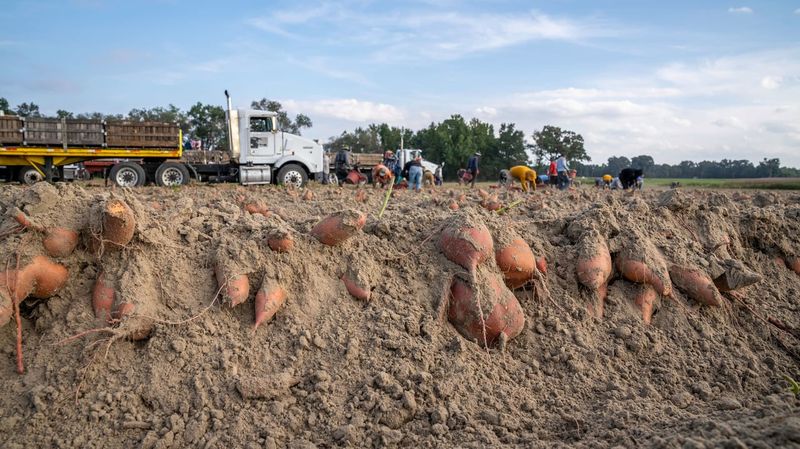
North Carolina is one of the top sweet potato producing states in the country, and there is a real reason for that. The warm growing season and well-drained sandy soils found across the Coastal Plain and Sandhills give this crop conditions it genuinely loves.
That said, sweet potatoes still need thoughtful care, the right timing, and soil that actually matches their needs. Understanding what makes this crop such a good fit, and where the limits of that fit lie, will help you grow a rewarding harvest in your own backyard.
Why Sweet Potatoes Perform So Well in Parts of North Carolina
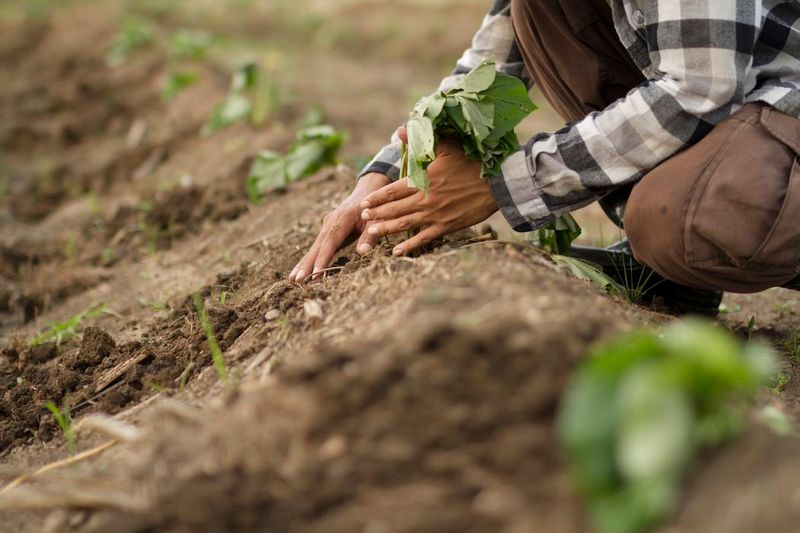
North Carolina’s sweet potato success story is rooted, quite literally, in its soil. Across the Coastal Plain, the ground is predominantly sandy to sandy-loam, and that texture creates a physical environment where storage roots can swell and take shape without fighting compaction or excess moisture.
The 2026 Southeastern U.S. Vegetable Crop Handbook confirms that well-drained sandy or sandy-loam soils generally produce the best-shaped roots, while heavy or compacted soils tend to cause deformity.
Waterlogged soils present a different problem entirely, cutting off the oxygen roots need and causing a condition growers call souring.
Warmth is the other half of the equation. Sweet potatoes thrive in temperatures roughly between 70 and 88 degrees Fahrenheit, and North Carolina’s long frost-free season, especially in the eastern part of the state, delivers that growing window reliably year after year.
The crop’s commercial heartland is the Coastal Plain, where sandy soils and summer heat combine to support large-scale production. USDA data for 2025 shows North Carolina farmers planted 93,000 acres of sweet potatoes, harvested 92,000 of them, and produced 18.86 million hundredweight, making the state a genuine national leader in the crop.
That commercial scale reflects real agronomic alignment between crop and landscape, but it does not mean every backyard in North Carolina shares those ideal conditions. NC State’s soil fertility overview makes clear that Piedmont and mountain soils are commonly clayey, clay-loam, or sandy-clay-loam, which behaves quite differently from Coastal Plain sand.
The soil match that makes sweet potatoes perform so well in eastern North Carolina is a regional advantage, not a statewide guarantee, and knowing which side of that line your yard falls on is the first step toward a productive planting.
Find Out Whether Your Yard Has the Right Soil
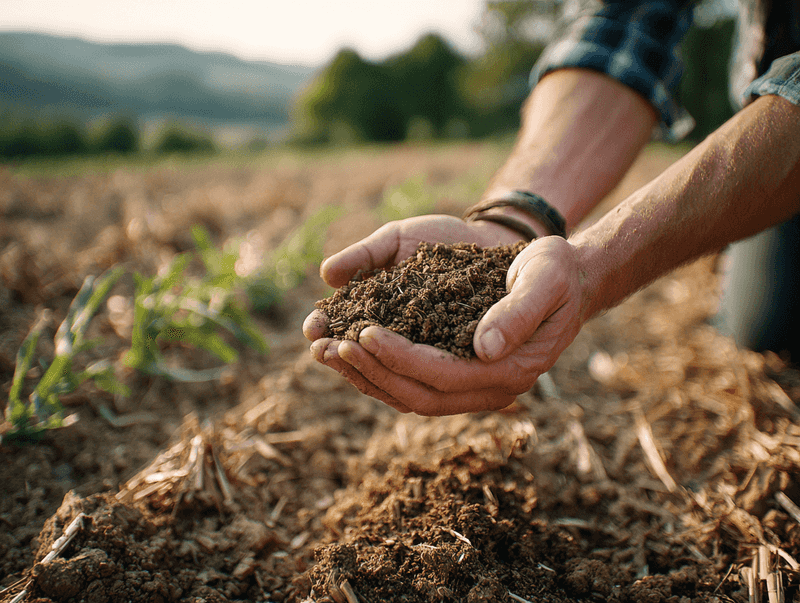
Before you order slips or mark out rows, spend a few minutes actually looking at what is under your feet. Coastal Plain and Sandhills yards often have sandy or sandy-loam topsoil that drains freely, stays loose, and lets roots expand without resistance.
Piedmont yards are more likely to have clay-heavy or clay-loam ground, and mountain soils range from fine loams to sandy-clay-loam, none of which behave like eastern Carolina sand. NC State’s soil fertility research documents these regional differences clearly, and they matter for how your sweet potato roots will develop.
A simple drainage check helps you assess your specific spot regardless of what region you are in. Dig a hole about a foot deep, fill it with water, and watch how quickly it drains.
Water that disappears within an hour or two points to good drainage. Water that sits for many hours or lingers overnight signals a drainage problem that raised mounds or rows can partly address, though severely waterlogged ground is a more serious obstacle.
At the same time, watch for the opposite extreme: soil that feels powder-dry a day after rain may be too droughty to support good establishment without supplemental watering.
Soil pH matters as much as texture. The Southeastern U.S.
Vegetable Crop Handbook sets the optimum pH range for sweet potatoes at 5.8 to 6.2, and NC State’s home-garden guidance rounds that to about 6.0. Getting a soil test through your local Cooperative Extension office is the most reliable way to know where your pH stands and what, if any, lime or fertilizer your soil actually needs.
Guessing at amendments can do more harm than good: NC State’s soil sampling guidance notes that Coastal Plain sandy soils are especially prone to nutrient leaching and benefit from more frequent testing than heavier soils elsewhere in the state. Heavy organic amendments are also worth approaching with caution, since high-organic-matter soils can promote scurf, a skin disease that affects sweet potato roots.
Base your amendment decisions on what your test results actually show, not on a general habit of adding compost.
Plant Slips When Your Local Weather Is Ready
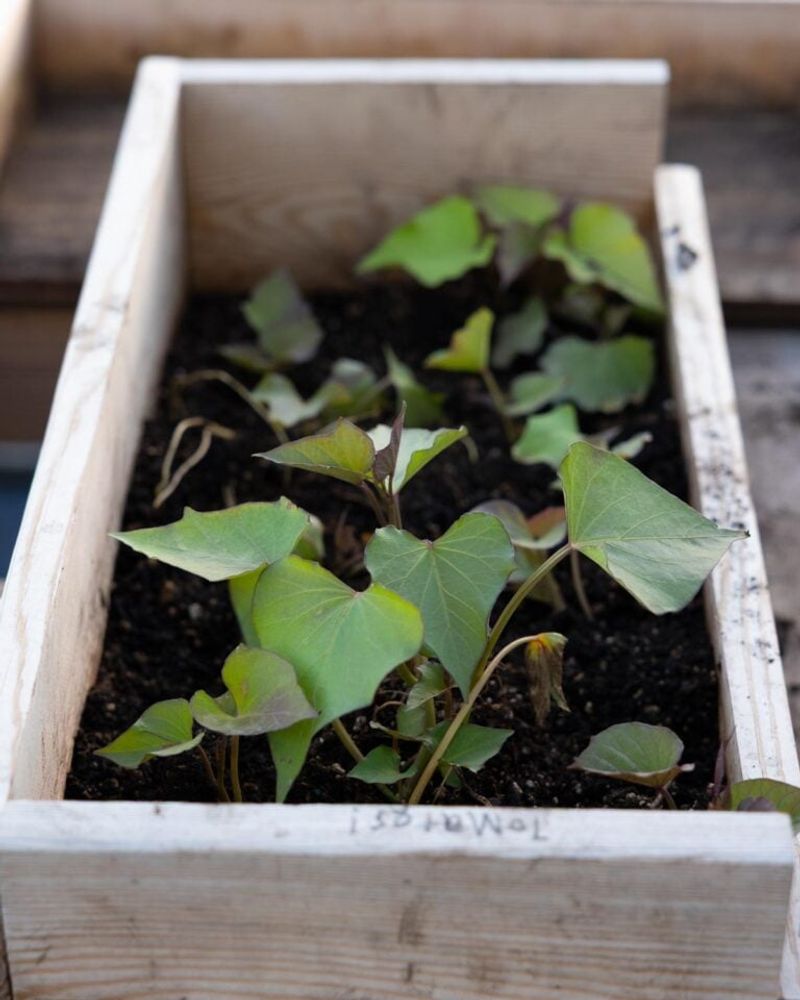
Sweet potatoes are almost always grown from slips, which are rooted vine cuttings taken from a sprouting root, rather than from botanical seed. Starting with healthy, disease-free slips is one of the most straightforward ways to avoid problems before they start.
Grocery-store roots may sprout when placed in water, but their variety identity, disease history, and any treatments they may have received are unknown. Certified or disease-free slips from a reputable supplier or your local Extension office give you a much cleaner start, particularly if your bed has any history of root diseases or nematodes.
Site selection and spacing set the stage for everything that follows. NC State’s home-garden guidance recommends full sun and enough room for vines to sprawl, with rows spaced 3 to 4 feet apart and slips placed 16 to 18 inches apart within each row.
Slips should be set 3 to 4 inches deep with several nodes below the soil surface to encourage strong root development. Where drainage is marginal, forming raised mounds or slightly elevated rows before planting can make a real difference in root shape and overall health.
Timing is the part of planting that varies most across North Carolina. Sweet potatoes are frost-sensitive, and cold soil can stunt or kill young slips before they establish.
The Southeastern U.S. Vegetable Crop Handbook places the main commercial planting period in late May through June, while NC State’s organic production guide and home-garden resources suggest a broader window of May 1 through July 15 depending on local conditions.
Coastal Plain gardeners generally have a longer frost-free season and can plant earlier; mountain and higher-elevation gardeners face later last-frost dates and shorter seasons. Checking NC State’s average first and last frost date tables for your county is the most reliable way to identify a safe planting window rather than relying on a single statewide date.
Manage Water, Weeds, and Fertility After Planting
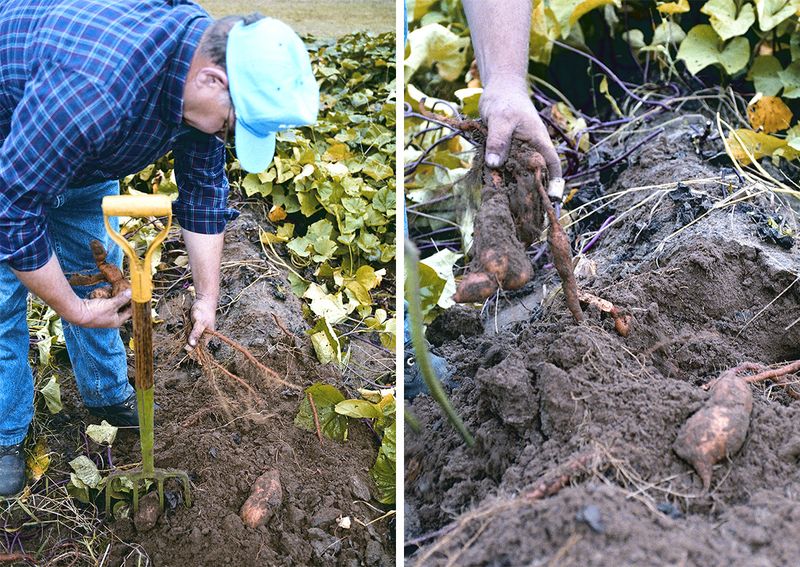
One of the genuine advantages sweet potatoes offer is that their sprawling vines eventually form a dense mat that shades out many weeds on their own. That payoff comes later in the season, though, and the weeks right after planting are when weeds compete most aggressively with young slips for water and nutrients.
Getting on top of weeds early, before the vines take over, saves real effort down the line. NC State’s home-garden guidance points to early weed control as an important step rather than an optional one.
Sandy soil drains quickly, and that same quality that benefits root shape can work against you during establishment. Young slips need consistent moisture to develop their root systems, and very sandy ground can dry out faster than the plants can handle during a hot, dry stretch.
NC State’s irrigation research makes clear that supplemental watering is often necessary in sandy Coastal Plain soils during dry periods. Once vines are well established, the crop becomes more tolerant of dry spells, but even then, prolonged drought can reduce yield and worsen root-knot nematode damage.
Waterlogged conditions, on the other end, remain harmful at any stage, so the goal is consistent moisture without saturation.
Fertility management in sandy soil requires a measured hand. Nitrogen moves easily through coarse soil after heavy rain, which means applications can be lost before the plant uses them.
The Southeastern U.S. Vegetable Crop Handbook warns that excessive nitrogen can push the plant toward lush vine growth while actually reducing root yield, and it can also cause salt injury at higher rates.
The right approach is to let a soil test guide your fertilizer decisions, apply modest amounts based on what that test recommends, and resist the urge to overfeed. More fertilizer is rarely the answer when sweet potatoes are underperforming.
Watch for Pests and Soilborne Disease
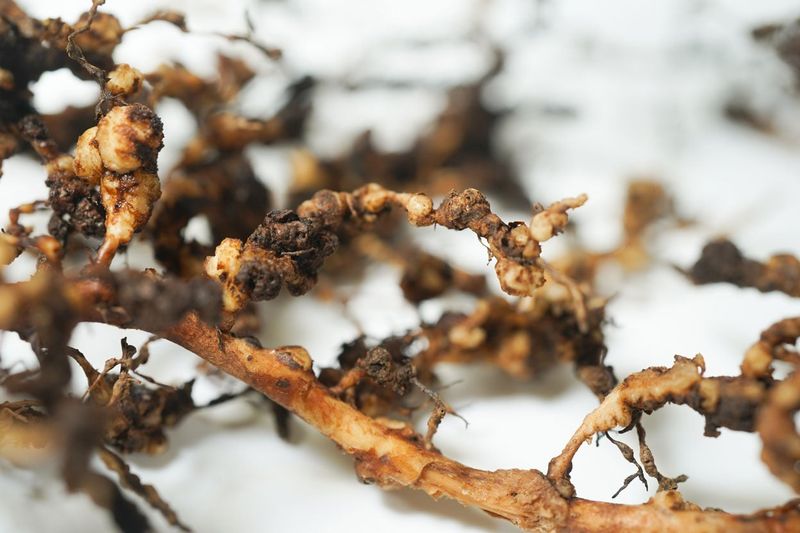
A good soil match reduces certain problems but does not eliminate them, and sweet potatoes grown in North Carolina’s sandy soils face a specific set of challenges worth knowing about. Root-knot nematodes are particularly relevant here because they are well adapted to the coarse sandy-loam soils where sweet potatoes grow best.
NC State’s root-knot nematode resource documents symptoms that include stunting, yellowing, galls on the roots, cracking, and reduced root quality. The guava root-knot nematode has been documented in North Carolina and poses particular concerns for sweet potato growers.
Drought stress can make nematode damage worse, which is another reason that adequate moisture during establishment matters beyond just getting the vines started.
Scurf is a soilborne fungal disease that creates dark, irregular patches on the skin of sweet potato roots. It does not usually penetrate deep into the flesh, but it affects appearance and can reduce marketability or storage quality.
NC State’s scurf guide notes that the disease persists in soil and on infected plant material, which is why starting with clean slips and rotating crops matters. Soils with high organic matter can also favor scurf development, reinforcing the point that amendment decisions should be based on actual soil conditions rather than the assumption that more organic matter is always better.
Beyond nematodes and scurf, NC State’s organic production guide identifies Fusarium wilt, black rot, wireworms, flea beetles, and thrips as additional concerns for North Carolina growers. The crop handbook supports using disease-free or certified planting material as a first line of defense.
Rotating sweet potatoes to a different bed every two to three years helps break disease and nematode cycles even in a small backyard garden. If problems keep recurring in the same spot, the soil history of that bed is worth investigating before planting again.
Harvest Carefully Before Frost
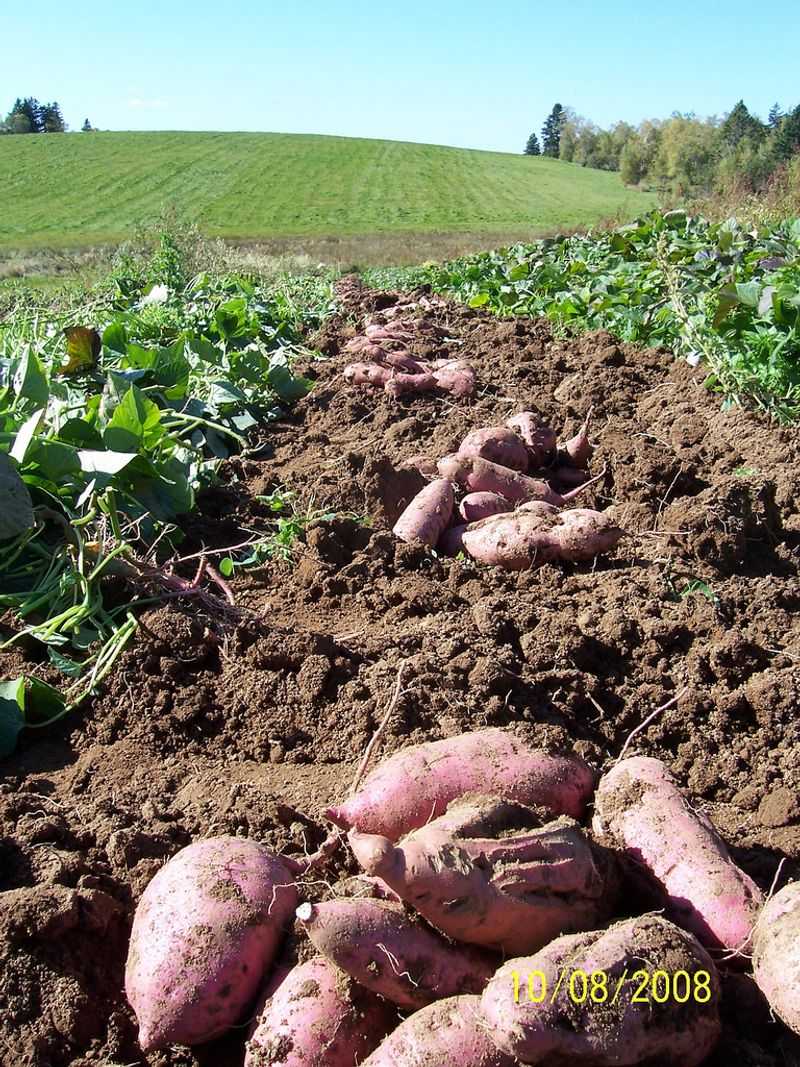
Knowing when to dig is part skill and part local weather awareness. Most home-garden sweet potatoes are ready to harvest somewhere in the 90-to-120-day range after planting, according to NC State’s home-garden guidance, but that window is a guideline rather than a hard deadline.
Variety, planting date, soil conditions, and how much heat and water the plants received all influence when roots actually reach their best size. A light frost can kill the vines and signal that harvest is overdue; a hard frost can damage the roots themselves.
The most important rule at harvest is to treat every root as if it bruises easily, because it does. NC State’s postharvest handling resource is clear that wounds and bruises made at harvest increase storage losses significantly.
Use a garden fork rather than a shovel, work from the outside of the hill inward, and lift rather than pry to avoid puncturing or cracking roots. Sandy soil makes digging easier and reduces the force needed to free roots, which is one more practical advantage of the Coastal Plain soil type.
Even so, careless handling in loose soil can still cause damage that shows up weeks later as decay.
Plan your harvest date with your local frost calendar in mind rather than relying on a single day count. Mountain and higher-elevation gardeners may need to dig several weeks earlier than Coastal Plain gardeners simply because first frost arrives sooner at elevation.
Checking your county’s average first frost date helps you set a target and avoid the scramble of digging in a hurry after an unexpected cold snap. Roots left in the ground after a killing frost lose quality quickly and may not cure or store well.
Cure Roots for Better Flavor and Longer Storage
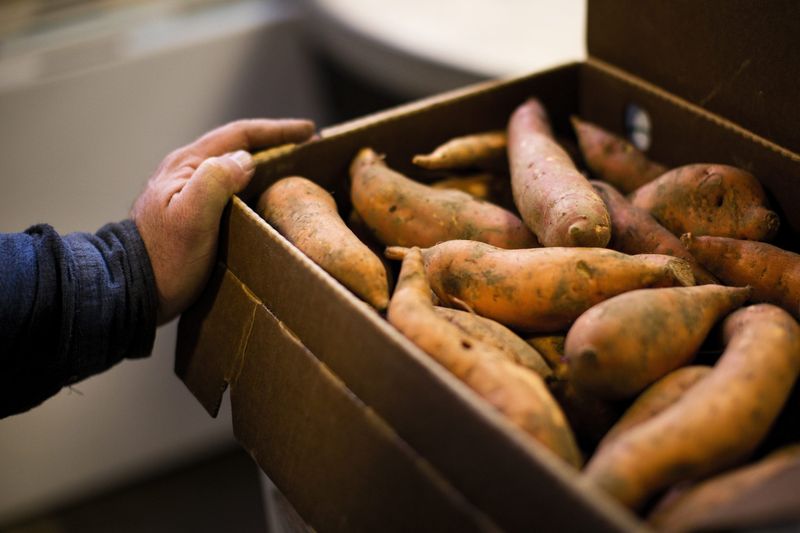
Freshly dug sweet potatoes are not yet at their best. Raw from the ground, they can taste starchy and their skins are thin and easily damaged.
Curing changes that. The process allows surface wounds to heal over, the skin to set and toughen, and starches to begin converting to sugars that give cured sweet potatoes their familiar sweetness.
NC State’s postharvest handling guide describes curing as essential for wound healing, skin setting, and achieving the flavor and storage life that make sweet potatoes worth growing in the first place.
Commercial operations target approximately 85 degrees Fahrenheit with 85 to 90 percent relative humidity for three to five days. Home gardeners do not need to hit those numbers exactly, but the principle holds: warmth and humidity together are what drive the curing process.
A common home approach is to keep freshly harvested roots in a warm, humid spot for about one to two weeks. A spare bathroom, a warm corner of a heated outbuilding, or even a spot near a water heater can work if temperatures stay in the right range.
NC State’s organic production guide supports this general warm-and-humid approach for home-scale growers.
A few handling mistakes can undo a good harvest quickly. Rough handling after digging creates new wounds that invite decay even after curing.
Chilling is another common error: sweet potatoes stored below about 55 degrees Fahrenheit can develop internal discoloration and off-flavors through a process called chilling injury, which may not be visible until you cut the root open. A cool garage in a North Carolina fall or winter is often too cold for safe storage.
Cured roots keep best at around 55 to 60 degrees Fahrenheit in a dark, moderately humid location. If you plan to eat your harvest within a week or two of digging, a full curing regimen matters less, but for anyone hoping to enjoy homegrown sweet potatoes through winter, curing is the step that makes it possible.
Grow the Crop That Fits Your Patch of North Carolina
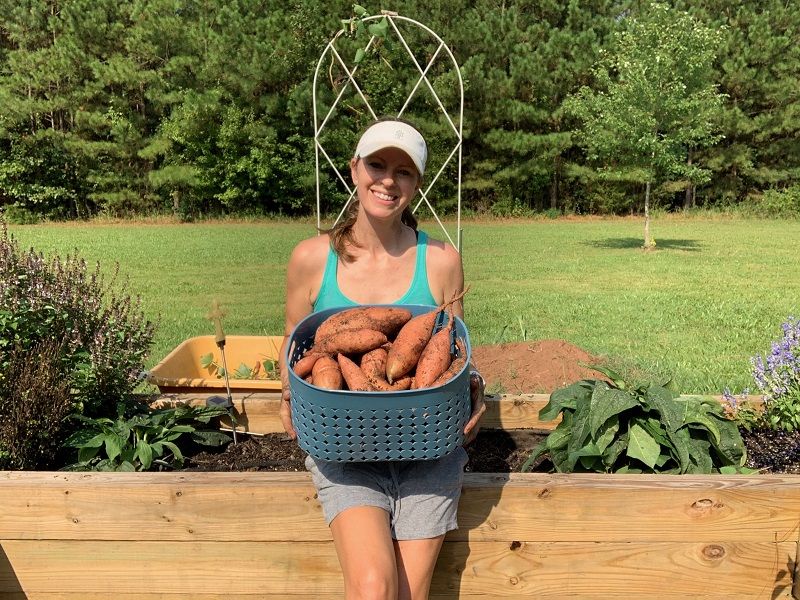
Sweet potatoes earn their reputation in North Carolina because the conditions here, particularly across the Coastal Plain and Sandhills, genuinely suit them. Warm temperatures, a long frost-free season, and well-drained sandy soil work together to support the kind of root development that other states struggle to match.
USDA production figures for 2025 put North Carolina at 93,000 planted acres and nearly 19 million hundredweight produced, numbers that reflect a real and lasting alignment between this crop and this landscape.
For backyard gardeners, the path to that kind of success runs through honest assessment rather than assumption. Check your actual soil texture and drainage.
Get a soil test before adding lime or fertilizer. Time your planting to your county’s frost calendar, not a generic statewide date.
Start with healthy slips, water during dry spells, control weeds early, rotate your planting bed every few years, and handle your harvest as carefully as you would anything fragile. The Southeastern U.S.
Vegetable Crop Handbook and NC State’s organic production guide both support this measured, soil-aware approach.
Sweet potatoes grown in the right conditions with the right care are among the most rewarding vegetables a North Carolina gardener can plant. The crop is not effortless, but it is genuinely well suited to much of this state.
Match your methods to your actual soil and season, and the harvest will speak for itself.