
Harvest Mature, Color-Changing Tomatoes Before Forecast Heavy Rain to Reduce Splitting Risk
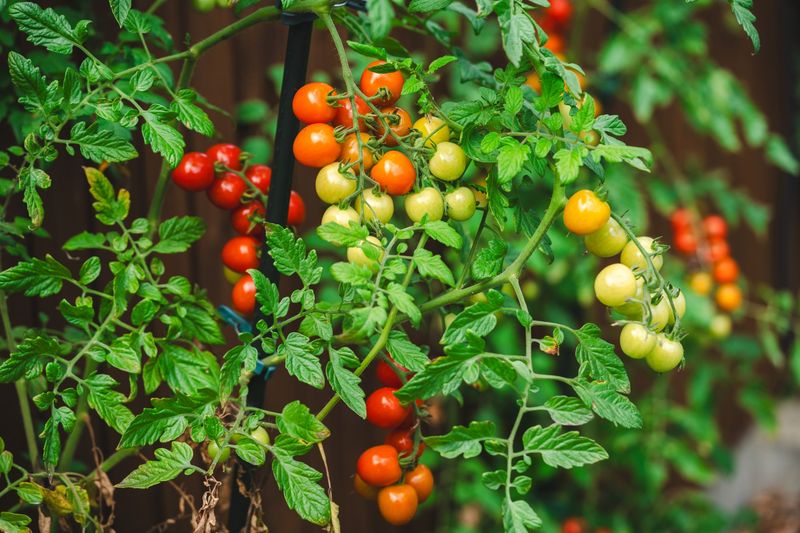
A heavy rain forecast can feel like a countdown clock when your tomato plants are loaded with nearly ripe fruit. Across North Carolina, from the Piedmont to the Coastal Plain to the mountain valleys, late-season downpours have a way of arriving right when tomatoes are at their most vulnerable.
The good news is that one targeted move, done before the storm rolls in, can meaningfully reduce how many of those tomatoes end up split on the vine. Understanding why rain triggers cracking, and which fruit to pick first, puts you back in control of your harvest.
Why a downpour after dry weather can split tomatoes
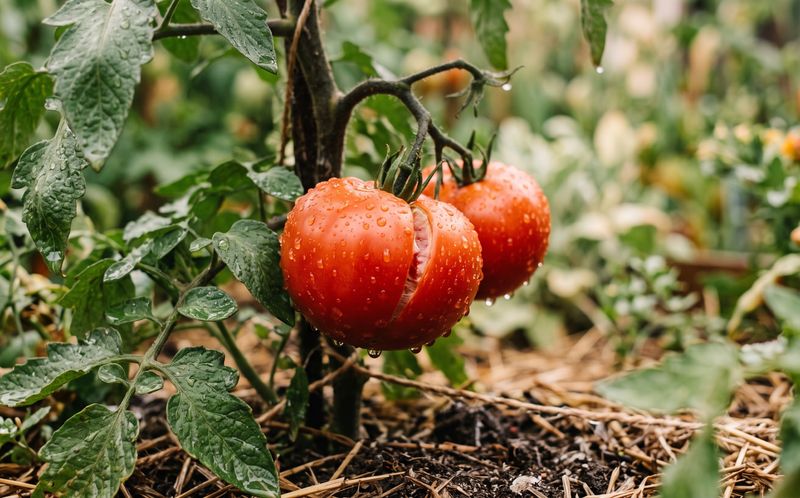
Tomatoes crack most often when heavy rain follows a dry stretch, and the reason comes down to how fast water moves through the plant. After days or weeks with little moisture, the root zone dries out and the fruit’s growth slows.
When a downpour arrives, roots absorb water rapidly and push it upward into the fruit. The flesh expands faster than the skin can stretch, and the result is a split.
Ripening fruit is especially exposed to this kind of damage. As a tomato moves from green toward red, research on tomato pericarp tissue shows that the skin and underlying cell structure gradually lose their ability to resist that internal pressure.
A fully green tomato has more elastic tolerance; a tomato that has already begun coloring has much less.
That said, rain alone does not guarantee splitting. NC Cooperative Extension notes that cracking risk is shaped by the interaction of prior moisture stress, how rapidly water is taken up, fruit maturity, variety, heat, sunlight exposure, and canopy cover.
A moderate rain falling on consistently moist soil is far less likely to cause damage than a two-inch downpour hitting a root zone that has been dry for two weeks.
University of Georgia Extension reinforces that the dry-to-wet cycle is the strongest recurring pattern behind fruit cracking. Knowing this changes how you respond to a forecast.
The urgency is not about rain itself but about the combination of a dry spell followed by sudden saturation, hitting fruit that is already in the vulnerable ripening window. That is exactly why harvesting color-changing tomatoes before the storm is a practical, targeted move rather than a panicked overreaction.
Harvest mature tomatoes that are starting to turn
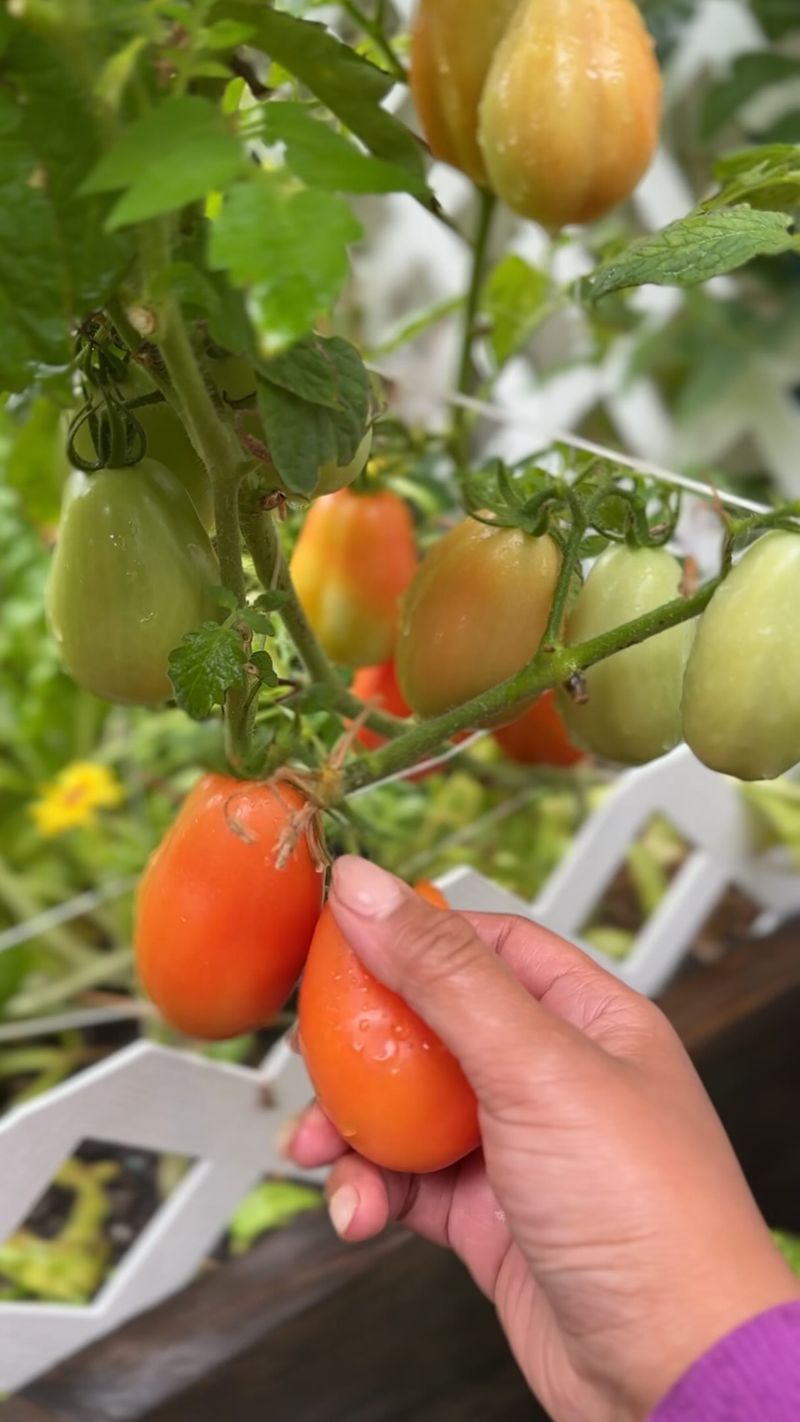
Before a heavy rain forecast, walk your garden and look for tomatoes that have reached their full mature size and begun changing color. These are the fruit worth picking now.
At the breaker stage, a tomato has just started to shift from green, showing a small blush or yellowish patch at the blossom end. Pink-stage fruit has progressed further, with more of the surface showing color.
Both are ready to come off the vine before the storm.
Penn State Extension identifies harvesting at the breaker-to-pink stage as a practical way to reduce late-season cracking losses, because removing these tomatoes from the vine takes them out of the most vulnerable ripening window before rapid water uptake can cause the skin to fail. NC Cooperative Extension similarly recommends picking nearly ripe fruit ahead of heavy rain.
What this step cannot do is protect every tomato in your garden. Fully green fruit that has not yet reached mature size is not a good candidate for early picking, because it will not ripen well off the vine.
Tomatoes that are still small and immature should stay put. The targeted action is limited to fruit that is already mature in size and actively changing color.
Fruit left on the plant, regardless of its stage, remains exposed to whatever the storm delivers. NC Extension guidance is clear that pre-rain harvest is a risk-reduction measure, not a complete prevention system.
If you have dozens of vines loaded with fruit at every stage of development, picking the breaker-to-pink tomatoes still reduces your losses meaningfully, even if some fruit inevitably cracks. Treat this as triage, not a guarantee, and focus your effort where the payoff is highest.
Bring the harvested fruit indoors to finish ripening
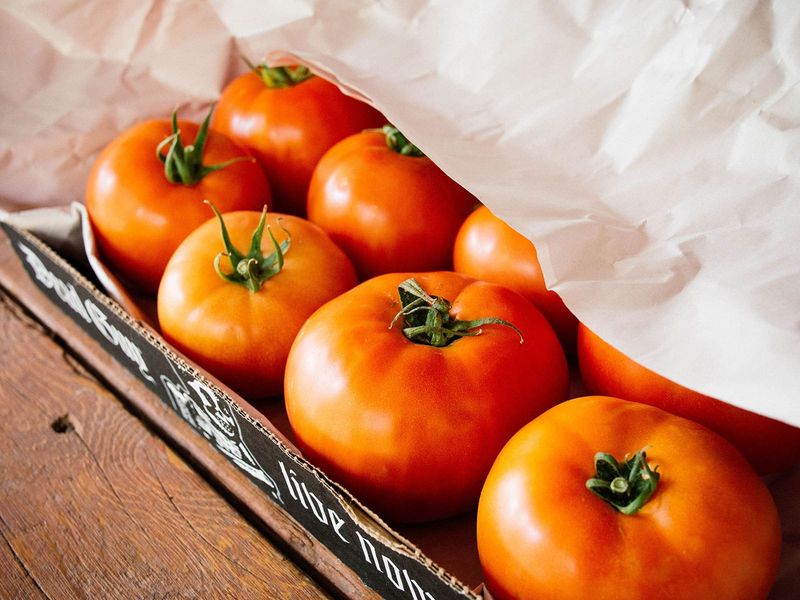
Once you have picked your color-changing tomatoes, the next step is straightforward: bring them inside and let them finish at room temperature. Breaker and pink-stage tomatoes have already triggered the internal ripening process, and they will continue to develop color, softness, and flavor without the vine.
University of Illinois Extension recommends storing ripening tomatoes at room temperature away from direct sunlight. Avoid the refrigerator for fruit that has not yet fully ripened, because cold temperatures interrupt the ripening process and can negatively affect texture.
A countertop, a shaded windowsill, or a table in a cool indoor room all work well.
Oregon State Extension notes in its fall horticulture guidance that tomatoes harvested at the mature green or breaker stage can continue ripening successfully indoors. There is no need for special packaging or elaborate storage setups.
Lay the fruit in a single layer, stem side up or down based on what keeps them stable, and check them daily.
Keep your expectations realistic. Indoor ripening reduces the storm exposure that causes cracking, but it does not guarantee flawless fruit.
A tomato that already had a hairline stress crack or some surface scarring before you picked it will not heal indoors. What you are doing is removing vulnerable ripening tomatoes from an environment where rapid water uptake could split them open, giving them a calmer setting to finish.
That is a practical win for a late-season garden facing an incoming downpour, even if the result is not picture-perfect fruit every time.
Skip last-minute pruning, drenching, and calcium cures
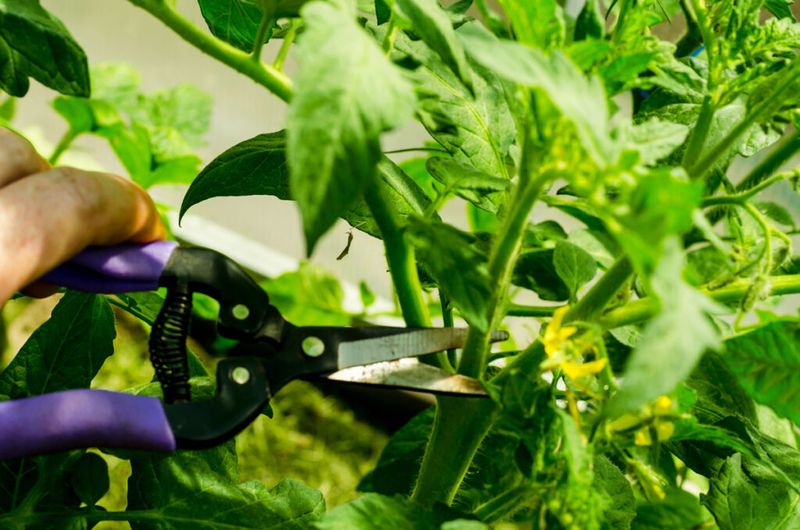
When a big storm is coming, it is tempting to do something dramatic to protect your plants. Three of the most common last-minute impulses, stripping leaves, soaking the soil, and reaching for calcium spray, are not supported as emergency fixes for rain cracking and can actually make things worse.
Healthy foliage is worth keeping. The canopy shades ripening fruit from intense direct sunlight, moderates temperature swings, and may reduce both cracking and a surface damage pattern called rain check.
University of Georgia Extension explains that excessive pruning can expose fruit to sunscald and potentially increase cracking susceptibility, the opposite of what you are trying to achieve. Removing a few damaged or diseased leaves is fine, but stripping healthy foliage off the plant before a storm is not a recommended protective step.
Saturating a dry root zone immediately before heavy rain is equally counterproductive. The mechanism behind dry-to-wet cracking is rapid water uptake after a period of moisture stress.
Deliberately adding a large volume of water to already-dry soil right before a downpour compounds that rapid wetting cycle rather than softening it. NC Cooperative Extension and UGA Extension both point to steady, even moisture over time as the supported approach, not a last-minute drenching session.
Calcium is also worth addressing directly, because it comes up often in tomato troubleshooting. Calcium and moisture management are more directly associated with blossom-end rot, a different disorder that appears as a dark, sunken patch at the bottom of the fruit.
Research on tomato fruit physiology and Penn State Extension’s disorder guide both make clear that rain cracking is strongly tied to rapid growth, water influx, cultivar, maturity, and skin properties. Spraying calcium on ripening fruit immediately before a storm is not an established treatment for cracking and is not worth your time or money in this situation.
Inspect and sort tomatoes after the storm
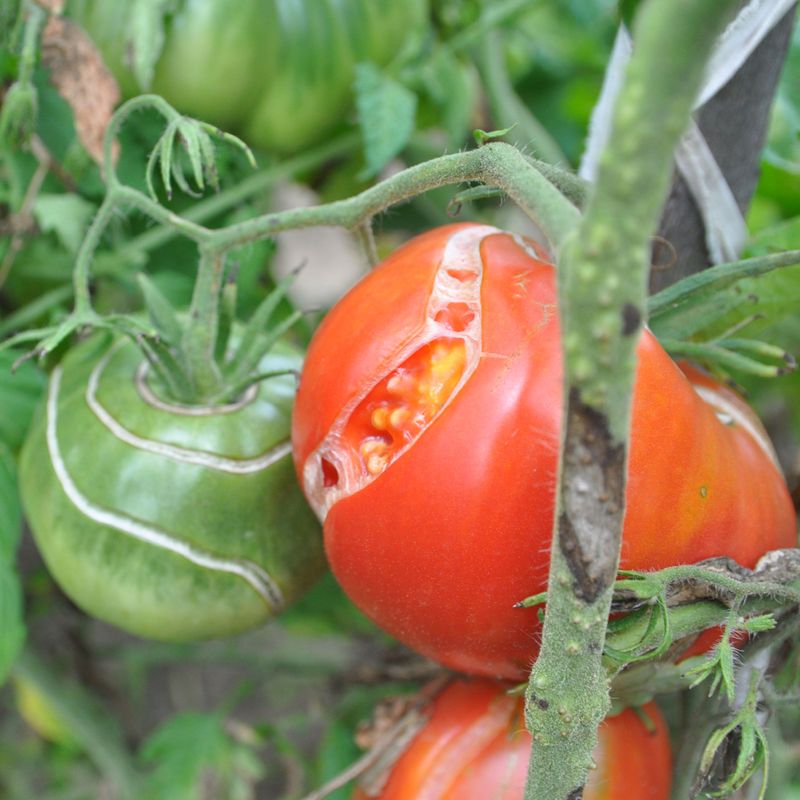
After the rain clears, get out to your garden as soon as conditions allow and look at every tomato on the vine. Newly cracked fruit deteriorates quickly once the skin is broken, so prompt inspection is worth the effort.
Pick any tomatoes showing fresh splits right away rather than leaving them to sit.
Not all damage looks the same, and knowing the difference helps you sort correctly. Radial cracks run outward from the stem end like spokes on a wheel and are often more severe.
Concentric cracks form circular rings around the shoulders or stem scar. Both are growth cracks driven by rapid water uptake.
Penn State Extension also describes rain check, a separate pattern that appears as many fine, rough, often concentric surface cracks with a healed or corky look. Rain check’s exact cause is not fully established, though it is associated with rainfall and drought-to-wet cycles.
It should not be lumped in with major growth cracks when you are assessing damage.
NC Extension and Rowan County Extension both advise harvesting cracked tomatoes before rot sets in and using them promptly. A tomato with a small, dry, shallow crack that shows no signs of leaking, mold, or odor may be trimmed and used right away.
Wash it thoroughly, cut away the damaged tissue generously, and use it the same day.
Discard any tomato that is leaking juice, shows mold or sliminess, smells off, or has deep deterioration. Cracks create openings where spoilage organisms enter quickly, and food safety guidance is clear that fruit with significant damage, disease, or signs of decomposition should not be consumed.
Do not use cracked, damaged, or diseased tomatoes for home canning. Penn State Extension explains that compromised tomatoes can harbor pathogens and may not acidify properly, making them unsafe for canning regardless of how they look on the outside.
Use even moisture to reduce future cracking
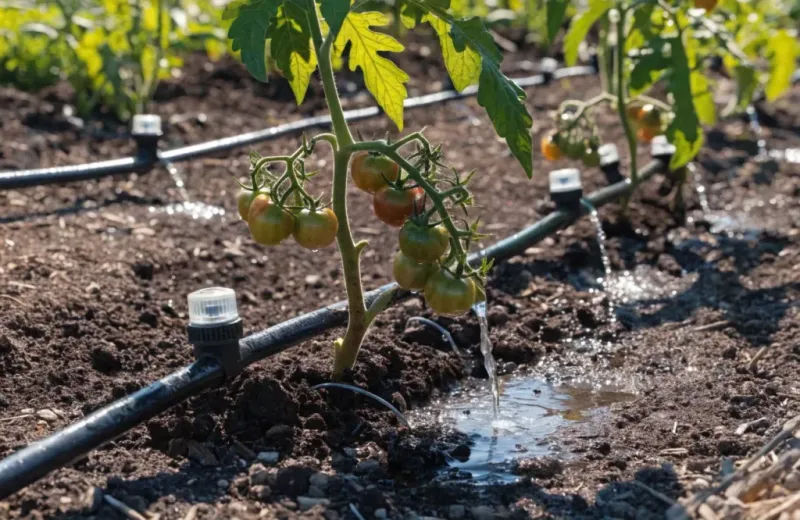
Harvesting before a storm is a reactive move. The longer-term strategy is keeping your soil moisture as steady as possible throughout the growing season, so the dramatic dry-to-wet swings that drive cracking happen less often.
This will not eliminate cracking entirely, but it meaningfully reduces the conditions that make it most likely.
Mulch is one of the most practical tools available. A layer of straw, wood chips, or shredded leaves over the root zone slows evaporation, buffers soil temperature, and helps retain moisture between watering sessions.
NC Cooperative Extension and UGA Extension both point to mulch as a reliable, low-cost way to moderate moisture swings at the root level. Pair it with drip or soaker irrigation, which delivers water directly to the soil rather than overhead, to keep foliage drier and reduce the risk of foliar disease spreading alongside the moisture stress you are trying to manage.
NC State’s home-garden guidance gives approximately 1.5 inches of water per week during fruiting, supplied by rainfall or irrigation combined. That figure is a seasonal planning target for consistent moisture management, not a cue to add water immediately before a storm arrives.
Cultivar choice also plays a role. University of Minnesota Extension notes that large-fruited tomatoes and many heirloom varieties tend to be more susceptible to cracking than smaller-fruited or crack-tolerant cultivars.
If you have had repeated cracking problems in your North Carolina garden, it is worth researching crack-tolerant varieties for next season. That said, susceptibility varies by cultivar and growing conditions, and no tomato type is guaranteed crack-proof under all circumstances.
Variety selection is one more layer of protection, not a complete solution on its own.
Make a practical pre-rain harvest decision
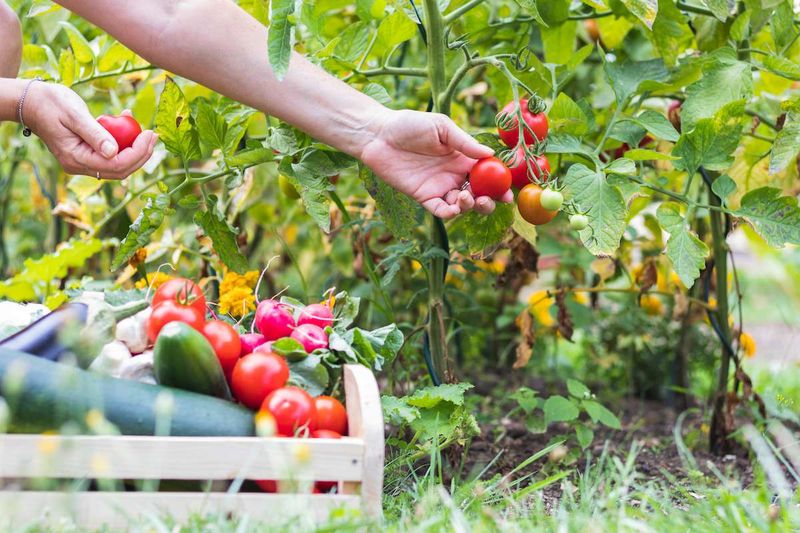
When a heavy rain forecast arrives, the practical sequence is short: check your vines for tomatoes at the breaker-to-pink stage, pick them, bring them inside to finish ripening at room temperature, and leave healthy foliage in place on the plant. Penn State Extension and NC Cooperative Extension both support this targeted approach as a way to reduce losses in the most vulnerable fruit.
After the storm, inspect what remains on the vine and sort promptly. Harvesting color-changing tomatoes before forecast rain is a risk-reduction move, not a rescue guarantee, and some cracking may still occur in fruit left behind or in varieties that are more susceptible.
The steadier you keep soil moisture across the whole season through mulch and consistent watering, as NC State home-garden guidance recommends, the less dramatic the dry-to-wet swings that set up cracking in the first place. A well-timed harvest before the storm and a steady hand on moisture through the season are the two moves that give your tomatoes the best realistic chance.