
The One Thing North Carolina Hydrangeas Need In September Or Next Summer’s Blooms Never Fill In
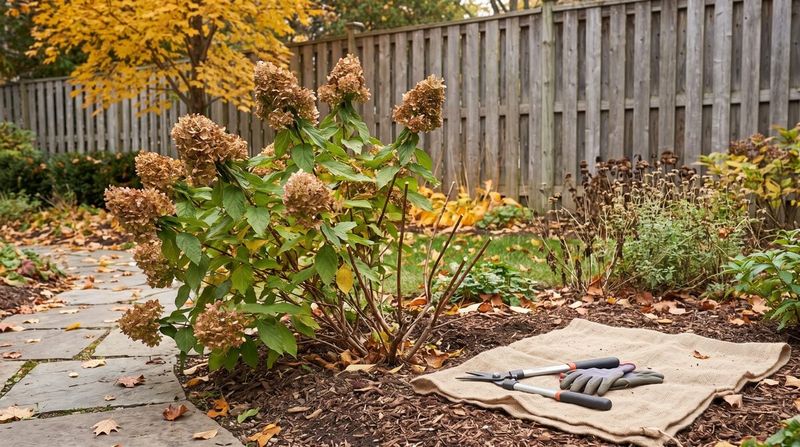
Fall sneaks up on North Carolina gardeners fast, and the decisions made in September can quietly shape what blooms the following summer. For certain hydrangeas, the most important thing to do right now is actually to put the pruners away.
Knowing which plants need that hands-off approach, and which ones follow a completely different schedule, can save next year’s flower display before it ever gets the chance to fail.
Protect healthy stems instead of making a universal September cut

Gardeners who grow old-wood hydrangeas in North Carolina face a specific and consequential risk in September: cutting back healthy stems before the plant has any chance to deliver next summer’s blooms. Bigleaf hydrangeas, including traditional mophead and lacecap types, and oakleaf hydrangeas form their flower buds on existing woody stems.
Those buds often develop in late summer and into fall, meaning that a well-intentioned September cleanup can remove the very growth that carries next year’s display.
The strongest practical guidance from Clemson Extension’s hydrangea pruning resource is to prune these old-wood types immediately after they finish flowering, not in fall, winter, or early spring. By September, that safe window has already closed for most bigleaf and oakleaf plants in North Carolina.
Preserving intact, healthy stems is the defensible priority for the months ahead.
That precaution is not a universal rule covering every hydrangea in the yard. Smooth hydrangeas and panicle hydrangeas bloom on new wood that develops during the coming growing season, so they operate on a completely different schedule.
The September warning applies most directly to old-wood bloomers, and the NC State Extension Gardener Handbook reinforces that pruning decisions should be guided by species and bloom timing rather than a single calendar date.
Protecting healthy stems is also not a promise that every plant will bloom. Winter injury, late spring freezes, shade, drought, deer pressure, and cultivar hardiness all play roles in whether buds survive to open.
Stem preservation in September removes one avoidable risk from that list. It does not eliminate the others.
Identify the hydrangea before reaching for pruners
Grabbing pruners without knowing what species is growing in the bed is the fastest way to accidentally wipe out next summer’s flowers. North Carolina yards commonly contain at least two fundamentally different pruning categories, and treating them the same way can produce very different results.
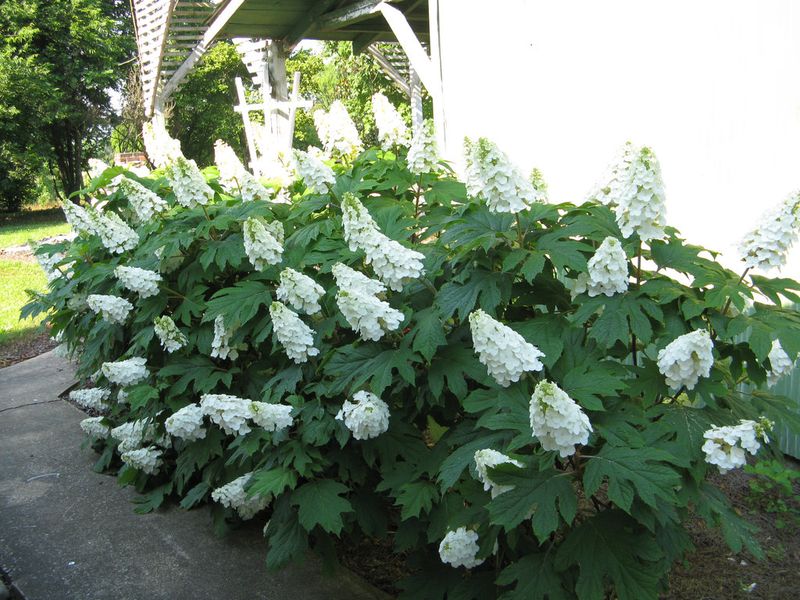
Bigleaf hydrangeas, Hydrangea macrophylla, cover the familiar mophead and lacecap types with large, rounded or flattened flower clusters and bold, glossy leaves. Oakleaf hydrangeas, Hydrangea quercifolia, have distinctly lobed leaves that resemble an oak’s and produce elongated white flower clusters that age to parchment.
Both of these bloom on old wood. Macon County Cooperative Extension’s pruning guide explains clearly that old-wood bloomers should not be pruned in fall or early spring if the goal is to protect next year’s flowers.
Smooth hydrangeas, Hydrangea arborescens, and panicle hydrangeas, Hydrangea paniculata, bloom on new wood that grows during the current season. Their major pruning window falls in late winter or very early spring, before new growth begins.
Penn State Extension’s species-by-species pruning guide confirms that these new-wood types are not subject to the same September restriction as bigleaf and oakleaf plants.
Reblooming or remontant bigleaf cultivars, including Endless Summer types, can produce flowers on both old and new wood. They recover more gracefully after some bud loss, but that flexibility does not make them candidates for a hard September cutback.
They still benefit from stem preservation as a precaution.
Mountain hydrangeas and climbing hydrangeas add their own complexity and should not be folded into a simplified four-type rule without a firm identification. Gardeners who are unsure what they have growing can consult the Forsyth County Extension hydrangea resources page or take a sample to a local county Extension office for help before making any structural cuts.
Old wood carries the next flower cycle
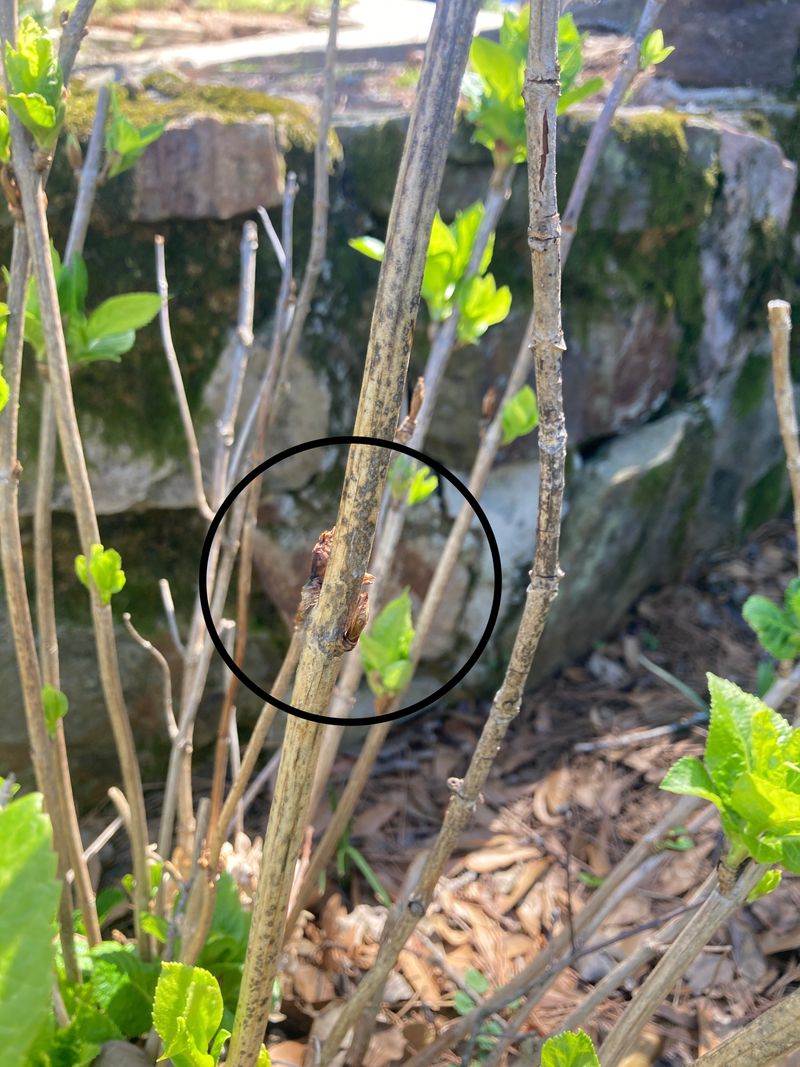
Old-wood hydrangeas grow on a biological schedule that catches many gardeners off guard. Rather than forming flower buds in spring alongside new leaves, these plants set the buds for next summer’s blooms during the late summer and fall of the current year.
By September, a healthy bigleaf or oakleaf hydrangea may already be carrying the embryonic flowers that will open the following June or July.
A stem cut in September does not just remove a woody branch. It can remove those developing buds entirely.
University of Georgia Extension’s hydrangea care publication explains that bigleaf hydrangeas form flower buds on old wood in late summer and that pruning after that point removes next year’s blooms. The plant does not generate replacement buds on the same stem once it has been cut.
New-wood hydrangeas operate very differently. Smooth and panicle hydrangeas produce the growth that will bear flowers during the upcoming growing season, which means buds form on fresh stems that emerge in spring.
Pruning in late winter or very early spring removes only old material that has already served its purpose, and the plant responds by pushing vigorous new flowering growth. University of Minnesota Extension’s hydrangea pruning guidance reinforces that the timing difference between old-wood and new-wood types is the central factor in choosing when to cut.
Understanding that distinction converts September from a pruning window into a preservation window for old-wood plants. The stems that look like nothing more than spent summer growth may already be doing the quiet work of building next year’s display.
Leaving them alone is the most straightforward way to protect that investment.
Remove hazards, not healthy flowering stems
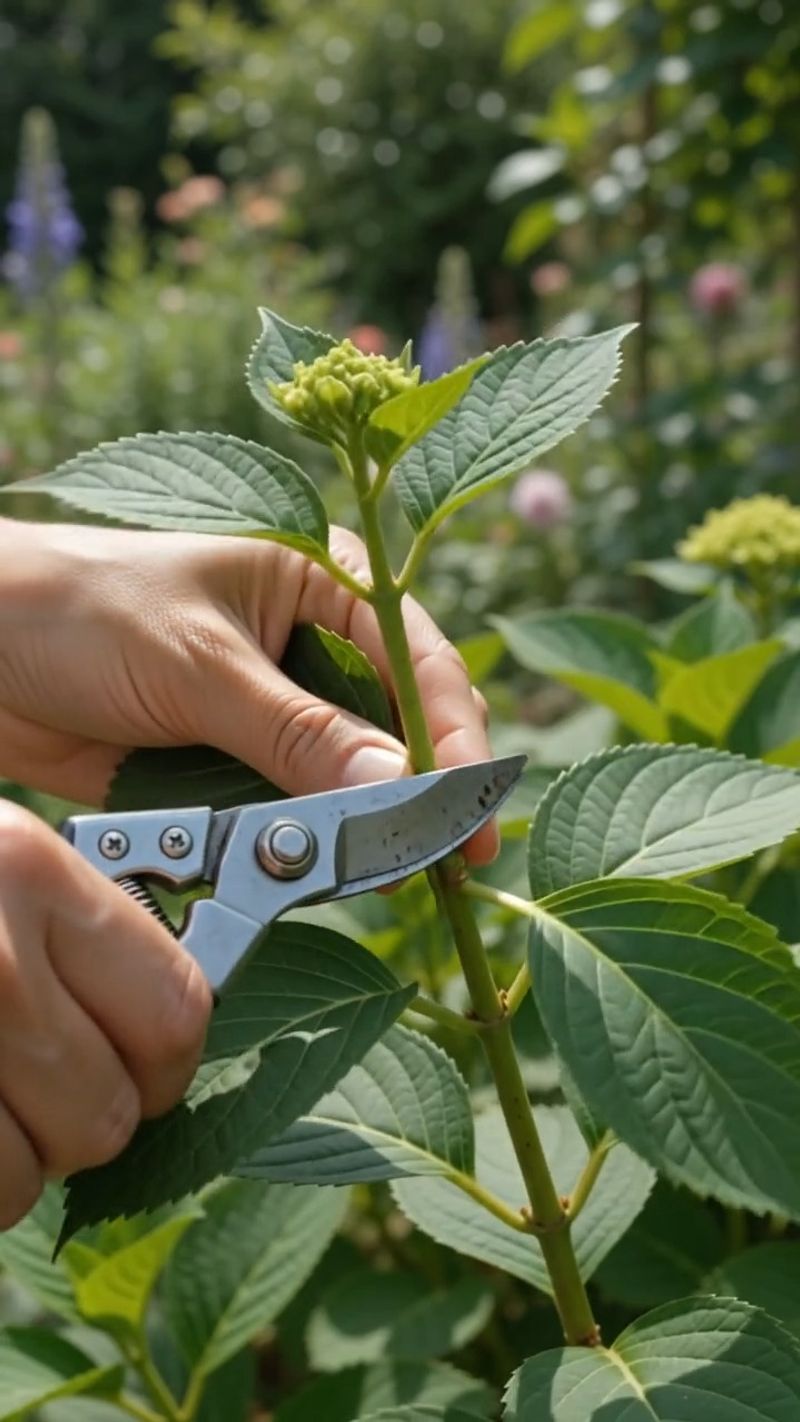
September yard work and old-wood hydrangeas can coexist, as long as the focus stays on removing genuine problems rather than reshaping the plant. A stem qualifies for removal if it is clearly dead all the way through, visibly broken, or poses a physical hazard to foot traffic or nearby structures.
Healthy green or firm woody stems, even ones that look a little untidy after summer, should stay in place.
Running a fingernail lightly along a stem gives a quick read on its condition. Green or white tissue just under the bark means the stem is alive and worth keeping.
Dry, brown tissue throughout the stem suggests it is dead and can be removed without affecting next year’s buds. Clemson Extension’s pruning guide advises removing dead wood at the base and cutting out weak, spindly stems while leaving the healthy framework intact on old-wood types.
Spent flower heads are a separate decision. Leaving the dried blooms in place through fall and winter causes no harm to next year’s buds and can add visual interest to the garden during the colder months.
University of Minnesota Extension notes that spent heads left on the plant are not a meaningful problem and that the more consequential issue is whether healthy old stems carrying buds are cut. Removing the flower heads is optional and purely a matter of preference.
Fall size control and major reshaping belong off the September task list for bigleaf and oakleaf hydrangeas. Smooth and panicle hydrangeas, which bloom on new wood, follow a late-winter or early-spring schedule for their main pruning.
Keeping those two categories separate prevents one plant’s correct treatment from becoming another plant’s accidental setback.
Maintain moisture without forcing tender growth
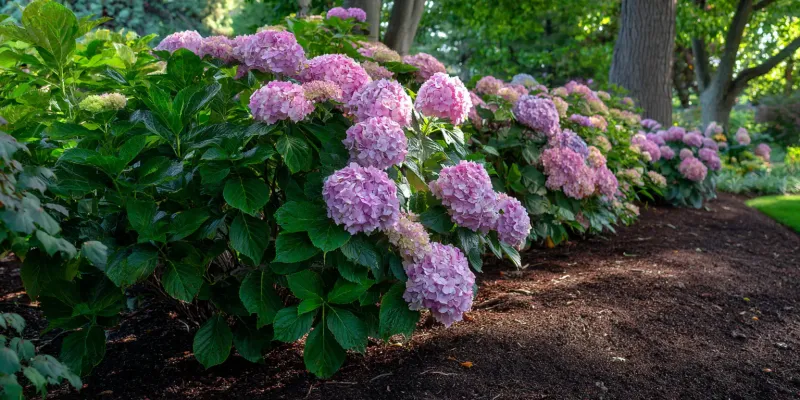
Stem preservation sets the stage, but the buds those stems carry still need a stable environment to survive the months ahead. Moisture management is the most practical supportive step gardeners can take in September without creating new problems.
Large-leaved hydrangeas show drought stress quickly and visibly, and late-season dry spells in North Carolina can be just as damaging as summer heat. Watering deeply through the root zone when the top few inches of soil feel dry helps maintain the conditions the plant needs.
At the same time, keeping the site persistently saturated is counterproductive. The NC State Extension Gardener Handbook identifies waterlogged soil as a contributor to oxygen deprivation in roots and the conditions that favor root disease.
The goal is consistent, moderate moisture, not constant wetness.
A layer of organic mulch supports that balance. Spreading roughly 2 to 3 inches of wood chips, shredded bark, or pine straw around the plant helps conserve moisture, moderate soil temperature, and reduce weed competition.
NC State’s nursery winter preparation guidance recommends keeping mulch away from direct contact with stems to avoid trapping moisture against the bark, which can invite disease or pest problems at the crown.
Fertilizer is not a universal September recommendation for hydrangeas. The right approach depends on soil conditions and the plant’s visible health, and a soil test is the most reliable starting point.
NC State’s fertilizing guide for trees and shrubs cautions against feeding by assumption rather than by demonstrated need. Excess nitrogen is specifically identified by UGA Extension as a possible cause of poor bigleaf hydrangea flowering, and late-season nitrogen can push tender new growth that enters winter without adequate hardening.
Unless a soil test shows a clear deficiency, skipping fall fertilizer is the safer choice.
Adjust winter protection to region and weather
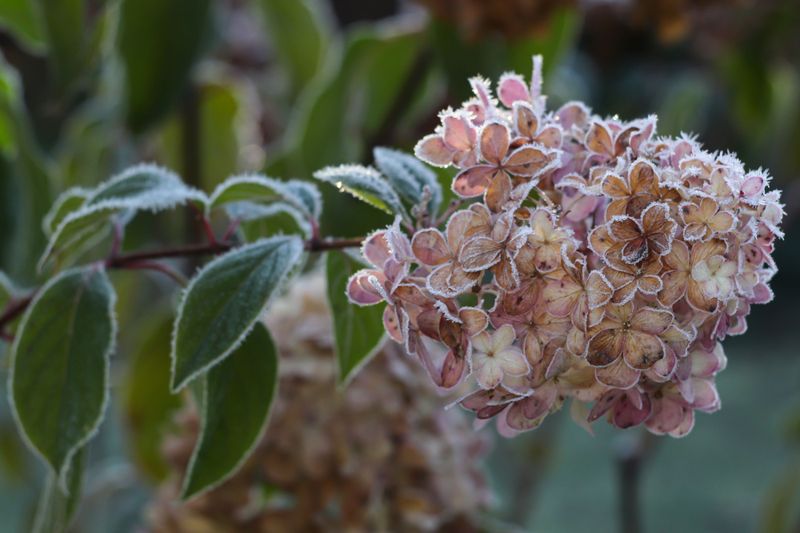
North Carolina spans a wide range of climates, and a single statewide protection date does not serve gardeners accurately. A bigleaf hydrangea growing in Asheville faces meaningfully different winter conditions than the same cultivar planted in New Bern or Greensboro.
Treating those situations identically can lead to either premature action or missed protection windows.
Blue Ridge gardeners often deal with harder and longer winters, and bigleaf hydrangeas in that region carry a greater risk of bud injury from sustained cold. Late spring freezes are an additional concern in western North Carolina, where a warm spell followed by a hard frost can catch newly emerged growth at its most vulnerable.
Piedmont and Coastal Plain gardeners generally face milder winters, though late cold snaps can still damage exposed buds on unprotected plants.
NC State’s guidance on preparing plants for winter advises applying winter mulch after plants have already begun to harden in response to shorter days and initial frosts, rather than applying it on an arbitrary early date. Mulching too early, before the plant has hardened off naturally, can actually interfere with that hardening process.
In the mountains, that timing generally falls later in the season than in the Piedmont or Coastal Plain.
Region-specific timing also means watching the weather rather than the calendar. A warm, extended fall across the Piedmont may push the appropriate mulch date into November, while an early cold snap in the Blue Ridge could make earlier action sensible.
The Macon County Extension pruning guide reflects this regional awareness by noting that mountain gardeners face a harder pruning challenge with bigleaf hydrangeas precisely because of winter bud damage. Flexibility and local observation serve North Carolina gardeners better than a fixed statewide schedule.
Check other causes when flowers stay sparse
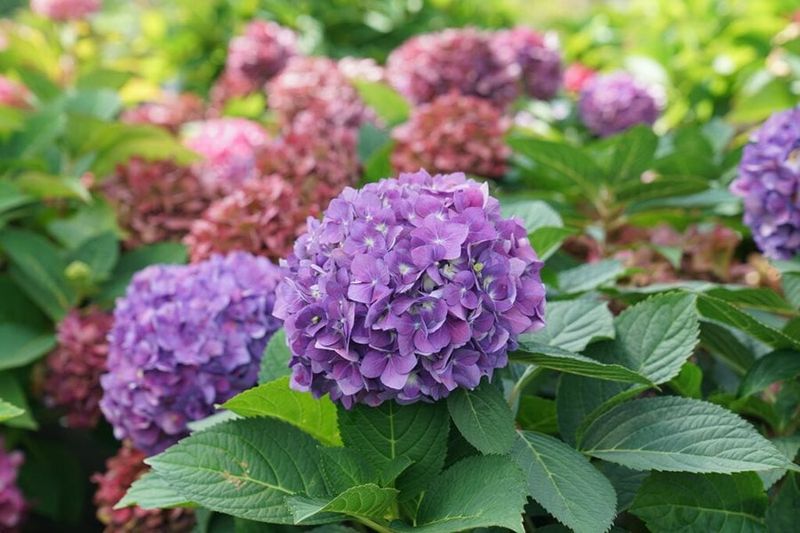
Fall pruning gets blamed often for sparse hydrangea blooms, and in many cases that blame is fair. However, treating it as the only possible explanation can lead gardeners to protect stems carefully all winter and still end up puzzled when the flowers fail to appear the following summer.
Penn State Extension’s resource on why hydrangeas fail to bloom lists several documented contributors beyond pruning: winter bud injury from sustained cold, late spring freezes that kill emerging growth, excessive shade, drought stress, deer browsing, excess nitrogen, and cultivar hardiness mismatches with the local climate. Any one of these can produce a season with few or no flowers even when stems were left perfectly intact through fall and winter.
Shade is worth evaluating specifically. A hydrangea planted under a tree that has grown significantly over several years may now receive far less light than it did at planting.
Most bigleaf and oakleaf hydrangeas perform better with morning sun and afternoon shade rather than deep, all-day shade. Deer browsing can remove emerging buds and new growth before the gardener even notices the damage, particularly in rural Piedmont and mountain areas where deer pressure is high.
Soil pH is a separate matter that sometimes gets confused with flowering problems. Adjusting pH with aluminum sulfate or lime can shift flower color in certain bigleaf cultivars from pink toward blue or vice versa, depending on aluminum availability.
But that color shift is not a solution for sparse blooms. UGA Extension’s hydrangea publication makes clear that pH management affects pigmentation, not bud production.
Buds removed by pruning or killed by frost cannot be restored by adjusting soil chemistry, and white-flowered cultivars may show no color response at all. Diagnosing the actual cause of poor flowering, rather than applying a blanket remedy, is the more reliable path forward.
Follow the species-specific plan after September
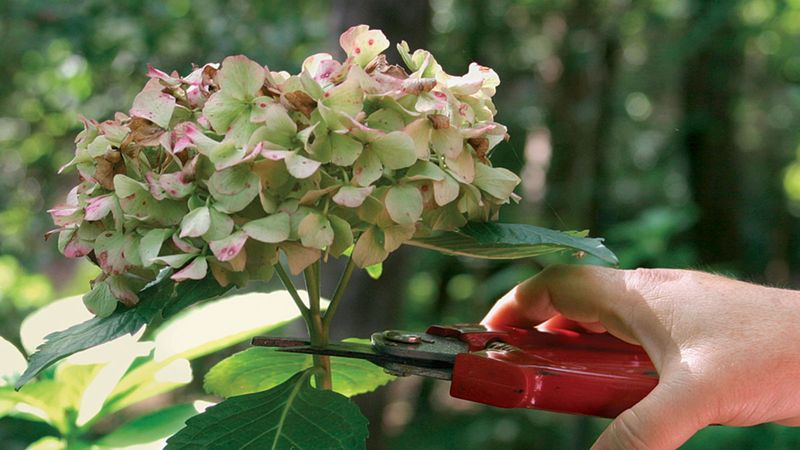
Putting a reliable plan together starts with knowing what is actually growing in the bed. A firm species identification before any structural cuts are made is the single step that prevents most September pruning mistakes.
Gardeners who are uncertain about what they have can search the NC State Extension Gardener Plant Toolbox or bring a sample to their county Extension office for a confident answer before the pruners come out.
Once the species is known, the plan follows naturally. Old-wood types, primarily bigleaf and oakleaf hydrangeas, call for halting major cuts now, removing only clearly dead or broken material, and waiting until right after flowering next summer for any structural shaping.
Smooth and panicle hydrangeas follow their own late-winter or early-spring schedule for main pruning, as Penn State Extension’s species-specific pruning guide confirms. Watering through dry spells and keeping a moderate mulch layer in place rounds out the fall care list for both types.
Preserving healthy stems on old-wood hydrangeas is a sound precaution, not a guarantee. The buds on those stems still face winter weather, late freezes, and other variables no gardener fully controls.
What stem preservation does is remove one avoidable risk from a list that is already long enough. A plant that keeps its healthy framework through fall starts next spring with the best possible chance, and that is a reasonable goal for September.