
The One Thing North Carolina Gardenias Need In September Or The Leaves Yellow Before Their Fall Blooms
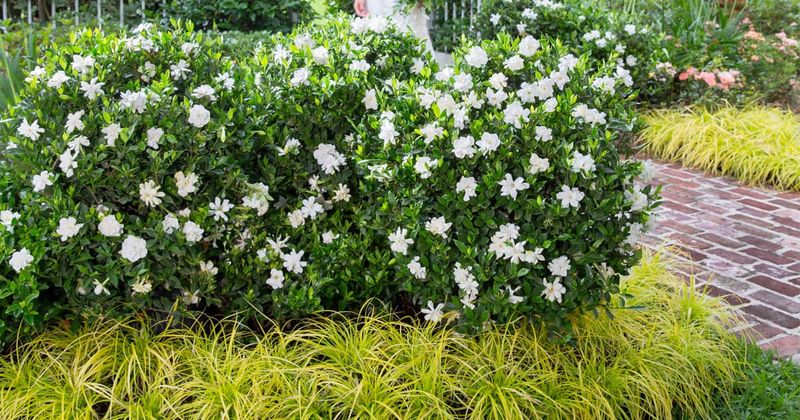
Gardenias are one of those plants that look effortless in a neighbor’s yard but feel fragile the moment they’re yours. Come September, a lot of North Carolina homeowners start worrying about yellowing leaves and wondering if they’ve missed some critical treatment that will cost them their fall flowers.
The truth is more reassuring than the panic suggests: no single September action controls whether your gardenia blooms or turns yellow. What actually helps is a calm, steady approach focused on reducing stress rather than chasing a one-step fix.
September calls for steadiness, not a secret treatment
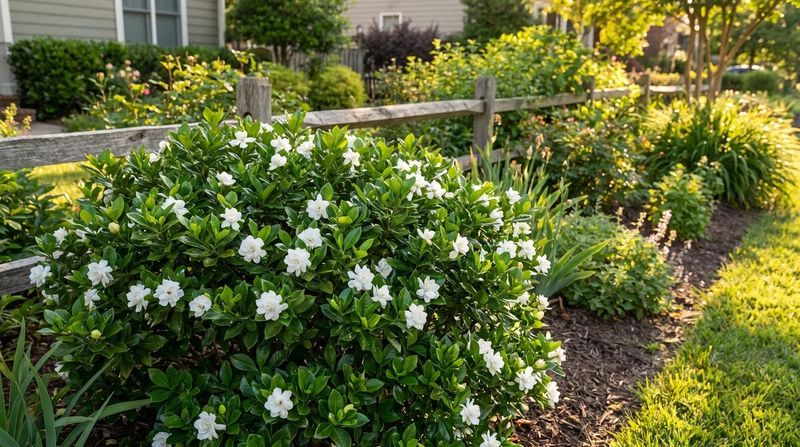
Gardenias are often sold alongside a set of warnings that make them sound like they need constant intervention. September tends to bring that anxiety to a head, especially when someone reads that a single treatment or a specific bud structure is the deciding factor between fall flowers and a shrub full of yellow leaves.
That framing is not accurate, and acting on it can cause more harm than the problem it claims to solve.
No single September action determines whether a North Carolina gardenia blooms or develops yellow leaves. NC Cooperative Extension’s South-specific gardenia guidance does not point to one decisive treatment.
Instead, it describes a set of conditions the plant needs to stay healthy, and September is a month to maintain those conditions rather than introduce new interventions.
The governing idea for this month is stress prevention. A gardenia under stress from drought, waterlogged roots, cold-stimulating fertilizer, or pest pressure is less likely to hold its buds and more likely to show symptoms in its leaves.
The immediate priorities are straightforward: keep the root zone evenly moist with reliable drainage, avoid hard pruning that could remove existing or forming buds, skip routine fall fertilizer unless a soil test shows a specific deficiency, and take a close look at the plant for early pest activity.
Clemson’s gardenia care factsheet reinforces the point that fall fertilization can push tender new growth that cold weather then damages. That kind of setback does far more to derail a gardenia than skipping a September feeding ever would.
Clemson’s companion factsheet on gardenia diseases and problems also makes clear that yellowing and bud drop share multiple possible causes, none of which reduces to a single either-or trigger. Fall flowers are possible for some cultivars under good conditions, but they are not a guaranteed outcome for every plant in North Carolina.
Yellow leaves do not automatically predict flower loss
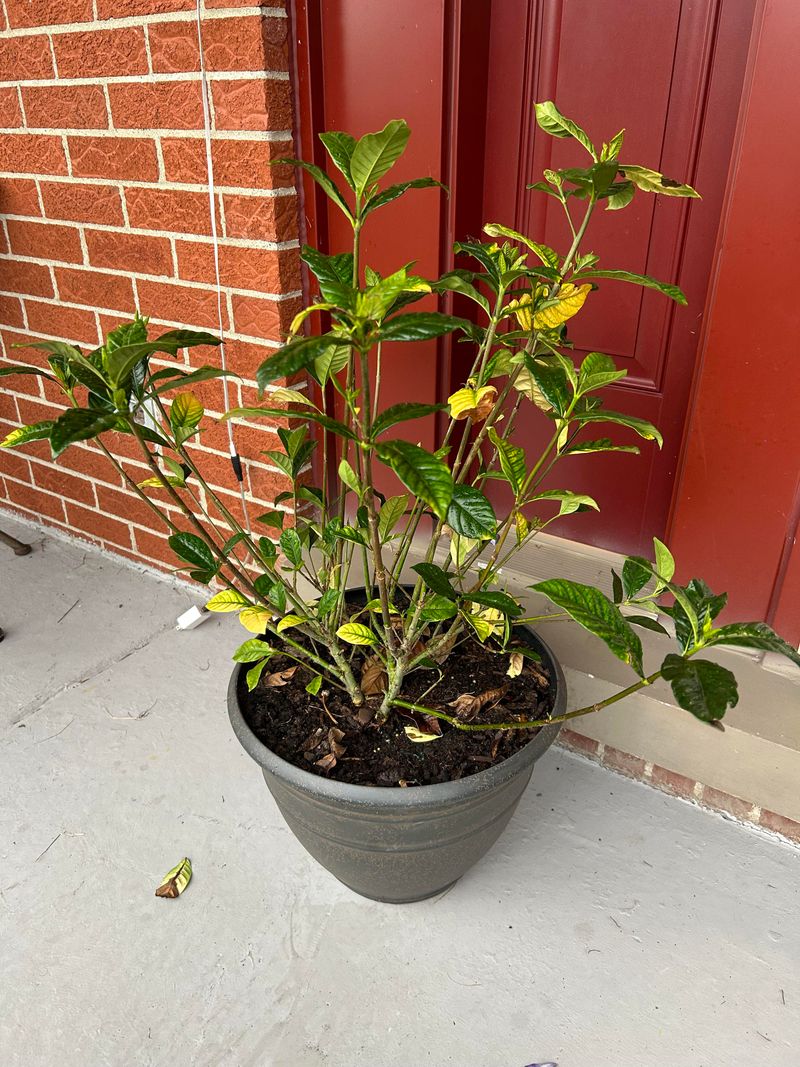
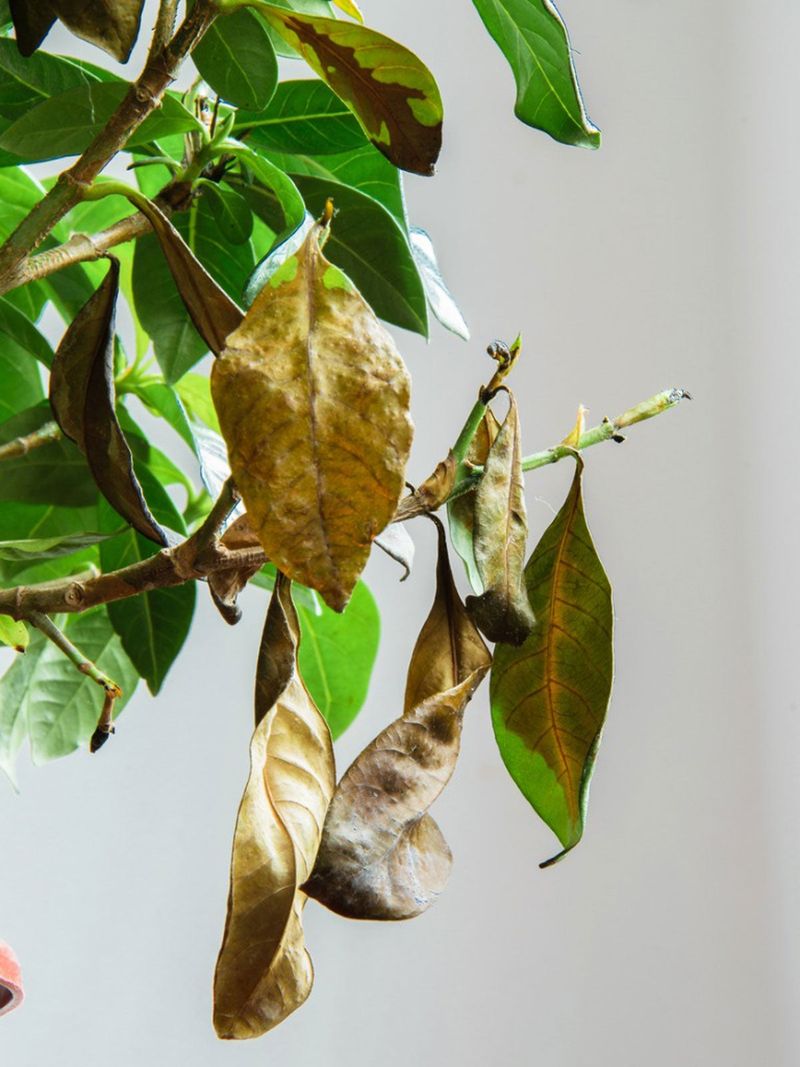
Seeing yellow leaves on a gardenia in September can feel alarming, but the first question to ask is where those yellow leaves are and what pattern they follow. Not every yellow leaf signals a problem, and a yellow leaf by itself does not prove that the plant is about to lose its flowers.
Gardenias are broadleaf evergreens, but they do shed older foliage. UF/IFAS gardenia production guidance notes that a few older interior leaves yellowing and dropping in fall can be part of normal evergreen turnover.
These leaves tend to be the oldest ones, located deeper in the canopy and further from the branch tips. If the rest of the plant looks full, green, and otherwise healthy, this kind of scattered yellowing is not a crisis.
The situations that do require attention look different. Widespread yellowing across many leaves, rapid defoliation, yellow coloring on new growth at the branch tips, or yellow leaf tissue with veins that stay green are all signs that something is actively wrong.
UF/IFAS Polk County Extension’s gardenia health overview distinguishes between these patterns, and so does Clemson’s factsheet on gardenia diseases and other problems, which lists multiple possible causes including pests, root problems, drainage issues, and nutrient deficiencies.
The connection between leaf color and bud retention is not a simple rule. Stress can affect both, but a few yellowing older leaves do not mean buds are about to fall.
UF/IFAS Okaloosa County Extension’s seasonal plant change discussion notes that some leaf drop in fall is a normal response to changing light and temperature, not evidence of a failing plant. Assess the pattern before deciding the plant needs treatment.
Keep moisture even and drainage reliable
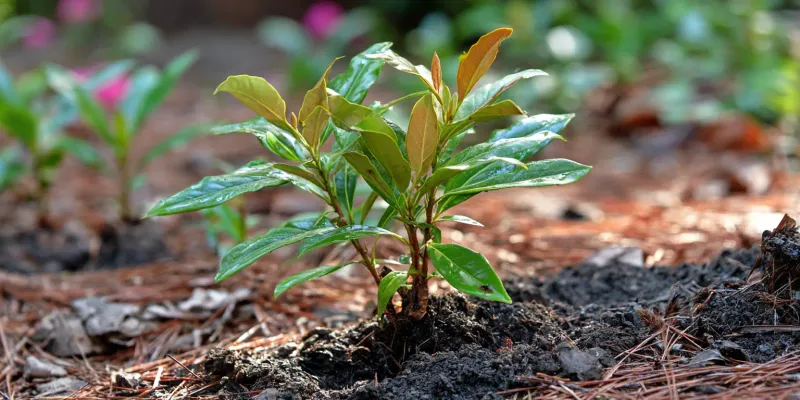
Consistent soil moisture is one of the most practical things a homeowner can do for a gardenia in September. That does not mean watering on a fixed schedule regardless of conditions.
It means paying attention to what the soil is actually doing and responding to it.
Water deeply enough to wet the full root zone, then let excess water drain away before watering again. Clemson’s gardenia care factsheet recommends deep watering during summer drought on roughly a weekly basis, and notes that drip irrigation is a useful option because it delivers water directly to the root zone without wetting foliage or flowers.
Keeping leaves and petals dry can reduce leaf-spot pressure, which is a practical benefit during the warm, humid end of a North Carolina summer.
How often you actually need to water in September depends on several factors working together: how much rain has fallen, what kind of soil the plant is growing in, whether the plant is in a container or in the ground, how much sun and wind exposure the site gets, and how established the plant is. A young gardenia in a sandy Coastal Plain soil during a dry September needs water much sooner than a mature plant in a moisture-retaining Piedmont clay after a rainy week.
There is no universal answer, which is exactly why a fixed watering rule can lead homeowners astray.
A 2- to 3-inch layer of organic mulch spread over the root zone helps buffer both extremes: it slows moisture loss during dry spells and moderates soil temperature as nights begin to cool. Keep mulch pulled back a few inches from the main stem so it does not hold moisture against the bark, which can invite rot.
Good drainage matters as much as adequate moisture: a gardenia sitting in waterlogged soil is under stress even if the watering schedule looks correct on paper.
Bud drop reflects accumulated stress
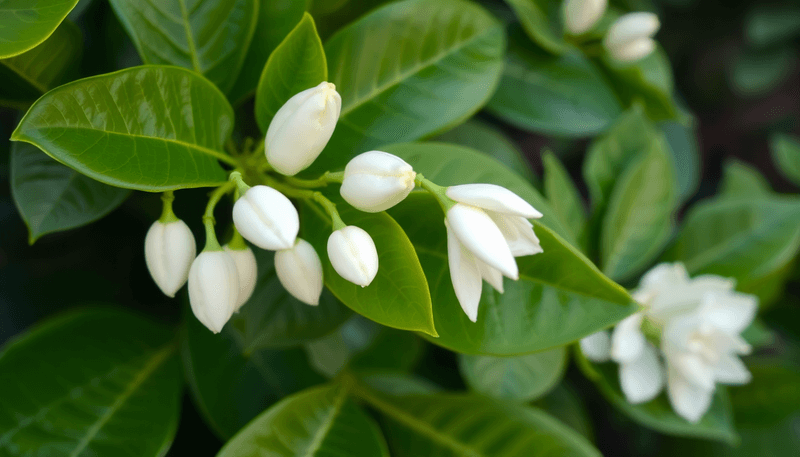
Gardenia bud drop frustrates homeowners more than almost any other symptom because it feels sudden and final. A bud that was there yesterday is gone today, and it is easy to assume one specific cause.
In practice, bud drop is a physiological response to accumulated stress, and multiple contributors can be active at the same time.
Clemson’s gardenia diseases and problems factsheet lists documented contributors to bud drop including drought, overwatering, poor drainage, excessive fertilizer, insufficient light, unusually hot or cool weather, rapid temperature swings, thrips, aphids, nematodes, and other root problems. UC ANR’s resource on leaf and bud drop similarly describes bud drop as a plant response to environmental stress rather than a single disease or deficiency.
September in North Carolina can bring several of these stressors together: lingering heat, uneven rainfall, and the first cooler nights arriving in quick succession.
Pests deserve a specific look this time of year. Check the undersides of leaves, the newest growth at branch tips, and the area around developing buds.
Whiteflies, scale insects, aphids, spider mites, and thrips are all documented gardenia pests. Thrips in particular can distort flowers and foliage and contribute to premature bud and leaf drop.
Clemson’s gardenia insects and related pests factsheet recommends identification and monitoring before choosing any treatment, rather than spraying automatically at the first sign of a problem.
Confirm what you are dealing with before reaching for a pesticide. Clemson’s main gardenia factsheet specifically warns against spraying gardenias while they are in bloom because of the risk to pollinating insects.
If treatment is needed, follow the current product label and target the identified pest rather than treating the whole plant as a precaution.
Test before applying iron or fertilizer
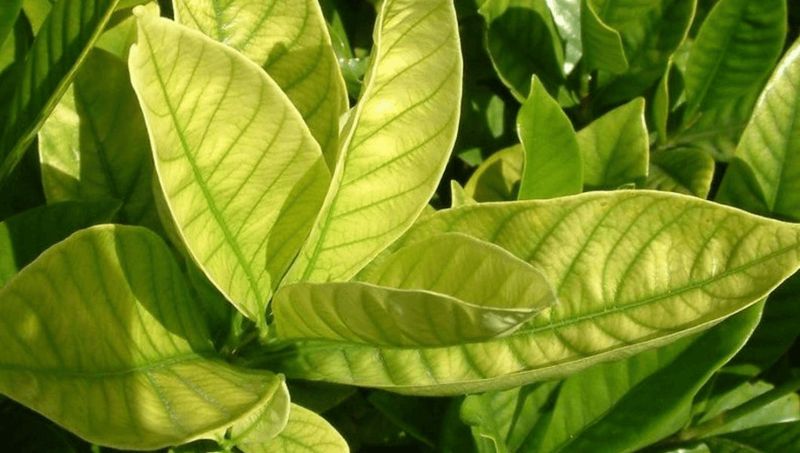
When yellowing shows up on young leaves and the veins stay green while the tissue between them turns yellow, iron chlorosis is a reasonable suspect. High soil pH can make iron unavailable to gardenia roots even when iron is present in the soil.
But high pH is not the only explanation, and treating for iron without checking is a shortcut that can miss the actual problem.
NC State’s gardenia plant profile notes that iron chlorosis in gardenias is often linked to high pH. NC State Extension’s iron nutrition resource explains that poor drainage, root injury, soil compaction, and other root-zone problems can produce symptoms that look like iron deficiency even when pH is not the issue.
Nematodes, disease, and other nutrient imbalances can do the same. Clemson’s gardenia problems factsheet reinforces this: similar symptoms can have different causes, and adding iron or fertilizer without a diagnosis can stress roots further or mask the real problem.
A soil test gives you actual pH and nutrient data to work from. Gardenias grow best in acidic soil, and a practical target for most North Carolina sites is approximately pH 5.0 to 6.0, though the exact preferred range varies slightly by source.
NC State Extension’s gardener’s guide to soil testing explains how to collect and submit a sample through the NCDA&CS lab. Testing is generally available at no direct cost from approximately April through November; NC State’s nutrient management guidance notes that a peak-season fee may apply from December through March.
On the fertilizer question, Clemson’s gardenia care factsheet is direct: do not fertilize gardenias in fall. Fall feeding can push soft new growth that cold weather then damages, adding stress at exactly the wrong time.
One more thing to skip: homemade vinegar treatments to acidify soil. University of Illinois Extension has cautioned that vinegar can damage plant roots and is not a reliable or safe method for adjusting soil pH.
Use labeled amendments based on what your soil test actually shows.
Fall flowering depends on cultivar and conditions
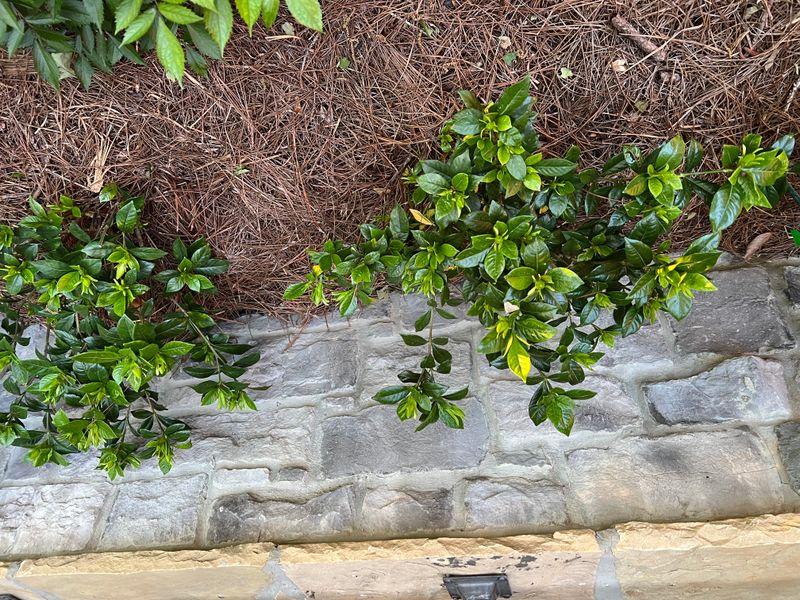
Not every North Carolina gardenia is going to produce fall flowers, and treating fall bloom as a universal expectation sets homeowners up for unnecessary worry. Whether a gardenia flowers in fall depends on a combination of factors: cultivar, plant age, available light, water history, temperature, winter injury from prior seasons, and whether the plant has retained viable buds going into September.
NC State’s Gardenia jasminoides plant profile lists the primary flowering period as spring and summer. Clemson’s gardenia factsheet documents sporadic summer flowering for the species and identifies ‘Chuck Hayes’ specifically as a cultivar with a profuse fall rebloom.
NC State’s JC Raulston Arboretum plant profile for ‘August Beauty’ reports blooming from May through September for that cultivar. These two examples have documented evidence for extended or fall flowering; an unspecified gardenia at a garden center does not carry the same expectation.
Older developmental research does note that gardenia flower buds are terminal buds and that short photoperiods and cooler night temperatures are associated with floral initiation, as described in early gardenia physiology research and graduate-level Ohio State gardenia developmental work. That research describes developmental tendencies observed under specific experimental conditions, not a field-tested predictor that applies to every cultivar or every gardenia growing in a North Carolina yard.
Regional conditions add another layer. Piedmont, Coastal Plain, and mountain gardeners are working with meaningfully different climates.
Cold exposure is especially significant in western and northern parts of the state, where an early frost can damage buds or foliage before any fall flowering occurs. Cultivar hardiness varies, and smaller or dwarf forms may be more cold-sensitive.
Knowing your cultivar and your site’s frost history is more useful than assuming September care alone will deliver fall flowers.
Avoid hard pruning while possible buds remain
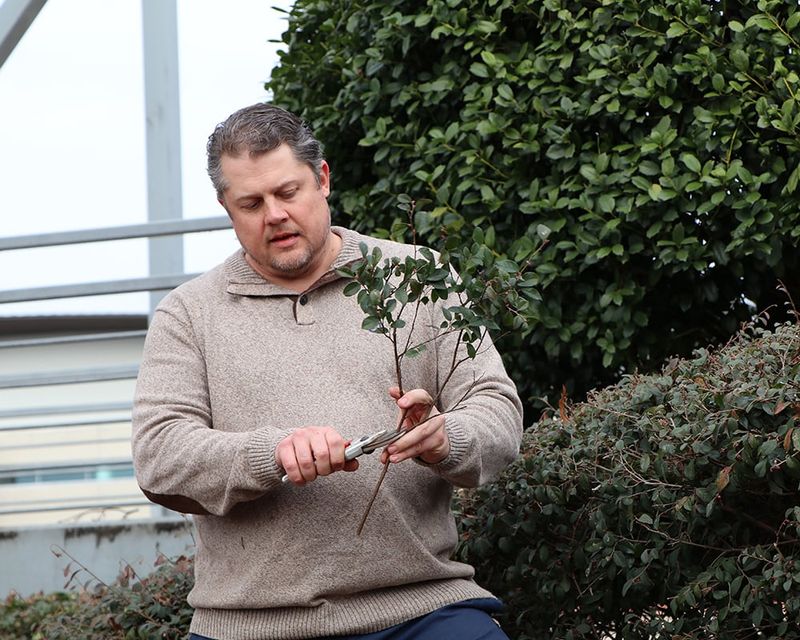
Pruning a gardenia at the wrong time is one of the most reliable ways to eliminate flowers that might otherwise have opened. September is not the month for hard cutbacks, particularly for anyone hoping to see late-season blooms from their plant.
NC Cooperative Extension’s South-specific gardenia care guide advises against hard cutbacks from September through March and recommends scheduling substantial pruning after flowering ends. That timing protects buds that may already be present on branch tips going into fall.
Removing those tips in September means removing the buds along with them, regardless of how healthy the rest of the plant looks.
There is some variation in pruning language across NC State sources. NC State’s general Gardenia jasminoides plant profile mentions spring as a pruning time because blossoms appear on new growth, while NC State Extension’s pruning guide for specific plants addresses timing in the context of flowering shrubs more broadly.
For a homeowner specifically trying to preserve possible September or later buds, the more conservative approach is the right fit: hold off on hard pruning until after the plant has finished its current flowering cycle.
Light tidying, such as removing a dead branch or spent flower, is a different matter from cutting back substantial portions of the shrub. The goal in September is to leave the plant’s structure intact and give any formed buds the best chance of developing.
Hard pruning can also stimulate new growth late in the season, and that tender growth becomes vulnerable when temperatures drop. Saving significant shaping for late winter or spring, after cold risk has passed and before the next growth flush, is the approach that protects both the plant and its flowering potential.
Use a stress-prevention checklist, not a bloom deadline
Pulling the September gardenia plan together does not require a complicated schedule. The actions that matter most are the ones that remove sources of stress rather than add new treatments to the plant’s routine.
Start with moisture and drainage. Water deeply when the soil is dry, let excess drain away, and keep a 2- to 3-inch mulch layer over the root zone without piling it against the stem.
NC Cooperative Extension’s gardenia care guidance and Clemson’s gardenia factsheet both point to consistent moisture and good drainage as foundational, not optional.
Leave possible buds undisturbed by skipping hard pruning until after flowering. Withhold fall fertilizer unless a soil test shows a specific deficiency that warrants correction now.
Inspect leaves, new growth, and buds for pest activity, and confirm what you are looking at before treating. If new leaves are turning yellow with green veins remaining, test the soil before adding iron or any amendment.
Clemson’s gardenia problems factsheet is a reliable reference for working through what a symptom actually means before deciding on a response.
These steps can reduce the avoidable stress that leads to bud drop and problem yellowing. They cannot guarantee fall flowers from every North Carolina gardenia, because bloom depends on cultivar, conditions, and viable buds that formed earlier in the season.
A gardenia that makes it through September without added stress is simply a healthier plant, and a healthier plant is always the better starting point for whatever comes next.