
What The Weeds Coming Back In Your North Carolina Beds Are Really Telling You About Your Soil
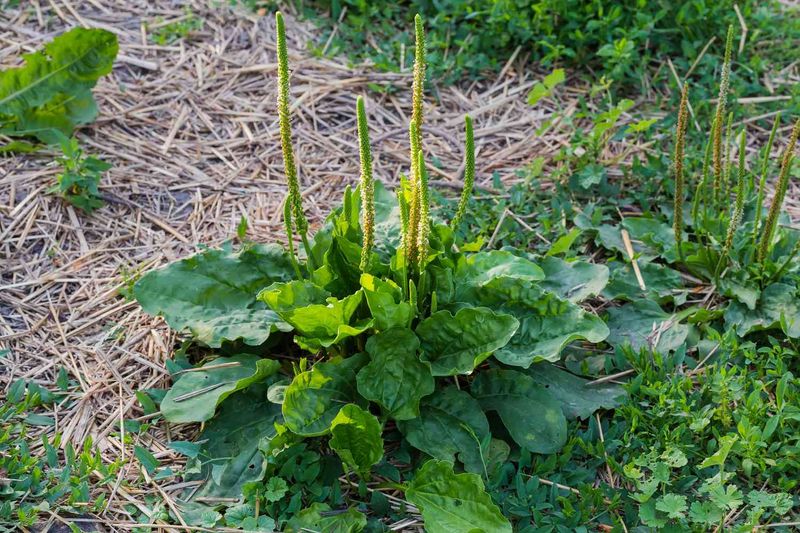
Pull a weed today and it is back by next month, same spot, same plant. That pattern is not bad luck – it is your bed trying to tell you something about what is happening beneath the surface.
Recurring weeds can offer real clues about moisture, compaction, drainage, or management habits, and learning to read those clues can help you make smarter decisions for your North Carolina yard. You still need to investigate before you act, but the weed is a surprisingly good place to start.
The weed is a clue, not a soil test
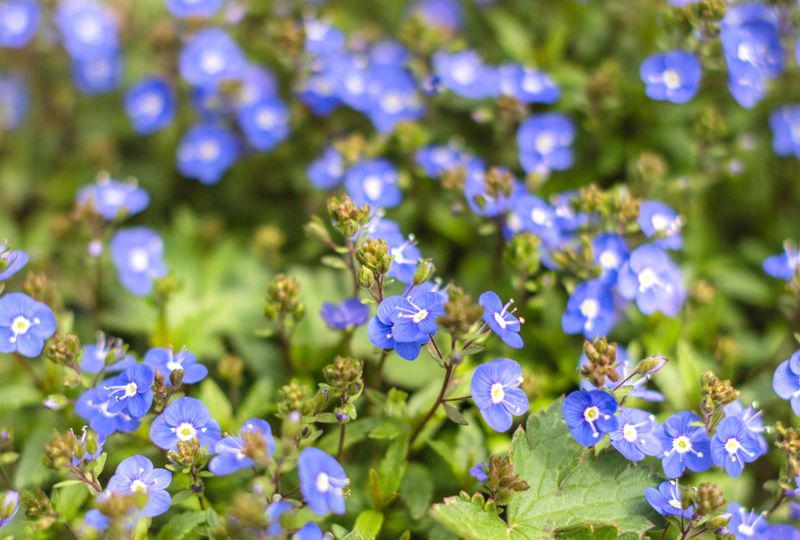
Recurring weeds in a flower bed can feel like a personal grudge, but they are better understood as free field notes. A weed that keeps returning to the same corner of your bed is pointing at a pattern – a repeated site condition, a maintenance habit, or an underground survival strategy – and that pattern is worth reading before you reach for lime, compost, or herbicide.
The catch is that reading a weed is not the same as running a soil test. NC State Extension’s weed management guidance is clear that a weed associated with a particular condition does not prove that condition is present.
Weed species often tolerate a wide range of soils, and the same plant can thrive under several different circumstances. A weed’s presence raises a hypothesis worth checking, not a diagnosis worth acting on.
Part of what makes persistent weeds so stubborn is that their return often has nothing to do with soil chemistry at all. Many perennial weeds survive through underground rhizomes, tubers, stolons, bulbs, or crowns that regrow after every pull.
Annual weeds can leave behind seed banks that stay viable in the soil for years, germinating whenever conditions open up. Nearby seed sources – a neighbor’s lawn, a roadside ditch, a bird feeder – can keep refilling a bed regardless of what the soil pH reads.
The most useful approach treats each recurring weed as the start of an investigation rather than the end of one. Observe where and when it returns, check the site conditions that match its known associations, and use a proper soil test when pH or fertility is genuinely in question.
Correct only what the evidence actually confirms, and you will spend less time chasing weeds and more time solving the real problem underneath them.
Start with where the weed returns
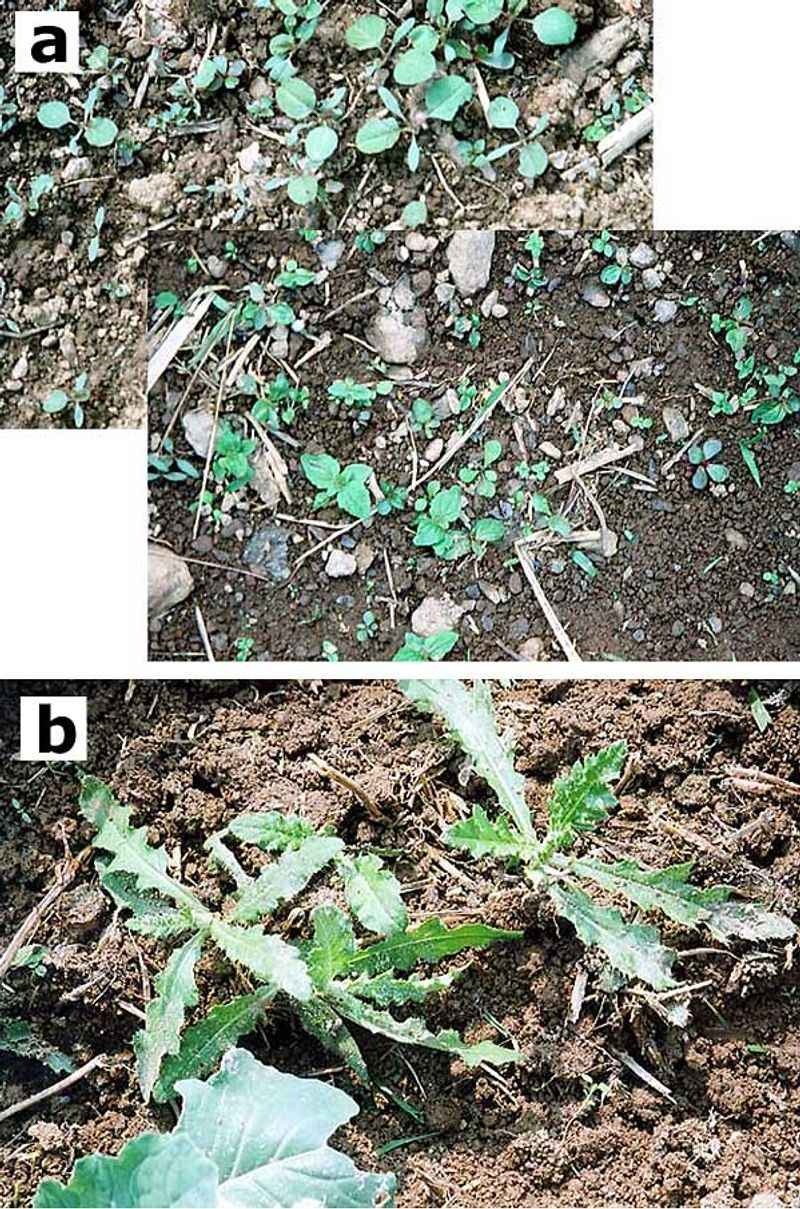
Before a recurring weed tells you anything about soil, it needs to tell you something about location. Grab a notepad or take a phone photo and mark exactly where the plant keeps showing up.
A weed that clusters below a downspout extension, follows the edge of a footpath, pools in a low corner of the bed, or fans out under a dense tree canopy is giving you spatial information that matters as much as the species name.
Accurate identification comes next, and it genuinely changes what you do. Sedges, grasses, and broadleaf weeds are not interchangeable.
Yellow nutsedge, for example, has triangular stems and underground tubers that snap off and regrow if you pull the plant incorrectly – a detail that affects both interpretation and removal strategy. A grass-like plant and a true grass may look nearly identical above ground but require completely different management approaches.
If you are unsure of the species, your local NC Cooperative Extension office can help with identification.
Once you know what you have and where it keeps appearing, look for the repeating feature that connects those spots. Ask whether the weed follows a slope, an irrigation zone, a construction scar, a compacted path, or a shaded corridor.
NC State’s guidance on weed management in annual color beds notes that weeds exploit open spaces and disturbed soil, so a pattern that follows a recent digging project may reflect disturbance rather than a chemistry problem.
A weed that appears uniformly across an entire bed suggests something bed-wide, such as consistent moisture, light, or soil texture. A weed that clusters in one corner points toward a localized condition.
That difference shapes which explanation is worth pursuing first, and it keeps you from treating the whole bed for a problem that only exists in one spot. NC State’s planning guidance reinforces that site observation is the foundation of good decision-making before any amendment or intervention.
Wet, compacted, and dry soils leave different clues
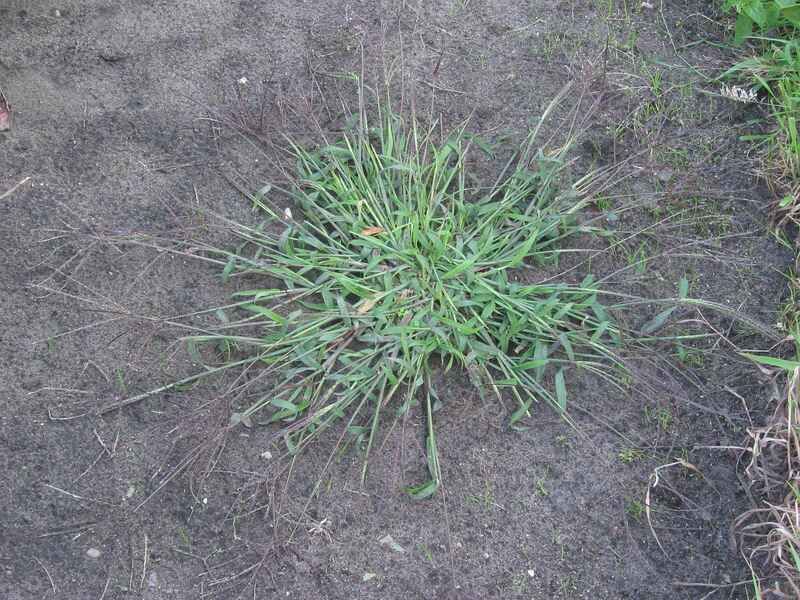
Moisture, compaction, and drought each tend to favor a different cast of weeds, and recognizing those groupings can help you form a sharper hypothesis about what to check next. None of these associations is a guarantee, but when the weed pattern lines up with what you observe in the soil, the combination becomes meaningful.
Wet or poorly drained areas often host moss, liverwort, moneywort, pearlwort, rushes, sedges, and annual bluegrass. Large populations of rushes in particular are a common signal of drainage trouble, according to NC State Extension’s weed handbook.
Yellow nutsedge frequently thrives in wet or poorly drained spots, but it can also survive in areas that are not wet at all – so its presence alone does not confirm a drainage failure. When you see these plants, look for standing water after rain, soil that stays soggy for days, or a low spot that receives runoff from a hard surface.
Compaction tells a different story. Broadleaf plantain, goosegrass, prostrate knotweed, and prostrate spurge are among the weeds that can accompany compacted soil.
University of Minnesota Extension explains that compaction reduces pore space, slows the movement of water and air, and restricts root growth – which can simultaneously worsen both drainage and dry-out between rains. If you push a screwdriver or a soil probe into the bed and it stops abruptly at a hard layer, that physical resistance is more reliable evidence of compaction than any weed alone.
Dry or drought-prone soil has its own associated plants: black medic, annual lespedeza, birdsfoot trefoil, spotted spurge, yellow woodsorrel, and goosegrass. Seeing these is a prompt to check soil moisture across wet and dry periods, not a signal to add fertilizer or organic matter.
NC State’s guide to modifying soil around your home points out that poor infiltration can result from grading, compacted subsoil, or clay – not simply from a lack of amendments. Look for crusting after rain or for plant roots that stop well short of where they should reach before drawing conclusions about the cause.
Why pH needs a test before lime
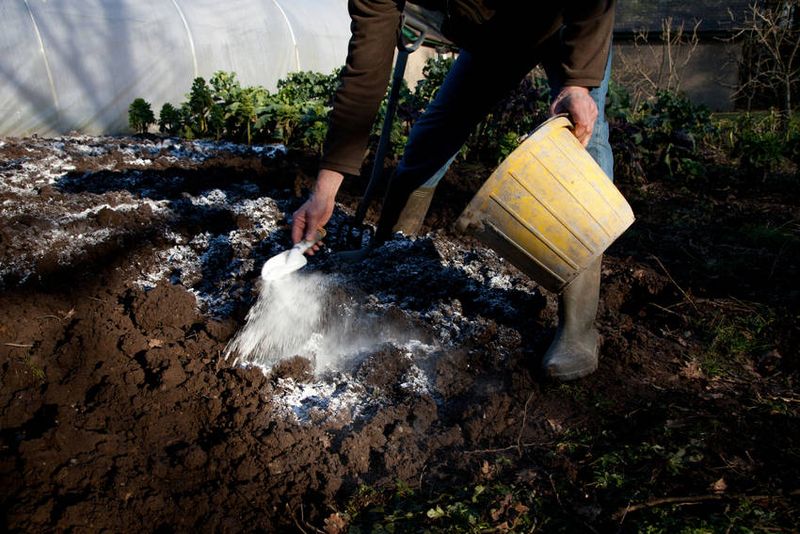
Broomsedge, Carolina geranium, and red sorrel are among the weeds that NC State Extension associates with strongly acidic soil conditions. Spotting one of them in your bed might reasonably make you wonder whether your pH has dropped too low for the plants you want to grow.
That instinct is worth following, but only as far as the soil test – not all the way to the lime bag.
The reason is straightforward: indicator associations have real limits. NC State’s weed handbook specifically notes that red sorrel can survive in very alkaline soils despite its well-known association with acidity.
A plant that tolerates a wide pH range cannot tell you where your pH actually sits. Treating the weed as a diagnosis and adding lime without testing is how you overshoot the target and create a new problem in the opposite direction.
Soil pH is also a separate question from fertility, drainage, and compaction. A bed that looks acidic based on its weed population might actually have a drainage issue, a shade problem, or a seed bank from a previous planting – none of which lime will address.
NC State’s liming guide is clear that lime should be applied based on a soil-test recommendation, not on a weed’s presence.
Submitting a sample through NC State’s soil testing program gives you an actual pH number along with amendment rates calibrated to your specific soil and intended planting. NC State’s gardener’s guide to soil testing recommends collecting separate samples from distinct beds or clearly different problem areas, since a rose bed and a vegetable patch may read very differently.
Let the report, not the weed, make the lime decision.
Some weeds are reporting management, not chemistry
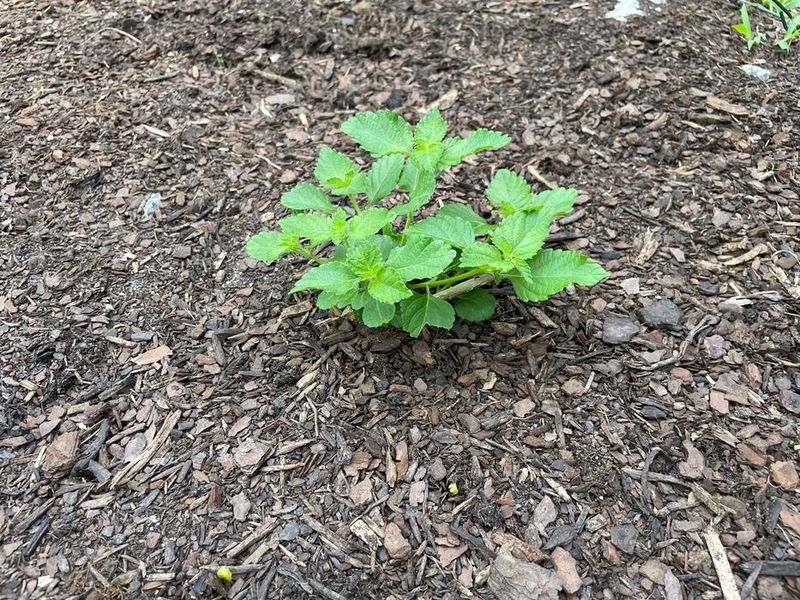
Not every persistent weed is trying to tell you something about soil chemistry. Plenty of them are responding to how the bed is managed – how often it gets disturbed, how much bare soil is exposed, how dense the desirable plants are, and how water is applied.
Shifting your interpretation from soil composition to site habits can change the solution entirely.
Open spaces are an invitation. NC State’s weed management guidance for annual color beds notes that weeds exploit bare soil and that soil cultivation – even well-intentioned digging or hoeing – can bring dormant seeds to the surface where light and warmth trigger germination.
An annual weed that keeps returning to a freshly dug section of your bed may be drawing from a seed bank built up over years, not signaling a pH or fertility problem.
Shade adds another layer of complexity. Moss, for example, is often associated with moisture and poor drainage, but it also establishes readily under dense tree canopy where turf or ground covers struggle to compete.
Penn State Extension’s indicator weed guidance reinforces that moss can reflect moisture, shade, weak competition, or acidity – and the plant itself cannot separate those causes for you. Observing when and where it appears is more informative than assuming a single explanation.
Where a lawn borders a bed, low mowing height is associated with annual bluegrass, chickweed, crabgrass, and goosegrass moving into the edge zone, according to NC State’s weed handbook. Frequent shallow irrigation can also favor shallow-rooted weeds over deeper-rooted ornamentals.
Before attributing a management-edge weed problem to soil chemistry, check whether a change in irrigation timing, mowing height at the border, or plant density in the bed would reduce the opening those weeds are exploiting.
North Carolina changes how you read the pattern
A broadleaf plantain growing in a Piedmont bed near Charlotte carries a different set of possible explanations than the same plant growing in a Coastal Plain bed near Wilmington. Regional soil character shapes what a weed association actually means, and reading the pattern without that context can send you in the wrong direction.
Piedmont and mountain soils commonly contain substantial clay. NC State’s guide to modifying soil around your home identifies clay, compacted subsoil, construction traffic, and improper grading as common causes of poor infiltration in residential landscapes.
In those regions, a weed associated with wet or compacted conditions is more likely to be pointing at a genuine drainage or compaction issue – but only if your site inspection backs that up with slow infiltration, standing water, or a dense layer at the root zone.
Coastal Plain soils are often sandier and drain more readily by nature. That does not make them immune to compaction, however.
Heavy foot traffic, construction equipment, and vehicle parking can compact even sandy soil enough to reduce pore space and slow root growth. A weed pattern that looks like a compaction or drainage signal in an eastern North Carolina yard might instead reflect a specific construction scar or a repeatedly trafficked path rather than the region’s typical soil character.
Slope, irrigation, shade from mature trees, and the history of the bed – whether it was graded, filled with borrow soil, or planted over a root zone – all change how you weigh a weed’s message. The same plant should not trigger the same conclusion in every North Carolina yard.
Use the regional baseline as a starting point, then let the actual site conditions at your property tell you where to look more closely.
Turn the clue into a weekend assessment

Moving from a weed observation to an informed decision takes a few deliberate steps, and a weekend is enough time to work through most of them. Think of the process as a site investigation rather than a definitive diagnosis – you are gathering evidence, not issuing a verdict.
Start by confirming the weed’s identity and then mapping where it returns. Sketch the bed on paper or mark spots on a phone photo, noting whether the pattern follows a downspout, a footpath, a low area, a shaded zone, or a construction boundary.
That spatial picture is your first real clue about what to inspect next.
Check soil moisture at two different moments: once within a day or two after a soaking rain, and again during a dry stretch. Look for standing water, soil that stays soggy well beyond 24 hours, surface crusting after it dries, or slow infiltration when you pour a bucket of water into a test hole.
Push a screwdriver or soil probe into the bed and note whether it stops abruptly at a hard layer – that physical resistance is direct evidence of compaction that no weed can confirm by itself.
When moisture, compaction, or pH seems genuinely possible based on what you observe, submit a soil sample. NC State’s gardener’s guide to soil testing recommends sampling flower beds and vegetable gardens at approximately 6 to 8 inches deep, combining multiple subsamples from across the bed, and avoiding unusual spots such as compost piles or wet patches unless you submit those as separate problem-area samples.
Distinct beds with different plant communities or visible weed patterns should each get their own sample.
Match corrections to findings. Address grading or drainage structures where site inspection confirms slow infiltration or persistent saturation, guided by NC State’s soil modification guidance.
Reduce foot or vehicle traffic on wet soil rather than digging it, since working wet clay worsens structure. Reserve aeration for suitable turf areas, not ornamental beds.
Adjust pH only if the soil report calls for it, following the recommended rate. Then restore healthy plant cover or properly applied mulch to close the openings that gave the weed its foothold.
Protecting nearby waterways matters throughout: NC State’s water quality guidance advises keeping amendments and runoff away from streams and storm drains.
Reduce recurrence while protecting yard wildlife
Reducing future weed pressure is less about eliminating every plant you did not choose and more about giving your desired plants a consistent competitive advantage. A few reliable habits, applied at the right time and in the right order, do more than any single product.
Pull or hoe annual weeds while they are still small and, most critically, before they set seed. One missed plant going to seed can add hundreds of new seeds to the bank your bed is already carrying.
Minimize unnecessary soil disturbance between established plants – every time you dig or cultivate, you bring buried seeds closer to the light they need to germinate.
Organic mulch is one of the most practical tools for suppressing annual seedlings, but it works best when applied correctly. NC State’s guidance on woody ornamentals recommends roughly 3 to 4 inches of organic mulch in perennial landscape beds, without exceeding 4 inches.
Piling mulch deeper than that can keep the bed too wet, encourage weeds to root into the mulch layer itself, and damage plant crowns. Equally important: mulch suppresses many annual seedlings that need light to germinate, but it does not reliably stop perennial weeds that emerge from rhizomes, tubers, stolons, bulbs, or crowns already in the soil.
NC State’s guidance on controlling sedges in landscape plantings makes this limitation clear for nutsedge specifically.
When chemical control seems necessary, approach it as risk reduction rather than a guaranteed fix. No pesticide is safe for every plant, pollinator, or animal in your yard.
NC State’s pesticide safety guidance advises avoiding applications near streams, wetlands, wildlife habitat, and native plant communities. Spot treatment of individual plants is preferable to broad spraying where practical.
Follow the product label completely, observe pollinator-protection directions, and keep applications away from waterways. The EPA’s pollinator protection tools offer additional strategies for reducing risk to bees and other beneficial insects.
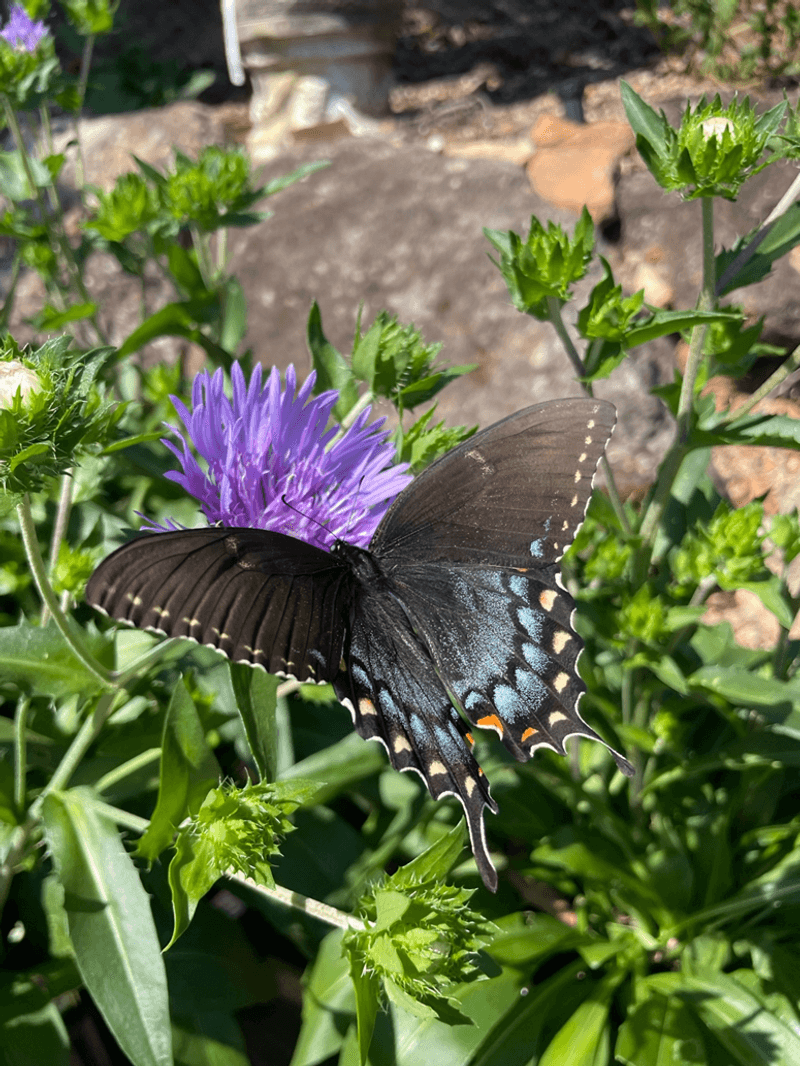
Before removing every unfamiliar plant, consider whether it has wildlife value. Some volunteer plants offer pollen, nectar, or shelter for the box turtles, fireflies, native bees, and goldfinches that North Carolina homeowners work hard to support.
Invasive, poisonous, thorny, allergenic, or aggressively seed-spreading species warrant prompt attention. Plants that are simply unfamiliar may be worth a second look before pulling.
NC State’s planning guidance and your local Extension office can help you tell the difference.
Let the weed guide your next check

A weed that keeps coming back is not a failure – it is a prompt. The decision rule is simple: observe the pattern, verify the soil or site condition that the pattern suggests, and treat only the cause the evidence actually confirms.
Skipping straight from weed to amendment is how gardeners spend years pulling the same plant from the same spot.
Better-covered, better-observed beds grow healthier plants and support more of the wildlife North Carolina homeowners value – the native bees, the box turtles moving through in spring, the goldfinches working the seed heads in fall. NC State’s weed guidance and a reliable soil test together give you what no weed can give you alone: a confirmed starting point.
The weed gets you curious; the evidence gets you somewhere.