
If You Think Vultures Are Just Creepy Scavengers, Here’s The Hidden Job They’re Doing In Your Backyard
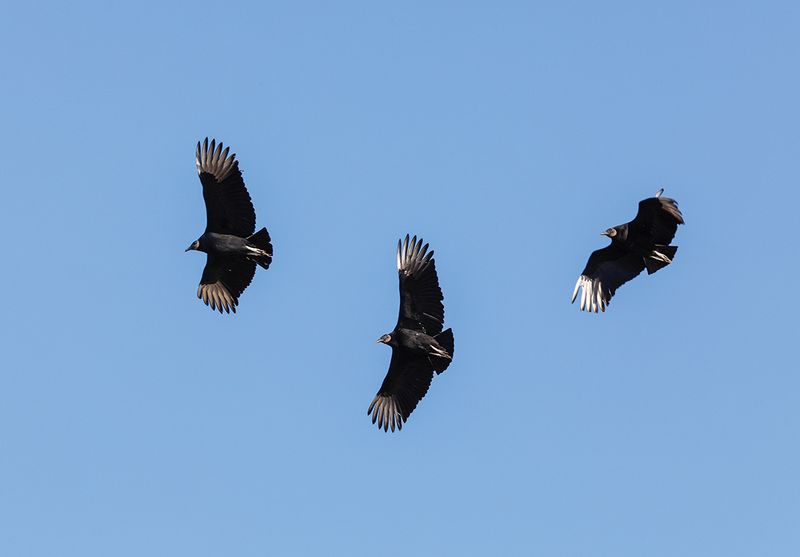
Most people spot a vulture circling overhead and assume something has died right below them, possibly in their own yard. The truth is more interesting and a lot less dramatic.
Turkey Vultures, the species most likely soaring above your neighborhood, are specialized carcass-removal workers that quietly clean up the surrounding landscape, reducing the time dead animals stay available to flies, bacteria, and other scavengers. Understanding what they actually do, and what they definitely do not do, changes how you see that slow, rocking silhouette in the sky.
The Vultures Over Your Yard May Be Working Somewhere Nearby
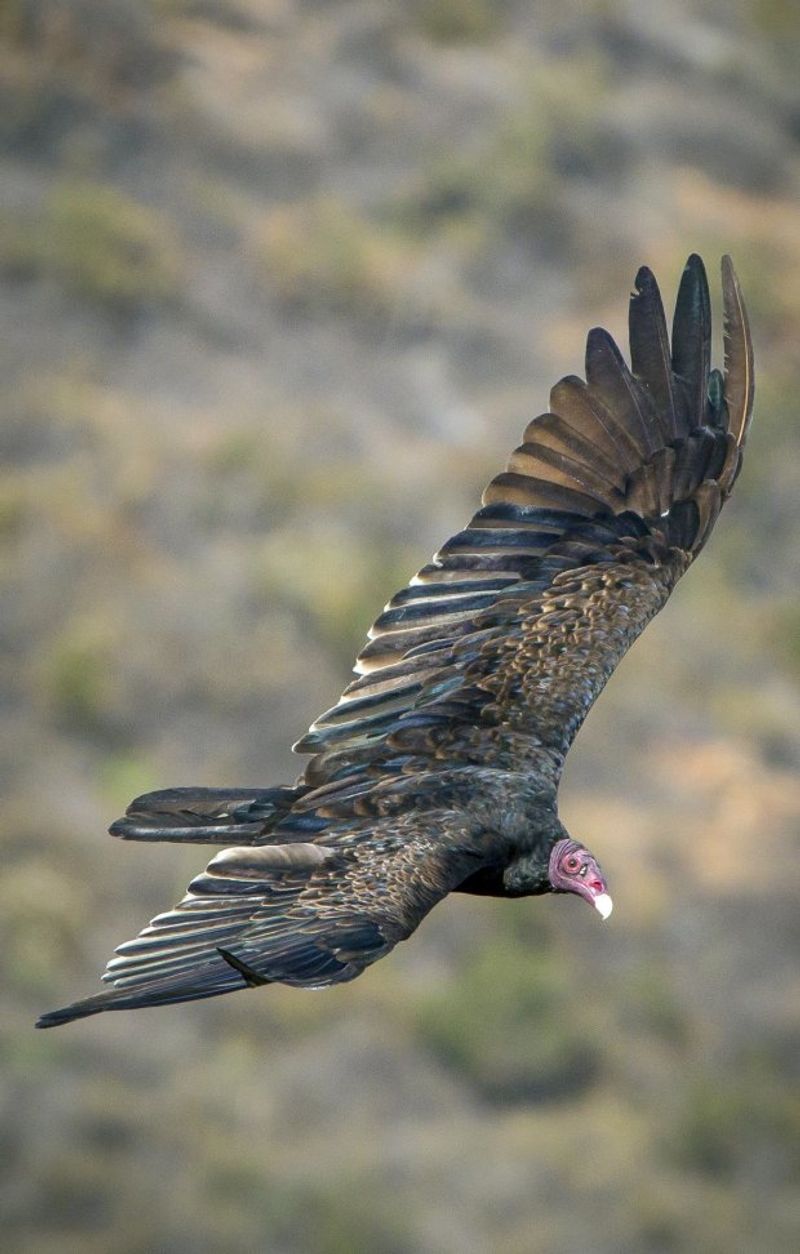
Spotting a vulture overhead is not the same as finding a carcass in your flower bed. Turkey Vultures are wide-ranging soaring birds that ride thermals across broad areas, often responding to carrion that could be a field, a roadside, or a forest edge away from your property.
Cornell Lab of Ornithology notes that Turkey Vultures are not especially likely to be in an ordinary backyard unless something has died there or the property is unusually large, so a bird circling above you may simply be passing through on its way to a meal somewhere else.
Knowing which vulture you are looking at matters. Turkey Vultures have red, featherless heads, long wings held in a shallow V, and a distinctive teetering, rocking flight that makes them look slightly unsteady in the air.
Black Vultures look noticeably different: their heads are black rather than red, their tails are shorter, and they show white patches concentrated at the wingtips rather than along the full wing. Both species are native to the United States and may appear in the same area, but they behave quite differently.
Turkey Vultures are, overwhelmingly, carrion eaters. Cornell describes them as birds that almost never attack living prey, making them a very different kind of visitor than most homeowners fear.
Black Vultures rely more on vision than smell, frequently follow Turkey Vultures to a food source, and have a broader behavioral range that can include occasional conflicts with vulnerable livestock. The hidden job these birds are doing, then, is better described as a service to the surrounding landscape rather than a guaranteed cleanup crew stationed in your backyard.
Their First Cleanup Tool Is an Unusually Good Nose
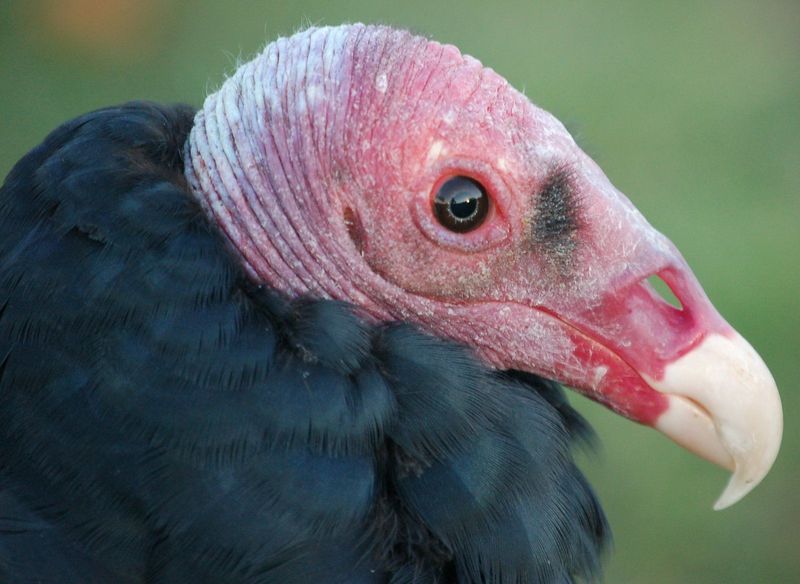
Turkey Vultures find dead animals the way a good detective finds a hidden clue: by following something invisible. Their primary tool is smell, specifically the ability to detect the gases released by decomposing tissue, even when a carcass is buried under leaf litter, concealed beneath dense vegetation, or tucked inside a hollow that no passing hawk could ever spot from above.
Cornell Lab research describes a study in which Turkey Vultures located 71 of 74 chicken carcasses within three days, including ones deliberately hidden from view. A separate USDA Forest Service study documented Turkey Vultures finding and excavating food that had been buried, reinforcing that their olfactory ability is not just a passive drift toward obvious odor but an active search for decay signals beneath the surface.
That is a genuinely remarkable capability, one that most birds of prey simply do not have.
Black Vultures work differently. Their life history shows they depend far more on vision and social cues, often waiting and watching until a Turkey Vulture has already zeroed in on a meal, then following that bird to the food source.
Once both species arrive at the same carcass, Black Vultures can displace Turkey Vultures through sheer numbers. The practical result is a two-stage detection system: Turkey Vultures sniff out the hidden carrion, and Black Vultures use their eyes to find the Turkey Vultures.
Together, they can locate carcasses that would otherwise sit undetected for days.
Fast Carcass Removal Changes What Happens on the Ground
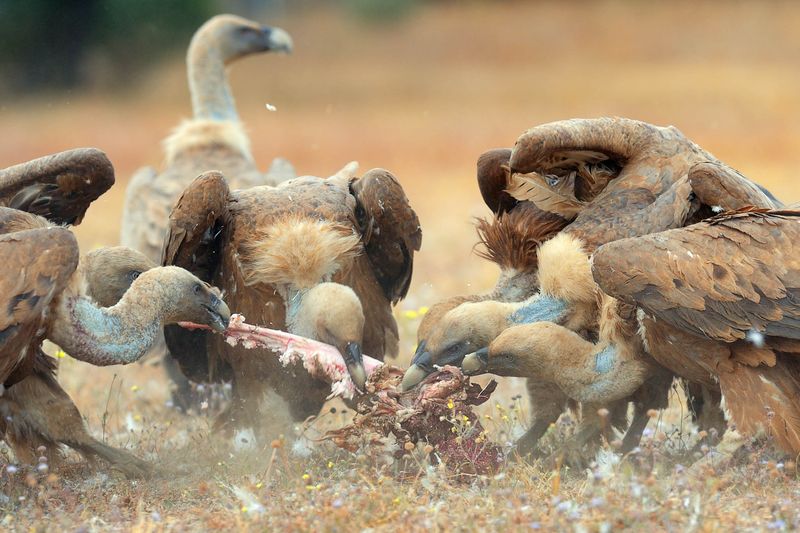
Every carcass that sits in a field or at a forest edge is a resource that multiple organisms race to claim. Flies arrive within minutes, bacteria multiply inside the tissue, and mammals such as raccoons, foxes, and coyotes investigate within hours.
The longer a carcass persists, the longer all of those organisms have access to it, and the more opportunity there is for pathogens, insect populations, and scavenger activity to spread outward from that spot.
Vultures accelerate the timeline dramatically. A vulture-exclusion study conducted in the Neotropics found that removing vultures from the equation approximately halved large-carcass decomposition rates and doubled fly abundance compared to sites where vultures had access.
Those are striking numbers, and they come from a specific ecosystem, so they should not be treated as a guaranteed measurement for every U.S. backyard or suburban green space. What the study does establish is a real, measurable mechanism: when vultures consume carcass tissue quickly, flies have less material to breed in and less time to do it.
The broader ecological picture supports the same direction. Research integrating terrestrial scavenging ecology into wildlife management recognizes carcass removal as a genuine ecosystem service, reducing the reservoir of organic material available to pathogens, insects, and other scavengers.
A systematic review of vulture ecosystem services confirms that evidence for this benefit exists but varies across species and regions. The practical takeaway for a homeowner is not that vultures prevent disease, but that their presence can shorten how long a carcass stays on the landscape and how many other organisms get a turn at it.
The “Battery Acid” Comparison Starts With Their Stomach
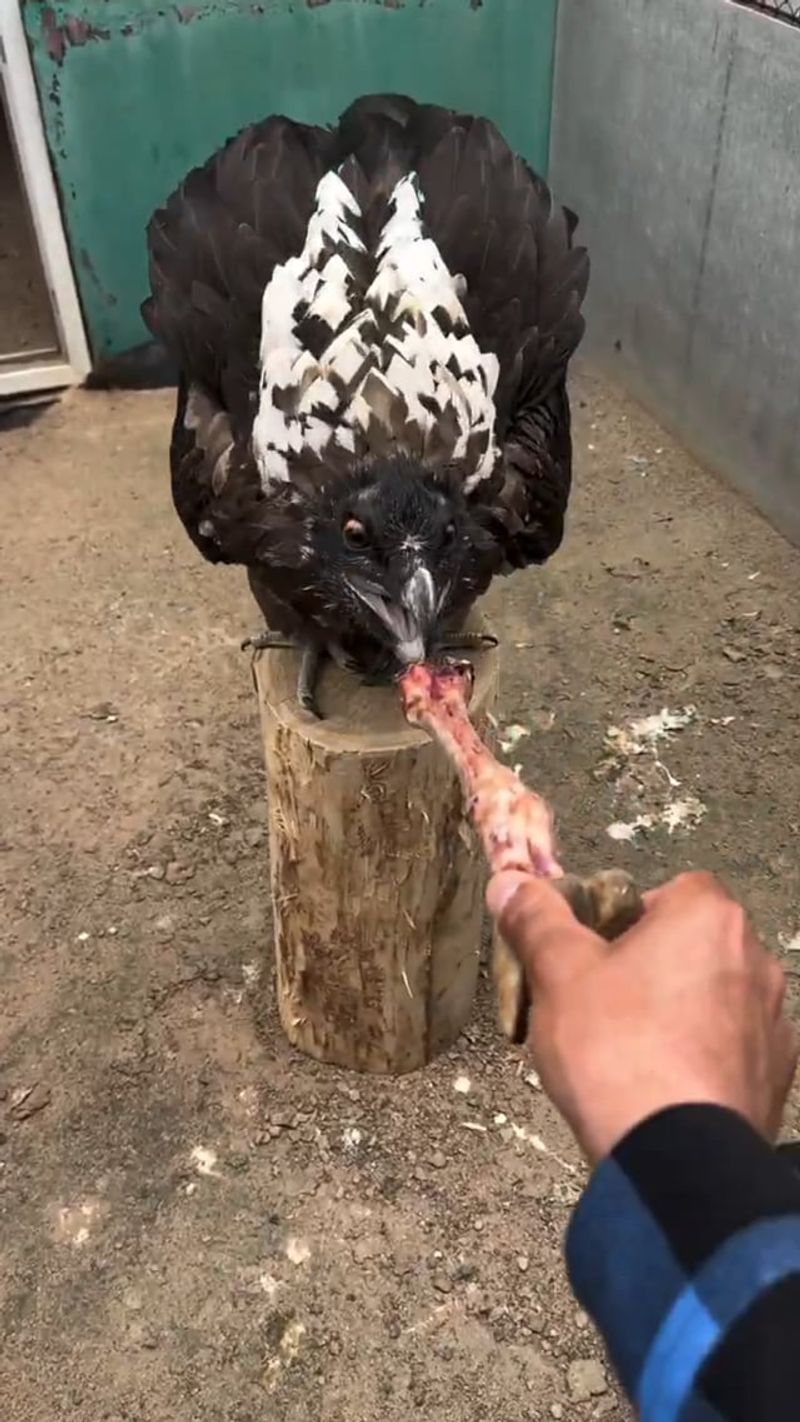
A Turkey Vulture can eat meat that would put a person in the hospital within hours. Botulinum toxin, anthrax spores, and the bacteria coating week-old roadkill in summer heat are all part of a vulture’s regular diet, and the bird processes most of it without apparent harm.
The stomach is a big part of why.
Field measurements of gastrointestinal pH in New World vultures, including Turkey, Black, and Lesser Yellow-headed Vultures, recorded a lowest pH around 1.0 in some individuals, placing vulture stomach contents among the most acidic digestive environments measured in birds. A review of molecular adaptations in vultures describes how that extreme acidity works as a filter, destroying or suppressing many of the microorganisms present in decaying meat before they can pass further into the digestive tract.
That is genuinely unusual biology, and it earns the dramatic reputation.
The comparison to battery acid, though, needs a precise boundary. A car battery holds sulfuric acid electrolyte, and CDC/NIOSH guidance on sulfuric acid and NOAA CAMEO data on wet batteries both show that battery electrolyte concentration and pH vary with charge state and formulation.
A low pH reading in a vulture stomach and a low pH reading in battery electrolyte are not equivalent measures of corrosive power, because total corrosive action depends on acid concentration, volume, and chemistry, not pH alone. Vulture digestion does not dissolve metal or bone in the way a battery’s sulfuric acid might damage steel.
Acidity is also only one layer of the defense. Research on the vulture gut microbiome shows that the community of microorganisms living in the digestive tract is unusually sparse and tolerant of acid, functioning as an additional ecological filter.
The immune system, anatomy, and feeding behavior all contribute as well, so the stomach is better understood as one component of a specialized system rather than a single magic weapon.
A Vulture Is Not a Flying Disinfectant
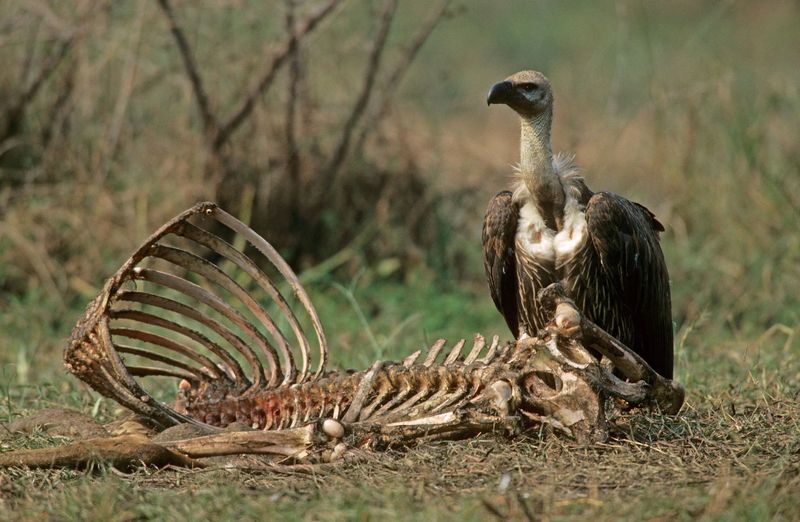
Calling vultures a hazmat team is a useful metaphor, but even hazmat teams do not make a contaminated site perfectly clean. Vultures reduce how long a carcass persists and can cut into the resources available to flies and some bacteria, but they are not a biological cleaning service that leaves the surrounding environment sterile or disease-proof.
The pathogen picture is more complicated than most summaries suggest. A microbiology review of bacterial, viral, and fungal microorganisms in vultures outlines both disease-mitigation pathways and possible disease-spreading pathways: vultures can carry microorganisms in their feathers, feet, feces, and regurgitated material, and may move those organisms to new locations.
The systematic review of vulture ecosystem services similarly finds that evidence for net disease reduction is uneven across species, regions, and transmission routes. Consuming carrion does not automatically neutralize every pathogen inside it, and it does not make the area around a carcass site safe to touch with bare hands.
Rabies is a specific example worth addressing directly. Rabies virus may be destroyed by the highly acidic digestive environment, but that does not mean a vulture eating a rabid animal renders the surrounding area safe or that people can handle a carcass more casually because vultures are present.
The same logic applies to lead, pesticides, and veterinary drugs: USDA APHIS notes that carcasses can contain chemical residues and other hazards that affect both scavengers and people. CDC guidance on dead animal disposal recommends protective equipment and proper handling regardless of whether wildlife has already visited a carcass.
The vulture’s presence shortens the window; it does not close every risk.
Look for the Attractant Before Assuming the Gathering Is a Threat
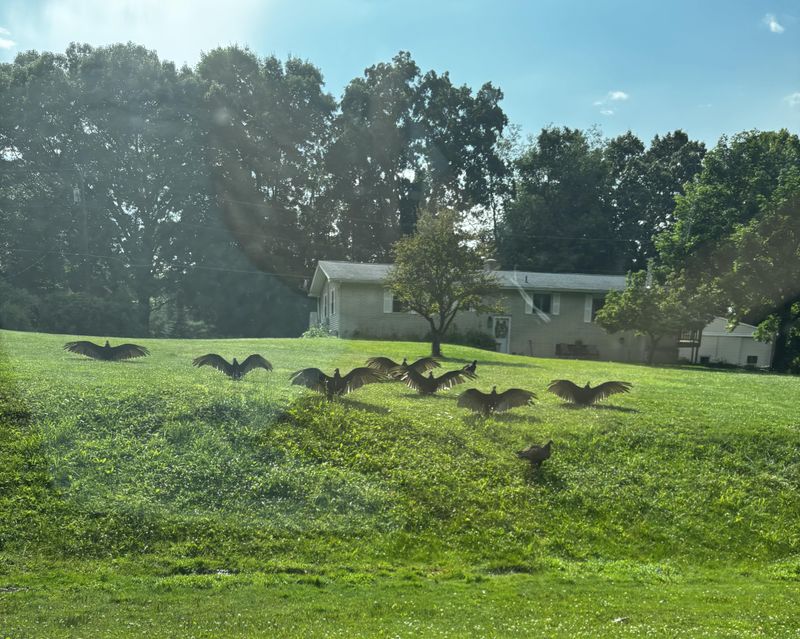
When vultures show up near your property, the most useful first question is not “are they dangerous?” but “what are they smelling?” A dead squirrel behind the shed, a raccoon under the deck, a fish that washed up near a pond, unsecured garbage, or livestock afterbirth in a nearby pasture are all the kinds of attractants that can pull vultures into a neighborhood. That said, birds circling overhead may also be responding to something a half-mile away or simply riding a thermal with no carcass anywhere nearby.
USDA APHIS and the Michigan DNR’s Turkey Vulture guidance both recommend reducing attractants as the first management step: secure garbage, remove accessible food sources, and address any carcasses through proper disposal rather than leaving them as an open invitation. Feeding vultures deliberately or placing carcasses in the yard to attract them is strongly discouraged.
Congregation increases fecal accumulation, odor, regurgitation on surfaces, and the chance of contact with contaminated material, turning a helpful ecological visitor into a genuine nuisance.
Turkey Vultures, as Cornell confirms, almost never target healthy living prey, so healthy adult pets and humans are not at risk from a passing Turkey Vulture. The calculus changes with Black Vultures and large roosts.
USDA’s managing-vulture-damage fact sheet documents property damage, contamination concerns, and aircraft-strike hazards associated with large congregations, and Black Vultures specifically have been linked to occasional attacks on vulnerable livestock such as newborn calves, lambs, and piglets. Knowing which species you are dealing with and whether a roost is forming versus a single bird passing through shapes how seriously a situation needs to be treated.
Handle Carcasses Safely and Get Lawful Help for Serious Conflicts
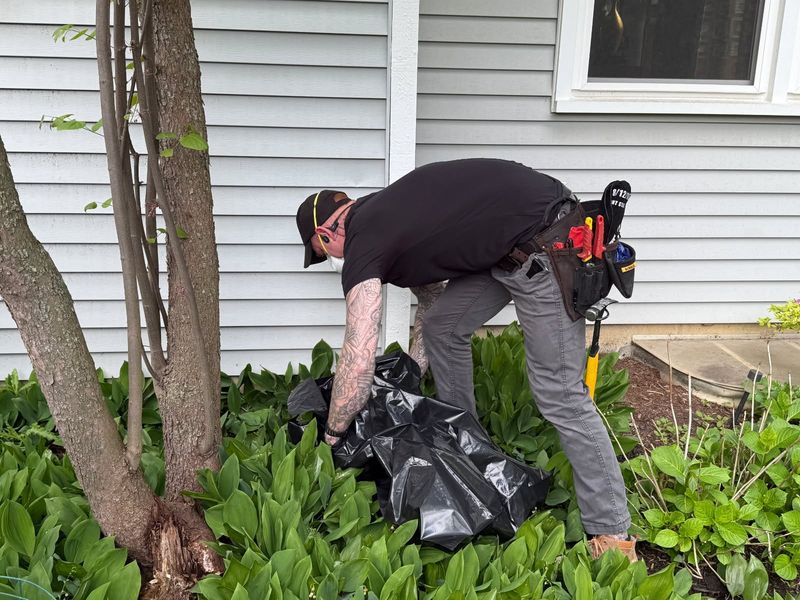
Finding a dead animal on your property calls for a few straightforward precautions before anything else. CDC guidance on dead animal disposal recommends wearing gloves, using a shovel or similar tool for larger remains, sealing material in heavy plastic bags, and washing hands thoroughly afterward.
Local disposal rules vary by state and municipality, so checking with local animal control, your county health department, or agricultural extension office before burying or bagging a carcass is a practical step, not an overreaction.
For birds specifically, CDC dead-bird handling guidance adds that some states ask residents to report or submit dead birds for disease surveillance, so a quick call to your state wildlife agency before disposal can be worthwhile. The same protective-equipment principles apply: gloves, minimal direct contact, sealed disposal.
These steps matter whether or not vultures have already visited the carcass, because vulture activity does not make the remains safe to handle without protection.
Vultures are protected under federal law. The Migratory Bird Treaty Act covers both Turkey and Black Vultures, meaning that killing, capturing, disturbing active nests, or taking eggs generally requires specific authorization.
Property owners should not attempt lethal control on their own. For serious conflicts, including persistent large roosts, repeated property damage, or Black Vulture activity near livestock, USDA Wildlife Services and state wildlife agencies are the appropriate contacts.
The management options available, whether nonlethal deterrence, hazing, roost dispersal, or other methods, depend on the species involved, the nature and scale of the conflict, applicable state and federal law, and whether the required permits or authorizations are in place. A professional assessment ensures the response is both effective and legal.
Respect the Cleanup Crew Without Recruiting It
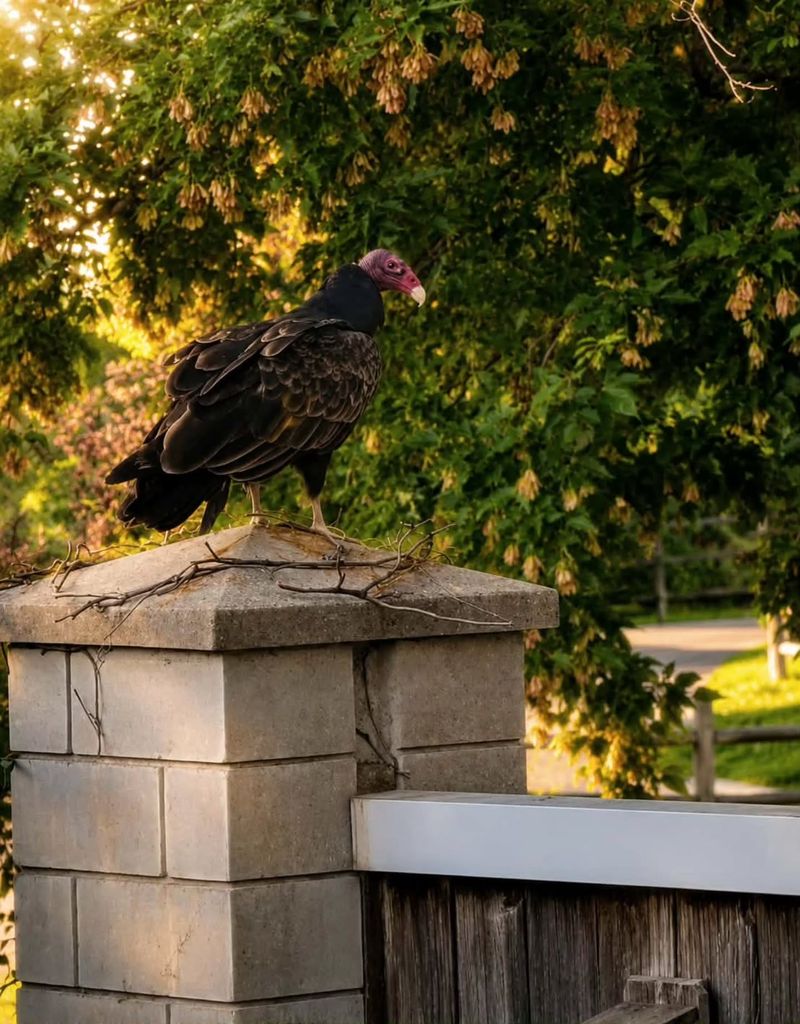
Turkey Vultures earn their reputation as nature’s cleanup crew through a combination of specialized tools: a nose sharp enough to find hidden carrion, a digestive system adapted to process decaying meat that would harm most other animals, and a gut microbiome that filters out much of what the acid misses. Cornell Lab and USDA APHIS both recognize their role in removing dead animals from the landscape, reducing the time carcass tissue remains available to insects, bacteria, and other scavengers.
That service is real, but it works on the landscape’s schedule, not yours. A vulture overhead is not a guarantee of a carcass in your yard, and a vulture eating carrion nearby is not a reason to skip protective gloves or ignore local disposal rules.
The biology behind their acid-resistant digestion is genuinely impressive without needing to be overstated.
The most useful posture toward a passing Turkey Vulture is simple: remove unnatural attractants, handle any carcasses safely, and contact the right agency if a conflict develops. Appreciate the bird for what it actually does, and resist the urge to recruit it by leaving out a meal.
Some cleanup crews work best when you stay out of their way.