
What It Really Means When Blue Jays Keep Screaming And Mobbing One Tree In Your North Carolina Yard
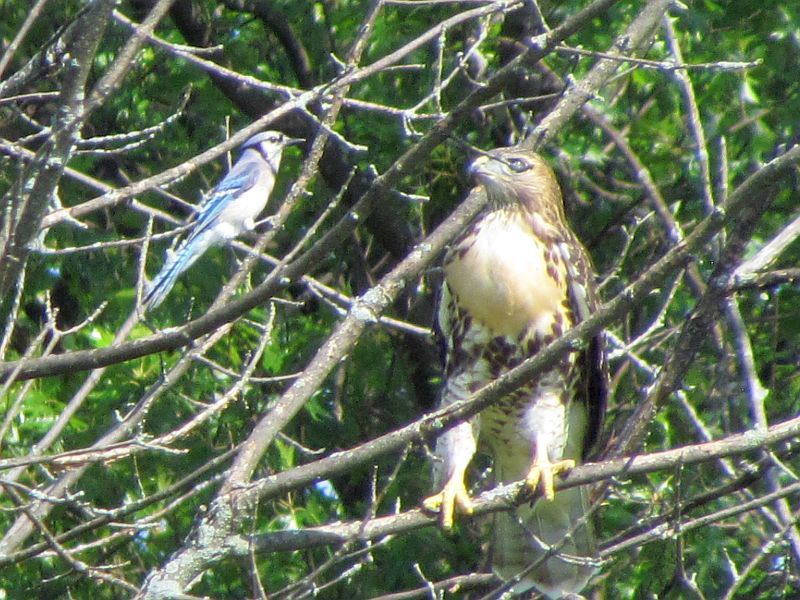
Blue Jays are loud on a normal day, but when a group of them fixates on one tree and won’t stop screaming, something more specific is going on. Most homeowners assume the birds are just being dramatic, when in fact the jays may be reacting to a real threat nearby.
Understanding what that racket actually signals can help you protect your yard’s wildlife without making things worse.
The fixed tree is a clue, not a diagnosis
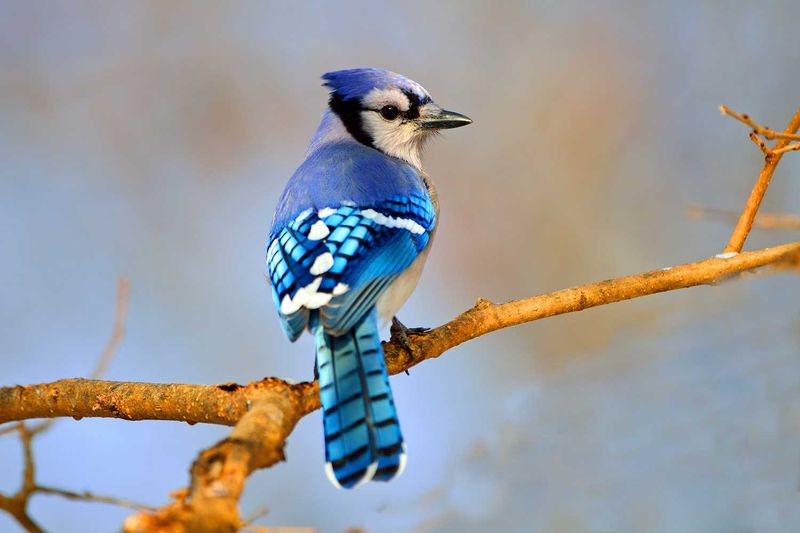
Repeated, concentrated activity around a single tree is worth paying attention to. Blue Jays are year-round residents across North Carolina, commonly found in wooded neighborhoods, parks, and yards from the Piedmont to the Coastal Plain and into the Blue Ridge foothills.
The Carolina Bird Club’s North Carolina species account notes that Blue Jays occupy a wide range of wooded residential habitats, especially where mature hardwoods are present.
When jays keep returning to the same tree, screaming and circling rather than moving on, the location itself is a signal. A stationary or perched target can hold the birds’ attention far longer than a moving one would.
The tree may be serving as a lookout perch, a roost, or a hiding spot for whatever the jays have noticed. It may also stand close to a jay nest or a group of fledglings on the ground nearby.
The strongest evidence-based explanation for this kind of fixed, agitated behavior is mobbing: a coordinated response in which birds approach and harass a potential threat. Research on mobbing published in Frontiers in Ecology and Evolution describes how mobbing commonly centers on a stationary or perched target rather than one that is actively moving.
That detail fits the one-tree pattern well. Even so, the tree’s location tells you something is there; it does not tell you what that something is.
Calling this behavior a diagnosis would be a stretch. The jays are reacting to a perceived threat, but the precise target remains unseen until you look carefully.
Treat the fixed tree as a useful starting point for observation, not a confirmed verdict about what is lurking inside it.
When loud jay behavior becomes mobbing
Not every burst of Blue Jay noise is a mobbing event. The species produces a wide range of sounds throughout the day, and a few jays calling from a tree could easily reflect contact calls, territorial disputes between neighbors, excitement over a food source, or ordinary social chatter.
Mobbing looks and sounds different from that baseline.
The key distinction is coordinated attention directed at a specific target. When jays are mobbing, they do not simply call from their perches and go about their business.
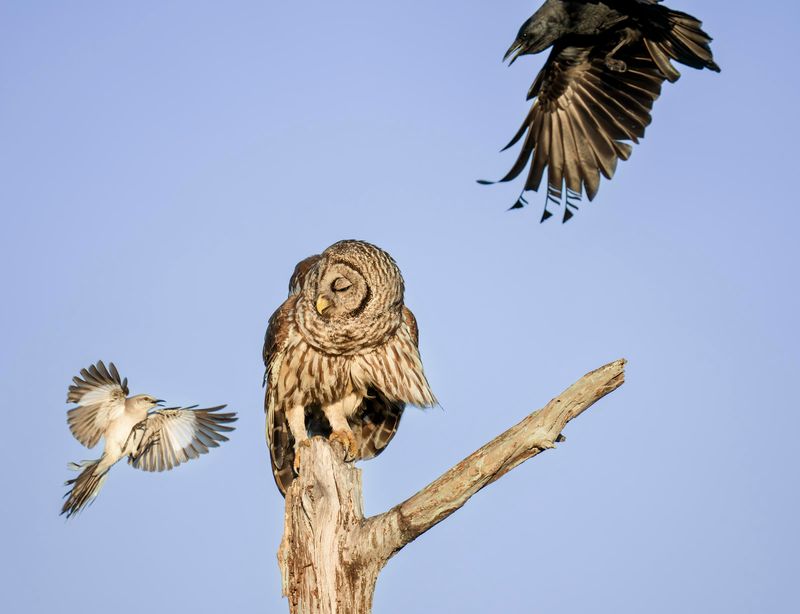
Instead, they make repeated approach flights toward one spot, circle it, raise their crests, sometimes physically dive at the target, and often recruit other birds to join in. Cornell Lab’s overview of mobbing behavior explains that this kind of group harassment can warn other birds, reduce the predator’s ability to launch a surprise attack, and apply enough pressure that the target eventually moves on.
Mobbing does carry real costs for the birds doing it. Research published in Behavioral Ecology shows that mobbing birds adjust their level of risk-taking based on how dangerous the predator appears to be.
Getting close enough to harass a hawk or owl means getting close enough to be caught. The fact that Blue Jays engage in this behavior at all reflects how serious the perceived threat is from their perspective.
So if you see the jays repeatedly flying toward one branch, circling back, raising their crests, and drawing in other species like chickadees or nuthatches, that pattern is meaningfully different from a general argument in the treetops. Cornell’s Blue Jay life-history page confirms that jays become especially aggressive in response to perceived predators, particularly when a nest is nearby.
The intensity and focus of the behavior is what separates a genuine mobbing event from everyday jay noise.
A perched predator is only one possible target
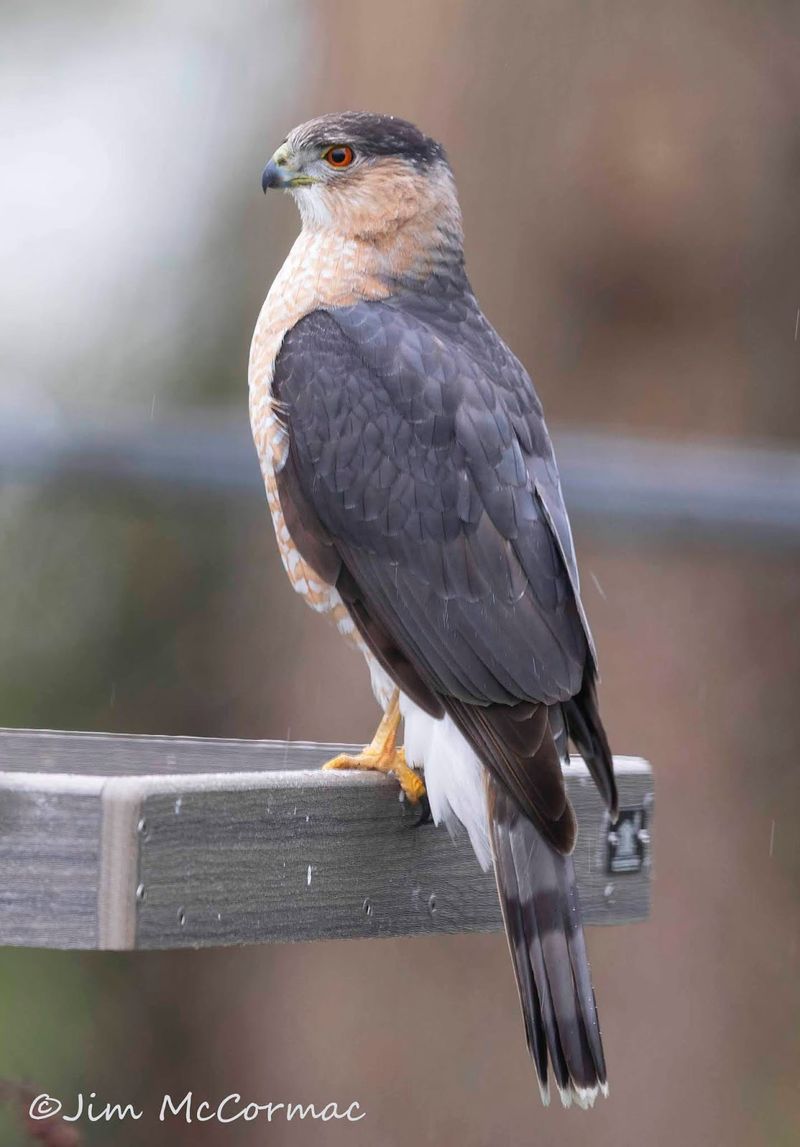
Hawks and owls come to mind first when people imagine what Blue Jays might be reacting to, and perched raptors are certainly a plausible target. The Audubon Society’s Blue Jay field guide entry describes the species as bold and vocal when confronting potential predators near their territory.
But the list of things that can trigger this response is much longer than most homeowners expect.
Crows, which are themselves intelligent and sometimes aggressive birds, can draw mobbing reactions from jays. Squirrels raiding a nest, a black rat snake climbing toward eggs, a neighborhood cat sitting at the base of the tree, a person who has wandered too close to a nest, or even another bird that has entered contested territory can all set the jays off.
Cornell’s mobbing explainer confirms that the targets of mobbing behavior span a wide range of species and situations, not just raptors.
Spring is a particularly plausible season for this kind of intense response because Blue Jays are actively nesting and defending territories from roughly late April through July across much of North Carolina. Cornell’s life-history profile notes that jays become noticeably more aggressive around the nest during this period.
That said, mobbing can and does occur outside of spring whenever the birds perceive a threat, so the season alone does not determine whether the behavior is nest-related.
The tree itself may hold the target, or it may simply be the landmark nearest to what the jays are defending on the ground or in a neighboring shrub. Audubon’s profile of Blue Jay behavior describes the species as opportunistic defenders of a broad territory.
Broad potential-threat is the accurate frame here, not a specific diagnosis of what is hiding in that one tree.
The calls cannot name the intruder
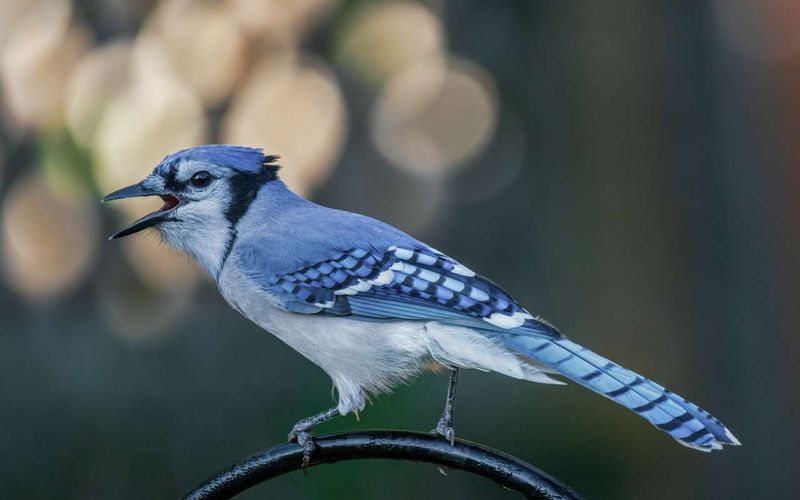
Blue Jays have a surprisingly varied vocal repertoire. Most people recognize the harsh, raspy jeer call that cuts through a yard like an alarm.
But Cornell Lab’s Blue Jay sounds page also documents whistled notes, liquid gurgling calls, soft contact calls used between flock members, and a striking ability to imitate other species, including Red-shouldered and Red-tailed Hawks.
That last detail matters a lot for anyone trying to use sound alone to figure out what is in the tree. If you hear what sounds like a hawk call and then see a Blue Jay fly off, the jay may have produced that sound itself.
Cornell’s life-history summary notes that researchers have proposed some hawk imitations may scatter other birds from a feeder, effectively clearing the area for the jay. A convincing hawk sound from the treetops does not confirm that a hawk is actually there.
Research on how Blue Jays respond vocally to different raptors adds another layer of caution. A study examining Blue Jay responses to different raptor species found that the birds used broadly similar call types across the tested predators and varied their calling rate or overall response rather than producing a reliable, predator-specific call that could be decoded by a listener.
In practical terms, this means that neither the loudness of the jays nor the specific sound they are making will tell you whether the target is a hawk, an owl, a crow, or a cat.
What the calls can tell you is that the birds are agitated and focused. Audubon’s Blue Jay facts describe the species as one of the most vocally complex birds in North American yards.
Sustained, intense calling from one location is a reason to look carefully, but the sound alone cannot close the case.
Watch from a distance and let the yard reveal more
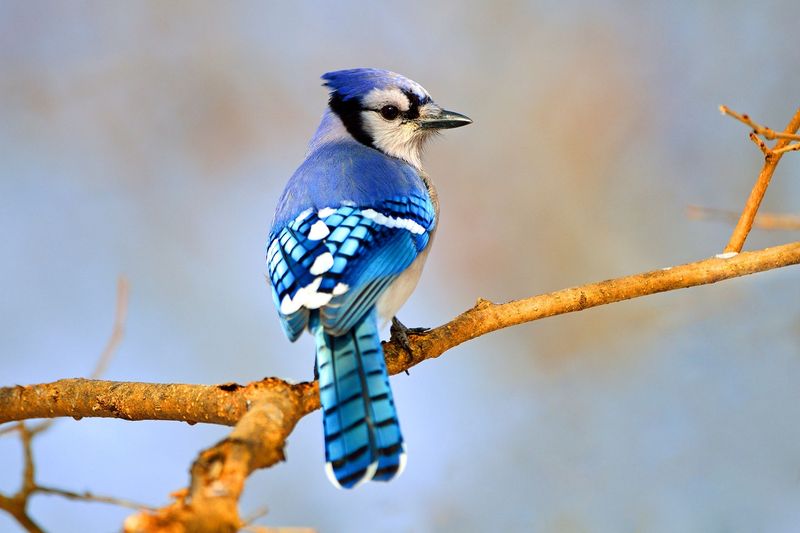
A window is often the best seat in the house for figuring out what the jays are reacting to. Watching from inside or from well across the yard keeps you out of the scene, which matters because your own presence near the tree can disrupt the behavior you are trying to understand and may disturb a nest you did not know was there.
From a safe distance, scan the branches of the target tree slowly from the base upward. Look for a hawk or owl sitting quietly in the canopy, a crow perched near the top, a squirrel pressed against the bark, or a snake moving along a limb.
Also check nearby rooflines, fences, and the ground beneath the tree for a cat, a dog, or a person who may have wandered into range. Note whether the jays keep returning to dive at one specific branch or whether their attention shifts toward a lower shrub or a patch of ground, which might suggest a nest or fledgling nearby.
Cornell’s NestWatch guidance on observing backyard nests warns that repeated approaches to a nest site can attract additional predators and that disturbing nearly fledged young can cause them to leave the nest before they are ready. The same caution applies here: repeated trips toward the tree to get a better look can create more problems than they solve.
Cornell’s overview of mobbing notes that the behavior itself often provides useful information about where the threat is located. Let the jays guide your eyes rather than walking toward what they are reacting to.
Do not shake branches, throw objects, fly drones over the tree, or attempt to handle or confront any animal you spot. Brief, calm observation from a distance is both safer and more informative.
Protect nests, pets, and feeder areas
Once you have noticed repeated jay activity around one tree, a few straightforward yard-management steps can reduce risk to birds and other wildlife without harming whatever the jays are reacting to. Start with the area around the tree itself.
Minimize foot traffic, avoid lingering near the base, and postpone any pruning or construction scheduled for that section of the yard until the activity settles.
If a nest may be present, do not touch it, move it, or try to relocate young birds. U.S.
Fish and Wildlife Service guidance on bird nests makes clear that federal law generally protects active migratory-bird nests containing eggs or chicks, and disturbing or destroying an active nest can be unlawful. If the nest location creates a genuine conflict, contact your state wildlife agency or a licensed wildlife rehabilitator rather than handling it yourself.
Cornell’s guidance on protecting nests from predators echoes this point and advises against DIY removal of the nest or the tree.
Pets are a separate and controllable factor. The Fish and Wildlife Service recommends keeping cats indoors or in a secure outdoor enclosure, especially during nesting season.
Cornell’s FAQ on outdoor cats notes that free-roaming cats are a significant hazard to birds and can themselves become the intruder that jays are responding to. Dogs should be kept leashed or under close supervision when in the yard.
For feeders, spilled seed and other accessible food can attract rodents, raccoons, squirrels, and other animals that may increase wildlife activity around your yard. Moldy seed should be removed promptly to protect bird health and maintain feeder hygiene.
Fish and Wildlife Service feeder guidance and University of Minnesota Extension feeder hygiene recommendations both advise temporarily removing feeders if sick birds appear.
Avoid poison of any kind, particularly rodenticides. EPA rodenticide safety guidance explains that rodenticides can expose hawks, owls, and other wildlife through secondary poisoning, which is the opposite of supporting a healthy yard.
Instead, focus on what NC State Extension’s wildlife gardening guidance recommends: mature trees, layered shrubs, native plants, and a water source that give birds and other wildlife the shelter and resources they need without encouraging the conditions that attract unwanted activity.
Treat the racket as a reason to observe, not intervene
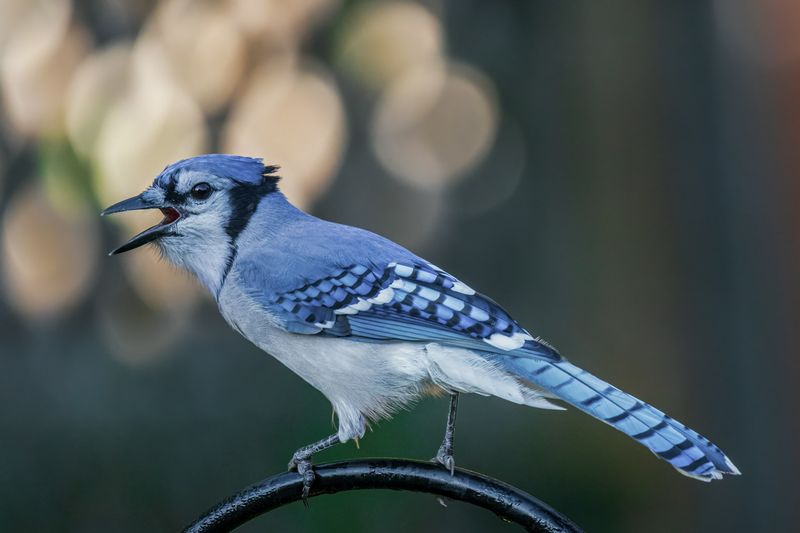
Repeated screaming and coordinated attention directed at one tree often signals that the jays have detected or are actively defending against a potential threat near that location. That is the most evidence-supported reading of the behavior.
What it does not tell you is exactly which animal is involved or whether that animal is passing through or simply perched quietly and waiting.
The practical response is observation from a distance, not intervention. Keep pets indoors or controlled, clean up spilled seed and remove moldy feed, and give the area around the tree a wide berth if a nest may be present.
Cornell’s mobbing overview notes that the behavior itself usually resolves once the target leaves or the birds determine the threat has passed. Federal nest protection law means the tree and any active nest inside it should be left undisturbed unless a qualified wildlife authority advises otherwise.
NC State Extension’s wildlife habitat guidance reminds homeowners that a yard full of layered cover, mature trees, and native plants is one where birds can do exactly what Blue Jays are doing: detect threats, communicate, and manage their own survival. The jays do not need your help chasing off whatever is in that tree.
They need you to stay back and let the yard work the way it was built to.