
If Flies Take Over Your Kitchen And Patio Once It Warms Up, Here’s The Homemade Bottle Trap That Quietly Clears Them Out
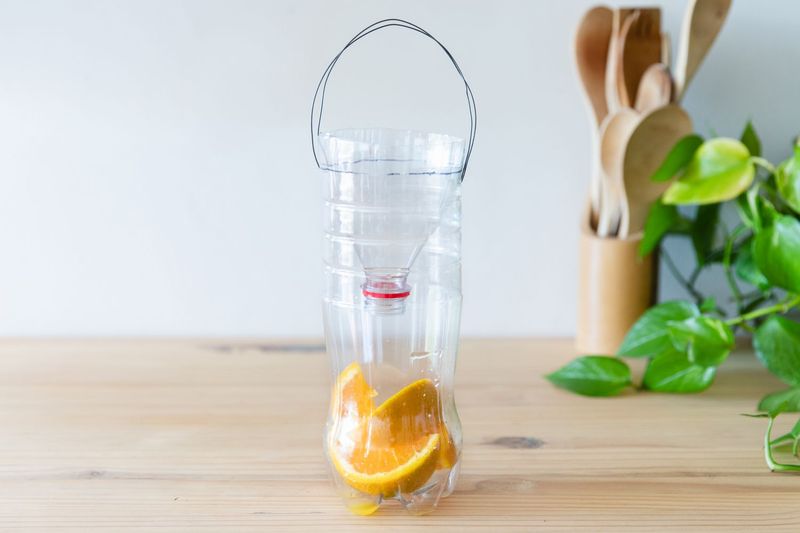
Tiny flies hovering around a fruit bowl or buzzing near a trash can are one of summer’s most annoying kitchen problems. The good news is that a clean bottle, some apple cider vinegar, and one drop of dish soap can genuinely help reduce a small fruit-fly outbreak.
The catch is that this fix works best when paired with removing whatever is feeding and breeding those flies in the first place. Read on to learn exactly which flies this method suits, how to build and use the trap correctly, and when you need a different approach entirely.
The Vinegar Trap Targets Tiny Fruit Flies
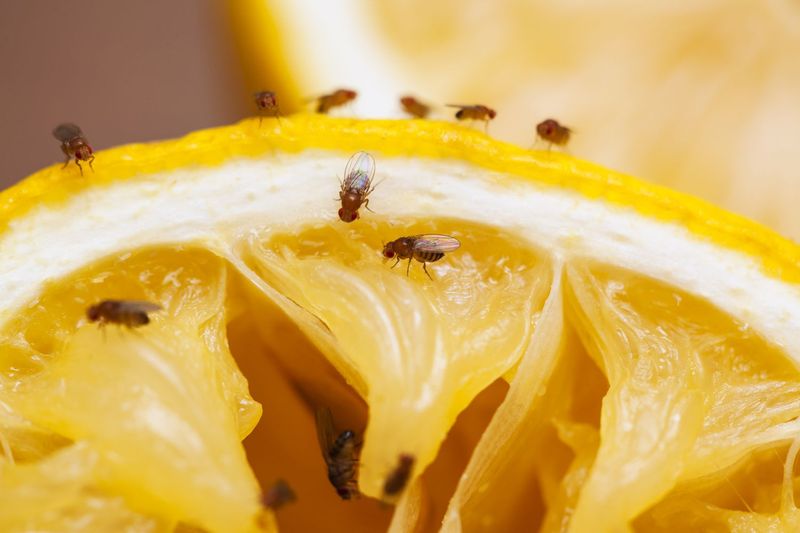
Before setting out any trap, it helps to know which fly you are actually dealing with, because the answer changes everything about how you respond. The insects most likely buzzing around your fruit bowl or hovering near the recycling bin are fruit flies, sometimes called vinegar flies.
University of Minnesota Extension describes fruit flies as roughly 1/16 to 1/8 inch long, usually tan to brown in color, and often identifiable by their distinctly red eyes. They cluster around fermenting fruit, vegetables, beer, wine, soft-drink containers, trash cans, garbage disposals, and any moist organic residue left sitting too long.
These are not the large, dark flies that land on your burger at a cookout. House flies are noticeably bigger, often with four dark stripes along the thorax, and they are typically tied to garbage, manure, pet waste, or other decaying material outdoors.
Drain flies are another common look-alike. Minnesota Extension notes that drain flies are dark, hairy, and moth-like in appearance, associated with the organic buildup inside drains rather than fruit or drinks.
Fungus gnats, meanwhile, tend to emerge from moist potting soil rather than food.
A vinegar-based bottle trap is specifically designed for small fruit or vinegar flies. Utah State University Extension explains that house flies respond better to sanitation, exclusion, sticky traps, and appropriately placed light traps than to a vinegar bait.
Matching the right tool to the right insect is the single most important diagnostic step. This article’s honest promise is modest and specific: a homemade vinegar trap can help reduce a small fruit-fly outbreak when you also remove the source that is sustaining it.
Clearing every fly from a kitchen and patio is a different problem that requires a different solution.
Clean Up the Breeding Source First
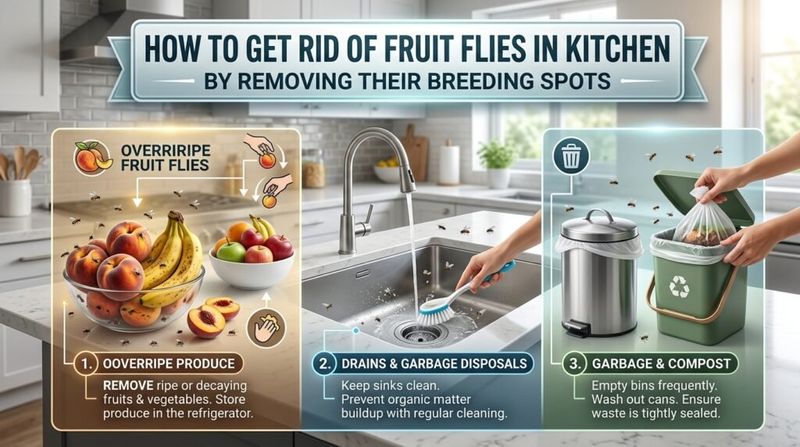
Putting out a trap before cleaning up is like mopping the floor while the faucet is still running. The trap can catch adult flies already in the air, but if eggs and larvae remain inside a fermenting banana, a sticky juice bottle, or a clogged garbage disposal, fresh adults will keep emerging and the problem will not go away.
Source removal is the first step, not an optional add-on.
Start by going through the fruit bowl and refrigerating or discarding anything that is overripe, bruised, or beginning to ferment. Rinse every beverage container, including beer bottles, juice cartons, and soda cans, before placing them in recycling.
Wipe out the bottom of trash and recycling bins where liquid tends to pool and organic residue builds up. Colorado State University Extension specifically calls out garbage disposals and drains as common breeding sites that homeowners frequently overlook.
Run the disposal thoroughly, and if you notice a slimy film inside a drain, scrub it out.
Spills on counters, under appliances, and inside cabinets deserve attention too. Even a small amount of fermented liquid trapped beneath a refrigerator or behind a cabinet can support a breeding population.
Minnesota Extension notes that fruit flies can continue emerging from breeding sites long after the visible food source seems gone. Once the source is cleaned out, store susceptible fruit in the refrigerator for at least a week so that remaining adults have nothing new to feed on or lay eggs in.
The bottle trap you set afterward will then be working with the odds in its favor rather than fighting a continuously replenished population.
Make a Contained Vinegar-and-Detergent Trap
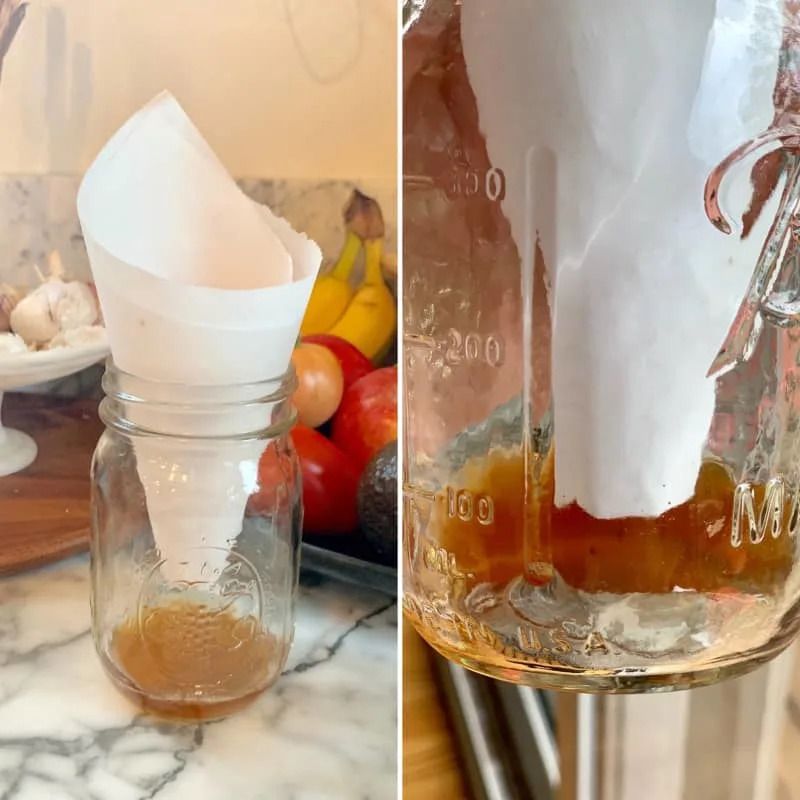
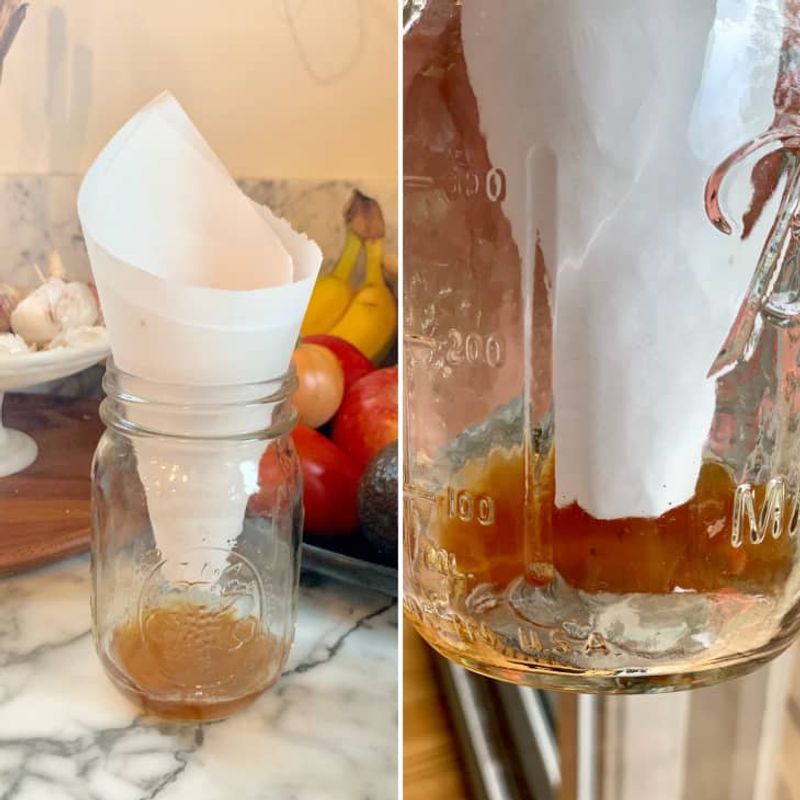
Once the breeding sources are addressed, building the trap itself takes about two minutes and requires nothing you do not already own. Grab a clean glass jar or a disposable plastic bottle, and pour in roughly one inch of apple cider vinegar.
The fermented, slightly sweet smell is what draws small fruit flies in. Add exactly one drop of unscented dish detergent and swirl gently.
The detergent reduces the liquid’s surface tension so that flies that land on it sink rather than skimming across and flying away.
For the entry point, roll a small piece of paper into a cone shape and set it inside the jar opening with the narrow tip pointing down toward the liquid. The funnel allows flies to navigate inward easily but makes finding the exit much harder once they are inside.
Alternatively, stretch plastic wrap over the top and poke several small holes with a toothpick. Either method works.
Colorado State University Extension recommends a similar funnel or small-hole design as a practical household option for fruit fly capture. Penn State Extension guidance on monitoring traps suggests about one inch of apple cider vinegar and confirms that a drop of detergent improves capture by breaking surface tension.
A second design appears in a school IPM handbook: combine one cup of vinegar, two cups of water, and one tablespoon of honey in a 2-liter soda bottle, then poke small holes above the liquid line and hang the bottle. That recipe is one documented option, not a proven improvement over the simpler jar version.
The straightforward jar with apple cider vinegar and one drop of detergent is well-supported and easy to refresh. Do not add bleach, boric acid, insecticides, essential oils, or anything else.
The bait works as described, and adding other substances creates safety risks without any benefit.
Place and Maintain the Trap Carefully
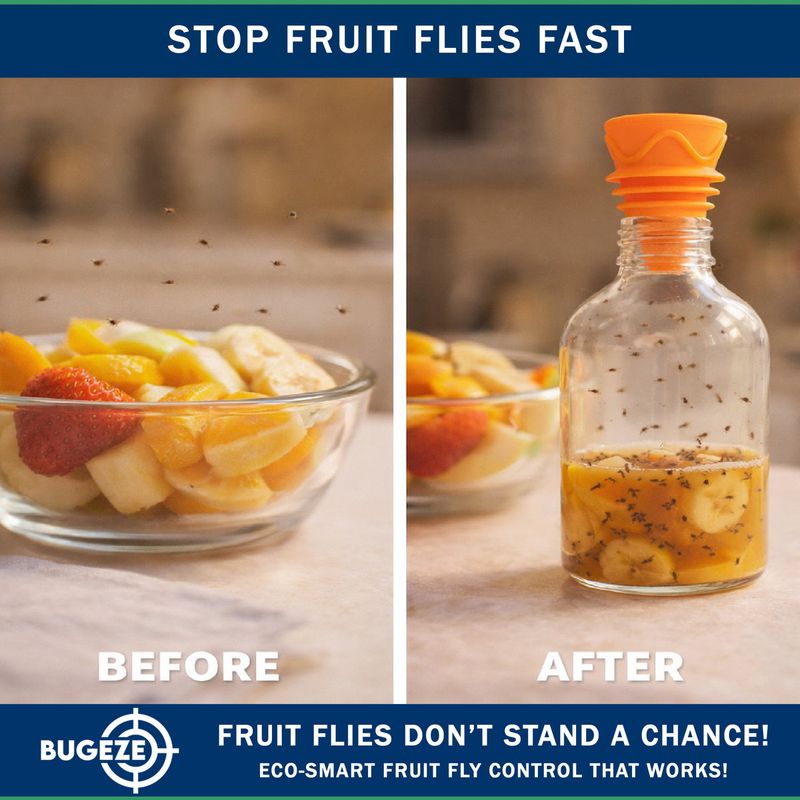
Where you place the trap matters almost as much as how you build it. Set it near the area where you have seen the most fly activity, such as close to the fruit bowl or next to the recycling bin, but not directly on a food-preparation surface.
Keeping it a few feet away reduces any risk of fermenting bait or trapped insects contaminating food or cooking areas. Make sure the jar is stable and unlikely to tip over.
Treat what collects in the trap as a useful indicator rather than a scoreboard. A jar full of flies tells you the problem is real and the bait is working, but it does not mean the infestation is over.
Penn State Extension advises cleaning traps weekly and replacing the bait with fresh vinegar when it becomes dirty, cloudy, or moldy. A fouled bait loses its attractiveness and can itself become a small breeding site if neglected too long.
Empty the jar, rinse it, and refill with fresh apple cider vinegar and one new drop of detergent on a regular schedule.
Colorado State University Extension notes that remaining adult fruit flies may persist for a week or more even after you have removed all breeding sources. That is normal.
Adults already in the air need time to die off, and the trap can help reduce their numbers during that window. EPA pest-control guidance emphasizes keeping any pest-control materials inaccessible to children and pets and away from food areas.
Apply that same common sense here: place the trap out of reach of curious hands and paws, and do not set it anywhere it could contaminate a meal.
Large Patio Flies Need Sanitation and Exclusion
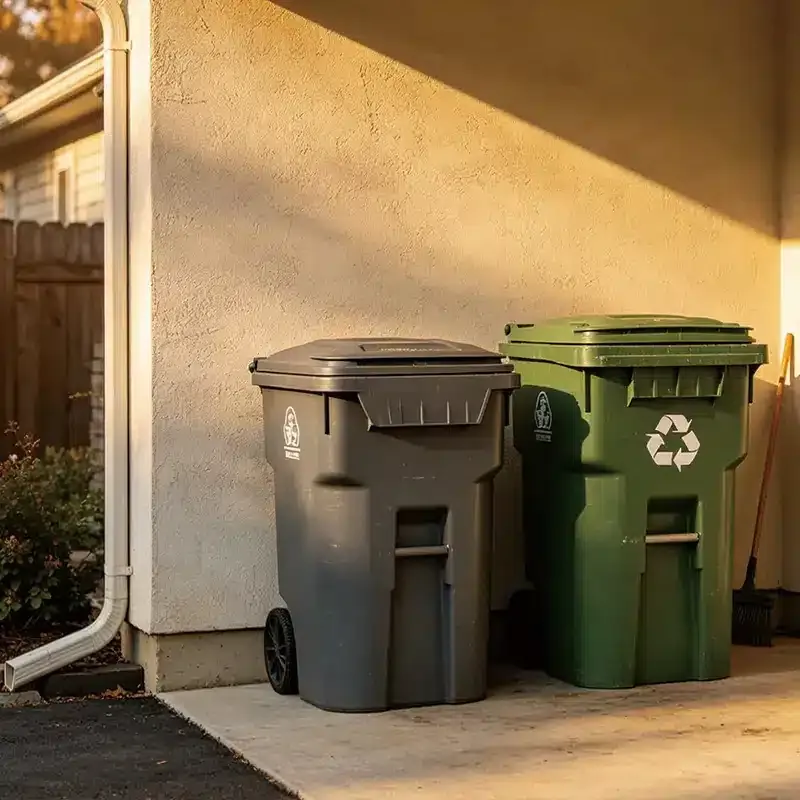
Patio fly problems often look similar at a glance but have a very different cause. When large flies are circling your outdoor dining area, landing on food, or hovering near a trash can, you are almost certainly dealing with house flies rather than the tiny fruit or vinegar flies a vinegar trap is built for.
Pouring apple cider vinegar into a bottle will not solve that problem.
Utah State University Extension emphasizes that house fly control is primarily a sanitation and exclusion challenge. These flies breed in garbage, manure, pet waste, compost, and other decomposing organic material.
The fix starts outside: use garbage cans with tight-fitting lids, remove pet waste from the yard at least every few days, keep compost bins covered and properly managed, and eliminate any standing piles of decomposing material nearby. If a dead animal or rotting organic debris is the source, finding and removing it is the only real solution.
Exclusion matters equally indoors. Keep exterior doors closed when possible, repair any torn window screens, and seal gaps around door frames and utility penetrations.
Colorado State Extension recommends screens, tight-fitting lids, swatters, and sticky traps as the practical toolkit for house flies. Light traps placed away from entry points can also help indoors.
A vinegar bottle set near the patio table may capture an occasional small fly, but it will not meaningfully reduce a house-fly population tied to a garbage can or a compost pile ten feet away. Identifying which fly you are seeing before choosing a response saves time and frustration.
Ripening Soft Fruit Can Signal Spotted-Wing Drosophila
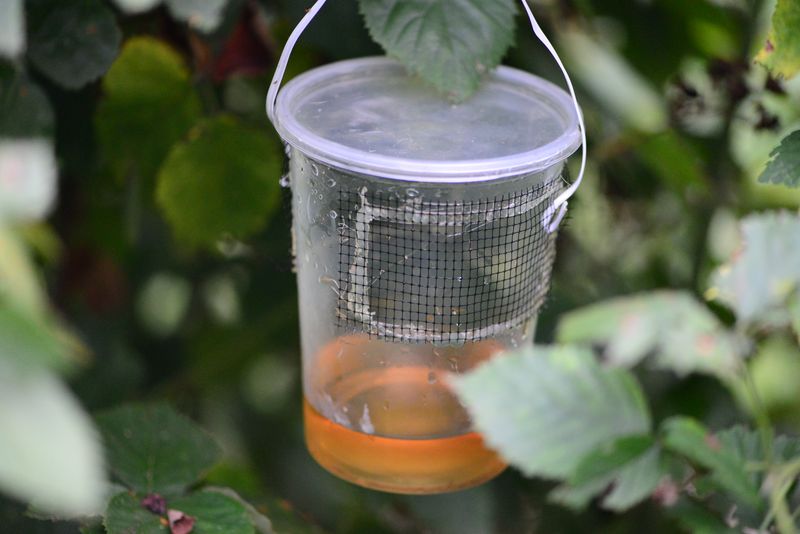
Backyard gardeners growing raspberries, blueberries, strawberries, or cherries sometimes notice small flies around their plants and assume a vinegar trap will handle things. That assumption deserves a closer look.
Spotted-wing drosophila is a small fruit fly species that behaves differently from the common fruit or vinegar fly found in kitchens.
The key difference is where it lays eggs. Ordinary kitchen fruit flies typically target damaged, overripe, or already-fermenting fruit.
Spotted-wing drosophila can lay eggs inside sound, ripening fruit before it shows any visible damage. By the time you notice a problem, larvae may already be developing inside fruit that looks perfectly fine from the outside.
Penn State Extension explains that vinegar traps can be used to monitor adult spotted-wing drosophila activity, which helps you know whether the pest is present in your area. However, Penn State cautions that trapping alone is generally not adequate control.
Traps capture only a fraction of the flies attracted to a site, and new individuals can keep arriving from surrounding areas.
Penn State’s fruit IPM monitoring guidance makes clear that a catch in a trap does not prove the fruit is protected. Colorado State Extension’s spotted-wing drosophila management resource similarly directs gardeners toward a combination of monitoring, harvest timing, and other protective strategies rather than trapping alone.
If you grow soft fruit and start seeing small flies near ripening berries, use a trap to confirm activity and then look into additional management options specific to that pest. A homemade vinegar jar is a useful first alert, not a crop-protection plan.
Keep the Homemade Remedy Contained
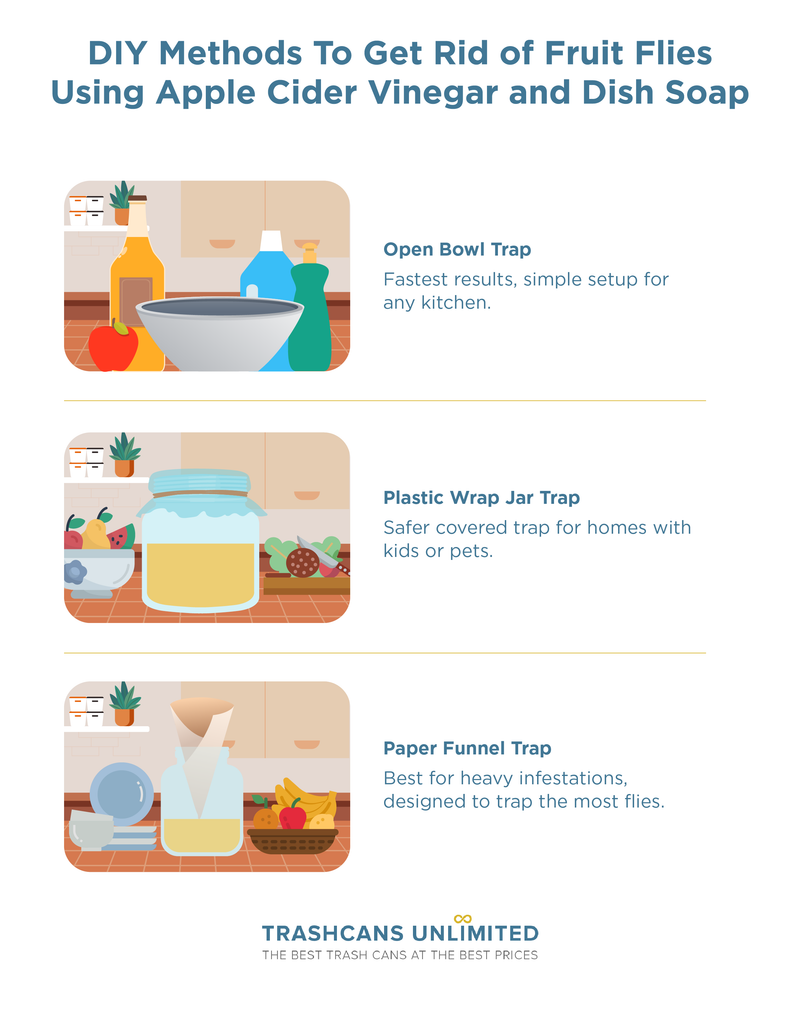
A vinegar trap is a simple, low-risk tool, but a few safety rules keep it that way. The jar contains fermenting liquid and dead insects, and over time that mixture can become a small health nuisance in its own right if left unattended.
Empty and rinse the trap regularly, or simply discard and replace the container when it gets too dirty to clean easily.
Keep the trap well away from children, pets, and wildlife. Place it somewhere stable where it cannot be knocked over onto food, dishes, or countertops.
EPA pest-control guidance consistently emphasizes keeping all pest-control materials out of reach of children and pets and away from food-preparation areas. Apply that same standard here, even though the trap contains no registered pesticide.
One boundary that deserves plain, direct language: adding one drop of dish detergent to a contained jar is not a reason to spray vinegar, soap, or homemade mixtures on plants, vegetables, fruit, pets, or any surface where food is prepared. Penn State Extension warns that untested household remedies can harm people, pets, plants, and wildlife, and that common household products often contain additives with unintended effects.
The trap is a contained-use application. Do not add bleach, boric acid, essential oils, insecticides, or any other chemical to the bottle.
None of those additions are needed, and mixing household substances creates avoidable risks with no documented benefit for fruit fly control.
Pair the Bottle With Cleanup for Modest Relief
The most effective sequence is straightforward. First, confirm you are seeing small fruit or vinegar flies by checking their size, color, and where they congregate.
Second, remove whatever is feeding and breeding them: overripe produce, rinsed beverage containers, clean drains, and wiped spills. Third, set the vinegar trap and refresh the bait on a weekly schedule while adult activity winds down.
Colorado State University Extension is direct on this point: traps used alone do not provide satisfactory control. The honest payoff of this method is fewer nuisance flies over the days following cleanup, not a guaranteed clean sweep.
When the insects you see are large, tied to outdoor garbage, pet waste, manure, or compost, Utah State Extension points to sanitation and exclusion as the primary response, and a vinegar bottle belongs nowhere in that plan.
A clean kitchen with no fermenting food sitting out is, on its own, the most effective fruit-fly prevention available. The trap is a useful helper during the gap between cleanup and calm.