
If A Dead Tree In Your Yard Has A Rectangular Hole, Here’s The One Bird That Likely Carved It
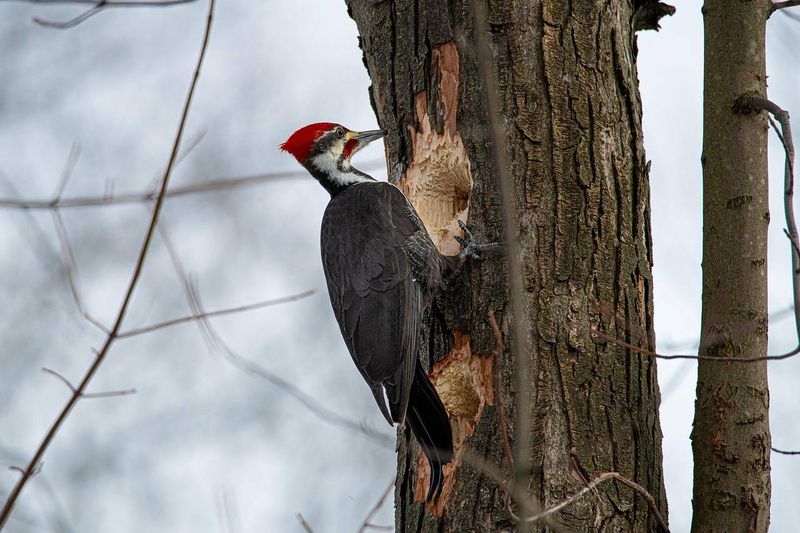
Spotting a large, rectangular hole in a dead or dying yard tree can stop you in your tracks. That kind of opening is a strong clue pointing to one particular bird, the Pileated Woodpecker, though it takes a little detective work to understand what the hole actually means.
Some openings are feeding sites, others may be nest or roost cavities, and the tree itself may be a hidden hub of backyard wildlife activity. Before you decide what to do with that snag, it helps to know what you’re really looking at.
A rectangular excavation strongly suggests a Pileated Woodpecker
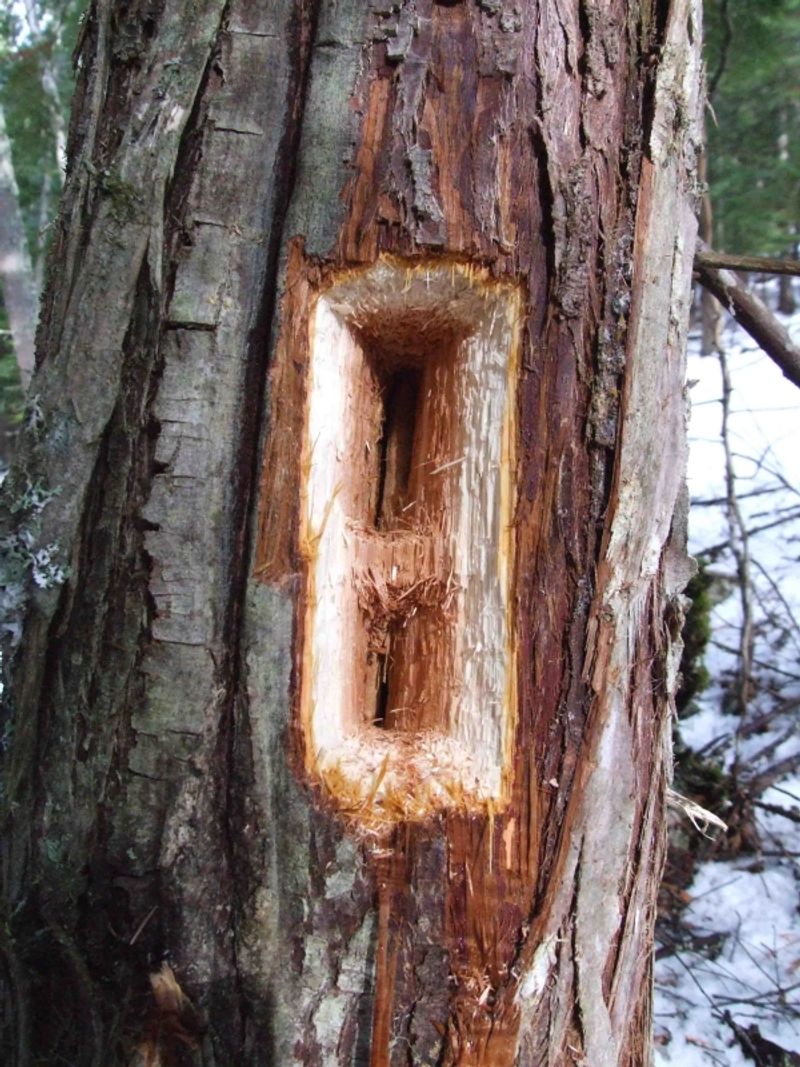
Noticing a large, vertically oriented rectangular or oval hole chiseled into a dead or declining yard tree is one of the more striking things a homeowner can encounter. That shape is a strong clue pointing to Pileated Woodpecker activity, and Cornell Lab of Ornithology’s Pileated Woodpecker profile describes these birds as powerful excavators that routinely tear into rotten wood while hunting carpenter ants and other insects hidden deep inside.
That said, a rectangular opening alone does not confirm the species. Other woodpeckers can carve cavities too, and natural decay sometimes opens a tree in ways that look surprisingly deliberate.
Regional range matters a great deal here, because Pileated Woodpeckers are broadly distributed across much of the eastern United States, the Pacific Northwest, and parts of Canada, but they are not present everywhere. If the bird does not live in your region, the excavation has another explanation.
Worth noting is what the woodpecker’s work reveals rather than causes. A U.S.
Geological Survey report on Pileated Woodpeckers makes clear that these birds target trees already softened by decay, meaning the excavation often exposes rot that was already progressing inside the trunk. The bird did not kill the tree.
It found food where the tree was already failing, which is a key distinction when you are trying to understand what happened and what to do next.
Additional signs can strengthen the identification. A crow-sized black bird with a bold red crest, a loud call that carries through the woods, and the Washington Department of Fish and Wildlife’s species profile notes the bird’s characteristic rectangular digging pattern as a field mark in its own right.
Fresh wood chips scattered at the base of the trunk are another useful signal of recent activity.
Many large rectangular holes are feeding excavations, not nests
Carpenter ants are the main prize. Pileated Woodpeckers spend a remarkable portion of their lives excavating decaying wood in search of ant colonies, beetle larvae, termites, and other insects that tunnel through soft, rotting heartwood.
The resulting holes can look dramatic, sometimes running several inches wide and tall, which is why they catch a homeowner’s eye so quickly.
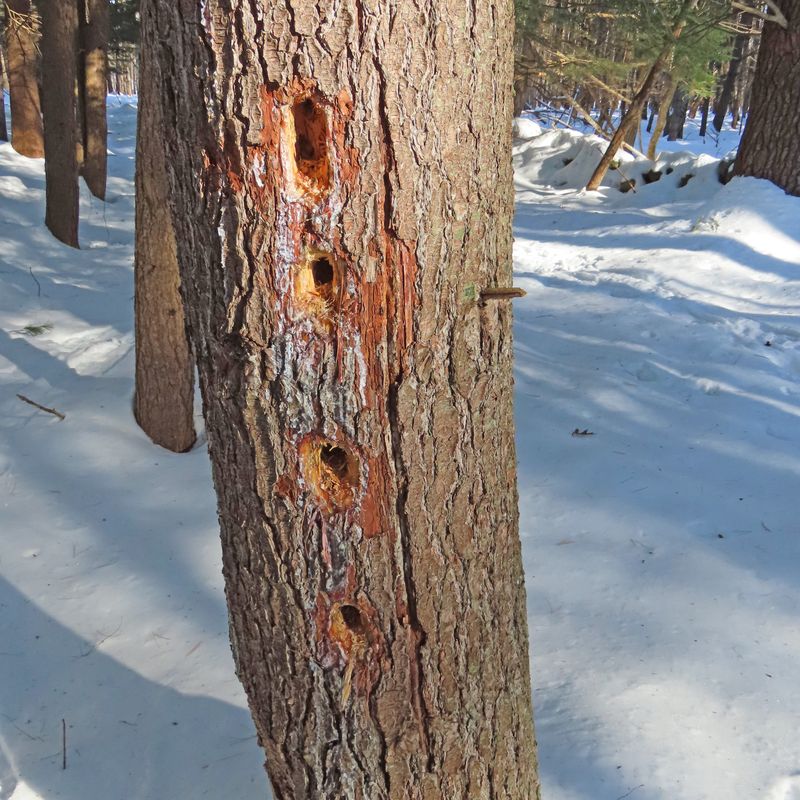
Feeding excavations tend to have a rough, irregular character. Canada’s Pileated Woodpecker Cavity Identification Guide describes feeding cavities as often numerous on a single tree, with ragged edges and relatively shallow depth, roughly 5 to 20 centimeters in many cases, compared with the more intentional geometry of a nest entrance.
A tree that shows several large, rough-edged openings at different heights is more likely a foraging site than a nursery.
Fresh wood chips piled at the base of a trunk are one of the clearest signs that excavation happened recently. The chips accumulate quickly when a woodpecker is actively working, and they tend to be large and pale compared with the weathered bark debris that collects naturally.
If you see a heap of fresh-looking chips under a rectangular hole, something has been digging there within the past few days.
Cornell Lab’s overview confirms that these feeding holes are the most commonly observed sign of Pileated Woodpecker presence, far more common than confirmed nest sites. Shape alone cannot tell you whether a bird raised young inside a particular opening.
Many large rectangular excavations are feeding sites, and treating every dramatic hole as an abandoned nest overstates what the evidence actually shows.
Nest entrances often look smoother and lead deeper inside
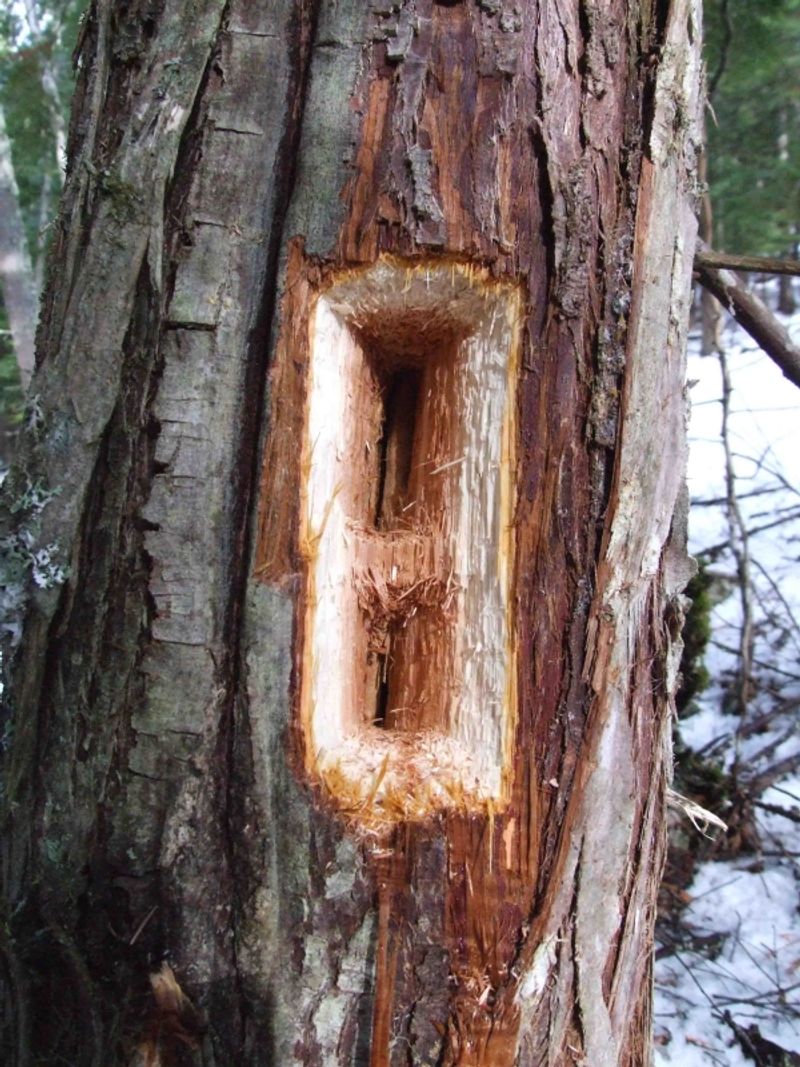
There is a real difference between a foraging gouge and a true nest cavity, though the distinction requires some patience to spot from the ground. Nest entrances tend to look cleaner and more symmetrical than feeding holes.
The edges are often smoother because the woodpecker works them deliberately over many sessions, and the opening is typically oriented to lead into a single, deeper chamber rather than exposing a wide, shallow recess in the wood.
Canada’s cavity identification guide notes that roost cavities can differ from nest cavities and may have more than one opening, adding another layer of complexity to a visual assessment from the yard. Treating any of these features as a definitive test is a mistake.
They are approximate clues that can support an informed guess, not a reliable identification system a homeowner can use without specialized training.
Construction of a true nest cavity is a substantial undertaking. Cornell Lab’s Bird Academy documentation of nesting behavior indicates that nest cavities can take roughly three to six weeks to complete, with the male doing most of the excavation, though both members of a pair may participate.
That investment of time and energy is one reason Pileated Woodpeckers generally excavate a fresh cavity for each breeding season rather than returning to the same nest hole year after year.
Reported nest cavity depths and entrance heights vary considerably by region and tree type, so no single measurement applies universally. The USGS Pileated Woodpecker report reflects this variability across study sites.
The practical takeaway for a homeowner is to observe from the ground with binoculars and note what you see without probing, climbing, or cutting into the tree to measure depth. Estimating cavity type by eye is useful context, but it is not a substitute for leaving the tree undisturbed while you gather more information.
Suitable cavities can become shelter for other wildlife
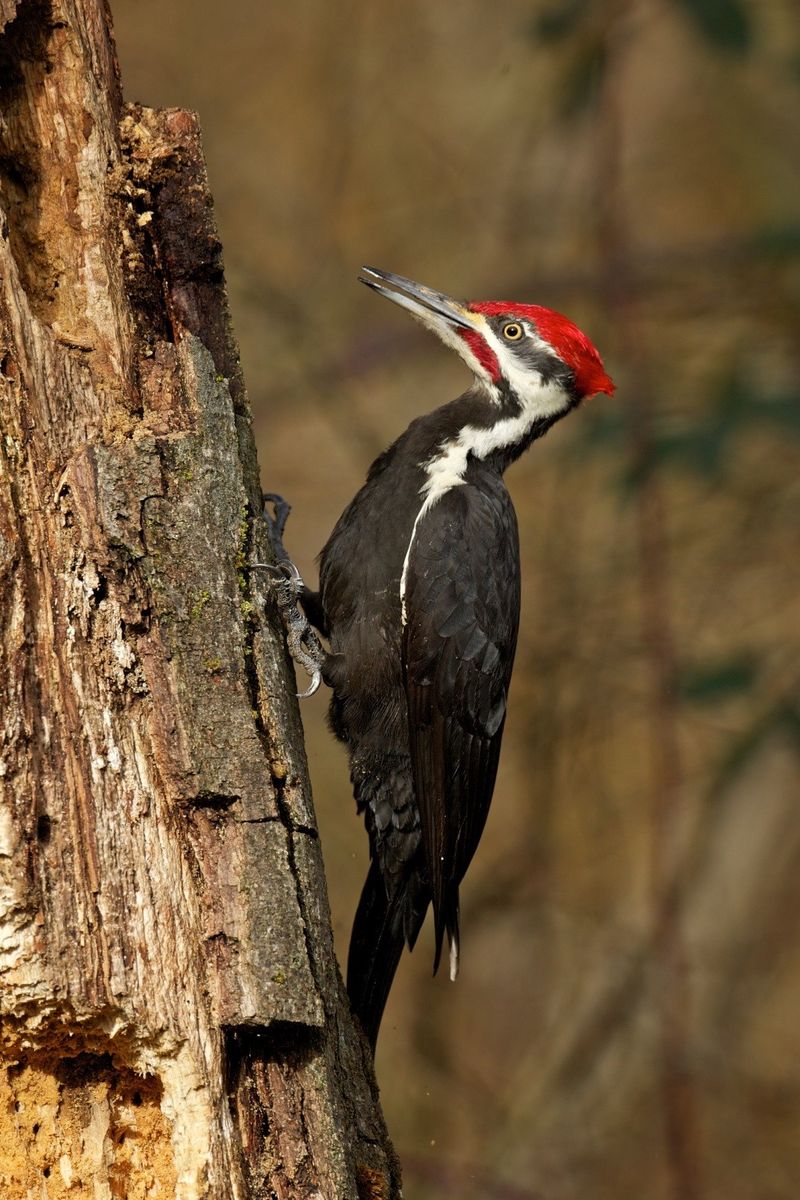
Once a Pileated Woodpecker finishes with a cavity and moves on, the opening does not stay empty for long in productive habitat. Suitably sized nest and roost cavities left behind by these birds can become homes for a range of secondary cavity users, species that need a ready-made hollow but cannot excavate one themselves.
The U.S. Fish and Wildlife Service’s feature on life beyond a dead tree lists owls, wood ducks, flying squirrels, bats, fishers, and other birds among the animals that may take up residence in cavities left by large woodpeckers.
The scale of that secondary use has been documented in field research. A study by Bonar on the availability and use of Pileated Woodpecker cavities found that more than 18 other species used inspected cavities across the Alberta study area.
That figure reflects conditions in a particular region and forest type, so it should be read as evidence of the cavity network’s potential, not a prediction about a single backyard tree. Whether any given cavity gets reused depends on its size, structural condition, the local species community, and habitat quality.
Occupancy is not guaranteed, and not every cavity will attract a tenant. Cavities that are too small, too shallow, too exposed, or in a tree that collapses before a secondary user arrives simply go unused.
Reuse rates vary across studies and habitats, which is why describing this as a possible outcome rather than an automatic result is the accurate framing.
Still, the woodpecker’s role in creating openings that other species cannot make for themselves is a meaningful one. Research published in Frontiers in Forests and Global Change on nest webs in boreal forests documents how cavity-creating species like Pileated Woodpeckers sit at the center of a broader network of wildlife that depends on those openings.
That context gives a backyard snag a different kind of significance, even if no single hole is guaranteed to house a tenant.
The standing dead tree supports more than cavity users
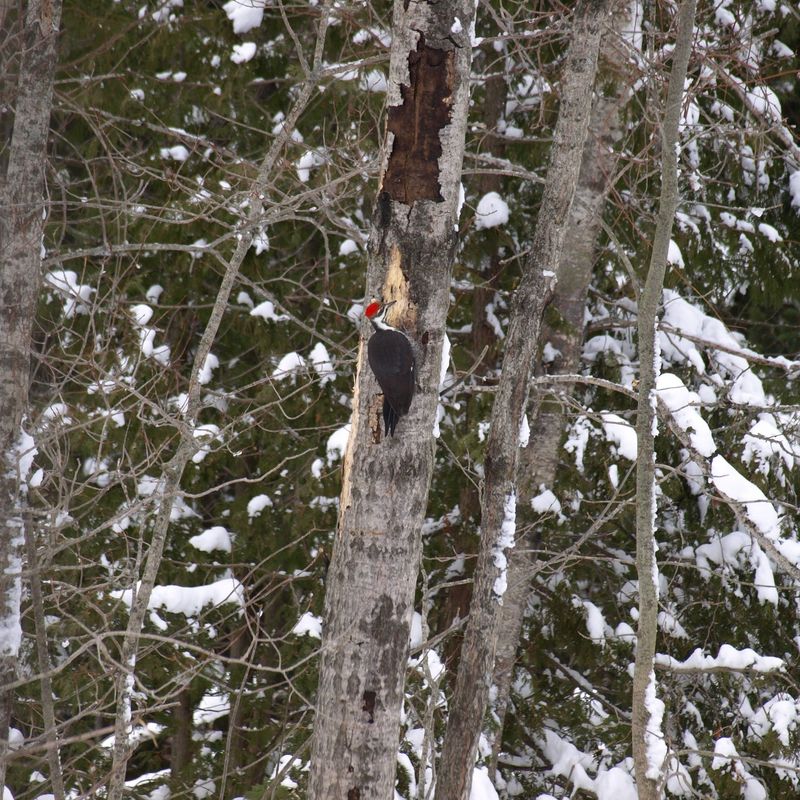
A dead or dying tree is rarely just a hole waiting to happen. The snag itself, along with any large decaying limbs attached to it, functions as a layered habitat structure that benefits a much wider community than the birds using its cavities.
University of Minnesota Extension’s guide to cavity trees, snags, and deadwood describes standing dead trees as sources of food, nesting sites, roosting cover, and shelter for insects, fungi, amphibians, reptiles, mammals, and cavity-nesting birds all at once.
Insects colonize decaying wood at every stage, from bark beetles moving in shortly after a tree dies to wood-boring larvae working deeper layers years later. Those insects feed woodpeckers, flickers, nuthatches, and a variety of songbirds that forage along the bark.
Fungi accelerate the breakdown of wood and create the soft, punky interior that cavity excavators need, while also feeding invertebrates that support the food web from the ground up.
The U.S. Forest Service’s guide to cavity-nesting birds of North American forests places this deadwood function in a broader ecological context, noting how snags at different decay stages serve different species communities over time.
A freshly dead tree with tight bark attracts different users than a soft, mossy snag that has been standing for a decade. Retaining safe deadwood in various stages of decay gives a yard or woodlot more of that ecological variety.
The Pileated Woodpecker’s documented role in particular forest systems reflects this layered value. The Frontiers nest-web study connects cavity-creating woodpeckers to the broader structure of forest wildlife communities without claiming that any single bird or snag is irreplaceable.
That nuance matters: a backyard snag is worth understanding on its own terms, as a small but genuine contribution to local habitat complexity.
Assess the snag’s hazard before preserving its habitat
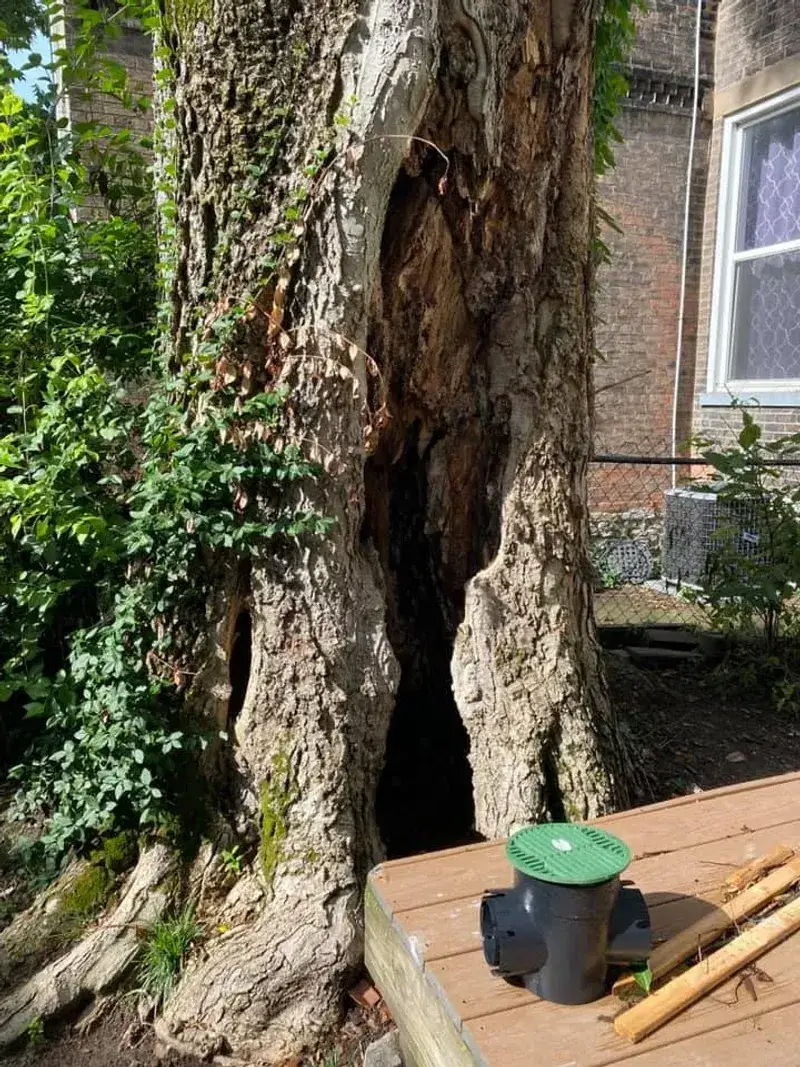
Wildlife value and structural danger are not mutually exclusive, and a snag can be both genuinely beneficial and genuinely risky at the same time. Dead trees and large dead limbs can fail without much warning, especially during wind, rain, or ice events.
A tree that stands harmlessly in an open field is a very different situation from one that leans over a roof, a play area, a driveway, a road, a fence, or a utility line.
University of Minnesota Extension’s snag and deadwood guidance is clear on this point: homeowners should have a qualified arborist or tree professional evaluate any dead tree whose failure could strike people or property. That assessment comes before any conservation decision, not after.
No amount of habitat value justifies leaving an unstable tree in a position where it could cause serious harm.
A qualified professional can evaluate root condition, trunk integrity, crown structure, and lean to give you an honest picture of the tree’s stability. If the evaluation finds the snag structurally sound and positioned away from any target it could damage, retaining it becomes a reasonable choice.
Penn State Extension’s guidance on dead wood for wildlife supports leaving safe snags in place as an optional habitat stewardship practice, not a requirement for every yard.
When a professional determines that the snag can stay, the next step is straightforward: leave it alone. Avoid sealing, filling, or modifying any cavities.
If the tree eventually falls or a limb breaks, consider leaving the downed wood on the ground where it creates no additional hazard. Decaying logs on the ground continue to support insects, fungi, salamanders, and other small animals, extending the snag’s ecological contribution even after it is no longer standing.
Habitat stewardship in a backyard rarely demands dramatic action; often the most productive thing a homeowner can do is simply resist the urge to clean everything up.
Watch from the ground and leave an active cavity alone
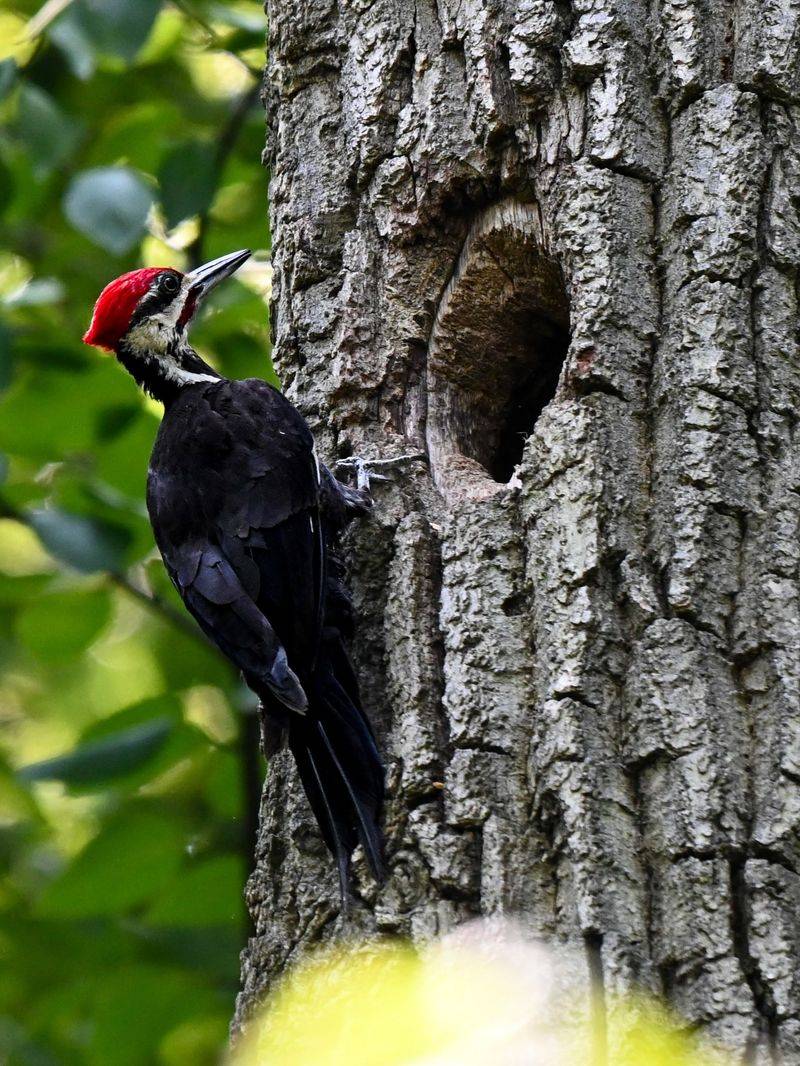
Binoculars and patience are the right tools for this situation. Watching from the ground, you can look for repeated bird traffic at the opening, fresh wood chips below the hole, feathers, droppings, or other signs that something is actively using the cavity.
Those observations tell you far more than anything you could learn by climbing closer or poking around the opening, and they do not disturb whatever may be inside.
Never climb to the cavity, insert tools into it, cut into the tree to inspect it, seal or plug the entrance, fumigate it, enlarge it, or clean it out. Any of those actions could injure wildlife, destroy an active nest, or create additional problems with the tree itself.
If the cavity looks occupied, the safest and most responsible approach is to keep your distance and watch.
Active nests carry legal weight. The U.S.
Fish and Wildlife Service’s guidance on bird nests explains that disturbing or destroying an active migratory bird nest can violate federal law. The Migratory Bird Treaty Act, 16 U.S.C.
Section 703, protects covered species from a wide range of harmful actions, and Pileated Woodpeckers are among the birds that fall under its protections. If eggs, nestlings, or dependent young may be present, do not cut the tree or seal the cavity, and seek guidance from a wildlife professional or your state fish and wildlife agency before taking any action.
The practical summary is this: identify cautiously, get a professional hazard assessment before deciding whether the tree can stay, and let the cavity be. A rectangular hole in a dead tree is a genuine clue worth following up on, and the most rewarding thing you can do with that clue is watch carefully from a respectful distance and let the wildlife story unfold on its own terms.