
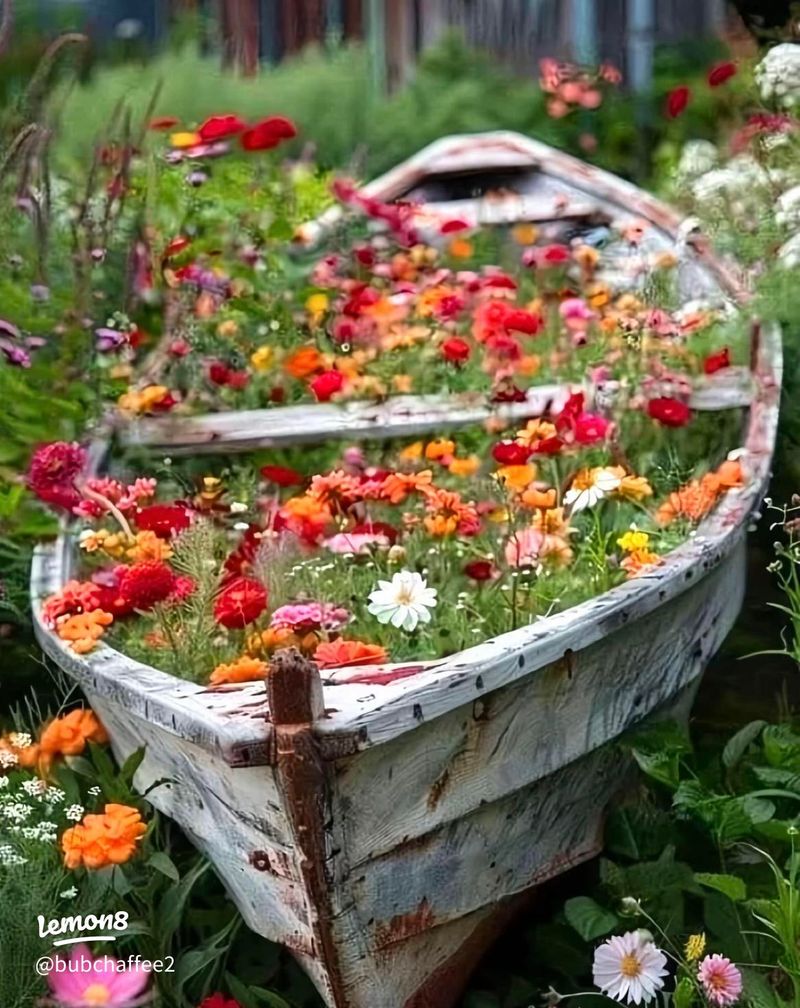
If You’ve Got An Old Boat Rotting In The Yard, Here’s How To Turn It Into A Flower Bed That Looks Washed Ashore
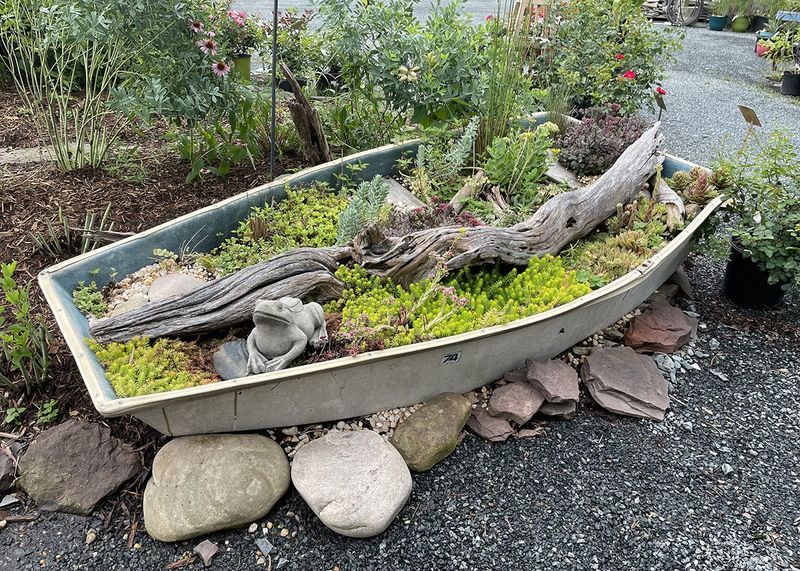
That weathered hull sitting in the corner of your yard might look like a lost cause, but with some planning it can become the most eye-catching thing in your garden. Treating an old boat as an oversized container is the core idea, and the steps are closer to container gardening than to any special boating skill.
The payoff is a planter that looks like the tide just left it behind, spilling over with color. Before you haul out a shovel, though, there are a few things worth checking first.
First, decide whether the boat belongs in the garden
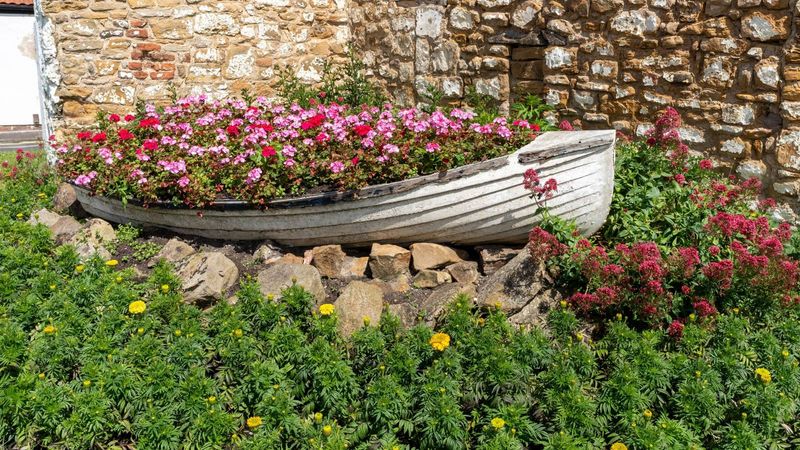
Walk around the hull slowly and push on the sides, bottom, and transom with firm hand pressure. A boat that flexes dramatically, crumbles at the touch, or has sections that have already collapsed is not a safe candidate.
Moist potting mix is heavy, and a structurally unreliable vessel can buckle or tip once it carries that load.
Sharp corroded hardware, exposed bolts with jagged edges, and protruding nails are worth addressing before anyone works around the boat or children play nearby. Grind or remove any hardware that poses a cut risk, and wear heavy gloves during that work.
A boat with manageable surface weathering and solid ribs can still make a striking planter; the character lines in old wood add to the washed-ashore look rather than detract from it.
Stability on the ground matters as much as the hull’s strength. Flat-bottomed skiffs and canoes usually rest level without help, but a V-bottom hull will rock unless it is supported.
Boat-specific planting guidance notes that V-bottom boats may need exterior blocking or a simple cradle to stay upright once filled. Position the boat on the flattest section of your yard, check that it cannot roll or shift, and add pressure-treated timber or gravel supports beneath the keel if needed.
One more consideration before moving forward: EPA documentation on vessel disposal notes that boats can contain oil, fuel, lubricants, and deteriorating coatings. A quick visual inspection for oily residue, fuel smell, or flaking paint inside the hull is worth doing at this stage, before you commit to the project.
If the interior smells strongly of fuel or shows heavy contamination, the conversion may not be practical without professional cleaning.
Unknown coatings change the preparation plan
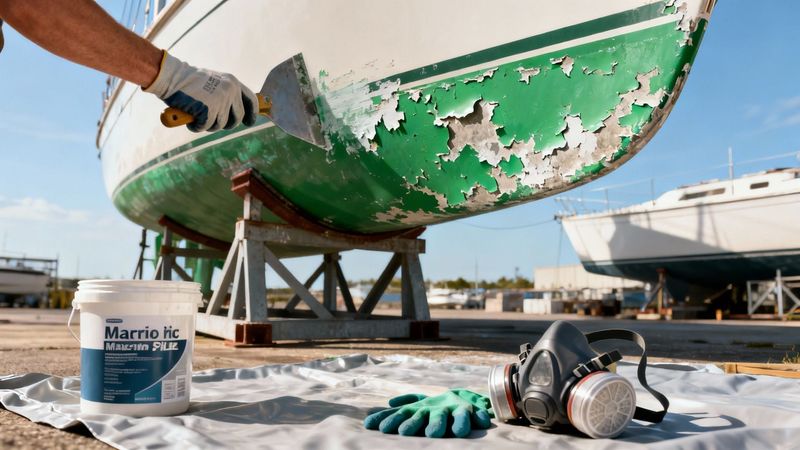
Before cutting, sanding, scraping, or filling the boat, find out as much as you can about what it is made of and what has been applied to its surfaces. Wood, fiberglass, aluminum, and steel each have different failure modes, and each may carry different coatings or residues.
Taking fifteen minutes to research the boat’s history can save you from a much larger problem later.
Wooden hulls are the most common find in a backyard. Older salvaged wood may have been treated with preservatives such as chromated copper arsenate, or CCA.
Oregon State University Extension guidance on pressure-treated wood advises caution when working with old lumber of unknown treatment, particularly for edible garden beds. For an ornamental flower display, the risk is lower, but it is still worth knowing what you are handling.
Antifouling bottom paint is a particular concern. Many older boat bottom paints contain copper compounds and other biocides designed to prevent marine growth.
EPA aquatic life criteria for copper identify antifouling paint as a significant source of copper pollution, and the agency warns against allowing old paint chips or sanding dust to enter soil or water. Do not casually sand, scrape, pressure-wash, or grind an unknown painted hull.
If the paint is intact and you are planting ornamentals rather than food crops, leaving it undisturbed is far safer than creating dust.
Unknown old coatings on any surface deserve caution. EPA guidance on reducing lead exposure at home recommends avoiding DIY disturbance of deteriorating painted surfaces and consulting lead-safe professionals when the coating’s age and composition are uncertain.
The agency does not claim that every old boat contains lead, but older painted surfaces warrant careful handling rather than aggressive mechanical preparation.
Fiberglass boats introduce a separate work hazard. Cutting or sanding fiberglass releases fine particles that can irritate eyes, skin, and the respiratory tract.
OSHA identifies synthetic mineral fibers as an exposure concern in workplace settings, and the same logic applies to backyard modification. If you must cut a fiberglass hull, work outdoors, minimize cutting, control dust, and wear appropriate eye and respiratory protection.
When the boat’s history is genuinely unknown, planting ornamental flowers rather than vegetables or herbs is the safer default, because unknown coatings and materials warrant more caution for edible crops.
A boat planter needs a real drainage system
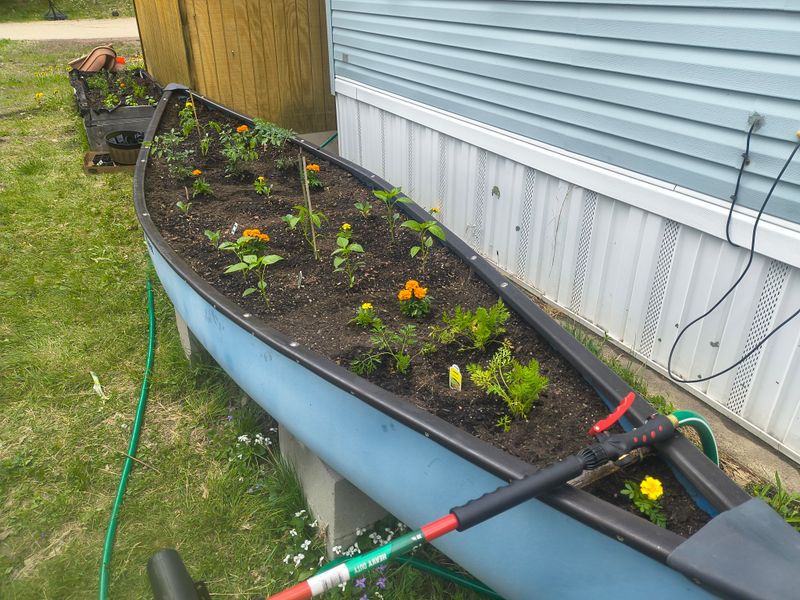
How you handle drainage depends on one key distinction: a sealed-bottom hull with intentional holes behaves like a very large container, while a hull whose bottom has been removed or opened to the soil behaves more like a raised bed. The watering, soil, and winter-care advice differs between the two, so it is worth deciding which approach you are taking before you fill the boat with anything.
For a sealed hull, the most important step is creating multiple drainage holes through the lowest points of the bottom. Relying on existing leaks is not a safe substitute.
A leaky hull may still hold water in low spots after rain, and the boat can remain saturated long enough to suffocate roots. University of Illinois Extension identifies drainage holes as critical for container plants, noting that excess water deprives roots of oxygen and creates conditions for root rot.
Drill or bore several holes spaced across the lowest section of the hull rather than depending on a single opening or natural deterioration.
A gravel layer inside the boat does not fix a drainage problem. University of Illinois Extension specifically addresses the widespread belief that gravel in the bottom of a container improves drainage, and the conclusion is clear: water can perch above a gravel layer rather than moving through it, actually raising the zone of saturation rather than lowering it.
Skip the gravel inside the soil profile entirely.
Gravel still has a role outside the boat. Spreading a few inches of coarse gravel beneath and around the hull can help level and stabilize it, especially on uneven ground or for a V-bottom that needs support.
University of Minnesota Extension guidance on raised bed gardens supports placing beds on stable, well-drained ground as a foundation step. Once the boat is level, secure, and properly drilled, you have a functional oversized container ready for the next stage.
Fill the hull with a light, workable growing medium
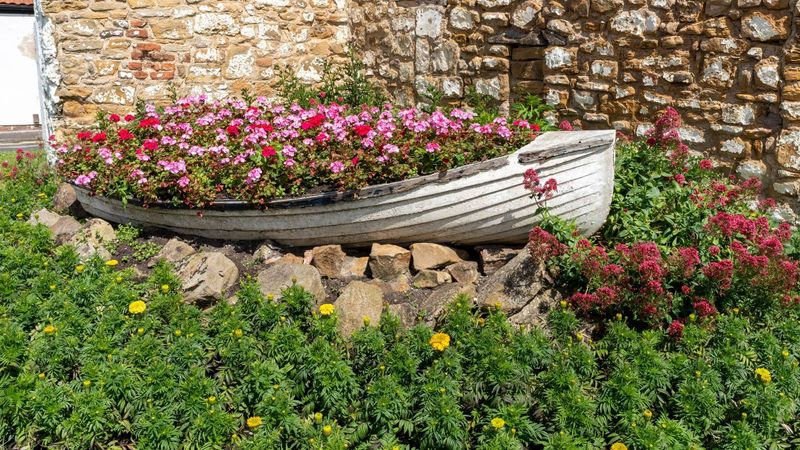
Garden soil straight from the yard is the wrong choice for a boat planter. In any container, garden soil tends to compact over time, squeezing out the air pockets that roots depend on and slowing drainage to the point where water sits against the roots instead of moving through.
Penn State Extension’s container gardening guidance recommends a commercial container or soilless potting mix rather than native soil, precisely because those mixes are formulated to stay loose and drain well even after repeated watering.
A good bagged potting mix typically contains peat moss or coco coir, perlite or vermiculite, and sometimes a slow-release fertilizer. Those ingredients keep the medium light enough that roots can push through it freely and water can drain to the holes you drilled rather than pooling.
For a large boat, you may need several bags; buy more than you think you need, because the mix will settle slightly after the first few waterings.
The boat’s depth does not change the basic container-soil rule, and it does not mean the planting zone is unlimited. Most annual flowers root in the top eight to twelve inches of a container.
If the hull is very deep, you can reduce the amount of mix needed by placing a clean, inverted nursery pot or a sealed plastic container in the bottom to take up space, then filling the remainder with potting mix up to a few inches below the gunwale. What matters is that the growing zone has enough loose, well-aerated medium for roots to establish, not that the boat’s old materials contribute anything to plant nutrition.
The character of the hull is purely visual; the potting mix does the actual horticultural work.
Choose flowers for the boat’s light and the season
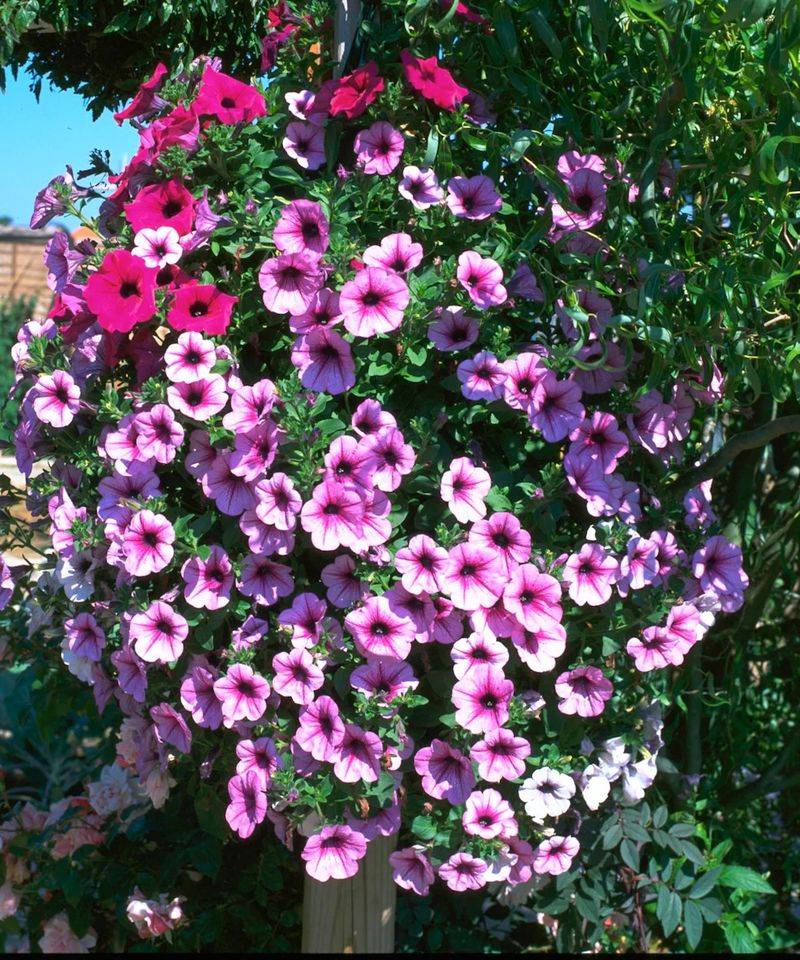
Sunlight is the first filter for plant selection, and it overrides personal preference. Count the hours of direct sun the boat receives on a clear day.
Most popular annual flowers, including petunias and geraniums, need roughly six to eight hours of direct sun to bloom well. A shaded spot under a tree calls for impatiens, begonias, or coleus instead, and no amount of fertilizer compensates for placing a sun-loving plant in deep shade.
Annual flowers are the broadly practical recommendation for a boat planter because they complete their life cycle in one season and do not leave overwintering roots exposed to freezing temperatures in an above-ground container. University of Minnesota Extension notes that annuals provide quick color and are relatively easy to establish, making them a reliable choice for a new or unconventional planting situation.
University of Illinois Extension cautions that containerized perennial roots face greater exposure to winter temperature swings than roots in the ground, so promising that any perennial will survive winter in a boat planter is not a safe claim for all US climates.
For a sunny boat, petunias and geraniums are well-supported choices. University of Minnesota Extension guidance on growing geraniums recommends full sun, well-drained soil, and containers with drainage holes, which maps directly onto a properly prepared boat planter.
Trailing petunias are especially useful along the gunwales because they spill over the edge rather than growing straight up, reinforcing the overflowing, washed-ashore feeling.
Timing matters as much as plant selection. Tender annuals such as petunias and pelargonium-type geraniums cannot tolerate frost.
Penn State Extension’s guide to annual hardiness directs readers to local frost dates rather than a single national calendar. Check your area’s last expected frost date and read the plant tag before setting anything outside.
Woody plants like hydrangeas can grow in containers under the right conditions, but they require climate-specific winter protection and are not a universally easy swap for annuals in a boat planter.
The washed-ashore look comes from the planting profile
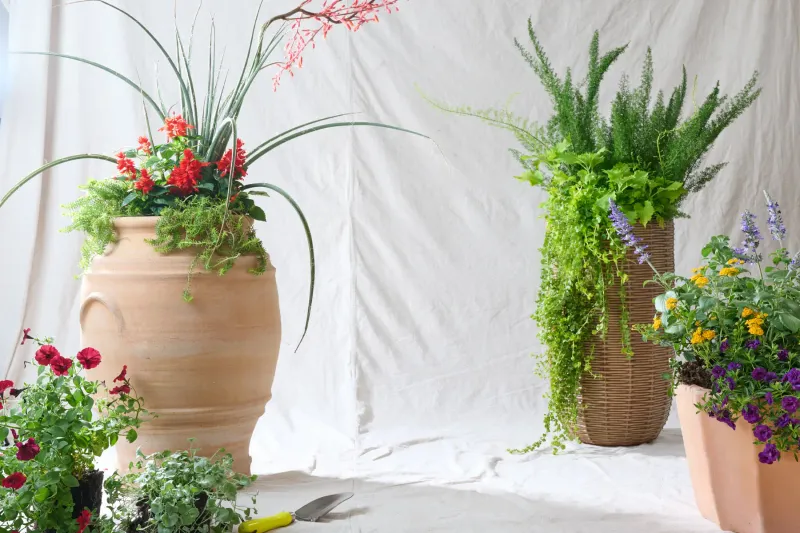
Arrangement does more visual work than the individual plants you choose. Penn State Extension’s container design guidance describes a reliable three-part formula: one tall or upright thriller anchors the planting, mounding plants fill the middle body, and trailing spillers drape over the edges.
Applied to a boat, that structure transforms a flat mass of flowers into something that reads as overflowing rather than planted.
Place the thriller toward the stern or center of the hull where it will be seen from the most angles. A spike plant, tall salvia, or ornamental grass works well in this role because height draws the eye first.
Then bring in two or three mounding plants – compact zinnias, mounding petunias, or calibrachoa – to fill the midsection of the hull and create density. Finally, let trailing petunias, sweet potato vine, or bacopa tumble over the gunwales and bow so that flowers appear to pour from the hull rather than sit inside it.
Color restraint strengthens the effect. A palette of two or three colors that repeat across the thriller, mounding plants, and spillers looks purposeful.
A boat stuffed with every available color can read as chaotic rather than abundant. Choosing one bold color, one soft complement, and a foliage plant that ties them together gives the display the kind of cohesion that makes viewers stop and look twice.
A few plants softening the boat’s hardest lines – the sharp angle of the bow, the flat top of the transom – complete the illusion. When foliage and flowers blur those edges slightly, the hull stops looking like a planter and starts looking like something the water left behind.
That single visual shift is what makes a boat flower bed feel memorable rather than merely quirky.
Plan for thirstier roots than the boat suggests
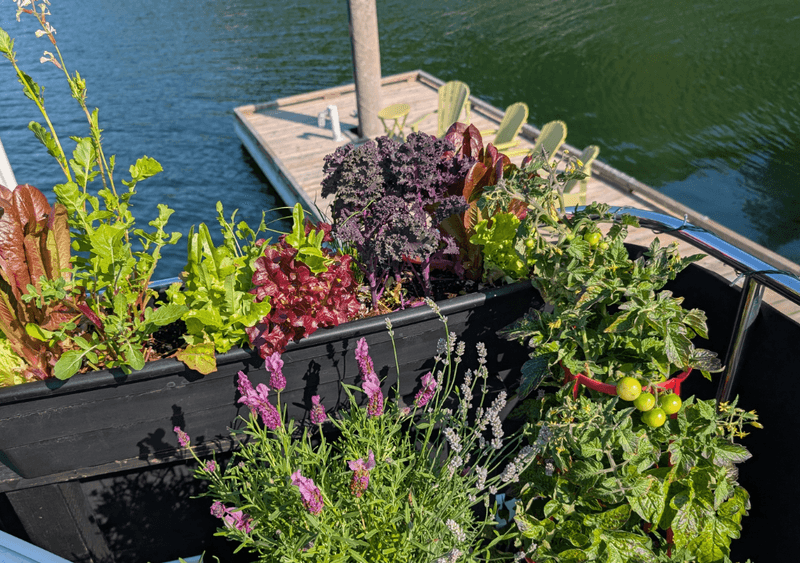
A large, deep hull can create a false sense of security about watering. The boat looks substantial, and it is easy to assume that all that soil volume holds moisture for days.
Container plants do not work that way. Limited soil volume, exposure to sun and wind on multiple sides, and the fast-draining potting mix you chose all combine to make a boat planter dry out faster than a flower bed in the ground.
University of Illinois Extension’s container gardening guidance recommends checking soil moisture regularly rather than watering on a fixed schedule. Push a finger two inches into the mix; if it feels dry at that depth, water thoroughly.
Watering thoroughly means adding water slowly until you see it exit the drainage holes at the bottom of the hull, which confirms that the entire root zone has been reached and that salts are being flushed out rather than accumulating.
Hot, dry summer weather can push the interval between waterings to once a day or even twice for smaller plants in full sun. The factors that affect frequency include the intensity of sun exposure, daytime temperatures, wind, the type of plants in the boat, and the material of the hull itself.
A dark metal hull sitting in full afternoon sun will heat the soil and accelerate drying far more than a shaded wooden one. There is no single schedule that works for every setup.
Keeping the mix waterlogged is just as damaging as letting it dry completely. After a heavy rain, check that water is actually draining through the holes rather than pooling inside the hull.
If the mix stays saturated for more than a day after rain, the drainage holes may need to be enlarged or additional ones added. Consistent moisture without standing water is the target, and getting there takes a week or two of observation before you settle into a routine.
A sound hull and healthy annuals make the best shoreline illusion
The sequence that makes this project work is straightforward: inspect the hull for structural reliability and sharp hardware, investigate unknown coatings and materials before disturbing them, secure the boat on level ground with proper support, drill intentional drainage holes at the lowest points, and fill the hull with commercial container mix rather than garden soil. Each step sets up the next, and skipping one undermines the rest.
Plant selection follows the same practical logic. Match annuals to the boat’s actual light exposure, check local frost dates before setting tender plants outside, and combine an upright thriller, mounding mid-plants, and trailing spillers so the flowers appear to pour from the hull.
Boat-specific planting guidance and Penn State Extension’s container design principles both point toward the same result: a safe, well-drained oversized container planted for seasonal color.
The memorable effect does not come from the boat’s age or its history on the water. A properly prepared hull with the right mix and the right plants becomes a focal point because it is overflowing with life, not because it is left to rot.
That distinction, between a managed container and an abandoned wreck, is exactly what makes the shoreline illusion convincing.