
If You Keep Ripping Clover Out Of Your Lawn, Here’s The 250 Pounds Of Free Nitrogen You’re Quietly Throwing Away
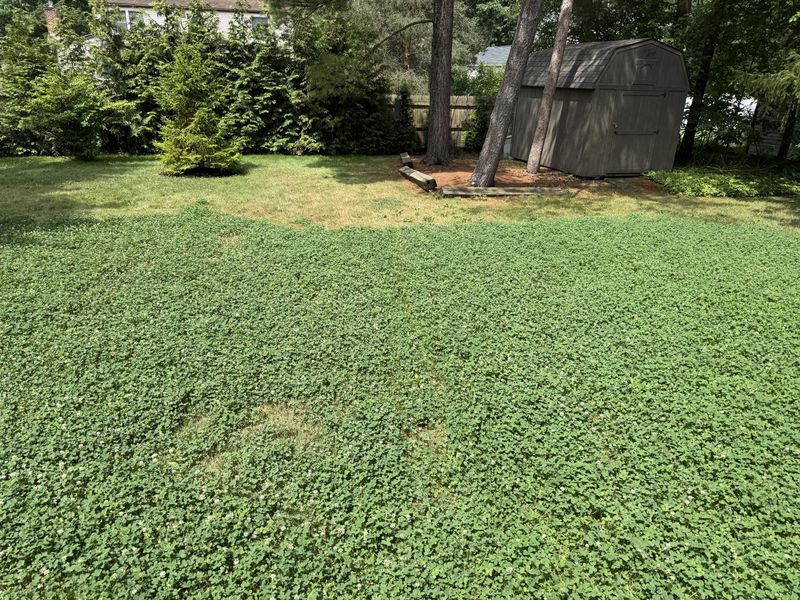
That low-growing, three-leafed plant spreading through your grass is white clover, and most homeowners yank it out without a second thought. Before you grab the gloves again, there’s a real case for pausing and learning what clover is quietly doing underground.
The headline number of 250 pounds of free nitrogen sounds enormous, but the actual story is more nuanced and still worth knowing for anyone trying to spend less on lawn fertilizer.
Clover can make nitrogen, but that does not make it instant lawn fertilizer
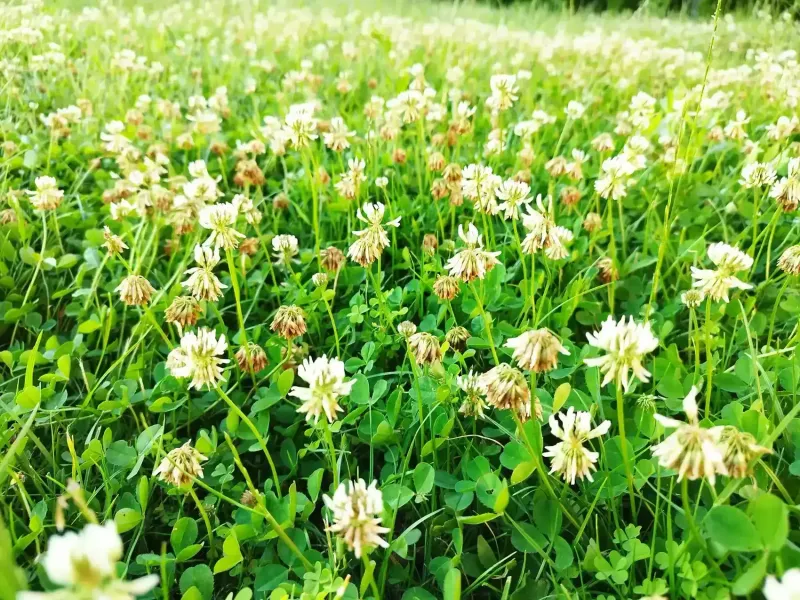
White clover, also called Dutch white clover, is the low-growing, three-leafed plant most homeowners find spreading through their turf. Plenty of people pull it because it looks out of place in an otherwise uniform grass lawn, spreads aggressively by stolons, and can attract bees where barefoot kids play.
Those are fair reasons to manage it, and nothing about clover’s biology makes it untouchable.
What makes clover genuinely different from a typical broadleaf weed is what happens underground. University of Minnesota Extension explains that white clover forms a working partnership with Rhizobium bacteria inside small root nodules, where the bacteria convert atmospheric nitrogen into organic nitrogen compounds the plant can actually use.
That process is called biological nitrogen fixation, and it’s the reason legumes like clover can thrive in low-nitrogen soils where other plants struggle.
The key distinction is what that fixed nitrogen does next. Clover uses most of it to fuel its own growth, packing nitrogen into its leaves, stems, roots, and nodules.
Minnesota’s Dutch white clover profile notes that the plant can indicate low-nitrogen or compacted soils, which tells you something important: clover is a responder to poor conditions, not a guaranteed cure for them.
Calling clover an internal nitrogen source is accurate. Calling it an automatic fertilizer delivery system for every grass blade around it is not.
The nitrogen it fixes has to travel through a process before neighboring grass sees any benefit, and several things can interrupt that journey. Understanding the gap between what clover fixes and what grass receives is the starting point for making a smart decision about whether to keep it, manage it, or remove it from your lawn.
The 250-pound number does not describe an ordinary home lawn
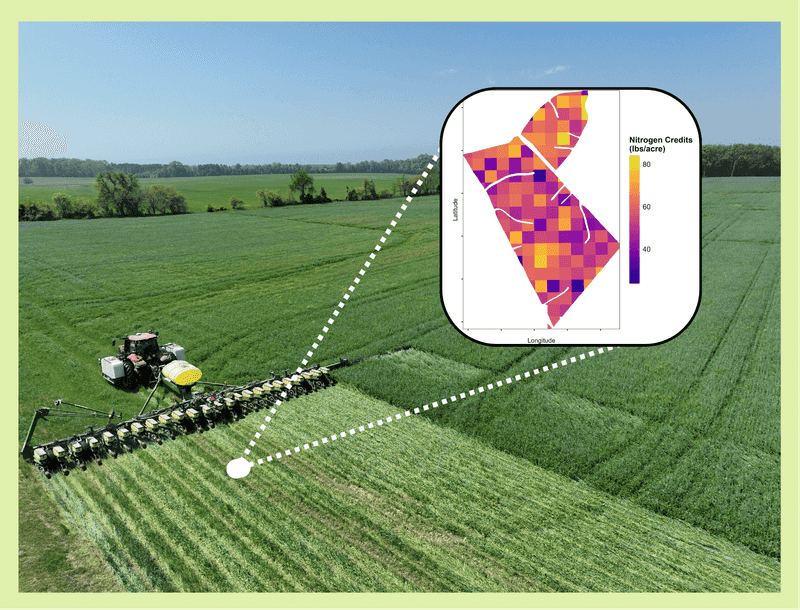
The 250-pound figure that appears in clover headlines comes from agricultural and turf research measuring how much nitrogen legumes can fix per acre per year under reasonably favorable conditions. It is a field-scale estimate, not a number stamped on every suburban lawn that happens to have clover in it.
University of Minnesota Extension places white clover’s fixation range at roughly 115 to 180 pounds of nitrogen per acre per year, and notes that the actual output varies widely depending on soil nitrogen levels, moisture, temperature, pH, bacterial effectiveness, clover species, and how vigorously the plant is growing. That range alone shows why a single headline number is misleading: a patch of stressed, sparse clover in compacted soil fixes far less than a dense, healthy stand in ideal conditions.
Scale matters just as much. A typical residential lawn covers around 5,000 square feet, which is about 0.115 of an acre.
If you applied a hypothetical fixation rate of 250 pounds per acre to that size, the math works out to roughly 28.8 pounds across the entire lawn. That arithmetic illustrates how the per-acre number shrinks at home-lawn scale, but it still doesn’t reflect reality because it assumes the whole lawn is covered in dense, actively fixing clover, that all the fixed nitrogen stays put, and that none is lost through clipping removal, leaching, or other processes.
A turf-specific field study measured white clover fixation at approximately 24.6 to 33.8 grams per square meter per year, which falls in the 220 to 302 pounds per acre range, but found that only 4.2 to 13.7 percent of that fixed nitrogen actually transferred to associated turfgrass. So even under research conditions, the grass received a fraction of what the clover fixed.
The 250-pound number describes a fixation ceiling under favorable conditions at agricultural scale, not the fertilizer value a homeowner forfeits by pulling a few clover patches.
Fixed nitrogen must move through the lawn’s nutrient cycle
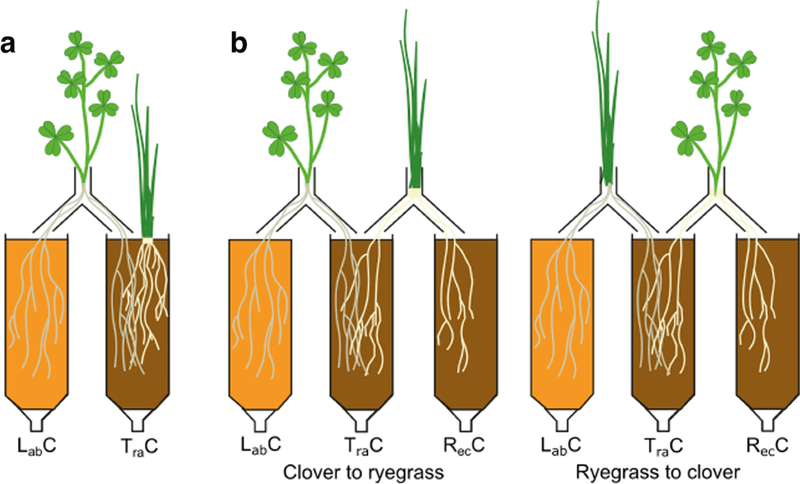
Fixing nitrogen and releasing it as fertilizer are two separate steps, and a meaningful gap exists between them. Right after clover fixes nitrogen, most of it sits inside the plant’s own tissues: the leaves, stems, roots, and those small nodules attached to the roots.
Grass cannot tap into that nitrogen while the clover plant is alive and using it.
USDA Natural Resources Conservation Service guidance explains that fixed nitrogen generally becomes available to other plants after the legume’s tissue dies and decomposes, allowing soil microbes to break it down into forms that grass roots can absorb. If the clover biomass is removed before that happens, whether by bagging clippings, pulling plants, or applying herbicide, most of the fixed nitrogen leaves the lawn along with the plant material.
The idea that nitrogen moves directly from clover roots into neighboring grass roots is too simple and not well supported. The turf field study cited earlier measured transfer of 4.2 to 13.7 percent of fixed nitrogen reaching associated turfgrass, which confirms transfer happens but also shows how variable and limited it can be.
Meanwhile, a University of Bristol study on grazed grass-clover swards did not confirm a simple direct-transfer pathway, though grass and soil nitrogen did increase over time, suggesting that decomposition and soil processes mediated the benefit rather than direct root-to-root exchange.
Both aboveground clippings and belowground residues, including roots and nodules, can contribute nitrogen as they break down. Neither pathway is universally more important than the other; the relative contribution depends on clover density, mowing frequency, clipping management, soil biology, and how long the stand has been in place.
What the research does make clear is that removing plant material cuts the nutrient loop, while leaving it in place gives the system a chance to cycle that nitrogen back into the soil where grass can eventually reach it.
Mowing and clipping return help retain the benefit
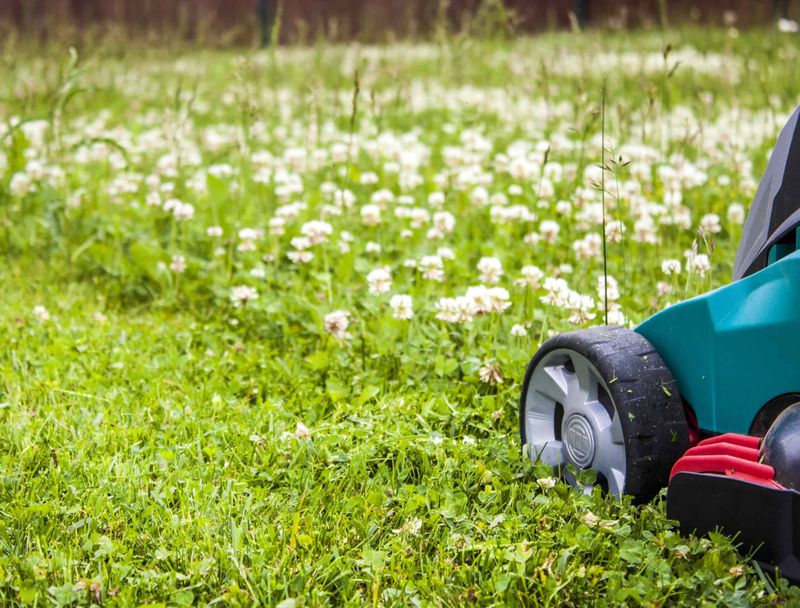
Knowing that nitrogen stays locked in plant tissue until decomposition points directly to a practical action: stop bagging clippings from a lawn that contains clover. When you mow and discharge clippings back onto the lawn, those nitrogen-containing leaf fragments begin breaking down in place, feeding soil microbes and gradually releasing nutrients where the grass can use them.
University of Maryland Extension reports that microclover can provide an organic nitrogen source through lawn clippings as they decay, and that this can reduce annual nitrogen applications in suitable grass mixtures. The word “can” matters here: the actual reduction depends on how much clover is present, how consistently clippings are returned, and what the surrounding grass species need.
Returning clippings is a practical, low-effort way to keep more nutrients on the lawn, but it does not guarantee a specific fertilizer savings.
Mowing height also plays a role. Cutting too low, especially in a single aggressive pass after clover has grown tall, removes a large share of the leaf area and stresses both the clover and the surrounding grass.
Iowa State University Extension describes pollinator lawns, including those with Dutch clover, as mixtures of turfgrass and mowing-tolerant flowering plants managed with some intention rather than left completely uncut. A higher mowing height, typically three to four inches for most cool-season grasses, supports both turf health and clover persistence without turning the lawn into an unmanaged tangle.
USDA NRCS notes that biomass left behind is central to how much nitrogen a legume contributes to the system. The same principle applies to a home lawn: the more nitrogen-containing material stays on the ground, the more the lawn’s own biology can work with it.
Returning clean, mulched clippings after every regular mow is the most consistent way to make that happen without any extra cost or equipment.
A mixed grass–clover lawn offers a middle path
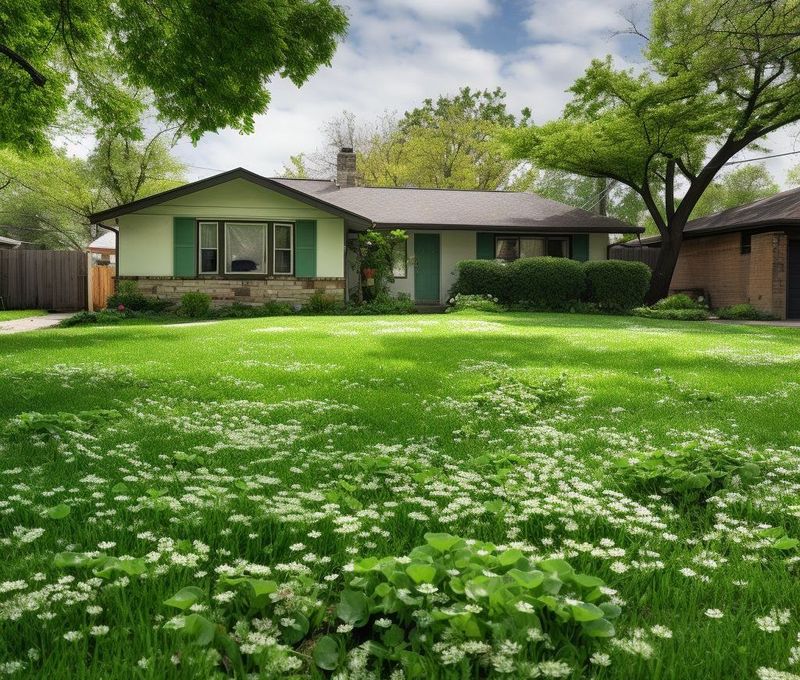
Removing every trace of clover from a lawn takes real effort and ongoing herbicide or hand-weeding. Replacing the entire lawn with a pure clover stand creates a different set of problems.
A grass-clover mix sits between those two extremes and works reasonably well for homeowners willing to adjust their expectations slightly.
University of Maryland Extension points out that pure clover lawns are not supported by current research in Maryland and come with real drawbacks: clover loses leaves in winter, leaving bare patches that weeds and erosion can exploit before spring growth fills them back in. Clover also performs poorly in shade, struggles with high heat and drought, and is vulnerable to certain diseases.
A lawn that is mostly clover may look fine in May and rough by August.
White clover flowers do provide food for some bees and other pollinators, and that is a genuine benefit worth acknowledging. Iowa State University Extension includes Dutch clover among the mowing-tolerant flowering plants suitable for pollinator lawns, framing them as mixtures of turfgrass and selected flowering species rather than a single-species replacement.
Maryland characterizes clover’s pollinator value as limited compared with plantings that include multiple native flowering species, so if supporting bees is the main goal, clover alone is a starting point, not a complete solution.
For most backyard gardeners, the most realistic middle path is a lawn that allows five to twenty percent clover coverage, mowed at a consistent height with clippings returned. That approach captures some nitrogen cycling benefit, tolerates occasional clover flowers, and keeps the turf dense enough to resist weed pressure.
Matching the grass species to the site, including sun exposure, foot traffic, and climate, matters more than hitting any particular clover percentage.
Clover may reveal weak turf or poorly matched management
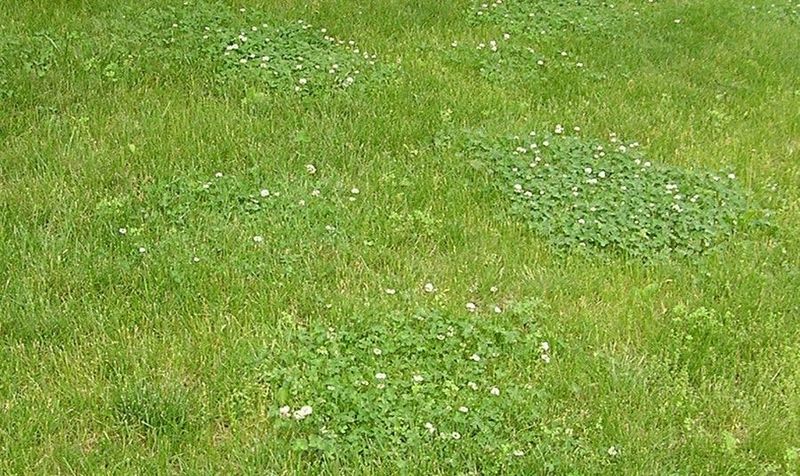
An expanding clover population is often a signal, not just a nuisance. White clover shows up most reliably where turf is thin, underfertilized, compacted, or drought-stressed, because those are exactly the conditions where a nitrogen-fixing plant has a competitive advantage over grass that needs external fertility to stay dense.
University of Minnesota Extension notes that white clover can indicate low nitrogen, compaction, or drought stress in a lawn, which means its presence is telling you something useful about your soil or management.
Penn State Extension identifies clover as more prevalent where turf fertility is low, while Minnesota Extension ties white clover’s spread to specific soil conditions. Improving turf density through proper fertilization, aeration to relieve compaction, overseeding thin spots, and adjusting irrigation can reduce clover’s competitive edge without relying on repeated herbicide applications.
The goal is a lawn that’s thick enough to crowd clover out naturally.
A soil test is the right starting point for any fertilizer decision. Penn State Extension recommends soil testing as the basis for clover fertility management and notes that grass-clover stands with less than roughly 30 percent clover may still benefit from nitrogen applications to support grass growth.
That 30 percent figure applies to managed grass-clover stands in Penn State’s guidance and is not a universal residential threshold; your fertilizer needs depend on grass species, soil test results, mowing habits, clipping return, climate, and what you want the lawn to look like.
One nuance worth understanding: research from grazed grass-clover systems, including the University of Bristol study, found that higher nitrogen fertilizer rates reduced the proportion of fixed nitrogen and decreased clover content over time. That finding comes from grazing systems and may not translate directly to a mowed residential lawn, but it does suggest that heavy nitrogen applications are not the smartest tool for managing a lawn where you want clover to contribute.
Applying fertilizer only when soil tests indicate a genuine need protects both your budget and the biological processes already working in the lawn.
Choose whether to manage clover based on the lawn you want
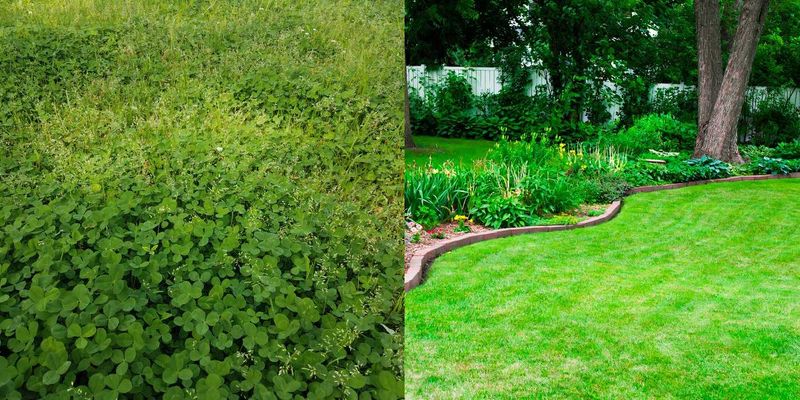
Keeping white clover makes sense when you want a lower-input mixed lawn, can tolerate occasional flowers, and consistently return clean clippings after mowing. Under those conditions, clover contributes to the lawn’s internal nitrogen cycling, costs nothing, and reduces how often you need to reach for a fertilizer bag.
University of Maryland Extension supports a managed grass-clover mix as a practical lower-input option, provided the site and grass species are compatible.
Reducing clover is the right call when you need uniform turf for heavy foot traffic, when shade or heat causes clover to die back and leave bare spots, or when local conditions simply do not favor it. If clover keeps spreading despite good turf management, that persistence points to a soil or fertility problem worth investigating with a soil test before applying anything.
Penn State Extension ties fertilizer recommendations to soil test results and turf composition, not to clover presence alone.
If herbicide use becomes necessary, know that many broadleaf and nonselective products commonly used on lawns will also kill clover. EPA pollinator-protection guidance and the product label both carry legally required instructions for minimizing harm to bees and other beneficial insects; read and follow them before any application.
The honest takeaway from all of this is that clover offers real, if modest, nitrogen-cycling potential in the right lawn, not a guaranteed windfall of 250 pounds of free fertilizer. Knowing the difference lets you make a decision that actually fits your yard.