
If Bald Eagles Have Returned To Your Skies, Here’s The Poison That Nearly Wiped Them Out (And What Pulled Them Back)
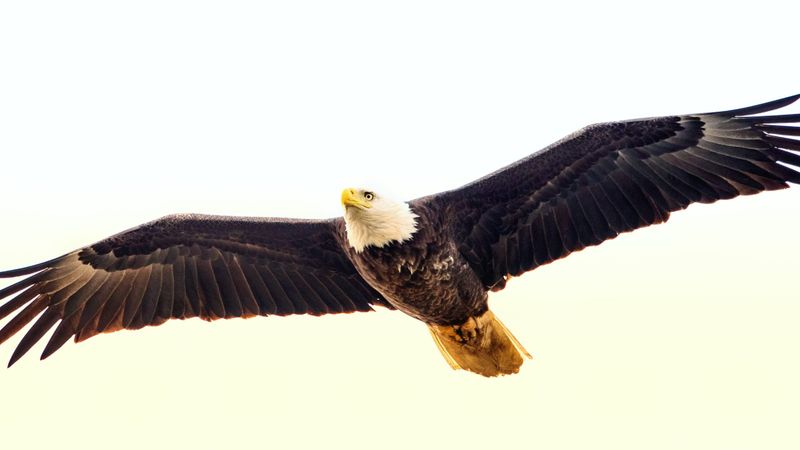
Spotting a bald eagle soaring over a river or reservoir today feels almost magical, yet just a few decades ago that sight had nearly vanished from the lower 48 states. A widely used pesticide called DDT quietly devastated eagle reproduction for years before scientists and regulators understood what was happening.
The story of how that chemical worked, why it was stopped, and what it took to bring eagles back is one of the most important environmental lessons in American history.
The eagle in your sky survived a lower-48 reproductive crisis
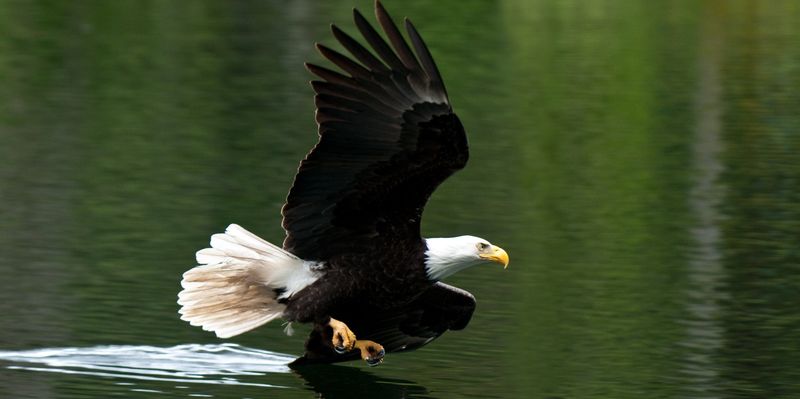
Watching a bald eagle ride a thermal above a lake or swoop toward the water is a genuinely different experience from seeing one in a photograph. That bird overhead represents something that came surprisingly close to disappearing from the contiguous United States, though the full picture is more complicated than a simple near-extinction story.
The lower 48 states experienced a severe mid-century population crisis, but Alaska told a different story. Alaska’s bald eagle population remained robust throughout the same period, and the federal listing as endangered or threatened applied to the lower 48, not the entire country.
The U.S. Fish and Wildlife Service species profile makes clear that the crisis was concentrated in the contiguous states, where habitat, human activity, and chemical exposure combined to produce a sharp decline.
Before DDT entered the picture, bald eagles in the lower 48 had already been under pressure for well over a century. Persecution and deliberate shooting reduced populations across many regions.
Habitat loss eliminated nesting trees and foraging areas. Changes in prey availability, driven by overfishing and altered river systems, reduced reliable food sources.
Development pushed eagles away from shorelines and wetlands they depended on for hunting.
DDT arrived as a major additional blow on top of those existing pressures. What made it particularly insidious was the way it worked.
Adult eagles continued to fly, hunt, and hold territory while the chemical quietly undermined their ability to reproduce. A population can decline steadily even when many adults survive, if each breeding season produces far fewer young than normal.
That reproductive mechanism is the central question worth understanding: how does a bird population collapse when the birds themselves appear to be alive and functioning?
DDT became DDE before it reached an eagle’s nest
DDT did not travel directly from a farmer’s field to an eagle’s egg in any simple straight line. The contamination pathway ran through water, sediment, and a chain of living organisms, and it changed chemistry along the way before it ever reached a raptor.
After DDT was applied to crops, forests, and wetlands, rain carried residues into streams, rivers, and lakes. Once in aquatic environments, the compound persisted in sediments and water for years.
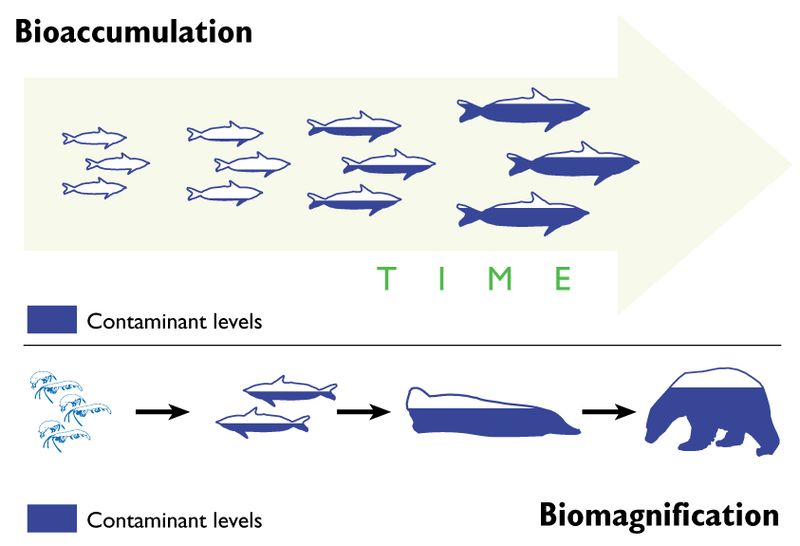
Small invertebrates absorbed it. Fish ate those invertebrates and accumulated the chemical in their fatty tissues.
Larger fish ate smaller fish, concentrating the residue further. Bald eagles, which eat fish as a primary food source, sat at the top of that chain and absorbed the highest concentrations of all.
Federal regulatory records identify DDE, not DDT itself, as the principal breakdown product most closely associated with eggshell thinning in bald eagles.
That chemical distinction matters. DDT was the original pesticide applied in the environment.
DDE was what DDT broke down into over time, and DDE proved more persistent and more closely tied to reproductive harm in raptors. Both compounds are fat-soluble, meaning they dissolve readily into fatty tissue rather than passing through an animal’s body in urine or other waste.
Fat-soluble contaminants do not flush out quickly. They accumulate with each meal.
An eagle eating fish every day for years was therefore receiving a slow, continuous dose. No single contaminated fish caused the problem.
The exposure built across a lifetime of feeding in waterways where DDT residues had settled into the food web. By the time DDE concentrations were high enough to affect reproduction, the chemical had moved invisibly through multiple species before reaching the bird.
That accumulation process, called biomagnification, is why aquatic predators at the top of food chains faced the worst exposure even when environmental concentrations at lower levels seemed relatively modest.
The poison often broke the next generation, not the adult bird
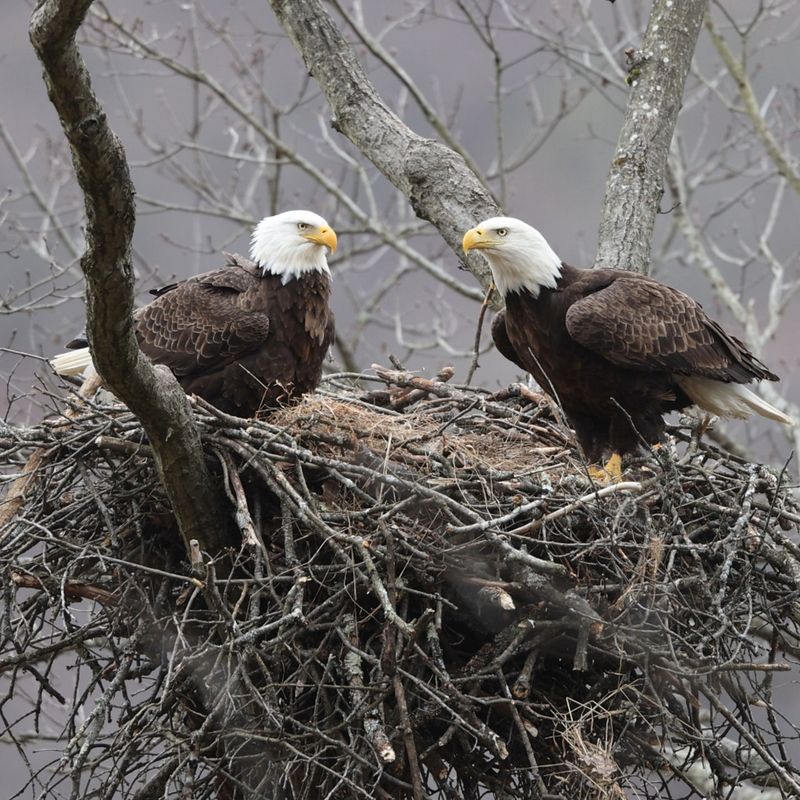
Adult bald eagles exposed to high DDE concentrations often looked perfectly healthy. They flew, defended territories, and returned to the same nest sites year after year.
The damage appeared only when those birds tried to reproduce.
DDE interfered with the biological process of eggshell formation, producing shells that were thinner than normal and more likely to crack under the weight of an incubating parent. Eggs that did not crack outright were still less likely to develop and hatch successfully.
The result was a reproductive collapse that could unfold across an entire breeding season without a single adult eagle dying from the chemical. A long-term Ontario study tracking bald eagle productivity measured this effect directly: productivity fell from 1.26 young per breeding area in 1966 to just 0.46 in 1974, then recovered to 1.12 by 1981 as conditions improved.
DDE concentrations measured in failed eggs were inversely related to reproductive success, meaning higher contamination corresponded to lower output.
That study illustrates the broader causal case, which rests on multiple lines of evidence rather than a single finding. Field biologists observed nests producing far fewer surviving chicks than historical records suggested.
Contaminant measurements in eggs and tissues showed elevated DDE in the most affected populations. Laboratory research demonstrated that DDE could interfere with eggshell formation in controlled conditions.
And after the 1972 prohibition reduced ongoing exposure, reproduction improved in populations where it had been worst.
It would be inaccurate to describe this as a universal effect on every eagle in every location. Research examining multiple raptor species and populations found that sensitivity varied, and that other contaminants including PCBs, dieldrin, and mercury also affected reproduction in some areas.
Habitat quality, prey availability, and human disturbance contributed additional pressure. The EPA’s case study on DDT and aquatic impairment treats the reproductive evidence as strong but appropriately notes the complexity of real-world exposure.
What is clear is that DDE-related reproductive failure, not mass adult mortality, was the primary mechanism pushing lower-48 bald eagle numbers downward during the mid-20th century.
Why the United States prohibited general-use DDT
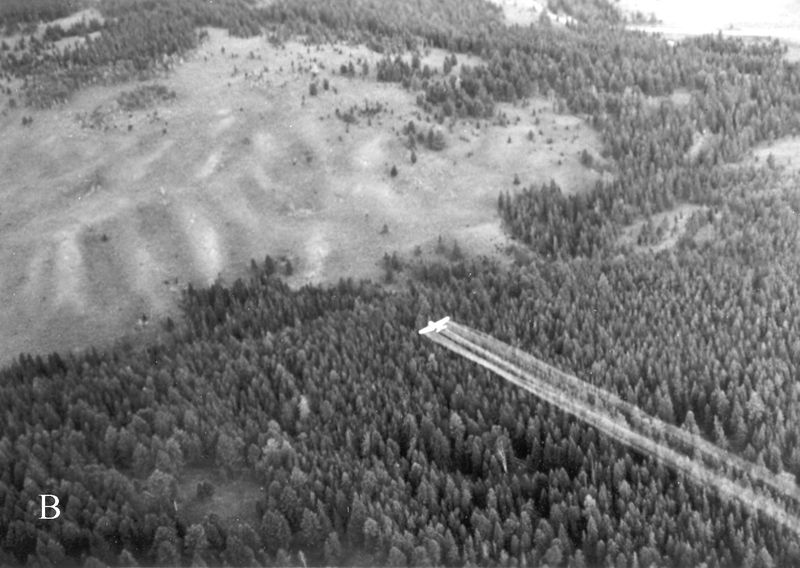
The road to the 1972 U.S. prohibition of general-use DDT was not a straight line from public outrage to regulatory action. Scientific concern had been building for years before it reached a political tipping point, and the process involved government hearings, administrative review, and formal legal proceedings rather than a single moment of decision.
Rachel Carson’s 1962 book “Silent Spring” contributed significantly to public awareness by synthesizing existing research on pesticide effects and presenting it to a general audience in accessible terms. That public concern created pressure for government attention.
But the EPA’s history of DDT describes a regulatory pathway that included scientific review, industry challenges, and a formal administrative hearing process. A 1975 regulatory history survey documents that the EPA’s cancellation of DDT registrations followed years of proceedings, not an immediate response to any single book or event.
Carson helped catalyze public concern; the prohibition followed scientific evidence and formal regulatory action.
When the EPA administrator canceled most DDT registrations in June 1972, the immediate effect was to stop new DDT from entering the U.S. environment through agricultural and other general uses. That mattered enormously, because ongoing application had been the main source of fresh contamination entering waterways and food webs.
Removing that source gave the environment a chance to begin reducing residue levels over time.
Reducing new exposure did not erase historical contamination overnight. DDT and DDE are highly persistent compounds that remained in soils, sediments, and the tissues of long-lived animals for years after application stopped.
EPA guidance on persistent organic pollutants notes that such compounds can continue cycling through ecosystems long after their original source is removed. The 1972 action was a critical turning point, but it set the stage for a slow recovery rather than a rapid one.
The comeback required more than removing one chemical
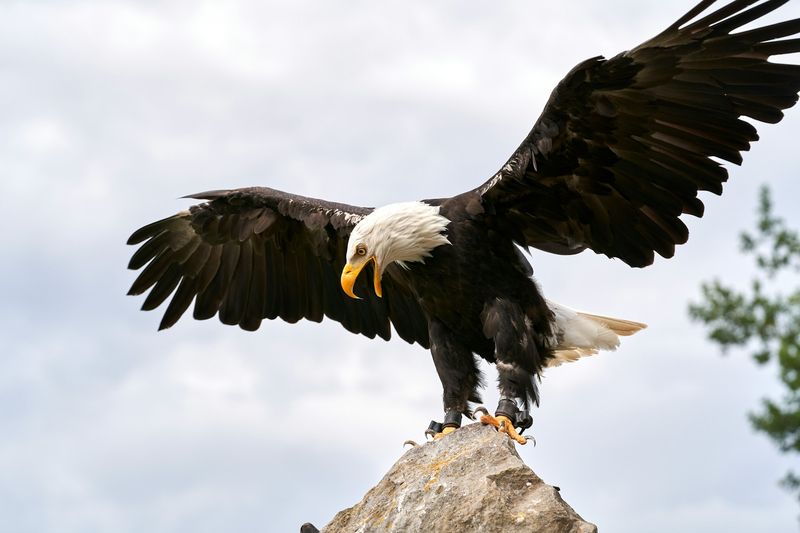
Cutting off new DDT exposure was necessary, but it was nowhere near sufficient on its own to rebuild bald eagle populations across the lower 48. The recovery that followed was a layered effort involving multiple agencies, laws, programs, and years of sustained work.
As DDE concentrations in the environment gradually declined after 1972, eggshell quality improved and reproductive success began recovering in many populations. That biological response was real and measurable.
But eagles also needed protected nesting habitat, reliable food sources, and freedom from the persecution that had already reduced populations before DDT arrived. Legal tools addressed those needs directly.
The Bald and Golden Eagle Protection Act, which predated the DDT ban, made it a federal crime to kill, harass, possess, or disturb bald eagles. The Endangered Species Act, enacted in 1973, added further federal protection and required active recovery planning.
The Fish and Wildlife Service’s 2007 delisting announcement specifically credits reduced pesticide exposure alongside the ESA, habitat protection, nest protection, law enforcement, captive breeding, and reintroduction programs as contributors to the recovery. No single factor carried the species back alone.
Captive breeding and reintroduction programs placed young eagles in regions where populations had been eliminated or severely reduced, giving those areas a chance to rebuild from a foundation of established breeders. Nest protection efforts, including buffer zones around active nests and restrictions on nearby development, helped birds that were reproducing successfully continue to do so without disturbance.
Law enforcement reduced illegal shooting, which had been a significant source of mortality for decades.
The 2007 federal delisting rule estimated 9,789 breeding pairs in the lower 48 states, a milestone that reflected genuine recovery across most of the country. Critically, removal from the endangered species list did not end federal legal protection.
Bald eagles remain protected under the Bald and Golden Eagle Protection Act and the Migratory Bird Treaty Act, meaning the legal framework that supported recovery continues to apply.
What the recovery looks like in numbers
Numbers tell the recovery story clearly, but only if you read them carefully. Different surveys measured different things at different times, and mixing those figures together creates a false picture of how dramatic the decline and comeback actually were.
In 1963, biologists counted approximately 417 known nesting pairs of bald eagles across the lower 48 states. That figure comes from the Fish and Wildlife Service species profile and reflects survey methods of that era, which likely undercounted birds in remote or less-surveyed areas.
A separate 2007 federal estimate cited approximately 487 breeding pairs as a historical low point reference, using a different survey basis. These numbers are not contradictory; they reflect different surveys and estimation approaches applied at different times, and the delisting documentation treats the historical low as a starting reference rather than a precise census.
The 2007 delisting rule estimated 9,789 breeding pairs across the lower 48 at that time, a figure that captured the recovery’s progress over roughly four decades of conservation effort. That number measures breeding pairs, a specific unit that differs from total individuals or occupied nests.
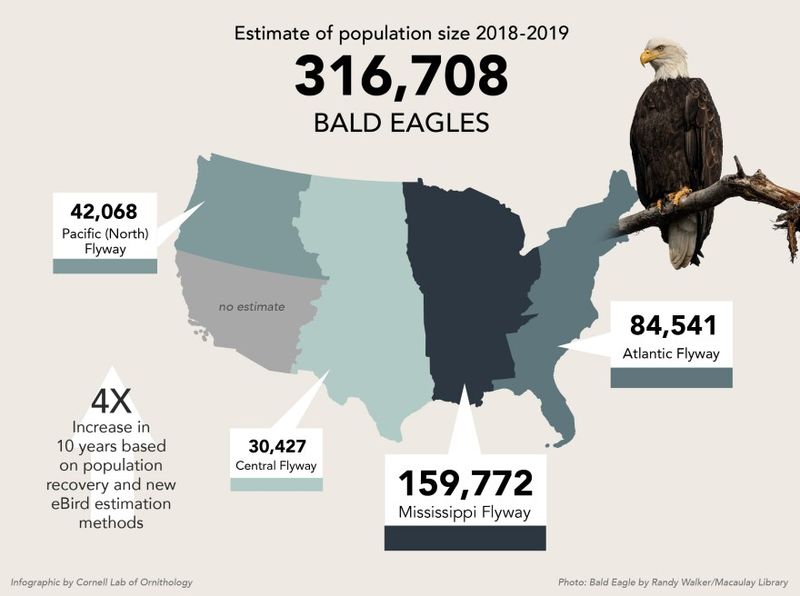
The most recent nationwide lower-48 estimate available comes from the Fish and Wildlife Service’s 2020 population update, which drew on 2018-2019 survey data. That report estimated approximately 316,700 individual bald eagles and 71,467 occupied nests across the lower 48.
The Service’s eagle population status page identifies this as the current published nationwide estimate, not a 2026 census. Individuals, occupied nests, nesting pairs, and breeding-pair estimates are distinct measurements and should not be treated as one continuous data series.
Each figure reflects a specific survey design, geographic scope, and time period.
A healthier national population still faces local dangers
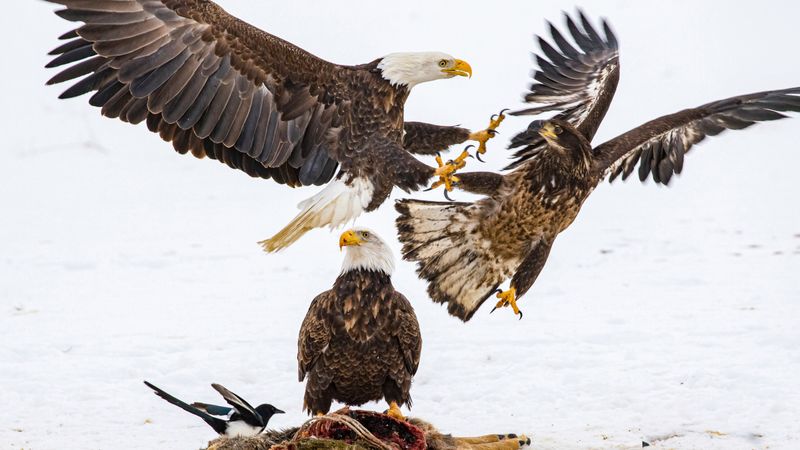
A national population estimate in the hundreds of thousands sounds like complete success, and in many respects it is. But population-level recovery does not translate automatically into safety for every bird in every location.
Lead poisoning remains one of the most consistently documented threats to bald eagles today. Eagles scavenge gut piles left by hunters and ingest lead fragments from rifle ammunition.
They also swallow lead fishing sinkers and jig heads from contaminated waterways. USGS research on bald and golden eagle mortality identifies lead as a significant documented cause of death, though its relative importance varies by region and season.
Electrocution from power lines kills eagles that land on poorly designed utility structures, particularly in open landscapes where perching options are limited. Vehicle collisions occur when eagles feeding on road-killed animals are struck by passing traffic.
Habitat loss continues to eliminate nesting and foraging areas in regions where development pressure is high. Nest disturbance from human activity, including recreational use near active nest sites, can reduce productivity even without any toxic exposure.
A 2023 USGS open-file report on eagle mortality documents the range of causes affecting bald and golden eagles across the country, reinforcing that no single threat dominates everywhere. Mercury contamination from industrial sources affects eagles in some watersheds.
Rodenticides, used to control mice and rats, can move through food webs and reach eagles that eat poisoned prey. The significance of each threat shifts depending on region, habitat type, prey base, and local human activity.
Federal recovery does not mean individual birds or local populations face no danger. The Fish and Wildlife Service species profile continues to list current threats alongside the recovery story, a reminder that conservation status and ongoing risk are separate questions.
Seeing one is a reason to give the recovery room
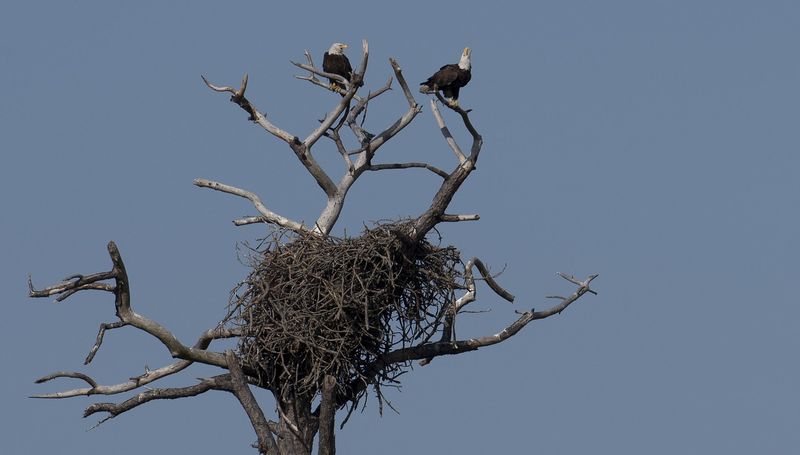
Coming across a bald eagle near a nest, a roost, or a fishing spot is one of the more striking wildlife experiences available in the United States. The instinct to move closer, get a better photo, or watch the bird from directly below is understandable, but it can cause real harm even when the eagle does not immediately fly away.
Human disturbance near active nests can disrupt incubation, stress parents during the critical early weeks of chick development, and in some cases lead to nest abandonment. Eagles that appear calm may still be affected in ways that reduce their productivity for that season or discourage future use of the site.
The safest approach is to observe from a distance using binoculars or a spotting scope, stay quiet, and avoid lingering near nests, roosts, or areas where eagles are actively feeding.
The Fish and Wildlife Service’s guidance on eagle disturbance permits describes a 660-foot buffer around nests as a distance commonly used when evaluating whether human activity might disturb eagles. That figure is a planning and evaluation tool, not a universal rule that applies identically everywhere.
Some national park sites recommend staying at least 1,000 feet from active nests during sensitive periods. FWS guidance on living and working near eagles advises following site-specific recommendations, which may require greater distances depending on terrain, nest activity, and local conditions.
If you find an injured or dead eagle, do not attempt to handle it, move it, or salvage feathers or any part of the carcass. Both living and dead eagles, along with their feathers and parts, are protected under federal law.
FWS frequently asked questions and the agency’s eagle handling guidelines are consistent on this point: contact a permitted wildlife rehabilitator or your state wildlife agency and follow their direction. Resources like the Parker River refuge sick-or-injured wildlife page can help you find the right contact quickly.
Eagles require specialized care, and well-meaning handling by an untrained person can make injuries worse.
The bald eagle’s return is a lesson in prevention

The bird you see circling above a reservoir or gliding low over a river today is there because a lot of things went right after a lot of things went wrong. DDT, through its breakdown product DDE, helped push lower-48 bald eagle reproduction into crisis during the mid-20th century, quietly emptying nests while adults continued to fly.
The evidence connecting DDE to eggshell thinning and failed hatching is strong and built from multiple independent lines of research.
Removing DDT from general use in 1972 was the essential first step, but it was only a first step. The Fish and Wildlife Service’s account of the recovery credits scientific evidence, formal regulation, legal protection, habitat conservation, law enforcement, captive breeding, reintroduction, and careful nest management working together over decades.
No single law, book, or decision produced the comeback on its own.
What the bald eagle’s recovery actually demonstrates is that environmental damage can be reversed when the response is broad enough and sustained long enough. Continued protection under federal law remains part of what keeps that recovery intact.
The eagle overhead is a genuine success story, and it is also a standing reminder that success requires maintenance.