
If Predators Are Circling Your Hummingbird Feeder, Here Are 15 Hidden Threats And How To Shut Each One Out
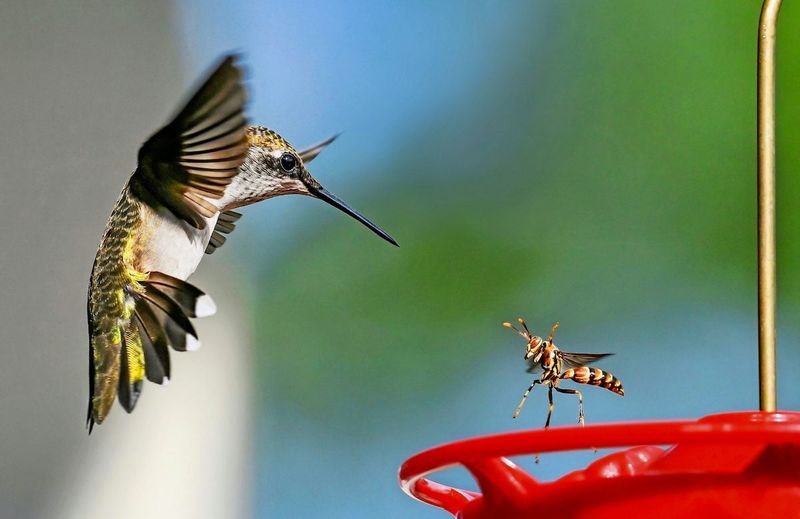
Watching hummingbirds zip up to your feeder is one of the best parts of summer, but they are tiny and fragile, and plenty of trouble is hunting them. Some threats sneak in quietly, like moldy nectar or hidden spiders, while others are bold, like cats and raccoons.
The good news is that almost every problem has a simple, cheap fix you can do today. Here are 15 hidden dangers around your feeder and exactly how to shut each one out.
1. Ants
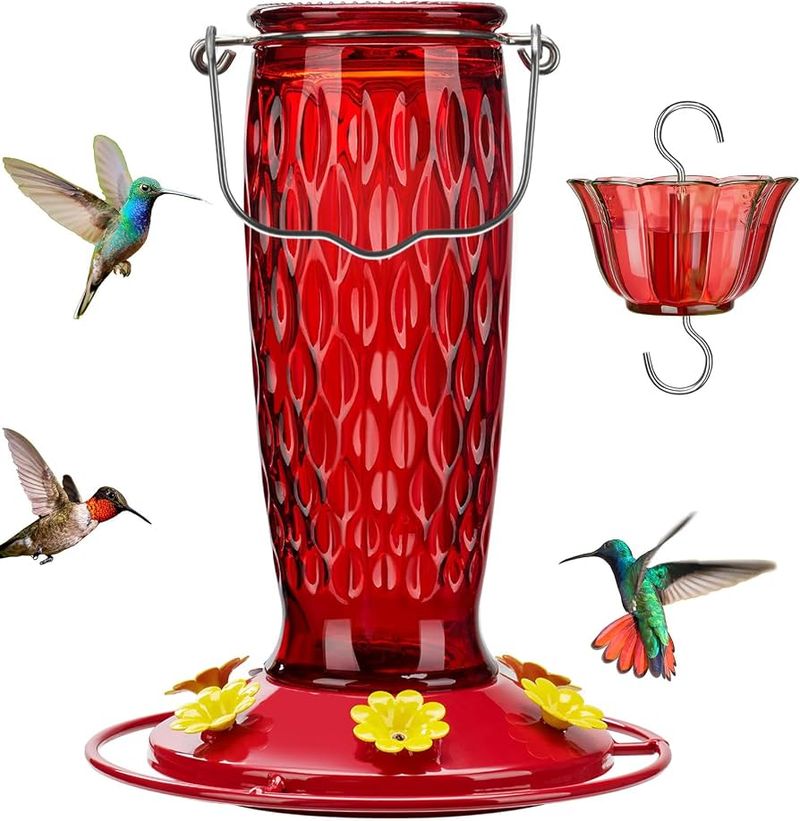
Nothing ruins a fresh batch of nectar faster than a trail of ants marching straight into the feeding ports. They clog the holes, drown in the sweet liquid, and leave behind a mess that sends hummingbirds looking elsewhere.
The easiest defense is an ant moat, a small cup of water that sits above the feeder. Ants cannot swim across it, so keep it topped off and your problem mostly disappears.
Saucer-style feeders help too, since the nectar sits below the ports where ants struggle to reach it.
Hanging the feeder on fishing line makes the climb even harder, and keeping everything clean and leak-free removes the scent that draws them in. Planting a little mint nearby or sprinkling cayenne around the base (never on the feeder) can add extra deterrence.
Skip the petroleum jelly or cooking oil trick, though, because those substances can coat feathers and seriously hurt the birds you are trying to protect.
2. Bees
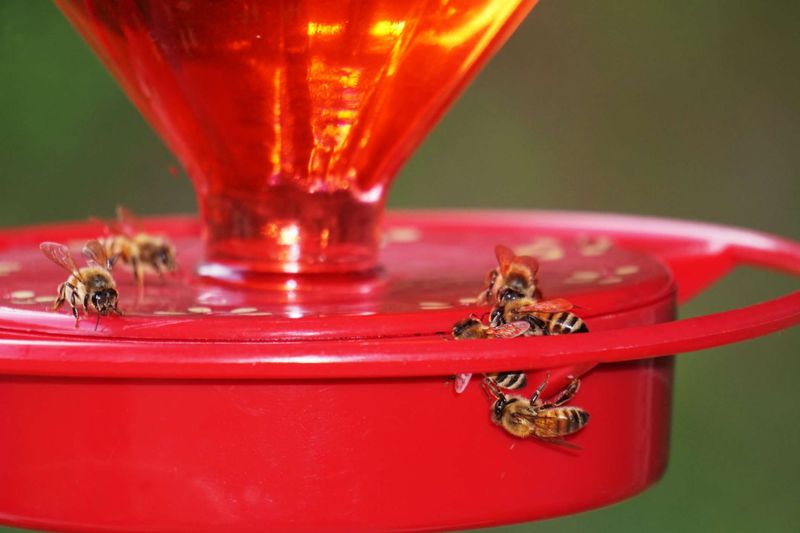
A swarm of bees hovering over the ports turns your feeder into their private buffet, blocking hummingbirds and gulping down the nectar before the birds get a sip. Sometimes they even get aggressive about it.
Bee guards that snap over the feeding holes are your friend here. A hummingbird’s long tongue slips right through, but a bee’s shorter mouthparts cannot reach the nectar tucked below.
Saucer-style feeders create the same barrier naturally.
Color matters more than you might think. Yellow strongly attracts bees, so choose a feeder that is mostly red with no yellow accents.
Bees love full sun, so hanging your feeder in partial shade nudges them away. Keep everything clean and drip-free, and resist the urge to make a super-sweet mix, since a standard one-part-sugar to four-parts-water ratio is far less tempting to them.
If bees keep coming, set up a decoy feeder with a stronger sugar solution in a sunny spot well away from the real one.
3. Wasps, Hornets, and Yellow Jackets
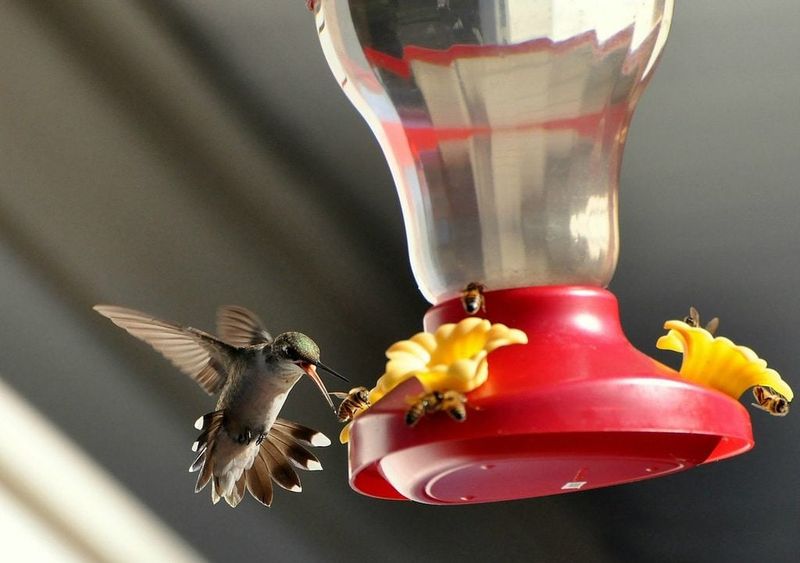
Unlike bees, wasps and yellow jackets bring an attitude. They are territorial, quick to sting both people and birds, and they will happily drain your nectar while chasing hummingbirds off.
The same tricks that work on bees apply here: fit nectar guards over the ports, ditch any yellow parts, and keep the feeder spotless and leak-free. Moving the feeder to a new spot often throws them off, since wasps do not always relocate their foraging route right away.
A concentrated sugar trap placed far from the feeder can pull them away from the action. Tidying up the rest of your yard helps too, so seal garbage cans and rinse recyclables that might be feeding a nearby colony.
Some folks swear by hanging a fake wasp nest nearby, betting that these territorial insects will steer clear of what looks like occupied turf. Whatever you do, avoid pesticides or sticky sprays near the feeder, because they can be deadly to hummingbirds.
4. Bears
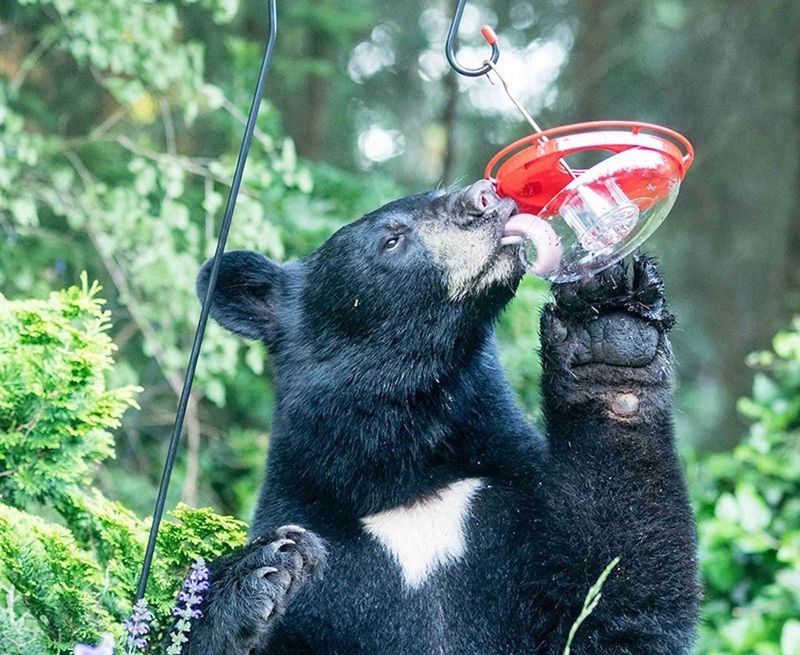
It sounds dramatic, but in bear country a hummingbird feeder is basically a candy dispenser. That sugar water smells irresistible, and a hungry bear will flatten a feeder, a pole, or a whole section of railing to get it.
If bears roam your area, the safest move is to bring feeders inside every night and put them back out in the morning. A hummingbird will still find plenty to drink during daylight hours.
Keep the rest of your yard uninviting by locking up garbage and other food sources that draw bears close in the first place. Some people hang small bags of mothballs at least three feet from feeders on branches bears might climb, but be cautious, because mothballs can be toxic to pets and other wildlife.
When a bear is truly determined, taking the feeder down is always the smartest and safest answer.
5. Raccoons
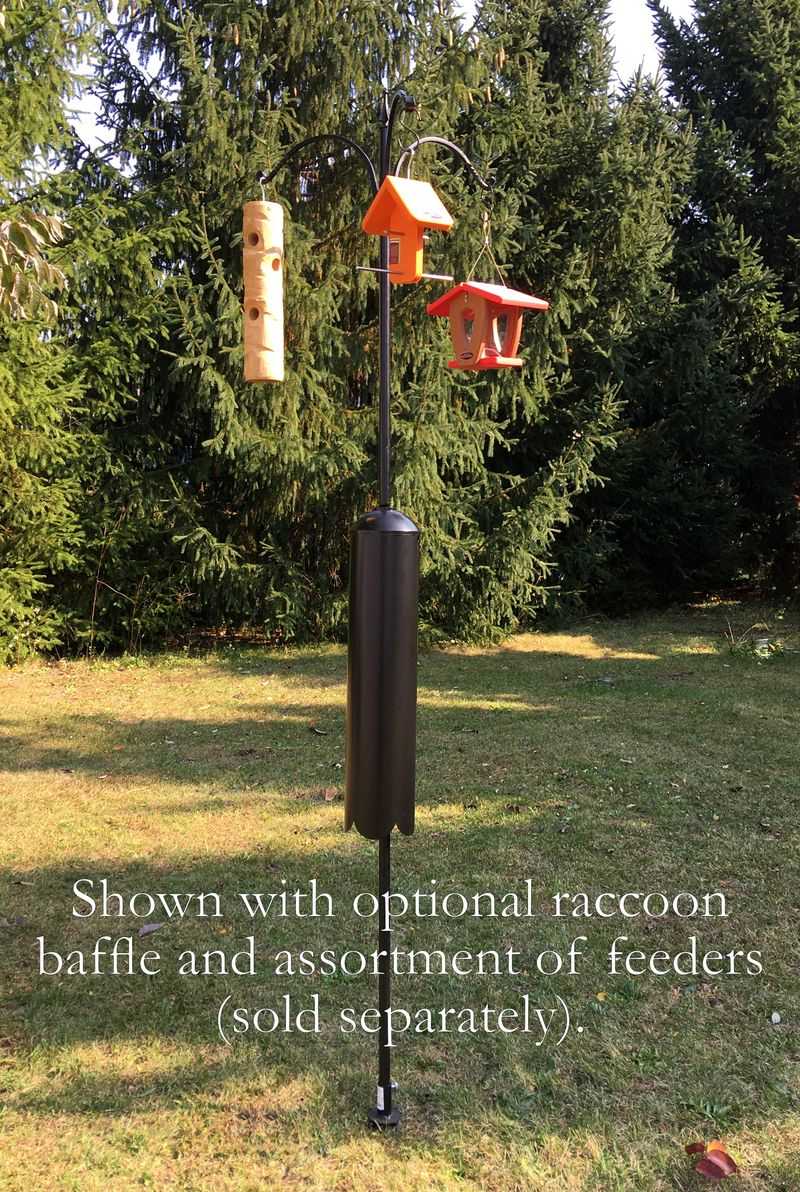
Come nightfall, raccoons treat your feeder like a vending machine. These clever, nimble-fingered bandits climb almost anything, tip feeders over, drain the nectar, and leave germs behind on everything they touch.
A baffle is your best weapon. Slip a pole baffle onto a pole-mounted feeder or a dome baffle above a hanging one, and suddenly that easy climb becomes an impossible one.
Mount feeders on smooth metal poles set well away from trees and fences they could use as a launch pad.
Scent deterrents can add another layer. Raccoons dislike spicy food and strong smells, so a scattering of cayenne pepper or Epsom salt around the pole, or a homemade spray of water, lemon juice, and cayenne, can send them packing.
Since raccoons prowl mostly after dark, simply taking feeders down at night removes their opportunity entirely.
6. Squirrels and Chipmunks
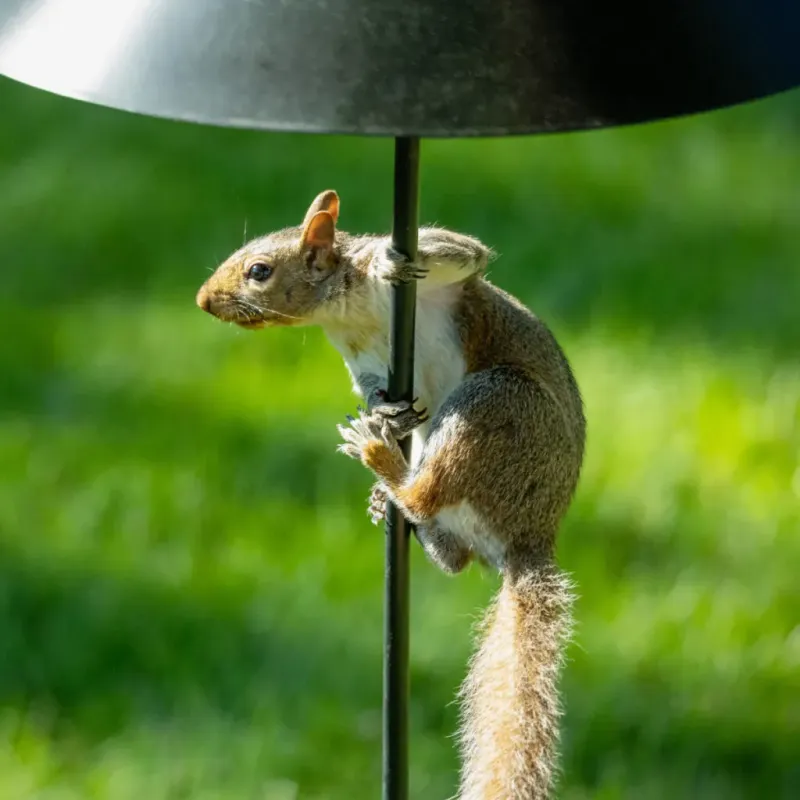
Acrobatic and endlessly hungry, squirrels and chipmunks will slurp nectar right out of a feeder and gnaw on the parts for good measure. Worse, they are known to raid hummingbird nests for eggs and chicks, which makes them a double threat.
Baffles work wonders against these little gymnasts. A pole baffle blocks the climb from below, and a dome baffle stops the drop from above.
Both take away the routes these critters rely on.
Fishing line is another sneaky solution, since their tiny paws cannot get a grip on something that thin and slippery. Placement seals the deal: keep the feeder several feet from trees, shrubs, and fences so they have nowhere to spring from.
Take away the runway and the jump becomes impossible.
7. Cats (Feral or Outdoor)
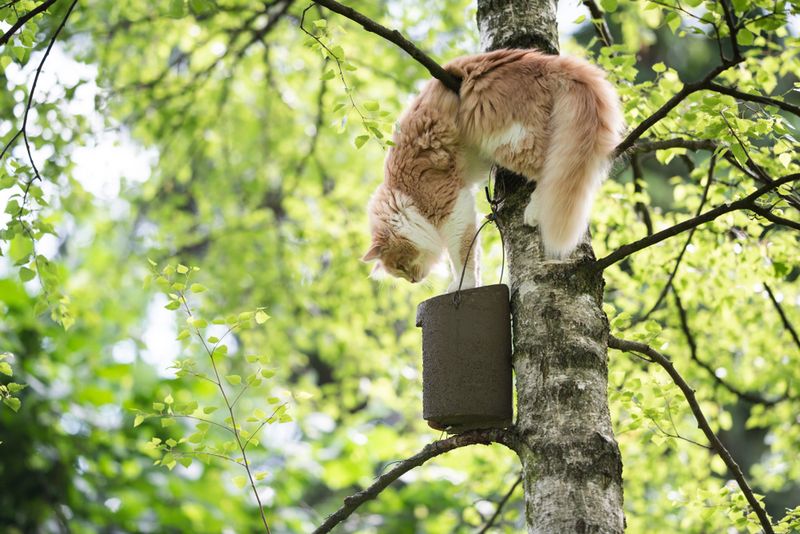
Few predators are as patient as a cat. Feral and outdoor cats will crouch motionless in the shadows, then pounce the instant a hummingbird drops its guard, and they take a staggering toll on backyard birds.
Height and open space are your allies. Hang feeders at least eight feet off the ground and keep them clear of tree limbs, fences, stone walls, and tall brush where a cat can hide and ambush.
With no cover to sneak through, the hunt falls apart.
The single most effective fix is keeping cats indoors, and a catio or secure enclosure lets your own pets enjoy fresh air without the carnage. For cats that are not yours, a motion-activated sprinkler or ultrasonic deterrent does a great job of discouraging visits.
Strong scents such as menthol rub, cayenne, or vinegar sprinkled around the area (not on the feeder) may also help keep them at a distance.
8. Spiders (Especially Orb-Weavers)
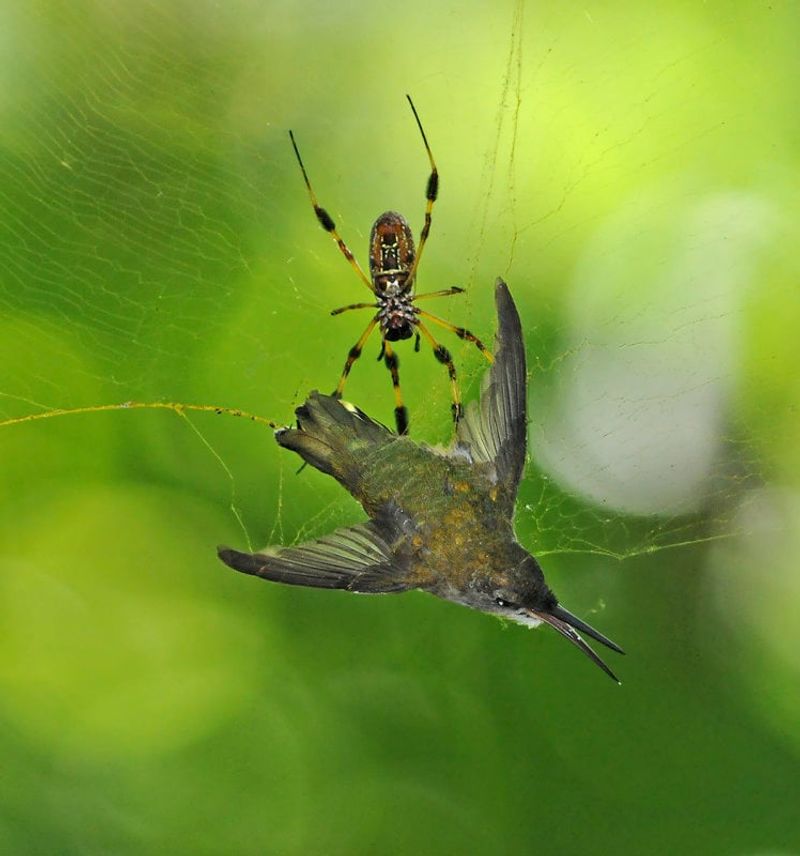
Here is a danger most people never see coming. Big orb-weaving spiders spin webs so strong and sticky that a hummingbird can actually get tangled in them, and feeders are prime real estate because they draw so many insects for the spiders to eat.
A quick daily glance around the feeder is often all it takes. Sweep away any large webs you spot before they turn into traps.
Since many spiders favor sunny corners, hanging your feeder in partial shade makes the location less appealing to them. Keeping the feeder and surrounding area clean cuts down on the insects that lure spiders in the first place.
A slick, smooth hanger or a slippery coating on the hook also makes it tougher for spiders to set up shop right where the birds feed.
9. Praying Mantises
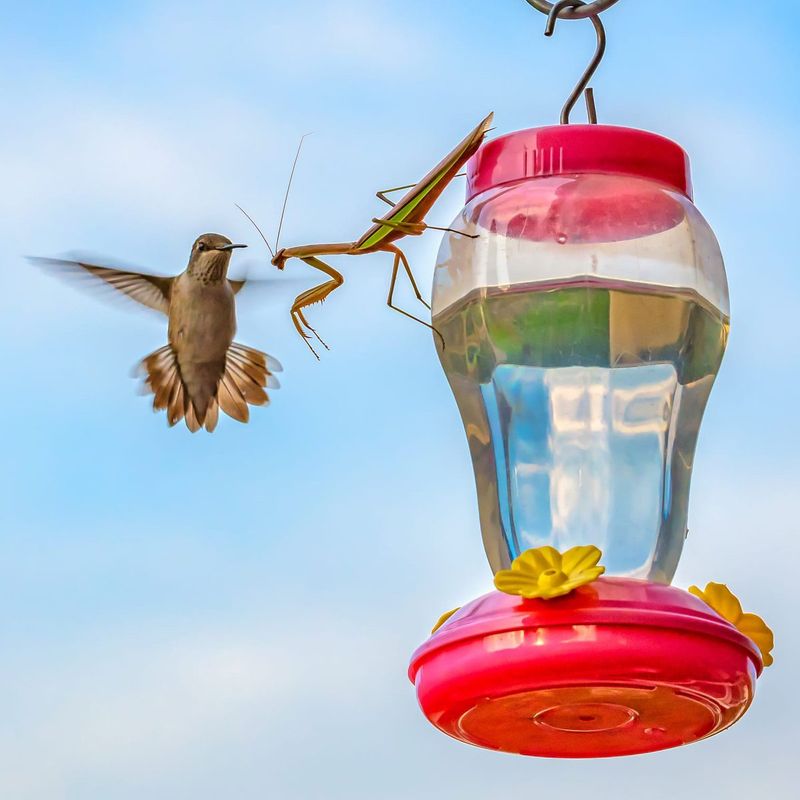
It is hard to believe an insect could take down a bird, but a large praying mantis is a genuine ambush predator. Perched perfectly still on the rim of a feeder, it can snatch a hummingbird with those powerful spiked forelegs and slowly consume it.
Distance from vegetation is the key to prevention. Mantises hide in shrubs and trees and use them to reach the feeder, so hanging your feeder well away from that greenery removes their staging ground.
If you do find one lurking on your feeder, do not panic. Gently coax it onto a stick or gloved hand and relocate it far from the feeding area.
The mantis gets to live and hunt bugs elsewhere, and your hummingbirds get to keep visiting in peace.
10. Other Birds (Jays, Crows, Small Hawks, Woodpeckers)
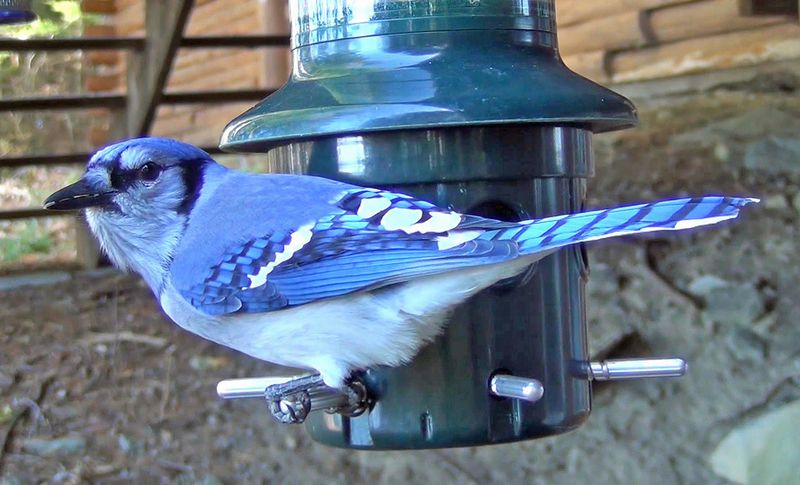
Not every winged visitor is a friend. Jays and crows raid hummingbird nests for eggs and chicks, small speedy hunters like sharp-shinned hawks, kestrels, and merlins target adult hummingbirds in flight, and woodpeckers or orioles simply muscle in to steal the nectar.
Each problem calls for its own tweak. To protect nests, offer safer nesting spots such as dense thorny shrubs or cacti that big raiders avoid.
To stop nectar thieves, choose a feeder with no perches, since larger birds need a place to land while hummingbirds hover just fine.
For the fast aerial predators, open placement is your best defense. Position feeders away from dense cover where a hawk can perch unseen and launch a surprise attack.
Giving hummingbirds a clear line of sight lets them spot danger and dart to safety before it is too late.
11. Dirty Feeders and Spoiled Nectar
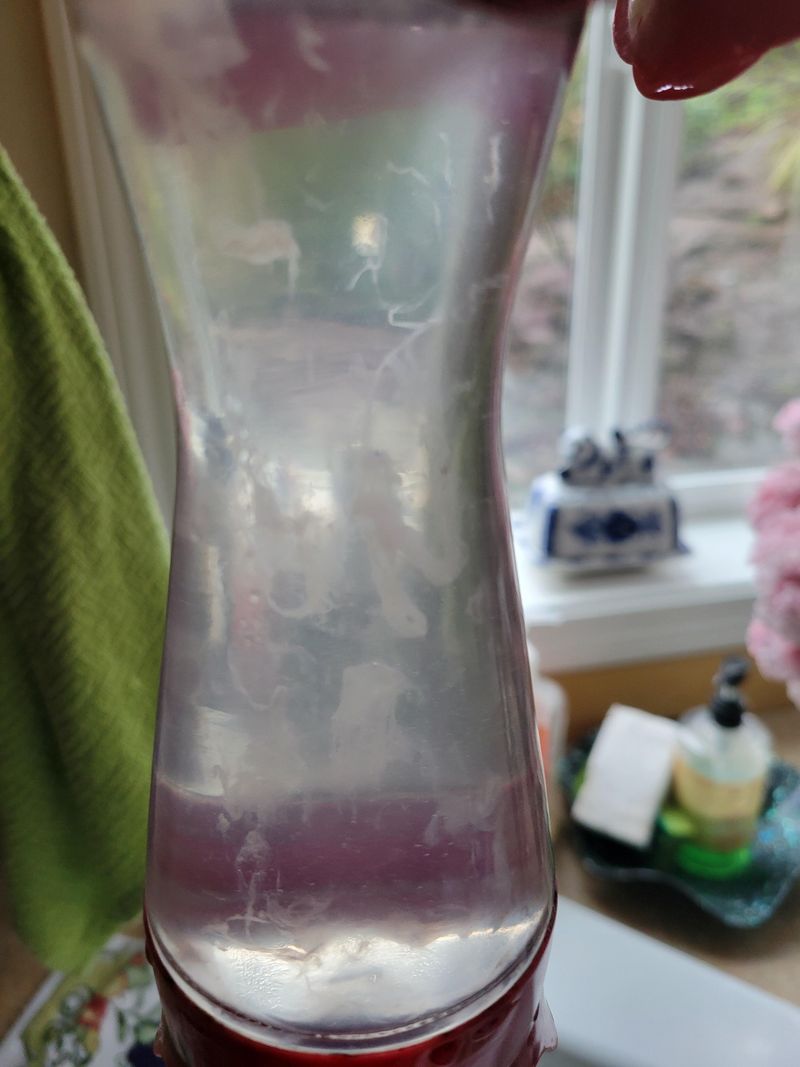
This may be the deadliest threat on the entire list, and it is completely invisible until it is too late. Nectar left too long, especially in warm weather, ferments and grows mold, fungus, and bacteria that cause fatal infections.
One of the worst, Candidiasis, swells a hummingbird’s tongue until it can no longer feed.
Cleaning schedule is everything. When temperatures top 93 degrees, clean daily; between 71 and 75 degrees, every three to five days; and at least weekly in cooler weather.
Take the feeder fully apart and scrub every piece with hot water and a bottle brush.
If you use a mild soap or a diluted bleach or vinegar solution, rinse extremely thoroughly, because leftover residue can harm birds. Never add red dye, honey, or artificial sweeteners to your nectar.
Toss any batch that looks cloudy or milky, shows dark specks, or smells sour, and keep a spare feeder handy so there is always a clean one ready during rotation.
12. Leaking Feeders
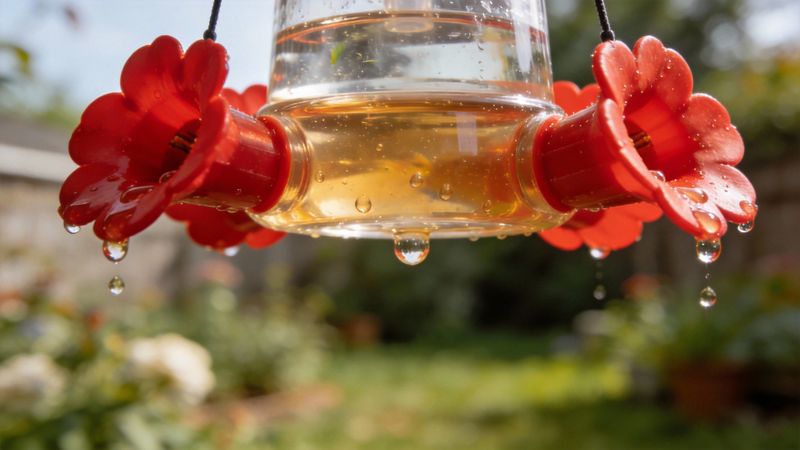
A drippy feeder does not just waste sugar water, it rings the dinner bell for every ant, bee, and wasp within range. That sticky trail becomes a magnet for exactly the pests you are trying to keep away.
Start by inspecting your feeder for cracks, worn seals, or parts that no longer fit snugly, and tighten everything down. Bottle-style feeders are especially prone to dripping when sun heats the air inside and pressure forces nectar out the ports.
Switching to a saucer-style feeder solves much of this, since there is no pressure buildup to push liquid out. Hang feeders somewhere sheltered from strong wind and bring them in during rough weather so they do not swing and slosh.
And whenever a spill happens, clean it up right away with hot water before the insects catch the scent.
13. Yellow Accents on Feeders
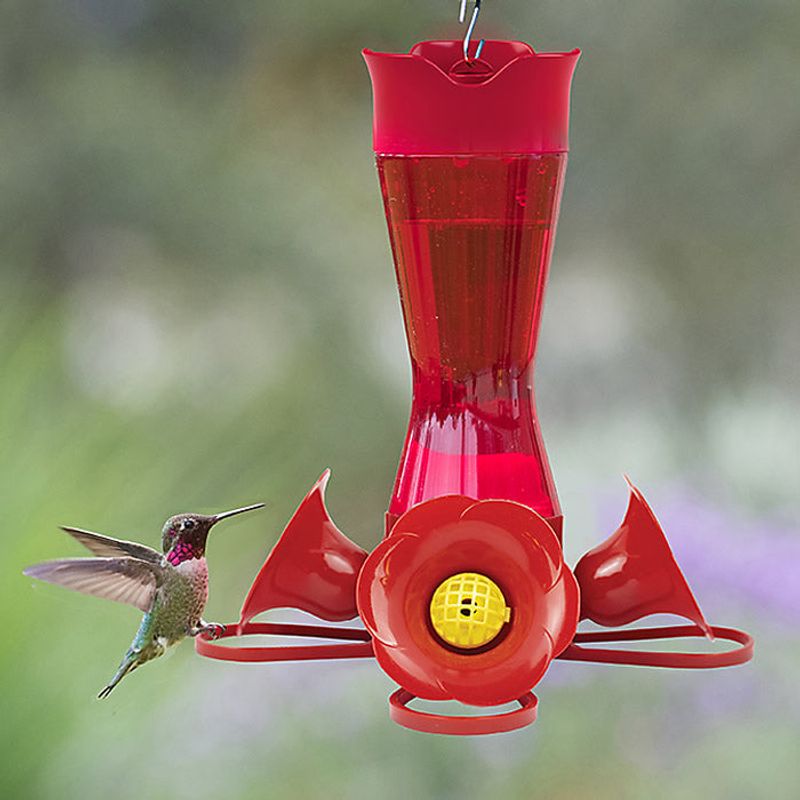
The color of your feeder does more work than you would guess. Yellow is like a beacon to bees and wasps, so those cheerful yellow flower ports and decorations end up inviting the exact insects that crowd out and stress your hummingbirds.
Hummingbirds are drawn to red, and they do not need yellow at all to find the nectar. Picking a feeder that is predominantly red gives the birds what they want while quietly turning down the volume on stinging visitors.
Already own a feeder with yellow trim? You have options.
Remove the yellow pieces if they pop off, or carefully paint over them with a bird-safe red or clear finish. Such a small change can noticeably cut the number of bees and wasps buzzing your feeder.
14. Feeder Placement in Direct Sun
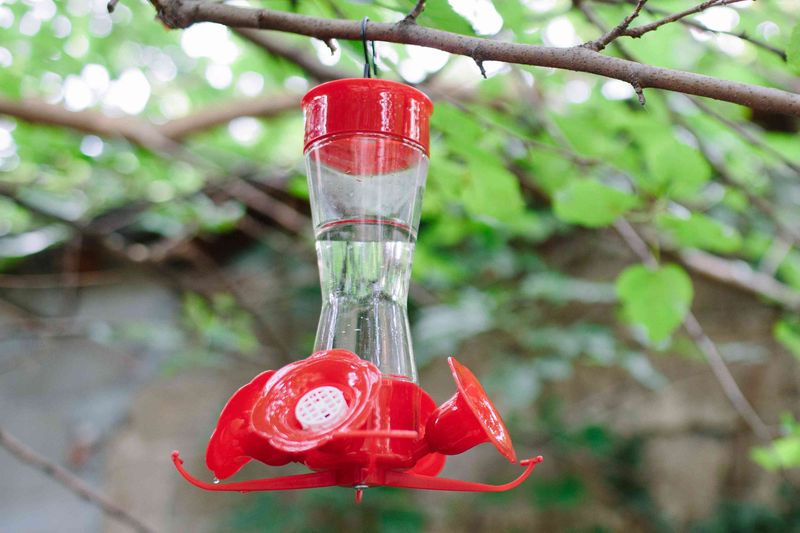
Sunlight feels like a nice, cheerful spot for a feeder, but for the nectar inside it is a disaster. Heat speeds up fermentation dramatically, and mold and bacteria bloom in a fraction of the time they would in cooler conditions.
Spoiled nectar is not just unappetizing, it is genuinely dangerous to hummingbirds, which is why placement matters so much. A feeder cooking in the afternoon sun can go bad within a single day.
The fix could not be simpler: hang your feeder where it gets partial shade through the day, such as under an eave or beneath a leafy branch that is still away from cover for predators. Cooler nectar stays fresh longer, keeps mold at bay, and means your birds get safe food and you refill less often.
Everybody wins.
15. Feeder Placement Near Cover
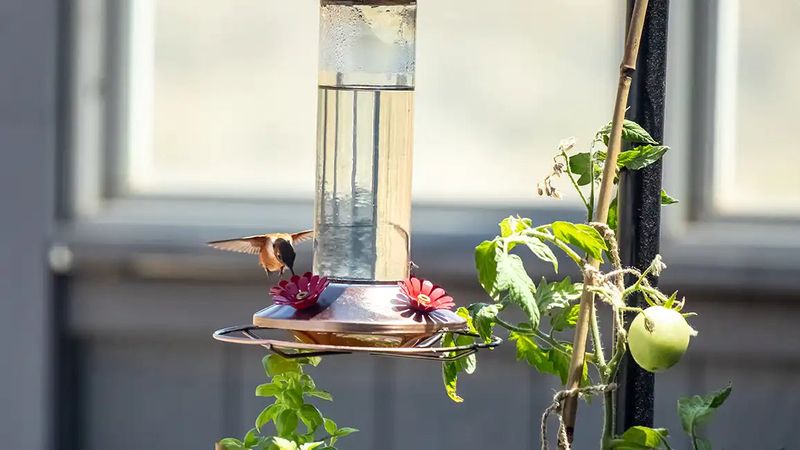
Where you hang the feeder can quietly decide who else shows up to hunt. Set it right next to shrubs, low branches, or a fence, and you have basically built a hiding blind for cats, snakes, and praying mantises, plus an easy ramp for climbing raccoons and squirrels.
Predators love an ambush point, and dense cover gives them the element of surprise a hummingbird cannot recover from. The birds simply do not have time to react when danger springs from inches away.
Open placement flips the script. Hang feeders at least eight feet up and several feet from any bush, tree limb, fence, or stone wall a predator could hide behind or climb.
That clear space lets hummingbirds see threats coming and gives you a plain view too, so nothing sneaks up unnoticed. It is one of the simplest, most powerful safety moves you can make.