
If Mosquitoes Swarm The Moment You Sit Outside, Here’s The Plant That Screams ‘Fire’ Straight Into Their Nervous System
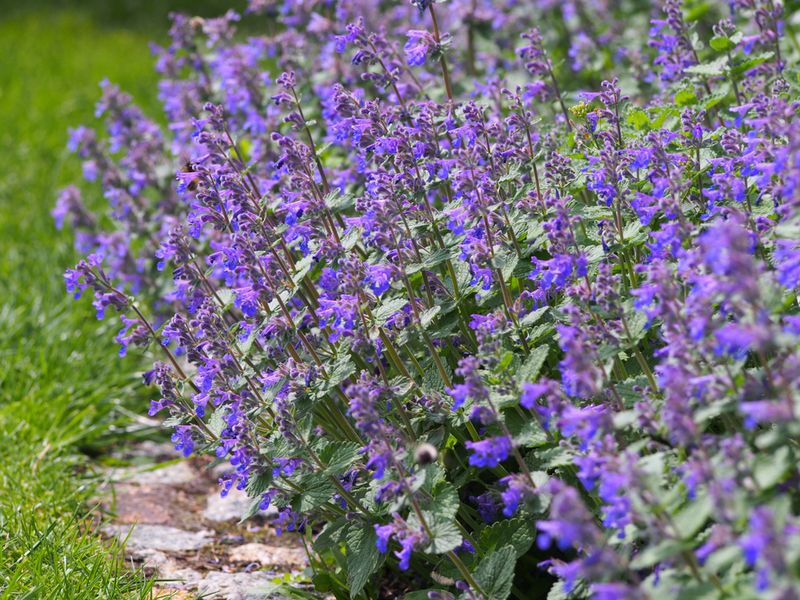
Mosquitoes ruin backyard evenings fast, and most people reach for the same old sprays without knowing why they work. A common garden plant called catnip holds a compound that researchers have found triggers a mosquito’s own irritant-sensing system, pushing them to flee.
That compound is nepetalactone, and the science behind it is more interesting than the headlines suggest. Understanding what it actually does, and what it cannot do, helps you make smarter choices about protecting yourself and your family outdoors.
The real plant behind the mosquito story
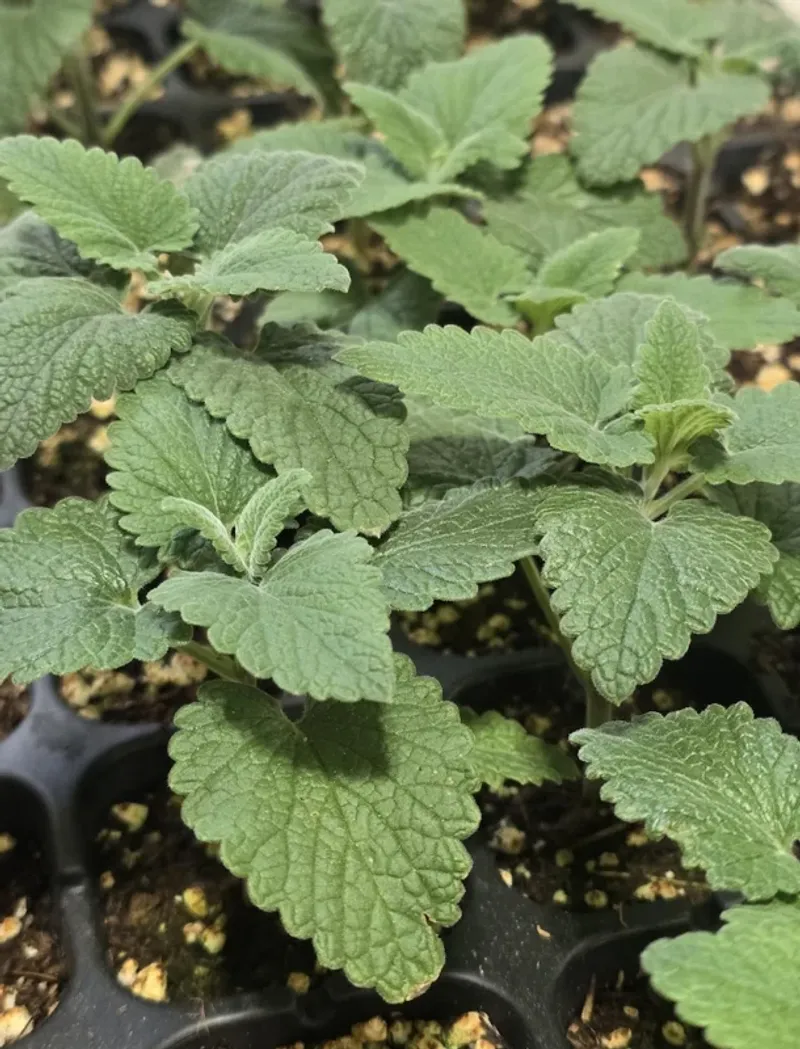
True catnip, known botanically as Nepeta cataria, is the plant at the center of this story, and it matters to get the name right. A lot of products and articles lump catnip together with ornamental catmints like Nepeta mussinii or Nepeta x faassenii, but those are different plants with different chemical profiles.
The mosquito research specifically concerns Nepeta cataria and its principal volatile compound, nepetalactone.
Nepeta cataria is a mint-family perennial that grows readily across most of the United States. The University of Minnesota plant profile for Nepeta cataria notes that it attracts cats and pollinators and can spread aggressively, much like other hardy perennial mints.
Gardeners who give it space in a sunny bed will find it easy to establish, but it benefits from containment if you do not want it taking over neighboring plants.
Nepetalactone is the compound associated with catnip’s mosquito-repellent activity, and it is concentrated in the plant’s glands and volatile oils. The headline framing of a plant that “screams fire” into a mosquito’s nervous system is a vivid metaphor, but it oversimplifies what the research actually tested.
Laboratory studies on catnip essential oil and purified nepetalactone worked with extracted and concentrated forms of the compound, not with a potted plant sitting beside a patio chair. Growing catnip in your yard is a reasonable garden decision, but the mosquito science attaches to a molecule, not to the plant as a whole object.
What nepetalactone triggers in a mosquito
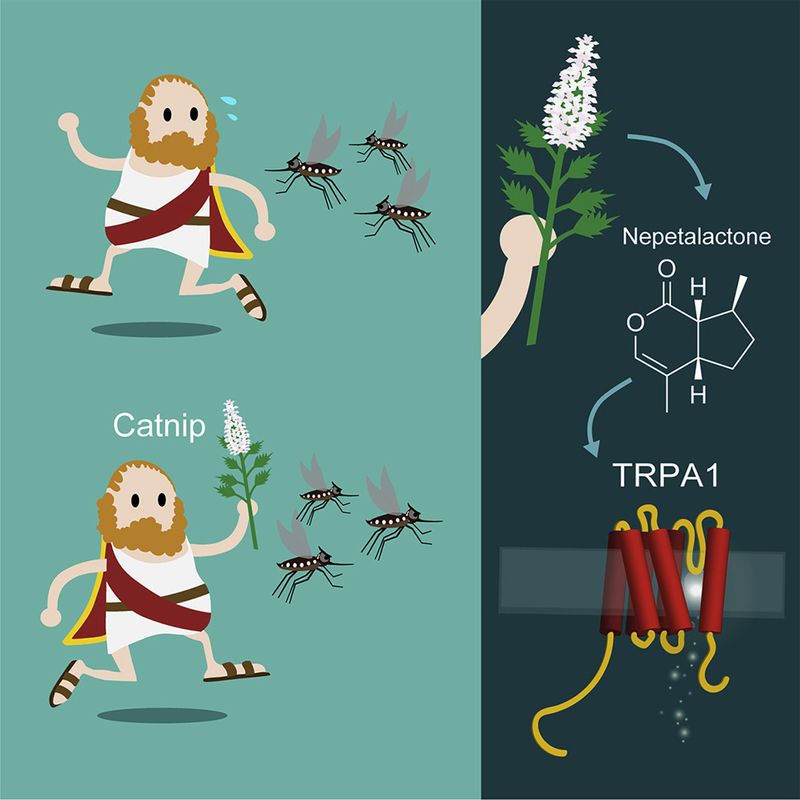
Mosquitoes carry a receptor called TRPA1, and nepetalactone knows exactly how to set it off. TRPA1 is an irritant-sensing channel found across many animals, including insects, and it responds to a range of aversive chemicals in the environment.
When nepetalactone contacts a mosquito carrying a functional TRPA1 receptor, the receptor activates and the mosquito moves away.
A study published in Current Biology provided the clearest demonstration of this mechanism. Researchers showed that mosquitoes with a working TRPA1 receptor avoided nepetalactone, while mosquitoes that had been genetically modified to lack TRPA1 were no longer repelled.
That single finding is significant because it ties catnip’s repellent effect to a specific biological pathway rather than leaving it as an unexplained behavioral quirk.
The “fire” language in the headline is a metaphor worth keeping but also worth correcting. Receptor activation and behavioral avoidance are real, measurable outcomes.
What the research does not show is that a mosquito consciously experiences pain, distress, or anything resembling a subjective burning sensation. The full-text version of the TRPA1 study describes TRPA1 as an irritant receptor involved in aversive chemical sensing and nociception-related biology, which is a precise description.
Calling it a proven pain receptor or suggesting that a mosquito feels fire the way a person would overreaches what the data support.
Think of TRPA1 as something closer to a chemical alarm than a pain experience. When the alarm goes off, the mosquito’s behavior changes and it steers away from the source.
That alarm response is genuinely useful, and it explains why nepetalactone has attracted serious scientific attention as a repellent ingredient. The mechanism is real; the metaphor just needs a clear label so readers know where the science ends and the storytelling begins.
Why a catnip plant is not a mosquito force field
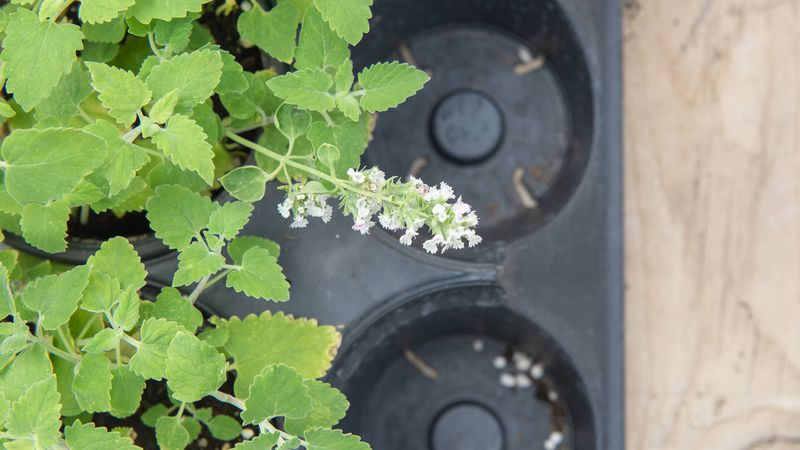
Planting catnip beside your patio chair is not the same thing as applying a mosquito repellent. That distinction sounds obvious once stated plainly, but it gets lost in a lot of garden advice that treats aromatic plants as passive repellent devices.
An untouched catnip plant sitting in a pot releases some volatile compounds into the surrounding air, but the concentration reaching your skin is nowhere close to what a formulated product delivers.
The laboratory research that found high repellency against Aedes aegypti used extracted catnip essential oil and purified nepetalactone isomers at defined concentrations, applied under controlled conditions. The 2026 field study that tested catnip oil against real mosquito populations used a steam-distilled oil with approximately 92% nepetalactone content, prepared into a lotion.
Neither study involved placing a catnip plant near people and measuring the result.
Extension specialists are direct about this gap. Illinois Extension guidance on mosquitoes in the landscape notes that aromatic plants may contribute to mosquito management but will not work alone.
Colorado State University PlantTalk similarly states that plants do not repel mosquitoes merely by growing in a landscape.
Crushing catnip leaves and rubbing them on your skin releases more nepetalactone than an intact plant does, but it still falls short of a characterized formulation. You do not know the concentration, you cannot guarantee even coverage, and raw plant material carries its own irritation risks.
The science supports catnip oil in a tested product, and that is a meaningfully different claim from saying that a garden plant will protect you from bites.
What the formulated-oil evidence actually shows
Laboratory results for catnip oil are genuinely impressive at first glance, and they deserve an accurate reading rather than either dismissal or overclaiming. A 2019 study on catnip essential oils and purified nepetalactone isomers found repellency exceeding 95% against Aedes aegypti at some tested concentrations.
That figure applies to specific formulations under laboratory conditions, and the repellency declined after roughly two to four hours. The study also included a conflict-of-interest disclosure involving a company and patents related to natural insect repellents, which is worth knowing as context, though it does not invalidate the findings.
Results shift considerably when you change the mosquito species or the delivery method. An Australian human-skin study on catmint found protection times ranging from zero minutes against Aedes aegypti to about 240 minutes against Culex quinquefasciatus, and catmint did not match DEET across the board.
Species differences matter enormously, and a result against one mosquito tells you only so much about another.
Delivery method adds another layer of complexity. A USDA-linked comparison of spatial and contact repellency found that catnip oil performed better than DEET as a spatial repellent in one assay, while DEET outperformed catnip oil as a contact repellent across the mosquito species tested.
Those two findings sound contradictory only if you treat repellency as a single fixed quality. A spatial repellent keeps mosquitoes out of an area; a contact repellent stops bites when a mosquito lands on skin.
Both matter, and catnip oil does not dominate in both categories.
A 2026 field study conducted in rural Eastern Uganda tested lotions containing 2% or 6% catnip oil with approximately 92% nepetalactone content. Both formulations substantially reduced mosquito landings over a four-hour evening test.
The 6% lotion performed similarly to the study’s 15% DEET comparator under those specific conditions. That is a meaningful result, but the study was conducted in one region, against local mosquito populations, during evening hours, using a precisely characterized oil prepared into a lotion.
Extending that finding to US backyards, every mosquito species, or every catnip product available on store shelves goes further than the data support.
How to use a catnip-based repellent safely

The safest and most reliable way to use catnip as a mosquito repellent is to choose a product that already did the hard work for you. The EPA lists catnip oil among active ingredients approved for skin-applied insect repellents, which means registered products containing it have passed review for both efficacy and safety.
You can search for registered products using the EPA Pesticide Product and Label System to verify registration numbers before you buy.
One EPA-registered label for a 15% refined oil of Nepeta cataria product spells out the rules clearly: apply only as directed, keep the product away from eyes and damaged skin, keep it away from children, wash treated skin after coming indoors, and reapply according to the label schedule. That label claims up to seven hours of protection, but that duration belongs to that specific registered formulation alone.
A catnip garden plant, a bottle of raw essential oil, or a homemade spray does not carry that claim or that testing history.
Raw essential oils are a separate category from registered repellents, and the difference matters for safety. Poison Control advises that essential oils can cause rashes, allergic reactions, and poisoning if swallowed, and that concentration and contaminants vary between products.
Undiluted catnip essential oil applied directly to skin, sprayed from a homemade bottle, or used on broken skin carries real risk of irritation or worse. Children need additional caution because their skin absorbs compounds differently and their exposure relative to body weight is higher.
Pets require their own consideration. The ASPCA notes that catnip can cause vomiting or diarrhea in cats when ingested in significant amounts.
Pet Poison Helpline warns that concentrated essential oils pose additional hazards to pets and children beyond what the plant itself presents. Store registered repellents and any essential oils out of reach, and avoid applying products near pets’ faces or on their fur without explicit veterinary guidance.
Build mosquito protection around the whole yard
Catnip earns a fair place in a backyard garden for reasons that have nothing to do with mosquitoes. The University of Minnesota plant profile highlights its value for pollinators, its aromatic foliage, and its appeal to cats, all of which are genuine benefits for a gardener who enjoys a lively outdoor space.
Planting it near a sitting area adds sensory interest and gives you access to the leaves if you ever want to experiment with rubbing them on fabric or gear, though that is different from applying a tested repellent to skin.
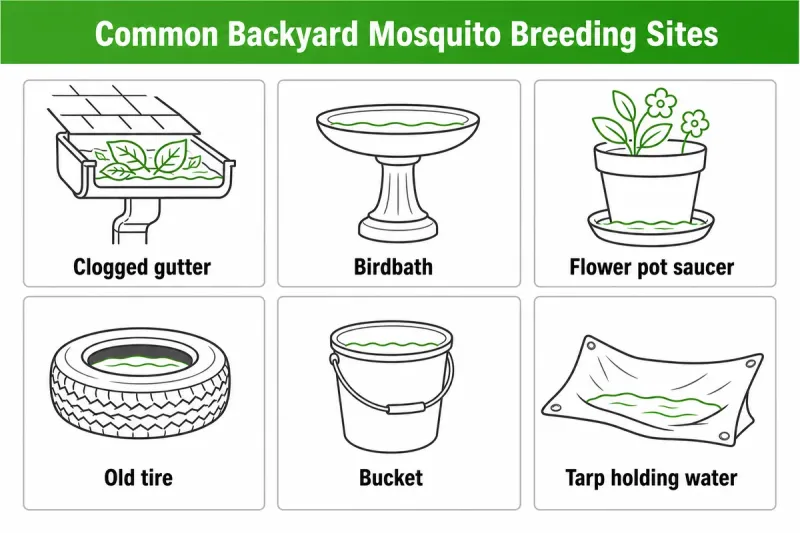
What catnip cannot do is solve a yard-wide mosquito problem on its own. Illinois Extension is clear that aromatic plants alone will not control mosquitoes in a landscape, and the most effective action a homeowner can take costs nothing: remove standing water.
CDC guidance on mosquito control at home recommends emptying or removing water-holding containers at least once a week, including buckets, planters, birdbaths, toys, old tires, and flowerpot saucers. Mosquitoes can complete their larval development in surprisingly small amounts of water, so this step reduces the local population before adults ever reach your patio.
Personal protection layers on top of yard management. CDC bite-prevention guidance recommends using EPA-registered skin-applied repellents, wearing long sleeves and pants during peak mosquito hours, and making sure doors and windows have intact screens.
No single measure, including any repellent, prevents mosquito-borne disease on its own. Repellents reduce bites; reducing bites lowers exposure risk.
Combining water removal, physical barriers, and a labeled repellent gives you meaningful, layered protection that a catnip plant in a pot simply cannot replicate.
The useful answer is a receptor, not a scream
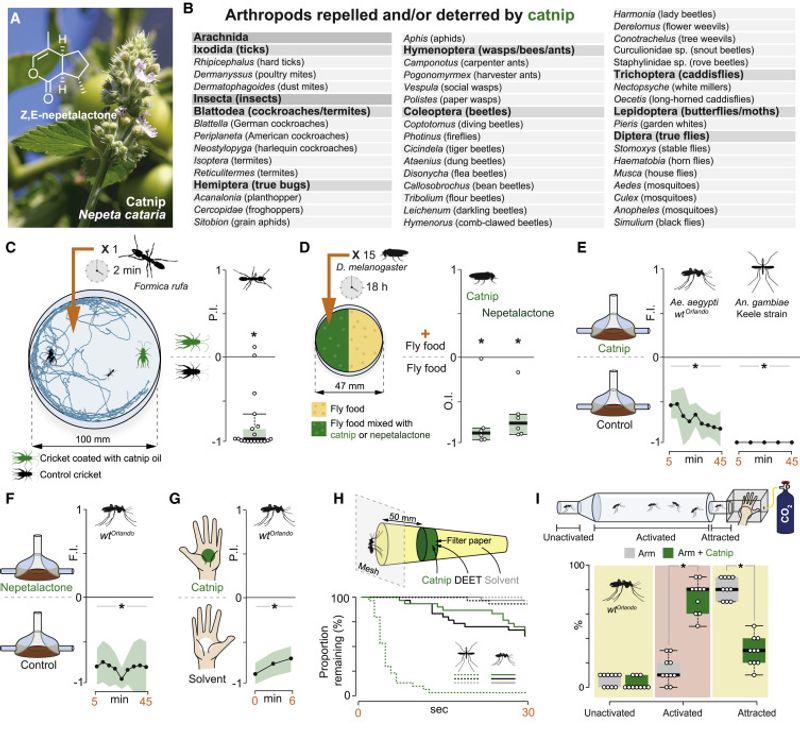
Strip away the headline drama and the actual finding is still worth knowing. Nepetalactone activates mosquito TRPA1, an irritant-sensing receptor, and mosquitoes without that receptor lose their avoidance response entirely.
That mechanistic link, established in the Current Biology study, gives catnip oil a credible biological basis as a repellent ingredient rather than leaving it as garden folklore.
Formulated catnip oil, used in a registered product and applied according to its label, is a reasonable choice for people who want a plant-derived option. EPA-registered skin-applied repellents that list catnip oil as an active ingredient have cleared the agency’s review process, which is the standard that distinguishes a tested product from a homemade alternative.
Growing catnip in your garden remains a pleasant choice for its aroma, its pollinators, and its cats, but it is a garden decision, not a pest-control strategy.
Real protection still comes from the combination that CDC prevention guidance has long recommended: eliminating standing water, using screens, covering exposed skin, and applying a labeled repellent. The receptor story is genuinely fascinating science.
The practical lesson is that a molecule earns its reputation through testing, not through proximity to your lawn chair.