
If Owls Hunt Your Yard At Night And You Never Hear Them, Here’s The Silent-Wing Trick That Fools Even Mice
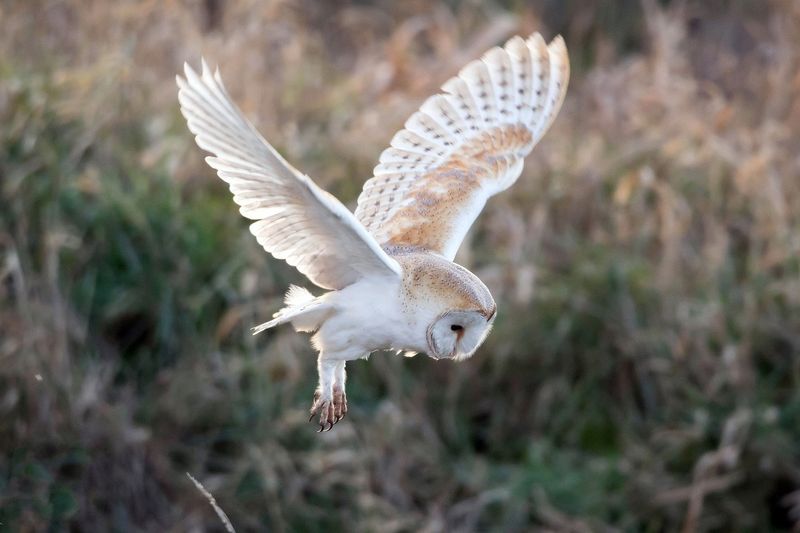
Something moves through the darkness above your yard, and you never hear a sound. An owl can sweep across a lawn, drop toward a mouse, and vanish into a tree before your ears register anything at all.
That near-silence is not an accident or a quirk of nighttime quiet. A package of physical adaptations works together to make an owl’s approach one of the most acoustically reduced movements in the animal kingdom.
The owl is quiet, not literally silent
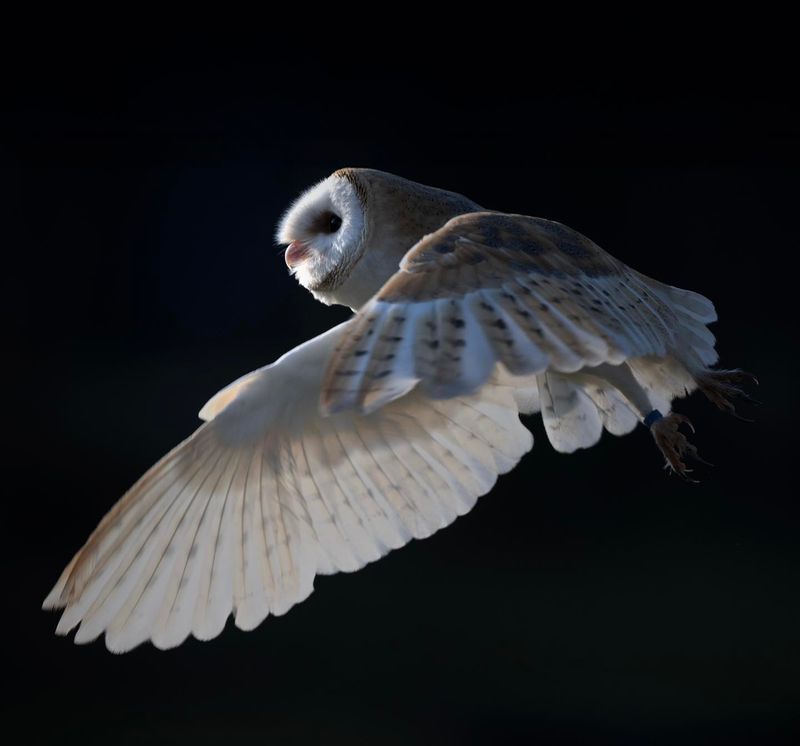
An owl crossing your yard at night is not operating in a sound vacuum. Researchers measuring owl flight in wind tunnels and controlled flyover studies consistently find that wing noise is dramatically reduced compared to other birds of similar size, but the word “silent” needs a qualifier.
Aeroacoustic flyover measurements confirm that owl wings still generate aerodynamic noise. The difference is that the noise falls to unusually low levels, especially during a glide or controlled swoop.
Two related hunting advantages come from that acoustic reduction. First, a quieter approach makes the owl harder for prey to detect.
Second, keeping its own wing noise low may help the owl avoid masking the faint rustling sounds that rodents make on the ground below. That second benefit is a likely functional advantage, and it fits well with what owls need to do, but researchers have not established it as a universal outcome across every species or every hunt.
Wind-tunnel research on owl plumage supports the role of feather structure in noise reduction, and a separate study of barn owl takeoffs and swoops found that swooping flight produced particularly quiet, low-frequency impulses.
Takeoff is a different story. Launching from a branch demands more force, more rapid wing movement, and more aerodynamic work, and that can be considerably louder than a slow glide over open ground.
What most people never hear is the hunting swoop, not because owls are magically soundless, but because several adaptations work together to push noise to the edge of detection. Leading-edge serrations, trailing-edge fringes, velvety feather surfaces, wing shape, and controlled flight behavior all contribute.
No single feather is the secret.
The leading edge breaks up turbulent airflow
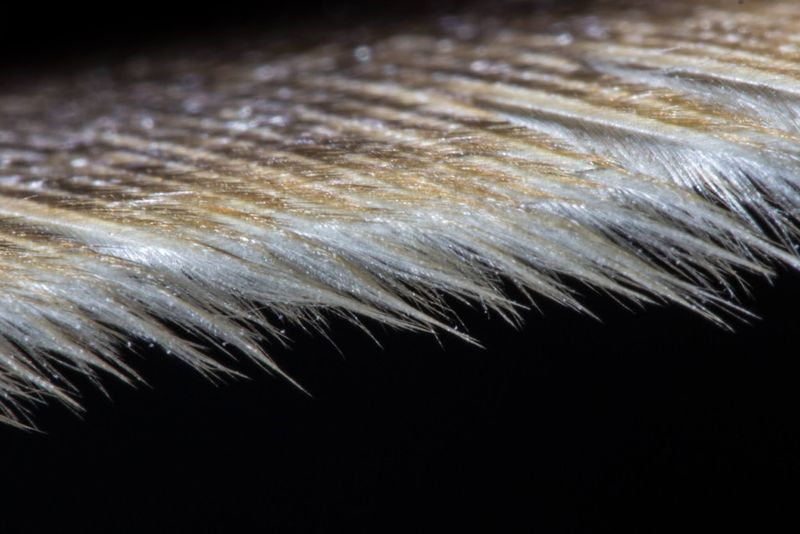
Run a finger along the leading edge of an owl’s outer primary feather and you would feel something unexpected: a row of stiff, comb-like teeth. These are not random imperfections.
Comparative anatomical research shows that specialized barb endings form these serrations on the outer primary feathers, with the strongest development concentrated toward the outer wing and especially around the tenth primary feather. The structure is precise, not decorative.
When air flows over a conventional bird’s wing, it tends to break into turbulent eddies near the leading edge, and those eddies generate noise. The comb-like serrations on an owl’s outer primaries appear to disrupt that turbulent airflow before it can build into louder, broadband sound.
Think of it as breaking a wave into smaller ripples rather than letting it crash. The aeroacoustic result is a reduction in the tonal and broadband noise that would otherwise radiate from the wing surface.
That said, the serrations are one piece of a larger system, not a standalone fix. Wind-tunnel studies examining owl plumage find that multiple feather structures contribute to the overall acoustic reduction, and researchers caution that the relative contribution of each feature remains an active area of study.
The comb edge handles turbulence at the front of the wing, but noise generated along the trailing edge and across the feather surface requires its own set of solutions. Serrations also vary in development across owl species, which means no single feather arrangement applies equally to every bird you might spot hunting after dark.
Soft feather edges damp additional noise
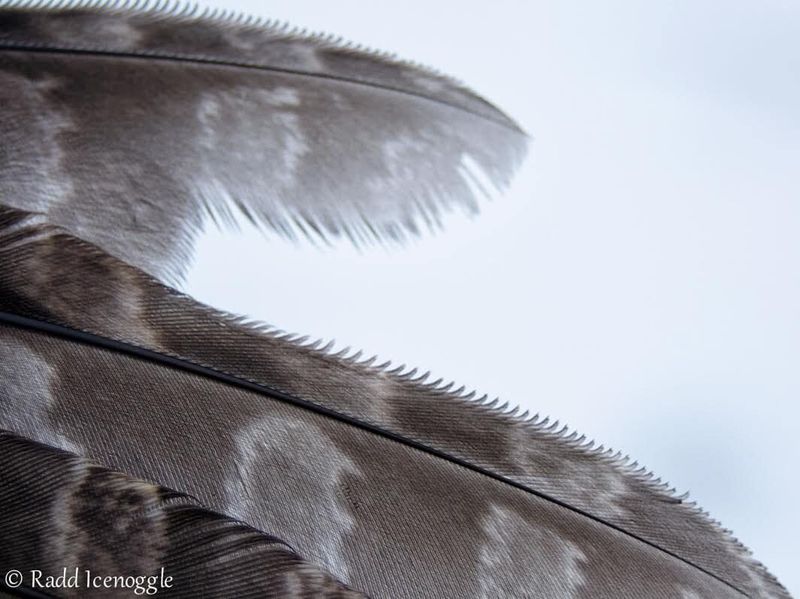
Beyond the leading edge, the rest of the wing carries its own set of noise-reducing features. Long-eared owls and related species show a distinctive soft fringe along the trailing edge of their flight feathers, a delicate, almost lace-like border that contrasts sharply with the clean, stiff trailing edges found on most other birds.
Where a hawk’s feather ends in a defined line, an owl’s trailing feather edge dissolves into fine filaments.
That fringe is thought to damp the turbulence that peels off the back of the wing during flight, reducing the trailing-edge noise that contributes a significant share of aerodynamic sound in conventional birds. Research on owl feather microstructure also points to the upper surface of the feathers themselves, which carry a downy or velvety texture quite unlike the smoother surface of most bird feathers.
This velvet-like layer is linked to reduced friction between feathers as they shift during flight and may help absorb or scatter sound energy before it radiates outward.
Together, trailing fringes and velvety surfaces complement what the leading-edge serrations start. Studies examining multiple feather zones find that each structure addresses a different noise-generating mechanism, but researchers are clear that the relative contribution of trailing fringes versus velvety surfaces versus leading serrations has not been fully resolved.
What is established is that the leading edge alone cannot explain the whole acoustic performance. A great gray owl hunting over snow-covered ground relies on every one of these feather zones working in concert, because a single loud flap could scatter the prey it spent minutes locating by ear.
Broad wings support slower, lower-effort flight
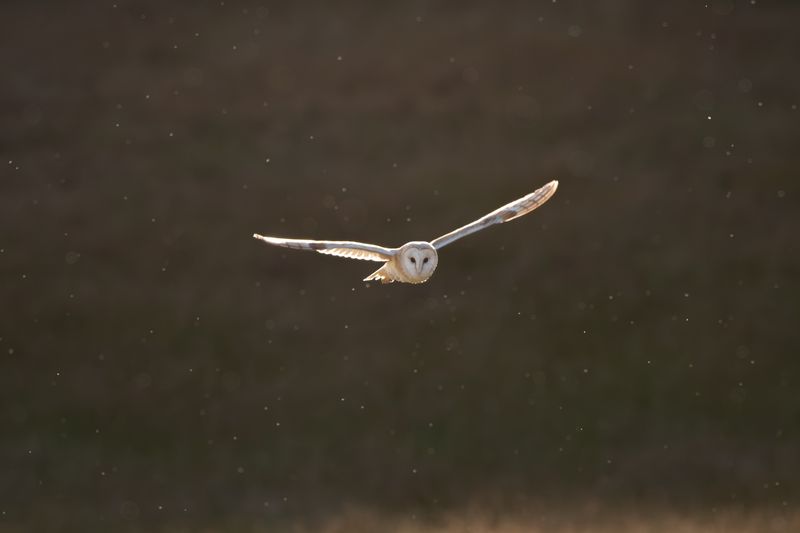
Feather texture alone does not fully explain why an owl’s approach sounds so faint. Wing shape plays an important supporting role.
Many owl species have large wings relative to their body mass, a ratio that produces what aeronautical engineers call low wing loading. With more wing area carrying each unit of body weight, the bird can sustain flight at slower speeds and glide for longer distances without constant flapping.
Audubon’s summary of owl flight research notes that broad wings help owls fly slowly and with relatively low effort, which contributes to quieter overall flight.
Slower, more controlled movement means less aerodynamic force is required with each wingbeat, and less force generally means less noise generated at the wing surface. Acoustic measurements comparing owl flight to other birds confirm that wing and feather morphology together account for the noise reduction, not slow speed alone.
A large bird flapping hard would still be loud even with broad wings, which is why plumage structure and flight behavior both matter alongside wing shape.
The contrast between a glide and a takeoff makes this concrete. A barn owl study measuring takeoff and swooping flight found that the swoop produced quiet, low-frequency acoustic impulses, while takeoff demanded more vigorous wing movement and generated comparatively more noise.
An owl launching from a fence post is audibly different from the same bird skimming silently over grass two seconds later. Fluid-dynamics reviews of owl aeroacoustics emphasize that the full silent-flight effect emerges from wing morphology, feather structure, and controlled behavior working as a system, not from any single factor operating in isolation.
What can a mouse actually hear?
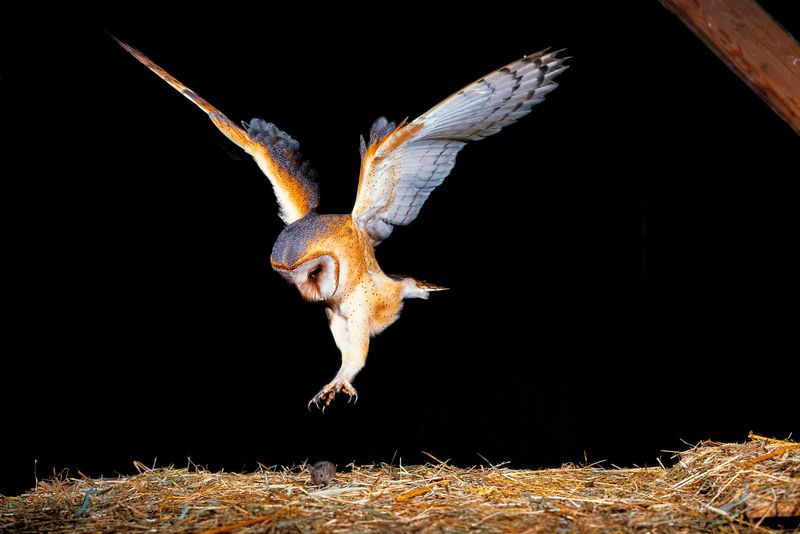
Owls bring their own extraordinary sensory equipment to the hunt, and understanding what a mouse can detect on the other side of the exchange puts the whole silent-flight story into clearer focus. Many owl species have facial disks, the round, dish-like arrangement of feathers framing the face, that act like a satellite dish to funnel incoming sound toward the ear openings.
Research on barn owl auditory anatomy documents asymmetrical ear placement in several species, with one ear positioned higher than the other on the skull. That asymmetry gives the owl a three-dimensional sound map, letting it calculate not just the horizontal direction of a sound but also its vertical position, which is how a barn owl can pinpoint a mouse rustling under leaf litter without seeing it at all.
Cornell Lab’s account of great gray owl snow-plunge hunting illustrates just how precise this hearing can be. These owls routinely crash through a foot of packed snow to grab a vole they tracked entirely by sound.
Vision helps when light is available, and barn owls have capable low-light eyesight, but the auditory system can operate independently in complete darkness.
Now consider what the mouse can hear coming toward it. A study of barn owl takeoffs and swoops found that the acoustic impulses produced during a swoop were low in frequency and fell below the auditory threshold of most rodents tested.
That is a meaningful finding, but it comes with an important boundary: the result applies to most rodents under the conditions studied, not to every mouse or every phase of an attack. Some rodents can detect low-frequency vibrations, and prey may also respond to air movement, ground vibration, or other cues that have nothing to do with wing noise.
A review of owl prey-tracking research notes that the sensory exchange between predator and prey is more complex than a single acoustic threshold. The owl’s swoop can be difficult for many rodents to detect, but calling it a guaranteed foolproof trick oversimplifies what the research actually shows.
Long-eared owls and similar species illustrate the point: they hunt by sound in dense vegetation where even a slight wing noise could alert prey, and their feather structures reflect that pressure.
Not every owl uses the same stealth package
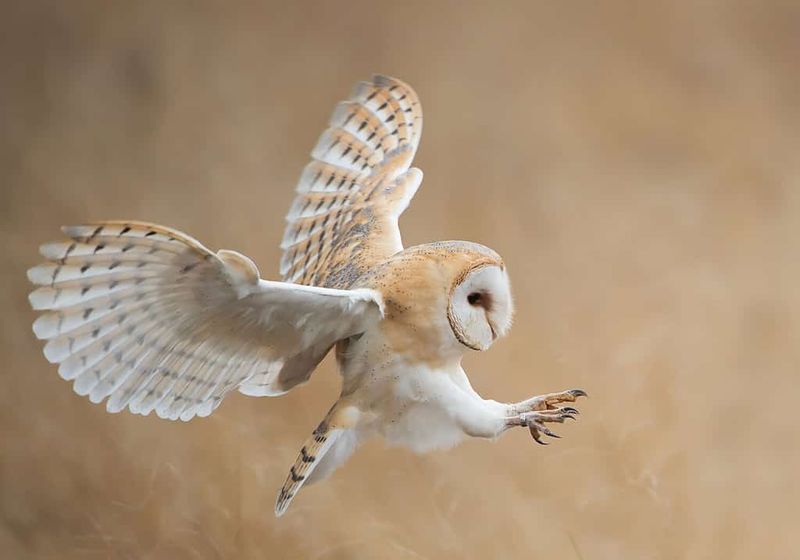
A barn owl study is a useful starting point, but it does not describe every owl that might be hunting your yard. Comparative anatomical work on owl feathers generally finds that nocturnal species show more developed leading-edge serrations than species that are active during the day or at dusk.
The pattern makes ecological sense: an owl that hunts in daylight can rely more on speed and vision, while a strict night hunter faces strong pressure to keep its wing noise as low as possible.
Snowy owls are a useful illustration of how much variation exists. Snowy owls hunting open Arctic tundra often rely more on speed and direct pursuit than on the slow, gliding stealth approach that barn owls favor.
Their trailing-edge fringes are less developed than those of many other owl species, and their hunting style reflects that difference. A snowy owl chasing a lemming across open ground does not need the same acoustic suppression that a barn owl requires when dropping silently onto a mouse hidden in grass.
Hunting style and terrain add further variation. Some owls launch from a perch and drop in a near-vertical plunge, others course low over open fields in long, sweeping passes, and others hover briefly before striking.
Research on owl prey-tracking behavior shows that the attack sequence shifts with species, prey type, habitat, and whether the bird is using hearing, vision, or both on a given night. Calling any approach a “drop” captures the pounce visually but misses the range of flight strategies involved.
Fluid-dynamics reviews of owl aeroacoustics reinforce this point by noting that the relative importance of each noise-reducing adaptation likely shifts depending on the species and the specific flight maneuver being performed.
A hunting owl can help a yard—but it is not pest control
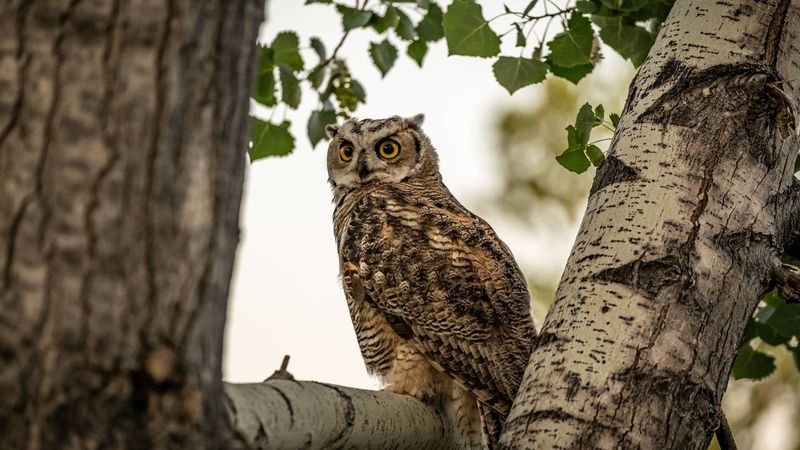
Spotting an owl hunting your yard is genuinely exciting, and it is reasonable to wonder whether the bird might help with a mouse or vole problem. Owls do take small rodents, and regular predator pressure in a yard can have a local effect on prey populations.
Penn State Extension’s guidance on vole management acknowledges that raptors and other predators contribute to natural population control, but it is direct about the limits: predator pressure alone does not reliably eliminate an established rodent population, especially when food and cover remain plentiful. Rodents can reproduce faster than most predators can suppress them, so habitat and sanitation changes remain important alongside any benefit from a visiting owl.
An owl perching near your garden also does not mean it has identified a specific mouse you are worried about. Owls are opportunistic hunters that follow prey availability across a territory, and the bird you see tonight may cover several acres before dawn.
Nest boxes and raptor perch poles can make a yard more attractive to some species, but these additions are not guaranteed to produce measurable rodent control, and they work best when paired with reducing rodent food sources and cover rather than replacing that work.
A few practices matter more than any box or perch. Avoid rodenticides anywhere an owl might hunt.
U.S. Fish and Wildlife Service documentation on raptor poisoning reports that owls and other raptors have died after eating a single poisoned prey animal, making rodenticides a serious risk to the very predators you want nearby.
Do not put out mice, meat, or pet food to attract an owl. FWS guidance on feeding wildlife advises observing wild animals from a distance and avoiding food offerings that can alter behavior and create health risks.
If an owl appears injured, is grounded, or approaches people without alarm, do not attempt to handle it. Contact a licensed wildlife rehabilitator or your state wildlife agency for guidance.
Native U.S. owls are protected under the Migratory Bird Treaty Act, and capturing, possessing, or disturbing them or their nests may require federal authorization.
The silent-wing effect is a coordinated package
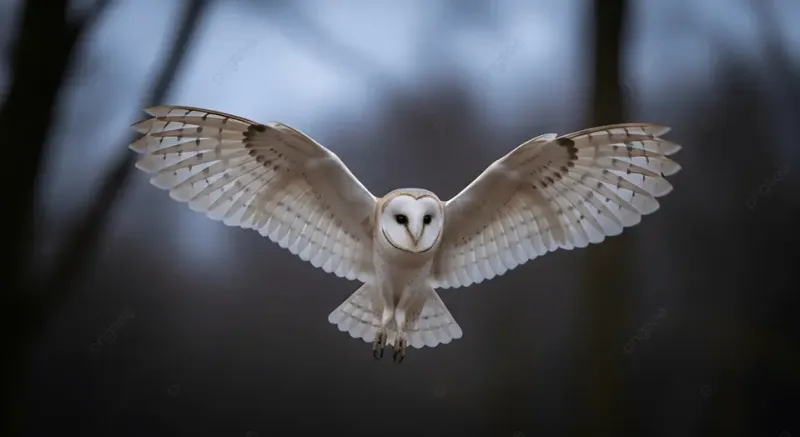
Picture that owl again, crossing your yard in the dark. Serrated leading edges break up turbulent air before it can build into audible noise.
Soft trailing fringes damp what remains. A velvety feather surface reduces friction between feathers shifting with each subtle adjustment.
Broad wings allow a slow, controlled glide that demands less aerodynamic force. And all of that happens while the owl listens for the faint rustle of prey below, its facial disk funneling sound, its asymmetrical ears triangulating position in three dimensions.
Wind-tunnel research on owl plumage confirms that no single feature explains the acoustic reduction. The system only works because every component operates together.
The barn owl swooping study showed that the result can be difficult for many rodents to detect, but the flight is not literally soundless, every owl is not built identically, and no swoop is guaranteed to go unnoticed by every prey animal every time.
The most useful thing a backyard observer can do is let that system work on its own terms. Keep prey free of rodenticides, leave the owl wild and unbaited, and watch from a respectful distance.
An owl that hunts your yard without your help or interference is already doing exactly what millions of years of feather refinement prepared it to do.