
If Condors Have Vanished From Your Coastline, Here’s The Ancient Redwood Hollow That’s Finally Bringing Them Back
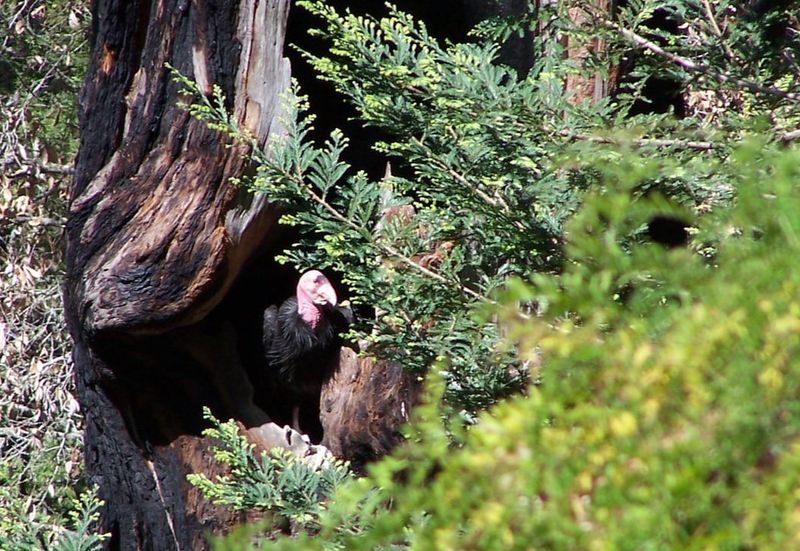
Something extraordinary happened in the forests of northern California in early 2026: a pair of California condors, birds that had been absent from the region for more than a century, showed strong signs of nesting inside an old-growth redwood cavity in Redwood National and State Parks. The story behind that moment stretches back decades, through near-extinction, emergency captive breeding, and a Yurok Tribe-led effort to bring these enormous birds home.
Understanding what researchers found, and what they could not confirm, reveals just how fragile and hard-won this return truly is.
A condor pair returned to northern California’s redwood country
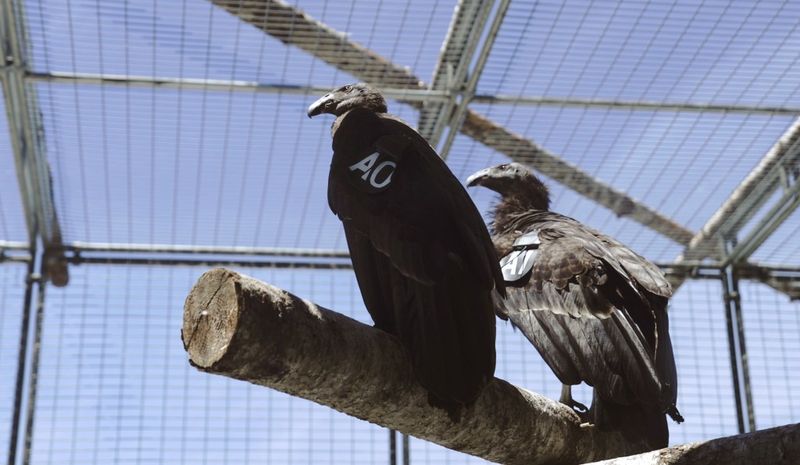
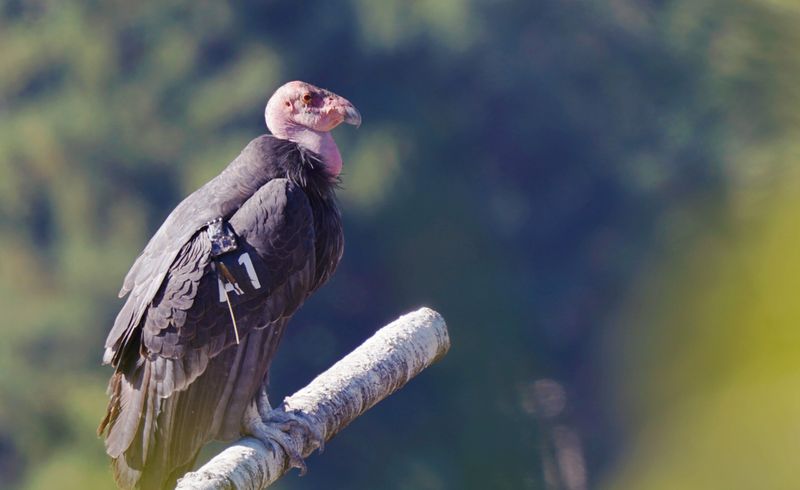
Early in 2026, wildlife researchers monitoring northern California’s redwood forests noticed something that had not been seen in Yurok Ancestral Territory for well over a hundred years. Two reintroduced California condors, identified by their wing tags as A0 and A1, began displaying behavior consistent with pair formation, nest attendance, and alternating incubation inside a remote old-growth redwood cavity within Redwood National and State Parks.
The location, deep in old-growth forest, was not easily accessible to observers on foot.
Researchers pieced together the picture from GPS tracking data and careful field observations rather than direct visual confirmation. Yurok Tribe condor program updates described the behavior as strongly suggesting that the pair was incubating an egg, though no one could physically see into the cavity to verify that.
The nest was characterized as the first believed nesting attempt in the Pacific Northwest and Yurok Ancestral Territory in more than a century, a geographic distinction that matters: condors had resumed nesting in central California years earlier, so this was a northern California milestone, not a statewide first.
By April 20, 2026, the picture grew less hopeful. Reporting from CapRadio noted that researchers said the presumed egg appeared unlikely to have produced a chick, based on a shift in the pair’s behavior.
Even so, the event itself carried real weight. The Yurok Tribe has led the reintroduction effort in this region, working alongside Redwood National and State Parks and federal and nonprofit partners to restore condors to land the tribe has stewarded for generations.
A pair choosing a northern redwood cavity and behaving as though incubating an egg represents a meaningful behavioral and habitat milestone, even without a confirmed chick.
The redwood cavity fits an older coastal history
Condors did not stumble into redwood country by accident. Historical records from the Pacific Northwest confirm that California condors once ranged along the Pacific Coast from British Columbia south to Baja California, including the forests and coastal bluffs of northern California.
Their presence in the redwood region was not unusual; it was their natural range.
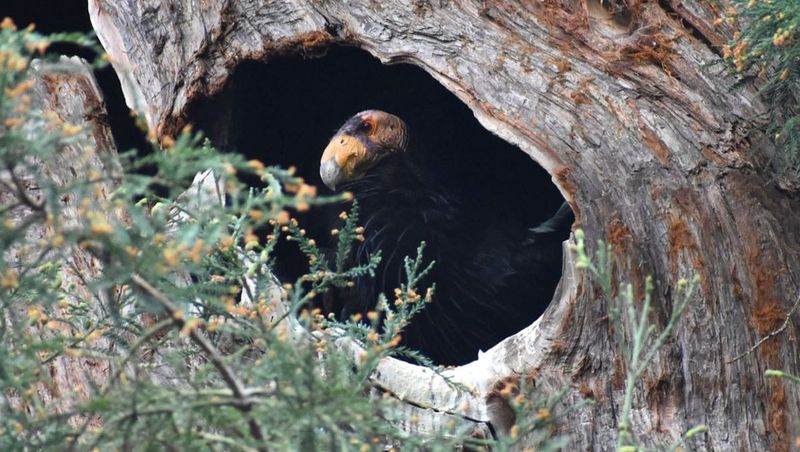
Condors are adaptable nesters. USGS research on condor nesting habitat documents that the species uses shallow caves, rock crevices, cliff ledges, and tree cavities, adding no nesting material to any of these sites.
Old-growth redwood cavities, formed over centuries by fire scars, decay, and weathering, can offer the large, sheltered spaces these birds require. California Department of Fish and Wildlife records also document a separate 2006 nesting event near Big Sur, where a free-flying pair used a burned-out cavity in a coast redwood, the first documented central California nesting in more than a century at that time.
That 2006 Big Sur event and the 2026 Redwood National Park event are distinct in every meaningful way: different regions, different pairs, different trees, and different decades. What they share is that redwood cavities proved credible nesting habitat in both cases.
U.S. Fish and Wildlife Service recovery documentation makes clear that condors historically used varied nest sites across their range, and that the northern California old-growth forest fits within that documented pattern.
Researchers have not established that the 2026 pair used the same individual tree or cavity that any ancestral condor ever used; the evidence supports suitable habitat use, not a mystical return to a specific hollow passed down through generations.
The Prey-go-neesh restoration context at Redwood National Park frames the redwood forest as part of a landscape that condors historically occupied and that the Yurok people have long recognized as condor territory. Old-growth trees with natural cavities are a genuine component of suitable habitat, not merely a romantic backdrop.
A managed recovery effort carried the giant birds north
To understand why 2026 mattered, you have to go back to how close condors came to disappearing entirely. U.S.
Fish and Wildlife Service recovery records document that only about 22 to 23 condors remained worldwide in the early 1980s, a population so small that extinction felt like a realistic outcome. By 1987, wildlife managers made the difficult decision to bring the last wild birds into captivity for a coordinated breeding program.
The species had no wild population at all for several years.
Reintroduction into the wild began in California in 1992, and additional release sites followed in central California, Arizona, Utah, and Baja California. The USFWS recovery program overview describes how each site required careful preparation, supplemental food stations, monitoring infrastructure, and sustained management before released birds could begin to thrive.
None of these populations emerged on their own; every free-flying condor alive today traces its presence to deliberate human intervention.
The northern California chapter began in earnest in March 2022. Redwood National Park’s announcement of the condor return described how the Yurok Tribe, the park, and their partners released an initial group of four young captive-bred birds into the redwood region.
A nonreleasable adult male, a bird that could not safely survive in the wild on his own, was placed in the release facility as a mentor, giving the younger birds a behavioral model to observe and learn from. The Prey-go-neesh program background explains that the Yurok name for the California condor is Prey-go-neesh, and the tribe views the restoration as a cultural and ecological responsibility tied to their relationship with the land.
Additional cohorts of birds followed after 2022. The Yurok Condor Restoration Program has coordinated releases, health monitoring, and acclimation support throughout the effort.
The pair that showed nesting behavior in 2026 did not find their way north by chance; they were part of a structured, multi-year reintroduction built on decades of captive-breeding expertise and Indigenous-led stewardship.
Researchers read the hidden nest without disturbing it
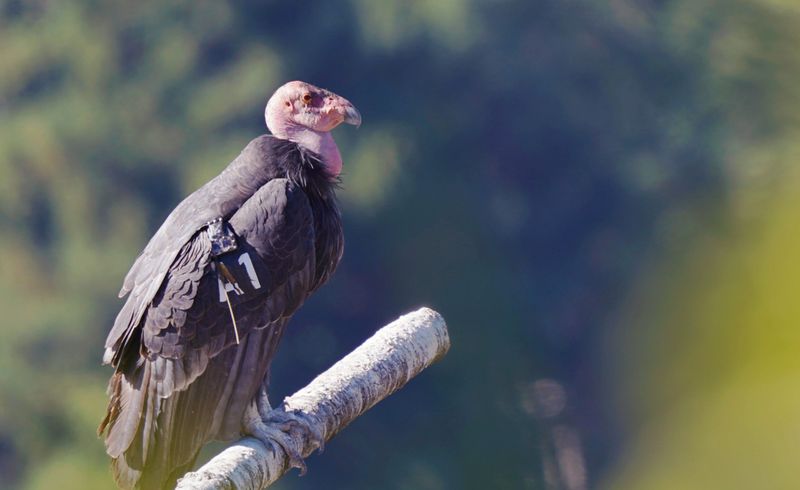
No one walked up to the nest and looked inside. The old-growth redwood cavity where A0 and A1 appeared to be nesting sat in a remote section of Redwood National and State Parks, far from easy observation points.
Instead, researchers assembled a picture of what was likely happening from multiple indirect sources: GPS location data from the birds’ tracking tags, the duration and pattern of time each bird spent near the suspected site, and field observations of their behavior when they were visible.
Los Angeles Times reporting from March 2026 described how the pair’s movements matched what researchers expect from condors engaged in incubation: extended, alternating periods of one bird remaining stationary at the suspected nest site while the other foraged, then switching. That pattern, combined with earlier observations of pair-bonding behavior and the GPS data anchoring both birds to the same remote location over weeks, led researchers to believe the pair was incubating an egg.
They were careful to say “believed” rather than “confirmed” because the cavity itself remained out of direct sight.
Then, in April, the behavior changed. CapRadio’s April 20 report explained that A0 and A1 began appearing together at joint feeding events rather than maintaining the divided schedule that incubation and early chick care require.
That shift told researchers that the pair was no longer tending an egg or a newly hatched chick, leading them to conclude the presumed egg appeared unlikely to have produced a chick. The Yurok Tribe’s condor program continued monitoring the birds through this period, keeping observation methods non-invasive to protect the pair’s welfare and the integrity of any future nesting attempt.
Reading a hidden nest through behavior and technology, rather than direct inspection, is both a scientific discipline and a form of respect for the birds themselves.
The presumed egg matters even without a confirmed chick
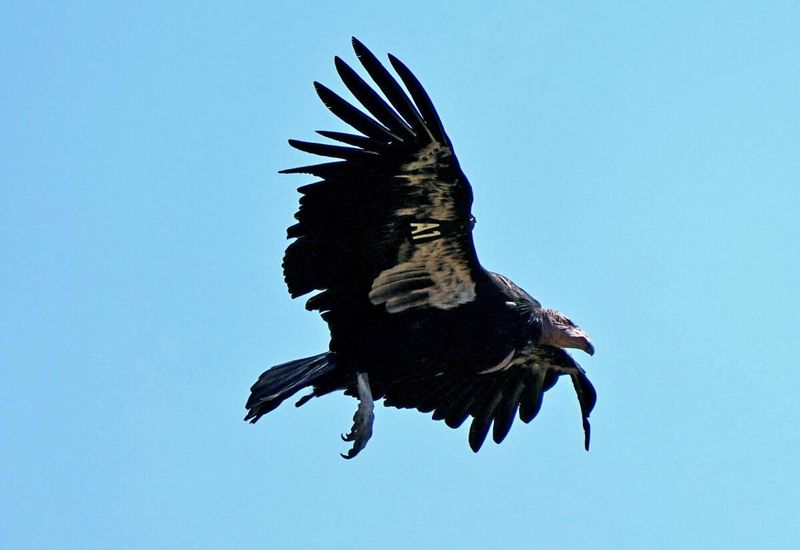
A single unsuccessful egg might sound like a setback, but condor biology makes the event significant regardless of outcome. California Department of Fish and Wildlife species information confirms that condors typically lay only one egg per breeding attempt, with incubation lasting approximately 54 to 58 days.
Young birds that do hatch remain dependent on their parents for roughly one to two years while learning the foraging and social skills they need to survive. The species reproduces slowly by design, which means every breeding attempt, successful or not, carries weight.
The population context sharpens that point. The official 2025 California condor population status report lists 607 condors worldwide at the end of 2025, including 215 in captivity and approximately 392 free-flying.
Crucially, the report recorded zero wild-fledged chicks in the Pacific Northwest during 2025. The suspected 2026 northern California egg was a development that came after that reporting period closed, making it the first believed nesting attempt the region had seen in more than a century.
What the 2026 event demonstrates is behavioral and habitat restoration: reintroduced birds from a captive-breeding program found each other, formed a pair bond, selected a suitable old-growth redwood cavity, and committed to what appeared to be incubation. USFWS recovery guidance frames pair formation and nest-site selection as critical behavioral milestones in building a wild population.
A pair that chooses northern redwood habitat and attempts to nest there suggests that the reintroduction is producing birds capable of wild reproductive behavior, even if this particular attempt did not produce a fledgling. That distinction matters: the northern flock is not self-sustaining, and one presumed egg does not establish population viability, but the behavior itself provides evidence that the restoration pathway is credible and worth continuing.
One redwood cannot supply everything condors need
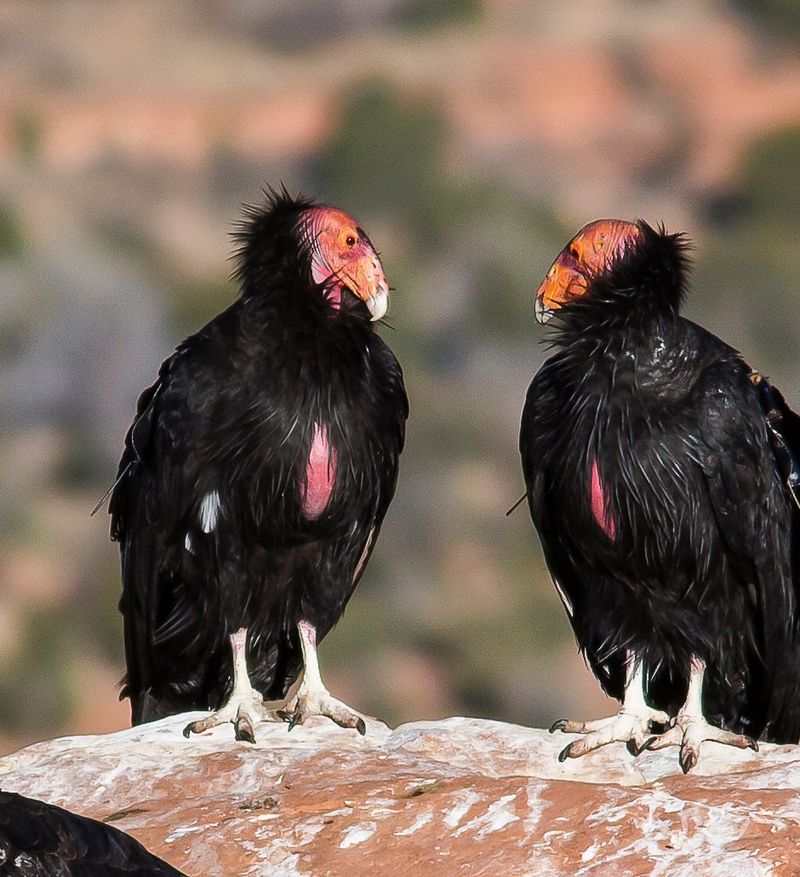
A single old-growth cavity, no matter how perfectly shaped, cannot carry a species back from the edge. Condors are wide-ranging birds with demanding requirements that stretch far beyond any one tree.
Adults can travel dozens of miles in a single foraging trip, covering coastal bluffs, open grasslands, river corridors, and mountain ridges in search of carrion. They need favorable soaring conditions, reliable roost sites, and enough carcasses distributed across the landscape to sustain a growing flock.
Redwood forest provides one piece of that system, not the whole picture.
Threats compound the challenge at every scale. National Park Service threat documentation identifies lead poisoning from ammunition fragments in carcasses and gut piles as the most important continuing danger to condors.
When a hunter uses lead ammunition and leaves remains in the field, condors that feed on those remains can ingest fragments small enough to be invisible but large enough to cause fatal poisoning. Lead affects the nervous system and digestive tract, and condors are especially vulnerable because they are obligate scavengers who consume bones and soft tissue alike.
Beyond lead, USFWS condor recovery initiatives document a range of additional pressures: microtrash ingestion, where adults accidentally feed their chicks small human-made debris such as bottle caps and wire that can cause internal injuries; power-line collisions and electrocution; deliberate shooting; disease; and disturbance at nest and roost sites. Recovery program operations address these threats through supplemental food stations that reduce reliance on potentially contaminated carcasses, regular health checks and blood-lead monitoring, and coordinated threat-reduction campaigns.
The Redwood National Park condor management planning documents reflect how much infrastructure surrounds even a small northern flock. The 2025 population status report makes plain that ongoing captive propagation and releases remain essential; the free-flying population cannot yet sustain itself through wild reproduction alone.
Recovery is a landscape-wide, multi-decade effort, and the redwood cavity is one habitat feature within that larger, still-fragile system.
People can help without chasing the birds
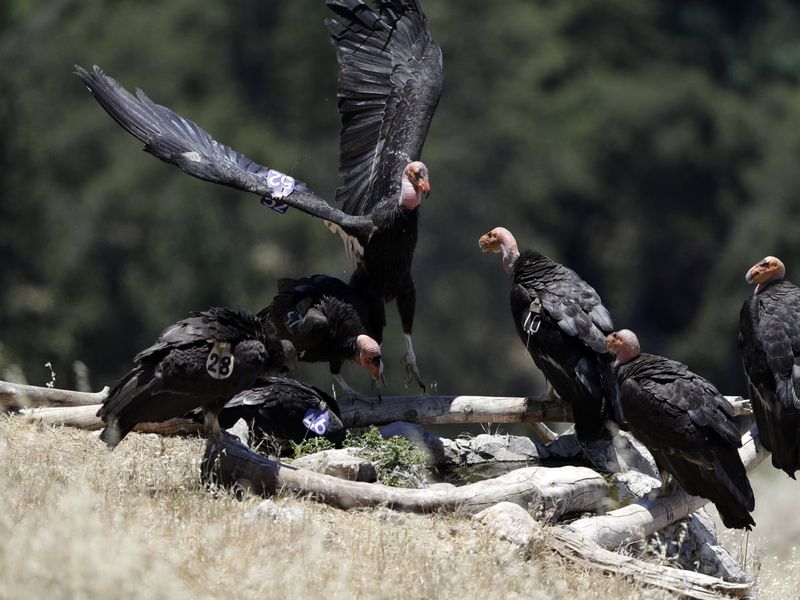
Curiosity about condors is understandable, but the most helpful thing most people can do for the northern flock is keep their distance and stay informed. USFWS public involvement guidance is straightforward: never approach a condor, never attempt to feed one, and never leave food, trash, or toxins such as antifreeze in areas where condors or other wildlife might encounter them.
Feeding condors, even with good intentions, can habituate them to people and human structures in ways that reduce their wildness and increase their risk of injury or death near roads and buildings.
Reporting a sighting can genuinely contribute to the recovery effort, but only when done safely. NPS condor observation guidance recommends recording the bird’s wing tag number or color pattern, the location, the time, and a brief description of its behavior before submitting a report to the appropriate program.
A sighting without those details is harder for researchers to use. Observers who cannot record that information safely, without moving closer to the bird or leaving a marked trail, should simply enjoy the moment and move on.
Hunters have a particularly direct role to play. Lead exposure from ammunition fragments remains the single most consequential ongoing threat, and switching to non-lead ammunition removes a hazard that condors cannot avoid on their own.
Removing or appropriately covering carcass remains after a hunt reduces the chance that condors or other scavengers will consume lead-contaminated tissue. Neither action requires a large investment; both make a measurable difference.
Seeking out the nest site, entering restricted backcountry areas, using drones near roosting or nesting birds, climbing trees, or trying to photograph condors at close range are all behaviors that can disturb an endangered species during its most vulnerable moments. A pair that abandons a nest cavity because of human pressure loses a breeding season it cannot easily recover.
Supporting the recovery from a distance, by making responsible choices in the field, is the kind of help that actually works.
The return offers evidence of a path, not a finished recovery
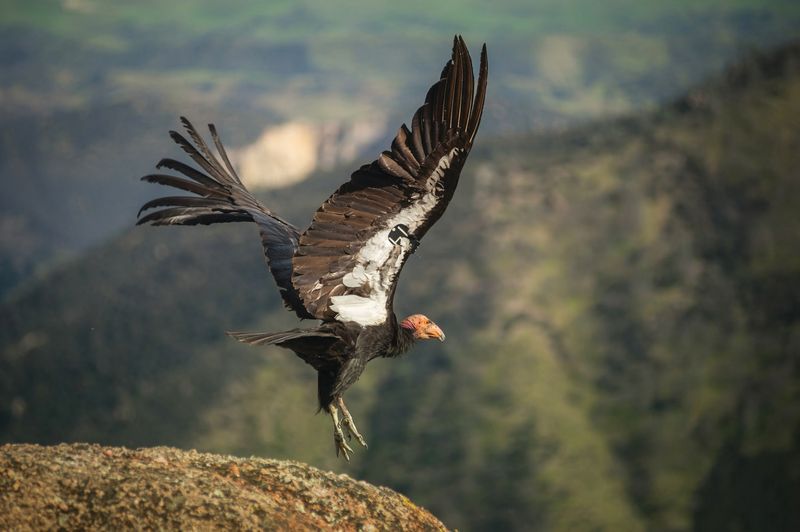
Somewhere in a remote section of Redwood National and State Parks, a cavity in an old-growth redwood tree held, for a period of weeks in early 2026, what researchers believed was the first condor egg in Yurok Ancestral Territory in more than a hundred years. The birds that chose that site were not wild-born survivors; they were reintroduced birds, raised in captivity and released through a deliberate, sustained effort led by the Yurok Tribe and its partners.
That distinction is honest, and it does not diminish what happened.
Yurok Tribe program records and USFWS recovery documentation together show that the reintroduction has restored a condor presence to a region the species historically occupied and has produced birds capable of forming pairs and selecting northern nesting habitat. The presumed egg was not confirmed and appeared unsuccessful by April 2026.
The northern flock is not self-sustaining. As the 2025 population status report makes clear, the species still depends heavily on captive propagation, intensive monitoring, and ongoing threat reduction to survive.
What the 2026 nesting behavior offers is evidence of a credible restoration pathway, not proof of a completed recovery. Continued Yurok leadership, habitat protection, monitoring, and the slow, patient work of reducing lead and other threats are what will determine whether future pairs succeed where A0 and A1 could not.
A bird with a nine-and-a-half-foot wingspan, circling above old-growth redwoods it had never seen before its release, choosing a cavity and staying: that is not nothing. It is, carefully understood, a beginning.