
If Your Snake Plant Suddenly Sends Up A Spike, Here’s The All-Or-Nothing Gamble It’s Making In The Dark
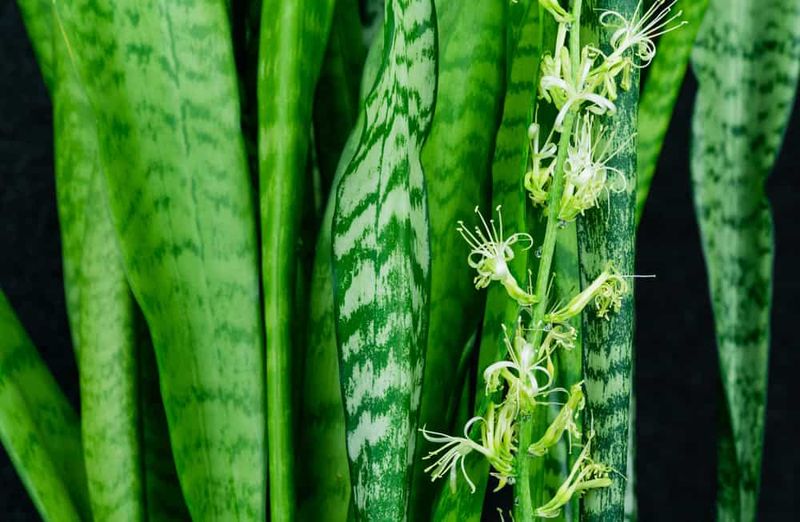
Most snake plant owners go years without ever seeing a flower, so when a strange stalk shoots up from the base overnight, the first reaction is usually panic. Some people assume the plant is sick, others have heard the scary rumor that it’s blooming itself to death.
Neither story is quite right. What you’re actually watching is a rare but completely normal reproductive event, and once you understand what’s happening, the whole thing becomes a lot less alarming.
That sudden spike is a real flower stalk
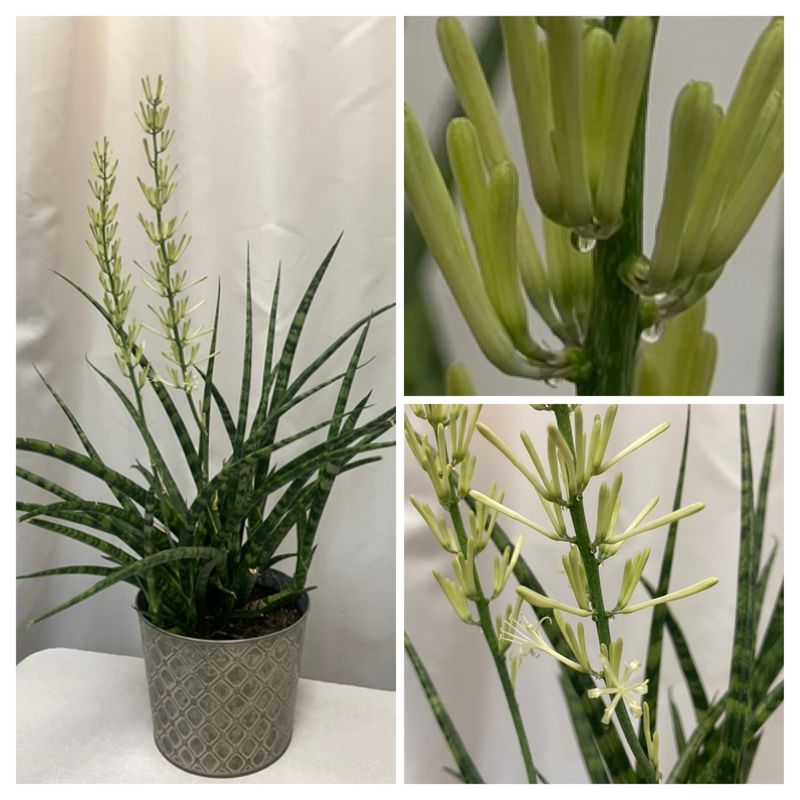
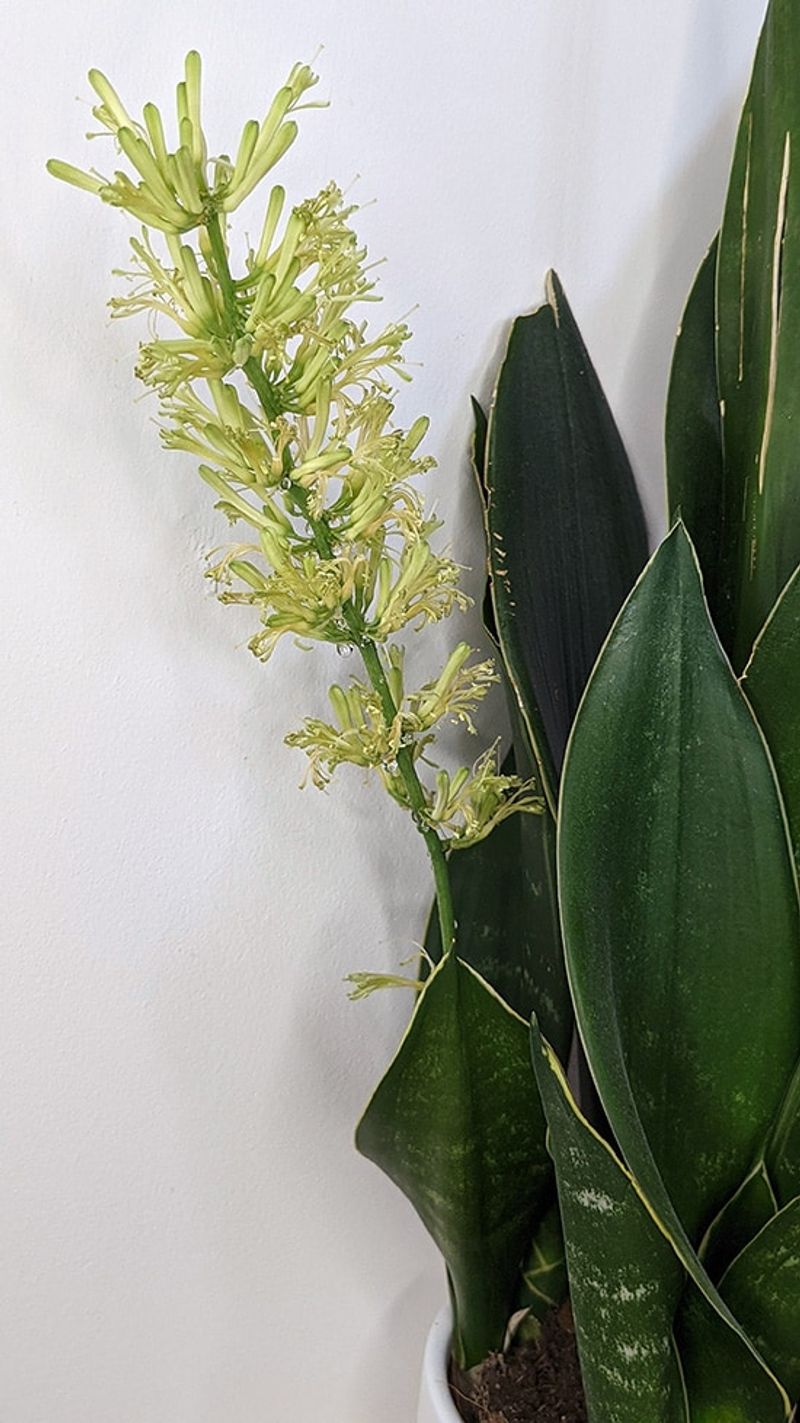
Picture a thin, upright stalk pushing straight up from the soil at the base of your snake plant, sometimes appearing almost overnight. That structure is an inflorescence, a genuine flower stalk, and it can reach anywhere from a few inches to nearly three feet tall depending on the plant’s size and conditions.
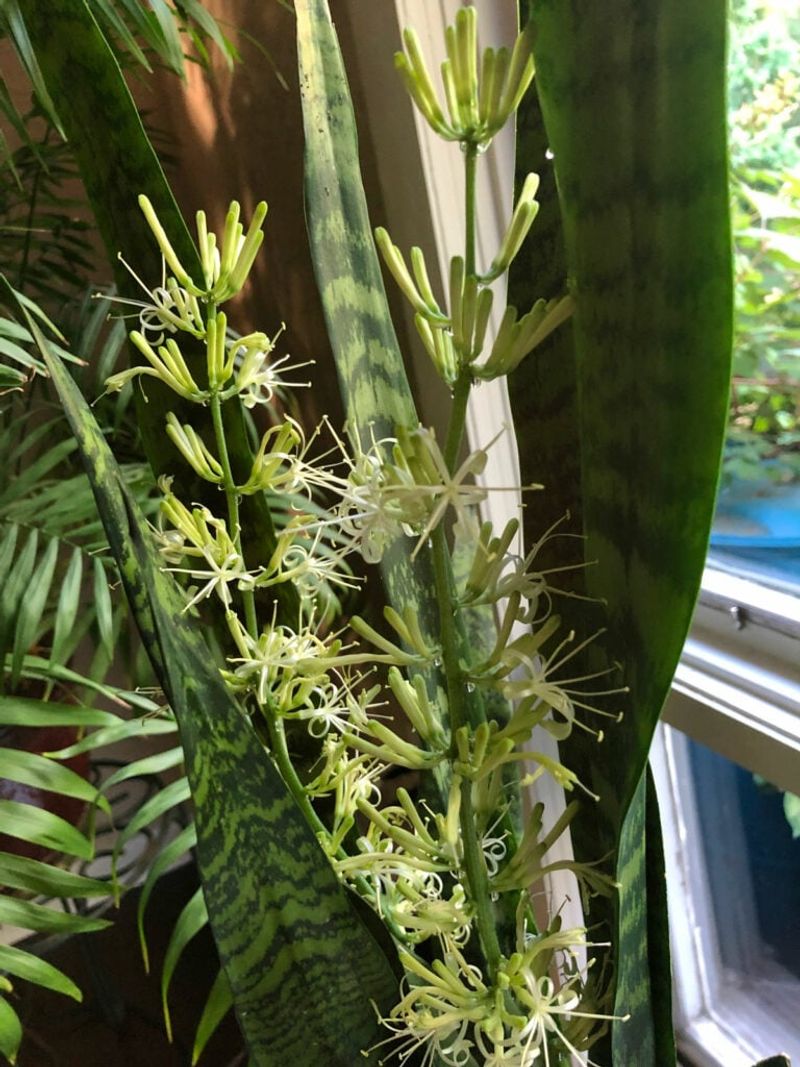
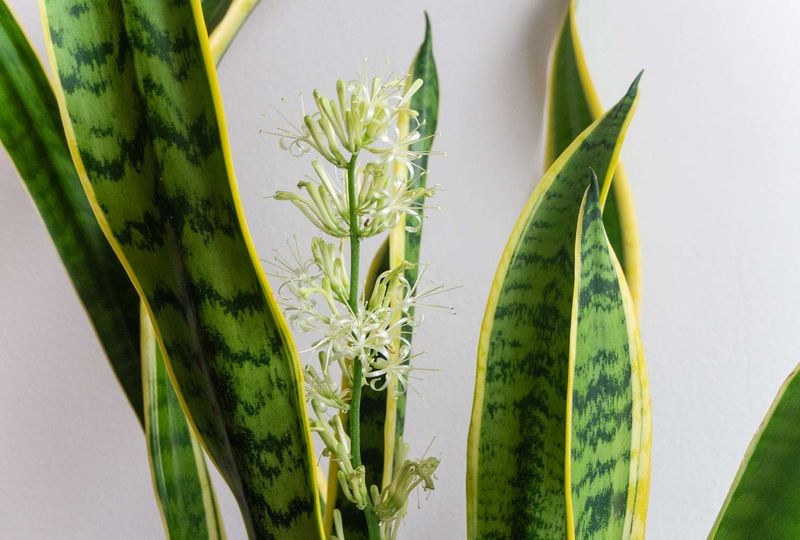
Along its length you will find clusters of small tubular flowers in shades of cream, white, or soft greenish-white, tightly packed and easy to overlook until they open.
The flowers themselves have a couple of notable habits. Many growers report a sweet, almost jasmine-like fragrance that becomes noticeably stronger in the evening, and the stalk may produce small droplets of sticky nectar as the flowers mature.
Neither trait is universal, but both are documented possibilities worth watching for once you know what to look for.
Knowing what the spike is not helps just as much as knowing what it is. A flower stalk is not a new leaf unfurling from the center of the plant, which would be flat, banded, and pointed.
It is also not a sign of rot, which would appear as soft, discolored, or foul-smelling tissue at the base rather than a firm, upright stem. University of Connecticut Extension guidance on Sansevieria describes the flower stalk as part of the plant’s normal reproductive cycle, not a symptom of disease.
The plant producing this stalk is formally known as Dracaena trifasciata, a name adopted after a reclassification of the genus. The older name, Sansevieria trifasciata, still appears on most nursery labels and in horticultural references, so both names point to the same familiar plant.
Singapore’s NParks Flora and Fauna Web profile of Dracaena trifasciata confirms the bisexual flower structure and documents the inflorescence as a standard feature of the species. What you’re seeing, in other words, is reproduction, not a malfunction.
No, the snake plant is not blooming itself to death
The death-bloom rumor probably gets its staying power from a real phenomenon in other plants. Certain agave species, for example, are genuinely monocarpic, meaning they flower once, set seed, and then die as part of a programmed life cycle.
That story is dramatic enough to stick, and it tends to get applied to any plant that produces an unexpected bloom. Snake plants are not in that category.
Dracaena trifasciata is a perennial, rhizomatous plant with a polycarpic flowering habit. Polycarpic simply means the plant is capable of reproducing more than once over its lifetime.
Plants of the World Online at the Royal Botanic Gardens, Kew documents Dracaena trifasciata as a perennial species, and the NParks species profile supports the same conclusion: flowering is a reproductive event, not a terminal one. The plant is built to potentially flower again.
After the flowers fade, the stalk may produce small berry-like fruit in shades of orange or red. North Carolina Extension’s plant profile notes this possibility, though it also reflects the experience of most indoor growers: fruit rarely develops on plants kept inside.
Pollination conditions indoors are simply not ideal, so berries are more of a botanical footnote than something most owners will ever encounter.
Flowering indoors is uncommon, and that rarity is probably part of why the event feels alarming. When a plant does something unexpected after years of quiet, the brain reaches for an explanation, and crisis is an easy one to land on.
The biology here does not support that conclusion. A bloom on a mature snake plant is unusual in the sense that it does not happen to every plant every year, but it is a normal part of what this species can do.
The spike is not a farewell; it is a reproductive structure on a plant that was always capable of producing one.
Why might an indoor snake plant bloom now?
Honest answer: nobody has run a controlled experiment that pinpoints exactly what flips the switch for an indoor snake plant. What exists instead is a body of horticultural observation, and those observations point consistently toward a few conditions that seem to be present when flowering happens.
Maturity and establishment come up repeatedly. A young plant or a recently divided offset is much less likely to flower than a specimen that has been growing undisturbed for several years.
Mississippi State University Extension’s guide to Sansevieria and University of Arkansas Cooperative Extension’s profile of mother-in-law’s tongue both suggest that a settled, established plant is a better candidate for bloom than one still finding its footing. Time in the pot seems to matter.
Light is the other factor mentioned most consistently. Snake plants are famously forgiving of low light, but surviving in dim conditions and thriving are two different things.
Bright indirect or filtered light gives the plant more energy to work with, and extension sources note that adequate light is associated with more vigorous growth generally, which includes reproductive activity. Very low light keeps the plant alive but is less likely to support the kind of robust condition that precedes a bloom.
Some sources, including Mississippi State Extension, mention that a plant filling its container, sometimes described as slightly root-bound, may be more inclined to flower. The University of Connecticut Extension guide echoes this loosely, framing it as a mild environmental signal rather than a prescription.
What that does not mean is that you should crowd the plant aggressively, starve it of water, or let the soil go bone dry for months at a time. Those conditions can damage roots and inhibit growth rather than trigger a beneficial bloom.
Colorado State University Extension’s snake plant fact sheet reinforces the broader point: stable, suitable care produces the healthiest plants, and a healthy, mature plant is the most plausible candidate for flowering. Individual plants and cultivars can also behave differently, so there is no single formula that guarantees a bloom or explains every case.
The survival gamble is a metaphor, not a diagnosis
The phrase “survival gamble” makes for a vivid image. A plant, sensing that conditions may not last, pours energy into reproduction before the window closes.
It is a compelling story, and in a loose poetic sense it captures something real about how reproduction works across the plant kingdom. As a diagnosis for your specific snake plant on your specific windowsill, though, it does not hold up.
What the evidence actually supports is simpler. The NParks species profile and the Kew Plants of the World Online record document Dracaena trifasciata as a perennial, polycarpic plant capable of flowering more than once.
Those sources describe normal reproduction, not a last stand. There is no species-specific finding showing that snake plants flower because they are about to die or because they are making a calculated final bid for survival.
Broader plant biology research does show that environmental conditions influence when and how plants reproduce. A review of temperature stress and plant reproduction and a review of drought stress and plant reproduction both confirm that environmental signals shape reproductive timing in many species.
But those reviews cover crops and model organisms under controlled stress conditions, and their findings cannot be transplanted directly onto a household snake plant without species-specific evidence to bridge the gap.
The reason the survival-gamble framing feels so satisfying is that a bloom really is rare, and rare events invite big explanations. Years pass with nothing, then one spring a stalk appears and the whole pot looks transformed.
That contrast is genuinely striking. The metaphor earns its place as a way to describe how surprising and dramatic the moment feels.
What it does not earn is the status of a biological diagnosis. Your plant is not consciously gambling, it is not signaling distress, and it is not making a final stand.
It is doing something its species has always been capable of doing, and the timing remains, for now, genuinely uncertain.
The safest response is ordinary snake-plant care
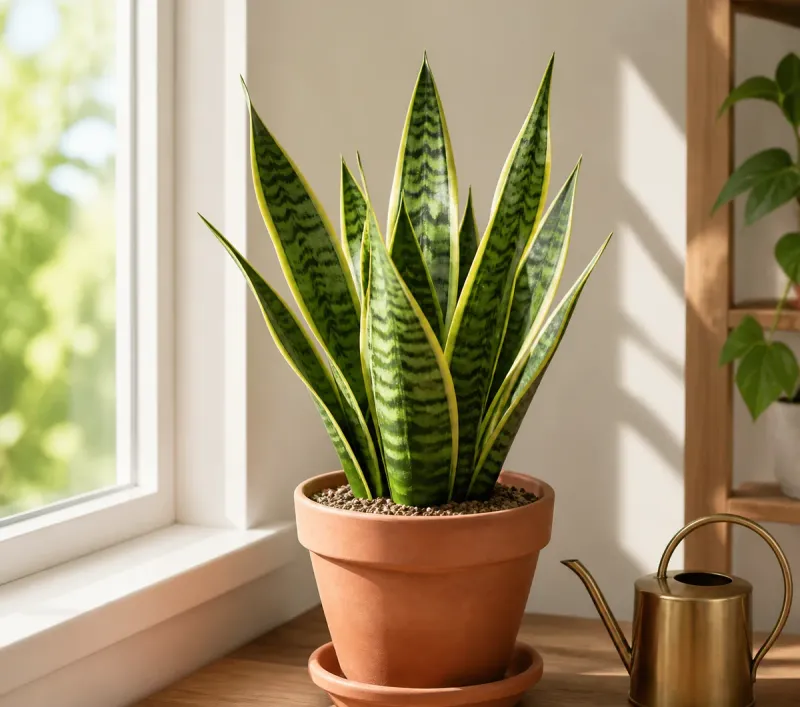
A flower spike appearing on your snake plant is not a call to action. The best immediate response is to keep doing what has apparently been working well enough to produce a bloom in the first place.
That means maintaining the same light, the same watering rhythm, and the same container unless there is an independent reason to change any of those things.
University of Connecticut Extension’s Sansevieria care guide and Colorado State University Extension’s snake plant fact sheet both describe the same foundational approach: place the plant where it receives bright indirect or filtered light, use a container that has drainage holes, and water thoroughly only after the potting mix has dried out sufficiently. That last point deserves emphasis because it is the one most often abandoned during a moment of plant worry.
When something unexpected happens to a houseplant, the instinct is often to water more. With snake plants, that instinct can cause real harm.
Prolonged wet soil in a pot with inadequate drainage is the most common path to root rot in this species. University of Wisconsin-Madison Extension’s guide to healthy houseplant roots explains that roots need both moisture and oxygen, and waterlogged soil deprives them of the latter, setting off a chain of damage that a flower spike will do nothing to stop.
How often you water in practice depends on variables that no single rule can capture: pot size, potting mix composition, room temperature, humidity, and how much light the plant is actually receiving all play a role. A snake plant in a four-inch clay pot in a sunny room will dry out faster than the same plant in a large plastic pot in a north-facing hallway.
Let the soil, not the calendar, guide the timing. Poke a finger an inch or two into the mix; if it still feels damp, wait.
The bloom itself does not justify skipping that check or shortening the drying interval.
A flower spike alone is not a reason to repot
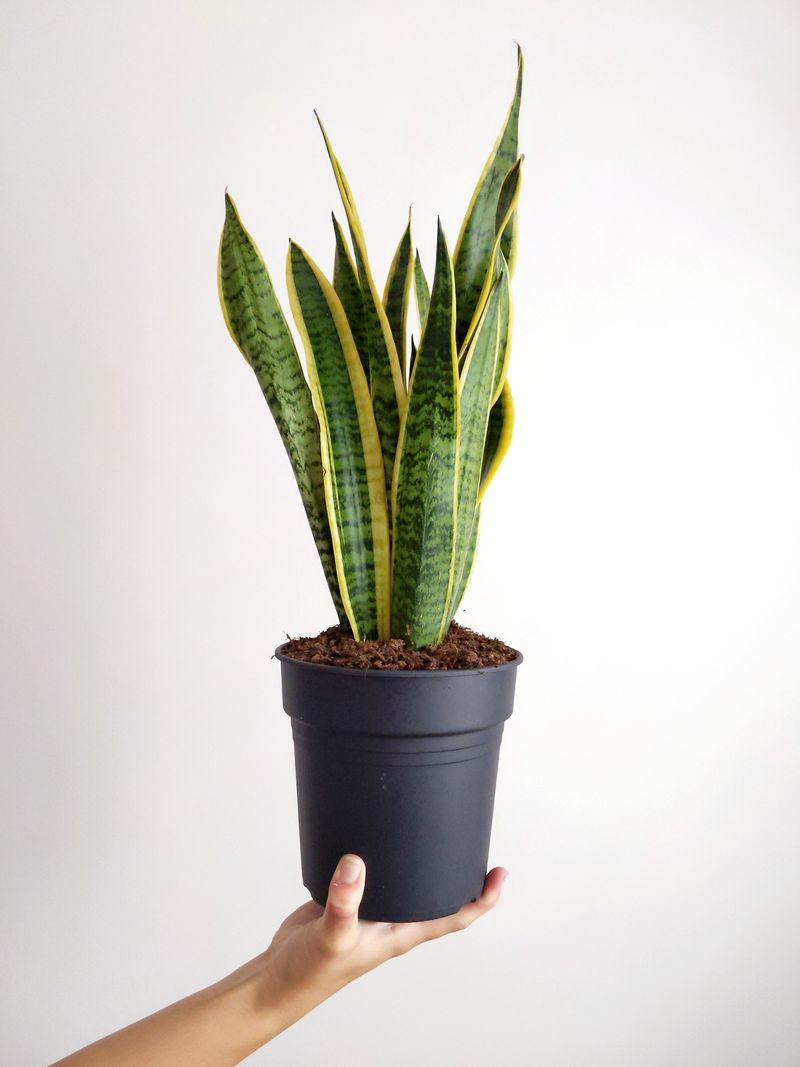
Repotting is one of those tasks that feels productive when you are anxious about a plant, but doing it without a real reason can cause more disruption than it prevents. A flower spike is not a reason to repot.
The decision to move a snake plant into a new container should be based on what the roots and soil are actually telling you, not on what the plant is doing above the soil line.
University of Illinois Extension’s repotting guidance identifies the relevant signals clearly: roots emerging from drainage holes, a root mass so dense that it has displaced most of the soil, unusually small new leaves compared to previous growth, or wilting that persists even after appropriate watering. Those are the signs that a plant has genuinely outgrown its space.
A snake plant that is snug in its container but otherwise healthy is a different situation. This species tolerates being somewhat root-bound, and some horticultural sources associate that condition loosely with flowering.
Washington State University Extension’s guidance on root-bound houseplants draws a useful distinction between tolerable crowding and conditions that actively harm the plant, such as a cracked or broken container, soil that has become so compacted it no longer drains, or chronic dehydration because the root mass leaves no room for water to be retained.
A bloom does not prove that the plant is perfectly healthy, either. The flower spike and the root system are separate things, and one does not automatically vouch for the other.
If you notice mushy roots when you check the drainage holes, a foul smell coming from the soil, leaves that are collapsing or turning uniformly yellow, or persistent wilting despite correct watering, those symptoms need their own assessment. The Wisconsin Extension root health guide and the University of Connecticut Sansevieria resource both treat root rot and overwatering as the primary threats to snake plant health, and neither condition is diagnosed or treated by looking at whether a flower stalk is present.
What should you do with the stalk after flowering?
Once the flowers have faded and the stalk begins to look spent, the question of what to do with it is mostly a matter of personal preference. There is no extension or botanical guidance establishing that removing a healthy spike prevents plant decline, extends the plant’s life, or cures any underlying condition.
Cutting it off is a cosmetic decision, not a medical one.
If you want to remove the stalk, wait until the flowers have fully finished, then use clean, sharp scissors or pruning shears and cut as close to the base as possible without damaging the surrounding leaves. University of Connecticut Extension’s Sansevieria guide treats this kind of pruning as routine tidying rather than intervention.
If you prefer to leave the stalk in place while it dries naturally, that is also fine. The plant is not harmed by the stalk remaining, and some growers enjoy watching the full process play out.
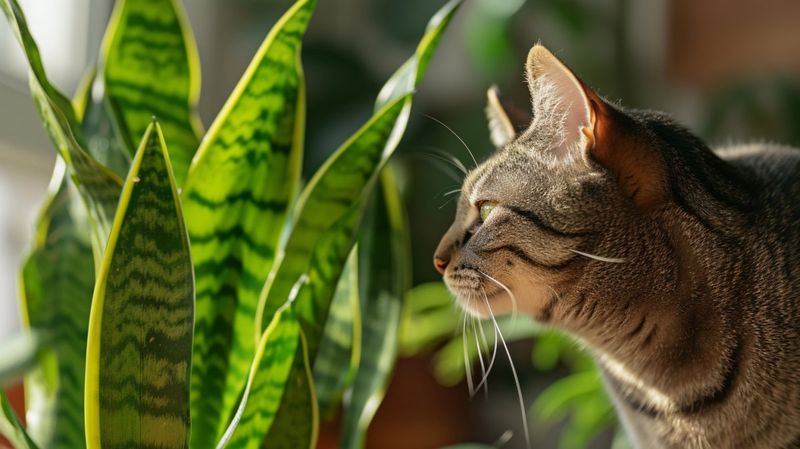
Small berry-like fruit in orange or red may develop after flowering, though indoor fruit set is uncommon for reasons already noted. If berries do appear, they are worth knowing about for one specific reason: snake plants are toxic to dogs and cats.
The ASPCA’s toxic plant listing for snake plants identifies saponins as the toxic principle and lists nausea, vomiting, and diarrhea as possible signs of ingestion in pets. That toxicity applies to the leaves as well, but fallen flowers and berries on the floor present an additional hazard because they are small, unfamiliar objects that curious pets may investigate.
Keep the plant on a surface your pets cannot reach, and pick up any dropped flowers or berries promptly. If a pet chews on any part of the plant and develops symptoms, contact your veterinarian or the documented toxic species information can support your call to an animal poison-control service.
Pruning the stalk is optional; keeping pets away from it is not.
Let the rare bloom be surprising, not frightening
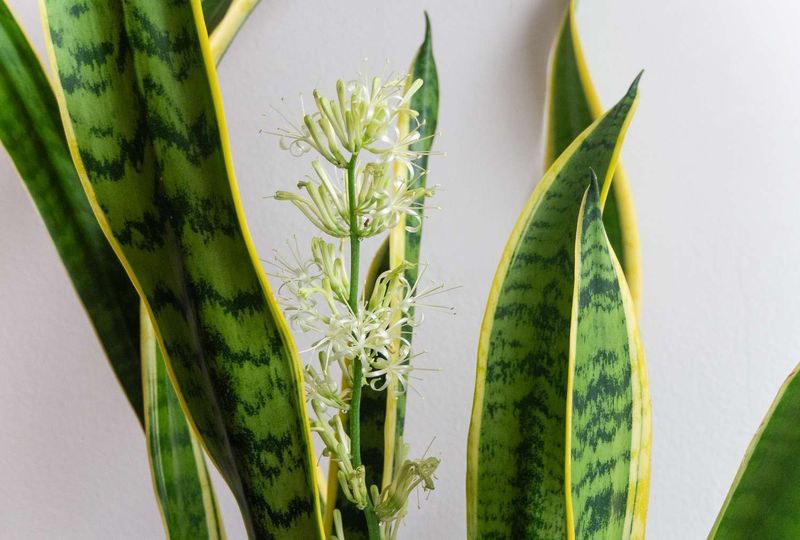
A snake plant flower spike is one of those events that catches you off guard precisely because the plant is usually so quiet. Years of upright, patterned leaves and then, suddenly, a stalk.
The biology behind it is genuinely not fully understood, and that uncertainty is worth sitting with rather than filling in with alarming stories.
What the evidence does support, drawn from Kew’s Plants of the World Online record and University of Connecticut Extension’s care guidance, is that Dracaena trifasciata is a polycarpic perennial capable of flowering more than once, and that a bloom on a mature, established plant is uncommon indoors but not a symptom of crisis. The spike is a reproductive structure, not a distress flare.
Keep the same dry-between-waterings routine that has served the plant well. Watch the roots and leaves separately for any signs of genuine trouble, and make any pruning decisions based on appearance rather than urgency.
Colorado State University Extension frames snake plant care as straightforwardly low-maintenance, and a flower spike does not change that. If the survival-gamble metaphor still feels useful, keep it as a vivid image of something rare and striking, not as a verdict on the plant’s fate.
The most interesting thing about this bloom may simply be that it happened at all.