
Selected Ginger Compounds Showed COX-2 Activity in a Lab Assay – Here’s What That Actually Means for Your Pantry Root

That knobby root sitting in your pantry has been linked to pain relief for centuries, but a laboratory finding about its chemistry has recently caught real scientific attention. Researchers identified COX-2 as the best-supported enzyme target associated with specific ginger compounds, and the result is genuinely interesting – though it tells a more complicated story than most headlines suggest.
Understanding what the experiment actually showed, and what it did not, helps you make smarter choices about ginger without overstating what a slice of root can do.
COX-2 is the laboratory target behind ginger’s reputation
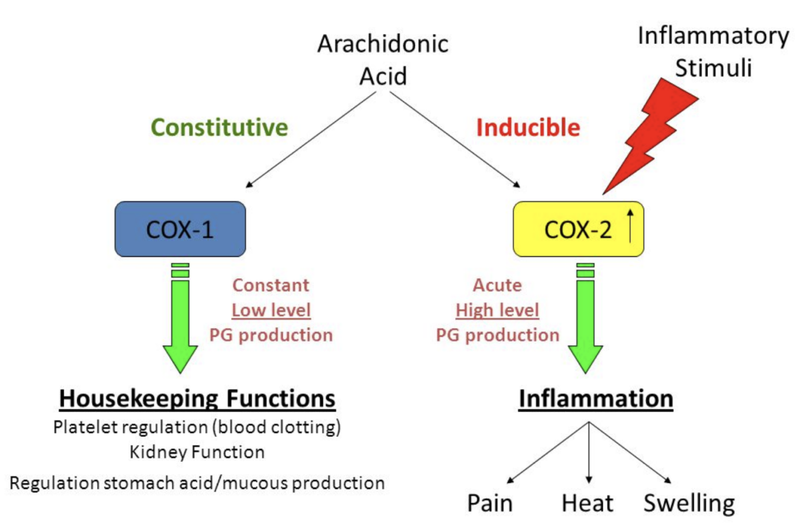
Cyclooxygenase enzymes – COX-1 and COX-2 – act like molecular switches inside your cells. When tissues are irritated or injured, these enzymes help convert certain fatty acids into prostaglandins, which are signaling molecules that drive pain, swelling, and fever.
COX-2 in particular gets switched on during inflammation, making it a well-known pharmaceutical target.
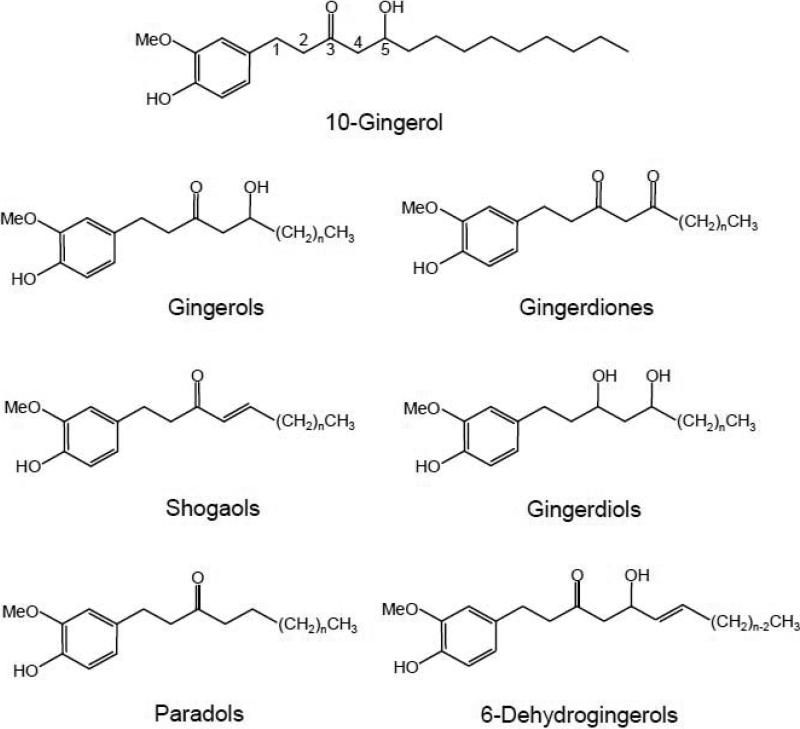
Ginger’s association with that target comes from a specific piece of laboratory work. A peer-reviewed study on cyclooxygenase-2 inhibitors in ginger found that selected isolated compounds from Zingiber officinale – namely 10-gingerol, 8-shogaol, and 10-shogaol – inhibited COX-2 activity in a controlled enzyme assay.
Under those test conditions, none of the three purified compounds produced detectable COX-1 inhibition.
That is a legitimately interesting biochemical finding. COX-2 is the same enzyme that prescription and over-the-counter anti-inflammatory medicines are designed to dial down, so seeing ginger-derived compounds interact with it in a lab is worth paying attention to.
What the finding does not show is equally important. The experiment used purified compounds and controlled enzyme assays – not a bowl of ginger soup or a cup of ginger tea tested in a person.
Calling COX-2 the best-supported enzyme candidate linked to ginger research is accurate; claiming that eating pantry ginger produces a selective COX-2 effect in human tissue is a separate claim that the laboratory data cannot support. The rest of this article unpacks exactly where the evidence ends and where the assumptions begin.
The experiment showed weak selectivity under controlled conditions
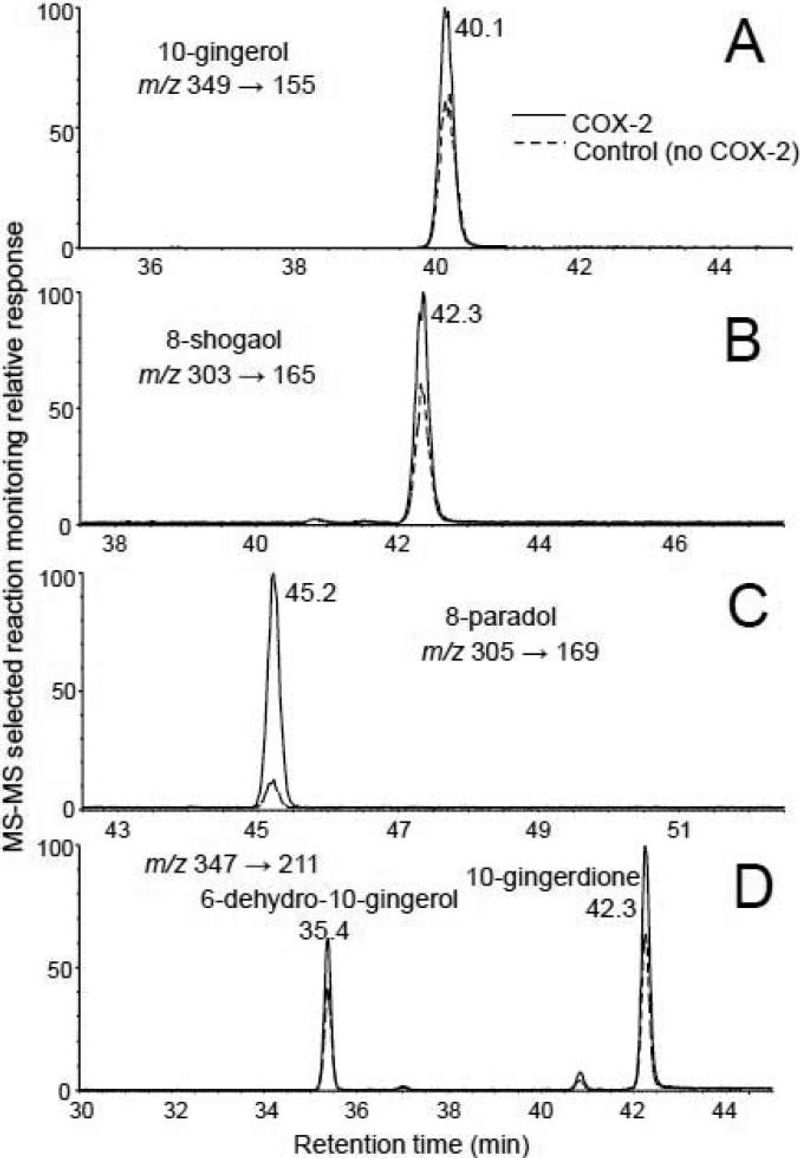
Getting specific about what the COX study measured helps separate a real finding from an overstated one. Researchers tested purified 10-gingerol, 8-shogaol, and 10-shogaol individually against both COX-1 and COX-2 enzymes in a cell-free assay.
The three compounds inhibited COX-2, and no COX-1 inhibition was detected for those purified compounds under the study’s conditions. A whole ginger preparation tested in the same study also favored COX-2 over COX-1, inhibiting it roughly three times more strongly.
The IC50 values reported for the purified compounds give a sense of the potency involved: approximately 32 micromolar for 10-gingerol, 17.5 micromolar for 8-shogaol, and 7.5 micromolar for 10-shogaol against COX-2. These numbers describe the concentration needed to reduce enzyme activity by half in a controlled test tube environment.
The study itself characterized this inhibition as weak, which is a meaningful qualification that often gets dropped when the research is summarized for general audiences.
Weak inhibition in an enzyme assay is not the same as measurable pain relief in a person. For a compound to affect COX-2 in human tissue, it first has to survive digestion, get absorbed into the bloodstream, reach the site of inflammation, and arrive at a concentration comparable to what the assay used.
None of those steps were tested in this study.
An in-vitro result establishes biochemical plausibility – it shows a compound can interact with a target under controlled conditions. It does not tell you how much fresh or dried ginger a person would need to eat, whether that amount is realistic, or whether the absorbed compounds reach tissue concentrations anywhere near the IC50 values measured in a test tube.
Treating the laboratory finding as a clinical dose recommendation skips over all of that missing evidence.
The type of ginger changes the chemistry
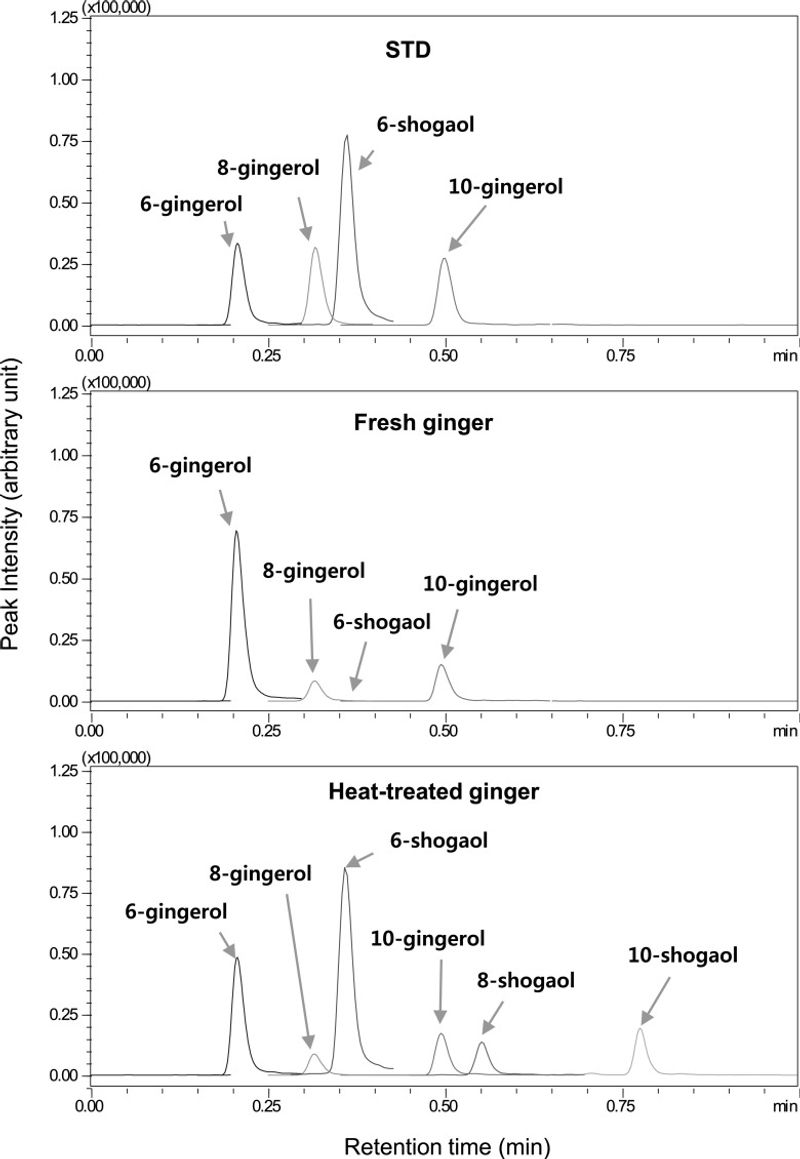
Fresh ginger root from the produce section and the dried powder in a spice jar are not the same product chemically, even though they come from the same plant. Research on ginger preparation and composition confirms that processing changes the balance of active compounds significantly.
Fresh ginger is richer in gingerols, while drying and heating can convert gingerols into shogaols through a dehydration reaction.
That distinction matters because the COX-2 study tested specific shogaols and a gingerol – compounds whose relative concentrations shift depending on how the ginger was handled before it reached you. A standardized extract used in a laboratory is not equivalent to a teaspoon of ginger powder stirred into oatmeal, and neither of those is equivalent to a slice of fresh root steeped in hot water for five minutes.
The National Center for Complementary and Integrative Health (NCCIH) notes that many of the clinical studies examining ginger’s health effects used dietary supplements rather than ordinary food. That means the evidence base for any proposed benefit was built using controlled, measured preparations – not the variable amounts most people consume when they cook or brew tea with ginger from the pantry.
No evidence-based measurement of pantry ginger guarantees a COX-2 effect in a person. The processing differences are not a reason to seek out a more concentrated product in hopes of stronger results; they are simply a reason to be careful about applying laboratory or supplement findings to everyday culinary use.
Different preparations should be treated as distinct products with distinct evidence profiles, not as interchangeable versions of the same thing.
Common pain medicines use different mechanisms
One of the more misleading ideas attached to the ginger-COX-2 story is that all painkillers work the same way and therefore share the same blind spot. They do not.
Lumping ibuprofen, naproxen, aspirin, celecoxib, and acetaminophen into a single category called “painkillers” hides real and clinically relevant differences in how each drug works.
Ibuprofen and naproxen are relatively nonselective COX inhibitors, meaning they block both COX-1 and COX-2 to varying degrees. Aspirin irreversibly inhibits both enzymes, with effects on platelet function that the others do not share in the same way.
Celecoxib was deliberately developed as a COX-2-selective drug, which means the pharmaceutical industry already produces medicines that target COX-2 more specifically than older NSAIDs do. Comparative research on COX-1 and COX-2 selectivity across widely used NSAIDs makes clear that selectivity exists on a spectrum, not as a binary on-off property.
Acetaminophen sits in a separate category entirely. It relieves pain and reduces fever, but its mechanism does not fit the classic model of peripheral COX inhibition the way traditional NSAIDs do.
A review of acetaminophen’s analgesic mechanisms describes multiple proposed pathways – including possible central nervous system effects and interactions with the endocannabinoid system – that remain incompletely understood after decades of use.
The practical implication is straightforward: ginger’s laboratory selectivity finding is not a distinction that every approved pain medicine lacks. Some medicines are already COX-2-selective by design.
COX selectivity alone also does not determine clinical safety or effectiveness, because both COX enzymes have important physiological roles beyond pain signaling. Framing ginger’s lab result as a unique advantage over all painkillers misrepresents both the finding and the medicines being compared.
Human evidence points to modest benefits in specific conditions
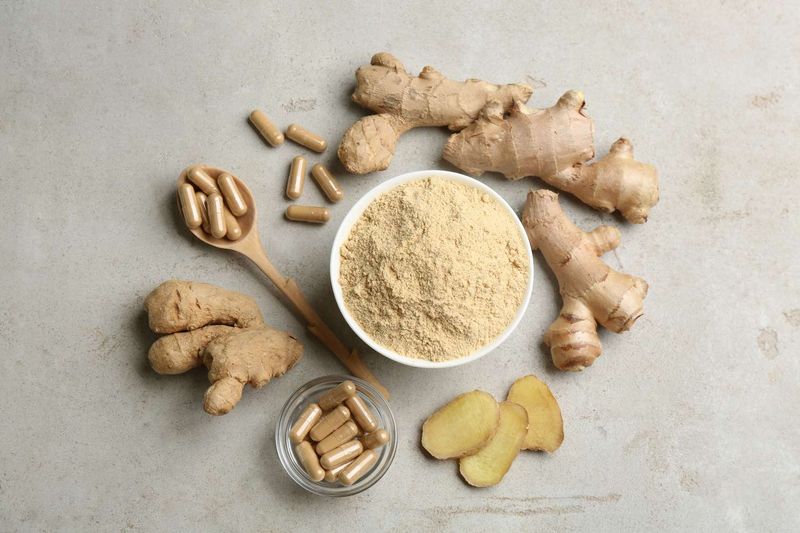
Moving from laboratory chemistry to actual human outcomes requires a different kind of evidence, and the picture that emerges from clinical research is more limited than the biochemistry might suggest. The NCCIH concludes that ginger supplements might reduce the severity of menstrual cramps and might help with knee osteoarthritis symptoms – two conditions where the trial evidence is more developed than in other areas.
The agency also notes that some of the supporting research is low quality.
NCCIH’s summary on ginger reflects a pattern seen across the broader literature: ginger has been studied for a wide range of conditions, but the strength of evidence varies considerably depending on what outcome is being measured and which preparation was tested.
An umbrella review of ginger and human health outcomes found that while some meta-analyses report statistically significant improvements in pain for conditions like osteoarthritis and dysmenorrhea, the studies contributing to those analyses used different products, different doses, different durations, and different comparison treatments. That heterogeneity makes it difficult to draw firm conclusions about how much ginger, in what form, reliably helps in a clinical setting.
A comprehensive systematic review of 109 randomized controlled trials on ginger similarly found mixed evidence across health outcomes, with some positive signals but no basis for recommending ginger as a general substitute for analgesic treatment.
Critically, most trials used standardized supplements or concentrated extracts rather than food-grade ginger. The gap between a measured supplement capsule and a slice of root added to a stir-fry is wide enough that results from one should not be assumed to apply to the other.
Modest improvements in specific conditions under studied conditions are not the same as a proven, general pain-relief effect from ordinary culinary ginger.
Selective chemistry does not make ginger risk-free
A compound showing COX-2 selectivity in a test tube says nothing definitive about whether it is safe when consumed in quantity by a person taking other medicines. The two questions – biochemical target preference and clinical safety – require entirely separate evidence, and ginger’s profile on the second question is more complicated than its reputation as a natural food ingredient might suggest.
NCCIH lists possible side effects of concentrated ginger products including abdominal discomfort, heartburn, diarrhea, and mouth or throat irritation. These effects are more likely with supplements than with ordinary culinary amounts, but they illustrate that concentrated exposure is not automatically benign.
The interaction picture deserves particular attention. The European Medicines Agency’s assessment of Zingiber officinale notes warnings about possible increased bleeding risk when ginger is combined with anticoagulants, antiplatelet drugs, aspirin, ibuprofen, and naproxen.
The agency acknowledges that the evidence on the warfarin interaction specifically is subject to debate, but the concern is consequential enough that it warrants medical advice rather than dismissal.
Memorial Sloan Kettering Cancer Center advises stopping ginger supplements before surgery because of possible antiplatelet effects. That recommendation applies to supplement doses, not to the small amounts in a recipe or a cup of tea, and that distinction is worth keeping clear.
Using ginger in cooking is a different exposure than taking a concentrated capsule daily.
Anyone taking blood thinners, antiplatelet medicines, diabetes medications, or other prescription treatments should talk with a healthcare professional before adding ginger supplements to their routine. Disclosing all supplements – including ginger – before any surgery or medical procedure is a straightforward precaution that can prevent a preventable complication.
The evidence supports a narrower takeaway

Pulling the evidence together leads to a more precise conclusion than the original headline implied. The COX-2 study showed that selected ginger compounds inhibited COX-2 in a laboratory assay, with weak potency and no detectable COX-1 inhibition under the test conditions.
That is a real and interesting biochemical finding. It is not proof that eating ginger from your pantry produces a selective COX-2 effect in your body, outperforms pain medicine, or replaces the need for medical treatment.
NCCIH’s guidance reflects where the human evidence actually sits: possible modest benefits for specific conditions using standardized supplements, with quality concerns across the supporting studies. Culinary ginger is food, and treating it as a guaranteed enzyme-targeted therapy asks it to carry more weight than the research will bear.
Concentrated ginger supplements, persistent pain, and any questions about drug interactions belong in a conversation with a healthcare provider. FDA guidance on safe use of over-the-counter pain relievers makes clear that common analgesics can cause serious harm when used above recommended amounts – which is one more reason not to treat ginger as a reason to skip or exceed labeled doses of medicines that work.
The most honest summary of ginger’s chemistry is that a root with genuinely interesting laboratory properties remains, at the end of the day, a spice – one worth enjoying, not one worth overestimating.