
If A Bare Patch Sits Outside Your Back Door, Here’s How A Pergola Turns It Into A Shaded Outdoor Room
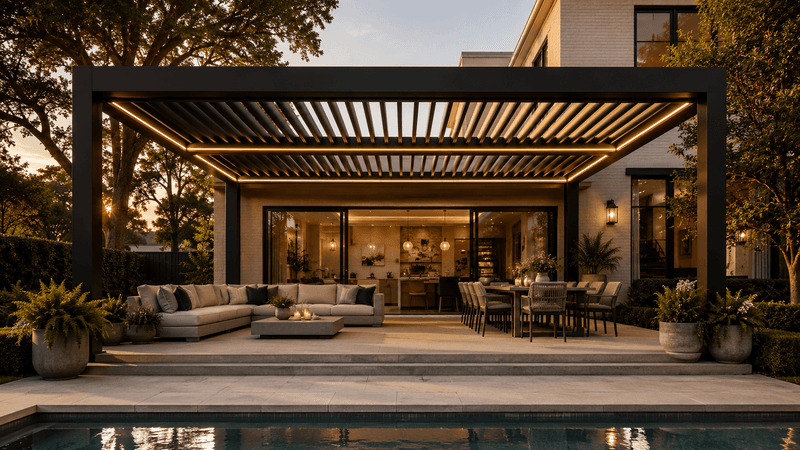
That strip of bare lawn just outside your back door is not wasted space. It is an outdoor room waiting for a plan.
A pergola, combined with the right plants and some honest site assessment, can help turn it into a place your family actually wants to use. The transformation is real but conditional, and understanding the difference between filtered shade and a fully shaded retreat will save you a lot of frustration.
Study the Bare Patch Before You Choose the Structure
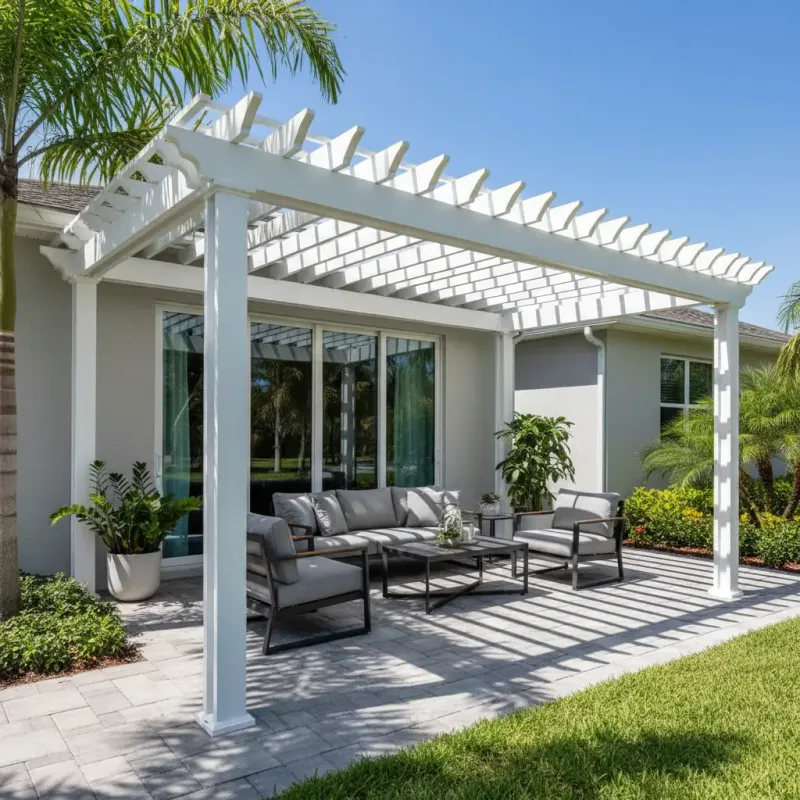
Walk out your back door at three different times today: morning, midday, and mid-afternoon. Write down where the direct sun lands and where shadows fall.
University of Georgia Extension guidance distinguishes partial shade from full shade by the timing and duration of direct sun exposure, and afternoon sun is generally harsher than morning sun for shade-preferring plants. That single observation can prevent you from buying the wrong plants entirely.
Beyond light, pay attention to how the space drains after rain. A low spot that stays soggy for days will stress most plants and may affect how you anchor a structure.
Check for consistent wind patterns too, since an exposed corner behaves very differently from a sheltered wall.
Measure the distance from the back door to the outer edge of the patch and count how much space a chair, a small table, and a clear walking path would actually require. Most people underestimate how much room comfortable seating needs and end up with a layout that feels cramped.
Knowing the real dimensions before you commit to any structure saves you from building something that crowds the circulation zone.
Think about the access point itself. A pergola placed too close to the door can make entry awkward, especially if the door swings outward.
Leave enough clearance so the structure frames the exit rather than blocking it.
Only after you have tracked sun, noted drainage and wind, measured for seating, and confirmed access does it make sense to decide whether a pergola fits the site. University of Illinois Extension reminds gardeners that shade is not a single uniform condition, and the plants you choose later will depend on the specific pattern this patch produces.
The pergola is a possible response to what you find, not the automatic starting point.
Design a Useful Outdoor Room Around Seating
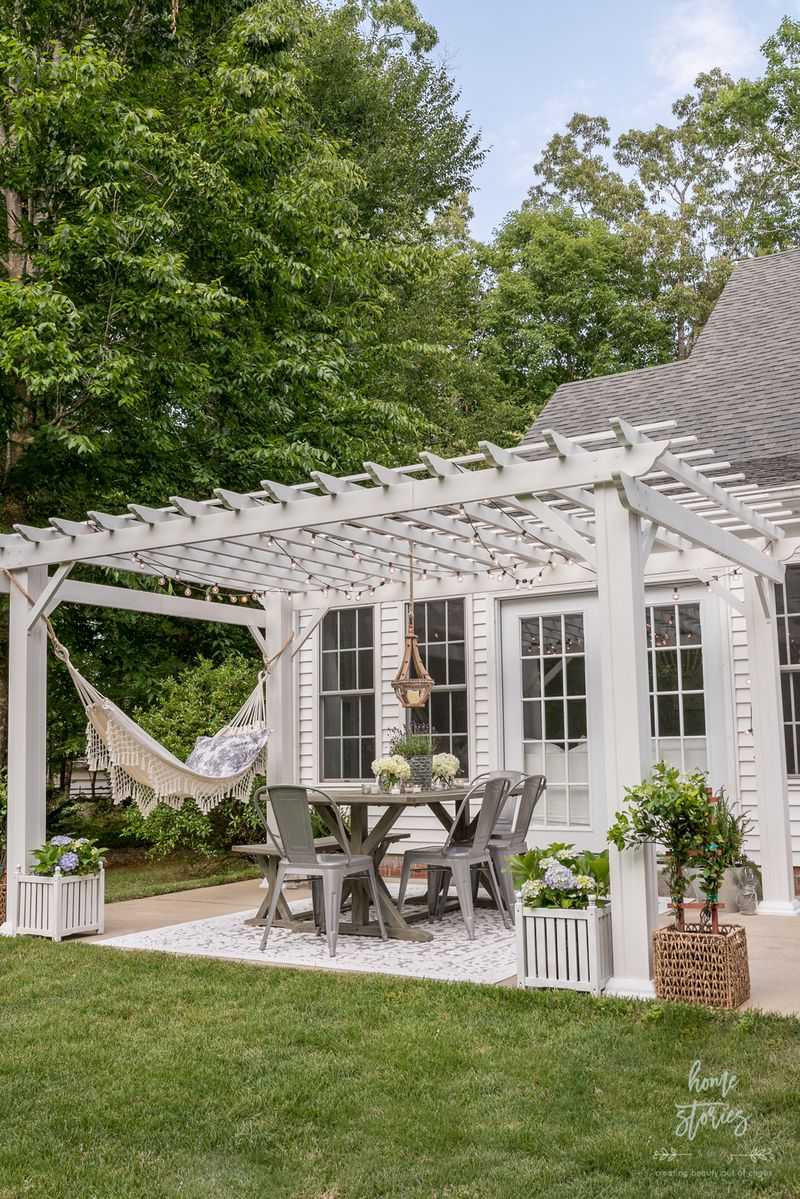
Good outdoor room design starts with people, not plants. Place your seating zone at the center of the pergola’s footprint first, then work outward to decide where shrubs, containers, and planting beds belong.
Colorado State University Extension notes that container gardens are especially suited for concentrating color and impact in small outdoor spaces, which makes them practical companions to a seating-centered layout.
Hydrangeas and other shrubs work well along the outer edges of the structure, where they frame the room visually without crowding the chairs or blocking the path from the door. Movable containers can sit near the seating area and shift position as the season or the light changes.
Avoid lining every edge with pots, since that can make the space feel cluttered and force guests to step around obstacles.
The structure itself provides visual definition even before any vine fills in overhead. Slats or open rafters create the suggestion of a ceiling and give the space a sense of enclosure that bare lawn never offers.
Penn State Extension identifies perennial vines as capable of covering pergolas and arbors to provide shade, but a young vine may offer only limited filtered shade in its first season or two. Plan the layout so the space functions even before the canopy fills in.
A standard slatted or vine-covered pergola is not rainproof. The American Wood Council clarifies that its residential deck guide does not apply to canopies or awnings, which signals that a pergola is its own structural category with its own design considerations.
If you want weather protection, that requires a separately designed solid roof and its own set of approvals. Design the outdoor room around the shade and definition the pergola realistically provides, and you will enjoy it far more than if you expected a feature it cannot deliver.
Select an Overhead Vine That Fits the Site and Structure
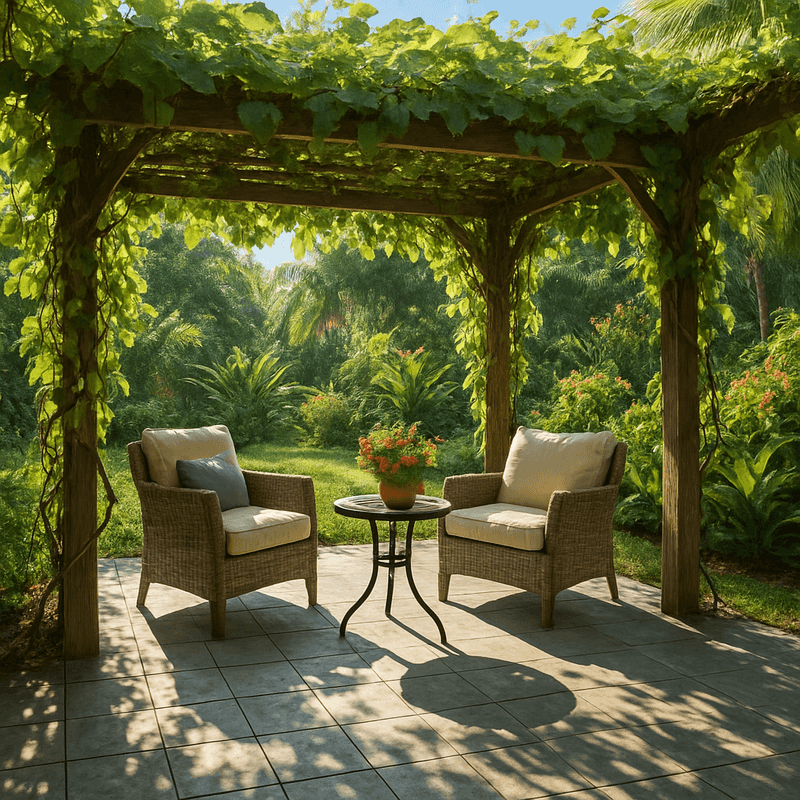
Perennial vines are the plants that actually climb over the pergola and provide a developing canopy of filtered shade. Hydrangeas, by contrast, are shrubs that stay at ground level and belong around the edges of the structure, not on top of it.
Keeping these two roles separate will prevent a lot of planting confusion later.
Choosing a vine requires more evaluation than most gardeners expect. Penn State Extension’s guide to perennial vines explains that vines differ substantially in mature size, vigor, weight, invasiveness, pruning demands, and how they attach to a support.
Some cling with adhesive pads, some twine, and some need to be tied. A vine that works well in one region may become difficult to manage in another, so regional suitability matters as much as appearance.
Structural load is a real consideration. Oregon State University Extension’s kiwifruit growing guide illustrates, as one example of a vigorous crop, just how substantial the support requirements for a heavy, productive vine can become.
That level of engineering attention is not universal across all vines, but it does signal that you should check the support requirements for whichever species you select, rather than assuming any pergola frame will handle any vine without review.
A living canopy takes time to establish. Many perennial vines spend their first season building roots rather than producing significant top growth, so the shade benefit may be modest for a year or two.
Plan the outdoor room to be functional during that establishment period, not dependent on full canopy coverage from the start.
Ask your local cooperative extension office or a reputable local nursery which vines perform well in your USDA hardiness zone without becoming invasive. Some beautiful and vigorous vines are listed as invasive in certain states and should not be planted there regardless of how attractive they look in a catalog.
Matching the vine to your specific site, climate, and structure is the step that makes the outdoor room sustainable over the long term.
Place Hydrangeas According to Their Species

Hydrangeas are not one uniform plant, and treating them that way is one of the most common reasons they fail to bloom. The species you have on hand determines where it should go, how you should prune it, and whether the shade your pergola produces is actually an asset or a problem.
Bigleaf hydrangeas (Hydrangea macrophylla) generally perform best with morning sun and afternoon shade, along with moist, well-drained soil. University of Georgia Extension’s hydrangea guide describes afternoon shade as especially valuable for bigleaf types, which can stress in intense afternoon heat.
Placing them along the east-facing edge of the pergola, where they catch morning light and get shelter later in the day, often suits them better than planting them directly beneath the structure where light may be too limited.
Smooth hydrangeas (Hydrangea arborescens) offer more flexibility. University of Illinois Extension’s shrub selector lists smooth hydrangea as best suited to partial to full shade but notes it can tolerate full sun when watered consistently.
That broader tolerance makes it a practical choice for spots where the light pattern is less predictable or where the pergola’s shade is still developing.
Deep or persistent shade beneath a pergola is not automatically a good home for any hydrangea. Insufficient light can reduce flower-bud formation, and a plant that sits in dense shade may produce healthy foliage but very few blooms.
University of Illinois Extension’s hydrangea care guidance reinforces that light levels are a primary factor in bloom success.
Bloom failure has more than one cause. If your hydrangea is not flowering, the problem may not be light at all.
University of Minnesota Extension’s pruning guide and University of Illinois Extension’s pruning advice both explain that bigleaf hydrangeas form next year’s flower buds in late summer on old wood, so pruning at the wrong time removes those buds entirely. Smooth and panicle hydrangeas bloom on new growth and have different pruning windows.
Identify the species before you reach for pruning shears, because cutting at the wrong time is a reliable way to lose a season of flowers.
Use Containers for Flexible Color and Placement
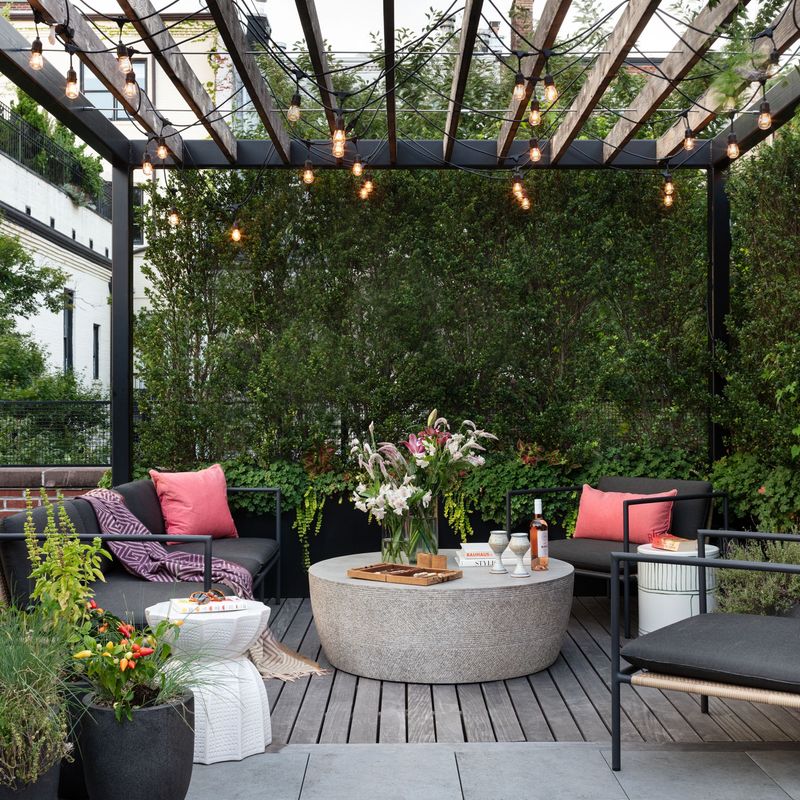
Containers earn their place in a pergola outdoor room because they move. When the vine canopy is still thin and the light beneath the structure is brighter than expected, you can shift a pot to a shadier spot along the edge.
When a plant outgrows its position or stops performing, you replace it without disturbing a garden bed. That flexibility is genuinely useful in a space where the light pattern is still evolving.
Set containers near the seating area where they add color within easy view, but keep the circulation path clear. A pot placed in the middle of the walking route from the door to the chairs becomes an obstacle quickly, especially at dusk.
Two or three well-chosen, larger containers make more visual impact than a cluster of small pots and are easier to manage.
Colorado State University Extension’s container garden guide emphasizes that containers need drainage holes, a suitable potting mix rather than ordinary garden soil, and more frequent watering than in-ground plantings because exposed pot sides lose moisture to the air on all sides. Larger containers hold moisture longer than small ones and give roots more room to grow, which reduces how often you need to water and how quickly plants become stressed.
Match the plants in each container by light and water needs. A sun-loving petunia and a shade-preferring fern will not thrive in the same pot.
Penn State Extension’s container gardening resource and the Penn State Master Gardener container guide both stress compatible combinations as a foundation for healthy container plantings.
During hot weather, outdoor containers may need daily watering and sometimes twice-daily attention as plants mature and temperatures climb. The correct schedule depends on pot material, plant size, weather conditions, and drainage rate.
Checking the soil moisture with your finger rather than following a fixed calendar is the most reliable approach, and it becomes especially important in midsummer when the soil in a small pot can dry out within hours.
Verify Structure, Loads, and Local Requirements Before Building
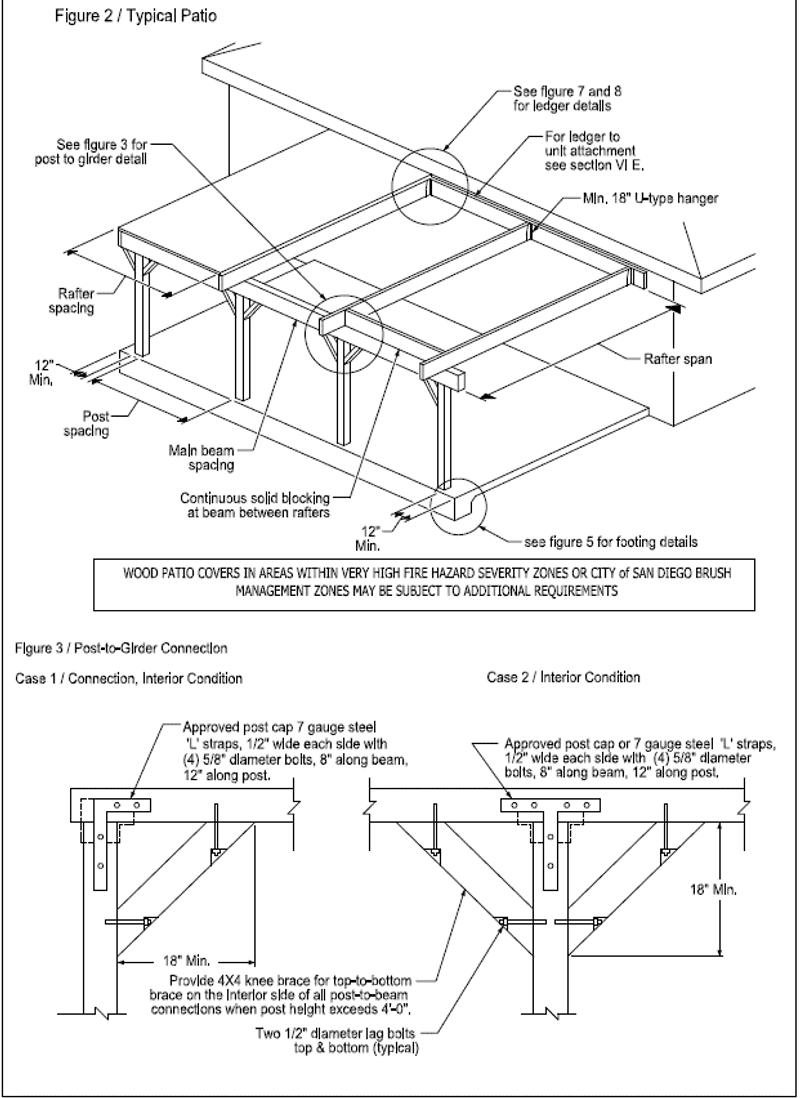
Permits and local codes are not bureaucratic obstacles. They are the mechanism that ensures the structure you build will hold up under the conditions your yard actually experiences, including wind, snow, and the added weight of a dense vine canopy or fabric panels.
Checking requirements before construction is far less disruptive than discovering a violation after the posts are set.
Building requirements for pergolas, trellises, arbors, and patio covers vary by jurisdiction. International Code Council model-code materials and ICC administrative reference documents show that some jurisdictions specifically regulate these structures, but ICC publications are model-code references, not your local law.
Contact your local building department to find out which codes your jurisdiction has adopted, what permits are required, and what setback, footing, zoning, and fire requirements apply to your specific project.
The American Wood Council states clearly that its DCA6 residential deck construction guide does not apply to canopies or awnings. Using standard deck-building instructions for a pergola without qualified review is not a safe shortcut.
If you are considering attaching the structure to your house, that connection requires its own structural assessment and may trigger additional permit requirements.
Wind and snow loads deserve specific attention when you add fabric panels, screens, a dense vine canopy, or a solid roof. The American Wood Council’s 2024 Wood Frame Construction Manual addresses structural loads including wind and snow for wood-framed construction.
As a general illustration of the engineering principle involved, OSHA guidance on added enclosures shows how screens or solid panels can increase wind forces on a structure, though that document addresses occupational safety contexts and is not pergola engineering guidance. For your actual design, consult the applicable local structural requirements or a qualified professional who can evaluate your site-specific conditions.
Maintain the Space as Light and Plants Change
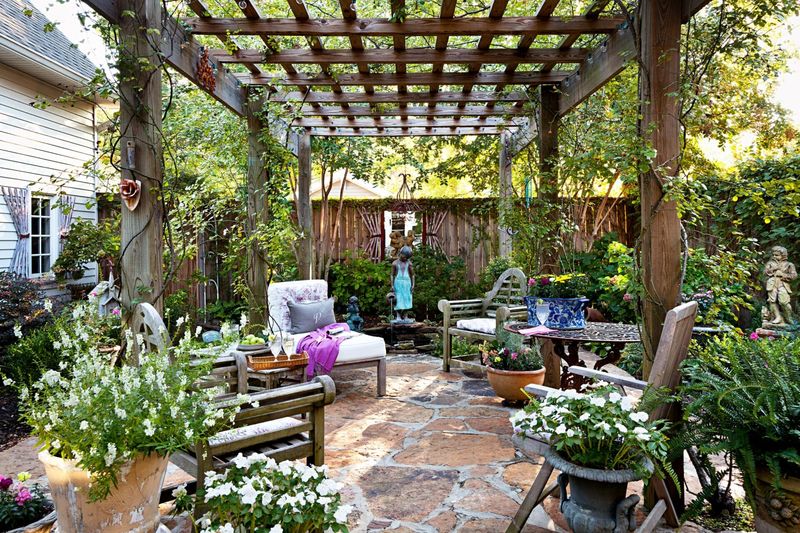
An outdoor room built around a pergola is not a set-it-and-forget-it project. The vine needs training in its early seasons to spread across the rafters rather than pile up at the base.
Penn State Extension’s vine guide cautions that perennial vines can spread, become difficult to manage, or require consistent pruning to stay within the intended footprint. Checking the vine’s growth pattern a few times each season, especially in the first three years, keeps it from overwhelming the structure or crowding neighboring plants.
As the canopy fills in, the shade beneath the pergola deepens. A hydrangea that performed well in partial shade during the vine’s first season may receive too little light once the canopy matures.
Reassess plant performance each spring rather than assuming the original placement remains ideal. Moving a container is easy; transplanting an established shrub is harder, so pay attention to early signs of stress or reduced flowering before a plant declines significantly.
Container plants need more frequent attention than in-ground beds throughout the growing season. Colorado State University Extension notes that containers may need daily or twice-daily watering during peak summer heat.
Check the soil moisture by feel rather than by schedule, and adjust as temperatures change.
Hydrangea pruning requires species-specific timing. University of Minnesota Extension and University of Illinois Extension both explain that bigleaf hydrangeas form flower buds on old wood in late summer, so cutting them back in fall or early spring removes next season’s blooms.
Smooth and panicle types flower on new growth and tolerate pruning in late winter. University of Illinois Extension’s hydrangea care page reinforces that indiscriminate hard pruning is one of the most common reasons a healthy hydrangea produces no flowers.
Identify the species first, then prune according to its specific schedule rather than reacting to a missed bloom season with the shears.
Expect a More Usable Space, Not Perfect Shade
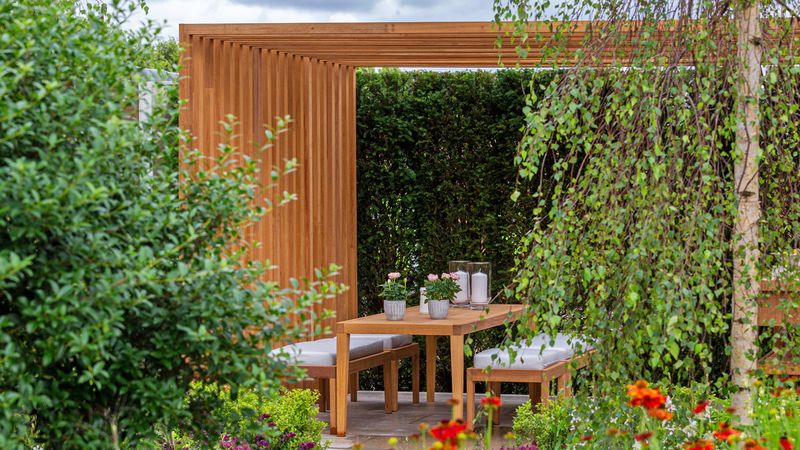
A well-planned pergola can organize seating, support a developing vine canopy, frame hydrangeas in light that suits their species, and hold movable containers that adapt as conditions shift. Penn State Extension confirms that vine-covered structures can provide shade, and Colorado State University Extension supports containers as practical tools for adding color to small outdoor spaces.
Together, those elements can make a neglected patch genuinely more useful under the right conditions.
The result may remain partially shaded or seasonal, especially while the vine establishes. A standard pergola will not provide rain protection, guaranteed cool temperatures, or low maintenance.
University of Georgia Extension and University of Illinois Extension both remind gardeners that plant performance depends on site-specific conditions, not on the presence of a structure alone.
The practical sequence is straightforward: observe the site carefully, verify the structure meets local requirements, match every plant to the actual light and moisture conditions, and let the outdoor room develop at the pace the plants allow. A space that grows into its purpose over two or three seasons tends to be more satisfying than one that overpromises from the start.