
If Your Marigolds Grow Beside Your Tomatoes, Here’s The Silent Chemical They Leave Working In The Soil For Years

Marigolds and tomatoes are one of the most talked-about plant pairings in backyard gardening, and a big reason for that is a story about a hidden chemical that keeps protecting your soil long after the flowers are gone. The truth is more interesting than the rumor, and also more useful.
Marigold roots do produce a real, biologically active compound that can suppress certain soil pests, but how it works, how long it lasts, and how you need to plant for it to matter are all quite different from what most garden advice suggests.
The marigold chemical story begins with living roots
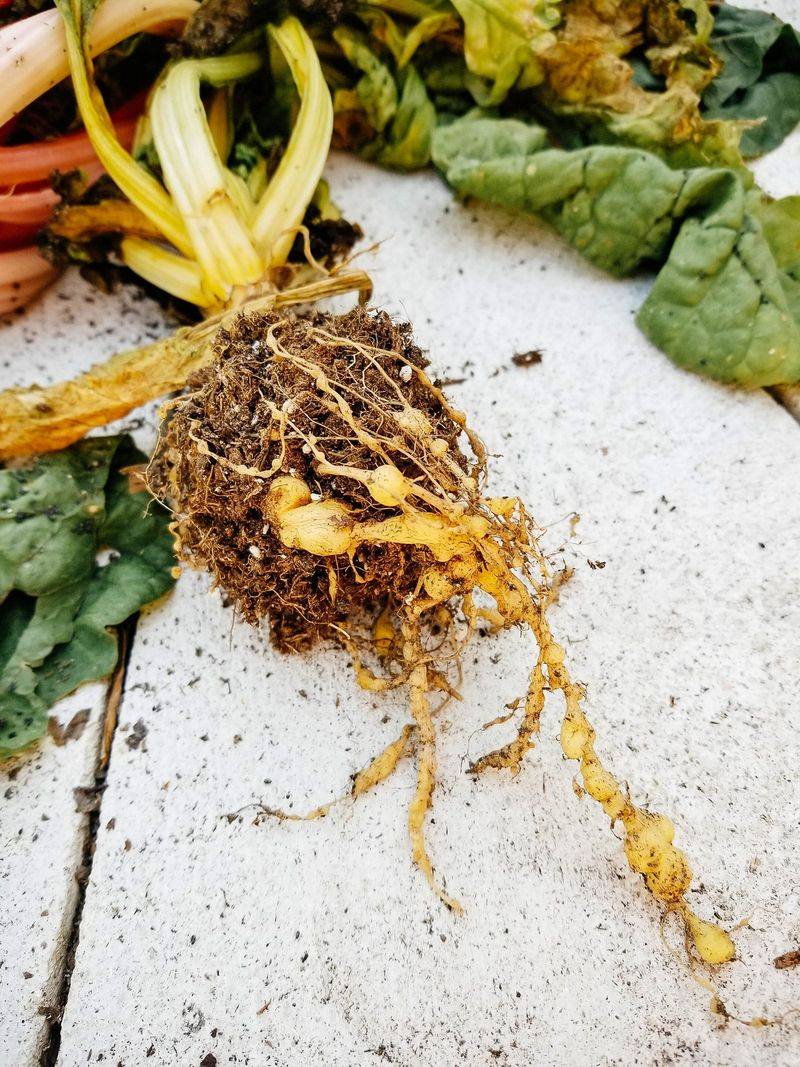
Pull a marigold out of the ground and take a close look at its roots. They are the source of one of the more genuinely surprising things a garden plant can do.
Marigold roots produce a compound called alpha-terthienyl, a type of thiophene, and laboratory research on its nematicidal actions shows it can penetrate certain nematodes and trigger oxidative stress that damages or kills them. That activity can increase after photoactivation, meaning exposure to light may intensify the effect.
The key word in all of that is “roots,” and specifically, living roots. University of Florida IFAS Extension guidance on marigolds for nematode management ties the compound’s activity to active root tissue.
Once the plant dies, the chemical case for ongoing soil protection becomes much harder to make. There is no established evidence that alpha-terthienyl lingers in soil as a years-long active residue after the marigold is gone.
That distinction matters enormously for how you garden. The appealing version of the story, that you plant a few marigolds near your tomatoes and a protective chemical quietly works in the soil season after season, skips over the part where the plant has to be alive and growing to generate that effect.
A dead plant, dried roots, or tilled-in residue does not carry the same demonstrated activity.
What marigolds can do is still worth understanding, because it is genuinely useful. The compound targets a specific category of soil organism, the activity is supported by real research, and there are planting strategies that give you a meaningful shot at suppressing a real problem.
The starting point is knowing exactly what alpha-terthienyl is aimed at, and what it is not.
What α-terthienyl actually targets
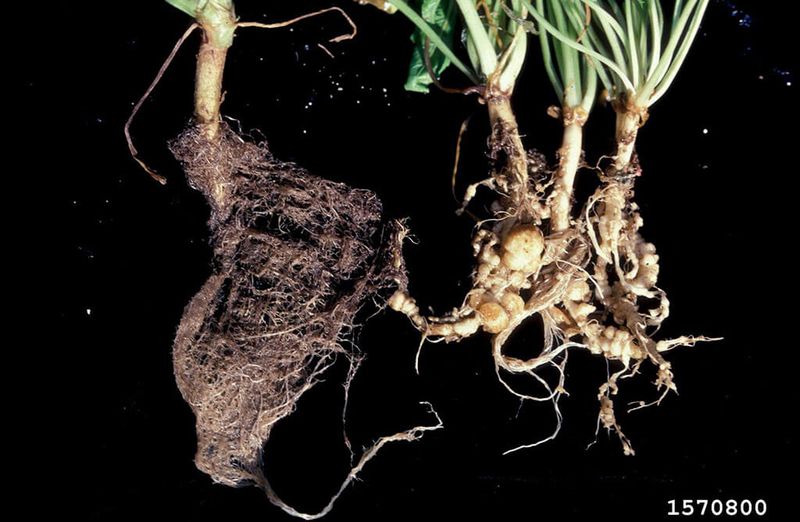
Alpha-terthienyl is not a general-purpose pest repellent, and treating it as one leads to a lot of gardening disappointment. The organisms it can affect are plant-parasitic nematodes, microscopic roundworms that live in soil and feed on plant roots.
These are not the same as the beneficial nematodes gardeners sometimes add to soil to fight grubs. Plant-parasitic nematodes are a distinct group, and the ones most relevant to tomato gardens are root-knot nematodes and lesion nematodes.
Root-knot nematodes are probably the more familiar name. They burrow into roots and trigger the formation of galls, those small swellings or knobby growths you might notice when you pull a struggling tomato plant.
Lesion nematodes cause a different kind of damage, creating dead patches along root tissue rather than galls. Both groups can reduce a tomato plant’s ability to take up water and nutrients, which is why infected plants often look like they are drought-stressed even after a good rain.
Two separate things can happen when marigolds are present in infested soil. Alpha-terthienyl can be directly toxic to susceptible nematodes, damaging them through oxidative stress.
At the same time, many marigold varieties are simply poor hosts, meaning nematodes that enter marigold roots cannot complete their life cycle or reproduce the way they would in a tomato. UF/IFAS extension specialists note that separating chemical toxicity from the non-host effect is difficult under real field conditions, and both mechanisms may be contributing to any suppression you observe.
Knowing the target matters because marigolds offer no demonstrated protection against tomato hornworms, aphids, spider mites, whiteflies, or the broad category of “garden pests.” If your tomato problem involves any of those, a marigold planting addresses the wrong issue entirely.
A later tomato benefit does not prove a lasting chemical

One reason the “years-long chemical” story feels so believable is that gardeners sometimes do see better tomato performance in soil where marigolds grew the previous season. That follow-on benefit is real in some cases, but the explanation for it is not a chemical sitting in the dirt waiting to act.
Field research gives a clearer picture of what is actually happening. A study on African marigolds rotated with potato and tomato reported dramatic declines in lesion nematode populations over three years, including an average 98% decline in one tomato-rotation treatment.
Those are striking numbers. But what the study documents is a population-level effect, not the presence of alpha-terthienyl persisting in soil.
The nematode numbers dropped because the marigold crop was a poor host and suppressed reproduction, leaving far fewer nematodes alive to attack the next crop.
A separate field study found that the effect of Tagetes patula on the lesion nematode Pratylenchus penetrans remained evident after two crop cycles. Again, that is a population dynamic, not a chemical one.
When fewer nematodes survive and reproduce during a full season of marigold growth, the following crop starts with a much smaller pest load. That head start can produce noticeably healthier plants, but the marigold is not leaving a chemical shield behind.
The practical difference is significant. Population suppression fades when susceptible crops return and nematodes begin reproducing again.
If you plant tomatoes back into that soil every year without repeating the marigold rotation, the population can rebuild. UF/IFAS is clear that continuous suppression requires repeated marigold cultivation or other ongoing management, not a one-time planting that permanently alters the soil.
Why one marigold beside one tomato usually falls short

The most common version of marigold companion planting looks like this: a gardener tucks one or two marigold plants between tomato cages, waters them together, and hopes for the best. It is a reasonable instinct, but the research on nematode management does not support it as a reliable strategy.
UC Statewide IPM guidance on nematodes states directly that control is usually poor when marigolds are intercropped with annual vegetables. UF/IFAS describes intercropping results as inconsistent.
The problem is partly about root competition and partly about coverage. A few scattered marigold plants cannot generate enough root activity across a full garden bed to meaningfully suppress a nematode population.
The nematodes in the soil between and beyond those marigold roots remain largely undisturbed and continue reproducing in the tomato roots nearby.
What the evidence actually supports is a dense, solid planting of marigolds covering the entire area where you plan to grow tomatoes, maintained for a full growing season before the tomatoes go in. UF/IFAS recommends establishing marigolds at least two months before the vegetable crop, giving the roots time to colonize the soil and reduce nematode reproduction across the whole bed.
That is a rotation strategy, not a companion planting strategy.
For most backyard gardeners, this means dedicating a bed entirely to marigolds for one season, then planting tomatoes there the following year. That requires planning ahead and giving up a season of tomato production in that spot.
Marigolds can also host pests like thrips and spider mites, and dense planting can create competition for water and nutrients if the transition to tomatoes is not managed carefully. The tradeoff is worth understanding before you commit the space.
The marigold variety can change the result

Buying a flat of marigolds at the garden center and assuming they all do the same thing in the soil is one of the more common mistakes in this area of gardening. Marigold is not a single, uniform nematode-management tool.
The species, cultivar, and even the specific nematode in your soil can flip the result from suppression to no effect, or in some cases, from suppression to making the problem worse.
French marigolds, particularly certain Tagetes patula cultivars, have the strongest research backing for nematode suppression. UC IPM specifically names Nemagold, Petite Blanc, Queen Sophia, and Tangerine as cultivars that have been studied in this context.
Those names reflect actual research, not marketing claims, though they are also not universal guarantees across every soil type and nematode species.
Signet marigolds, a different species entirely, are a problem category. Some signet varieties can actually support nematode reproduction rather than suppressing it, which means planting them in nematode-infested soil could make things worse for your next tomato crop.
African marigolds occupy a middle ground, with some cultivars showing strong suppression in rotation studies and others performing less predictably.
Beyond species and cultivar, University of Hawaii CTAHR guidance on marigolds as an alternative to chemical nematicides notes that temperature, soil conditions, weed pressure, and planting density all interact with cultivar choice to affect outcomes. A cultivar that performs well in warm, sandy soil in one region may behave differently in a cooler, clay-heavy garden.
UF/IFAS recommends a soil nematode assay before large-scale marigold use partly because some varieties can suppress one nematode species while hosting or increasing another. Knowing what is actually in your soil before you choose a cultivar is the most direct path to a result that actually helps.
Check the tomato’s roots before blaming nematodes
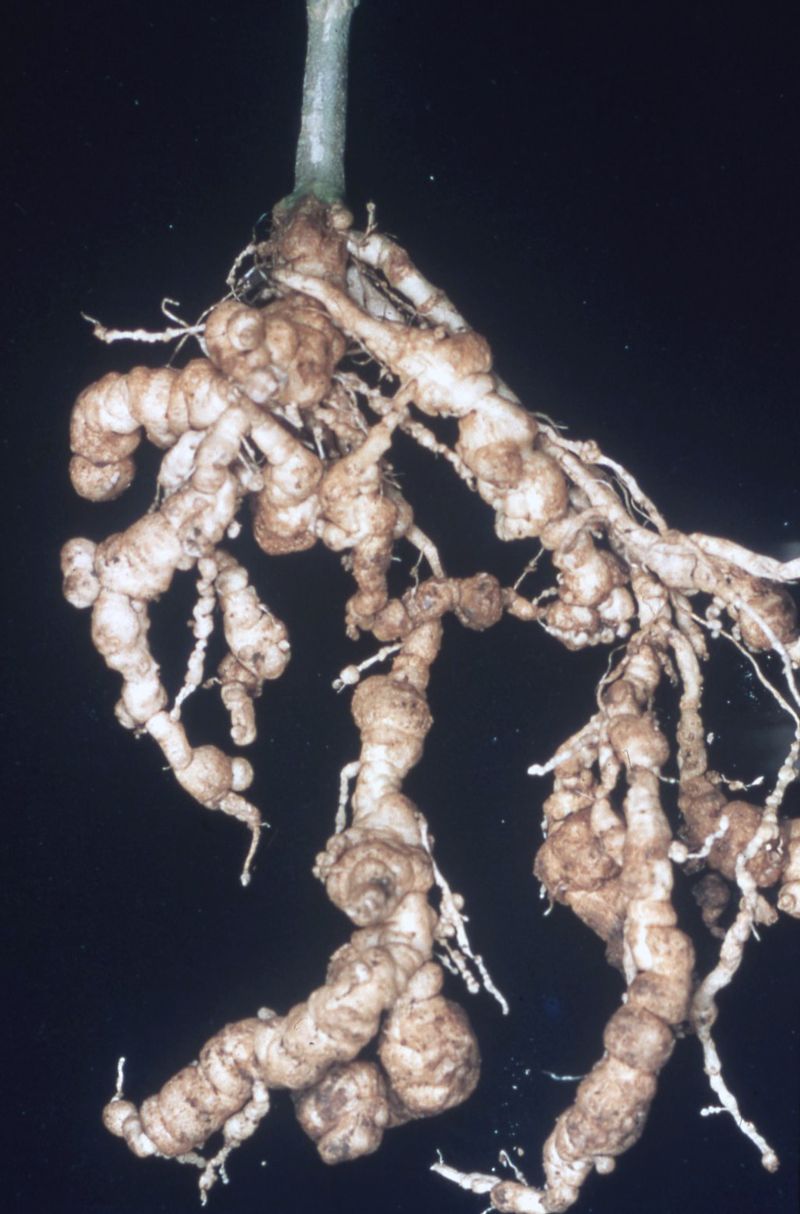
Stunted tomatoes, wilting plants, and slow decline are frustrating to watch, and it is tempting to land on a single explanation. Nematodes are a plausible suspect if you have had them before, but the above-ground symptoms they cause look almost identical to several other common problems.
Acting on an assumption without checking can mean spending a season on a marigold rotation that does nothing for your actual problem.
Heat stress, extended drought, soil compaction, nutrient deficiency, fungal wilt diseases like Fusarium and Verticillium, bacterial wilt, and root rots can all cause a tomato plant to wilt, yellow, and decline. None of those problems respond to marigold management.
UF/IFAS notes that nematode damage symptoms are not specific enough for a visual diagnosis from above-ground signs alone.
The most useful diagnostic step is to pull a struggling plant and look at the roots directly. Root-knot nematode damage produces distinctive galls, small knobby swellings attached to the roots that cannot be rubbed off.
Lesion nematodes leave dark, dead patches along the root surface rather than galls. Healthy roots should be firm and light-colored.
Rotted roots will be soft, dark, and may smell unpleasant, pointing toward a fungal or bacterial problem instead.
UC IPM guidance on nematodes supports using a soil nematode assay when you want confirmation before committing to a management strategy. Many university extension programs offer this testing at low cost, and the results tell you which nematode species are present and at what levels.
That information is especially important before you dedicate an entire bed to a season-long marigold rotation, since the wrong cultivar for your nematode species could be a wasted effort or an actively counterproductive one.
Use marigolds as targeted management, not permanent protection
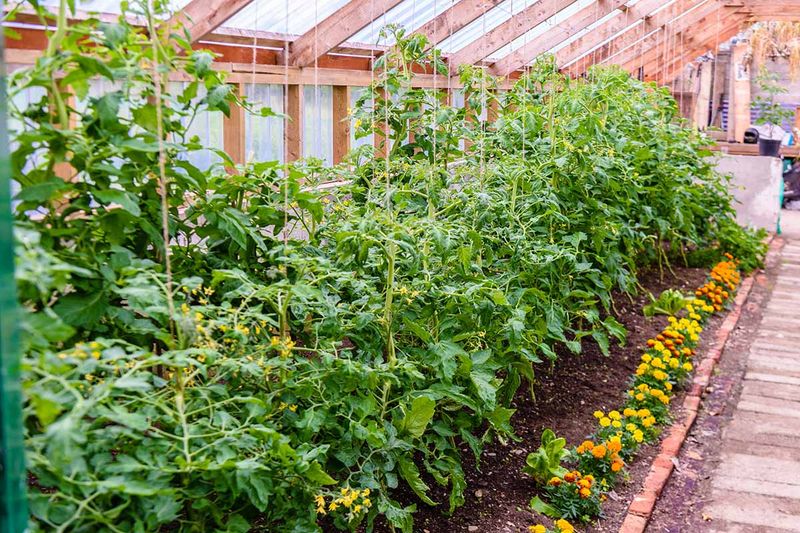
Marigolds earn their place in a vegetable garden when they are used with a clear purpose and the right setup. The evidence supports them as a targeted nematode-management tool, specifically when you choose a well-studied cultivar, plant densely across the full area, grow them for a complete season, and then follow with tomatoes in that same soil.
That is a real strategy with research behind it, and it can produce a meaningful reduction in nematode pressure for the following crop.
What the evidence does not support is the idea that planting marigolds anywhere near tomatoes leaves a chemical quietly working for years. UF/IFAS extension guidance ties the activity of alpha-terthienyl to living roots, not to residue left behind after the plant dies.
Dead roots, tilled-in plant material, and homogenized marigold parts do not have demonstrated long-term nematicidal activity in soil. The benefit from a marigold rotation comes from what happens while the plant is alive and growing, not from what it leaves behind.
Nematode populations can also recover. Once susceptible tomatoes return to the soil, nematodes that survived or migrated in from surrounding areas begin reproducing again.
UC IPM notes that populations can increase rapidly after susceptible crops are replanted, which means a single marigold rotation is not a permanent fix. Repeated rotations, resistant tomato varieties, and consistent soil monitoring give you more durable results than any one-season treatment.
Used correctly, marigolds are a genuinely useful, low-cost rotation option for gardeners dealing with confirmed root-knot or lesion nematode problems. The honest version of the story is less magical than a secret chemical working silently for years, but it is also more actionable, and it actually works.