
Why North Carolina Gardeners Should Never Dig Near A Box Turtle’s Territory In Fall

Eastern box turtles show up in North Carolina yards from the mountains to the coast, and fall is exactly when gardeners are most tempted to turn over fresh ground for planting. What most people do not realize is that the same leaf piles, brush corners, and soft-soil patches they want to clear away are the spots turtles depend on to survive winter.
Knowing where to pause your shovel, and where it is perfectly fine to keep digging, makes the difference between a wildlife-friendly yard and an accidental disaster.
Protect the Refuge, Not an Entire Turtle Home Range

A box turtle crossing your yard in October does not mean your entire property is off-limits for fall planting. Eastern box turtles live across all of North Carolina, from mountain coves to coastal plain neighborhoods, and they move through residential yards regularly as they forage, seek cover, and prepare for winter dormancy.
The stewardship warning that matters is narrower and more useful than a blanket no-dig rule.
According to NC Wildlife’s eastern box turtle guidance, a typical home range tends to stay under two acres, but that figure is a rule of thumb, not a fixed boundary. Research reviews show that home-range size varies considerably depending on habitat quality, sex, season, and how long a study tracks a given animal.
Some individuals use several acres or more. The point is that a turtle’s broad, shifting range is not the same thing as an identifiable nest or overwintering spot.
The governing rule is straightforward: pause major soil and cover disturbance wherever you have actually seen a turtle using an area, where you suspect a nest may have been laid, or where obvious shelter features such as deep leaf litter, a brush pile, a fallen log, or a soft depression exist in a spot the turtle frequents. Established planting beds that have been tilled and planted for years are a different situation than an undisturbed leaf-covered corner where you spotted a turtle last week.
Treating a turtle sighting as a signal to stop all fall work across the whole yard is not what the evidence supports. The practical goal is protecting the specific ground features that turtles actually rely on, which are almost always a small fraction of any residential lot.
Why Fall Makes Soil Disturbance More Consequential
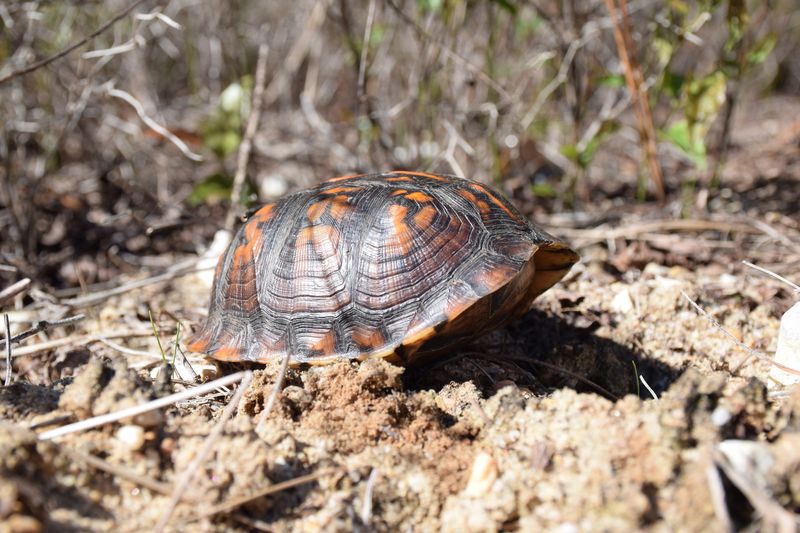
Box turtles do not flip a switch from active to dormant overnight. NC Wildlife’s species profile notes that turtles can be active throughout the day in spring and fall before burying themselves in soil or leaf litter during colder weather.
That transition window is exactly when a gardener armed with a spade can do the most unintentional harm, because a turtle preparing to overwinter may already be settled into a shallow form just below the surface of a leaf pile or loose-soil patch.
The nesting calendar adds another layer of risk. North Carolina box turtles nest mainly from May through July.
Eggs take roughly 60 to 90 days to hatch, which means hatchlings from late-season nests can still be underground well into fall. Some late-laid eggs skip fall emergence entirely and overwinter in the nest, hatching the following spring.
A gardener who digs through what looks like a bare patch of garden soil in October could be cutting through a nest that is still occupied.
Fall protection, then, covers two overlapping concerns. The first is active turtles that are moving toward or settling into overwintering spots and may be resting just beneath the ground cover you are planning to rake away.
The second is nests and hatchlings that remain underground after a summer nesting season that the gardener never witnessed. Neither of those risks is obvious from the surface, which is why the season deserves extra caution around areas where turtles have been seen.
Warm spells complicate the picture further. Piedmont, Coastal Plain, and mountain conditions differ enough that a turtle you assume has gone dormant for the year may still be moving around during an unseasonably mild November afternoon.
There is no single statewide date when it becomes safe to assume all turtles have settled in for the winter.
Recognize Ground Features Worth Leaving Undisturbed
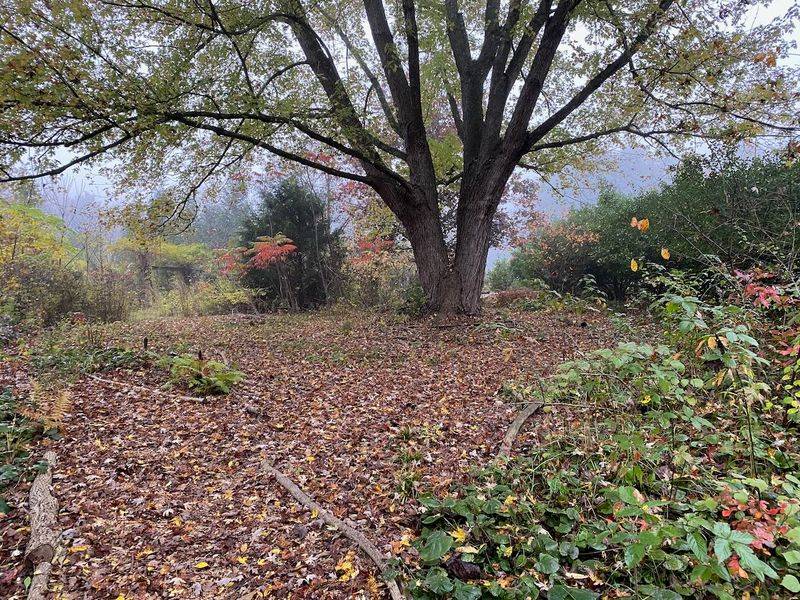
You do not need to diagnose a hidden turtle or confirm a nest to know which parts of your yard deserve a hands-off approach in fall. Certain ground features serve as shelter and temperature buffers that turtles actively seek out, and recognizing them is enough to make a protective decision.
U.S. Forest Service research on eastern box turtles documents that the species uses forest-floor features including leaf litter, natural depressions, soft and moist soil, brush, fallen logs, and woody debris for shelter and winter dormancy.
Turtles dig shallow forms in moist soil or leaf litter and may go deeper as temperatures drop. A brushy corner, a spot where leaves have accumulated several inches deep, a low depression that stays damp after rain, or a cluster of fallen limbs near where you have seen a turtle are all features worth leaving alone through the fall planting season.
The key is pairing observation with restraint. If you have watched a turtle move through or rest near a particular area more than once, treat that area’s ground cover as potentially occupied.
That does not mean you need to fence it off or post signs. It means you skip the leaf blower, leave the log in place, and route new planting work to already disturbed beds elsewhere on the property.
Avoid probing suspected areas with a stick or trowel to check whether anything is underneath. Probing disturbs the soil, can damage a shallow nest or resting turtle, and does not give you reliable information anyway.
Observation from a respectful distance tells you far more than digging around will, and it does not put anything at risk in the process.
Pause These Fall Garden Tasks Around Sensitive Areas

Most fall garden work is perfectly fine to continue, as long as it stays in the right places. The practical distinction is between already disturbed planting beds, where turtles are unlikely to be sheltering, and undisturbed or naturalized areas where turtles, suspected nests, or obvious shelter features have been observed.
Keep your fall planting, bed amendment, and bulb work in those established beds, and redirect the more disruptive tasks away from sensitive corners.
Around observed turtles, suspected nests, or likely overwintering cover, the tasks worth pausing include deep digging and mechanical tilling, grading or bed excavation that removes several inches of soil, stump removal with a grinder or heavy equipment, and soil scarification. Forest Service documentation on box turtle habitat confirms that these features provide thermal protection and shelter that turtles depend on, so removing them abruptly in fall leaves animals without cover at the worst possible time.
Surface tasks deserve the same targeted caution. Raking away all leaf litter in an area where a turtle has been seen removes the insulating layer that keeps soil temperatures stable through winter.
Dismantling a brush pile or moving a large fallen log eliminates structure that may be actively sheltering a turtle or protecting a nearby nest. These are not tasks to skip yard-wide, but they should wait in specific spots until you have confirmed no turtle is using the area.
The recommendation targets major disturbance in identified sensitive areas, not every routine gardening task across the property. NC Wildlife emphasizes protecting the individual turtle and the local population rather than treating the whole yard as a preserve.
Deadheading, light weeding, gentle mulching in established beds, and planting fall bulbs away from observed turtle areas are all reasonable to continue through the season.
Respond Carefully When You Find a Turtle or Nest
Stopping work the moment you spot a box turtle in your garden is the right first move. Give it space, watch where it goes, and let it leave the area on its own schedule.
Picking it up, carrying it to a different part of the yard, or placing it in a bucket while you finish digging are all responses that can cause real harm. NC Wildlife advises clearly against relocating box turtles, because moving a turtle away from its familiar home area disrupts its homing behavior and can expose it to unfamiliar hazards, roads, and predators.
The one exception involves a turtle that is actively crossing a road and in immediate danger of being hit. In that situation, move the turtle only the shortest distance necessary to get it off the road, ideally less than 50 feet, and carry it in the direction it was already traveling.
Moving it to the opposite side from where it was headed defeats the purpose, because the turtle will often turn around and cross again.
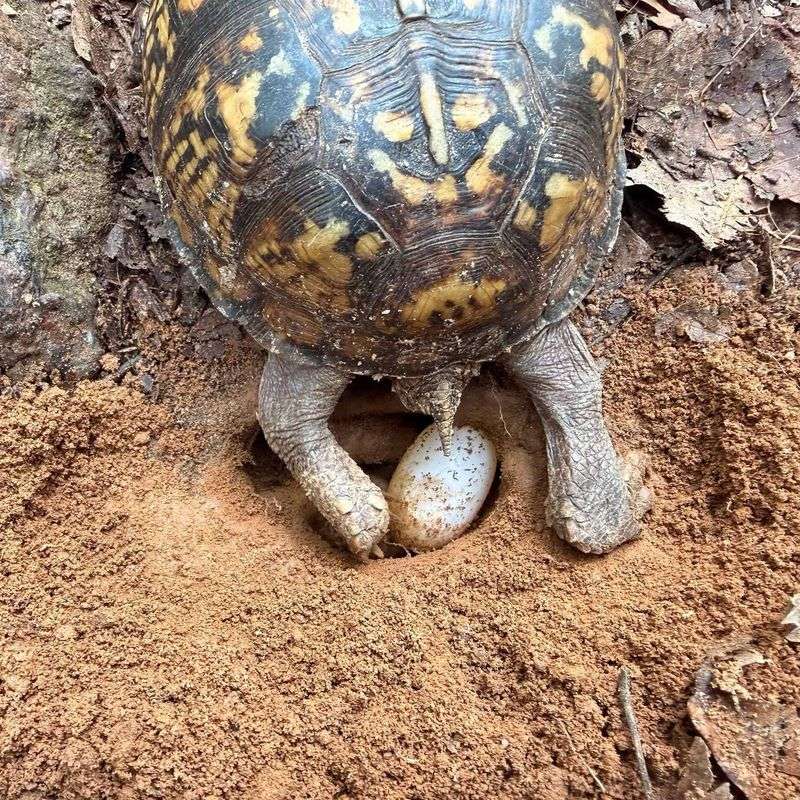
A suspected nest requires a different kind of restraint. If you uncover what looks like a small clutch of leathery eggs in a shallow hole, stop immediately.
Do not probe the hole further, do not attempt to move the eggs to a safer location, and do not try to re-cover the nest with a cage or container and then forget about it. NC Wildlife notes that a nest found in late summer or fall may still contain viable eggs or hatchlings waiting to emerge, and that forgotten nest covers can prevent young turtles from leaving once they hatch, which can be fatal.
If you place any protective cover, check it regularly and remove it once the nest appears empty.
An injured turtle, one with a cracked shell, bleeding, or visible wounds, needs professional care. Contact a licensed reptile rehabilitator rather than attempting to clean or bandage the shell yourself.
NC Wildlife maintains resources for finding permitted rehabilitators in your area, and getting the turtle to one quickly gives it the best chance of recovery.
Plan Mowing and Heavy Work Before You Start
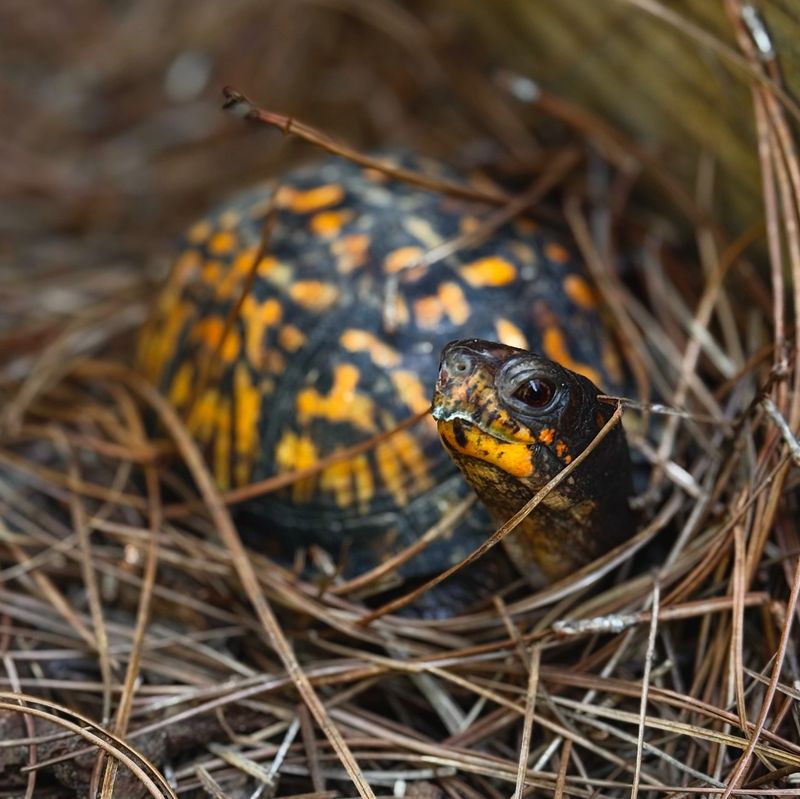
Mowing and heavy equipment present a different category of risk than hand-digging, because they cover ground quickly and give a turtle no time to move. Box turtles can be seriously injured or killed by mower blades, tractor tires, and land-clearing equipment, and a turtle resting in tall grass or leaf litter is nearly invisible until it is too late.
Before running a mower through naturalized areas or edges where turtles have been seen, walk the area slowly and check for turtles, especially on warm fall afternoons when they may still be active.
Forest Service documentation identifies mowing and farm equipment as direct mortality sources for box turtles, and habitat-management literature recommends restricting mowing to the inactive season where possible. Those recommendations reflect sound ecological reasoning, but inactive-season timing varies by location, year, and local weather patterns across North Carolina.
A warm November in the Piedmont is not the same as early November in the mountains, where turtles may already be well underground.
Best-management guidance from the Northeast Fish and Wildlife Diversity Working Group offers ecological principles worth understanding, but its specific date windows and procedural requirements reflect northeastern conditions and should not be read as North Carolina law or a guaranteed statewide schedule. Use the principles, not the calendar, as your guide.
Habitat management is not automatically harmful to box turtles, and that is worth knowing before you decide to leave everything untouched. Carefully timed mowing of invasive-plant patches, selective removal of aggressive vines, and controlled clearing of overgrown areas can actually improve foraging and nesting conditions for turtles over time.
The key is planning the work thoughtfully, not avoiding it entirely. For any unavoidable grading, major excavation, stump grinding, or large-scale clearing in areas with known turtle activity, contact NC Wildlife or a qualified wildlife professional before you start.
Getting guidance early is far simpler than trying to repair the damage after equipment has already moved through the area.
Use a Targeted Protection Plan for Your Yard

Putting this all together into a workable fall plan does not require you to stop gardening. Keep your fall planting, bulb installation, bed amendment, and light cleanup in the established, already disturbed beds that make up most of a residential yard.
Those areas are where the real gardening work belongs, and turtles are unlikely to be sheltering in ground that has been regularly cultivated.
Reserve your restraint for the specific spots that warrant it. Wherever you have observed a turtle using an area, wherever you suspect a nest may have been laid over the summer, and wherever obvious shelter features like deep leaf litter, brush piles, fallen logs, or soft depressions exist near turtle activity, leave the ground cover in place through the fall and into winter.
NC Wildlife and Forest Service habitat research both point to these microhabitat features as the ground-level resources turtles depend on most.
If a project that would disturb one of those sensitive areas is genuinely unavoidable this fall, get expert input before you start. NC Wildlife can connect you with guidance specific to your situation, and a licensed wildlife professional can help you time and scope the work to reduce risk.
Asking first is always faster than sorting out what went wrong after the fact.
A yard that keeps its turtle-friendly corners intact while staying productive in its cultivated beds is not a compromise. It is exactly the kind of residential stewardship that keeps eastern box turtles moving through North Carolina neighborhoods for another generation.