
A Standout Late-Season Native That Brings Bees and Butterflies to a Fading North Carolina Border
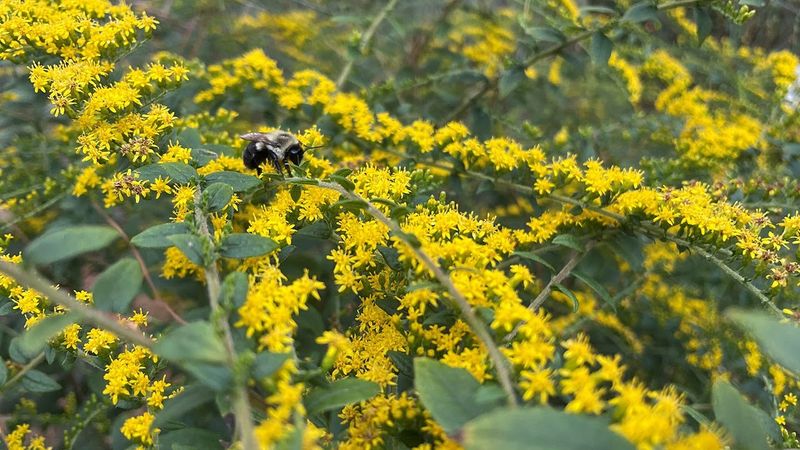
By late September, most North Carolina borders look tired. Summer bloomers have faded, and the yard can feel like it has given up for the year.
A few well-chosen goldenrod plants can change that picture fast, filling the gap with bright yellow flowers and a steady stream of visiting bees and butterflies. Goldenrod is not a single plant or a magic fix, but the right Solidago species matched to your site is one of the most practical things you can add to a fall border.
Goldenrod can keep a fading fall border active
Walk past a North Carolina border in late September and you will often see a lot of brown. Summer perennials have finished, ornamental grasses are going dormant, and the yard can look like it is simply waiting for winter.
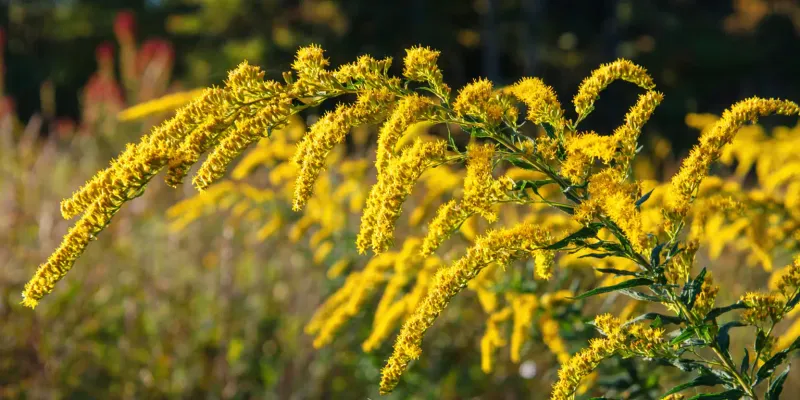
Adding goldenrod to that space changes the picture in a meaningful way, and NC State Extension’s profile of rough goldenrod confirms it as a North Carolina native fall bloomer that draws butterflies, native bees, honey bees, birds, and other pollinators to the border when many alternatives have already peaked and faded.
Rough goldenrod, known botanically as Solidago rugosa, is one practical candidate for a sunny residential site with adequately moist soil. It typically reaches two to five feet tall and flowers in early fall, offering a splash of yellow at exactly the time when color is hardest to find.
That said, goldenrod is not one plant but a group of related species, and not every type suits every yard. The name covers dozens of Solidago species that differ considerably in height, moisture needs, bloom timing, and how much space they will eventually take.
Goldenrod is also a genuinely useful option among several, not a statewide winner. NC State’s pollinator-garden guidance recommends a diversity of native species and lists both goldenrod and fall asters as valuable resources, so treating either one as a complete solution misses the point.
What goldenrod does well is supply adult nectar and pollen to a wide range of insects; it does not automatically provide nesting habitat, larval host plants, or the varied resources that different pollinator groups need across their full life cycles.
One more correction worth making early: goldenrod has a long-standing reputation as a hay-fever villain, but that reputation belongs more accurately to ragweed, which releases wind-dispersed pollen at the same time of year. Goldenrod is insect-pollinated, so its heavy pollen grains rarely travel far through the air.
NC State’s Solidago overview supports this distinction, though it does not claim goldenrod is completely reaction-free for every person, especially those who handle it directly. The takeaway is simply that goldenrod is generally not the main source of seasonal hay fever.
Late flowers matter when summer resources decline
Timing is a big part of what makes goldenrod worth planting. Through June, July, and much of August, a North Carolina border can offer coneflowers, milkweed, mountain mint, and dozens of other species producing nectar and pollen for foraging insects.
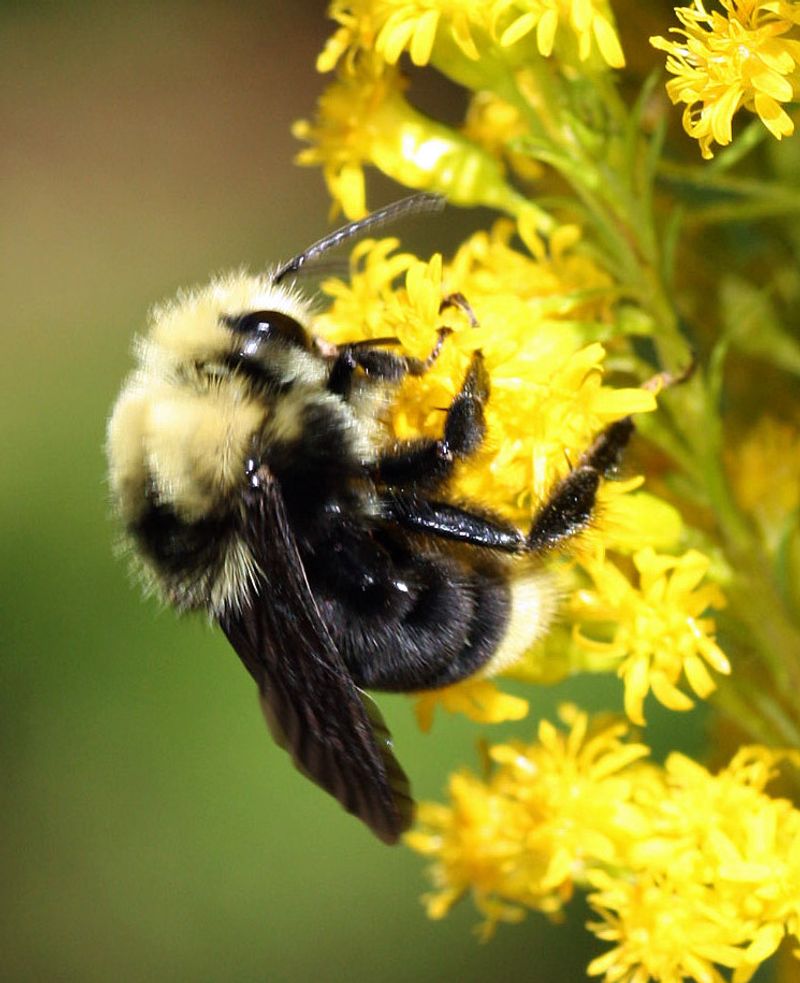
By late September and into October, that menu shrinks considerably, and the insects that are still active, including late-season bumble bees, migrating monarchs, and many smaller native bees, have fewer places to forage.
USDA Forest Service research on native pollinators identifies late-blooming goldenrod as particularly important during this period because it provides both nectar and pollen when fewer floral resources remain. That combination matters.
Pollen is a protein source that bees collect to provision nests and feed larvae, while nectar supplies the energy for adult flight and foraging. A plant that offers both at a lean time of year is genuinely useful, not just decorative.
NC State’s goldenrod plant profile lists native bees, honey bees, butterflies, moths, and beneficial insects among the wildlife documented visiting Solidago species. Migrating adult monarchs use goldenrod as a nectar source during their fall passage through North Carolina, though goldenrod is not a larval host plant for monarchs the way milkweed is.
That distinction matters if you are trying to support the full monarch life cycle rather than just fueling adults passing through.
Goldenrod also cannot replace nesting habitat, larval food plants, or the varied resources that different pollinator groups need. A bee that forages on goldenrod flowers may still need bare ground or hollow stems to nest, and a butterfly that nectars there may require a completely different plant for its caterpillars.
NC State’s pollinator habitat guidance makes clear that a healthy pollinator community depends on a succession of bloom periods, varied flower shapes, nesting conditions, and overwintering cover, not a single late-season plant however useful it may be.
Choose the Solidago species that fits your yard
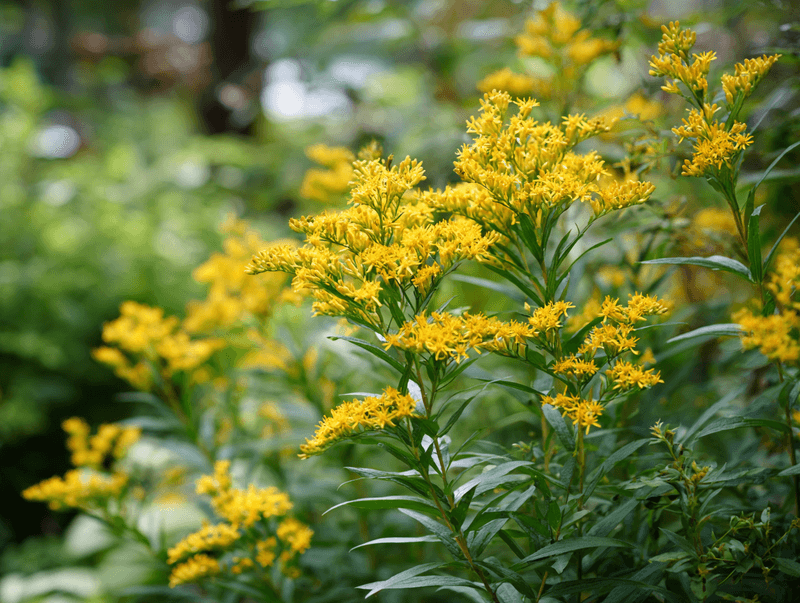
Picking the right goldenrod starts with looking honestly at your yard’s conditions before you buy anything. Rough goldenrod is a reasonable first choice for a sunny or lightly shaded spot where the soil stays reasonably moist.
NC State’s rough goldenrod profile places it in the Coastal Plain, Piedmont, and Mountains, with a mature height of roughly two to five feet and a bloom period peaking in early fall. It performs well along a border that holds some moisture after rain, near a downspout, or in a low spot that drains slowly.
A dry, sandy Piedmont bed or a sharply drained mountain slope is not a good fit without supplemental irrigation.
Downy goldenrod, Solidago petiolaris, covers more ground in terms of site tolerance. NC State’s downy goldenrod profile shows it occurring across all three major NC regions, tolerating moist-to-dry, well-drained soils with a slightly acidic character, and blooming from August through October.
That longer bloom window and broader soil tolerance make it a practical statewide option for homeowners who are not sure whether their border leans moist or dry, or who want flowers starting a bit earlier in the season.
Autumn goldenrod, Solidago sphacelata, is the shortest of the three at roughly one to three feet tall, and it is the one to reach for when the border is sunny, rocky, or drought-prone. NC State’s autumn goldenrod profile notes that it tolerates rocky, drought-prone soils and suits full sun to partial shade, making it a better fit for a dry Piedmont slope or a mountain rock garden than rough goldenrod would be.
The tradeoff is spread: autumn goldenrod moves by both rhizomes and wind-dispersed seed, so spacing and containment need to be part of the plan from the start.
Across all three species, mature size is worth taking seriously. A plant listed at two to five feet will eventually reach that range, and a border that looks appropriately filled at planting can become crowded within a few seasons if the spacing was too tight.
Think about the plant’s full footprint, not just its first-year appearance, and give each goldenrod room to grow without smothering its neighbors.
Pair goldenrod with a native aster for a fuller fall display
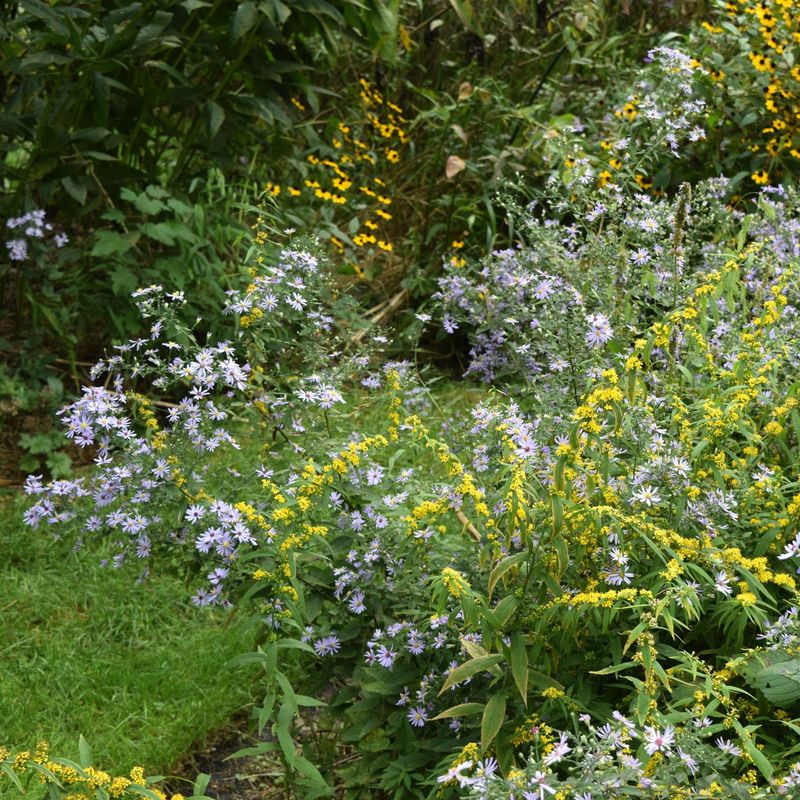
Yellow goldenrod on its own makes a strong seasonal statement, but pairing it with a native aster turns a single-note display into something that works harder for the insects visiting your yard. The color contrast alone is striking: golden yellow against the blue, purple, or white of a native aster creates the kind of fall combination that stops people on the sidewalk.
New England aster, Symphyotrichum novae-angliae, is one well-documented choice for North Carolina, offering rich purple flowers that bloom at roughly the same time as many goldenrod species and attract a similar range of foraging bees and butterflies.
NC State’s pollinator habitat guidance recommends selecting at least three native species in each season so that pollinators have a succession of blooms and varied floral resources rather than one plant and then nothing. Goldenrod and a native aster together get you partway there, but adding a third fall-blooming native, whether a native grass with persistent seedheads, a late-blooming perennial, or a shrub with fall berries, gives the border more texture and extends its usefulness further into the season.
NC State’s Extension Gardener Handbook chapter on native plants reinforces this point: a well-designed native planting sequences bloom periods so that something is always available, and it layers habitat features rather than depending on a single species to do everything. Goldenrod and aster together supply adult nectar and pollen across a range of flower shapes that suit different insect mouthparts, but they do not by themselves provide nesting sites, larval food plants, or winter cover.
Those needs call for additional plants and some intentional management of the border through the colder months.
Plant in fall and match care to the site
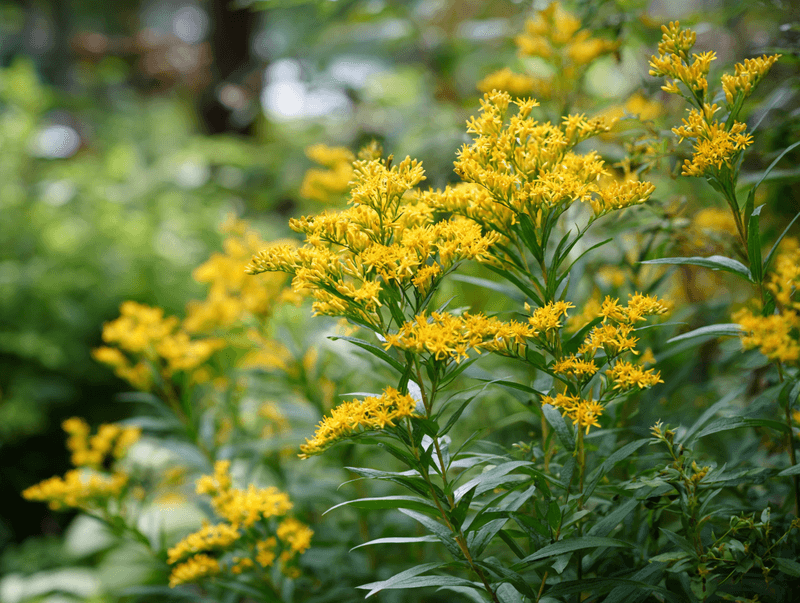
Fall is a genuinely good time to add native plants to a North Carolina border, and goldenrod is no exception. Cooler air temperatures reduce the stress on newly planted specimens, and the soil is still warm enough to encourage root development before winter arrives.
NC State’s landscaping-for-wildlife publication confirms that fall planting generally gives native plants a head start on establishment, allowing them to develop a stronger root system before facing the heat and drought stress of a North Carolina summer.
Before you dig, match the species to what your specific site actually offers. Rough goldenrod needs full sun or light shade and soil that holds moisture reasonably well after rain.
NC State’s rough goldenrod profile places it in moist-to-wet conditions, so a dry, fast-draining spot without irrigation is not a good fit. Downy goldenrod is the more flexible choice if your soil drains well or varies between moist and dry through the season.
Autumn goldenrod suits the sunniest, rockiest, or most drought-prone corners where the other two would struggle.
Once you have selected the right species, water newly planted specimens regularly until you see signs of healthy new growth, which indicates the roots have started to spread into the surrounding soil. The frequency will depend on your region and fall rainfall, but do not assume that cooler weather eliminates the need for supplemental watering during the first few weeks.
Space plants according to the mature size of the species you chose, not the size of the container at purchase. A rough goldenrod that will eventually reach four feet wide needs room to spread without crowding neighboring plants, and leaving adequate space from the start saves the effort of dividing or relocating an established clump later.
Protect pollinators and preserve useful winter structure
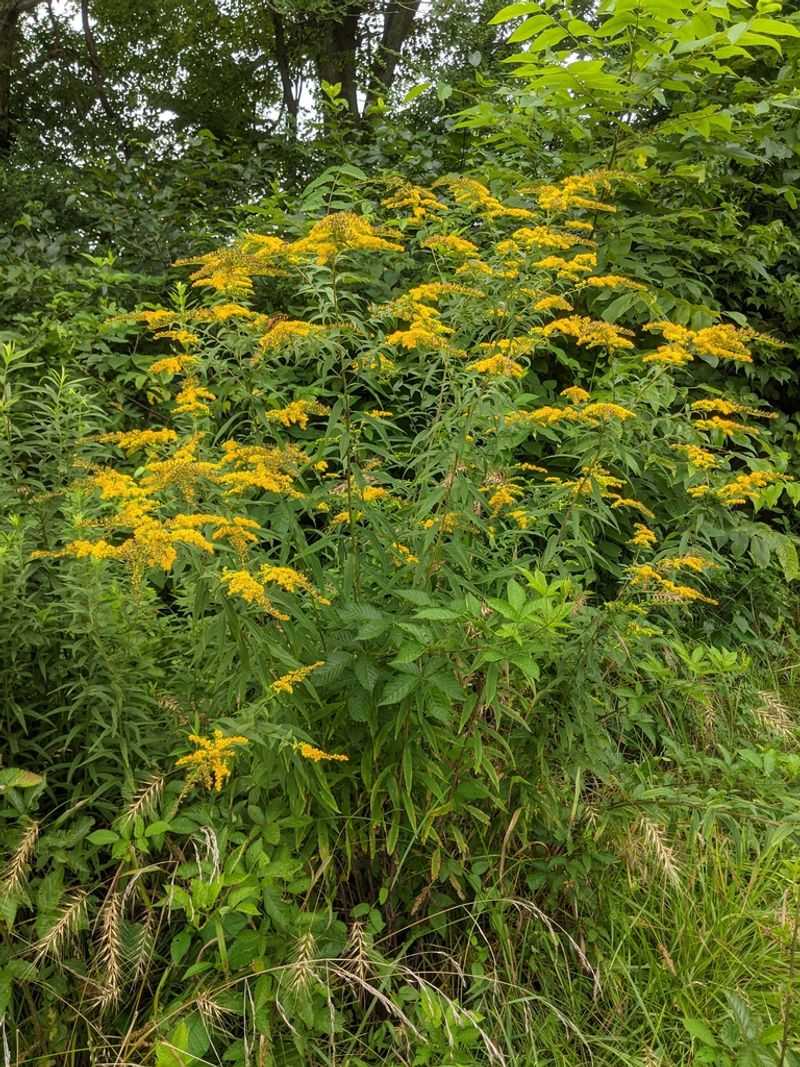
Once goldenrod is blooming and insects are actively foraging on it, the most important thing you can do is leave the plants alone in terms of chemical applications. Spraying insecticides on or near flowering plants while bees and other pollinators are present can harm the very insects you planted goldenrod to support.
EPA guidance on pollinator protection specifically recommends avoiding insecticide applications during bloom periods and following all label restrictions, including time-of-day requirements and drift precautions. If a pest problem requires treatment elsewhere in the yard, read the product label carefully and apply it in a way that keeps the material away from blooming plants and active foragers.
After flowering finishes, resist the instinct to cut everything back immediately. NC State Extension’s guidance on fall pollinator garden management recommends leaving stems and seedheads standing through winter where practical, because they can provide food for seed-eating birds, cover for beneficial insects, and overwintering habitat for small native bees that shelter inside hollow or pithy stems.
Goldenrod seedheads in particular tend to hold their structure well into winter and offer both visual interest and ecological value long after the flowers are gone.
Managing spread is a separate task from cleanup, and it is worth handling selectively rather than wholesale. NC State’s autumn goldenrod profile notes that this species spreads by both rhizomes and wind-dispersed seed, so deadheading some flower stalks before seeds fully mature can reduce unwanted seedlings without stripping the border of all late-season forage.
The tradeoff is real: removing flowers eliminates pollen and nectar resources. A practical middle ground is to deadhead a portion of the plants while leaving others to set seed, giving insects continued access while keeping the plant from overwhelming its neighbors over the following seasons.
Use goldenrod as a strong part of a diverse fall border
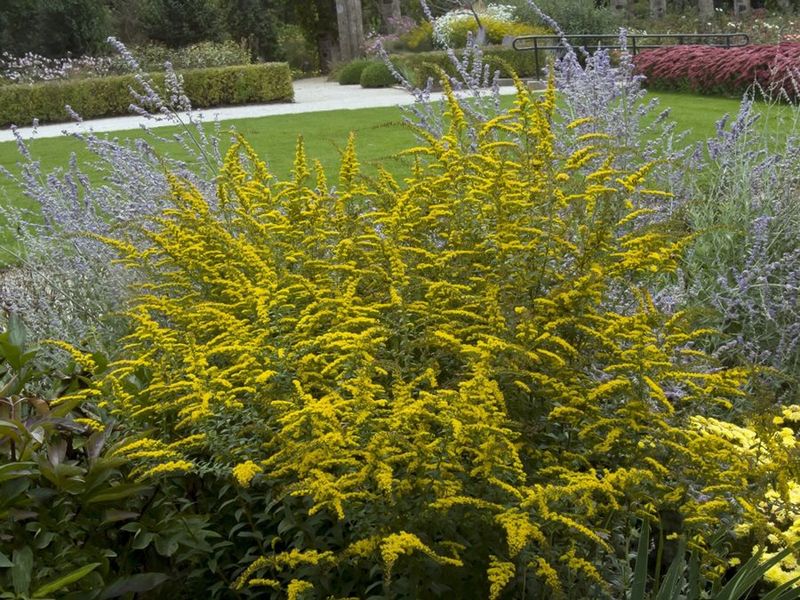
The honest takeaway from everything above is straightforward. Pick the Solidago species that fits your actual site conditions: rough goldenrod for a sunny, moist border; downy goldenrod where the soil is more variable or the site is broadly representative of the NC Piedmont or Coastal Plain; autumn goldenrod for a shorter, drier, rockier corner.
Then pair whichever species you choose with a compatible native aster and at least one additional fall-blooming or habitat-supporting native plant.
NC State’s pollinator habitat guidance and the Extension Gardener Handbook’s native plants chapter both point toward the same conclusion: a border that sequences bloom periods, varies flower types, and retains some winter structure does more for local wildlife than any single species planted on its own. Goldenrod is a strong contributor to that kind of border, but it is a contributor rather than a complete solution.
NC State’s landscaping-for-wildlife resource reinforces the value of thinking about the yard as a system: varied plants, retained stems, and a light hand with cleanup through winter all add up to a space that stays ecologically active long after the last goldenrod flower fades. A border that hums with bees in October and shelters overwintering insects in January is not the result of one brilliant plant choice.
It is the result of several good ones working together.