
Green Anoles Are Suddenly Everywhere In Your North Carolina Yard And Here’s What That Shift Signals
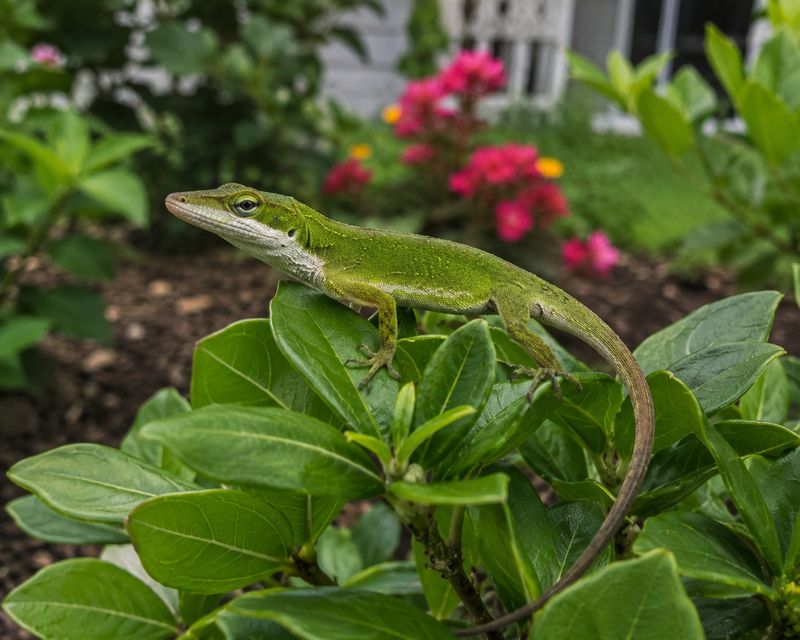
If you have been spotting small, bright lizards darting across your fence or basking on a shrub lately, you are not imagining things. Green anoles are native to North Carolina and can show up in noticeable numbers when local conditions suit them.
Understanding what changed in your yard tells you far more than simply counting lizards from the porch. The shift is worth paying attention to, and the real story is about your yard’s habitat, not just its insect count.
More sightings do not prove more lizards
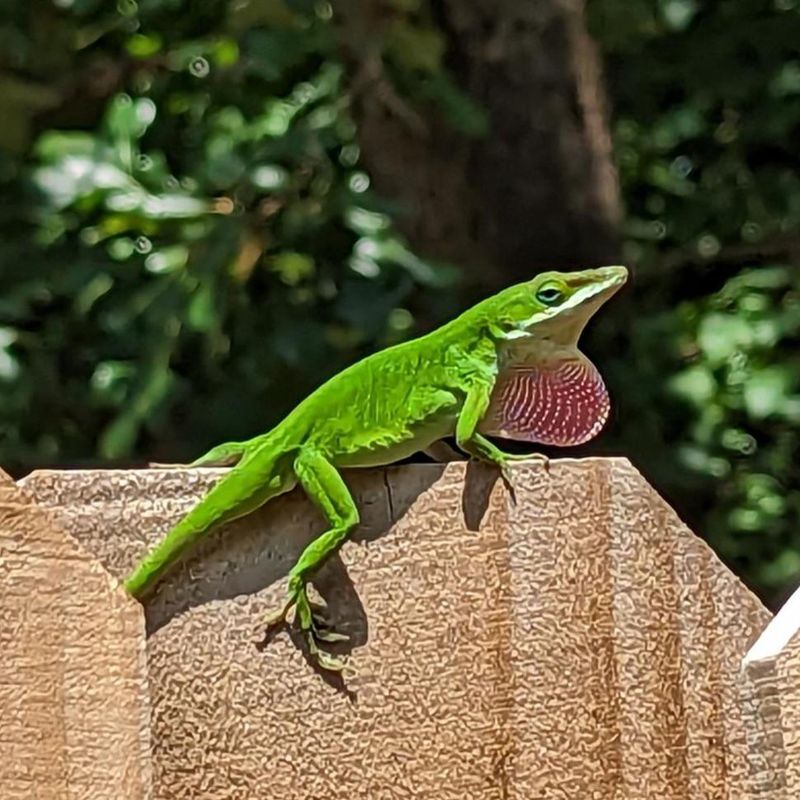
Walking out to water your garden and spotting three green anoles where you used to see none feels like something changed overnight. Before drawing conclusions, though, it helps to know a little about how these lizards live.
NC Wildlife describes green anoles as common in urban and suburban areas across the Coastal Plain and southern Piedmont, where they use shrubs, trees, fences, walls, garden beds, and other elevated surfaces as their daily territory.
Green anoles are daytime-active lizards, which means you can only notice them when conditions push them into the open. A newly trimmed shrub, a sunlit fence panel that was previously shaded, or a freshly installed trellis can suddenly become prime basking real estate.
The lizards were not necessarily absent before; they may simply have had no reason to use a spot where you could easily see them.
That distinction matters because a homeowner’s casual sightings are not a population survey. Seeing more lizards on a given afternoon tells you where they chose to be visible, not how many live in the yard overall.
Anoles are also native here, so their presence is not a surprise or an invasion. What changed is more likely your vantage point, the yard’s physical structure, or the season, rather than a sudden explosion of lizard numbers.
Resetting that expectation early keeps the rest of your investigation grounded in what you can actually observe.
The yard may now offer a better anole neighborhood

Lizards, like most animals, settle where conditions work in their favor. For green anoles, that means a combination of climbing surfaces, sheltered hiding spots, warm basking areas, and reliable access to small prey.
A yard that recently gained more shrub cover, a new vine on the fence, a brush pile in the corner, or a section of leaf litter left undisturbed has quietly added several of those ingredients at once.
Research disentangling controls on anole abundance identifies canopy structure, thermal conditions, perch availability, vegetation layers, prey access, and competition as separate forces that shape where anoles settle and how many can persist in a given area. No single factor dominates every situation, and the relative weight of each one can shift by season, microhabitat, and yard history.
That complexity is worth keeping in mind before attributing the change to any one cause.
Practical changes that could make a yard more hospitable include reduced mowing frequency along a fence line, a new irrigation system that keeps vegetation humid through dry spells, a construction project that left boards or debris in place, or simply skipping a round of broad-spectrum pesticide application. Warmer or more sheltered microclimates near a south-facing wall, a heat-absorbing brick path, or a protected corner garden can also tip conditions in an anole’s favor.
These are competing explanations, any one of which could account for what you are seeing, or several of which could be working together. The point is not to pick the single right answer but to recognize that your yard’s physical character, not just its bug count, shapes what lizards can use it.
Anoles interact with arthropods without measuring them
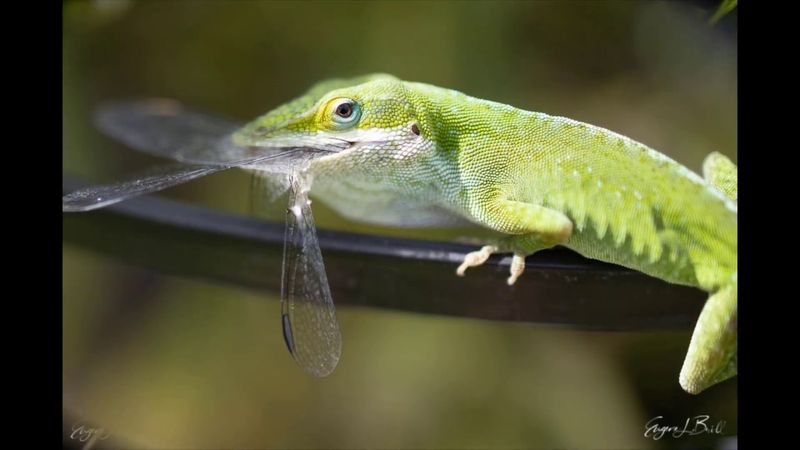
Green anoles eat a broad range of small arthropods. NC Wildlife confirms their diet includes flies, crickets, moths, butterflies, ants, beetles, and termites, which means their presence is compatible with a yard that supports a healthy variety of invertebrate life.
Seeing more anoles does not mean fewer insects; it may simply mean the lizards have better access to the insects that were already there.
The relationship between anoles and arthropods is real but not straightforward. A Texas study on green anoles found that arthropod biomass and female anole body condition were both higher in natural plots compared to disturbed ones, but arthropod abundance did not differ significantly between plot types.
Land use affected the lizards, but not through a clean, one-to-one relationship with prey numbers. That finding, from Texas rather than North Carolina, limits how far it can be applied to a suburban yard here, but it does caution against treating anole sightings as a direct readout of insect levels.
Experimental work on other Anolis species adds another layer. A study on St. Eustatius showed that removing anoles caused certain arthropod populations to increase, demonstrating that anoles can shape food webs in specific settings.
That study involved Caribbean anoles in a forest-floor habitat, not green anoles in a North Carolina backyard, so it does not translate into a pest-control promise for your garden.
On the specific question of ticks and mosquitoes: anoles eat a wide variety of small arthropods opportunistically, but their diet is not selective enough to make them a targeted tick-reduction strategy. NC State Extension notes that insect-eating wildlife often does not reduce mosquito populations noticeably and recommends source reduction and targeted management instead.
Anoles are a welcome part of the yard’s food web, but expecting them to handle pest control sets up a promise the evidence cannot support.
Season and vantage point can amplify the change
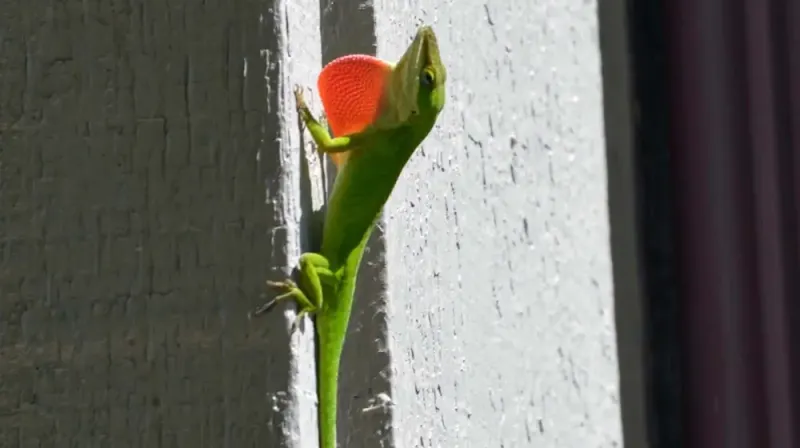
A warm week in May or a string of rainy days in July can push anole activity into overdrive without any permanent change in your yard’s population. NC Wildlife reports that green anoles breed mainly from March through September, and their overall activity is tightly linked to temperature and moisture.
When conditions are favorable, adults become conspicuous, juveniles emerge, and males display their pink throat fans from exposed perches to defend territory. All of that adds up to more lizards in plain sight.
A short warm spell after a cool stretch can produce a rapid, visible pulse of activity that looks dramatic from a homeowner’s perspective. The same number of animals that spent a cool week hidden in leaf litter or dense shrubs will suddenly appear on every sunny fence post and garden stake when temperatures climb back into their comfort range.
Juveniles hatched from eggs laid earlier in the season can also emerge in small waves, briefly making the yard feel busier than it did a month ago.
Vantage point matters just as much as season. A pruned hedge that now exposes a sunny fence panel, a removed tree limb that opens a south-facing wall to direct light, or a new garden bed positioned along a warm brick edge can all create prime basking spots where none existed before.
Anoles that were already in the yard simply shift to the best available perch, and that perch happens to be somewhere you walk past every day. The result feels like an increase when it may be a redistribution.
Compare the yard with its earlier condition

Rather than trying to count every lizard you spot on a Saturday morning, a more useful exercise is comparing what your yard looks like now versus six months or a year ago. Changes in physical structure often explain changes in what wildlife you notice, and green anoles are no exception.
Start by asking whether shrub or vine cover has grown in, been planted, or been left to fill out along a fence line or wall.
Habitat structure research consistently identifies perch availability and vegetation layering as meaningful factors in where anoles establish themselves, separate from prey alone. So if you added a trellis, let a climbing vine go, or stopped trimming a shrub border, those physical changes could account for the shift in sightings without any change in insect numbers.
The Texas green-anole study reinforces that land use and habitat character influence lizard condition in ways that go beyond a simple prey-availability explanation.
Other questions worth considering: Has leaf litter, fallen wood, or brush been left in place where it used to be cleared? Has irrigation or a stretch of rainy weather created more humid cover?
Has mowing or pruning been reduced along an edge? Has routine mosquito or lawn spraying stopped?
Have cats, dogs, construction activity, or landscaping changes altered where anoles can safely hide and perch? Each of those shifts could plausibly improve conditions for a small lizard.
NC Wildlife’s habitat descriptions for green anoles match these features directly.
None of these observations will tell you with certainty why sightings increased. They can, however, point to the most plausible local explanation and help you decide which yard features are worth protecting going forward.
That is a more productive outcome than trying to run an informal lizard census.
Protect habitat without trying to manufacture anole numbers
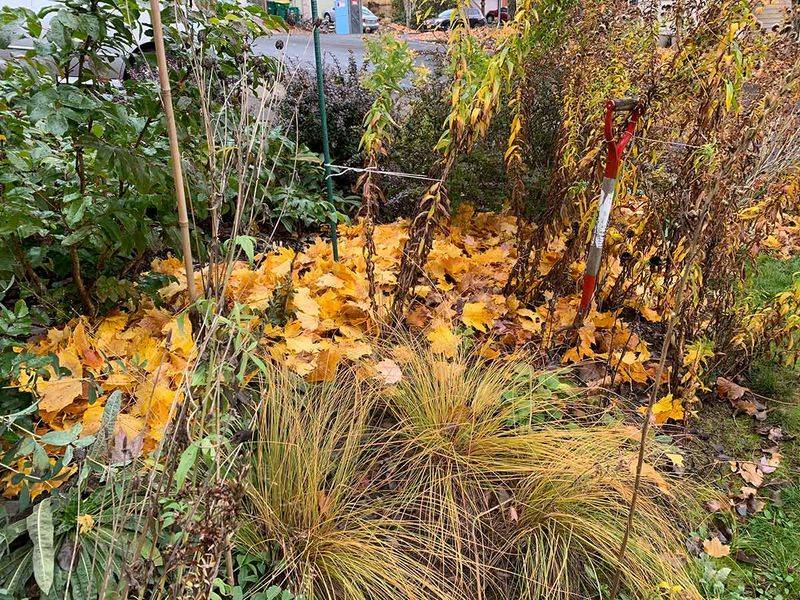
Once you have a sense of what changed, the practical question becomes what to protect and what to avoid. NC Wildlife’s amphibian and reptile-friendly backyard guidance recommends keeping some native vegetation layered at different heights, leaving leaf litter and woody material in appropriate areas, and maintaining sheltered features such as logs, rocks, or brush piles where they fit the property.
These measures support a broader food web, not just anoles, and they reduce the kind of disturbance that can make a yard inhospitable to native wildlife generally.
NC State Extension’s landscaping for wildlife guidance similarly recommends native plants and varied habitat layers as a foundation for supporting native insects, birds, and reptiles. The key word in both sources is “support”: these are habitat-maintenance practices, not a guaranteed formula for producing a specific number of lizards.
A yard with layered native shrubs and undisturbed leaf litter is simply more useful to more native species, including green anoles, than a heavily managed, chemically treated lawn.
Pesticide use deserves direct attention. NC State Extension warns that pyrethroid products can harm beneficial insects, and that pesticide drift is illegal.
Following label directions, avoiding sprays on flowering plants while pollinators are active, and choosing nonchemical or targeted controls where practical all reduce collateral harm to the invertebrates that anoles and other wildlife depend on. Broad-spectrum spraying that eliminates most arthropods in an area removes the food base that supports lizards as much as it removes the pests you are targeting.
Keeping cats indoors or otherwise controlled is another concrete step. Cats are recognized predators of suburban green anoles and other small reptiles, and reducing predation pressure is a straightforward way to make a yard safer for the wildlife already using it.
None of these actions come with a promise of more anoles or fewer pests; they simply remove the obstacles that make a yard harder for native species to use.
Brown color alone does not identify a brown anole
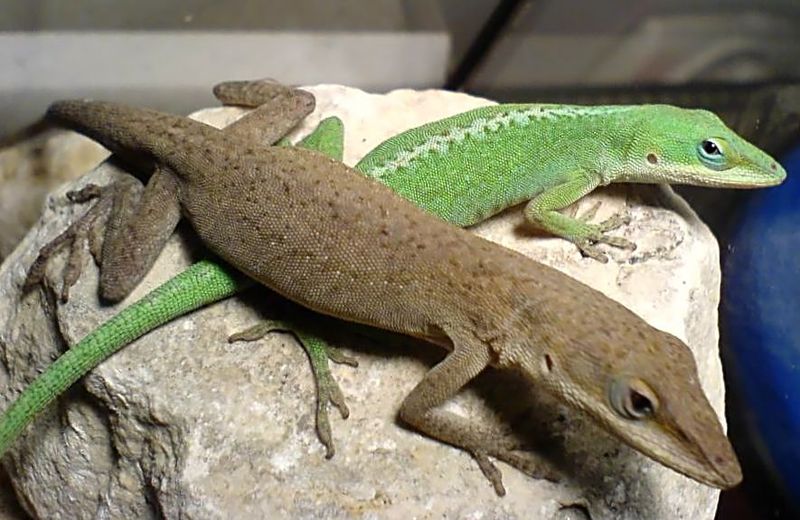
Spotting a brownish lizard and assuming it is a non-native brown anole is a common and understandable mistake. North Carolina’s reptile records confirm that native green anoles routinely change color, shifting from bright green to various shades of brown or gray depending on temperature, stress, light conditions, and activity level.
A brown lizard on your fence is more likely a native green anole in its brown phase than a non-native species.
Brown anoles, the non-native species increasingly associated with nursery trade and residential development, generally cannot produce a green color phase at all. NC records of brown anoles describe a more obvious reticulated or banded pattern on the back, a differently shaped head, and body proportions that differ from the native species.
Reliable identification uses those structural and pattern features, not color alone. A lizard that was green yesterday and brown today is almost certainly a native green anole responding to its environment.
North Carolina does have brown anole records across more than 30 counties, but those records include transported individuals and small localized populations, not necessarily widespread established colonies. Their effect on green anole numbers in the state requires further study, even though competition between the two species has been observed or suspected in other regions.
For a homeowner, the practical takeaway is straightforward: if you see a brown lizard, look at its back pattern and overall body shape before drawing conclusions about what species it is or what it means for your yard.
Treat the sightings as a habitat clue
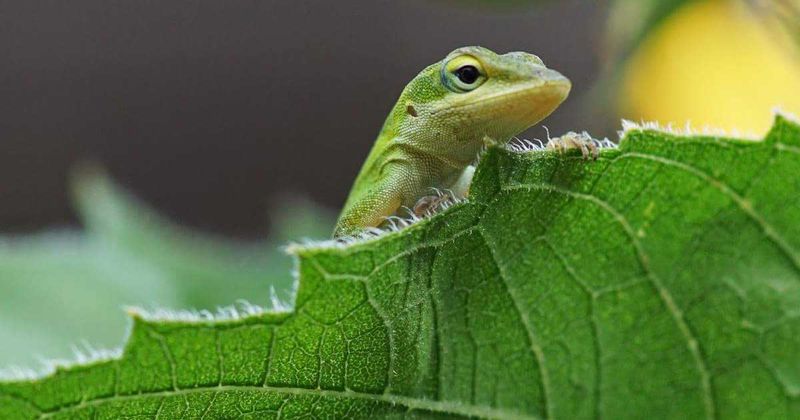
The most honest answer to a sudden increase in green anole sightings is also the most useful one: something in your yard has probably become more favorable to them. That something could be better cover, more perching surfaces, warmer microclimates, seasonal activity, reduced disturbance, or some combination of several factors at once.
NC Wildlife’s green anole profile supports exactly that range of possibilities.
What the sightings do not tell you is how many insects you have, whether your yard’s arthropod community is in better shape than before, or whether ticks and mosquitoes will decline. Anoles eat broadly and opportunistically, and their presence reflects habitat suitability more reliably than it reflects any specific prey category.
Watching where they perch, basking, and forage gives you useful information about which parts of your yard are working well for native wildlife.
The response that fits all of this is straightforward. Observe what changed, protect the cover and structure that makes the yard usable, limit broad chemical impacts, keep cats controlled, and leave the lizards where they are.
NC Wildlife advises against capturing or relocating reptiles, since moving them exposes them to predators, disrupts their ability to find food, and can push them into roads as they try to return. A yard that quietly became a better neighborhood for green anoles is doing something right, and the lizards are simply the most visible sign of it.