
Why North Carolina Homeowners Should Never Rake Away Every Fallen Leaf This Autumn
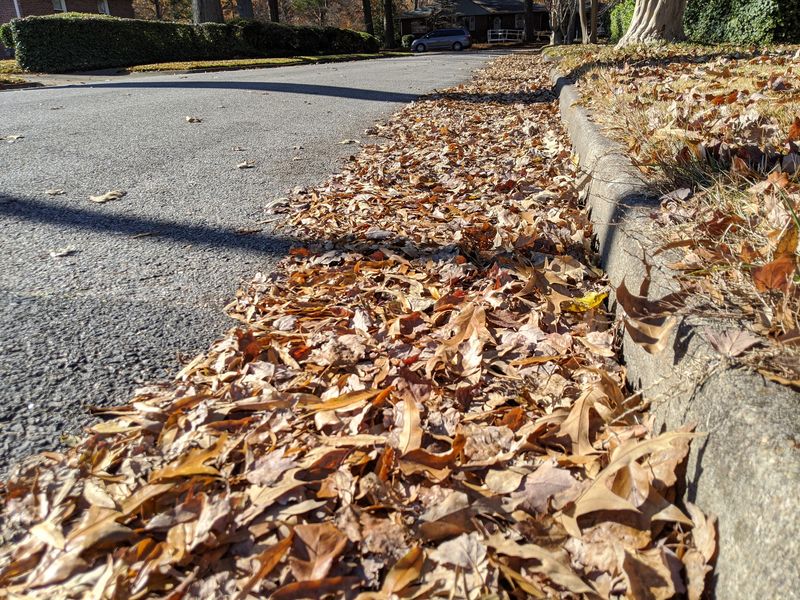
Every fall, the urge to rake the yard clean and bag every last leaf is hard to resist. But stripping away all that leaf litter can quietly remove the winter cover that fireflies, moths, and eastern box turtles depend on right in your backyard.
The good news is that smart leaf management is not about choosing between a tidy yard and healthy wildlife. A few deliberate decisions about where leaves stay and where they go can make a real difference for North Carolina homeowners this season.
A healthy yard does not need to be completely leaf-free
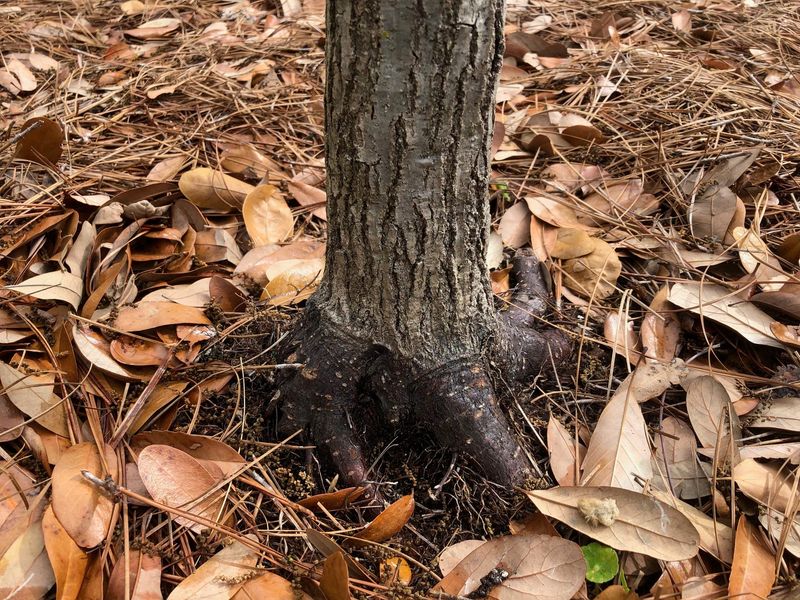
Somewhere along the way, the perfectly bare lawn became the standard for a well-kept yard. Raking every leaf into bags and hauling them to the curb feels like responsible maintenance, but it treats leaf litter as waste rather than as a resource that took an entire growing season to accumulate beneath your trees and shrubs.
The practical truth is that removing every leaf from a North Carolina yard can eliminate ground-level cover that small animals, insects, and soil life rely on through the cold months. At the same time, nobody benefits from leaves piling up in gutters, smothering turf, or drifting against the side of the house.
Both extremes create problems.
The more useful approach is deliberate zoning. Certain parts of the yard, such as the ground beneath mature trees, shrub borders, and naturalized sections along a fence line or woodland edge, are well suited to holding whole leaves through winter.
NC State Extension guidance on firefly habitat specifically recommends keeping a natural area with leaf litter and vegetation to support these insects.
Other parts of the yard genuinely need to stay clear. Leaves and other organic debris should not accumulate within the home’s immediate perimeter.
NC State Extension fire-resistant landscaping guidance recommends removing organic debris from within five feet of the home and keeping combustible material well away from structures.
Framing this as active stewardship rather than neglect matters. Deciding where leaves stay and where they go is a choice, not an oversight.
North Carolina homeowners who zone their fall cleanup thoughtfully end up with yards that function well for people and provide real cover for the wildlife that shares the property.
What leaf litter can provide through winter

Fallen leaves do more than decompose. Before they break down, they form a layered, insulating mat that holds moisture, moderates soil temperature, and creates a low-level environment where a surprising number of animals spend the winter months in some form.
Firefly larvae are one example. According to NC State Extension, firefly larvae live on or near the ground and prey on soft-bodied invertebrates such as snails, slugs, and worms.
Leaf litter provides both shelter and the moist conditions their prey needs. That said, firefly species vary considerably in their habitat preferences.
Some larvae are aquatic or semiaquatic, others live in rotting wood or soil, and no single habitat element explains every species. Leaf litter supports some firefly needs in some locations, but it is one piece of a larger picture that includes moisture, shade, native vegetation, darkness, and the absence of pesticides.
Moths and butterflies tell a similar story. Many species overwinter somewhere in the leaf layer or in nearby stems and vegetation, spending the cold months as eggs, caterpillars, pupae, or adults tucked into the debris.
The Xerces Society’s firefly conservation guidelines emphasize retaining undisturbed habitat patches as a core strategy for ground-dwelling insects. A University of Florida IFAS Extension overview of wildlife-friendly winter gardens also notes that many beneficial insects rely on standing stems and leaf debris to complete their life cycles, reinforcing the case for leaving some sections of the yard undisturbed.
Eastern box turtles add another layer to the picture. The North Carolina Wildlife Resources Commission notes that box turtles commonly bury themselves in soil or leaf litter during winter dormancy.
The U.S. Forest Service Fire Effects Information System review of eastern box turtles identifies leaf litter, soft soil, natural depressions, brush, and woody debris as components of overwintering habitat, including examples from North Carolina.
Box turtles do not necessarily overwinter in every visible leaf pile, and a homeowner should not assume that any particular spot holds one. What the research does support is minimizing unnecessary disturbance in areas that combine leaf cover, soft soil, moisture, and nearby vegetation, because those conditions are the most likely to be in use.
What the leaf-removal research actually shows
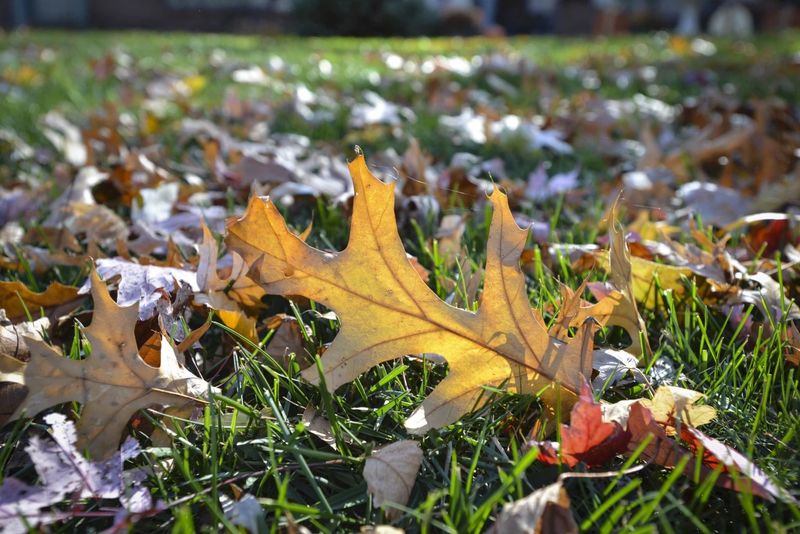
A peer-reviewed study published in 2025 offers some of the clearest direct evidence yet that autumn leaf removal in residential yards affects the insects that emerge the following spring. The research, published in Science of the Total Environment, found that removing autumn leaves from residential yards reduced spring-emerging arthropod abundance by 17 percent overall.
For moths and butterflies specifically, the results were more pronounced: abundance fell by roughly 45 percent and species richness dropped by about 40 percent compared to yards where leaves were left in place.
Those are meaningful numbers, but they come with an important geographic qualifier. The study was conducted in suburban Maryland, not North Carolina.
The findings support a general mechanism, namely that leaf litter provides overwintering habitat for insects that emerge in spring, but they do not predict the exact same percentages for every yard in the Piedmont, the Coastal Plain, or the mountains. North Carolina’s climate, soil types, tree species, and local insect communities differ from Maryland’s, and individual yards vary even within the same neighborhood.
What the study does establish clearly is that the connection between autumn leaf cover and spring insect emergence is real and measurable in residential settings. Removing leaves is not a neutral act in terms of the insects that depend on ground-level cover to survive the winter.
The practical implication for North Carolina homeowners is not to stop all cleanup, but to preserve selected patches of undisturbed leaf litter in suitable areas rather than treating the entire property as a surface to be cleared.
The research reinforces the zoning approach rather than replacing maintenance with inaction. Keeping some leaf cover in naturalized beds, under shrubs, and along woodland margins can help protect overwintering insects without requiring homeowners to abandon the parts of the yard that genuinely need to stay open and functional.
Choose the parts of the yard where leaves can stay
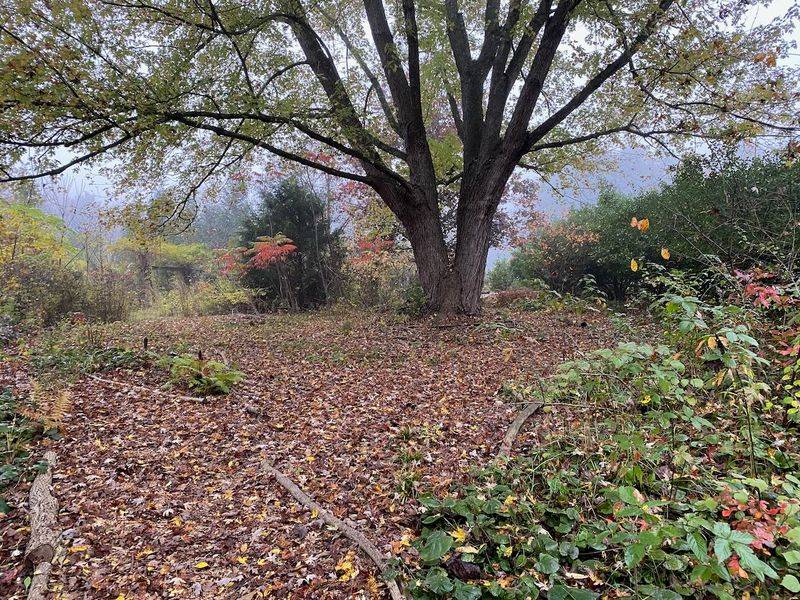
Not every corner of a North Carolina yard is equally suited to holding leaves through the winter. Matching leaf retention to the right locations makes the practice genuinely useful for wildlife rather than just a reason to skip cleanup.
The best candidates share a few characteristics: low foot traffic, existing vegetation overhead or nearby, relatively undisturbed soil, and some degree of shade or moisture. The ground beneath mature trees and large shrubs is the most obvious starting point.
Shrub borders along a fence or property line work well. Woodland margins, where the yard meets a tree line or natural area, are particularly valuable because they already function as transition habitat for many species.
N.C. Cooperative Extension guidance on backyard wildlife encourages reducing disturbance in sensitive areas such as wetland margins and stream sides.
Leaving leaves undisturbed near drainage features or wet low spots on the property respects those microhabitats without creating a management problem, as long as the leaves are not blocking drainage flow.
Slopes and naturalized sections of the yard that are not used for recreation or regular foot traffic are also good retention zones. The Xerces Society’s firefly conservation guidelines recommend retaining habitat patches and, when disturbance is unavoidable, avoiding disturbing the entire patch at once.
That means the same naturalized corner should not be blown out, raked through, and mowed repeatedly across the season. Each pass through a patch reduces its value as cover.
For leaves that fall on the lawn but cannot stay there, moving them into a suitable bed or designated habitat patch is a reasonable compromise. The U.S.
Forest Service review of eastern box turtle habitat identifies combinations of leaf litter, soft soil, natural depressions, brush, and woody debris as overwintering components, so a habitat patch that includes more than just leaves has added value. Raking lawn leaves into an established naturalized bed keeps the turf functional while directing material to a place where it can do some good.
One practical note: a leaf pile dropped in an open, sunny, dry spot and then disturbed every few weeks is not a habitat patch. Useful cover stays in place, stays moist enough to hold its structure, and is left alone through the winter months.
Manage turf and high-use areas without stripping habitat
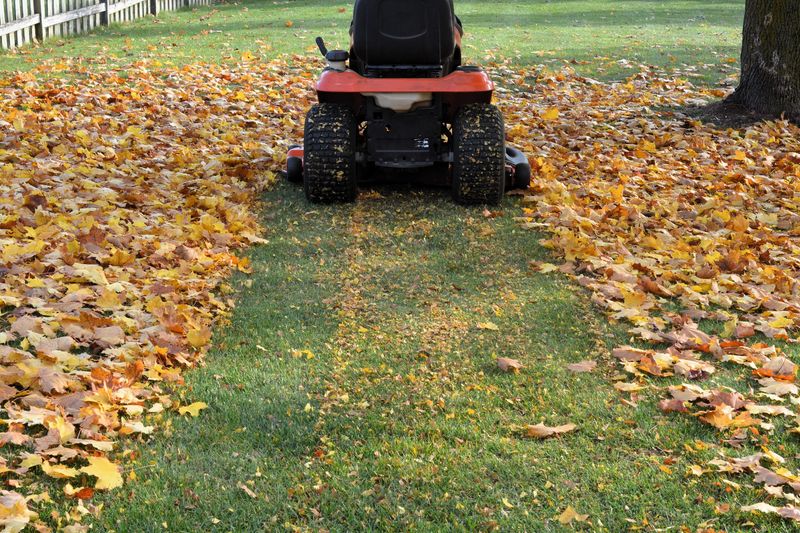
Keeping some leaf litter in the yard does not mean letting the lawn disappear under a thick, wet blanket of leaves. Dense, unshredded leaf mats can block water from reaching the soil, cut off light to grass, and create conditions that damage turf over the winter.
Managing the lawn and protecting habitat are not competing goals, but they do require different treatment in different parts of the yard.
For turf areas, the most practical option is mulch-mowing. Running a mulching mower over a moderate layer of dry leaves chops them into small pieces that filter down between grass blades, add organic matter to the soil, and break down much faster than whole leaves.
The NC State Extension Gardener Handbook guidance on woody ornamentals recommends shredding leaves for use as mulch and cautions against excessive mulch depth. The companion guidance on herbaceous ornamentals generally places organic mulch at around two to three inches in ornamental beds and warns against exceeding roughly four inches, where moisture and pest problems can develop.
Penn State Extension’s overview of leaf management reinforces the distinction between shredded leaves, which are well suited to turf and mulch applications because they break down quickly and do not mat, and whole leaves, which provide better cover in relatively undisturbed areas where the goal is overwintering habitat rather than fast decomposition. Choosing the right treatment for each location matters more than applying one method everywhere.
High-use areas of the yard need a different standard than naturalized sections. Paths, play areas, frequently used lawn borders, and spaces where children spend time should be kept more open.
Leaf litter and brush along these zones can increase the chance of tick encounters rather than reduce it. EPA guidance on tick-borne illness and school-aged children recommends managing leaf litter, tall grass, and brush in areas that children use regularly.
A school integrated pest management study cited by the EPA found that spring and summer leaf-litter removal reduced nymphal tick density by 73 to 100 percent in the studied setting. That result applies to high-use areas and activity zones, not to the entire property.
The appropriate response is zoning: retain leaf cover away from play spaces and heavily used paths while keeping those active areas managed and accessible. Leaf litter is a real asset in the right location and a real liability in the wrong one.
Keep structures, drainage, and defensible space clear

There are parts of every yard where leaves should not stay, and that line is not flexible. Gutters clogged with wet leaves can overflow, sending water against fascia boards and into soffits.
Leaves pressed against siding or piled near a crawl space vent create conditions for moisture intrusion and wood decay. Organic debris sitting against the foundation or around HVAC equipment is a maintenance problem waiting to happen.
Fire safety adds another layer of urgency. NC State Extension fire-resistant landscaping guidance for North Carolina recommends removing leaves and other organic debris from within five feet of the home, limiting mulch depth in the zone beyond that, and keeping combustible leaf piles well away from structures.
Roof surfaces and valleys, which can collect leaves and hold moisture, also need regular clearing. None of this conflicts with retaining leaf litter elsewhere on the property.
The home perimeter is simply not a habitat zone.
Drains and drainage swales deserve the same attention. Leaves that accumulate over a drain or block a swale can redirect runoff toward the foundation or into areas of the yard that are not designed to hold standing water.
Clearing these features is routine maintenance, not a wildlife concern.
When leaves cannot stay in place because of location, composting is a practical fallback. EPA guidance on composting at home identifies dry leaves as a carbon-rich ingredient and recommends placing the compost site in a well-drained area.
A few categories of material should stay out of the pile: leaves or clippings from plants treated with herbicides, diseased or pest-infested plant material, invasive weeds that have gone to seed, pet waste, and treated wood. A well-managed compost bin handles the surplus from gutters, paths, and the home perimeter without sending that material to the landfill or leaving it where it creates a hazard.
Keeping the home perimeter clear and the rest of the yard deliberately managed are two parts of the same plan, not contradictions.
Use a zoned fall cleanup plan
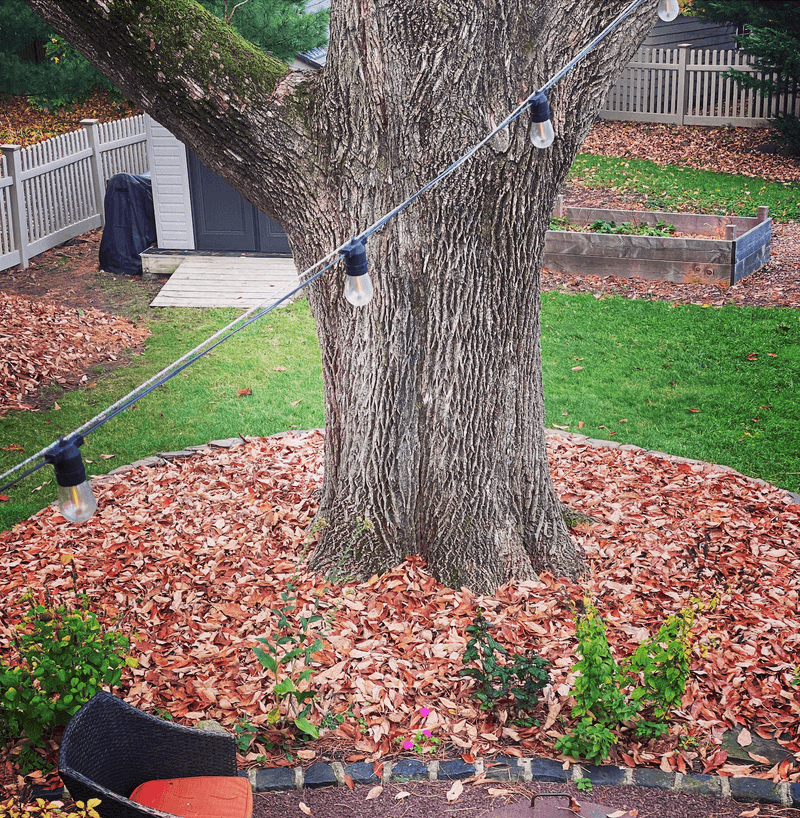
Putting this all together does not require a complex system. A zoned fall cleanup plan starts with a quick walk around the property before you pick up a single rake or fire up the blower.
Mark the areas that will serve as habitat patches: the ground beneath mature trees and shrubs, shrub borders, a woodland edge, or a naturalized section of the yard that sees little foot traffic. These are the places where whole leaves can stay relatively undisturbed through the winter.
The Xerces Society’s firefly conservation guidelines recommend retaining these patches and avoiding repeated disturbance across the same area in a single season.
Next, clear the home perimeter, gutters, roof surfaces, drains, and any drainage swales. Organic debris within five feet of the structure comes out, per NC State Extension fire-resistant landscaping recommendations.
Handle paths and play areas the same way, keeping them open and managed to reduce tick exposure in the spaces people use most.
For the lawn, mulch-mow a manageable layer of dry leaves or rake them into the designated habitat beds rather than bagging them. Leaves that cannot stay anywhere on the property go to a compost bin following EPA composting guidance, keeping diseased material, seeded invasive weeds, and treated plant debris out of the pile.
The goal is a yard that is deliberately organized rather than uniformly bare or uniformly covered. NC State Extension’s advice on supporting fireflies reflects the same principle: thoughtful habitat retention, not the absence of maintenance.
A North Carolina yard managed this way stays safe and functional for the people who use it while leaving room for the fireflies, moths, and box turtles that depend on a little undisturbed ground to get through winter. The difference between a leaf-free yard and a well-zoned one is mostly a matter of where you stop raking.