
Elderberry Along A North Carolina Fence Line Feeds Birds And Fights Ticks For Years
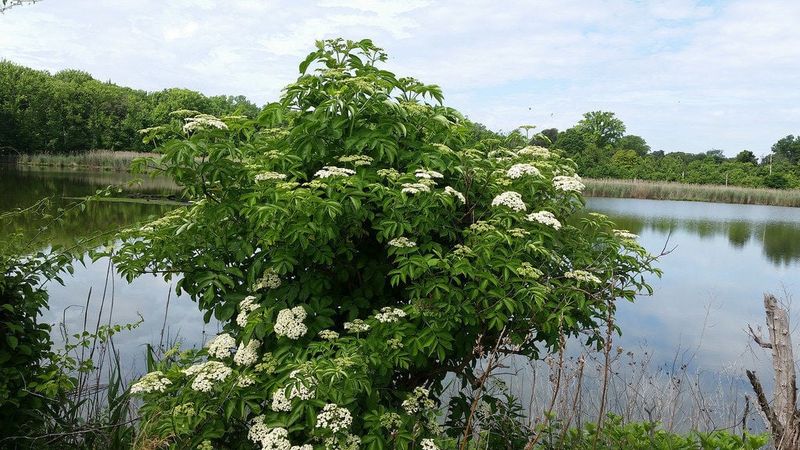
American elderberry is a tough native shrub that grows across all of North Carolina, from the Coastal Plain to the mountains, and it delivers real wildlife value when given the right spot in your yard. Songbirds flock to its late-summer fruit, pollinators work its creamy flower clusters, and stem-nesting bees use its hollow branches long after the growing season ends.
What elderberry cannot do, though, is fight or repel ticks, and understanding that difference will help you get the most out of this plant without putting your family at risk.
American elderberry belongs in a spacious North Carolina wildlife border
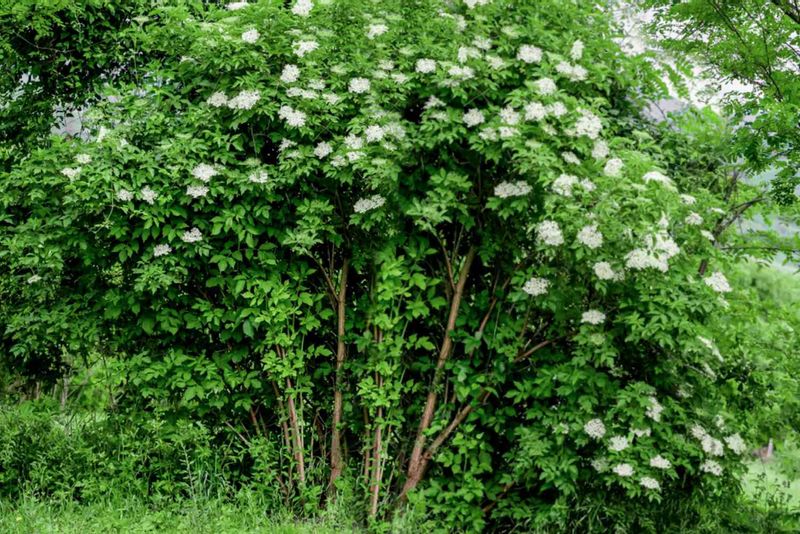
Sambucus canadensis, American elderberry, is one of the few native shrubs that delivers wildlife value across all three of North Carolina’s major regions. NC State Extension confirms it as native throughout the Coastal Plain, Piedmont, and Mountains, making it a genuinely local choice rather than a regional specialty.
Its broad adaptability alone puts it ahead of many ornamental shrubs that struggle once they leave a narrow comfort zone.
Expect a mature plant to reach roughly 5 to 12 feet tall with a spread of 6 to 12 feet. That is a substantial shrub, and the numbers matter when you are deciding where to put it.
Flat-topped clusters of creamy white flowers open in early summer and draw pollinators before the plant shifts energy into producing the purple-black fruit that ripens in late summer and attracts birds and mammals.
One point deserves a clear statement before anything else: American elderberry is not the same plant as European black elderberry, Sambucus nigra, which is sold in many garden centers. The two are related but distinct, and this article covers only the North Carolina native.
More importantly, elderberry has no demonstrated role in repelling or reducing ticks around a home. CDC tick-prevention guidance focuses on habitat modification, mowing, leaf-litter removal, and physical barriers, not on any living shrub.
Elderberry earns its place in the yard as a wildlife plant, and that is a strong enough reason to grow it, without adding a tick-control claim the evidence does not support.
A fence line can work as a planting location, but only when it provides enough open space for the shrub’s full spread and sits far enough from porches, paths, and play areas that people are not brushing through the growth regularly. Placement matters as much as plant selection.
Match the shrub’s mature size to the site
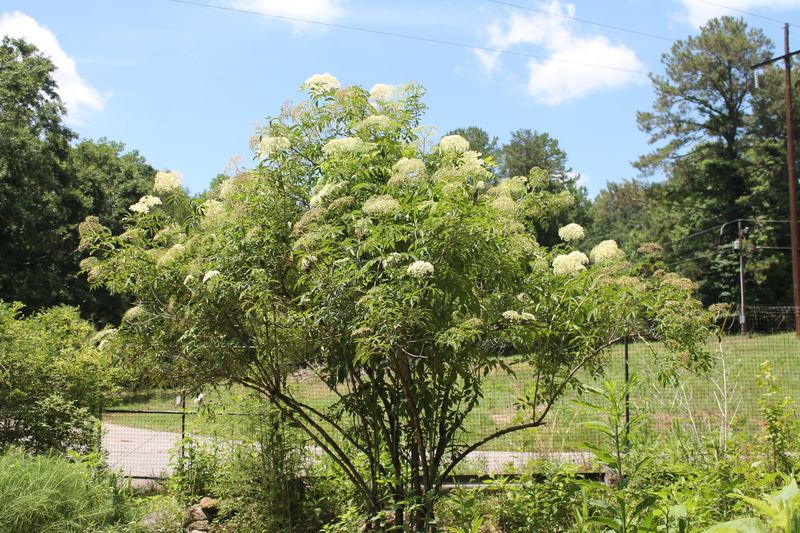
Picking a spot for American elderberry means thinking about the full-grown plant, not the small container sitting in your cart. NC State Extension describes a mature spread of 6 to 12 feet, and Penn State Extension recommends spacing cultivated elderberry plants approximately 5 to 7 feet apart in a managed planting.
Those two numbers address different things: the mature spread tells you how much room a single shrub will eventually claim, while the spacing interval applies to a row of cultivated plants where some pruning keeps growth in check. An informal, suckering colony planted without regular management may need considerably more room than either figure suggests.
Light and soil requirements are straightforward but not flexible. Elderberry performs best in full sun to partial shade.
Shade-heavy sites under a dense tree canopy tend to reduce flowering and fruiting, which defeats the purpose of growing it for wildlife. Penn State’s rain garden guidance notes that elderberry tolerates moist to occasionally wet conditions, which makes it a reasonable choice for a low spot that stays damp after rain.
Rich, slightly acidic soil gives the best results, though the shrub adapts to a range of textures.
Certain locations are simply poor fits regardless of soil or light. A narrow bed between a sidewalk and a fence gives the roots and suckers nowhere to go without constant intervention.
A children’s play area or a well-used garden path presents a different problem: dense shrub growth close to active foot traffic means more contact with vegetation, and that contact matters when ticks are in the picture. That concern is not unique to elderberry.
Any large, brushy shrub placed immediately beside a high-use area increases the likelihood of brushing against foliage.
The practical takeaway is to treat site selection as part of the planting decision, not an afterthought. Choose a background position with room to spread, adequate sun, and enough distance from the places your family spends the most time outdoors.
That placement strategy supports both the shrub’s wildlife function and a sensible approach to yard management.
Flowers, fruit, branches, and stems support wildlife
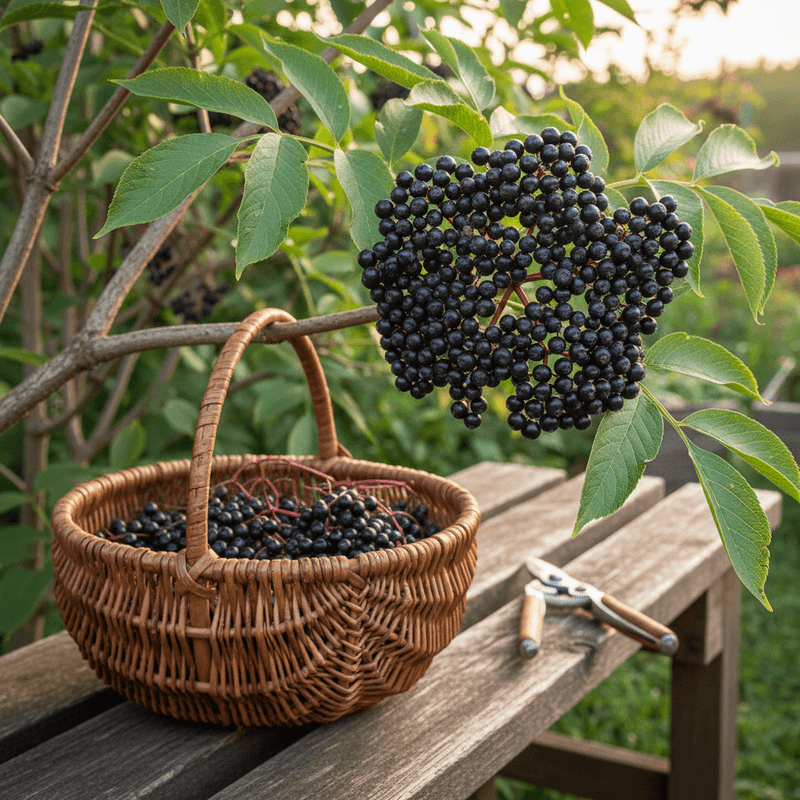
American elderberry earns its keep through most of the growing season, not just during the brief window when berries are ripe. The large, flat-topped flower clusters that open in early summer attract butterflies, native bees, and a wide range of other insects before a single berry forms.
That early-season insect activity matters because many songbirds feed insects to their nestlings even when they eat fruit themselves as adults.
By late summer the flowers have given way to heavy clusters of purple-black fruit. NC State Extension notes that the fruit is consumed by many songbirds and mammals, and that the branches provide nesting habitat as well.
Penn State Extension adds bluebirds, tanagers, catbirds, phoebes, robins, and cardinals to the list of birds that benefit from elderberry. Those are documented associations, though no planting comes with a guarantee that every species on the list will show up in your yard.
Fruit production itself varies with sunlight, soil moisture, plant age, and weather, so a young plant in its first couple of seasons may produce little fruit even under good conditions.
The wildlife value does not end when the leaves drop. Dead elderberry stems are hollow or pithy inside, and Penn State’s elderberry guide points out that those cavities can provide nesting sites for stem-nesting bees.
NC State recommends cutting suitable dead stems to roughly 12 to 24 inches and leaving them standing until they naturally break down, where that is practical on your property. Resisting the urge to cut everything back to the ground in fall gives those bees a place to overwinter.
Thinking of elderberry as a multi-season resource rather than a single-purpose fruit shrub changes how you manage it. Pruning decisions, stem removal timing, and even how you handle the surrounding ground cover all affect which wildlife benefits you actually see.
A naturalized border that includes some standing dead material alongside living canes tends to support a broader range of species than a tightly clipped row.
Elderberry does not fight ticks
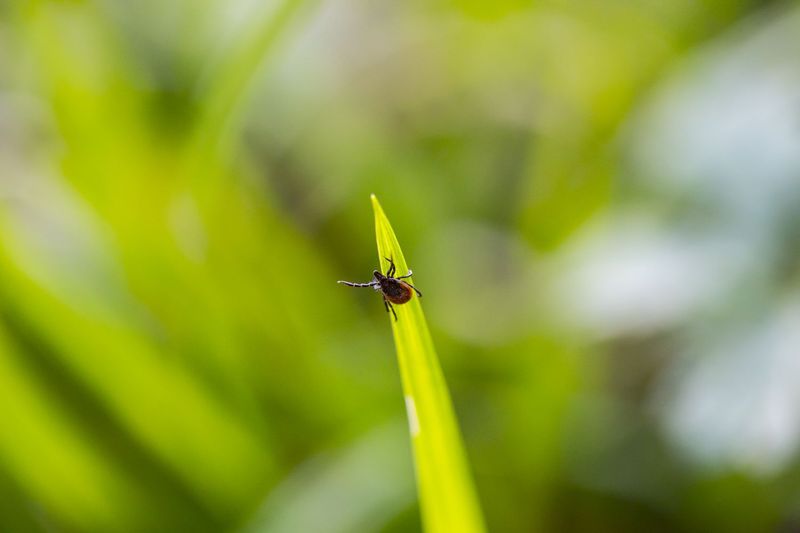
Saying plainly what the evidence shows is the most useful thing this section can do: no reliable research demonstrates that a living American elderberry shrub repels, kills, suppresses, or reduces the number of ticks around a home. The idea is appealing because elderberry is a native plant with documented wildlife value, but wildlife value and tick control are separate questions, and the tick-control question currently has a different answer.
CDC information on tick biology explains that ticks wait on grasses, low shrubs, and leaf litter for a passing host. Their abundance at any location depends on moisture, shade, the presence of leaf litter and brush, and the availability of host animals such as deer, rodents, and birds.
None of those factors is controlled by the identity of a particular shrub species. A yard with shaded, moist, brushy edges will tend to support more ticks than an open, sunny, well-maintained yard regardless of whether elderberry is growing there.
University of Minnesota Extension tick guidance recommends reducing brushy, shaded habitat, removing leaf litter, keeping grass short, and creating physical barriers between lawns and wooded areas. Elderberry does not appear on any tick-management plant list in the reviewed literature, either as a plant that helps or one that has been definitively ruled out in every context.
A 2008 Virginia tick-habitat study is sometimes cited in this context. That study did record elderberry among the plant species found in thicket habitats where ticks were sampled.
What it did not do is test elderberry as a repellent or establish that the shrub itself caused higher tick numbers. The ticks were associated with the habitat type, meaning shaded, dense, brushy vegetation, not with elderberry specifically.
Treating that finding as evidence that elderberry attracts ticks, or conversely as evidence that it repels them, both misread what the study actually measured.
The distinction between wildlife value and tick-control evidence matters for a practical reason. A homeowner who plants elderberry believing it will reduce tick exposure may skip the landscape management steps that actually lower risk.
NC State’s elderberry profile supports growing this shrub for birds, insects, and nesting habitat. That is a well-documented benefit.
Tick control requires a separate set of actions described in the sections that follow.
Set the wildlife border back from places people use

Knowing that elderberry does not control ticks still leaves a useful design question: where should a dense, suckering shrub go in a yard where ticks are a real concern? The answer follows from what tick-management research actually recommends, applied to how people use their outdoor spaces.
CDC Lyme prevention guidance calls for a 3-foot-wide strip of wood chips or gravel between a maintained lawn and any wooded or brushy area. That strip works by creating a dry, open transition zone that ticks are reluctant to cross.
A row of elderberry shrubs is not a substitute for that barrier. Living shrubs provide exactly the kind of shaded, vegetated surface where ticks can wait for a host, so placing elderberry immediately along a path or patio edge does not replicate what a gravel or mulch strip accomplishes.
The practical layout that follows from this is straightforward. Keep the elderberry border set well back from the porch, deck, children’s play equipment, and any path that people walk daily.
Position the wood-chip or gravel strip between the maintained lawn and the wildlife border, not between the border and the house. University of Minnesota Extension tick guidance reinforces keeping grass short and removing leaf litter and brush in the zones closest to the house, reserving naturalized plantings for the yard’s outer edges.
Within the maintained zone, prune any existing shrubs or low-hanging branches enough to let sunlight reach the ground. CDC tick biology information notes that ticks prefer moist, shaded conditions, so improving sunlight and airflow in the areas your family uses most directly reduces favorable tick habitat.
This is a landscape inference drawn from tick ecology, not a result from an elderberry-specific field trial, and labeling it that way keeps the advice honest.
More vegetation is not automatically bad for wildlife or automatically good for ticks. Outcomes depend on how a planting is sited, maintained, and separated from high-use areas.
An elderberry border placed thoughtfully at the back of a property, with a proper mulch strip between it and the lawn, can support birds and insects without pushing tick habitat closer to where your family spends time.
Plan for watering, suckers, and an informal habit
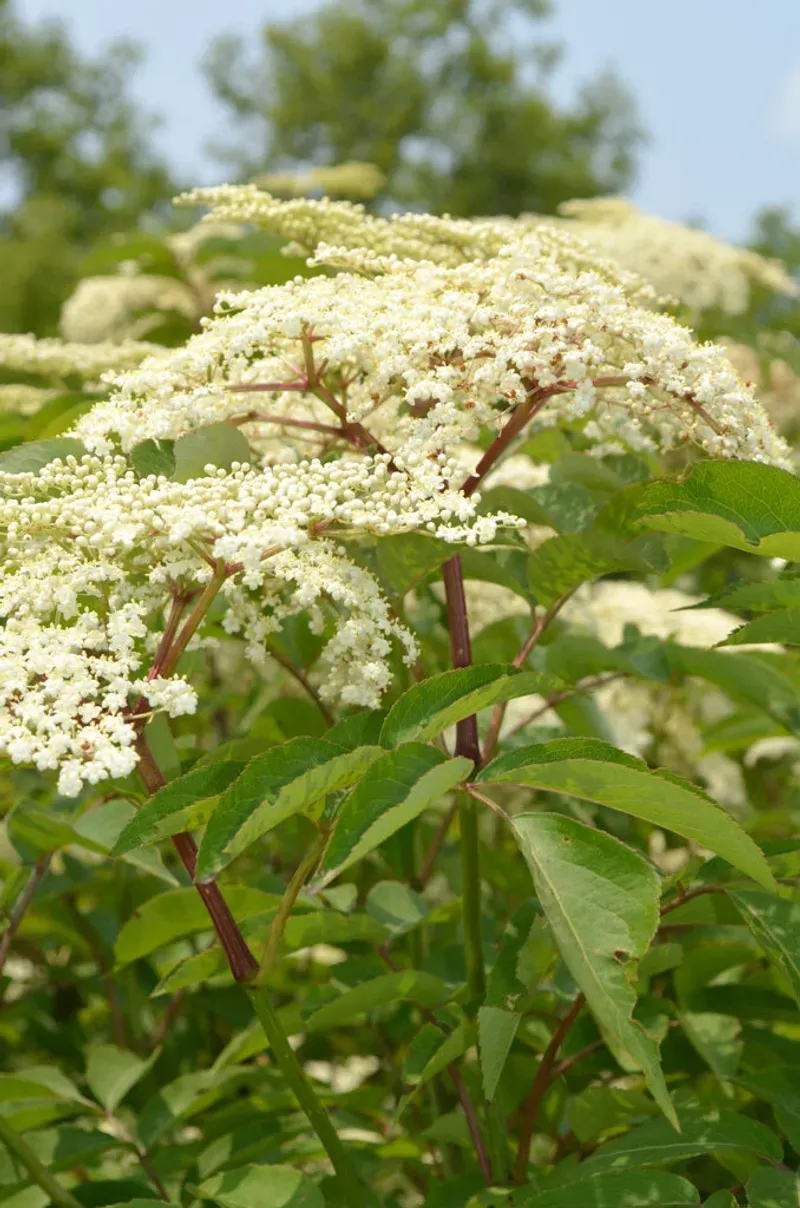
American elderberry can persist in a yard for many years, but it is not a plant-once, walk-away shrub. Getting a new plant through its first season requires consistent attention to water.
University of Maine Extension recommends providing approximately 1 inch of water over the root zone weekly during at least the first growing season, continuing until autumn unless rainfall covers that amount naturally. Skipping irrigation during a dry stretch in the first summer is one of the most common reasons newly planted elderberry fails to establish well.
Once the roots are settled, the plant’s spreading habit becomes the main management task. American elderberry spreads by root suckers, sending up new canes from the base and from underground runners that can emerge several feet from the parent plant.
Left alone, a single shrub can develop into a wide thicket over several seasons. For a naturalized wildlife border at the back of a large yard, that spreading behavior may be exactly what you want.
For a tighter planting near a fence or bed edge, plan to remove unwanted suckers each spring before they get woody. A sharp spade pushed straight down to sever the root connection is usually enough.
The shrub’s natural form is arching and multi-stemmed rather than upright and tidy. NC State Extension describes the plant’s informal, arching habit, which suits a background or naturalized border much better than a clipped formal hedge line.
Trying to maintain it as a precise, sheared hedge requires more effort than the plant’s growth rate makes practical and tends to reduce fruiting.
Older canes that have stopped producing well can be cut to the ground in late winter to encourage fresh, vigorous growth. For dead canes with hollow or pithy stems, consider leaving sections standing at 12 to 24 inches rather than removing them entirely, since those stubs can provide nesting cavities for stem-nesting bees through the following season.
Cut them closer to the ground only after they have naturally begun to deteriorate. Combining selective renewal pruning with a few standing dead stubs keeps the planting productive for wildlife without letting it become unmanageably dense.
Handle elderberries safely and keep using tick precautions
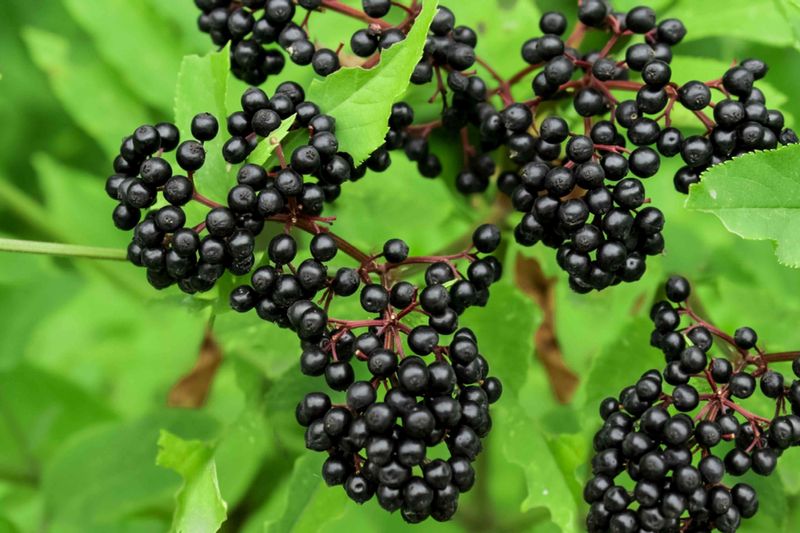
Two safety boundaries belong in any honest guide to growing elderberry, and neither one is optional. The first concerns the plant itself.
Raw or unripe elderberries contain cyanide-producing compounds, as do the leaves, stems, bark, and roots. The National Center for Complementary and Integrative Health notes that consuming raw elderberries or other plant parts can cause nausea, vomiting, and other symptoms.
Cooking the ripe berries eliminates the toxin, which is why properly prepared elderberry products are widely used. The fact that birds and mammals eat raw berries without visible harm does not mean the raw fruit is safe for people.
Wildlife physiology differs enough from human digestion that wildlife use is not a reliable safety signal.
Penn State Extension’s native plant guidance reinforces that elderberry’s wildlife value is well established, while human consumption requires proper preparation. Keep children away from unripe fruit, and do not use leaves or stems in homemade teas, sprays, or any other preparation.
No homemade elderberry spray has a demonstrated safe or effective tick-control use, and the plant’s raw material carries real risks.
The second boundary is about tick protection. An elderberry border, no matter how well sited, does not replace personal precautions.
The North Carolina Division of Public Health confirms that ticks are common throughout the state and that several tick-borne illnesses are tracked statewide, including ehrlichiosis, Lyme disease, Rocky Mountain spotted fever, and STARI. After spending time outdoors, check your skin and clothing carefully, paying attention to the scalp, behind the knees, and under the arms.
Shower promptly, and check pets before they come inside. These steps apply whether your yard has elderberry or not, and they remain the most reliable personal defense against tick-borne illness regardless of how well your landscape is managed.
Choose elderberry for wildlife, then manage the yard for people
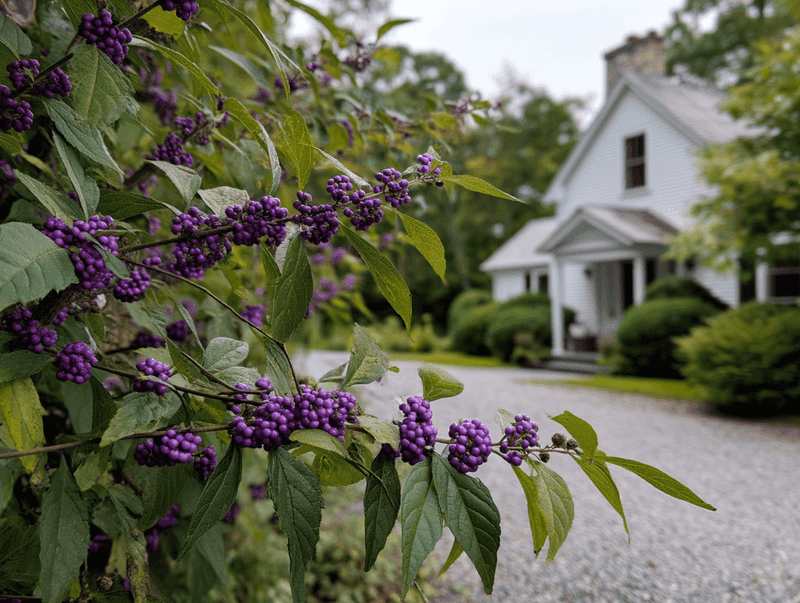
American elderberry, Sambucus canadensis, is a genuine North Carolina native that can provide flowers, late-summer fruit, nesting habitat, and insect resources across the Coastal Plain, Piedmont, and Mountains when given adequate space, moisture, and a site that suits its spreading habit. NC State Extension’s elderberry profile supports all of those wildlife benefits, and they are strong enough reasons to plant it without adding anything the evidence does not back up.
Tick-conscious landscaping is a separate project that runs alongside the wildlife border, not through it. Keep high-use areas open, sunny, and clear of leaf litter and brush.
Install a 3-foot-wide wood-chip or gravel strip between the maintained lawn and any naturalized planting, as CDC prevention guidance recommends, and set the elderberry border back from that strip rather than against it. Mow regularly, perform tick checks after every outdoor session, and use appropriate repellents when working near brushy areas.
A well-placed elderberry border rewards the yard with season-long wildlife activity. Managing the surrounding space thoughtfully rewards the people who use that yard every day.
Those two goals reinforce each other when the planting is sited with both in mind, and neither one asks elderberry to do a job it was never equipped to handle.