
Bats Keep Circling Your North Carolina Yard At Dusk Because Something There Is Feeding Them
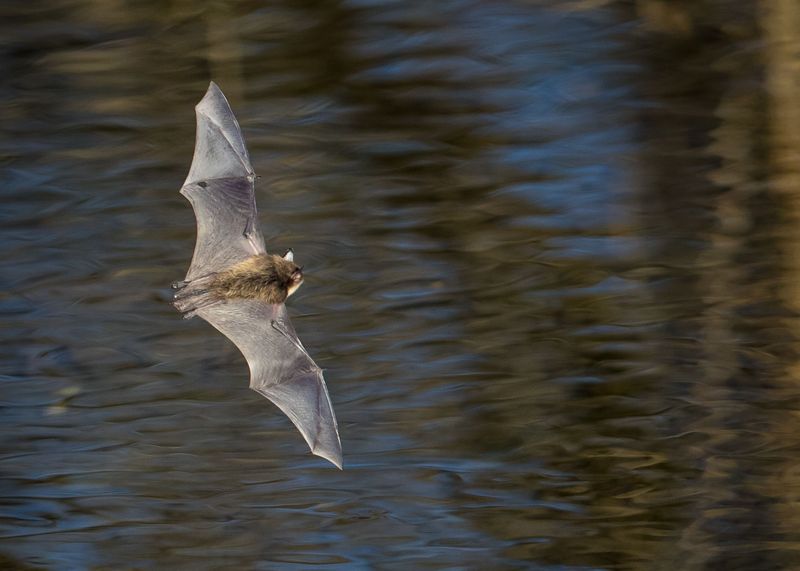
Watching a bat zigzag through your backyard at dusk can feel mysterious, but there is a straightforward reason it keeps coming back. Most bats you see near North Carolina homes are insect hunters, and they are very good at their job.
Understanding what pulls them to your yard gives you a clearer picture of your outdoor space and some practical ways to be a better steward of the wildlife around you.
At dusk, circling usually means a bat is hunting
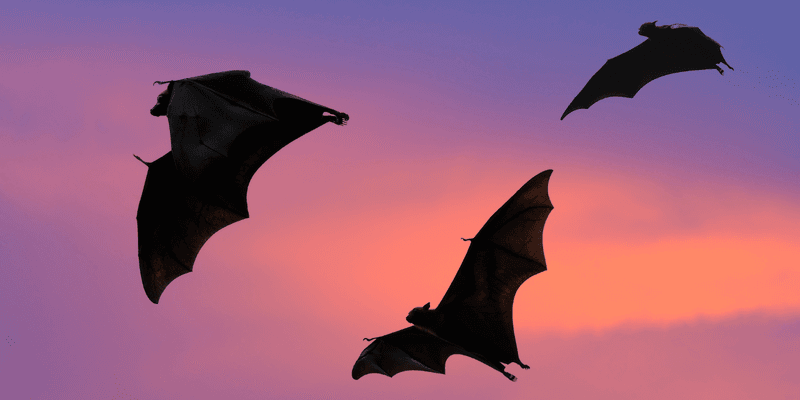
Evening light fades, and a small shape begins looping back and forth over your lawn in tight, unpredictable arcs. That erratic flight is not random.
Bats are using echolocation, sending out rapid pulses of sound and listening for echoes that bounce off flying insects, to chase down prey in real time.
USGS research on insect-eating bats confirms that 42 of the roughly 45 bat species found in the United States feed primarily on insects, and NC State Extension reports that North Carolina is home to 17 of those species. The little brown bat, the big brown bat, the evening bat, and the tricolored bat are among those most commonly seen near homes, but they are not interchangeable.
Species differ in body size, preferred prey, roost type, tolerance of artificial light, and conservation status.
What they share is the habit of emerging around sunset to feed. A USGS field guide to bat monitoring describes dusk emergence as standard foraging behavior across insectivorous species, with individuals often returning repeatedly to productive hunting areas.
Diet varies considerably: USGS notes that bats consume moths, beetles, flies, aquatic insects, and other airborne prey depending on the species and what is available.
Seeing a bat circle your yard is a reasonable signal that some combination of prey, open airspace, or nearby habitat is usable that evening. What the observation cannot tell you is whether the insects are coming from your yard specifically, from a neighbor’s garden, from a stream two blocks away, or from the insects gathering around a porch light.
The bat is responding to an opportunity, and one sighting is not enough to trace exactly where that opportunity originates.
What a bat sighting reveals—and what it cannot prove
A bat passing through your yard is useful information, but it is easy to read more into it than the evidence supports. The sighting tells you that some usable combination of airspace, prey, weather, and nearby habitat existed at that moment.
It does not confirm that your yard holds an unusually large insect population or that your property qualifies as a healthy ecosystem by any formal measure.
U.S. Fish and Wildlife Service points out that bats follow landscape features such as tree lines, streams, and building edges as they commute between roost sites and feeding areas.
A bat circling your yard may have roosted in a church attic three streets over, flown along a creek corridor, and entered your airspace because the open lawn offered good hunting room, not because your specific plantings drew it there.
Research does show that bat activity can track prey availability in certain settings. A USGS study along a river corridor found a positive relationship between bat foraging activity and the abundance of aquatic flies emerging from the water.
That is a meaningful finding, but it describes a specific riparian habitat, not a general rule that applies to every suburban lawn.
A separate wetland study reinforces why context matters. Research published in the Journal of Mammalogy found that insect abundance and diversity were not reliably related to bat activity across wetland sites, suggesting that bats respond to a complex mix of factors beyond simple prey counts.
Season, temperature, weather, roost proximity, light conditions, and species identity all shape when and where bats appear.
For a North Carolina homeowner, the practical takeaway is this: a bat sighting is a promising sign, not a certification. USGS ecology summaries and NC State Extension both note that bat activity reflects a mosaic of habitat conditions rather than a single yard-level variable, and one evening’s observation is too limited to diagnose what is driving it.
Water and connected habitat can make a yard worth revisiting
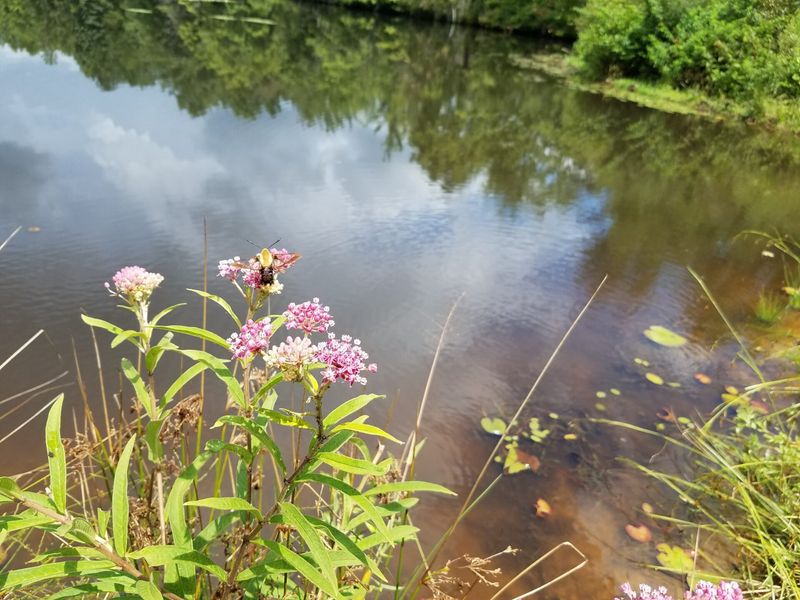
Yards that offer more than open grass tend to show up repeatedly on a bat’s nightly route, and water is often the single most attractive feature. Ponds, rain gardens, streams, and even well-maintained birdbaths can concentrate emerging aquatic insects, the same midges, caddisflies, and mayflies that form a significant part of many bat species’ diets.
NC State Extension specifically recommends protecting permanent water sources as part of bat-friendly habitat management, and notes that bat houses placed near water have a better chance of attracting occupants.
Woodland edges add a different kind of value. A fence row of native shrubs, a stand of mature trees along the property line, or even a neighbor’s woodlot can give bats a travel corridor and a source of moths and beetles that emerge from leaf litter and bark.
USGS bat ecology work highlights that many species forage along structural edges rather than in open fields or dense forest, which is why a yard sitting between a neighborhood street and a wooded buffer can see regular bat activity.
Open airspace matters too. Bats need room to maneuver at speed, and a yard with clear flight paths between trees is easier to hunt in than a densely planted space with no open lane.
Fish and Wildlife Service guidance describes how bats use landscape corridors, including open yards, as part of longer nightly routes that may span miles.
Native plants contribute indirectly by supporting moths, beetles, and other insects that bats eat. A yard with diverse native vegetation, leaf litter left in place, and a mix of flowering and woody plants is likely to host more varied insect life than a monoculture lawn.
That said, planting flowers is not a direct invitation to bats. The connection runs through insects, and there is no guarantee that any particular garden bed will produce the right prey at the right time to alter bat behavior.
The stronger approach is to think about the yard as part of a larger nighttime landscape: water, connected vegetation, open flight paths, and minimal light disruption working together.
Support a food web instead of spraying every insect
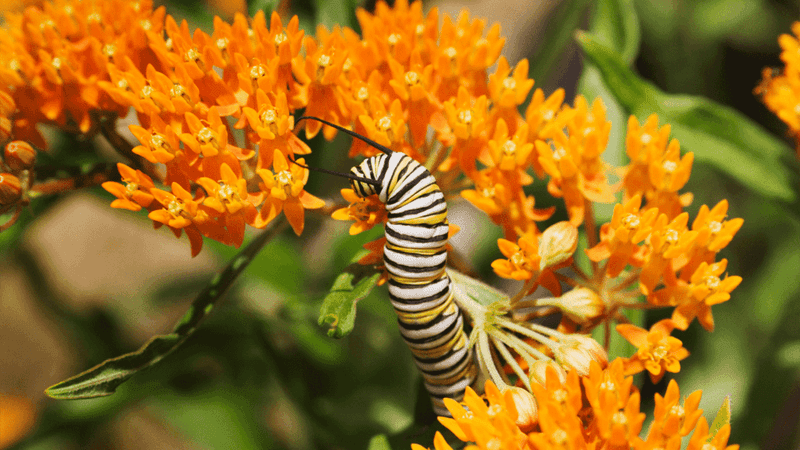
Bats are part of a food web that depends on insects being present in the first place. Treating every insect as a pest and reaching for a spray bottle undermines the very prey base that draws bats and other insect-eating wildlife to the yard.
NC State Extension advises homeowners to avoid insecticides where possible, protect water and roosting habitat, and tolerate some plant damage from caterpillars and other plant-feeding insects as a normal part of a functioning yard ecosystem.
That does not mean ignoring a genuine pest problem. The distinction is between routine blanket spraying as a preventive habit and targeted treatment when a specific pest reaches a level that causes real damage.
EPA guidance on integrated pest management lays out a practical sequence: identify the pest accurately, monitor how abundant it actually is, prevent conditions that allow it to build up, and use pesticides only when monitoring shows they are warranted. That sequence protects the broader insect community while still giving homeowners a path to address genuine problems.
The NC State Extension Wildlife Gardener Handbook reinforces this by recommending diverse native vegetation, protected water sources, and suitable roosting conditions as the foundation of a wildlife-friendly yard. Native plants support local insect communities better than non-native ornamentals because native insects are adapted to feed on them, and that insect diversity in turn supports birds, bats, and other predators.
When a pesticide is genuinely needed, EPA smart pest control guidance recommends choosing the least-toxic option, applying it only to the affected area, and timing applications to minimize contact with pollinators and other non-target insects. Spraying at night, when bats are active and foraging, is particularly worth avoiding.
A yard that keeps its insect community reasonably intact is a yard that can sustain the food web bats depend on, which is a more durable form of pest management than eliminating prey and expecting wildlife to stay.
Bats may eat mosquitoes, but they are not a mosquito-control plan
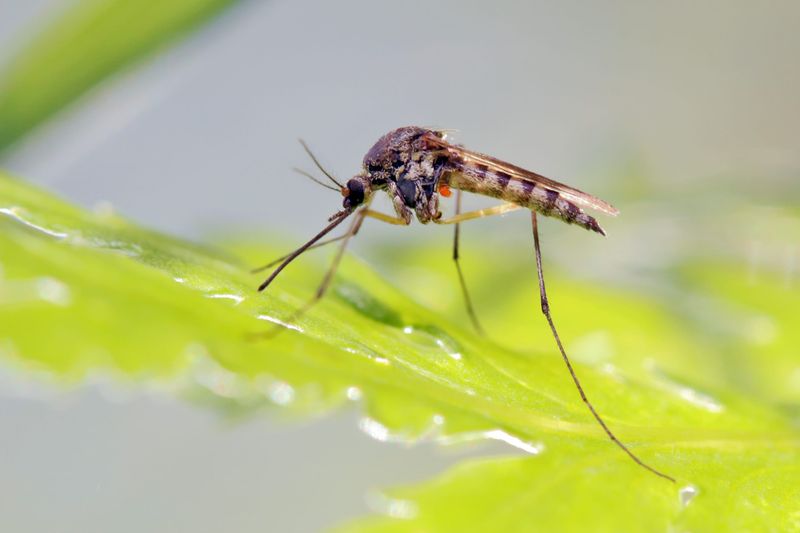
The idea that a few bats will clear a yard of mosquitoes is appealing, but it sets expectations the evidence cannot support. Mosquitoes are part of a bat’s diet, not the centerpiece of it.
USGS confirms that insectivorous bats eat a wide range of prey, including moths, beetles, flies, and aquatic insects, with the specific mix depending on the species and what is available on a given night. Mosquitoes show up in stomach samples, but they compete with many other prey types.
Figures claiming that a single bat eats hundreds or thousands of mosquitoes per night circulate widely, but those numbers do not hold up as a residential-yard guarantee. A USGS analysis of bat ecosystem-service valuation cautions that consumption estimates are often extrapolated from limited study systems and may not transfer reliably to other habitats or species.
USGS notes bats’ broad value as insect predators, including their role in suppressing agricultural and forest pests, while being careful not to assign a fixed mosquito tally per bat per night.
For actual mosquito reduction, source control is the most reliable tool available. EPA mosquito control guidance recommends emptying or refreshing water in birdbaths, plant saucers, rain barrels, children’s toys, clogged gutters, and any other container that holds standing water for more than a week.
Mosquito larvae develop in still water, so removing or circulating those breeding sites cuts the population at the source.
Water features added to support bats can backfire if they are not managed. A birdbath that sits stagnant, a poorly circulated pond, or a rain barrel without a tight-fitting lid can become a mosquito nursery rather than a bat attractant.
Keeping water moving, adding mosquito dunks to ornamental ponds, and emptying small containers weekly are straightforward steps that serve both goals at once. Bats are a welcome part of the yard’s ecology, but mosquito management works best when it starts with the water, not with wildlife.
Dark routes help more broadly than bright lights or a guaranteed bat house
Lighting decisions shape which bats use a yard more than most homeowners realize. Some species, including certain big brown bats, will exploit the insects that gather around outdoor lights and hunt in the illuminated cone.
Others, including many forest-associated species and some of North Carolina’s less common bats, actively avoid lit areas and may abandon travel corridors that have become too bright. Research on artificial light at night documents that light pollution affects bat communities differently by species, which means turning on more lights is not a reliable way to support bats broadly.
A more useful approach is keeping unnecessary outdoor lighting off and directing essential lights downward rather than broadcasting them into the sky or across open yard space. Fish and Wildlife Service bat guidance points to dark, connected flight paths between roosting and feeding areas as broadly beneficial for bat communities, since many species follow predictable corridors and rely on low light to navigate safely.
A yard that preserves darkness overhead while keeping functional lighting close to the ground is more welcoming to a wider range of species than one bathed in ambient glow.
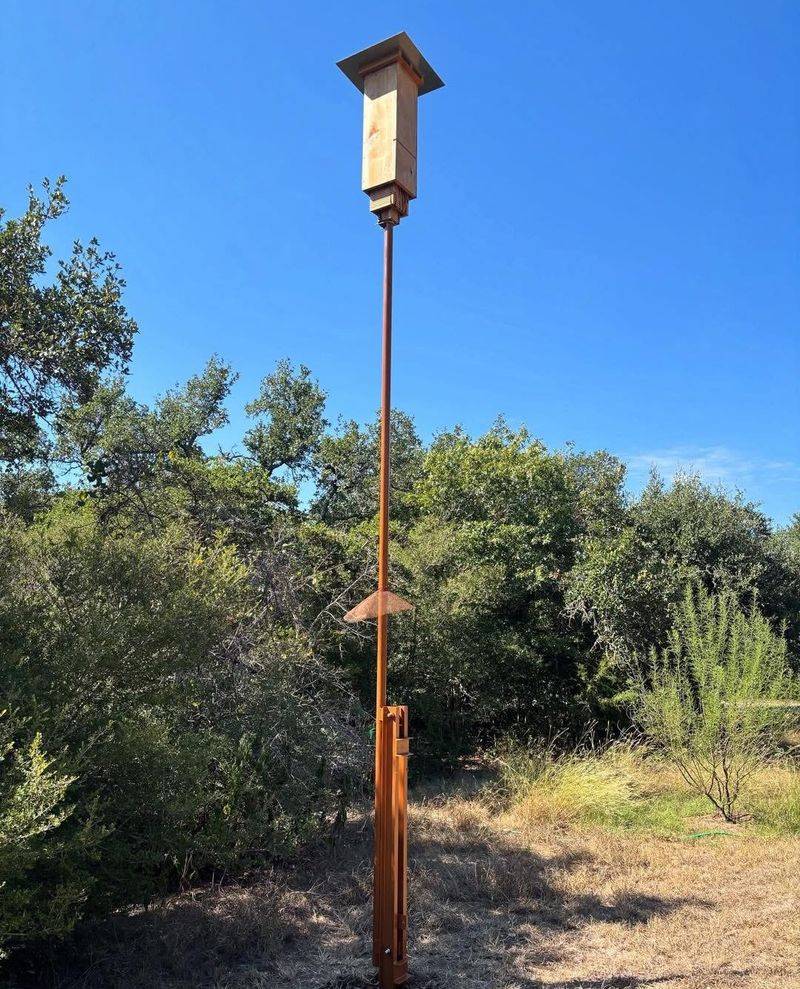
Bat houses are a popular way to offer roosting habitat, but they come with honest caveats. NC State Extension recommends mounting properly constructed boxes 10 to 15 feet high, in locations that receive substantial direct sunlight each day, near permanent water when possible, and clear of overhanging branches that block sun or give predators a route to the box.
Those conditions improve the odds of occupancy, but they do not guarantee it. FWS bat house resources note that local species composition, nearby roost competition, and box temperature all influence whether bats adopt an artificial structure.
Occupancy can take up to two years, and some species rarely use bat houses at all. A bat house is a reasonable addition to a bat-friendly yard, but it works best as one element of a broader habitat rather than a standalone fix.
Watch normally flying bats from a distance
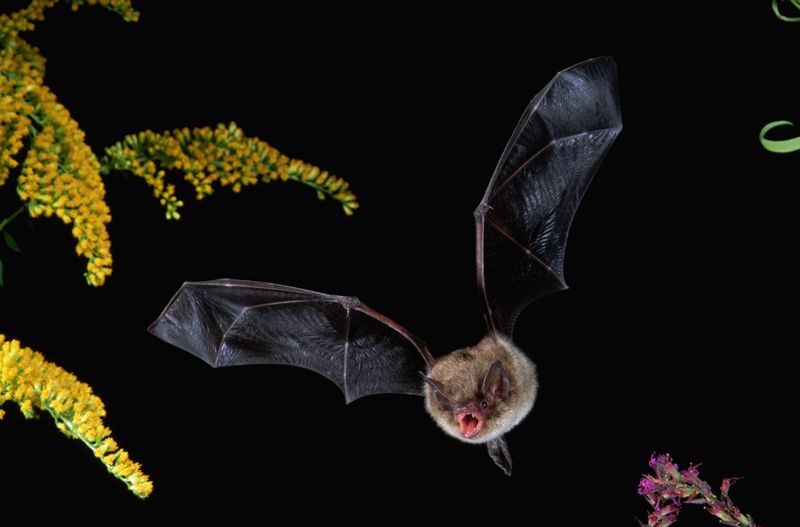
A bat looping through the yard at dusk is doing exactly what it should be doing, and the right response is to watch from where you are standing. Approaching, chasing, or trying to catch an outdoor bat that is flying normally serves no purpose and carries real risk.
Bat bites are small and can go unnoticed, which is the core reason public health officials take potential exposure seriously.
CDC rabies prevention guidance is clear: do not handle bats under any circumstances. If a bat is found inside a home, discovered on the ground, appears unable to fly, or has had any possible contact with a person or pet, the right move is to avoid direct contact and call local animal control or the health department promptly.
A grounded bat or one found in a living space is not automatically rabid, but possible exposure requires a conversation with public health officials, not a wait-and-see approach.
Children and pets are at higher risk because they may not recognize or report contact. If a child or pet was in the same room as a bat overnight, or if anyone wakes up to find a bat in the room, treat it as a possible exposure even without a visible bite mark.
Animal control or health department staff can advise on whether post-exposure evaluation is needed.
Homeowners who discover bats roosting in an attic or wall cavity face a separate decision about exclusion. Sealing bats out while flightless young are inside is both harmful to the animals and likely to create a worse problem, as young bats that cannot escape may die in the structure.
CDC guidance identifies fall and winter as the generally safer periods for bat-proofing, after young bats are flying and before the next breeding season begins. Exclusion during the maternity period, roughly May through August in North Carolina, should be handled by a qualified wildlife professional who can assess the situation and time the work correctly.
Leaving the outdoor bats to their business, and calling for help when one ends up where it should not be, is the approach that protects both the animals and the people sharing the yard.
Treat repeated circling as a habitat clue, not a verdict
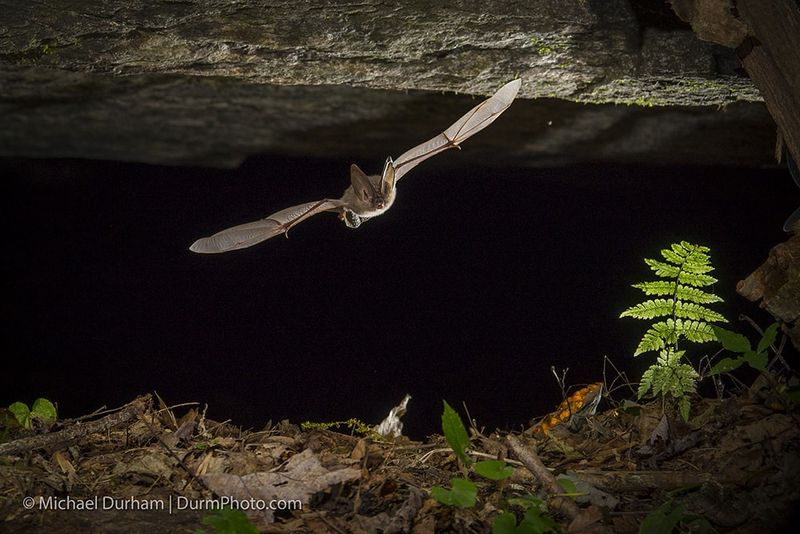
Repeated bat activity at dusk over the same yard is worth paying attention to, but the honest interpretation is modest. Something in or near the property, whether prey, open airspace, a travel corridor, nearby water, or a roost site, is making it worth the bat’s time to show up again.
NC State Extension frames regular bat presence as a sign of usable habitat rather than a precise insect census or a complete ecological-health report.
USGS notes that bats are important predators of night-flying insects, including agricultural and forest pests, and that their presence across a landscape reflects broad habitat quality. At the yard level, that value is real but harder to measure.
The practical response is not to chase a definitive explanation but to protect the conditions that make the yard part of a usable nighttime landscape.
That means keeping unnecessary pesticide applications off the calendar, limiting outdoor lighting to what is genuinely needed and directing it downward, managing standing water weekly so it does not become a mosquito nursery, and leaving the bats themselves undisturbed. CDC guidance remains the reference point for any situation where a bat ends up inside or in contact with a person or pet.
Beyond those safety boundaries, the bat circling at dusk is a quiet indicator that the yard is part of something larger than itself, which is a reasonable thing for a North Carolina homeowner to take some pride in.