
American Beautyberry Feeds Birds Along Your North Carolina Woodline, and a Separate Three-Foot Border Helps Manage Ticks
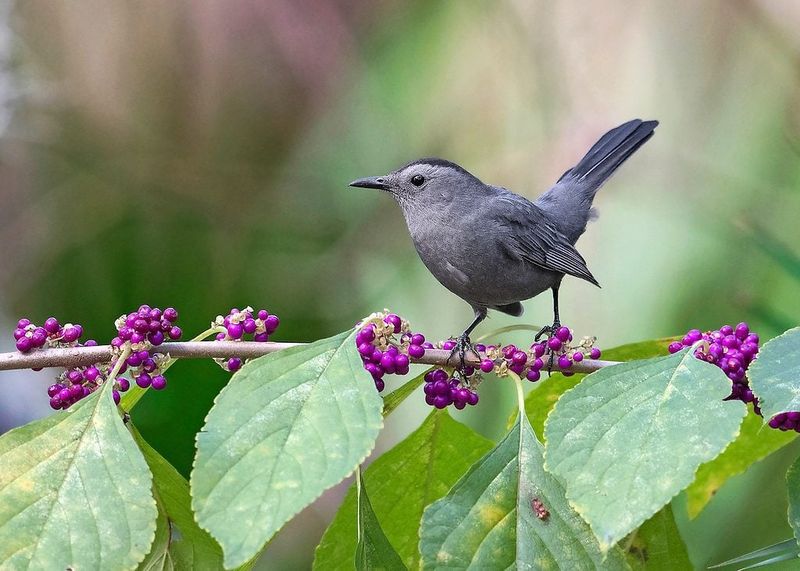
A single shrub can do a lot of good along a North Carolina woodline, but it helps to know exactly what that shrub can and cannot do. American beautyberry (Callicarpa americana) produces vivid clusters of purple berries that draw songbirds from late summer well into fall, making it a genuinely useful addition to a residential yard.
The tick story is more complicated, and getting it right will help you protect your family and pets far better than any planting alone. This guide sorts out the facts, corrects a common misunderstanding, and gives you a practical plan for both wildlife habitat and tick management.
Meet American beautyberry before you shop
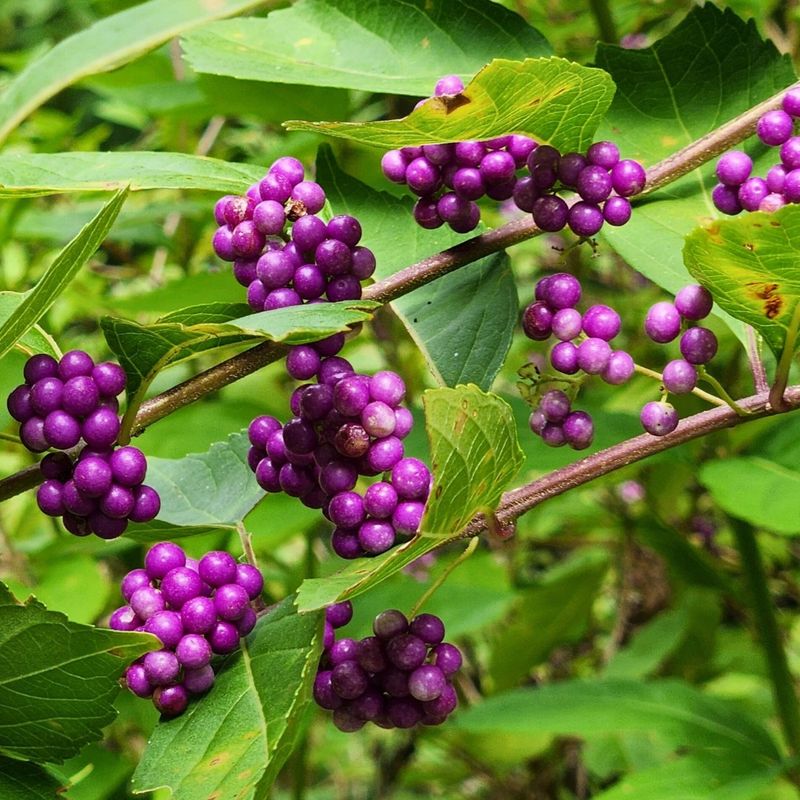
Walk into almost any native-plant nursery in North Carolina and you will likely spot a shrub with berry clusters so intensely purple they look artificial. That shrub is American beautyberry, Callicarpa americana, a deciduous native of the southeastern United States.
NC State Extension’s Plant Toolbox describes it as a woody shrub typically reaching three to eight feet tall and three to six feet wide at maturity, with tightly packed clusters of purple, blue-purple, or occasionally white berries that encircle the stems like little bracelets of color.
Before you buy, check the tag carefully. North Carolina nurseries also carry nonnative beautyberries, including Japanese beautyberry (Callicarpa japonicaCallicarpa dichotoma) and Chinese beautyberry ().
These species look similar enough to cause real confusion at the point of sale. The North Carolina vascular plants database specifically flags the need for the “American” qualifier because of how easily these species get mixed up.
If the tag does not show the scientific name Callicarpa americana, ask before you purchase.
NC State Extension lists American beautyberry across the Coastal Plain, Piedmont, and Mountains, so residents in all three broad regions of the state can consider it a regionally appropriate choice. That said, the species occupies particular native habitats within those regions, and not every cultivated specimen sold at a nursery is locally indigenous to your specific county.
The shrub’s two well-supported roles in a residential landscape are providing seasonal berry food for birds and serving as an attractive edge planting where light conditions are right. Tick exclusion is not among those supported roles, and the sections ahead will explain why that distinction matters.
Its berries provide seasonal food for birds
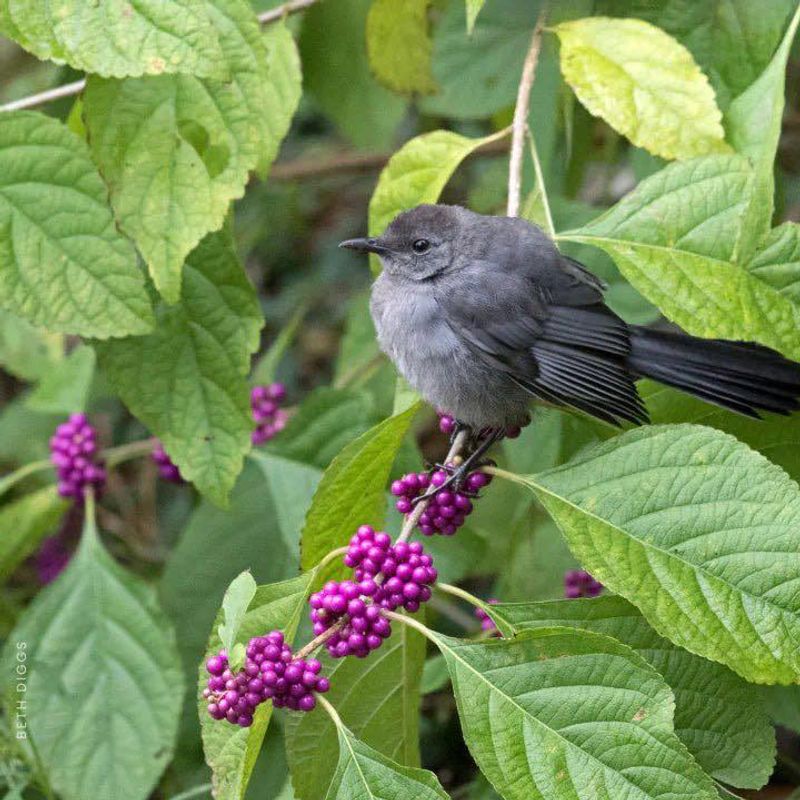
From roughly late August through October, American beautyberry puts on a show that birds notice quickly. The clustered purple berries ripen along the stems and attract a reliable cast of songbirds, including American robins, brown thrashers, purple finches, and eastern towhees.
NC State Extension’s beautyberry wildlife page confirms fruit availability running approximately August through November, with berries sometimes persisting into winter when other food sources are running low.
For a North Carolina homeowner, that fruiting window lands at exactly the right moment. Fall migration pushes hungry songbirds through the Piedmont, Coastal Plain, and mountain corridors, and a shrub loaded with accessible berries can make your yard a brief but memorable stop.
Resident birds that stay through winter also benefit when the berries hold. The food source is real and seasonal, but bird activity at any single shrub will vary with the year, the weather, and what else is available nearby.
A berry-producing shrub is a strong contribution to a bird-friendly yard, but it works best as part of a broader habitat. NC State Extension’s backyard bird habitat guide points out that birds also need cover for shelter, nesting habitat, water where appropriate, and additional native plants that provide insects, seeds, or fruit at different times of year.
American beautyberry handles the late-summer-to-fall fruit window particularly well, so pairing it with plants that produce food in spring or early summer gives birds more reasons to treat your yard as dependable habitat rather than a one-time visit.
Choose a bright woodland-edge location
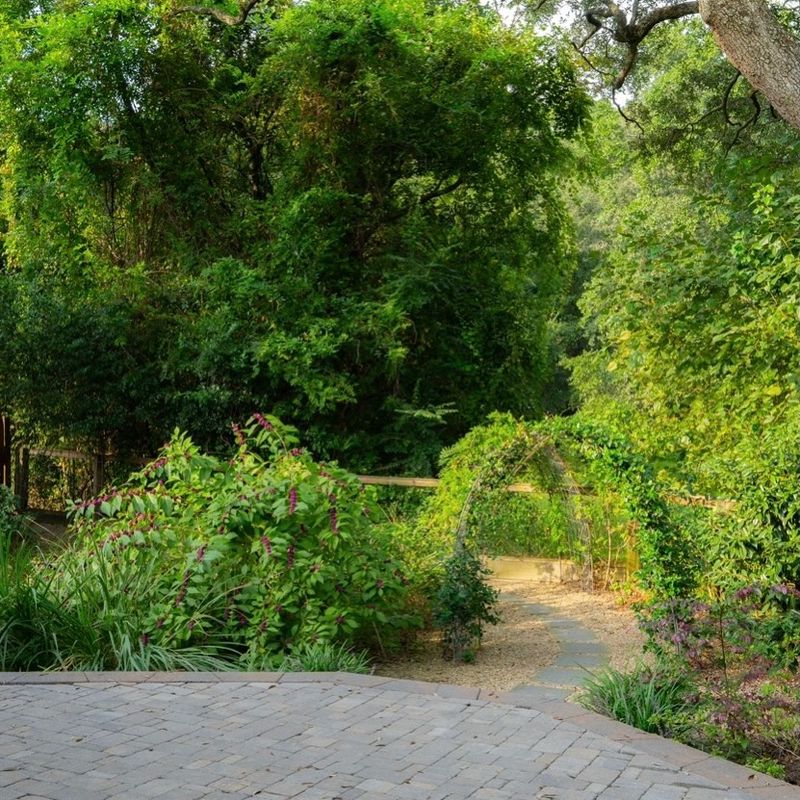
Placement makes a significant difference with American beautyberry. The shrub performs best in full sun to partial shade, and it naturally grows in open woods, thicket margins, and woodland edges where light filters through a broken canopy.
NC State Extension’s Plant Toolbox entry is clear that deep shade can reduce flowering and fruiting, which means a spot tucked beneath a dense, closed canopy will give you a struggling plant with few berries and minimal bird value.
“Along the woodline” is the right general idea, but the specific spot within that woodline matters. Aim for the sunny or partially shaded outer edge where your lawn meets the trees, not the shadowed interior of the woods.
The North Carolina flora database describes the species’ natural habitat as open woods, thickets, and similar semi-open environments, which aligns well with a residential woodline that still receives several hours of direct or bright indirect light each day.
Two placements to avoid: directly beneath a solid tree canopy where the shrub will fruit poorly, and dense against the house foundation where tick-management guidance advises keeping brush and humidity low. A woodline edge planting gives American beautyberry the light it needs while keeping it at a sensible distance from high-traffic areas.
That positioning also makes the shrub visible from the yard, so you can enjoy the berry display and watch the birds that come to feed without needing to walk into the wooded edge itself.
What the tick research actually tested
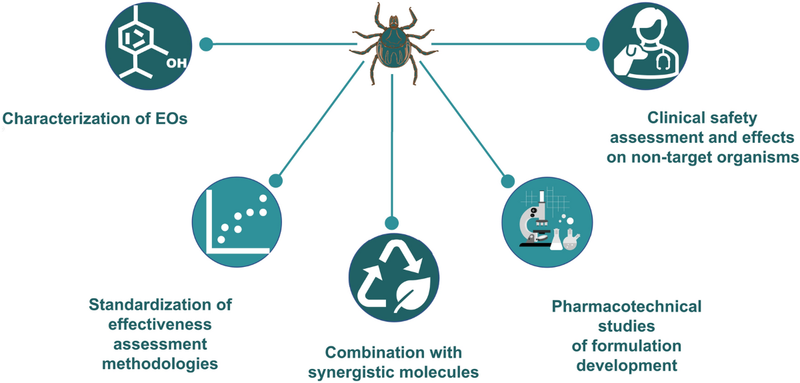
A widely circulated claim says that planting American beautyberry keeps ticks out of your yard. The actual research behind that claim is narrower and more limited than the claim implies.
The peer-reviewed laboratory study tested two terpenoid compounds isolated from crushed or chemically extracted American beautyberry leaves. Researchers applied those compounds to filter paper or cloth and then exposed host-seeking tick nymphs to the treated material in controlled laboratory conditions.
The strongest result came from tests against blacklegged tick nymphs (Ixodes scapularis), the species most associated with Lyme disease transmission.
The same compounds were considerably less effective against lone star tick nymphs (Amblyomma americanum), a species that is particularly common across much of North Carolina’s Coastal Plain and Piedmont. That distinction is important for homeowners in this region because lone star ticks are a frequent concern in southeastern yards, and the laboratory data showed substantially weaker activity against them.
Treating the research as a blanket tick-repellency finding overstates what it actually demonstrated.
Equally important is what the study did not test. Researchers did not evaluate intact, living beautyberry shrubs.
They did not study planted borders, residential yards, North Carolina landscapes, tick populations over time, or disease transmission. Simply growing American beautyberry in your yard does not establish that enough repellent compound reaches ticks at your property edge to have any effect.
Extension guidance on plants and tick repellency cautions specifically that no scientific studies show that the presence of particular plant species in a landscape effectively repels ticks, because plant chemicals typically must be extracted and delivered at sufficient concentration to affect pests. The beautyberry research is genuinely interesting, but it does not support treating the shrub as a tick barrier.
Build the evidence-supported lawn boundary
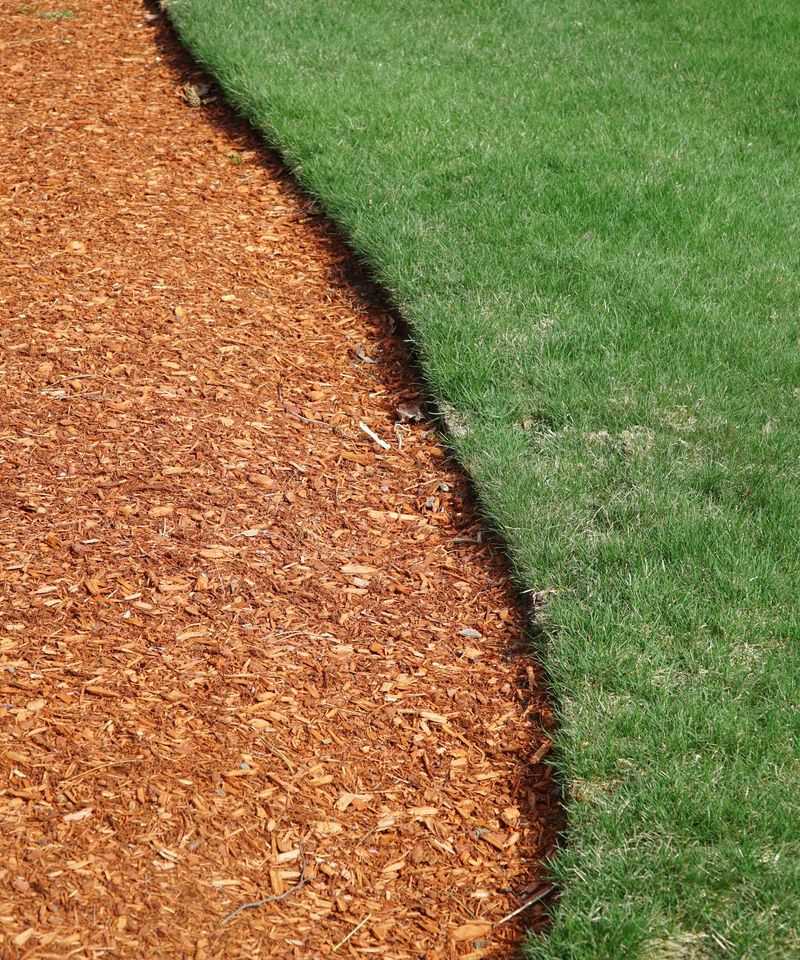
The habitat-management step that consistently shows up in tick-reduction guidance is not a shrub planting. CDC tick-prevention guidance recommends placing a roughly three-foot-wide strip of wood chips, mulch, or gravel between your mowed lawn and any adjacent wooded or brushy area.
Ticks prefer humid, shaded ground cover and tend to stay close to leaf litter, tall grass, and brush where hosts pass through. A dry, open material strip creates a less hospitable transition zone and serves as a visual reminder of where managed lawn ends and unmanaged habitat begins.
The strip works best when paired with other vegetation-management steps. Clear leaf litter from lawn edges regularly, since damp leaf layers close to the ground are prime tick habitat.
Cut back tall grass and brush that borders the lawn, and keep recreational areas like play sets, seating, and garden beds away from the immediate wooded edge where possible. Stack any firewood neatly in a dry, sunny spot rather than against the house or in shaded, humid corners.
University of Maine Cooperative Extension tick landscape guidance and URI TickEncounter’s yard-protection recommendations both emphasize these combined steps as a practical approach to reducing the conditions that support tick populations near your home.
Keep the wood-chip or gravel strip clearly separate from your beautyberry planting. The shrub belongs at the woodline edge for light and bird habitat; the dry strip runs between that edge and your usable lawn.
Filling the lawn boundary with dense, humid brush would work against the habitat goals the strip is meant to achieve. A maintained, open strip paired with regular vegetation management gives you a defensible, practical boundary that the shrub alone cannot provide.
Keep the shrub productive without crowding the edge
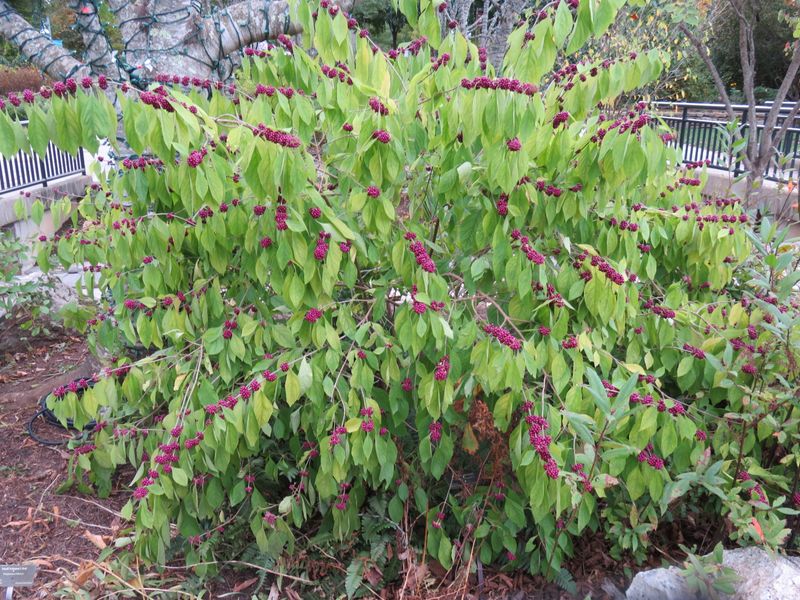
American beautyberry is forgiving in the garden, but it rewards a little attention each year. The shrub tolerates a range of soil types and handles both clay-heavy Piedmont soils and the sandier substrates common in the Coastal Plain, though it performs best where drainage is reasonably good.
NC State Extension’s Plant Toolbox notes full sun to partial shade as the preferred light range, and the same source confirms that deep shade reduces both flowering and fruiting. If surrounding trees have grown up and closed the canopy over your planting, the shrub will tell you by producing fewer berries each season.
Pruning is where many homeowners hesitate, but it is straightforward with beautyberry because flowers and fruit develop on new growth each year. That means a hard cutback in late winter or early spring does not cost you next fall’s berry crop.
An NC State Extension planting guide describes cutting the shrub back to roughly one to two feet in early spring, and the Plant Toolbox notes it can be cut back substantially with good results. Treat those figures as a useful range rather than an exact prescription; the goal is vigorous new growth that will carry a full berry load by late summer.
As the shrub fills out over a few seasons, resist the temptation to let it sprawl into the three-foot wood-chip or gravel strip you have established at the lawn edge. Tick landscape management guidance emphasizes keeping that boundary open, dry, and free of encroaching brush.
Trim any branches that reach into the strip, and clear any leaf litter that accumulates beneath the shrub on the lawn side to keep the boundary doing its job.
Continue personal protection after landscaping

Landscaping improvements reduce tick habitat, but they do not replace the personal and pet protection steps that matter most. CDC guidance on preventing Lyme disease recommends using EPA-registered tick repellents as directed on the label every time you spend time outdoors in or near wooded areas.
Products containing DEET, picaridin, IR3535, or oil of lemon eucalyptus are registered options for skin and clothing. Permethrin is different: it belongs on clothing, boots, and gear rather than directly on skin, and CDC clinical guidance on tickborne disease management treats it as a clothing and equipment treatment, not a topical product.
After any outdoor activity near wooded or brushy areas, check yourself, your children, and your pets carefully. Ticks often crawl for some time before attaching, so a thorough check caught early can prevent a bite.
Shower within two hours of coming indoors when possible. Remove any attached tick promptly using fine-tipped tweezers, pulling steadily without twisting, and clean the bite area with rubbing alcohol or soap and water.
One practice to skip entirely: rubbing crushed American beautyberry leaves on your skin, your children, or your pets. Extension guidance on plant-based tick repellency is clear that the laboratory research on beautyberry leaf compounds did not establish safe dosage, effective duration, or skin safety for homemade topical applications.
Your pets need veterinarian-recommended tick control products, not plant-based home remedies. Landscaping can help reduce tick habitat around your yard, but personal protection remains the layer you rely on every time you step outside.
Give each landscape feature its proper job
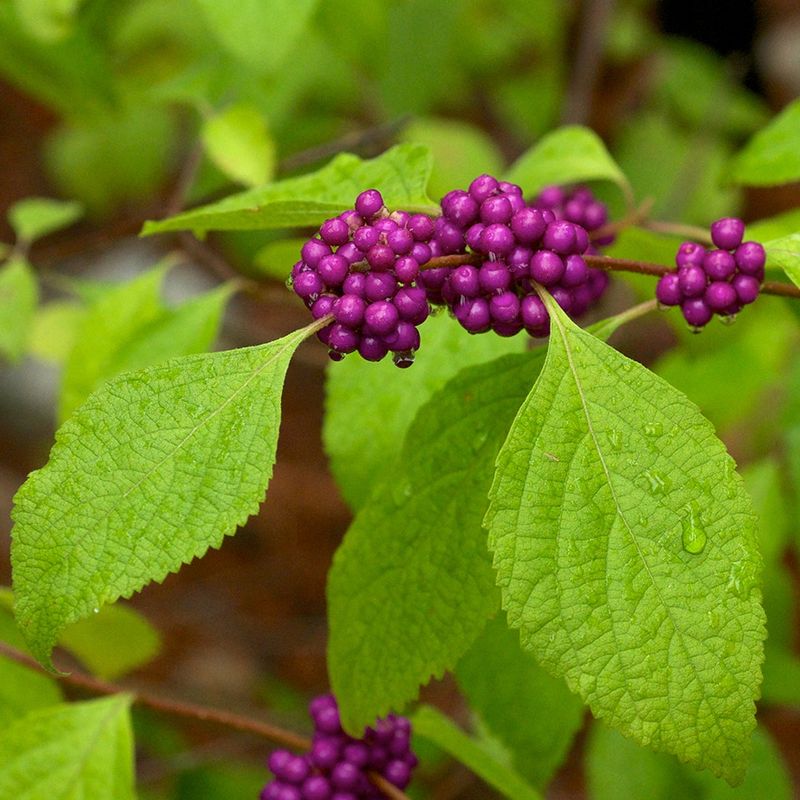
American beautyberry earns its place in a North Carolina yard as a native shrub that produces seasonal berry food for birds when given adequate light at a woodland edge. NC State Extension’s Plant Toolbox and the backyard bird habitat guide both support that role.
What the shrub cannot do is keep ticks out of your yard, and treating it as a tick barrier would leave your family and pets relying on something the research does not support.
Tick management belongs to a separate set of tools: the maintained three-foot strip of wood chips, mulch, or gravel at the lawn edge; regular removal of leaf litter and tall grass; and the personal protection steps you take every time you go outside. CDC tick-prevention guidance is the right reference for that layer of protection, not a planting guide.
When you shop for the shrub, confirm the scientific name Callicarpa americana on the tag so you bring home the native species rather than a nonnative look-alike.
A yard that pairs American beautyberry’s fall berry display with a well-kept lawn boundary and consistent personal protection is genuinely better than one that relies on any single fix. Each feature does its own job well, and none of them asks more of a shrub than a shrub can deliver.