
A Native Perennial Feeds Migrating Monarchs Through Your North Carolina Yard Deep Into October
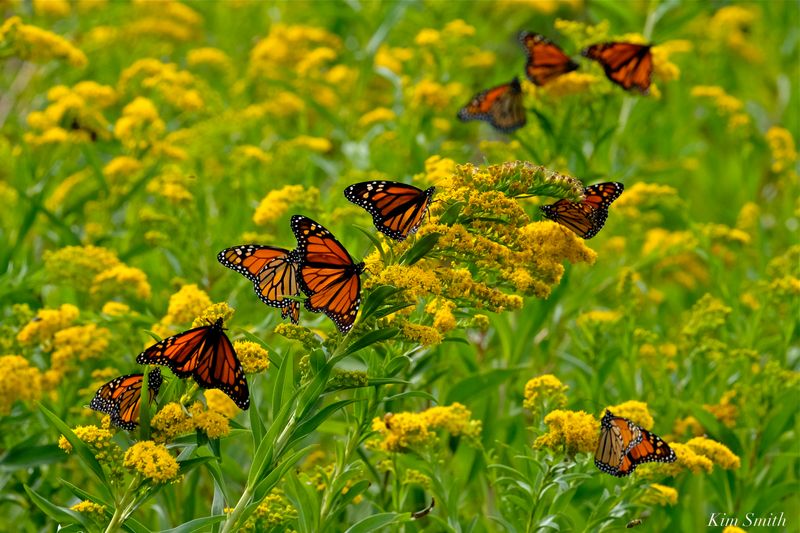
Every fall, monarch butterflies pass through North Carolina on their long journey south, and the plants in your yard can make a real difference to tired, hungry travelers. Native goldenrod, a perennial that blooms from late summer well into fall, can offer a reliable nectar stop right where monarchs need it most.
Choosing the right goldenrod species for your region and pairing it with other native bloomers gives your yard the best chance of catching these orange-and-black visitors before they move on.
North Carolina’s monarch window often reaches October

Monarch butterflies travel through North Carolina every year, and their presence in the state stretches across a wider window than many homeowners expect. According to the North Carolina Wildlife Resources Commission butterfly database, monarchs occur statewide and are generally more common from August through October, with many September and October sightings involving individuals migrating south toward their overwintering grounds in Mexico.
That statewide pattern does not play out evenly across the state’s three regions. Sightings tend to be stronger and more consistent in the Mountains and along the coast, while Piedmont and inland Coastal Plain yards may see monarchs less predictably.
Weather, wind direction, nearby habitat, and the particular route a butterfly chooses all shape whether any given yard receives a visit in a given year.
Still, the August-through-October window represents real opportunity for North Carolina homeowners. A migrating monarch fueling up on nectar in a residential yard is not a rare fantasy – it happens regularly across the state when late-season flowers are available.
The key word is “can”: a yard with blooming native plants can attract passing monarchs, but no single planting guarantees a visit on any particular day or week.
What this timing tells a gardener is practical. If you want your yard to be useful to monarchs during migration, you need plants that are actually flowering from August onward, and ideally ones that hold their blooms well into September and, where conditions allow, into October.
That is exactly the window where a well-chosen native goldenrod earns its place in a North Carolina yard.
Goldenrod can supply late-season nectar
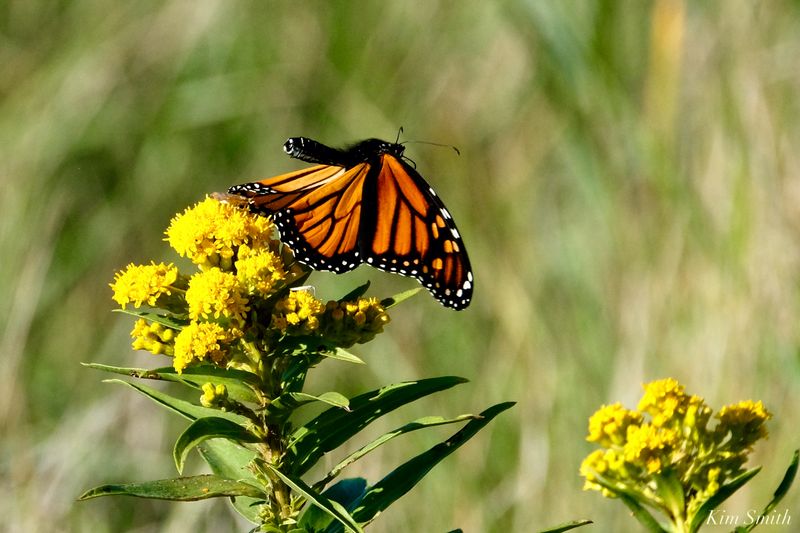
Native goldenrod is the perennial at the center of this article, and understanding what it actually is matters before you head to the nursery. Solidago is a genus, not a single species, and NC State Extension’s plant database lists multiple goldenrod species suited to North Carolina, each with its own height, spread, soil preference, and bloom period.
Treating them as interchangeable can lead to planting a coastal species in a dry mountain garden or a moisture-lover in a sun-baked Piedmont bed.
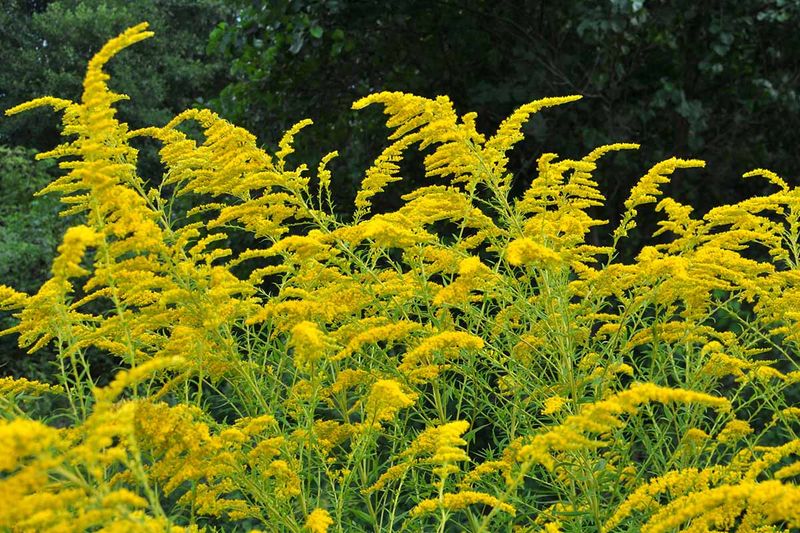
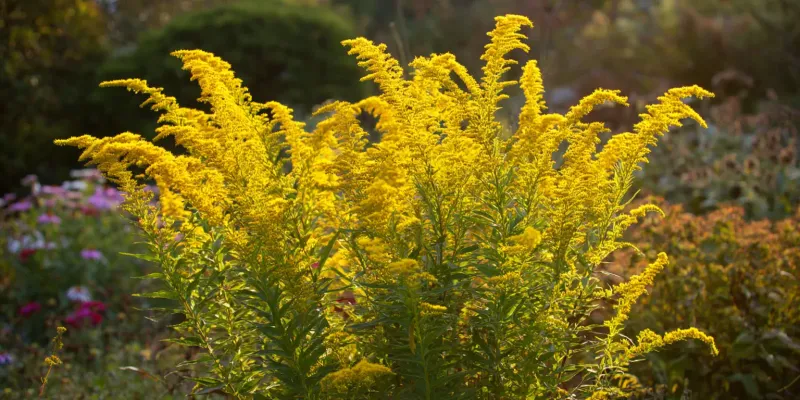
What the genus shares is a late-season flush of small yellow flowers arranged in arching or upright clusters that can light up a yard from August through fall. That bloom timing is the reason goldenrod matters for monarchs.
Rough goldenrod (Solidago rugosa), a broadly adaptable North Carolina native, produces its yellow flower clusters from September into fall, placing it squarely in the migration window across much of the state.
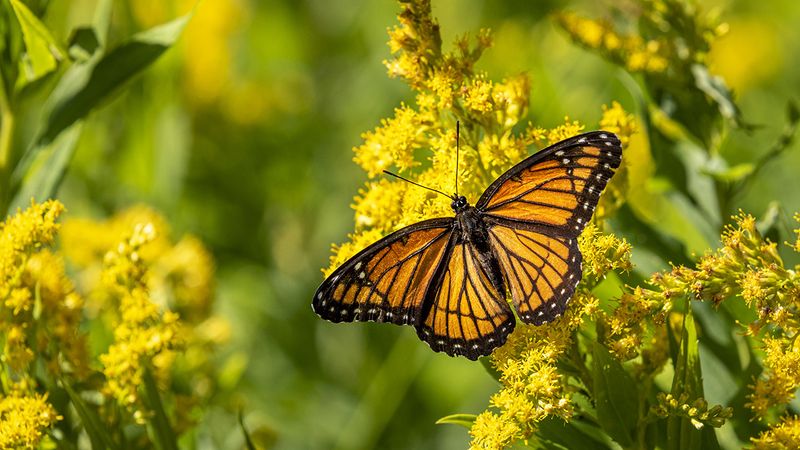
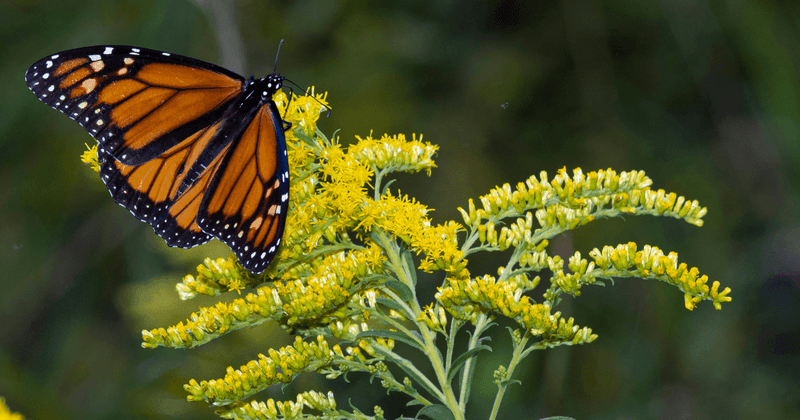
Goldenrod’s role here is specific and important to state plainly: it can provide nectar for adult monarchs. It does not feed monarch caterpillars.
Caterpillars require milkweed in the genus Asclepias, and no amount of goldenrod substitutes for that. A flowering clump of rough goldenrod is a possible nectar stop for a migrating adult, not a complete monarch habitat on its own.
Monarchs are nectar generalists, meaning they visit many flowering plants during migration and do not rely on goldenrod exclusively. What goldenrod offers is a reliable, native, late-blooming option that happens to overlap with the period when southbound monarchs most need fuel.
That overlap is the practical payoff, and it is worth building around, as long as expectations stay grounded in what one perennial can realistically do.
Choose the goldenrod that fits your region and site
Picking the right goldenrod starts with your yard’s actual conditions, not just the state you live in. North Carolina spans coastal marshes, clay-heavy Piedmont slopes, rocky mountain ridges, and everything between, and the goldenrod that thrives in one of those settings may struggle or spread aggressively in another.
Rough goldenrod is a reasonable starting point for many North Carolina yards because NC State lists it as native to the Coastal Plain, Piedmont, and Mountain regions. It prefers full sun to light shade and performs best in moist to wet soils, making it a strong candidate for low spots, rain garden edges, or sites near a downspout.
Its September-to-fall bloom window lands reliably in the migration period.
If your yard runs drier, with rocky, average-to-poor, or well-drained soil, autumn goldenrod (Solidago sphacelata) is worth considering. NC State describes it as drought tolerant once established and notes a bloom period from July through October, which means it can begin providing nectar earlier in the migration window and carry it later into the season.
Coastal Plain homeowners with sandy, saline, or dune-adjacent ground may find seaside goldenrod (Solidago sempervirens) the better fit. NC State places it in beaches, dunes, salt marshes, and pinelands, with flowering extending from August into November.
That said, seaside goldenrod is not the default recommendation for Piedmont or mountain gardens – its habitat requirements are specific, and planting it outside its range does not serve it or your yard well.
A fourth option worth knowing is Carolina grass-leaved goldenrod (Euthamia caroliniana), concentrated in the Coastal Plain and flowering from late August into November. For Piedmont and mountain readers, NC State’s pollinator habitat guidance also points to asters, ironweed, blazing star, and spotted beebalm as regionally appropriate companions.
Check mature height and spread before you plant – some goldenrods spread by rhizomes or seed and can expand into neighboring beds or paths if given favorable conditions.
Build a diverse fall nectar planting
One clump of goldenrod is a start, but a succession of fall-blooming native plants is what turns a yard into a genuinely useful nectar stop. Monarch Joint Venture’s planting guidance consistently emphasizes diverse plantings with overlapping bloom times rather than reliance on a single species.
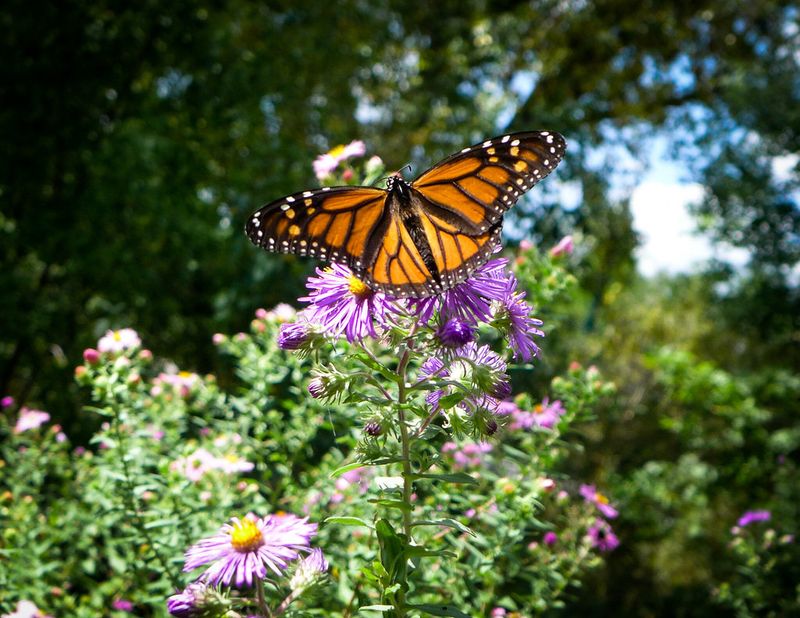
A monarch passing through on a warm October afternoon may visit goldenrod, then move to asters, then ironweed, all within the same yard.
Grouping plants in drifts of three or more compatible species makes the planting more visible and more useful. A solitary goldenrod in a corner of the yard is easy to fly past.
A patch of goldenrod bordered by purple New England asters and tall ironweed creates a color and scent signal that migrating butterflies can detect from above. Monarch Joint Venture’s roadside habitat guidance notes that plant diversity and continuous bloom improve the likelihood of monarch use, though no arrangement guarantees a visit or proves that any single plant caused one.
The milkweed question deserves its own paragraph because it changes the goal. Monarch Joint Venture explains that nectar plants support adult monarchs while milkweed in the genus Asclepias is what monarch caterpillars require to develop.
If your goal is only to offer a nectar stop to passing adults, goldenrod and fall asters may be enough. If you also want to support reproduction, native milkweed such as marsh milkweed (Asclepias incarnata, suited to moist sites) belongs in the planting.
For fall bloom succession, consider layering goldenrod with New England aster, aromatic aster, tall ironweed, blazing star, and Joe-Pye weed. The Xerces Society’s monarch nectar plant guides describe monarchs as nectar generalists and note that their plant lists reflect available observations rather than a ranked list of favorites.
That practical humility is worth carrying into your own yard: plant diversity, not plant perfection, is the goal.
Establish the planting for a durable autumn display
Getting goldenrod into the ground successfully starts before the first plant goes in. Sunlight is the first check: most goldenrods want full sun or at minimum a half-day of direct light to bloom well and stand up straight.
Evaluate the site at different times of day before committing, because a spot that looks open in the morning may be shaded by noon.
Drainage and soil texture come next. Match your goldenrod species to what the site actually has, not what you wish it had.
Rough goldenrod wants moist to wet ground; planting it in a fast-draining, sandy spot and hoping it adapts is a recipe for a struggling plant that never reaches peak bloom. Autumn goldenrod, by contrast, handles drier, rockier soils well once it roots in.
The NC State Extension Gardener Handbook’s native plants chapter recommends matching plants to existing soil and light conditions rather than heavily amending the site to suit a poorly matched species.
For a residential yard where you want reliable results without a multi-year wait, plugs or nursery-grown seedlings are a more dependable choice than starting from seed. Monarch Joint Venture’s ready-to-plant guidance supports starting with established plant material and watering new plants consistently through their first growing season.
A newly installed plug will not produce a mature flowering display in its first fall, but it builds the root system that delivers blooms in subsequent years.
Plan for mature spread before you dig the first hole. NC State’s goldenrod genus page notes that some species spread by rhizomes or seed under favorable conditions.
Autumn goldenrod, for example, can expand into neighboring beds if not managed. Give plants room, use edging near paths or small beds, and plan to divide clumps every few years to keep the planting tidy and productive.
Protect monarch habitat from chemicals and confusion
A yard full of blooming goldenrod and asters does monarchs little good if the plants carry insecticide residues or if nearby milkweed has been treated with a systemic chemical. Monarch Joint Venture’s insecticide guidance identifies flowering plants and milkweed as periods of particular vulnerability and warns that systemic insecticides can persist in plant tissues, pollen, and nectar long after the application date.
Before buying goldenrod or milkweed from a nursery, ask directly whether the plants were treated with systemic insecticides. Many garden centers now label plants as pollinator-safe, but asking is still the most reliable check.
Broad-spectrum insecticides applied on or near flowering plants can harm monarch adults, eggs, and caterpillars, along with native bees, wasps, and other beneficial insects that share the same habitat. The practical rule is simple: if it is blooming and monarchs or other pollinators are present, skip the spray.
Targeted removal of problem insects by hand is a safer approach in a pollinator garden than reaching for a bottle that affects everything it touches.
One persistent misconception is worth clearing up. Many people blame goldenrod for fall allergies, but NC State’s autumn goldenrod page and Xerces Society’s pollinator gardening FAQ both explain that goldenrod pollen is heavy and carried primarily by insects rather than wind.
Wind-pollinated ragweed, which blooms at the same time and is far less visible, is the more relevant hay-fever source. Goldenrod’s showy yellow blooms make it an easy target for blame, but the science points elsewhere.
Keeping the planting chemical-free and correcting the allergy story when it comes up are two straightforward ways to protect the habitat you have worked to create. Neither requires specialized equipment or expertise – just awareness and a willingness to let the garden do its job.
Think of October as a possible overlap, not a promise
The honest frame for this whole planting project is possibility, not certainty. North Carolina’s monarch records show a real August-through-October presence statewide, and rough goldenrod’s September-to-fall bloom can genuinely overlap that window.
But elevation, coastal versus inland climate, drought, early frost, and the particular species you plant all shape whether blooms and butterflies actually coincide in your yard in any given October.
The actionable decision is straightforward: choose a goldenrod species matched to your site’s light, soil, and moisture; group it with asters, ironweed, or other native fall bloomers for a succession of nectar; include native milkweed if supporting reproduction is part of the goal; and keep the planting free of broad-spectrum and systemic insecticides, as Monarch Joint Venture emphasizes when describing what makes habitat genuinely useful. Those choices do not guarantee a yard full of monarchs, but they make your yard a better candidate for a visit.
Monarch conservation ultimately depends on connected habitat, milkweed, and nectar resources across a very large range, and no single yard planting changes the species’ population trend on its own. What a well-chosen goldenrod and its companion plants can do is contribute one honest, useful piece of that larger picture – a patch of yellow blooms in October that a southbound monarch might actually use.