
Why Some North Carolina Homeowners Are Replacing Fruiting Nandina Before The Berries Harm Cedar Waxwings
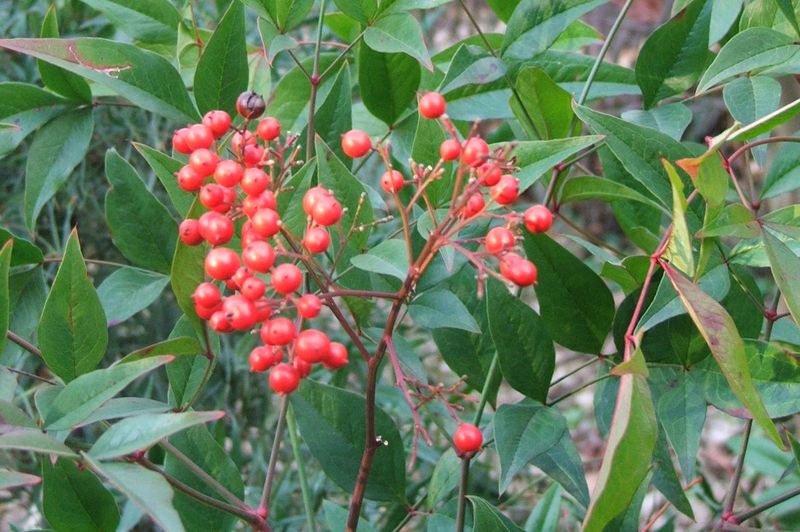
That glossy shrub with bright red berries lining your walkway might be doing quiet harm to the cedar waxwings visiting your yard. Nandina, also called heavenly bamboo, is a popular landscaping plant across North Carolina, but fruiting varieties can expose birds to cyanogenic compounds when eaten in large amounts.
A documented bird-poisoning event in Georgia has prompted some homeowners to take a closer look at whether their nandina is fruiting, spreading seed, or posing a risk they would rather not have in their yard.
A Georgia mortality event explains the concern without proving a North Carolina trend
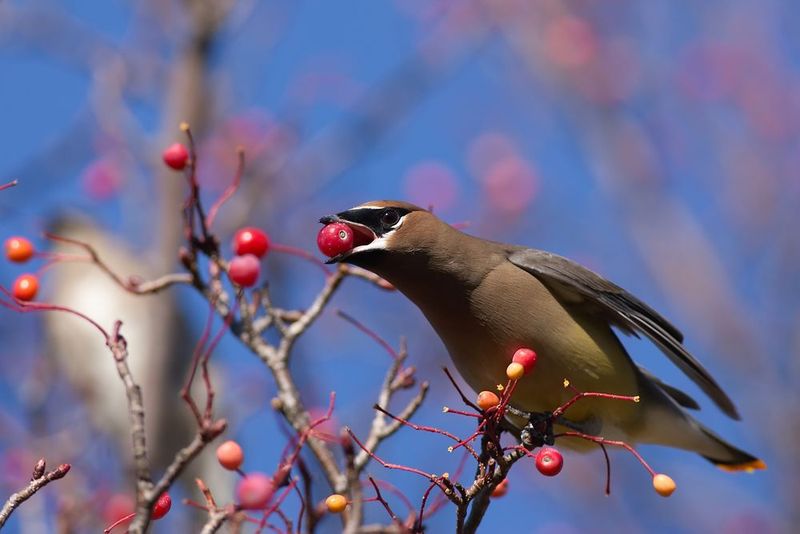
In April 2009, wildlife investigators in Thomas County, Georgia, found a number of dead cedar waxwings near a landscape planting. When five of the birds were examined, their digestive tracts were filled almost entirely with nandina berries.
The University of Georgia diagnostic report found the results consistent with cyanide toxicosis, making this the clearest documented link between fruiting nandina and bird death on record.
That case is the foundation for most of the concern you will read about today. What it does not do is prove that nandina is killing cedar waxwings across North Carolina, or that a broad homeowner-removal movement is already underway here.
No statewide mortality count exists, and the Georgia event involved a specific location, a specific flock, and a specific feeding episode.
The practical question for a North Carolina homeowner is narrower: do you have a fruiting, seed-producing nandina in your yard? If the answer is yes, the Georgia case is directly relevant.
Cedar waxwings range widely through the Carolinas, often arriving in flocks during late winter when little other fruit is available. A shrub loaded with red berries at that time of year is exactly the kind of target a hungry flock will empty in one visit.
Connecting the Georgia evidence to your yard does not require a statewide trend. It only requires recognizing that the conditions behind that mortality event, a fruiting nandina and a flock of gorging waxwings, can be recreated in any North Carolina neighborhood where the shrub is planted.
That is reason enough to check what you have before the next flock arrives.
The berry’s toxicity depends on maturity, clone, and dose
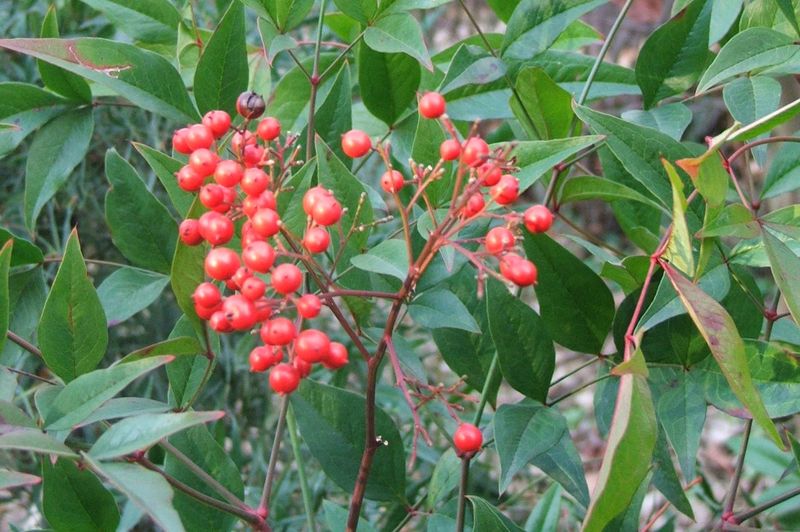
Not every nandina berry carries the same level of risk, and understanding why matters before you decide how urgently to act. A 2022 study on nandina fruit cyanogenesis tested berries at different stages of ripeness and across multiple plant clones.
Green, unripe fruit was found to be strongly and rapidly cyanogenic, releasing hydrogen cyanide quickly when tested. Many ripe fruits, by contrast, tested as weaker, slower-acting, or sometimes negative for cyanogenic activity altogether.
That variability does not mean ripe berries are safe. Some ripe fruit in the study still showed measurable cyanogenic potential, and the differences between clones were significant enough that two plants sold under the same species name could behave differently in a toxicity test.
Homeowners cannot determine cyanogenic potential by looking at a berry, which means the uncertainty itself is an argument for removing a fruiting plant rather than waiting to see what happens.
Dose is the other critical factor. Cedar waxwings are fruit specialists that sometimes consume berries almost exclusively during a feeding bout, working through a shrub rapidly before moving on.
The Georgia diagnostic report noted that the examined birds had nandina berries as the only identifiable material in their digestive tracts, suggesting they had eaten large quantities in a short time. A bird that samples a few berries faces a different exposure level than one that gorges on an entire cluster.
Putting these pieces together: a fruiting nandina loaded with green or partially ripened berries, visited by a flock of cedar waxwings in late winter, represents a more concentrated hazard than a single ripe berry eaten in passing. The risk is conditional, not automatic, but the conditions that raise it are common in North Carolina yards during the months when waxwings are most active.
Check whether the nandina is fruiting before deciding what to do
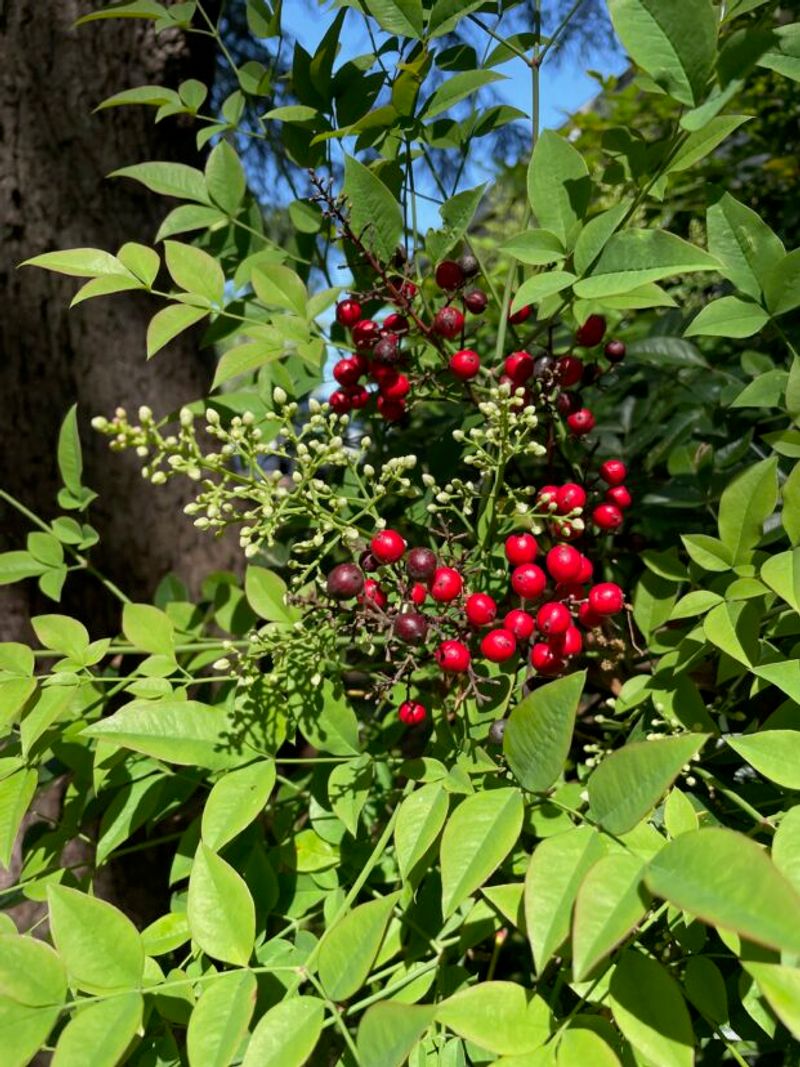
Before pulling anything out of the ground, take five minutes to confirm what you actually have. Nandina is recognizable by its upright, cane-like stems that grow in clusters rather than branching the way most shrubs do.
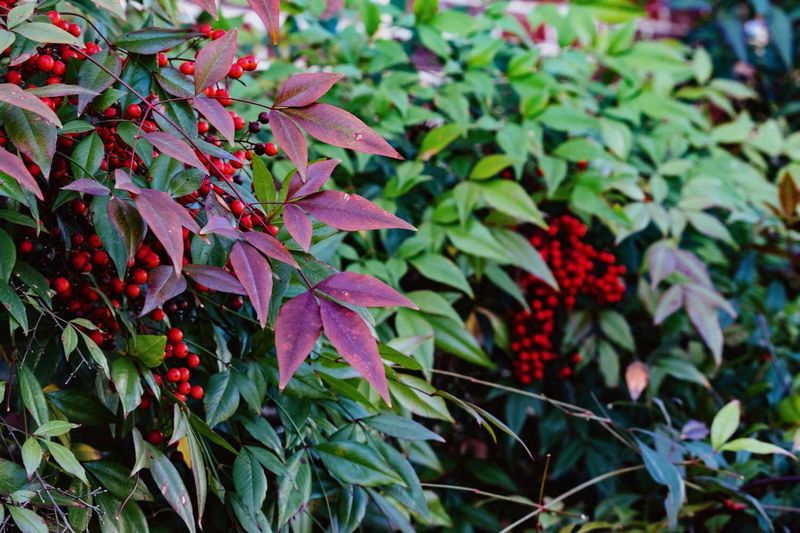
The leaves are finely divided into small leaflets, almost feathery in appearance, and new growth often flushes a reddish or bronze color before turning green. In fall and winter, the foliage can turn red or purple without dying back.
The key feature to look for is fruit. A fruiting plant will carry terminal clusters of round, bright red berries that persist well into winter and sometimes into early spring.
NC State Extension identifies nandina as a nonnative ornamental that can escape gardens and naturalize, meaning a fruiting plant in your yard may also be contributing seeds to surrounding natural areas through bird dispersal.
Some cultivars produce little to no fruit, which changes the risk calculation considerably. NC State lists selections such as ‘Fire Power’ and ‘Gulf Stream’ as sterile or nearly fruitless, meaning they rarely produce the berry clusters associated with bird poisoning and seed spread.
If your plant carries no berries and was purchased as one of these named cultivars, your immediate concern is lower, though you should still verify that performance because labeling and occasional fruit production can vary between nurseries and growing conditions.
The NC State invasive species assessment rates nandina as moderately weedy, noting increasing escape and naturalization, potential for dense thickets, and moderate management difficulty. That assessment applies most directly to fruiting plants in the landscape.
Inspecting your own shrub for berries, flowers, or seedlings nearby is the starting point for every decision that follows.
Remove berries and prevent seed spread before removing the plant
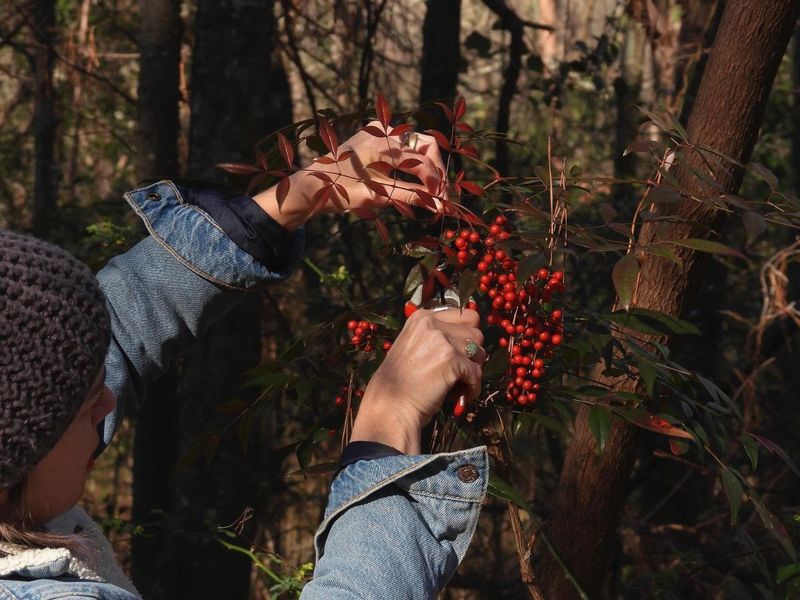
Once you have confirmed that your nandina is fruiting, the first job is not to grab a shovel. Berry clusters should come off the plant before anything else is cut or dug, because disturbing the shrub while berries are attached can scatter seeds across the soil or into surrounding beds.
Clip each cluster close to the stem and drop it directly into a heavy plastic bag as you work.
Bagging the berries, rather than tossing them into a yard waste pile or wheelbarrow, is the step most homeowners skip. UGA Extension guidance on removing invasive plants recommends removing flowers and berries from invasive plants before beginning removal and disposing of seed-bearing material carefully to prevent unintentional spread.
Sealed bags can go into household trash rather than compost unless your local composting program specifically accepts invasive plant material with viable seeds.
The same principle applies to any flowers you find. Nandina blooms in late spring with small white flower clusters that develop into the fall berry crop.
Removing flower heads before they set fruit is a lower-effort intervention that can reduce berry production the following season without requiring full removal right away.
USDA guidance on invasive plant management specifically warns against unintentional seed dispersal during removal, a risk that is easy to underestimate when working quickly. Taking ten extra minutes to bag berries before you start digging is the single step most likely to prevent a removed plant from seeding a new problem somewhere else in your yard or in the woods beyond your fence line.
Control resprouts with a careful, label-directed plan
Cutting nandina canes to the ground feels like a complete removal, but the plant often disagrees. Roots and surviving root sections can send up new shoots weeks or months after the top growth is gone, especially in established plants that have been in the ground for several years.
Treating the work as done after the first cut is one of the most common mistakes homeowners make with this shrub.
For small or recently planted nandina, digging is the most reliable approach. Use a garden fork or spade to work around the root mass, loosening the soil and pulling out as much of the root system as you can reach.
Younger plants with shallower roots respond well to this method. Larger, older clumps will have denser root systems that are harder to extract completely, and even a small root section left in the ground can regenerate.
UGA Extension’s invasive-plant removal guidance emphasizes mechanical removal as the primary method, paired with monitoring over multiple seasons to catch and remove resprouts before they re-establish. Plan to check the removal site at least once a month during the growing season for the first two years.
Resprouts pulled or cut when small are far easier to manage than ones allowed to develop a new root mass.
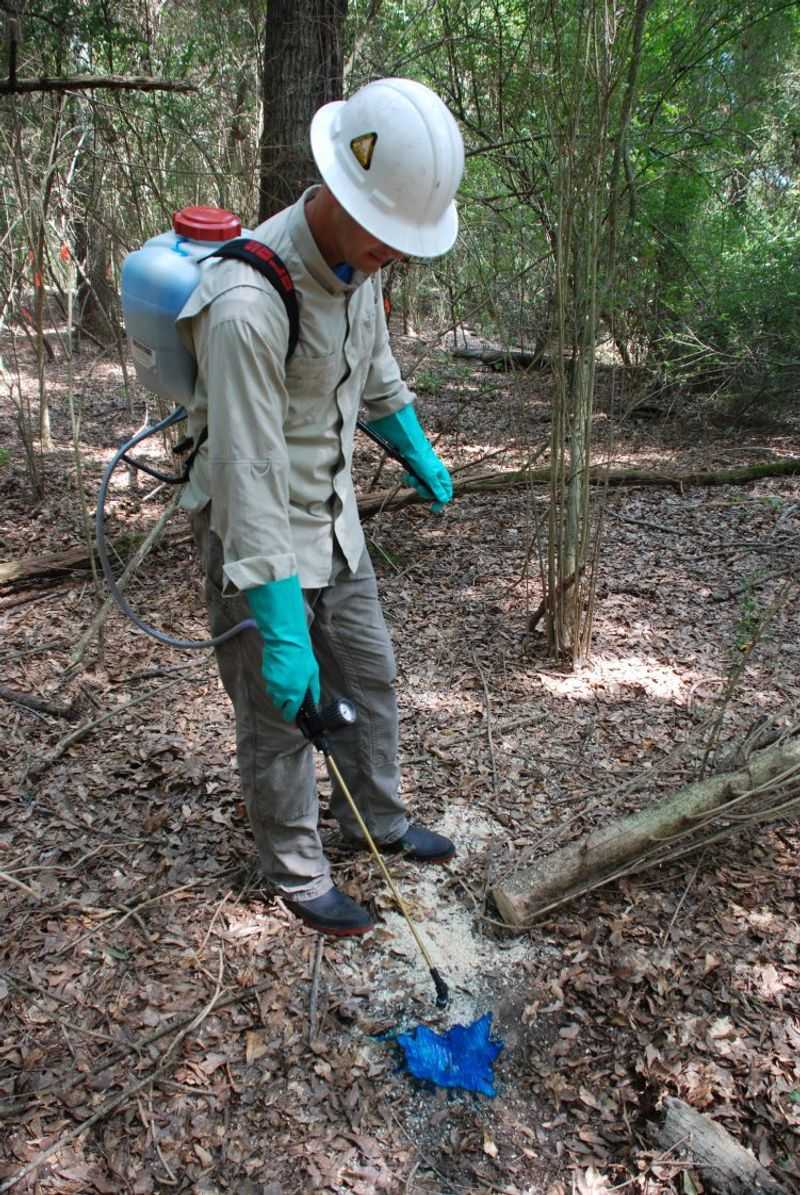
When mechanical removal is not practical, a targeted herbicide treatment applied to freshly cut stumps can reduce resprout rates. A cut-stump application limits chemical contact to the target plant and reduces the spray drift associated with broadcast application.
Use only products labeled for your specific site, follow all label directions, protective-equipment requirements, and site restrictions exactly, and contact your county Extension office if you are uncertain which product is appropriate. Do not burn nandina cuttings or use improvised chemical treatments.
The plant material has documented toxicity concerns, and pesticide labels are legally controlling documents, not suggestions.
Replace nandina with a native shrub matched to the site
Choosing a replacement before you remove nandina saves you from staring at a bare spot and reaching for whatever is on sale at the garden center. The right native shrub depends on four things: how much sun the spot gets, how moist or dry the soil stays, how large you want the mature plant to be, and which part of North Carolina you garden in.
Coastal Plain, Piedmont, and mountain yards differ enough in soil chemistry, winter temperatures, and summer moisture that a plant thriving in Raleigh may struggle in Boone or Wilmington.
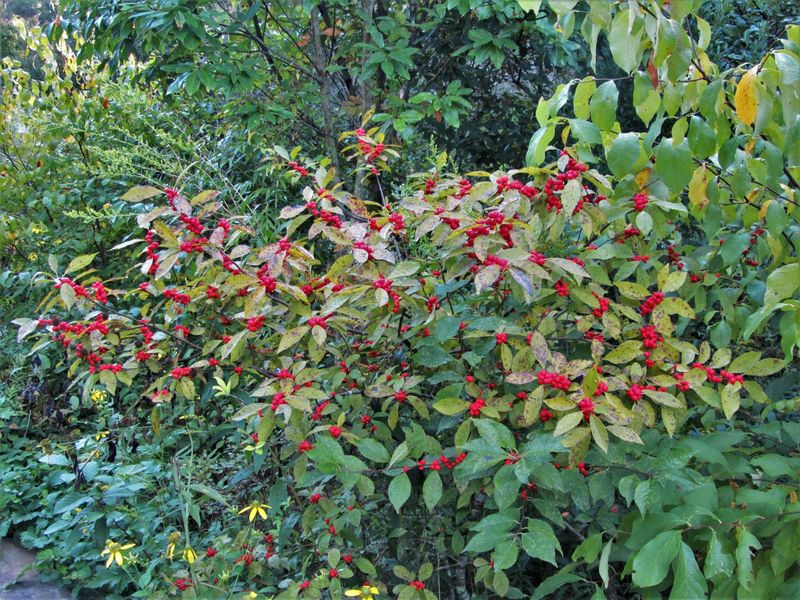
For moist, acidic sites where nandina often does well, common winterberry (Ilex verticillata) is one of the strongest replacements from a bird-habitat standpoint. It is native to eastern North America, produces persistent red fruit that holds through winter, and its berries are eaten by more than 48 bird species, including cedar waxwings.
Winterberry needs one male plant nearby to pollinate multiple female plants, so purchase accordingly and ask your nursery which male cultivar is compatible with your female selection.
For sites that stay moist to periodically dry, southern arrowwood viburnum (Viburnum dentatum) offers flowers, fruit, shelter, and pollinator value in one package. Fruit set requires more than one genetically distinct plant, so buy from at least two different sources or ask your nursery to confirm genetic diversity.
It handles part shade well and tolerates clay soils common in the Piedmont.
Other documented North Carolina-native options worth considering include American beautyberry, buttonbush, serviceberry, inkberry, yaupon holly, wax myrtle, and oakleaf hydrangea. The NC Native Plant Society’s recommended native species list and their native trees, shrubs, and grasses guide for NC landscapes both sort plants by habitat type and region, making it easier to narrow your choices to what will actually thrive in your specific yard conditions.
NC State Extension also lists native alternatives directly on the nandina plant page as a starting point for comparison.
Use a conditional decision: manage lower-risk cultivars or replace fruiting plants
Removing every nandina in every yard is not the message here. The decision hinges on whether your plant is fruiting.
A fruiting, seed-producing nandina carries two distinct concerns: it can expose cedar waxwings to cyanogenic compounds when birds consume large quantities of berries, as the 2022 cyanogenesis study and the Georgia mortality case both support, and it can spread seed into natural areas beyond your property line.
A verified sterile or nearly fruitless cultivar, such as those identified by NC State Extension, lowers both of those specific risks considerably. But lower risk is not the same as no concern, and a non-fruiting nandina still does not provide the insect habitat, native food sources, or ecological relationships that a North Carolina-native shrub offers.
Choosing a native replacement when you have the opportunity is still the better outcome for the yard’s overall wildlife value.
The sequence is straightforward: identify whether the plant is fruiting, remove berry clusters and bag them before digging, dispose of seeded material in household trash, dig or treat the root system and monitor for resprouts over multiple seasons, then select a native replacement suited to your actual site conditions. A yard that once held a fruiting nandina can, with one growing season of effort, hold a shrub that cedar waxwings visit for the right reasons.