
Chipmunks Keep Tunneling Along Your North Carolina Foundation Because The Yard Is Feeding Them Well
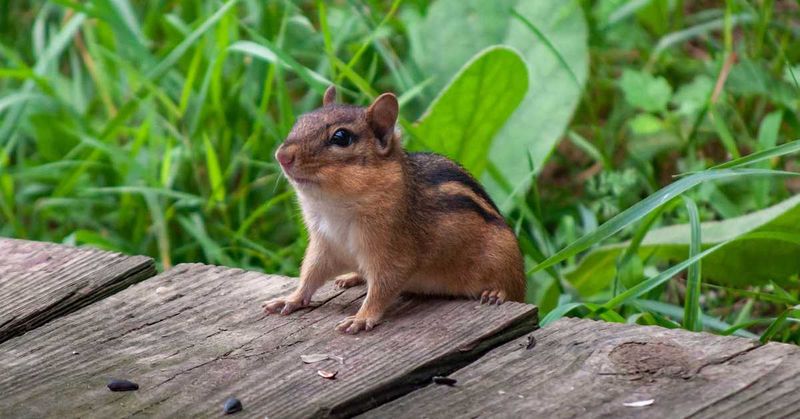
Spotting a chipmunk darting along your foundation can feel alarming, especially when you notice small holes appearing near your steps or garden beds. Before you assume the worst, though, the activity you are seeing is worth a closer look rather than an immediate reaction.
Eastern chipmunks are native to North Carolina, and their presence near a home usually tells a more nuanced story about food, cover, and seasonal behavior than most people expect. Understanding what is actually drawing them close can help you make smarter, calmer decisions about your yard.
A sudden sighting is a clue, not a verdict
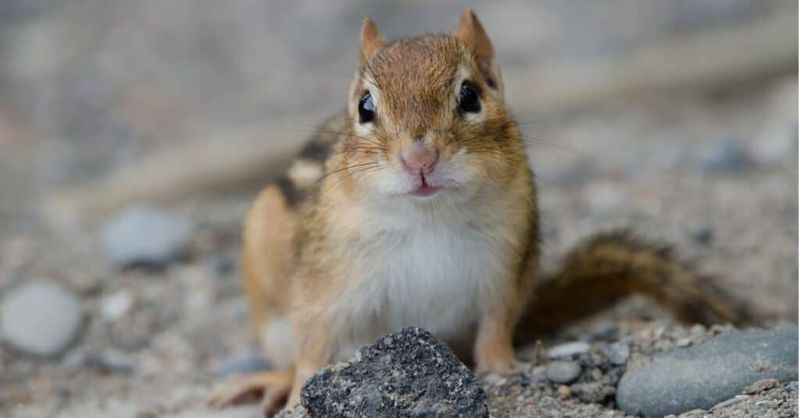
Noticing a chipmunk near your foundation one morning does not mean your yard suddenly sprouted a booming wildlife colony overnight. Eastern chipmunks are native to North Carolina, but their numbers and visibility shift considerably depending on where you live.
NC Wildlife Resources Commission notes that the species is common in the mountains and in much of the state northwest of Raleigh, while populations are more local or uncommon across parts of the Piedmont and Coastal Plain. If you are in an eastern county and spot one, that sighting alone may be worth reporting.
What you observe on a given day is often shaped by the time of year as much as by population size. Chipmunks become especially active and visible when they are gathering and caching food for leaner months, and seasonal phenology tracking confirms that their above-ground activity peaks during specific windows tied to food availability and breeding.
A heavy mast year, when oaks and hickories drop an unusually large crop of nuts, can draw noticeably more foraging activity into a yard that looked quiet the season before.
Weather patterns, breeding cycles, changes in nearby vegetation, predator pressure, and soil conditions can all influence how often you spot a chipmunk near the house. NC Wildlife’s species guidance identifies food availability, predators, and soil as factors that shape local distribution and density.
A single sighting, or even several sightings over a few days, cannot measure the overall health of your yard’s ecosystem, establish a population trend, or confirm that a burrow exists beneath your foundation.
The most useful first step is to treat what you saw as a clue that invites a closer look, not a verdict that demands an immediate fix. Watching where the animal goes, when it appears, and whether it returns to the same spot will tell you far more than any assumption based on one morning’s observation.
The menu usually starts with seeds, nuts, and seasonal foods
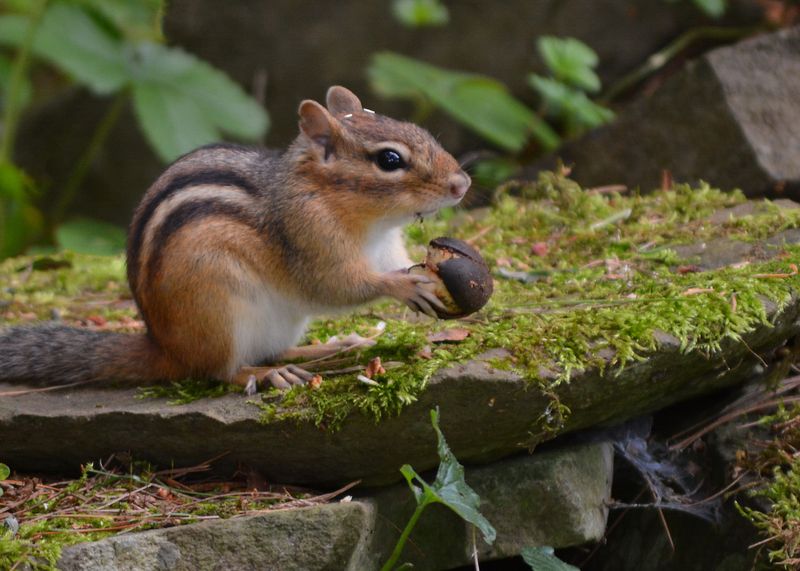
Walk the perimeter of your yard and you may find the food sources that make it worth a chipmunk’s regular attention. Spilled sunflower seed beneath a bird feeder is one of the most common attractants, and it often goes unnoticed until a homeowner starts connecting the dots.
NC Wildlife documents the eastern chipmunk’s diet as including seeds, nuts, acorns, berries, fruit, bulbs, and seedlings, meaning a well-planted yard can offer a varied and appealing menu across multiple seasons.
Acorns and hickory nuts that fall in autumn are particularly significant. Penn State Extension’s chipmunk resource explains that chipmunks store large quantities of food in their burrows rather than building fat reserves for winter, so the presence of abundant mast can trigger sustained and energetic caching behavior that looks, from a homeowner’s perspective, like a sudden population surge.
A yard with mature oaks or hickories nearby can see noticeably busier chipmunk activity in a good mast year without any real increase in the number of animals living on the property.
Insects and other small animal foods also appear in the diet, but spotting a chipmunk does not mean your yard is unusually buggy or that the animals are serving as a reliable pest-control service. UNH Extension’s garden guidance points out that plant-based foods are the dietary mainstay, and the insect component is opportunistic rather than a primary draw.
Abundant food can make a property worth visiting repeatedly, but food alone does not guarantee a resident burrow. A yard with plenty of seed and no adequate cover may attract brief foraging stops rather than a chipmunk that moves in permanently.
Checking for the specific food sources that are available on your property gives you a much more accurate picture than any general assumption about what chipmunks eat.
Cover can turn the foundation area into a protected route
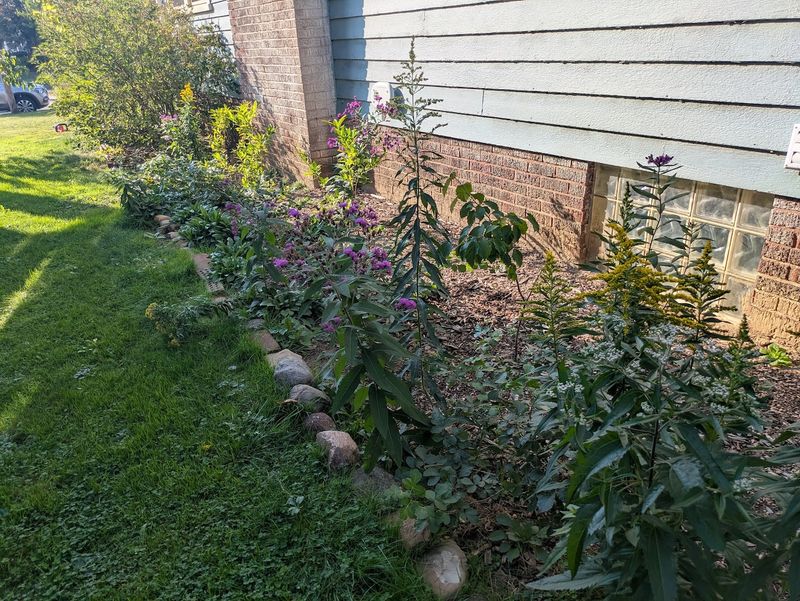
Food draws chipmunks into a yard, but cover determines where they feel safe enough to travel, linger, and eventually dig. The foundation of a house often sits at the end of a naturally sheltered corridor, and that position makes it attractive as a refuge or a burrow site even when the primary food source is somewhere else in the yard entirely.
NC Wildlife’s management guidance notes that chipmunks commonly place burrow entrances near buildings, stumps, wood piles, brush piles, and patios because these structures provide the kind of overhead and lateral protection that reduces exposure to predators.
Look at the planting layout between your yard’s edge and the foundation. Dense shrubs, continuous ground cover, logs, stacked rocks, debris piles, and closely spaced plantings can create an almost unbroken sheltered path from a woodland edge or fence line right to the base of the house.
Penn State Extension describes this kind of connected cover as a key factor in whether chipmunks use a residential area as more than a passing visit. The safer the travel route, the more likely an animal is to return and potentially establish a burrow at the far end of it.
A yard with excellent cover but limited food can still function as a regular travel corridor or a temporary refuge, especially if food is available just beyond the property line. Conversely, a yard with plentiful seed but open, exposed ground between the feeder and the foundation may only attract brief, cautious visits.
Research on small mammal habitat use supports the idea that population density tends to be higher where both adequate food and sufficient cover are present together.
Wildlife damage management guidance from ICWDM identifies continuous, sheltered plantings immediately beside the foundation as a practical target for modification when a homeowner needs to reduce activity near the house. Breaking up that corridor close to the structure, while leaving cover intact elsewhere in the yard, is a targeted approach that addresses the travel route without stripping the yard of its broader habitat value.
What does the hole actually tell you?
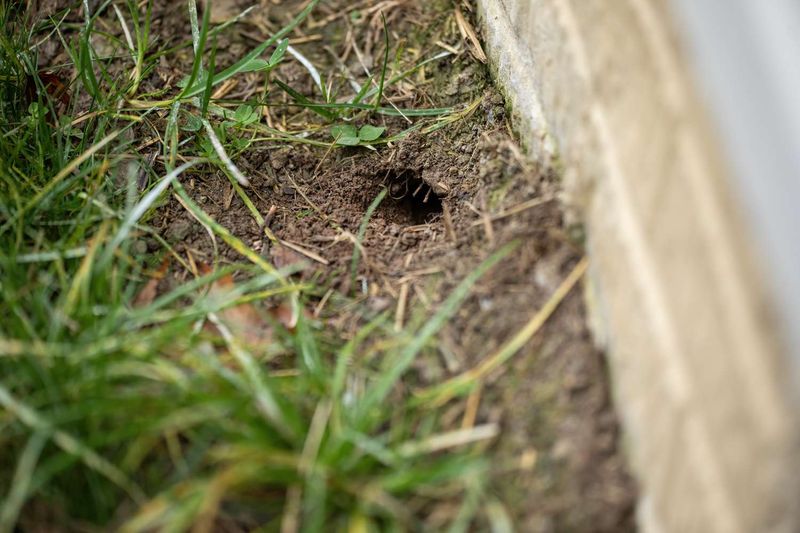
A small hole near the foundation is suggestive, but it is not self-explanatory. Penn State Extension describes a typical chipmunk burrow entrance as roughly 1.5 to 2 inches wide, often with little obvious excavated soil piled around it because the animal carries dirt away from the opening as it digs.
That clean, compact appearance can make the hole easy to overlook or, alternatively, easy to mistake for something less significant than it is.
Before drawing conclusions, walk the area methodically. NC Wildlife’s management resource and ICWDM’s inspection guidance both recommend identifying the animal and the actual damage before taking any action.
Look for signs of active use, such as fresh soil disturbance, tracks, or the animal itself entering and exiting. Check whether nearby steps, patios, or retaining walls show any shifting, settling, or cracking that was not present before.
Feel along foundation-area materials for looseness or soft spots that might indicate soil has been removed below the surface.
Also check for gnaw marks on wood siding or trim, and look carefully at any gap where a pipe, conduit, or utility line enters the house. NC State Extension’s animal damage control guidance points out that other rodents, including voles, mice, and rats, can create openings of similar size near foundations, so a small hole alone does not confirm a chipmunk as the cause.
ICWDM’s chipmunk damage identification resource draws a clear line between a cosmetic hole in a garden bed and confirmed structural damage. A single opening with no sign of structural movement, no entry into the crawl space or wall cavity, and no evidence of undermining is a very different situation from a burrow that has destabilized a concrete step or allowed an animal into the building.
Treat the inspection as the step that separates a possible problem from a confirmed one, and respond only to what you can actually observe and verify.
When leaving them alone is the responsible choice
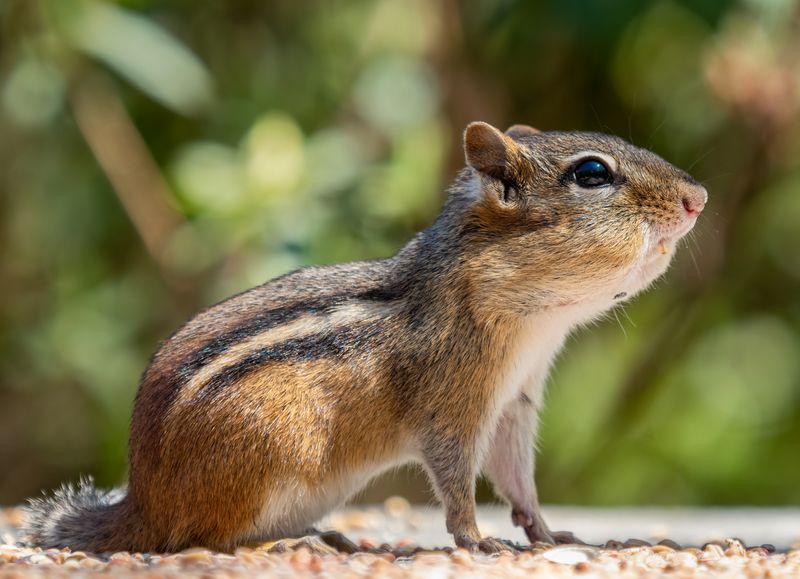
Most chipmunk activity around a home never rises above minor nuisance level. ICWDM’s damage identification guidance frames the majority of chipmunk conflicts as nuisance problems rather than emergencies, and that framing matters when deciding how to respond.
An animal that forages in the yard, uses a sheltered planting corridor, or digs a burrow in a garden bed away from any structure is not automatically creating a problem that requires intervention.
The practical standard is observed impact. If the chipmunk is passing through, caching food, and leaving your steps, patios, foundation, and plantings intact, tolerating its presence is a reasonable and ecologically sound choice.
ICWDM’s prevention and control resource and Penn State Extension both recommend responding to demonstrated damage rather than to the fear of what tunnels might eventually cause.
Tolerance becomes conditional, though, when specific circumstances change the picture. Entry into a house or crawl space, evidence that a burrow is undermining a patio, steps, retaining wall, pool liner, or foundation, damage to utility lines or drainage, and repeated destruction of high-value plantings are all situations that shift the appropriate response from patience to targeted action.
The key distinction is between a chipmunk that is living alongside your yard and one that is actively compromising a structure or repeatedly causing substantial, documented harm to plantings you genuinely value.
Reacting to a hole before verifying its impact can lead to unnecessary effort and may disturb an animal that was causing no real problem. Watching the situation for a few days, completing the inspection described in the previous section, and asking what harm has actually occurred will put you in a much stronger position to decide whether action is warranted at all.
Protect the house while keeping habitat elsewhere
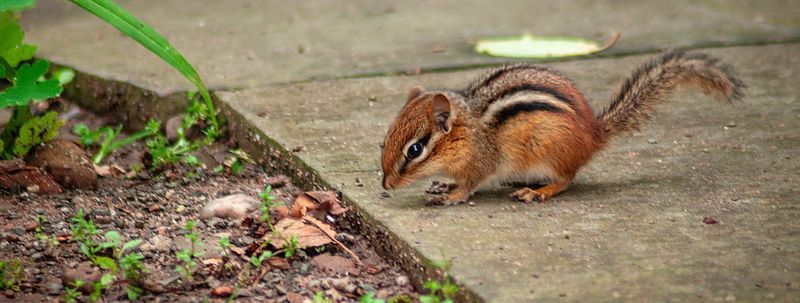
When an inspection turns up a genuine problem, the goal is targeted exclusion near the structure, not a wholesale removal of everything that makes the yard usable for wildlife. Start with the food sources closest to the house.
Reducing spilled birdseed is often the single most effective first step, and using a seed-catching tray or switching to a feeder style that limits scatter can make a meaningful difference without eliminating the feeder entirely. ICWDM’s prevention and control guidance recommends storing birdseed and pet food in rodent-resistant containers with tight-fitting lids, kept inside a garage or shed rather than against the house wall.
Move firewood, brush piles, and stacked debris away from the foundation. These materials are not inherently a problem in a yard, but stacked against the house they create exactly the kind of sheltered, ground-level cover that makes the foundation area feel like a safe destination.
Relocating a woodpile to the far side of the yard removes the shelter incentive near the house without removing the resource from the yard entirely.
Look at the planting corridor immediately beside the foundation. Penn State Extension and UGA Extension’s nuisance wildlife guidance both support interrupting continuous, sheltered plantings directly beside a vulnerable structure while leaving habitat intact elsewhere in the yard.
Thinning or trimming the strip of dense ground cover nearest the foundation creates a short exposed zone that most chipmunks will avoid crossing repeatedly.
For vulnerable garden beds, bulbs, and seedlings, quarter-inch hardware cloth laid flat beneath planting areas or formed into a cage around individual bulbs provides durable physical protection. When sealing any opening in the building itself, use metal mesh, caulk, or other durable materials rather than foam alone.
Critically, confirm that no animal is inside before you close an active entry, and time any sealing work so that dependent young will not be separated from a parent or trapped inside the structure.
Why relocation and quick-kill fixes miss the real problem
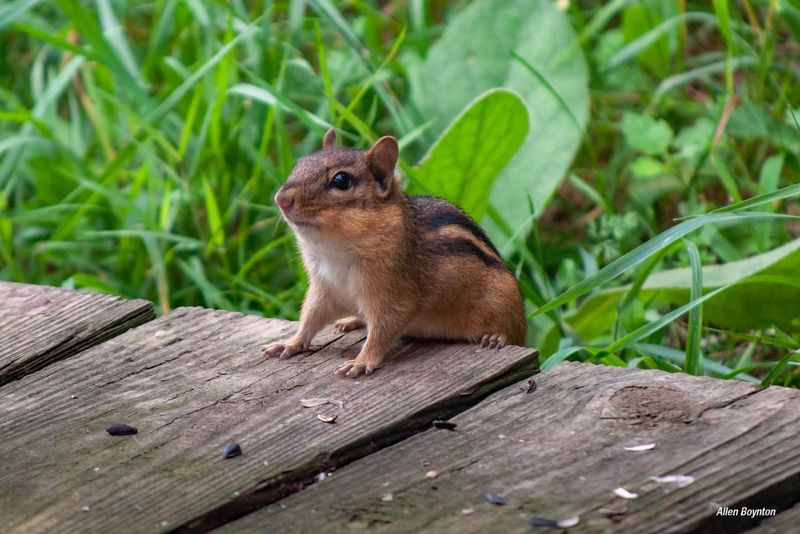
Reaching for a trap or a bag of repellent granules feels like doing something, but neither approach addresses the food and cover conditions that made the yard attractive in the first place. NC Wildlife Resources Commission lists the eastern chipmunk as a native nongame mammal with no established hunting or trapping season in North Carolina.
Before taking any removal action, check current state and local rules, because the regulatory status matters and can change.
Relocation is not the humane shortcut it appears to be. UNH Extension’s garden guidance and UNH’s nuisance wildlife resource warn that releasing a small mammal in unfamiliar territory exposes it to predators, territorial conflict with resident animals, starvation in an unknown landscape, and road mortality during disoriented movement.
Meanwhile, the habitat conditions at your property remain unchanged, and a new chipmunk may establish in the same spot within weeks.
UGA Extension’s conflict resolution guidance and UGA’s Cherokee County Master Gardener newsletter caution against poison, mothballs, fumigants, and predator-urine products around a foundation. Toxicants can harm pets and nontarget wildlife, mothballs are a pesticide with specific legal uses that do not include wildlife deterrence, and commercial repellents generally lack strong field-testing support for chipmunks.
ICWDM’s prevention resource notes that frightening devices are not effective for chipmunks, and improvised trapping without a clear plan for what comes next rarely resolves the underlying conditions.
For building entry or substantial structural problems, a qualified wildlife-control professional is a safer option than improvised removal. If a chipmunk bites or scratches you during any handling, wash the wound thoroughly with soap and water right away.
CDC surveillance data shows that rabies in eastern chipmunks is exceedingly rare, but rodents can carry other pathogens and parasites, so follow up with a healthcare or public-health professional after any bite or scratch.
Read the yard before you react
Chipmunks near a foundation may be responding to a usable mix of food, cover, and ground conditions that your yard currently provides, but their presence does not deliver a simple verdict. It does not confirm that tunneling is underway, that the foundation is at risk, or that the yard has achieved some measurable ecological benchmark.
NC Wildlife is clear that distribution and density depend on a combination of soil conditions, predators, and food availability, none of which a single sighting can measure.
The sequence that protects both your property and the animal is straightforward: identify what species you are actually dealing with, inspect for real and verifiable impact, tolerate activity that causes no meaningful harm, and make narrow nonlethal changes only where a documented problem exists. ICWDM’s management guidance consistently frames chipmunk conflicts as situations that reward careful observation over reflexive action.
A yard that supports native wildlife, including species that forage and occasionally burrow near structures, is not a yard that has failed its owner. Most of the time, the chipmunk you spotted this morning is simply making use of what is available, and a little careful looking will tell you whether that is a problem worth solving or a piece of your yard’s ordinary life.