
That Overlooked Native Tree Feeds North Carolina Pollinators All Season While Everyone Walks Past It
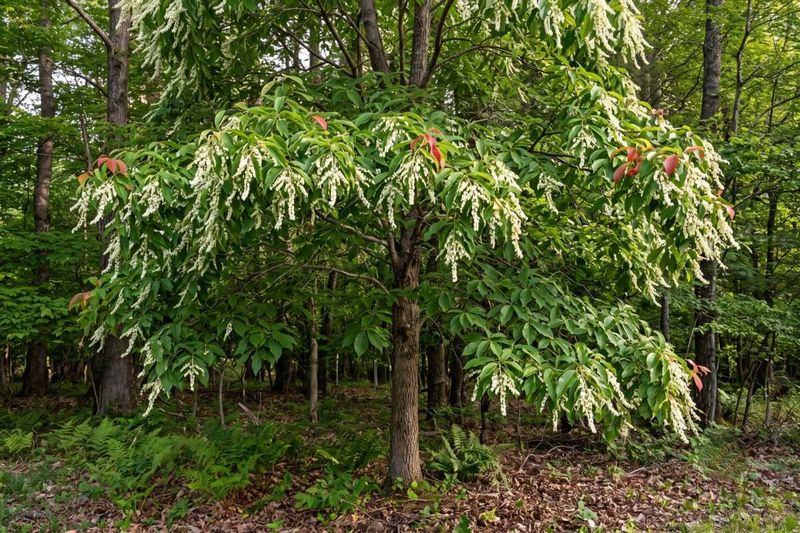
Tucked along forest edges and woodland gardens across North Carolina, sourwood is a native tree that most homeowners walk right past at the nursery without a second look. Known scientifically as Oxydendrum arboreum, it earns a spot in residential yards by producing white, bell-shaped flowers in early to midsummer, right when many other flowering trees have already finished for the year.
Bees and butterflies visit those blooms heavily, making sourwood a useful bridge plant during a gap in the pollinator calendar. Pair it with spring and fall natives, and a modest yard can support pollinators across a much longer stretch of the growing season.
Meet North Carolina’s overlooked sourwood tree
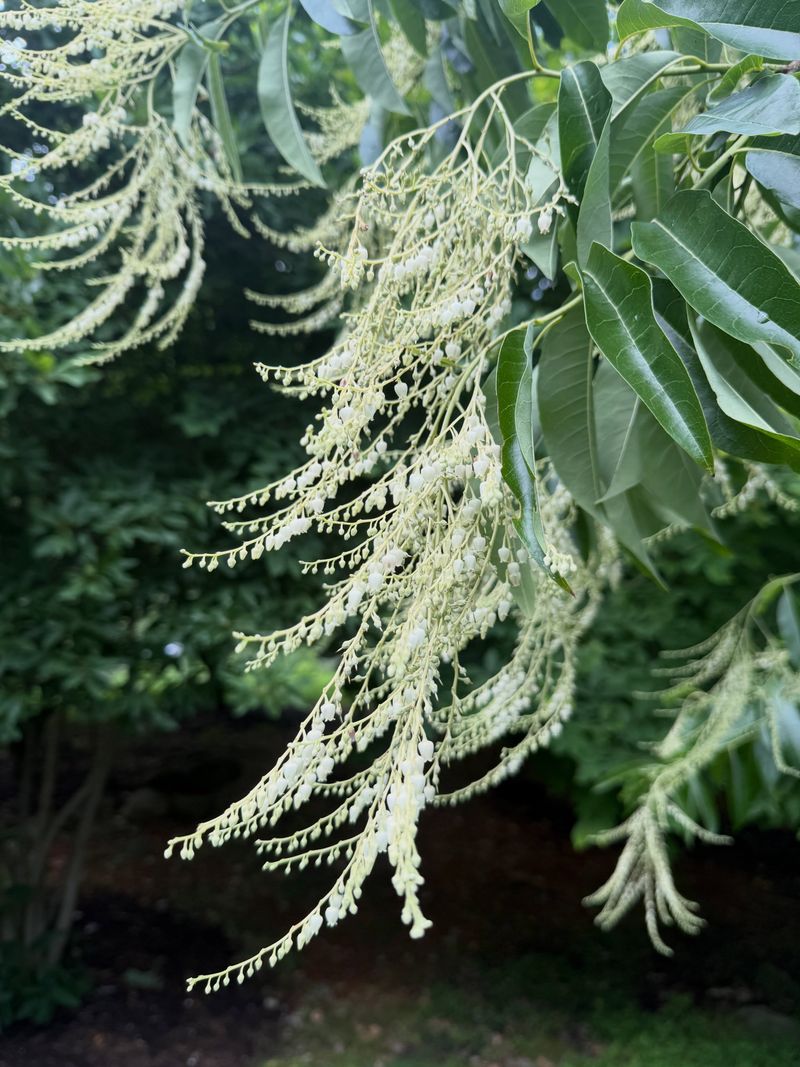
Sourwood, known scientifically as Oxydendrum arboreum, goes by a handful of names that hint at its personality: sorrel tree and lily-of-the-valley tree both appear in common use, and each points to the graceful, drooping flower clusters that make the tree recognizable once you know what to look for. NC State Extension’s plant profile for sourwood confirms it as a native species suited to the Mountains, Piedmont, and Coastal Plain, though it notes the tree is less frequent in low, alluvial portions of the Coastal Plain where drainage can be poor.
The flowers are the tree’s most talked-about feature, and rightly so. White, bell-shaped, and arranged in long, arching panicles, they open in early summer and draw insect pollinators reliably.
The blooms are followed by persistent seed capsules that cling to the branches well into fall and winter, giving the tree a quiet, textured presence even after the leaves have dropped.
As a landscape tree, sourwood fits the understory role well. The USDA Forest Service’s silvics account for sourwood describes it growing beneath taller canopy trees in its native habitat, and that same tolerance for partial shade makes it workable in a residential yard where large oaks or pines already dominate.
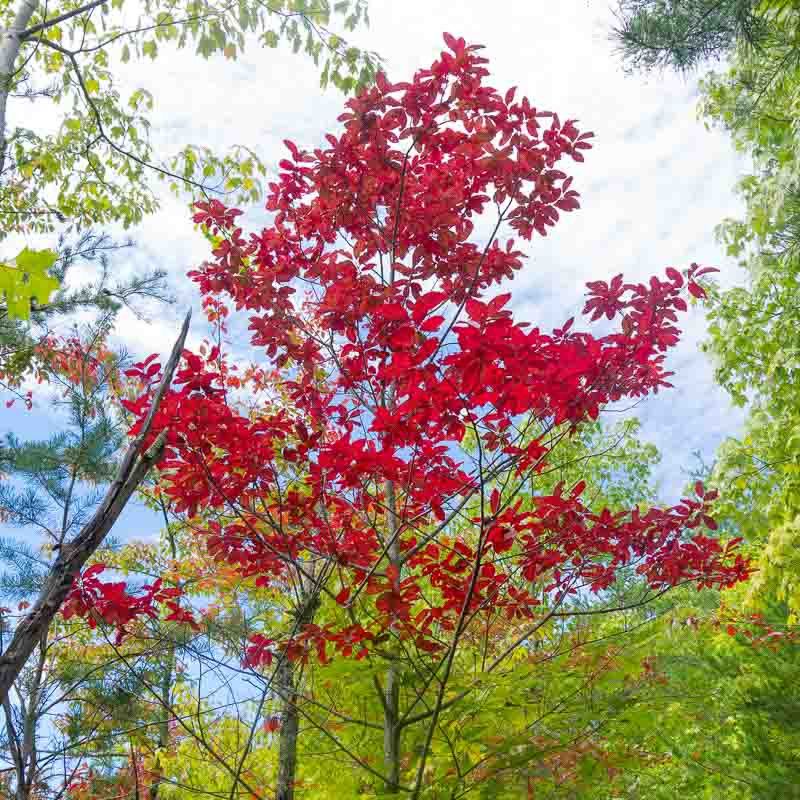
Fall color runs from red to reddish-purple and can be genuinely striking, adding a seasonal payoff beyond the summer bloom. For a North Carolina homeowner who wants pollinator value, manageable scale, and multi-season visual interest without taking on a large canopy tree, sourwood is an underused option worth serious consideration.
Its early-summer flowers bridge a forage gap
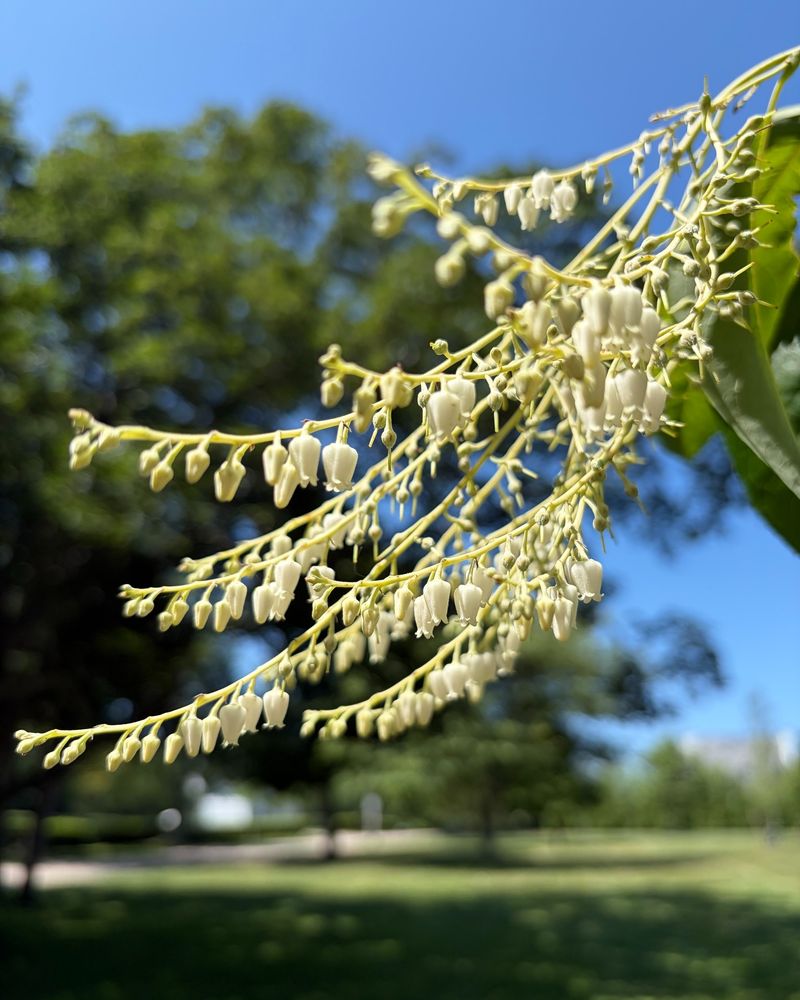
Sourwood’s bloom window generally opens in June and runs into July or August, with the exact timing shifting based on elevation, weather, and the particular year. That schedule lands during a stretch when many of the showier spring-flowering trees, such as redbuds and dogwoods, have long finished, and the fall-blooming perennials haven’t yet started.
USDA’s silvics resource for sourwood identifies the flowers as an important nectar source for bees, and NC State classifies the tree as a pollen and nectar producer that attracts bees and butterflies.
Correcting the article’s title premise is worth doing plainly: sourwood does not feed pollinators across the entire season on its own. Its documented contribution is concentrated in that early- to midsummer window, and once the flowers fade, the tree stops producing nectar and pollen.
The persistent seed capsules and fall foliage that follow have real landscape value, but they are not a food source for pollinators.
Sourwood honey deserves a mention, though with honest limits attached. Lee County Cooperative Extension’s profile of sourwood describes it as a regional honey specialty, prized for its distinctive flavor.
A single backyard tree, however, will not reliably produce a harvestable quantity of single-source honey; that outcome depends on weather, bloom timing, hive strength, and the concentration of sourwood in the surrounding landscape. What a yard tree does accomplish is contributing nectar to local bee populations during a period when alternative sources can be scarce, and that contribution has genuine value even without a honey harvest to show for it.
NC State’s plant database entry for sourwood further confirms its pollinator classification, listing it as bee-friendly and noting insect pollination. For homeowners trying to support bees and butterflies through a longer stretch of summer, sourwood fills a real gap that few other native trees address as directly.
Expect modest, slowly developing shade
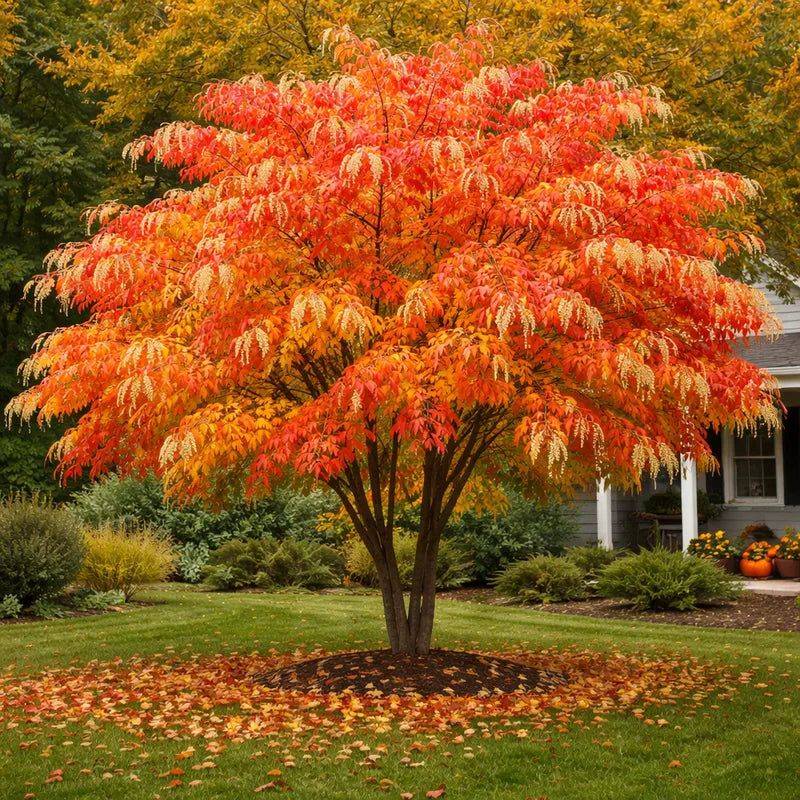
Sourwood is not the tree to plant when you need substantial shade in a hurry. Lee County Extension’s sourwood overview puts its typical landscape height at roughly 20 to 30 feet, and the tree earns that height slowly.
Homeowners who choose it alongside a large native oak or tulip poplar will notice the difference in canopy spread immediately: sourwood offers a modest, filtered shade rather than the broad, dense cover a mature large-canopy tree provides.
That slow pace and smaller footprint are not necessarily drawbacks. A 20- to 30-foot tree fits comfortably near a house, under utility lines, or in a side yard where a larger species would eventually cause problems.
USDA’s silvics account notes that sourwood can reach greater heights in forest conditions, so some specimens in ideal settings will exceed the typical landscape range, but planning for 20 to 30 feet in a residential yard is a reasonable working assumption.
Light conditions affect the tree’s form in a practical way. Growing in full sun to partial shade, sourwood tends to develop a fuller canopy and a sturdier trunk.
NC State’s plant profile notes that dense shade can produce a slender trunk and a narrower canopy, which reduces both shade output and visual presence. Placing sourwood at a woodland edge or in a spot with morning sun and afternoon dappled shade often produces a better-shaped tree than tucking it under a dense closed canopy.
For the homeowner who wants a small tree that delivers filtered shade, pollinator flowers, and fall color without eventually overwhelming the yard, sourwood’s scale is a feature rather than a limitation.
Match the tree to the site before you buy
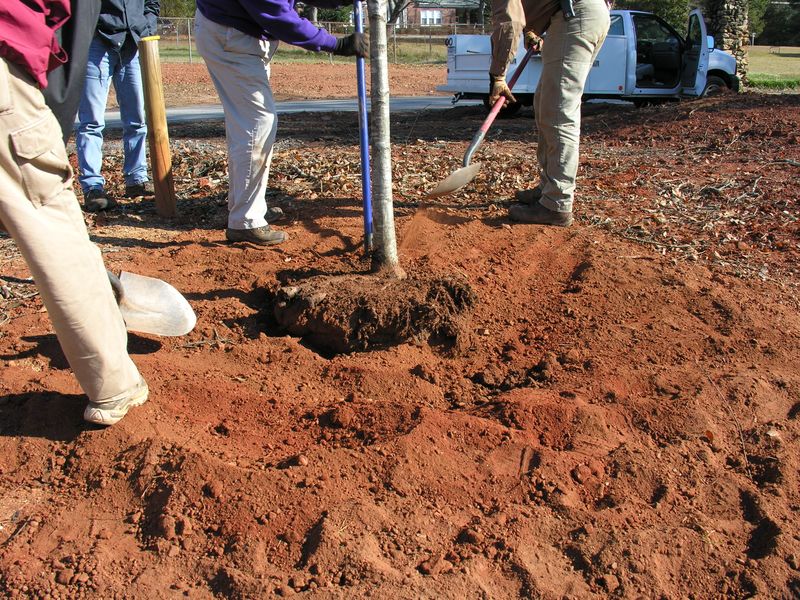
Choosing a native tree based on its ecological reputation alone, without checking whether the site actually suits it, is one of the more common planting mistakes homeowners make. Sourwood has specific needs, and meeting them matters more than its native status.
NC State’s sourwood plant profile calls for acidic, well-drained soil that can remain reasonably moist, and full sun to partial shade. Those conditions are common across the Piedmont and Mountains, but they are not universal, and assuming they exist without checking is a reliable way to end up with a struggling tree.
Soil pH is the first thing worth testing. Sourwood naturally grows in the acidic soils typical of much of North Carolina’s upland landscape, and a site with neutral or alkaline pH will work against the tree regardless of how well everything else lines up.
Drainage matters equally: the tree does not belong in ground that stays wet after rain. Low spots, clay flats that pond water, and sites near downspouts or drainage swales are poor choices.
Persistently waterlogged soil will cause root problems that no amount of care will correct.
NC State Extension’s native plants chapter reinforces that matching soil drainage and pH to the plant is more important than simply selecting a native species. Urban sites present a separate challenge: sourwood is sensitive to pollution and compaction, so a heavily paved yard, a parking strip, or a site near a busy road is not a good candidate even if the soil tests well.
Regional fit also deserves attention. Sourwood is native across North Carolina, but USDA’s silvics profile and NC State both note that it is less common in low, alluvial parts of the Coastal Plain.
Coastal Plain gardeners should pay particular attention to drainage and soil conditions before committing to a planting. A site check before purchase prevents disappointment and gives the tree its best realistic start.
Give a nursery-grown tree a careful start
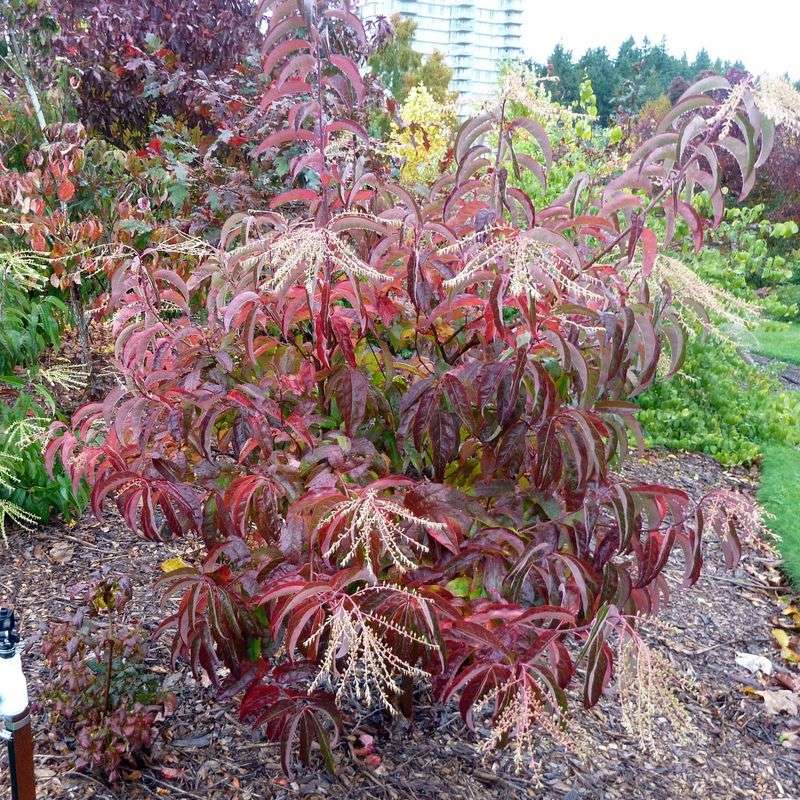
Sourwood has a reputation among horticulturists for being difficult to move once established, and that reputation is earned. Wild specimens dug from the forest rarely survive transplanting, and the temptation to collect one from the woods should be resisted entirely.
NC State’s sourwood profile specifically recommends purchasing nursery-propagated plants rather than attempting to transplant wild trees, and that guidance reflects both survival rates and responsible stewardship of native populations.
At the nursery, look for a young, container-grown or balled-and-burlapped specimen in good health, with no signs of girdling roots or significant stress. Bigger is not always better with slow-growing trees: a younger, smaller plant often establishes more successfully than a larger one because its root system has less ground to make up.
Before planting, confirm the site’s drainage by digging a test hole and watching how quickly standing water drains after rain.
NC State Extension’s native plants guidance emphasizes that establishment watering is not optional for native trees, particularly slow-growing species. Water the tree deeply and regularly during its first two growing seasons, especially through dry summer stretches, and reduce frequency only after it shows consistent new growth.
Apply a 2- to 3-inch layer of organic mulch around the base, keeping it a few inches away from the trunk, to conserve soil moisture and moderate temperature.
Leave enough room for the eventual canopy. A tree expected to reach 20 to 30 feet needs space that may not look necessary when the sapling is three feet tall.
Lee County Extension’s sourwood article notes its slow growth, which makes careful placement more consequential than with fast-growing species: you will be managing this tree’s location for decades, so getting it right at the start saves significant effort later.
Build the spring-to-fall support around sourwood
Sourwood handles the early- to midsummer stretch well, but a yard that only has sourwood leaves pollinators without resources for most of spring and all of fall. Filling those gaps requires companion planting with other native species, and the principle is straightforward: aim for multiple native plants flowering in each season rather than relying on any single tree or shrub to carry the workload.
NC State Extension’s native plants chapter recommends having at least three native species blooming simultaneously in each season to give pollinators consistent, overlapping food sources.
Spring-blooming natives can take the first shift before sourwood opens, and fall-blooming species can carry the season after its flowers fade. Native shrubs, perennial wildflowers, and grasses suited to North Carolina’s varied regions all contribute differently, and layering them around sourwood creates a more complete habitat than any single specimen can provide on its own.
Brunswick County Cooperative Extension’s pollinator restoration guide makes clear that diversity of flowering times is the key driver of sustained pollinator populations.
Food is only part of what pollinators need. Nesting habitat matters too: bare or lightly mulched ground for ground-nesting bees, hollow stems left standing through winter for cavity nesters, and brush piles or leaf litter for overwintering insects all contribute to a genuinely functional yard ecosystem.
Reducing unnecessary broad-spectrum insecticide use is equally important, since many products applied for one pest also harm the bees and butterflies the yard is meant to support.
The NC Department of Agriculture’s pollinator plant blend guidance reinforces that a blend of flowering natives, chosen for regional fit and staggered bloom times, outperforms a single-species planting for sustaining pollinators across the season. Sourwood earns a genuine place in that mix, but the mix itself is what makes the yard work.
Value its seasonal interest without overstating habitat claims
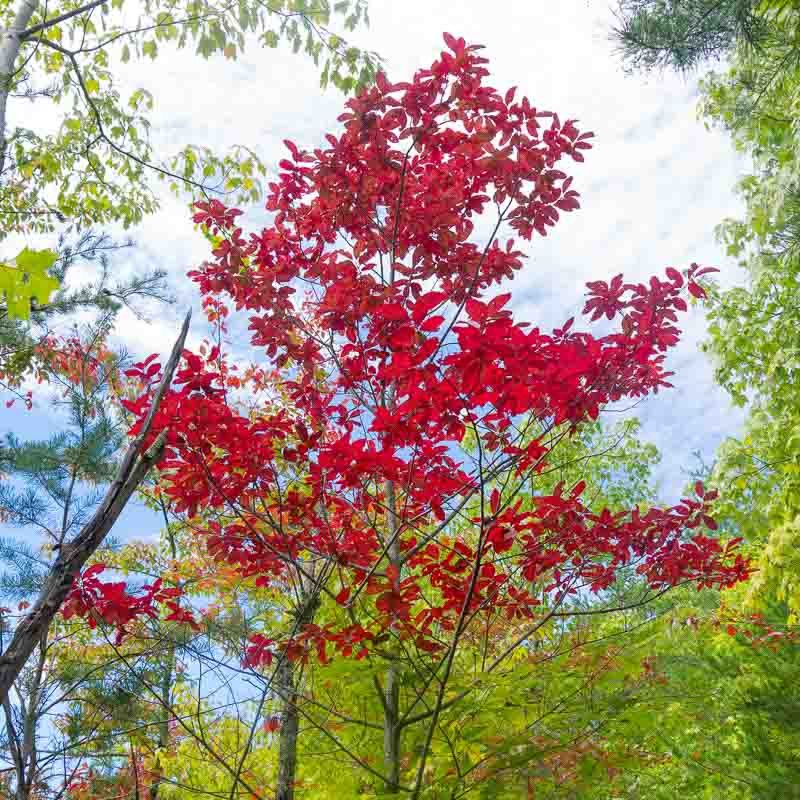
Once sourwood’s flowers fade in late summer, the tree still has plenty to offer, though none of it involves continued nectar or pollen production. The fall foliage is the most visually dramatic feature: leaves turn red to reddish-purple, often while other trees are still green, and the color can be reliably striking in years with good growing conditions.
NC State’s sourwood plant profile confirms this fall color characteristic, along with the persistent seed capsules that remain on the branches long after leaf drop.
Those seed capsules, cream-colored and arranged along the same arching panicles that held the flowers, give the tree a delicate texture through fall and into winter. Combined with sourwood’s attractive gray, furrowed bark, the tree has genuine presence in the winter landscape even without leaves.
These are landscape and structural habitat features, not food sources, and describing them accurately matters: birds may use the tree’s structure for perching or shelter, but the capsules do not function as a significant wildlife food in the way that berry-producing native shrubs do.
NC State does classify sourwood as a larval host plant, which suggests some insects use it as part of their life cycle beyond the adult foraging stage. The available sourwood research does not specify which butterfly or moth species are involved or how significant that host value is compared to other native trees, so naming particular insects without additional evidence would overstate what is currently known.
What sourwood does reliably provide beyond bloom is multi-season landscape interest that NC State Extension’s native plants handbook describes as a hallmark of well-chosen native species: value that extends well past a single season without requiring the tree to do more than it actually does.
Handle ordinary problems with proportionate care
Native trees are not immune to problems, and sourwood is no exception. Poor drainage, drought during the first few growing seasons, and compacted soil can all set a young tree back significantly, which is why site selection and establishment care matter so much.
NC State’s sourwood plant profile notes the tree’s sensitivity to pollution and urban conditions, and a tree planted in a marginal site will show that stress over time through sparse growth, poor color, and reduced flowering.
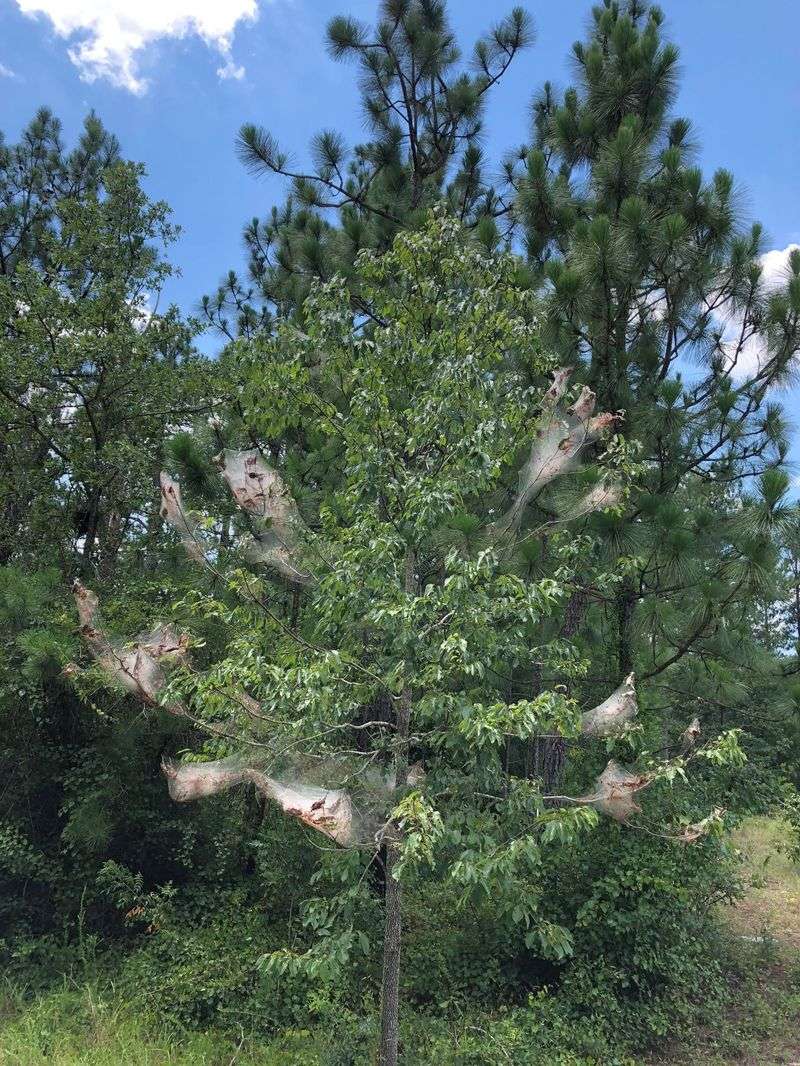
Fall webworms are the pest most commonly associated with sourwood in North Carolina yards, and they deserve a measured response rather than an automatic one. The silken nests appear on branch tips in late summer or fall and can look alarming, but the damage is usually cosmetic on a healthy, established tree.
NC State Extension’s fall webworm guidance makes clear that routine insecticide treatment is generally unnecessary. Pruning out the nest, or simply opening it with a stick so that birds and parasitic wasps can reach the larvae inside, is the preferred response.
Both approaches address the problem without harming the broader yard ecosystem.
Reaching for a broad-spectrum insecticide to treat webworms puts the same bees and butterflies sourwood is meant to support at unnecessary risk. NC State Extension’s native plants chapter reinforces that thoughtful, low-impact management serves both the tree and the yard’s wildlife better than treating every visible pest as an emergency.
A well-sited sourwood on suitable soil, with appropriate establishment care, is genuinely resilient. The problems that do arise most often trace back to a mismatch between the tree’s needs and the conditions it was given, which makes getting the site right the most productive investment a homeowner can make.
Use sourwood as a bridge, not the whole habitat
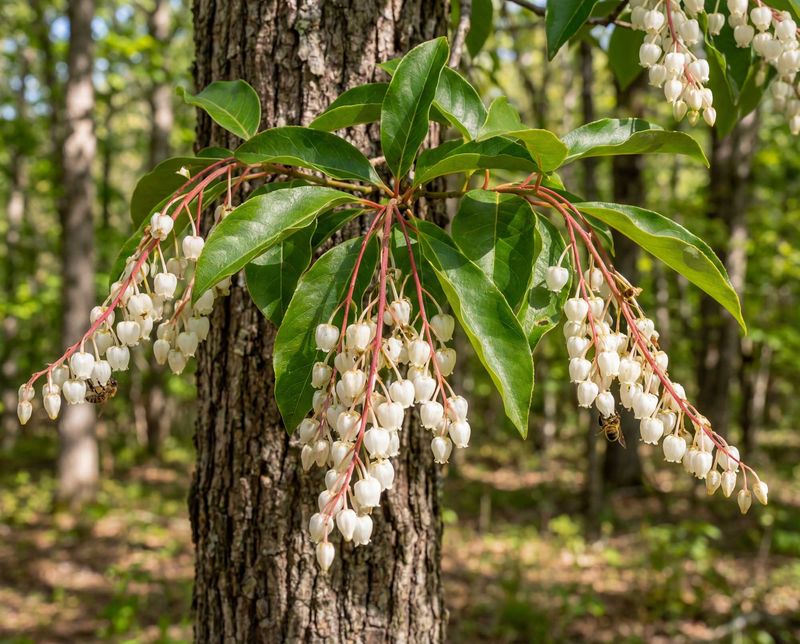
Sourwood earns a place in a North Carolina yard when the site offers acidic, well-drained soil, adequate light, and room for a 20- to 30-foot tree to develop over time. Its midsummer flowers give bees and butterflies a reliable nectar and pollen source during a gap that few other native trees fill as effectively, and its fall color, persistent seed capsules, and winter bark add visual interest across multiple seasons.
USDA’s silvics profile and NC State Extension’s native plants guidance together support it as a genuine regional asset.
One tree, though, cannot feed pollinators all season. Brunswick County Extension’s pollinator guidance makes the case plainly: diverse native plants blooming in spring, summer, and fall, combined with nesting habitat and reduced insecticide pressure, are what a functional pollinator yard actually requires.
Sourwood’s best role is as a strong midsummer anchor in that larger, layered planting. A yard built around it, rather than dependent on it alone, is the one that delivers for pollinators across the full growing season.