
A Native Shrub Screening Your North Carolina Wood Line Turns Deep Shade Into Its Best Spot
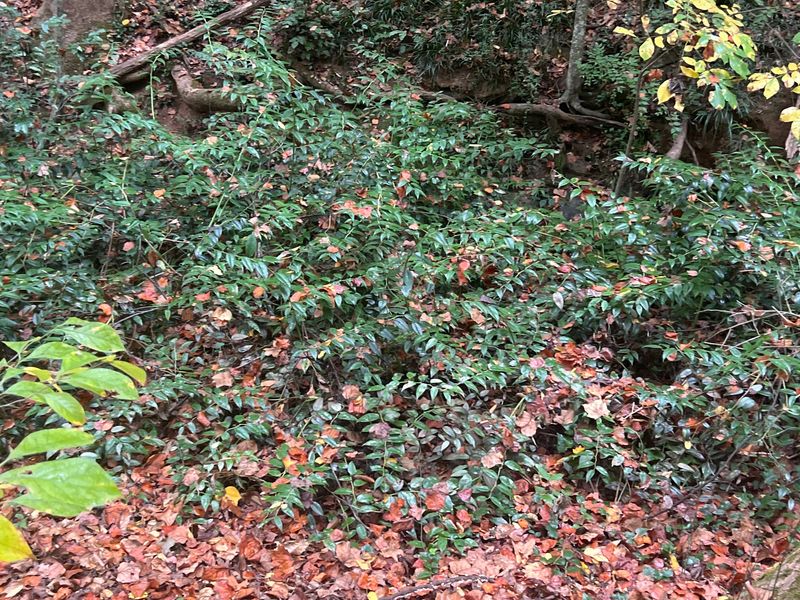
Most shrubs planted along a shaded wood line in North Carolina end up thin, struggling, and barely worth the effort. Mountain doghobble, a native broadleaf evergreen, is one of the few shrubs that can actually hold its own in low light when the site stays moist and the soil runs acidic.
For homeowners in the Mountains or Piedmont with a dark, damp corner that nothing else seems to want, this plant offers a real, practical solution. Getting it right means understanding where it fits and where it falls short.
Mountain doghobble can suit a deeply shaded corner
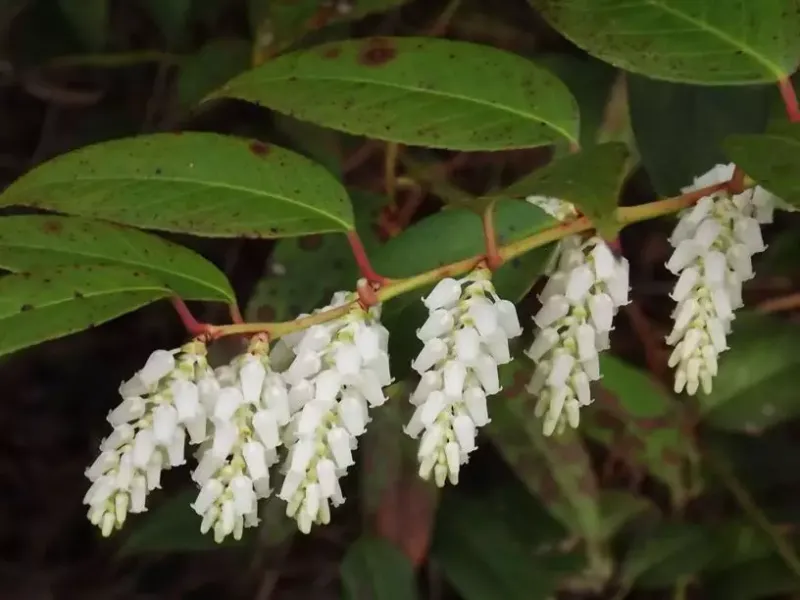
Leucothoe fontanesiana goes by several names: mountain doghobble, drooping leucothoe, doghobble, and fetterbush. All of them point to the same broadleaf evergreen shrub in the blueberry family, native to the southern Appalachians and well-suited to a protected woodland corner in North Carolina’s Mountains or Piedmont.
NC State Extension’s plant profile lists it for USDA Zones 4a through 6b and specifically categorizes it as tolerant of deep shade, heavy shade, and woodland conditions, making it one of the few screening shrubs that doesn’t thin out and go bare where light rarely reaches.
Here is the correction the title needs, though: deep shade is not automatically this plant’s best condition. NC State notes that mountain doghobble generally performs best in partial shade when moisture is consistent.
It can grow in full shade, and it can be a good fit for a deeply shaded corner, but the distinction matters. A site with filtered light and reliable moisture will typically produce denser, healthier growth than one that stays dark and dry.
Its strongest case is a protected, moist, acidic site where other common screening shrubs become sparse and leggy. Boxwood, holly, and arborvitae all struggle or fail outright in true deep shade.
Mountain doghobble does not. That is the real payoff the title is pointing toward: a native evergreen that fills a difficult corner rather than giving up on it.
Mountain doghobble should not be presented as the best screening shrub for every North Carolina yard. Its range within the state centers on the Mountains and Piedmont.
Coastal Plain gardeners working in a similar situation should look at a different species entirely, coastal doghobble (Leucothoe axillaris), rather than assuming the mountain species is the right fit statewide.
Test the wood-line site before planting
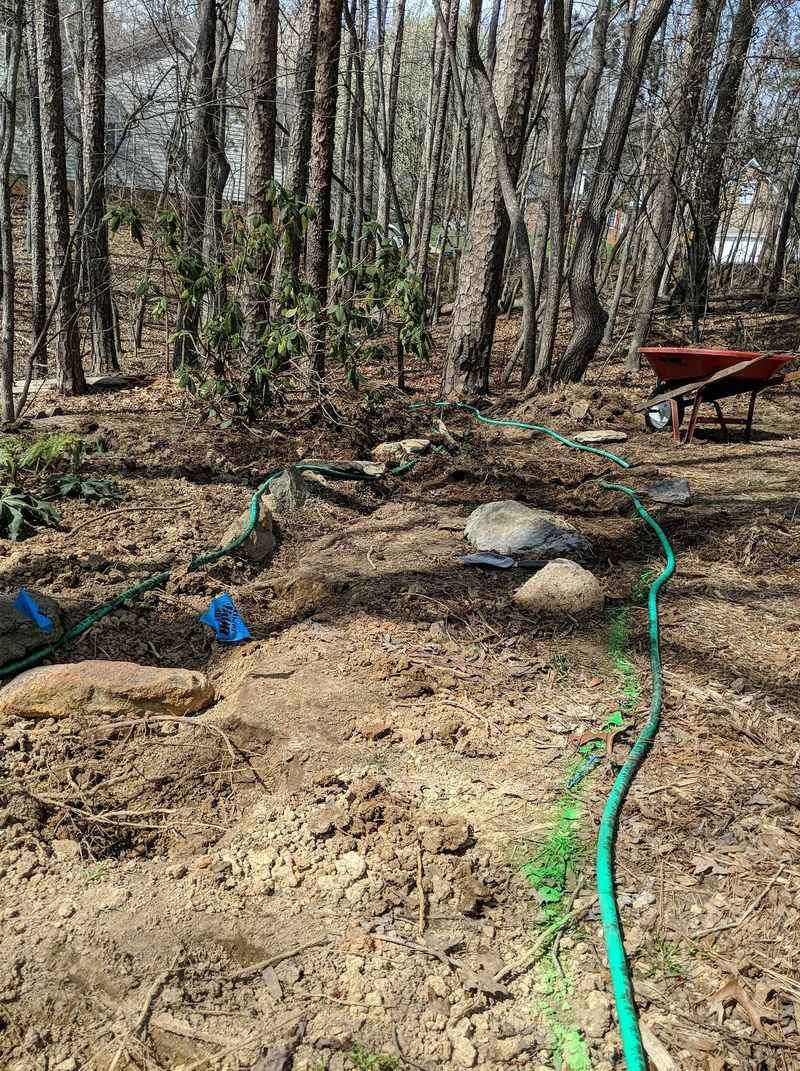
Shade alone does not make a site ready for mountain doghobble. Before buying a single plant, walk the proposed location and honestly assess four things: moisture, soil chemistry, organic matter, and protection from heat and wind.
A site that checks all four boxes is a genuine candidate. A site that checks only shade is not.
Moisture is the most important variable. Mountain doghobble does not tolerate drought, and it performs poorly in hot, dry, or windy exposures.
A wood-line corner that stays consistently damp from natural drainage, a nearby stream, or regular rainfall is a good match. A spot that dries out in summer, even if it looks shaded, puts the plant under stress it cannot recover from easily.
This is the critical difference between moist shade and dry shade.
Dry shade beneath mature trees is a particularly risky site. Large, established trees such as maples, beeches, and tulip poplars pull enormous amounts of water from the surrounding soil through their root systems.
A location that appears moist in spring may become a root-competition zone by July, leaving a newly planted doghobble with neither water nor room to establish. The NC State dog hobble plant entry confirms that the species needs moist, acidic soil with good organic matter and does not handle drought well.
Soil pH matters too. Mountain doghobble grows naturally in the acidic soils common to much of the NC Mountains and Piedmont, where decomposing leaf litter and forest organic matter keep pH in the 4.5 to 6.0 range.
If you are unsure about your soil, a basic pH test from a garden center or your county Cooperative Extension office will tell you whether you need to amend before planting.
The regional recommendation stays firm here. This site assessment applies to the Mountains and Piedmont, where the species is documented to perform.
It does not translate automatically to Coastal Plain conditions, where a different doghobble species is the appropriate choice.
Its evergreen form creates a lower, softer screen
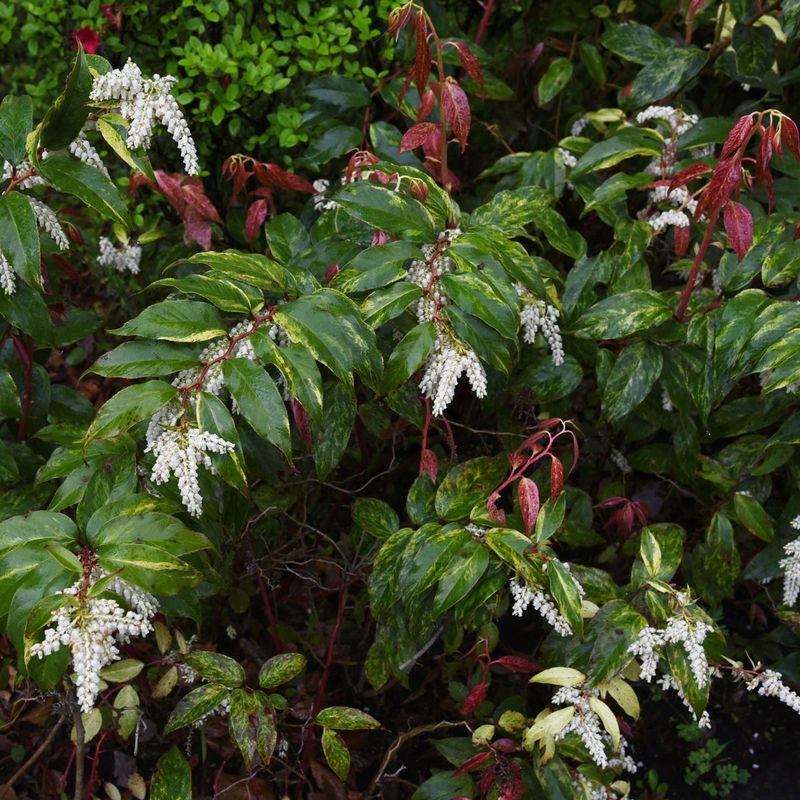
Mountain doghobble earns its place in a yard through year-round foliage, not seasonal flashes. The leaves are glossy and lance-shaped, holding their color through winter and giving the wood-line border a finished look even when deciduous neighbors go bare.
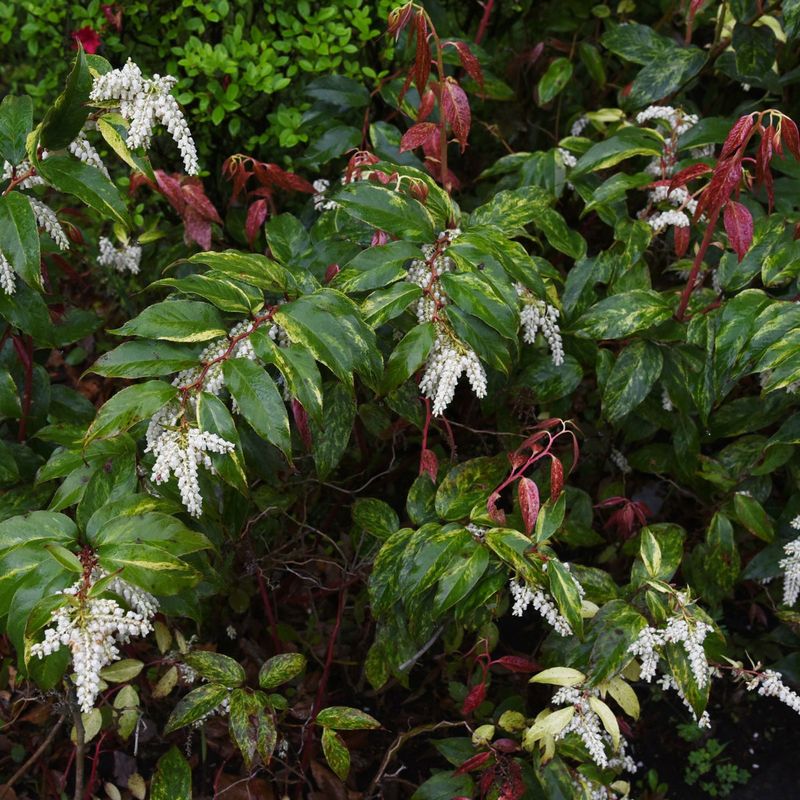
New growth often emerges red or bronze, adding a color contrast in spring that reads as ornamental without requiring any extra work.
Where the plant receives at least some angled light in fall or winter, the foliage can shift toward burgundy or purplish tones before returning to green. This seasonal color is a bonus, not a guarantee.
Plants growing in true deep shade tend to stay more uniformly green year-round, which is still useful for screening purposes but less showy than specimens on the shadier edge of a partial-shade situation.
Flower clusters appear mainly in April and May. They hang in drooping, waxy, creamy-white chains along the undersides of the arching stems, a characteristic form that gives the plant its common name “drooping leucothoe.” NC State Extension’s full plant profile describes the flowers as fragrant and notes that the arching, erect, or mounding habit reaches approximately 2 to 6 feet tall and 4 to 8 feet wide at maturity.
Those dimensions are the most important thing to understand about what kind of screen this plant can actually provide. At 2 to 6 feet tall, mountain doghobble is a low-to-medium evergreen layer, not a tall privacy wall.
It will soften and partially obscure a wood-line edge, fill in the lower story beneath taller shrubs or small trees, and give the planting a naturalized, finished character. Anyone expecting the visual density of a clipped arborvitae hedge will be disappointed.
The right frame for this plant is a woodland border or understory screen, not a formal privacy barrier.
Build the planting as a layered understory
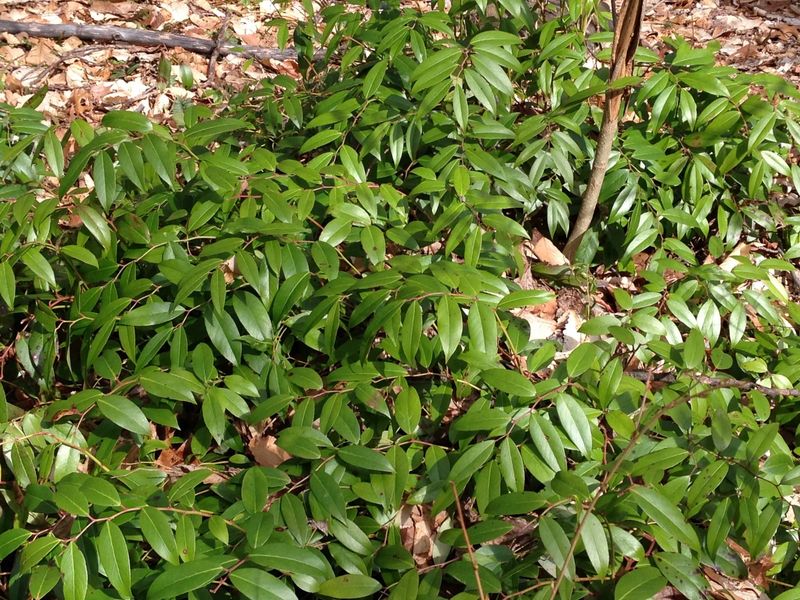
Spacing is where many wood-line plantings go wrong. Mountain doghobble can sucker and spread, gradually forming a colony if given room, which is useful for naturalized coverage but problematic if plants are crowded against a fence, a path, or one another from the start.
NC State’s Woody Ornamentals handbook recommends sizing plant spacing to the full mature width of the species, not the nursery pot. For mountain doghobble, that means planning for 4 to 8 feet of spread per plant and resisting the urge to pack them in for immediate coverage.
The arching habit also affects placement. Stems grow outward and downward in a graceful arc, which means the plant claims horizontal space even when it is not particularly tall.
Placing plants too close to a walkway or a low-clearance structure creates a maintenance problem within a few seasons. Give each plant room to arch naturally and the colony room to fill in gradually over two or three growing seasons rather than forcing density through overcrowding.
For sites that need more height than mountain doghobble alone can provide, the answer is layering rather than substituting. NC State’s native plants landscaping guide recommends matching shade-tolerant plants to the shady side of structures or beneath trees and using multiple vegetation layers for both ecological value and visual screening.
Pairing mountain doghobble with taller native understory shrubs such as sweetshrub (Calycanthus floridus) or native viburnums, or with small native trees like serviceberry (Amelanchier), builds a screen that works at multiple heights without relying on a single species to do everything.
A mixed planting also reduces the risk of a single pest or disease event wiping out the entire screen. NC State’s plant profile notes that leaf spot can occur where heat and poor air circulation combine.
Spacing plants appropriately and mixing species keeps air moving and reduces that risk considerably.
Manage moisture and spread as the shrub establishes
Mountain doghobble is not a plant you can set in the ground and ignore. The establishment period, typically the first two growing seasons, is when moisture management matters most.
Roots need consistent access to water while they spread into surrounding soil, and a dry spell during that window can set the plant back significantly. Mulching with 2 to 3 inches of shredded hardwood or leaf compost helps retain moisture, moderate soil temperature, and gradually add organic matter as it breaks down.
Once established, the shrub still needs a reliably moist site. NC State’s plant profile is direct about this: mountain doghobble does not tolerate drought well and should not be placed in a hot, dry, or windy exposure.
If the site dries out regularly in summer, no amount of establishment care will make the plant thrive long-term. This is why site selection, covered in an earlier section, cannot be treated as optional homework.
Suckering is normal behavior for this species, and it can work in your favor if you want the planting to naturalize and fill in over time. Monitor the edges of the colony each spring and remove suckers that push into paths, lawn edges, or neighboring plantings if they are not welcome there.
This takes perhaps fifteen minutes a year and keeps the planting from becoming a maintenance problem.
Height can be managed through pruning. NC State notes that mountain doghobble responds well to severe pruning when needed to reduce size or refresh older stems.
That said, pruning should not be used as a workaround for planting in the wrong spot. A plant that is consistently pruned back because it is crowding a structure or a walkway was probably placed too close in the first place.
Reserve severe pruning for occasional renewal cuts on older, woody stems rather than as a routine size-control strategy.
Use its wildlife value without making tick promises
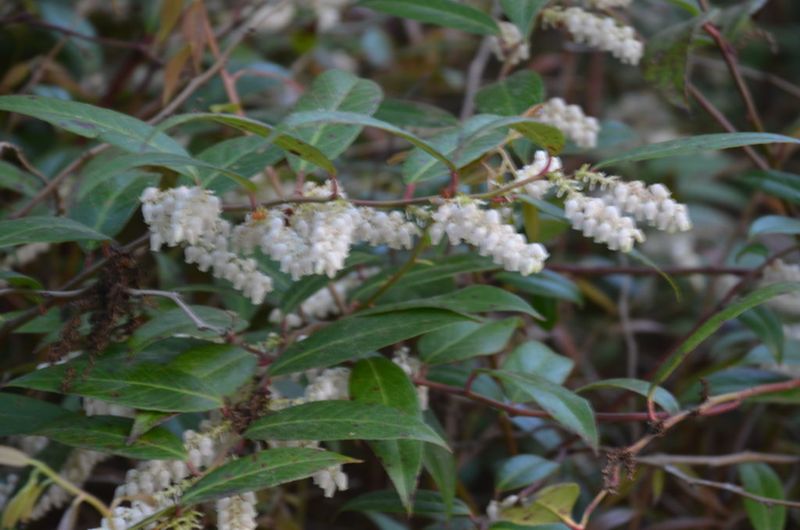
Mountain doghobble earns real stewardship credit in a yard planting. The creamy-white flower clusters that appear in April and May attract bees, butterflies, and other pollinators looking for early-season nectar in a shaded woodland setting.
NC State Extension’s plant profile documents this pollinator value directly, and a North Carolina stream repair guide describes the plant as good amphibian cover and notes that its fragrant flowers provide nectar in riparian and moist woodland settings.
The evergreen structure also provides useful winter cover for small wildlife that needs dense, low vegetation during cold months. NC State’s wildlife landscaping guide recommends using multiple vegetation layers and shade-tolerant natives to support habitat structure, and mountain doghobble fills the lower layer of that structure well.
These are the wildlife benefits the plant can honestly deliver: pollinator visits during bloom, general cover, and possible amphibian shelter in appropriate moist sites.
What mountain doghobble cannot do is repel ticks or make a wood-line border tick-safe. University of Maryland Extension experts specifically note that there are no scientific studies showing that simply planting a particular species repels ticks from a yard.
The presence of a plant is not the same as applying an extracted botanical repellent.
Dense, moist vegetation near a wood line can actually overlap with tick habitat rather than reduce it. For tick-risk reduction, CDC guidance on preventing tick bites focuses on removing leaf litter, clearing tall grass and brush near activity areas, trimming vegetation to allow more sunlight into the yard, and placing a roughly 3-foot wood-chip or gravel barrier between the lawn and the wooded edge.
Personal protection and regular pet checks after time outdoors are separate, necessary steps that no planting decision replaces. Use mountain doghobble for its genuine ecological value and handle tick risk through these practical, evidence-based measures on their own terms.
Check regional and household limits before buying
Mountain doghobble is the right choice for a specific situation: a homeowner in North Carolina’s Mountains or Piedmont with a protected, moist, acidic, shaded corner who wants a low-to-medium evergreen woodland screen rather than a tall, formal privacy hedge. If that description fits your site, the NC State dog hobble plant entry is a reliable starting point for confirming regional suitability and mature dimensions before purchasing.
Coastal Plain gardeners should not assume this species translates to their conditions. The appropriate alternative is coastal doghobble, Leucothoe axillaris, a related but distinct species adapted to the Piedmont and Coastal Plain.
NC State’s coastal doghobble plant record is the place to start for that region rather than defaulting to the mountain species.
Toxicity is a firm household limit regardless of region. NC State rates mountain doghobble as highly poisonous if ingested, identifying the leaves and flowers as the poisonous parts.
ASPCA lists fetterbush as toxic to dogs, cats, and horses. The common name “doghobble” refers to dense, arching growth that can obstruct animals moving through it, not to any protective or pet-safe quality.
Keep this plant away from children and pets that chew vegetation.
Deer resistance is listed by NC State as high, which is genuinely useful in mountain and Piedmont yards with browsing pressure, but resistant is not the same as deer-proof. A hungry deer in winter will test any plant.
Native status is also not a safety endorsement for household use. A plant can be ecologically valuable and regionally native while still being harmful if eaten.
Mountain doghobble is both things at once.