
Something Keeps Emptying Your North Carolina Bird Feeder Overnight And The Tracks May Help You Find Out Who
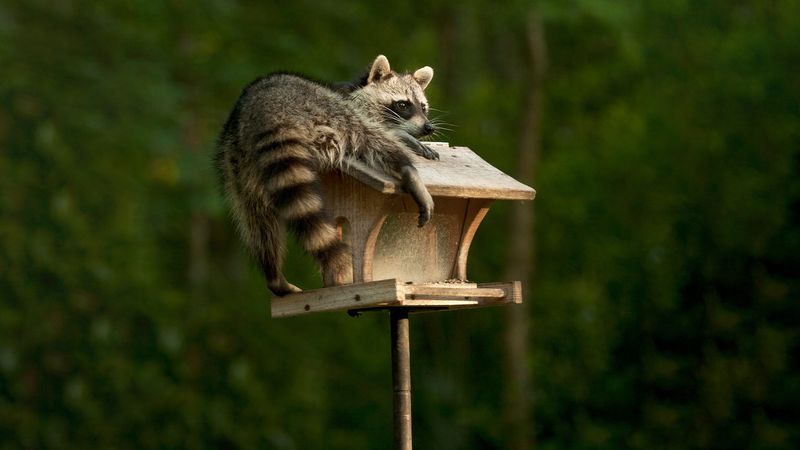
You fill the bird feeder before bed and find it empty by morning, but no birds were around after dark. Something is visiting your yard at night, and the clues it leaves behind can help you figure out what it might be.
Raccoons, Virginia opossums, and southern flying squirrels are all plausible nighttime visitors in North Carolina, and each one leaves a different kind of evidence. Knowing how to read those signs, and when to reach for a camera instead, turns a frustrating mystery into a manageable backyard investigation.
An empty feeder starts the investigation, not the identification
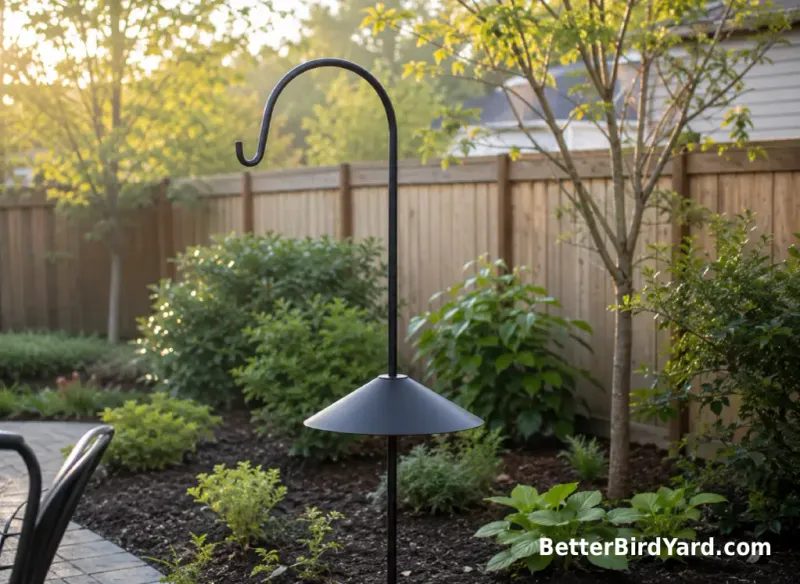
Waking up to an empty feeder is a starting point, not a conclusion. Before naming a culprit, consider how many things can drain a feeder between dusk and dawn: birds feeding late or early, seed spilling onto the ground, mice or rats working from below, or more than one species taking turns through the night.
NC State Extension wildlife guidance notes that spilled birdseed alone can pull in mice and other unintended visitors, which means the feeder may be losing seed to animals that never climb the pole at all.
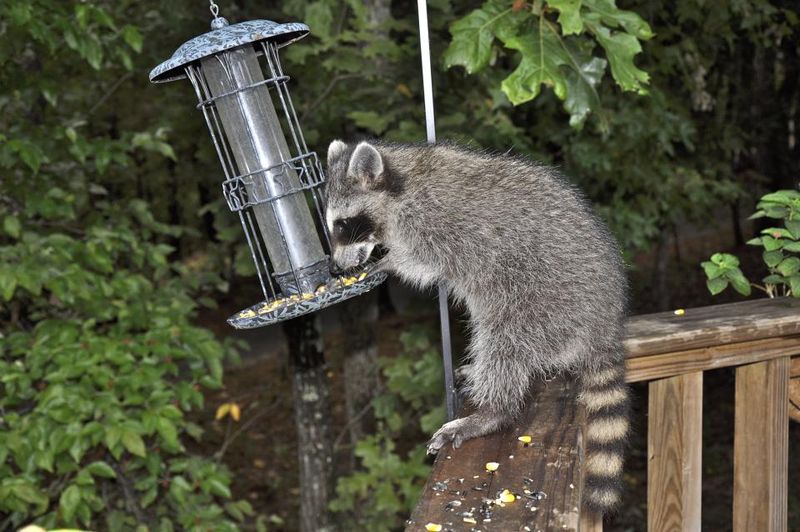
Raccoons, Virginia opossums, and southern flying squirrels are the nocturnal mammals most likely to visit a residential bird feeder in North Carolina. Raccoons are well-documented as mainly nocturnal and are attracted to bird food, pet food, and garbage.
Virginia opossums are also primarily nocturnal, typically becoming active around dusk and remaining out until dawn. Southern flying squirrels are strictly nocturnal and will forage on seeds, nuts, and other available food sources.
Tracks can help narrow the list of suspects, but they cannot tell you with certainty which animal emptied the feeder. A single print, especially a partial one on hard ground, is often ambiguous.
The strongest approach combines tracks with other signs: scat near or beneath the feeder, visible damage to the feeder itself, the access route the animal used, the timing of the disappearance, and, most reliably, footage from a motion-activated camera.
Read the whole trackway before naming the visitor
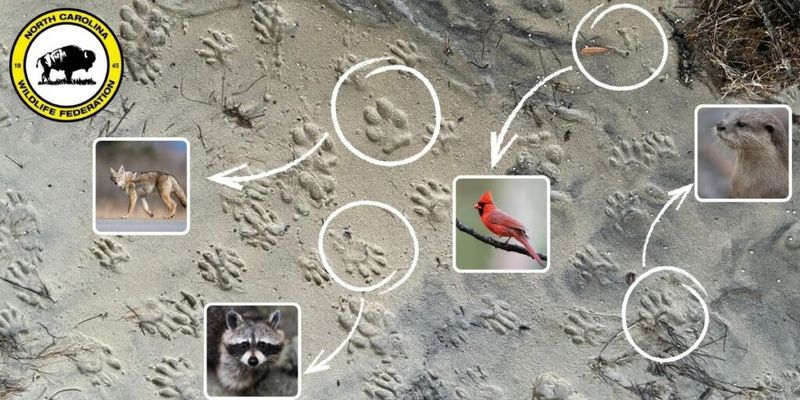
One print on its own rarely tells the full story. A trackway, meaning a sequence of several connected impressions, gives you much more to work with than a single mark.
National Park Service track-reading guidance recommends noting the approximate length and width of each print, the number of toes visible, whether the front and hind feet look noticeably different from each other, the stride pattern between steps, and the general direction of travel.
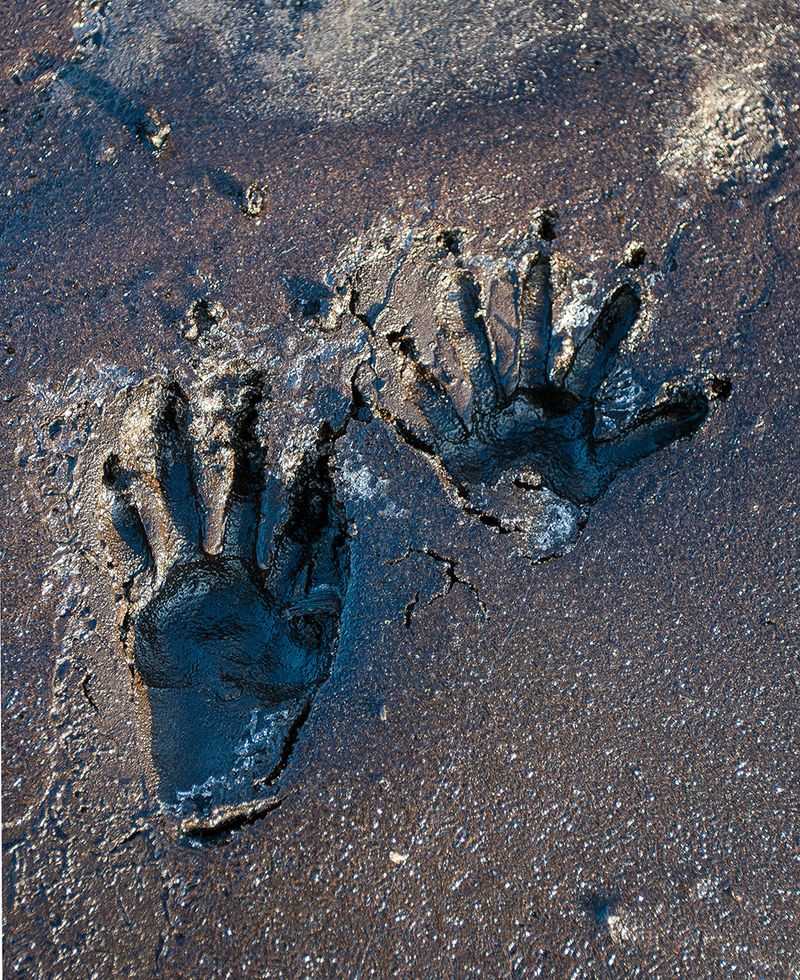
Front and hind feet often differ in size and shape, and that difference can be diagnostic. A raccoon’s hind foot is longer than its front foot, resembling a small hand with five finger-like toes.
An opossum’s hind foot may show a separated inner toe that stands apart from the rest. Measuring both feet and comparing them is worth the extra minute it takes.
Substrate matters as much as the animal’s anatomy. Soft mud near a garden bed, damp sand along a low spot, or a thin layer of moist soil at the base of the feeder pole will hold detail that hard lawn, compacted mulch, or dry gravel simply cannot.
Track patterns in yielding surfaces like snow reveal gait clearly, while the same animal crossing a firm surface may leave only smudges.
Gait can also distort what you see. An animal moving quickly may bound, causing the hind feet to land ahead of the front feet and creating a clustered pattern that looks nothing like a slow walk.
Penn State forest stewardship resources point out that reading the stride pattern alongside the individual print helps narrow possibilities without replacing confirmation from other evidence.
Five-toed prints point toward a raccoon, with limits
Raccoons are a logical first suspect when a feeder goes empty overnight. Raccoon natural history records confirm they are primarily nocturnal, omnivorous, and capable of manipulating feeders with their dexterous front paws.
NC State Extension identifies raccoons as commonly attracted to bird food, pet food, and unsecured garbage, which makes a backyard feeder a predictable stop on their nightly route.
The track feature most associated with raccoons is five finger-like toes on both the front and hind feet, with the hind print being noticeably longer. When the ground is soft enough to hold detail, the toes can appear spread and almost hand-like, which distinguishes them from the rounder, more compact prints of a cat or the smaller marks of a squirrel.
If you find a clear set of these prints leading from a fence line or tree base toward the feeder, a raccoon hypothesis is reasonable.
Still, five-toed prints are not exclusive to raccoons, and partial impressions can hide toes entirely. A print pressed into hard soil near the feeder pole may show only three or four toes, or it may look smeared and unreadable.
The raccoon’s access route matters too: look for claw marks on a nearby tree, bent or knocked-over feeder components, or scattered seed spread farther than wind would carry it. None of these details confirm a raccoon on their own, but together they build a more credible picture.
A raccoon visiting the yard is not a sign of an unusual population or a disease problem; it simply means food and a travel route are available.
The separated hind-foot thumb is the opossum clue
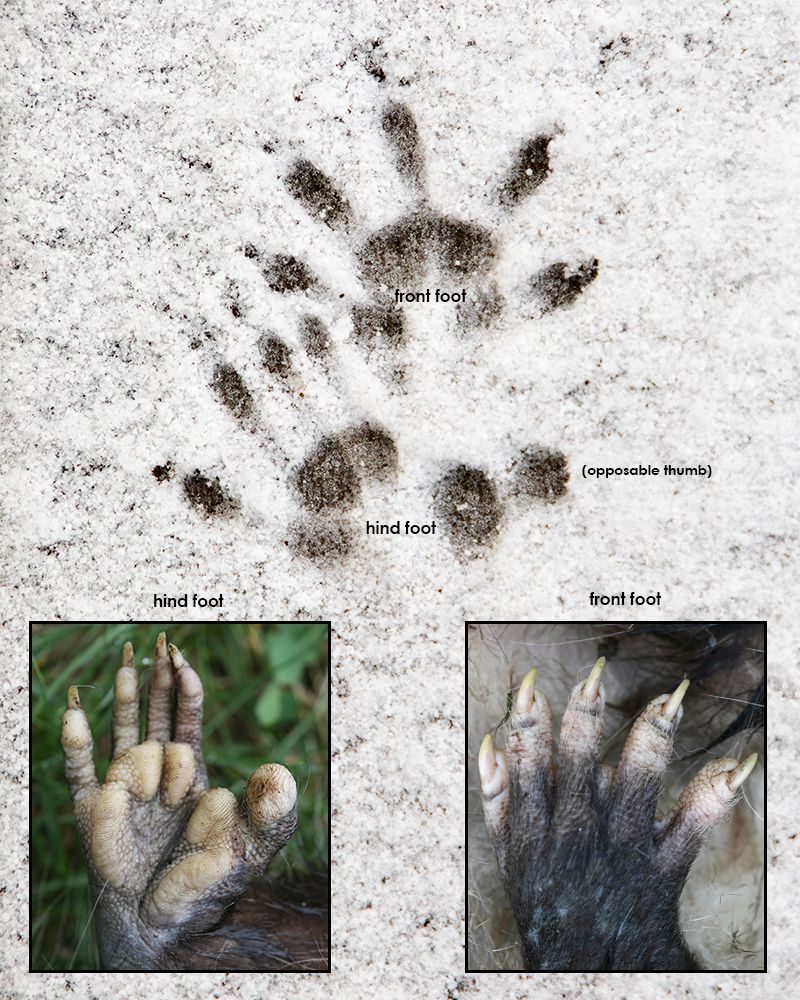
Virginia opossums are common across North Carolina and are active from dusk to dawn, making them a plausible overnight feeder visitor. What sets their tracks apart from a raccoon’s, when conditions cooperate, is the hind foot.
Opossum anatomy records describe the inner toe of the hind foot as opposable and clawless, meaning it can grip branches like a thumb. In a good impression on soft mud, that inner toe appears separated from the other four, pointing away at an angle that looks distinctly different from the tightly grouped toes of a raccoon.
The front foot, by contrast, has five toes arranged more symmetrically and lacks the dramatic separation of the hind foot. Reference images of opossum track patterns show that the hind print is the more diagnostic of the two, and that the trackway often shows a slow, somewhat meandering walking pattern rather than the bounding gait of a squirrel.
The practical catch is that the separated thumb only shows up clearly when the ground is soft enough to capture it. On hard soil, mulch, or a wooden deck near the feeder, the same hind foot may leave a blurry, five-toed smudge that looks like almost anything.
Track identification guidance consistently recommends looking at multiple prints in sequence rather than staking an identification on one impression. If the thumb detail is missing from most prints in the trackway, an opossum identification remains a hypothesis, not a conclusion.
A flying squirrel may be above the feeder, not in the tracks
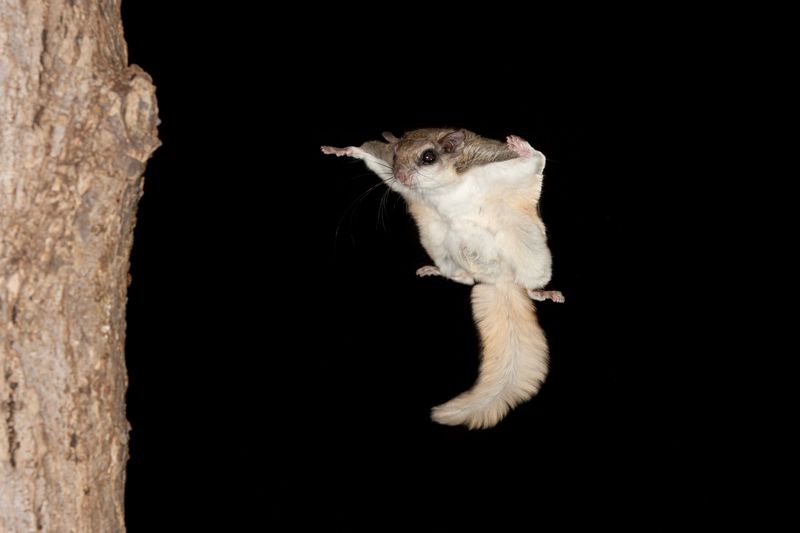
Southern flying squirrels are strictly nocturnal, and their documented diet includes seeds, nuts, berries, insects, and bird eggs, which puts a stocked feeder squarely within their foraging interests. Penn State Extension’s squirrel guidance notes that flying squirrels, like other squirrel species, may take food from bird feeders.
If your feeder is near a mature tree with good canopy cover, a flying squirrel gliding in from above is a realistic scenario.
The complication is that flying squirrels are primarily arboreal. They glide between trees and feeders rather than walking across open ground, which means they may leave little or no clear ground-level track evidence near the feeder base.
A small print in the soil beneath the feeder might belong to a flying squirrel, but it could just as plausibly come from a white-footed mouse, a young gray squirrel, or another small mammal. Camera-based wildlife documentation is far more dependable for confirming a flying squirrel visit than trying to interpret ambiguous small prints on the ground.
North Carolina geography adds another layer of caution. The state is home to two flying squirrel species, and they do not overlap in the same habitats.
The southern flying squirrel lives across a wide range of forested areas, including Piedmont and Coastal Plain yards. The Carolina northern flying squirrel is a separate, federally endangered species associated with the high-elevation spruce-fir and northern hardwood forests of the Blue Ridge Mountains.
North Carolina’s Wildlife Action Plan documents this distinction clearly. A suspected flying squirrel visiting a backyard feeder in Raleigh or Wilmington is almost certainly a southern flying squirrel, not the endangered northern species, though positive identification still requires more than a small track or a fleeting shadow.
A camera settles what the tracks cannot
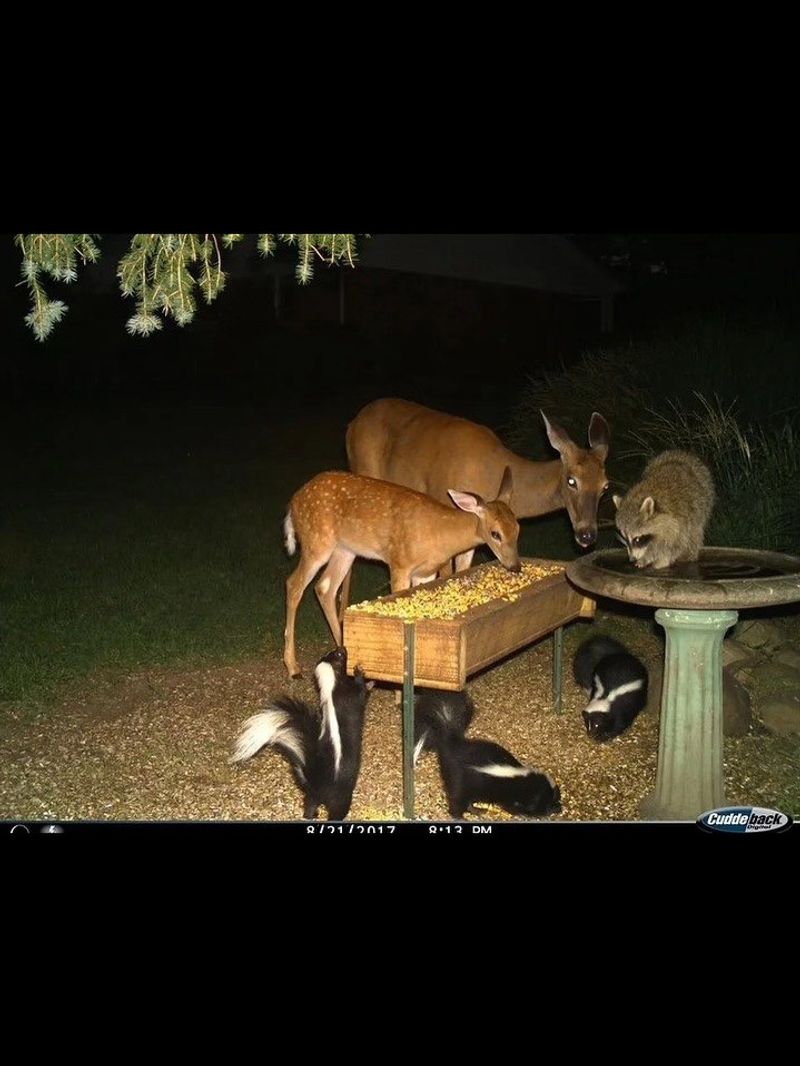
After gathering track evidence, the most productive next step is placing a motion-activated trail camera where it faces the feeder or the path leading to it. Penn State Extension recommends trail cameras specifically for documenting which species are present and when they are active, and a camera aimed at a bird feeder can distinguish a raccoon, opossum, squirrel, rat, mouse, deer, or even a domestic cat far more reliably than one ambiguous print ever could.
Camera placement matters. Aim the lens at the feeder itself or at the most likely approach route, such as the base of a nearby tree or a gap in the fence.
Most motion-triggered cameras record a time stamp alongside the image or video clip, which lets you correlate the footage with the timing of seed loss and with any tracks you found in the morning. A raccoon that shows up at 2 a.m. and a gray squirrel that arrives at 6 a.m. can both drain a feeder, and a camera tells you which one, or both, were actually there.
Treat camera footage as one piece of evidence, not the final word on every overnight disappearance. A single recorded visit does not mean that animal accounts for all the missing seed across multiple nights.
Compare what the camera shows against the trackway pattern, the feeder’s physical condition, and the access route to build a fuller picture. Once you have a credible identification, you can make an informed decision about how to adjust your feeding setup rather than reacting to a guess.
Reduce the attraction without turning the yard into a wildlife trap
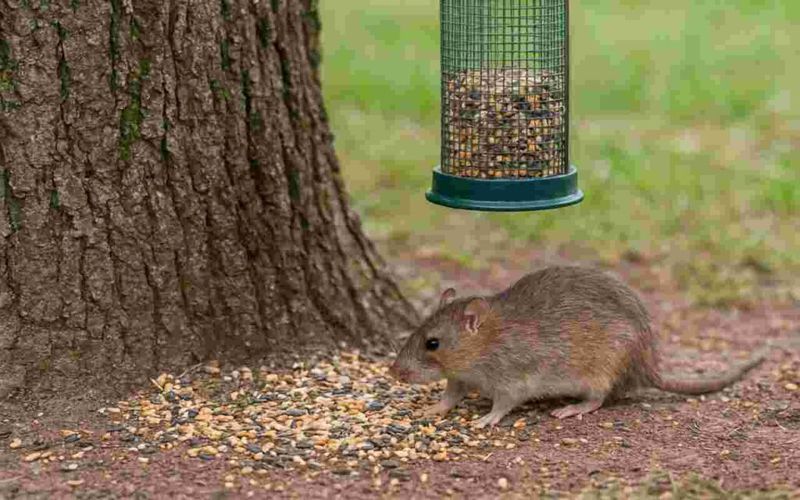
Once you have a reasonable idea of who is visiting, the practical response is adjusting what the yard offers after dark. The most direct step is bringing the feeder indoors at night or removing the seed from it before dusk.
NC State Extension specifically recommends storing bird food in sealed containers and considering a temporary pause in feeding when raccoons are repeatedly visiting. Pet food bowls left outside overnight carry the same risk and should come in at the same time.
Secure garbage cans with locking lids, since an accessible trash bin can draw the same animals that are hitting the feeder. Do not put food out to attract wildlife for a closer look or for photographs; habituating raccoons or opossums to people and food sources increases the chance of conflict and can create problems for neighbors as well.
If the damage to your feeder or property is substantial and ongoing, contact the NC Wildlife Resources Commission or a certified Wildlife Damage Control Agent rather than attempting to trap or relocate the animal yourself. North Carolina animal damage control rules vary by species and situation, and professional guidance protects both you and the animal.
Feeder hygiene is a separate responsibility that applies regardless of which visitor shows up. CDC guidance on wildlife and healthy pets advises cleaning bird feeders at least once a month, and more often when they look dirty, using a scrub brush and a diluted bleach solution.
Always wash your hands after handling feeders or bird food, keep pets away from the feeder area, and do the cleaning outdoors rather than in a kitchen or food-preparation area. If sick or dead birds appear near the feeder, remove both the feeder and any bird baths for two weeks and clean them thoroughly before putting them back out.
Concerning animal behavior deserves a measured response. A raccoon active during daylight hours is not automatically a rabies case; CDC rabies prevention guidance focuses concern on animals that appear sick, injured, unusually tame, or aggressive, not simply on the time of day they are seen.
Opossums and squirrels are not common rabies reservoirs, though any mammal can potentially carry rabies. If a wild animal bites you, scratches you, or if its saliva contacts a wound or mucous membrane, wash the area thoroughly with soap and water right away and contact a health-care provider or your local health department promptly.
Saliva landing on unbroken, intact skin is not, by itself, a rabies exposure, but a bite or scratch always warrants a call to a medical professional.
Let the evidence guide the response
Tracks narrow the suspects; a pattern of signs closes the gap. Combining a trackway with feeder damage, scat, access route, timing, and camera footage gives you a much stronger answer than any single clue on its own.
Camera-based documentation remains the most reliable way to confirm which animal is visiting and when, especially for species like flying squirrels that may leave little ground evidence.
Knowing what is visiting does not require treating the animal as a nuisance or a health threat. NC State Extension’s wildlife guidance frames the useful outcome as adjusting attractants and feeding practices, not as launching a removal campaign.
Most overnight visits stop or decrease once the food source is secured. If they do not, that is when professional help becomes the right call.
A well-managed feeding setup and a basic understanding of what moves through the yard after dark are the practical goals here. Keeping feeders clean and wildlife at a safe distance protects birds, pets, and people alike.
The empty feeder that started the investigation turns out to be a useful prompt: it pushed you to look more closely at what your yard supports after the lights go out, and that kind of attention is exactly what good stewardship looks like.