
Eastern Screech-Owl Nest Box: Durable Habitat and a Possible Helping Hand With Rodents
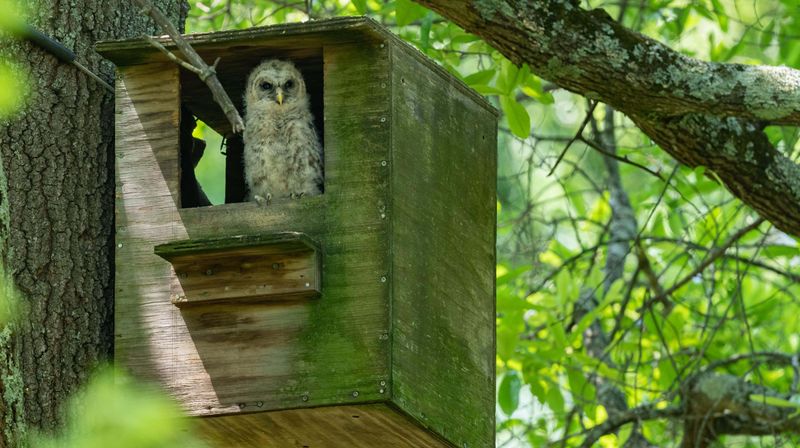
Putting up a nest box for an Eastern Screech-Owl is one of the more rewarding things a North Carolina homeowner can do for the local wildlife. These compact, year-round owls eat mice, voles, and a wide variety of other small animals, and they rely on ready-made cavities because they cannot dig their own.
A correctly built box gives a nearby owl pair a place to nest, roost, and raise young, and it may contribute to keeping rodent numbers in check around your yard. The catch is that “may” is doing real work in that sentence, and understanding what the box can and cannot promise makes the difference between a smart habitat project and a disappointment.
Treat the box as habitat, not a rodent guarantee
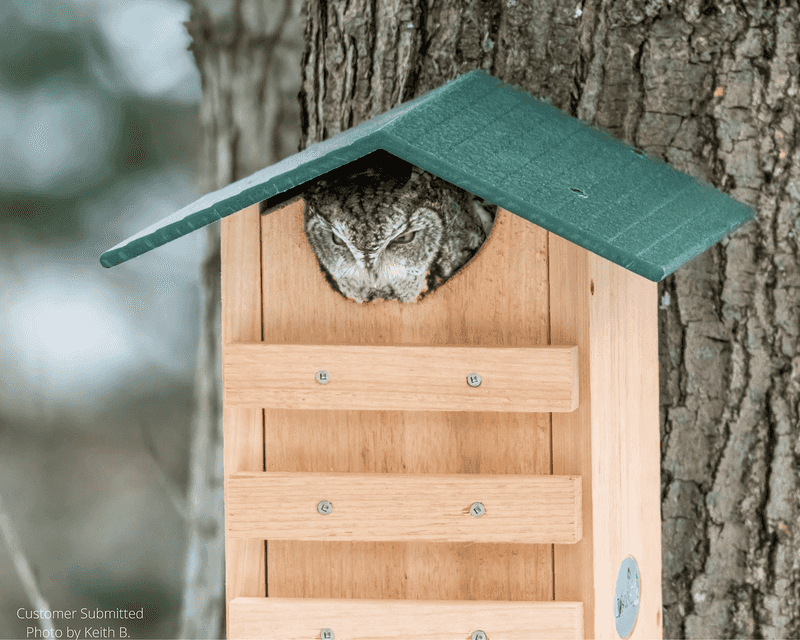
Eastern Screech-Owls do eat mice and voles. Cornell Lab’s Eastern Screech-Owl life history confirms that small mammals are a regular part of their diet, alongside insects, earthworms, small birds, frogs, and other prey.
A nest box can provide the cavity these owls need, since they cannot excavate their own holes and depend on natural openings, old woodpecker cavities, or artificial boxes.
Where the promise gets shaky is the leap from “this owl eats mice” to “one box will clear your yard of rodents for years.” Diet records show what an individual owl consumes; they do not show that one box in a residential backyard will reduce the local rodent population in any measurable way. The U.S.
Forest Service notes that Eastern Screech-Owl home ranges and nightly movements vary with prey availability, and a hunting owl may cover an area much larger than a single property.
Much of the “owls as pest control” evidence comes from agricultural Barn Owl programs. Research evaluating Barn Owl nest boxes in California vineyards and studies showing Barn Owls exert top-down effects on rodent abundance involve a different species in agricultural landscapes with very different prey densities.
A Utah State Extension review of wildlife for farmland pest control similarly focuses on large-scale settings. Transferring those findings directly to a single Eastern Screech-Owl box in a Raleigh or Wilmington backyard overstates what the science supports.
The defensible case for a screech-owl box is straightforward: it provides durable cavity habitat for a native predator and may, over time, contribute to an integrated approach to managing mice and voles around your property. Treat it as a wildlife stewardship project with a possible side benefit, and you will get the most honest value from it.
Check whether your North Carolina yard fits the species
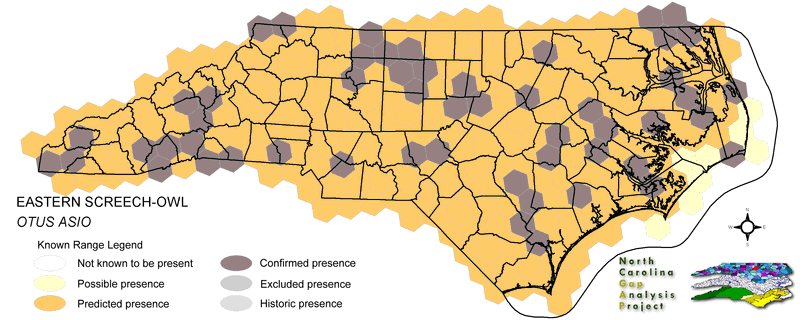
Eastern Screech-Owls live year-round across most of the eastern United States, and North Carolina falls squarely within their permanent range. Audubon’s Eastern Screech-Owl field guide describes the species as comfortable in suburban yards, parks, open woodlands, and stream corridors, which means many North Carolina residential properties can genuinely support them.
The key word is “can” – not every yard qualifies, and habitat quality matters.
What the owl needs is a combination of mature trees for cover and cavity opportunities, nearby open ground for hunting, and a yard that has not been saturated with pesticides. Cornell Lab notes that the species hunts a broad range of prey, from mice and voles to insects and small songbirds, so a yard with diverse native plantings and some open lawn gives the bird more to work with than a closely cropped, chemically managed turf.
Across North Carolina’s three main regions, conditions vary. Piedmont homeowners with mature shade trees, a mix of lawn and shrub border, and access to a meadow margin or stream edge are often in good shape.
Coastal Plain yards near wooded stream corridors, open pine woodland, or wetland edges can also provide suitable territory. In the mountains, the species is most reliably found at lower elevations; high-elevation sites may not support screech-owls consistently, so mountain homeowners should confirm local presence before investing in a box.
Rodents are one part of the owl’s diet, not the whole of it. Whether a box near your yard actually contributes to rodent management depends on whether a local owl takes up residence, how much hunting it does on your property versus neighboring land, and what prey is available across its range.
A yard with good habitat raises the odds of occupancy, but nothing guarantees it.
Build and install the box before nesting season
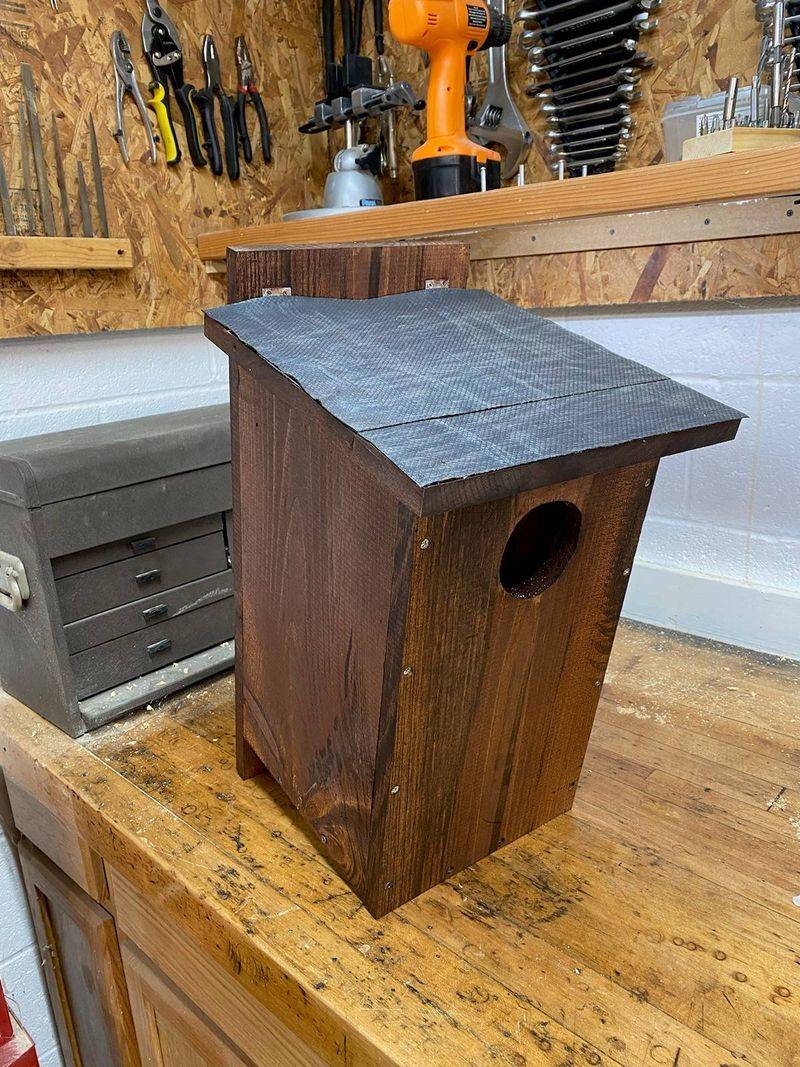
Fall is a practical time to hang a screech-owl box because it gives you a comfortable runway before breeding begins. Cornell NestWatch’s Eastern Screech-Owl nest-box guidance recommends that boxes in the South be in place by February, when the species may begin courtship.
For anyone planning a fall 2026 installation, the practical target is February 2027. Getting the box up months early means the wood can weather naturally, and any local owl has time to discover and assess it before the breeding window opens.
Material choice matters. Use untreated, unpainted wood – cedar, pine, or cypress are reliable options.
NestWatch’s features of a good birdhouse calls for drainage holes in the floor, ventilation gaps near the roofline, and a secure roof that sheds rain. Skip any exterior perch; perches give predators a staging platform and are not needed by owls, which grip the entrance directly.
The entrance hole should be exactly 3 inches in diameter – large enough for a screech-owl, small enough to exclude Great Horned Owls and most other unwanted visitors.
Inside the box, add 2 to 3 inches of untreated wood shavings. Screech-owls do not build a nest from scratch; they lay eggs on whatever substrate is already present, so shavings give the eggs a stable surface and some insulation.
Do not use sawdust, which can pack and smother eggs, or treated materials of any kind.
Mount the box 10 to 30 feet above the ground. Audubon’s screech-owl box guidance suggests positioning the box under a tree limb when possible, which provides shade and a landing spot for fledglings.
Keep at least 100 feet between boxes if you install more than one. For a pole-mounted box, add a predator guard baffle and place the pole far enough from nearby trees that squirrels cannot jump across to the box.
Choose placement that supports hunting and safety
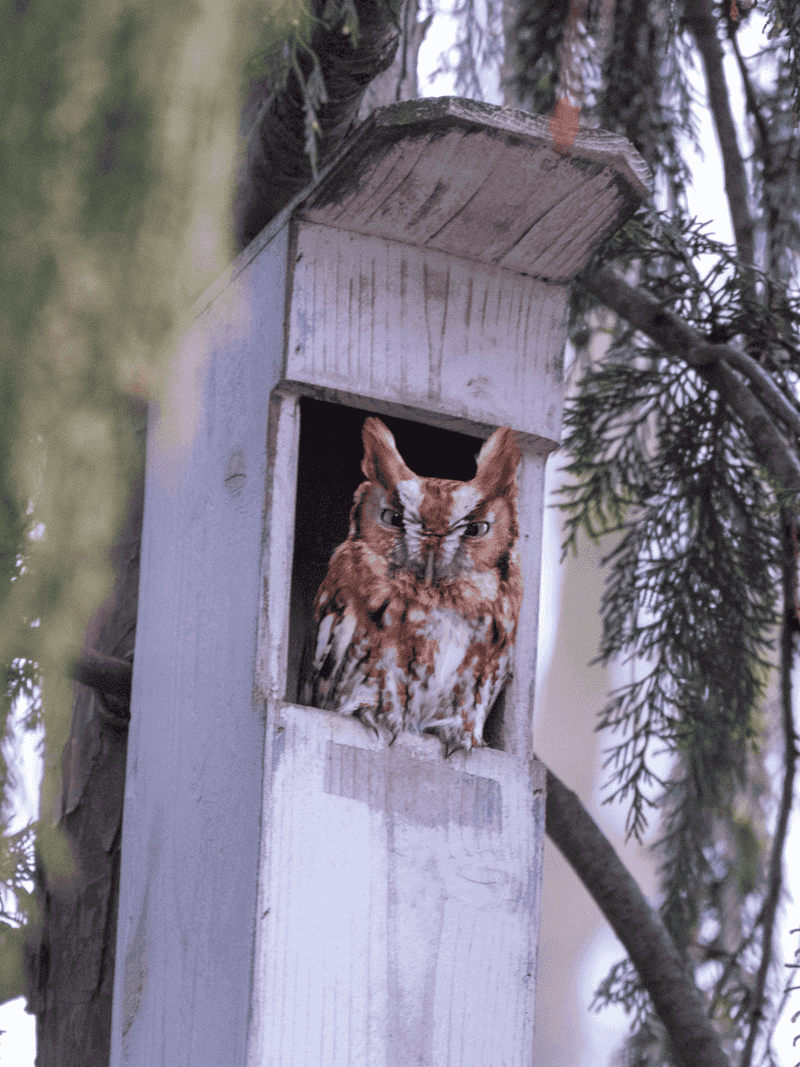
Location shapes whether a box gets used and whether the owl that uses it can actually hunt near your property. NestWatch recommends placing the box at a woodland edge, ideally under a tree limb, with open ground nearby – fields, lawns, meadow strips, or wetland edges all count.
The owl needs both: sheltered cover for roosting and nesting, and open ground where it can spot and pursue prey.
In the Piedmont, a box on a mature oak or hickory at the back edge of a yard, where lawn meets a shrubby border or a neighbor’s wooded lot, is often a good fit. Coastal Plain homeowners near wooded stream corridors or pine savannas can look for a spot where the tree canopy opens toward a clearing or water’s edge.
In the lower-elevation mountains, open hardwood forest margins and woodland gaps near small meadows can work; avoid heavily shaded hollow interiors where hunting visibility is poor and owl presence is less reliable, based on U.S. Forest Service habitat notes for the species.
Entrance orientation matters in a practical way. Face the entrance away from prevailing weather to reduce rain intrusion and direct afternoon sun, which can overheat the cavity.
A nearby branch at roughly the same height as the box gives fledglings a place to land after their first flights, but make sure it does not block the entrance or give a squirrel a direct bridge to the hole.
NestWatch’s nest box placement guidance is clear that pesticide and herbicide use near the box reduces the value of the site. Those chemicals can harm the owl directly and eliminate the insects and small prey that round out its diet.
If your yard relies on routine chemical applications, address that before hanging the box – the owl’s presence does not make chemical use safe, and chemical use undermines the habitat you are trying to create. Audubon’s field guide reinforces that suburban habitat quality depends heavily on the surrounding land management, not just the box itself.
Interpret occupancy and repeated use realistically
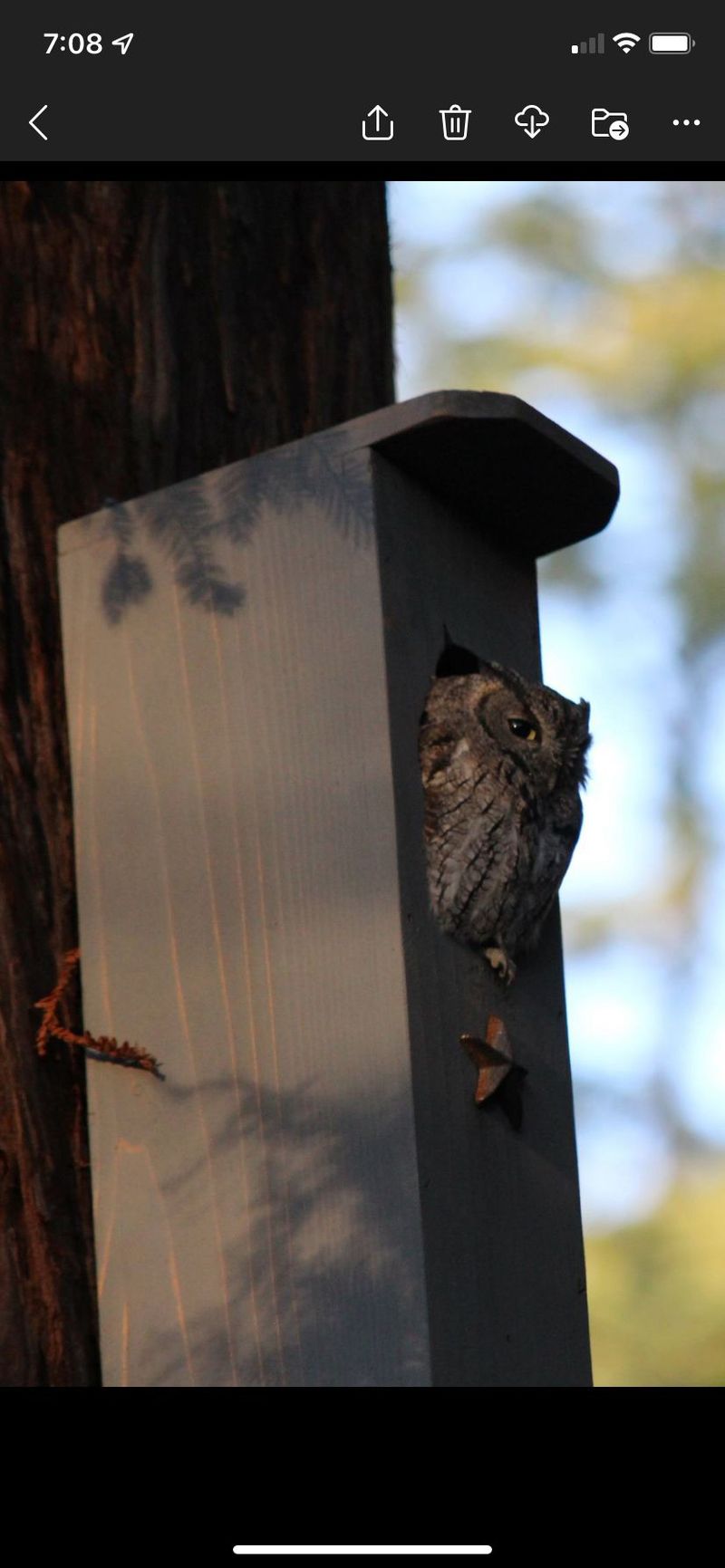
After the box goes up, the most common experience is waiting. Cornell NestWatch advises homeowners not to be discouraged if birds do not use a box right away; it can take a full season or more before a local owl discovers and accepts the site.
In the meantime, the box is not wasted – Eastern Screech-Owls use cavities for daytime roosting and winter shelter as well as nesting, and Cornell Lab’s guidance on roost boxes confirms that cavity-using birds often occupy boxes outside the breeding season long before they commit to nesting in them.
When occupancy does happen, it can persist. The U.S.
Forest Service’s Eastern Screech-Owl species review documents one female using the same nest box for eight consecutive breeding seasons. That is a real and encouraging data point – it shows that repeated, long-term use is possible.
It is not, however, a typical result that every box owner should expect. Reuse depends on whether the same individual survives and remains in the area, whether the box stays in good condition, and whether competing cavity users do not take over.
A box may also be used by other cavity nesters: Carolina Wrens, Eastern Bluebirds, flying squirrels, or even the occasional rat snake investigating from below. NestWatch notes that screech-owls sometimes cache prey items inside cavities, so the presence of small animal remains does not always mean active nesting is happening.
Once you suspect a box is occupied, resist the urge to check it frequently. NestWatch specifically warns that disturbing a female during or shortly after egg-laying can cause nest abandonment.
If you find an active nest, wait at least one to two weeks before opening the box again. Any rodent benefit from the box flows from an undisturbed, thriving owl – not from close monitoring.
Hunting range and prey availability determine how much the owl hunts near your yard, and that may extend well beyond your property line.
Use targeted controls when rodents are causing damage
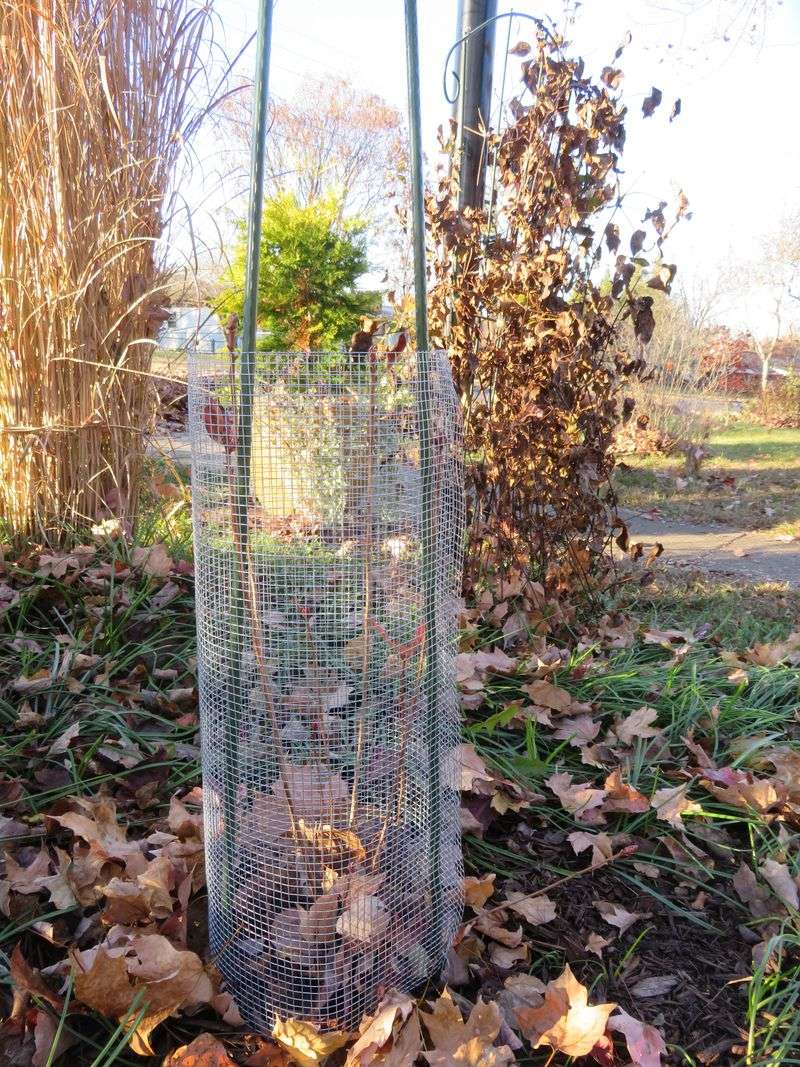
A nest box is a long-term habitat project, and it cannot serve as an emergency fix. When voles are girdling your fruit trees this winter or mice are getting into your garage, waiting for an owl to show up is not a practical answer.
Penn State Extension’s vole management guidance recommends exclusion and targeted trapping as the most controllable approaches for limited yard damage, and that advice translates well to North Carolina residential settings.
Hardware cloth cylinders – quarter-inch mesh, at least 18 inches tall, and buried 2 to 3 inches below the soil surface – protect individual trees and shrubs from vole feeding at the root collar and bark. Pull mulch back a few inches from the base of each tree; voles use deep mulch as a covered runway and rarely venture across open ground.
For mice entering structures, seal gaps larger than a quarter inch and use snap traps placed along walls and in travel corridors, checked and reset daily until catches stop.
Rodenticide is a different matter, especially in a yard with a nest box. Owls and hawks that eat poisoned rodents can absorb enough toxin to become seriously ill or die – a risk the EPA’s rodent control pesticide safety review identifies explicitly for predators and scavengers.
If you use bait elsewhere on the property and cannot avoid it, EPA’s guidance on safely using rodent bait products requires tamper-resistant bait stations inaccessible to children, pets, and wildlife; strict label compliance on placement and quantity; and prompt removal and disposal of any dead rodents you find. Never scatter bait loosely in a yard where an owl may be hunting.
The honest comparison between owls and traps is not which one is better in every case. Exclusion and trapping give you direct, measurable control over a specific damage problem.
A nest box gives a native predator a home and may, over time, reduce the number of mice and voles moving through your yard. Both have a place in a well-managed North Carolina yard; they just solve different problems on different timescales.
Let the box support a living, manageable yard
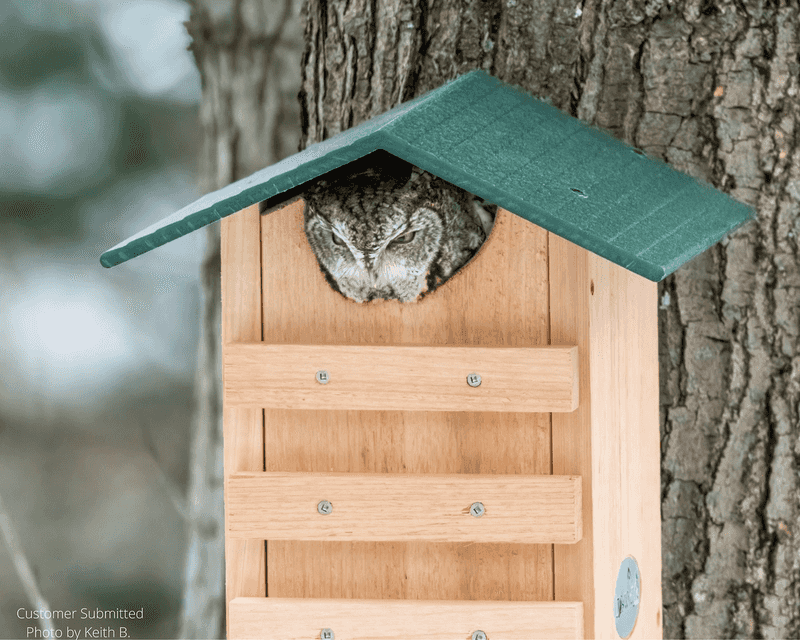
The real payoff from a screech-owl box is not a guaranteed reduction in your mouse count every year. A well-built box can last a decade or more, and if an owl finds it, uses it, and returns across multiple seasons, you have contributed something lasting to the local food web.
That is a meaningful outcome, even when it is hard to measure in pellets or trap counts.
A yard that supports screech-owls is a yard that still has mice and voles – because that is what the owl needs to survive. Penn State’s vole guidance frames the practical goal well: limit damage around structures and valued plants, not eliminate every small mammal from the property.
Mice and voles are part of the food web that keeps the owl fed. Cornell Lab’s overview of the Eastern Screech-Owl also notes that the species eats small songbirds along with rodents, so a box supports a native predator in full, not just the parts of its diet that are convenient for the homeowner.
Stewardship obligations come with the box. Active nests and dependent young are protected under the Migratory Bird Treaty Act, and U.S.
Fish and Wildlife Service guidance on bird nests makes clear that removing eggs or chicks from an active nest is not a homeowner’s call to make. USFWS policy on migratory bird nest contents reinforces that point for anyone tempted to clear out a box mid-season.
Avoid disruptive maintenance during nesting, and accept that the box may serve as a roost for years before an owl ever lays eggs in it.
Install it correctly, keep the surrounding habitat chemical-free, and use targeted controls for the problems a predator cannot reliably solve. A yard that does all three is genuinely better for wildlife – and noticeably easier to manage over time.