
An Underrated North Carolina Native Perennial Holds A Steep Backyard Slope For Years With No Mulch
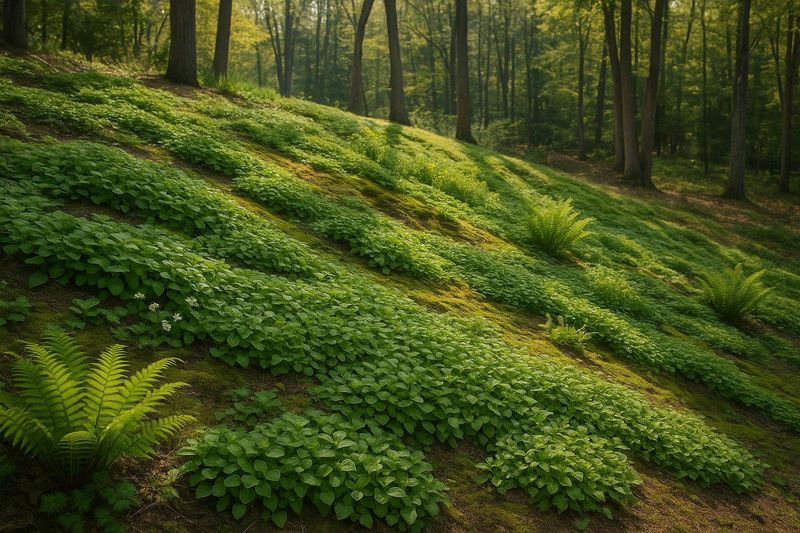
Bare slopes in North Carolina backyards have a way of fighting back every spring, washing out freshly spread mulch and leaving exposed soil that erodes a little more each time it rains. Many homeowners keep patching the problem with bags of wood chips, not realizing a low-growing native perennial can gradually take over that job after it gets established.
Wild strawberry (Fragaria virginiana) spreads by runners that root as they creep, slowly building a living mat that may reduce how often you need to re-mulch a slope. The catch is that it works best on the right site, with some temporary help while it settles in, and it cannot rescue every kind of failing bank on its own.
Runoff management and soil cover determine whether a slope holds
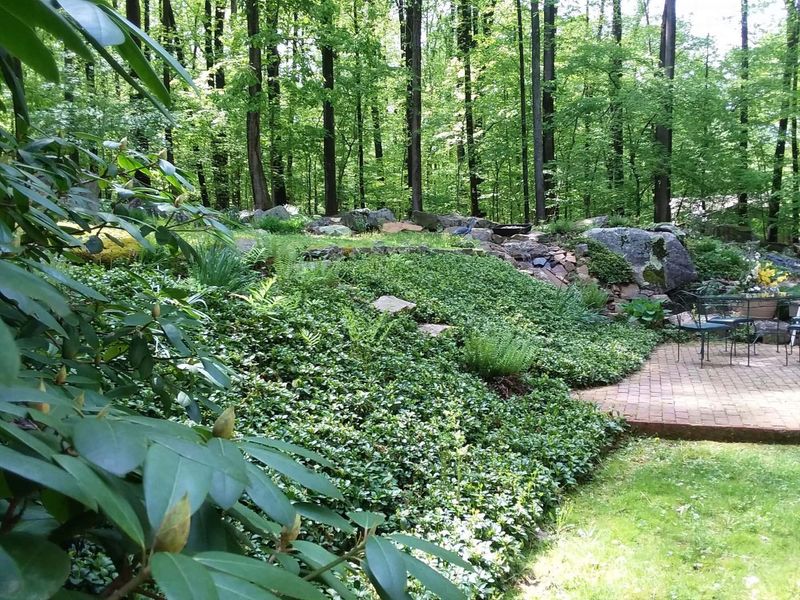
Most backyard slopes in North Carolina do not erode all at once. They lose a little soil each rain, mulch washes to the bottom of the hill, and the homeowner spreads another bag the following spring.
The real driver is usually concentrated water moving across bare or lightly covered soil faster than the ground can absorb it.
A living groundcover addresses the symptom, but it works alongside runoff management, not instead of it. NC Cooperative Extension’s erosion-control guidance recommends slowing stormwater before it reaches the slope, repairing or regrading badly eroded areas, and using terraces where the angle is steep enough to concentrate flow.
Fabric, straw, or simple barriers made from sticks and rocks can hold soil in place while plants get started.
Vegetation helps with what engineers call surface erosion, the thin-layer loss of topsoil from rain splash and sheet flow across a slope. That is a real problem worth solving, and a dense native ground layer can meaningfully reduce it over time.
However, a groundcover cannot fix active slumping, deep gullies, drainage failures, or any situation where water is concentrated by a downspout or impervious surface running straight onto the bank.
Henderson County Extension’s slope-stabilization guidance draws the same line: cover bare soil quickly, use biodegradable erosion fabric, and install barriers to slow runoff, but address the underlying drainage pattern first. When a slope is actively failing or threatens a structure, grading, drainage work, terracing, or a qualified site assessment belongs ahead of any planting decision.
The article that follows offers a lower-maintenance planting system built around a well-suited North Carolina native. It is not a promise that one plant will hold every steep slope forever without any soil cover or site preparation.
Wild strawberry creates a low native groundcover over time
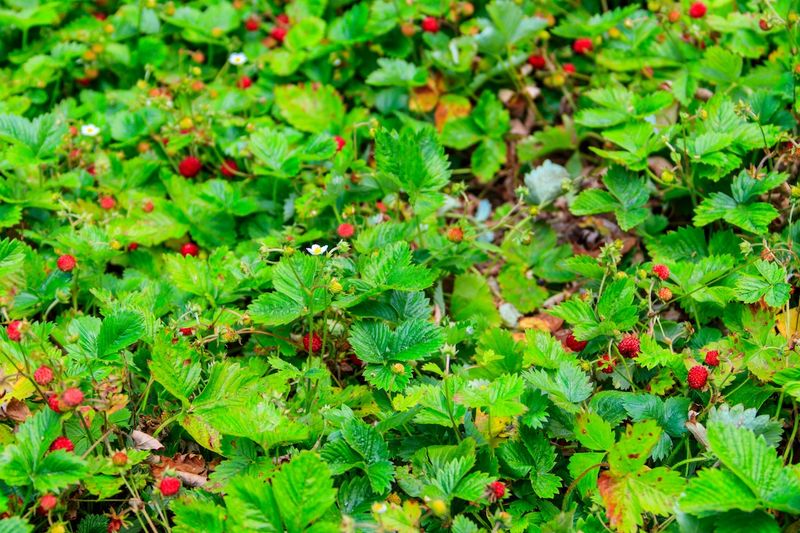
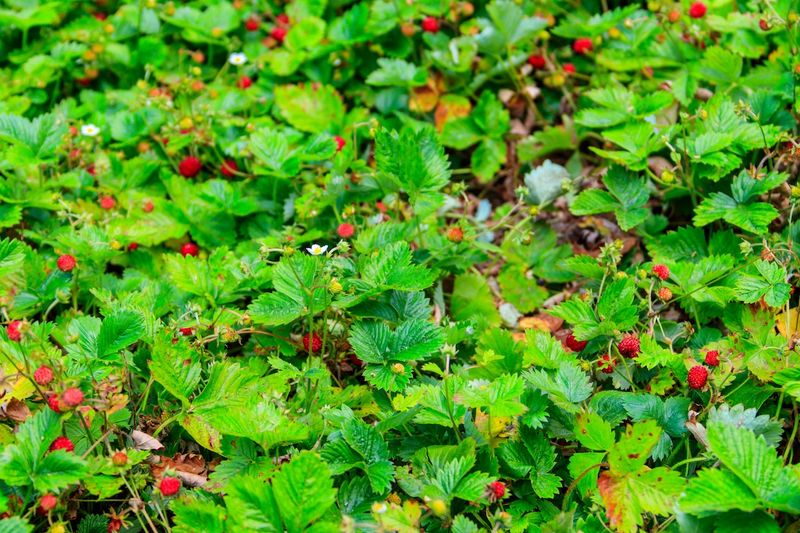
Fragaria virginiana, commonly called wild strawberry, is a native herbaceous perennial that grows roughly five inches tall and spreads through slender runners that root wherever they touch the ground. NC State Extension’s plant profile lists wild strawberry specifically for slopes and erosion control, noting that individual plants can spread roughly two feet wide and that runner-rooted colonies form over time.
That spreading habit is the practical heart of its value on a slope. As runners root at intervals, the colony gradually increases its contact with the soil surface.
More rooted points mean more places where the ground is held in place by a living plant rather than by mulch that can wash away. The process is gradual, not instant, and the result is a more continuous ground layer over time rather than a guaranteed cover from planting day onward.
Wild strawberry is native across all three of North Carolina’s major regions, the Coastal Plain, the Piedmont, and the mountains. That statewide nativeness is a meaningful advantage: the plant has co-evolved with local soils, rainfall patterns, and seasonal temperatures.
It is not a garden cultivar that needs coaxing to survive outside a nursery pot.
Still, native range does not equal universal performance. Wild strawberry can slow down or enter a dormant phase during hot, humid North Carolina summers, and NC State notes several possible pests and diseases.
On a south-facing slope baking in full afternoon sun, the plant may thin out seasonally even after a good establishment year. The honest promise is a gradually spreading native mat that can reduce surface erosion and lessen dependence on annual decorative mulch, provided the site conditions fit and the plant gets appropriate help while it roots in.
The site test decides whether wild strawberry fits
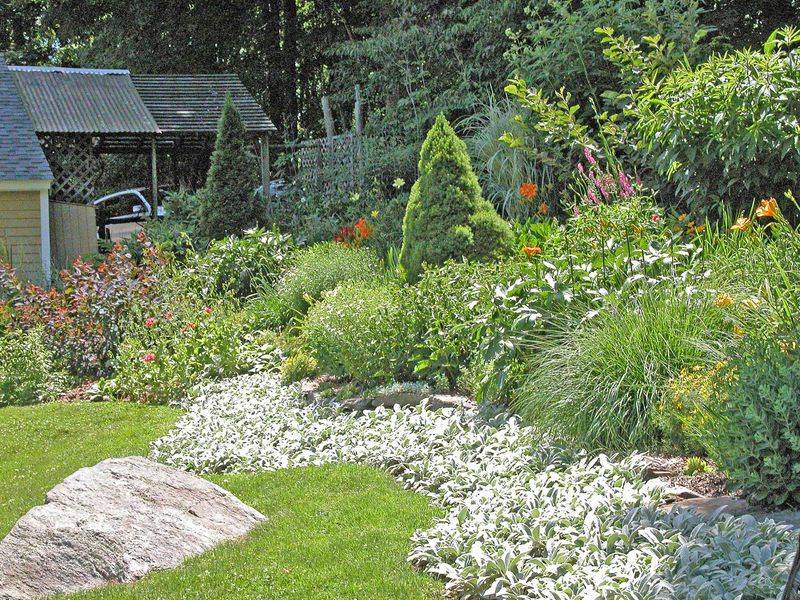
Before buying a flat of wild strawberry, spend twenty minutes walking the slope at different times of day. Light exposure is the first thing to pin down.
Wild strawberry tolerates full sun to part shade, so a slope that gets four or more hours of direct sun daily is generally workable. A bank that sits in heavy shade most of the day, under a dense tree canopy for example, is a harder fit and may favor other native options.
Soil condition is the second checkpoint. NC State’s wild strawberry profile describes the plant as preferring organically rich sandy loam with moist to dry, well-drained conditions.
That description fits many Piedmont and mountain yards reasonably well, but it is a less comfortable match for the compacted red clay that turns up on cut-and-fill slopes behind newer construction, or for the nutrient-depleted subsoil that sometimes gets exposed when a lot is graded.
If your slope is mostly compacted clay or bare subsoil, wild strawberry will struggle to root freely and spread the way you need it to. Loosening the top few inches, adding compost, and correcting any drainage problems before planting will matter more than the plant choice itself.
A soil test from your county extension office can tell you whether pH and nutrients need adjustment.
Drainage pattern across the slope is the third factor. Wild strawberry tolerates moist soil but does not do well in spots that stay waterlogged after rain.
Check whether water sheets across the surface in a wide flow or concentrates into channels. Channels need to be addressed with grading or barriers before planting; a groundcover cannot survive, let alone spread, in a small gully that fills with fast-moving water every storm.
Heat exposure, wind, and moisture all vary by slope aspect. A north-facing slope in the mountains holds moisture longer and stays cooler than a south-facing Piedmont bank.
Matching the plant to the actual microclimate on your property, not just the general region, is what makes the difference between a colony that spreads and one that barely survives.
Protect the slope while the plants establish
Planting day is not the day the slope is protected. The reduced-re-mulching benefit arrives only after wild strawberry has rooted, spread, and formed a reasonably continuous ground layer, and that takes time measured in growing seasons, not weeks.
The installation sequence matters as much as the plant choice. Start by redirecting any concentrated runoff away from the planting area.
Downspouts, paved surfaces, or compacted pathways that channel water directly onto the slope need to be addressed first, whether through a French drain, a swale, a splash block, or a simple reroute. NC Extension’s erosion-control recommendations put runoff management ahead of any planting decision for good reason: water moving fast enough to carve channels will wash out young plants along with bare soil.
Once runoff is managed, regrade or fill any active gullies and loosen compacted soil in the planting zone. Set plants close enough together that runners can reach neighboring crowns within a season or two.
For wild strawberry, spacing plugs roughly twelve to eighteen inches apart gives the colony a realistic path to filling in without leaving so much bare ground that erosion continues unchecked between plants.
Cover exposed soil between transplants with jute or coconut-coir erosion fabric, pinned flat to the slope. Henderson County Extension recommends biodegradable erosion fabric along with simple barriers such as sticks, logs, or rocks arranged across the slope to slow sheet flow.
Both fabric and barriers decompose over time, so they support establishment without leaving permanent debris.
A light layer of straw or shredded wood mulch placed over the fabric between plants adds another layer of protection during the first growing season. NC State’s guidance on mulch for erosion control notes that mulch and compost cannot compensate for uncontrolled runoff or poor site preparation, but used correctly they help retain moisture, moderate soil temperature, and slow the rain-splash erosion that dislodges young transplants.
The goal is to give roots time to anchor the slope before the temporary protection breaks down.
Define the no-mulch payoff realistically
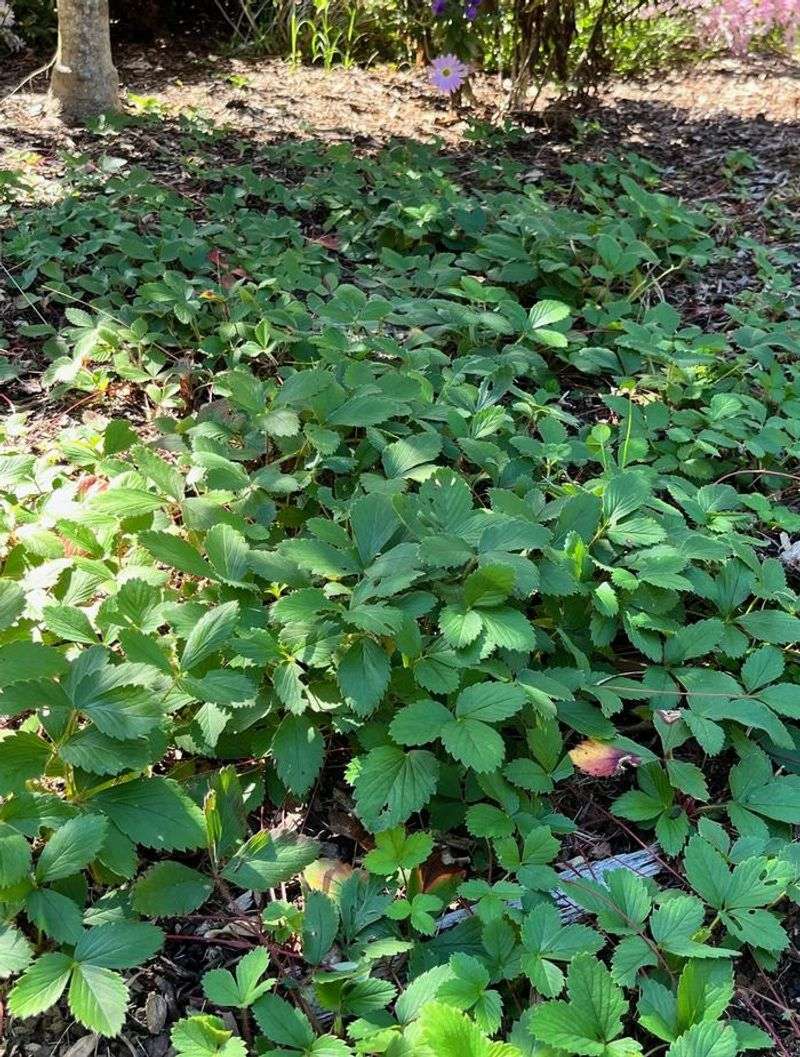
The realistic payoff from a well-established wild strawberry colony is fewer trips to the garden center for bags of decorative mulch, not a permanently bare-maintenance slope from the moment you plant. That distinction is worth holding onto when you set expectations for the project.
After two or three growing seasons on a suitable site, a rooted colony can cover enough of the slope surface that annual re-mulching becomes unnecessary or at least much less frequent. The runners knit together a living layer that intercepts rain before it hits bare soil, and the crowns hold the surface in place through winter.
NC State’s wild strawberry profile describes the plant as having medium maintenance needs, which means it is not zero-effort but also not demanding once it is established.
Natural leaf litter from nearby trees can work in your favor here. NC State’s native-plant handbook notes that fallen leaves function as natural mulch and help restore the forest-floor ground layer.
Leaving appropriate leaf litter in place over winter, rather than blowing it off the slope, can protect the planting and add organic matter to the soil without costing anything.
Hot, humid North Carolina summers can slow wild strawberry or push it into partial dormancy, particularly on south-facing slopes with afternoon sun. During those periods, gaps may open in the colony.
Henderson County Extension’s slope guidance emphasizes keeping bare soil covered quickly, so if summer dormancy thins the planting noticeably, a light top-dressing of shredded mulch or straw in those gaps prevents a setback from becoming a bigger erosion problem.
Watering during the first summer, checking for pest or disease problems, and filling any bare patches that persist into year two are the ongoing tasks. The colony earns its lower-maintenance reputation gradually, season by season, as coverage increases and the need for purchased soil cover decreases.
A mixed native planting may suit a harder slope
Wild strawberry performs well on many North Carolina slopes, but some sites push its limits. A south-facing bank with dry, rocky soil and full afternoon sun may be better served by a deep-rooted native grass.
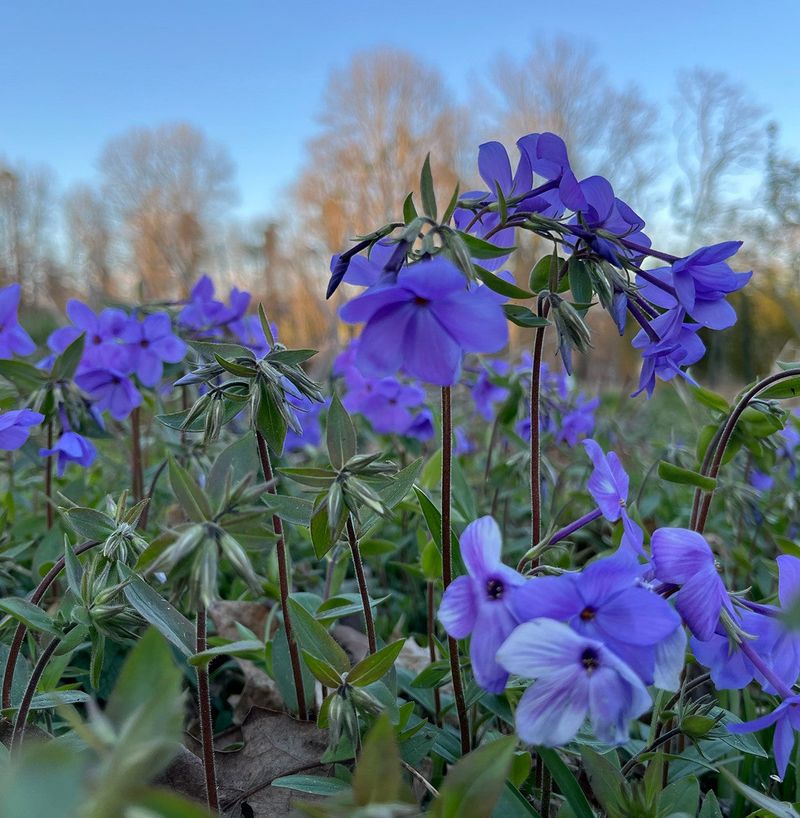
A partially shaded Piedmont or mountain slope with good drainage and rocky substrate might suit creeping phlox more naturally. Recognizing those differences early saves replanting effort later.
NC State’s profile for creeping phlox (Phlox stolonifera) describes it as spreading through stolons that root at nodes, forming a mat, and specifically recommends mass plantings on slopes for erosion control. Creeping phlox is drought-tolerant once established but needs consistent moisture during its first year, especially through hot, dry stretches.
On a slope with good drainage and sun to partial shade, it can complement wild strawberry or replace it where the soil is too rocky or shallow for strawberry runners to root freely.
For sunny, dry slopes where a taller plant is acceptable, little bluestem (Schizachyrium scoparium) offers a different kind of coverage. NC State describes little bluestem as a low-maintenance, drought-tolerant native grass that tolerates clay, infertility, and dry conditions across all three NC regions.
At two to four feet tall, it is not a groundcover in the traditional sense, but its fibrous root system can help anchor surface soil on slopes where a shorter plant would thin out in summer heat.
NC Extension’s coastal erosion-control guidance recommends combining native grasses, sedges, groundcovers, perennial flowers, shrubs, and trees according to site conditions, and notes that deep-rooted grasses and sedges may need infrequent or no mowing once established. Henderson County Extension lists partridge berry, native pachysandra, native grasses, shrubs, and trees as possible layers in a slope planting.
A mixed planting is more resilient than any single species because different plants vary in root depth, drought tolerance, seasonal coverage, and susceptibility to pests or weather. Think of wild strawberry as one layer in a system: a low mat-former that fills the ground level while taller grasses, sedges, or shrubs anchor deeper soil and provide seasonal structure when the strawberry slows down.
Know when vegetation is not enough
A groundcover that spreads and roots across a slope is genuinely useful, but there is a set of conditions where planting is the wrong first step. Knowing that boundary protects your investment and, in serious cases, your home.
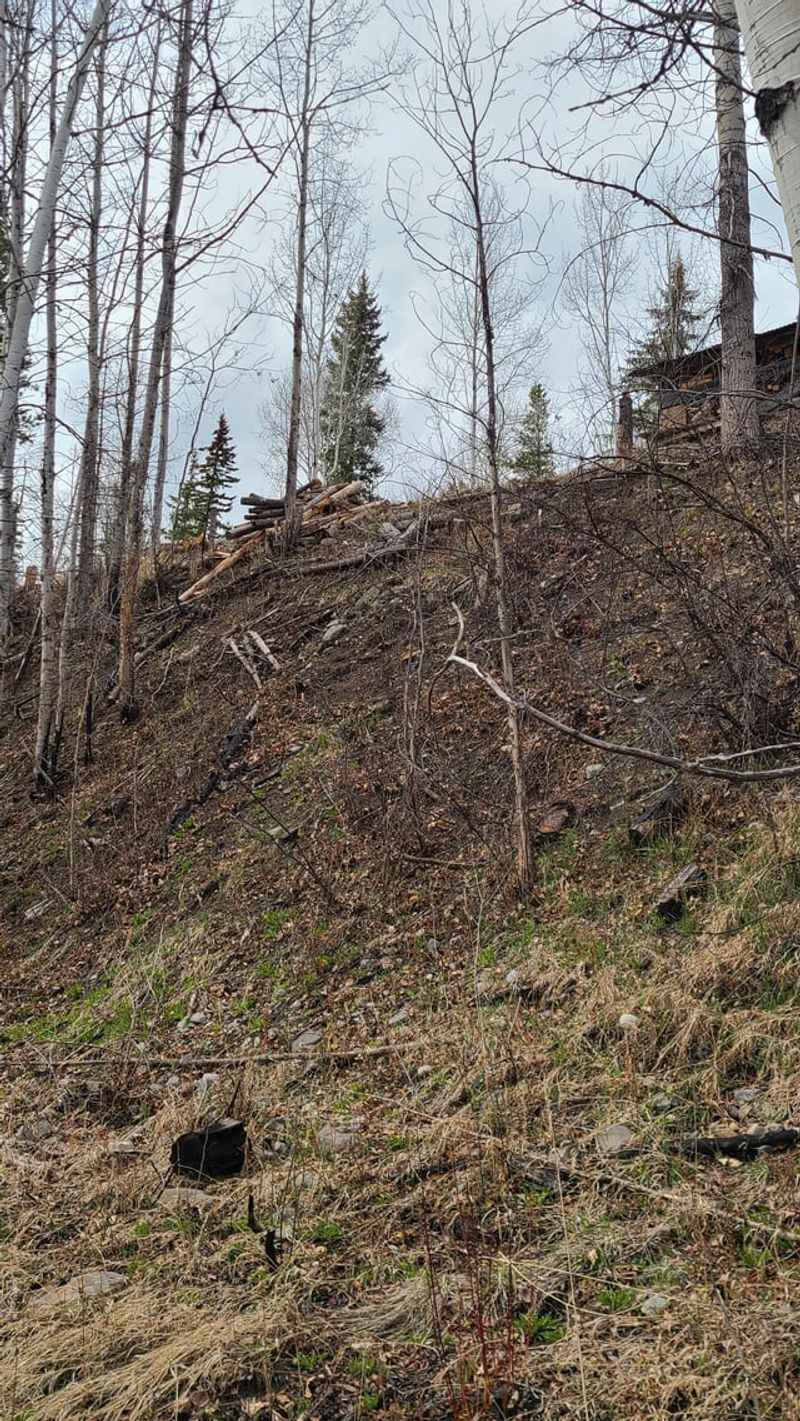
Active slumping, where sections of the bank are moving or separating from the surrounding soil, is a structural problem that vegetation cannot solve by itself. Deep gullies carved by concentrated water flow need to be filled and regraded before any plant can bridge them.
If a downspout or hard surface is routing stormwater directly onto the bank, the volume and velocity of that water will continue to erode the slope regardless of what is planted there. NC Extension recommends addressing slope angle and runoff first when erosion is severe, and directs homeowners toward terraces, drainage corrections, and regrading before relying on groundcovers alone.
Slopes near foundations, retaining walls, or other structures deserve extra caution. Henderson County Extension notes that unstable fill, undermined areas, and risks to buildings call for professional assessment rather than a planting plan.
A geotechnical engineer or licensed landscape contractor can determine whether the bank needs structural work before vegetation plays any role.
Establishment speed is another honest limit. A 2026 NCDOT report drawing on NC State research found that native grasses and plants showed little visible growth for one to two years and could take as many as four growing seasons to become fully established in some contexts.
That finding comes from roadside work, not residential backyards, but it is a useful caution against expecting a newly planted native perennial to immediately lock down a steep slope.
Urgent erosion problems need immediate stabilization. Erosion fabric, straw, rock check dams, or other physical barriers should go in right away if the slope is actively losing soil.
NC DEQ’s erosion and sediment control manual and USDA NRCS soil bioengineering guidance both distinguish between temporary physical stabilization and longer-term vegetative cover. The two approaches work together; one does not replace the other.
Choose wild strawberry for the right slope, not every slope
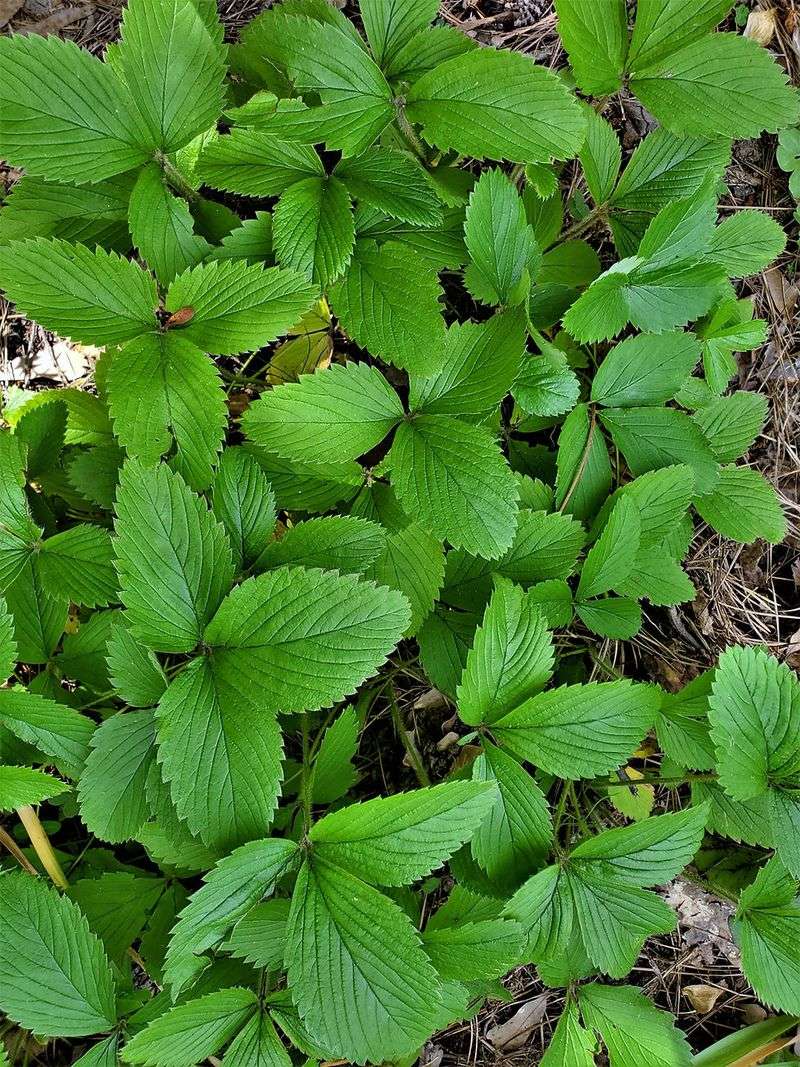
Wild strawberry earns a place in a North Carolina slope-planting plan when the site conditions line up: enough sunlight, reasonably workable soil, drainage that does not concentrate fast-moving water, and surface erosion rather than structural failure. Match those conditions, and you have a well-supported native groundcover that can gradually reduce your dependence on bags of decorative mulch season after season.
The approach that works is straightforward. Manage runoff before you plant, prepare compacted or depleted soil, set plugs at a spacing that gives runners a realistic path to neighboring crowns, and protect exposed soil with biodegradable fabric or temporary mulch while the colony fills in.
NC State’s wild strawberry profile and NC Extension’s erosion-control guidance both support this sequence. Expect the reduced-re-mulching payoff to arrive over two or three growing seasons, not the first spring.
On sites where light, soil, or slope severity push beyond wild strawberry’s comfort zone, bring in complementary natives, creeping phlox for shadier well-drained banks, little bluestem or other native grasses for sunny dry slopes, or a layered mix that covers more conditions at once. NC State’s native-plant guidance frames fallen leaves and a living ground layer as partners in restoring a functioning soil surface, which is exactly the role a rooted wild strawberry colony can play on the right slope.
Serious instability, slumping, deep gullies, or threats to structures belong to a different conversation involving grading, drainage work, or a qualified site assessment. For the slope that is losing topsoil and mulch every rainy season, though, a well-placed native groundcover beats an annual bag of wood chips every time.