
A Great Blue Heron Standing At The Edge Of Your North Carolina Yard Is Reading The Water Below
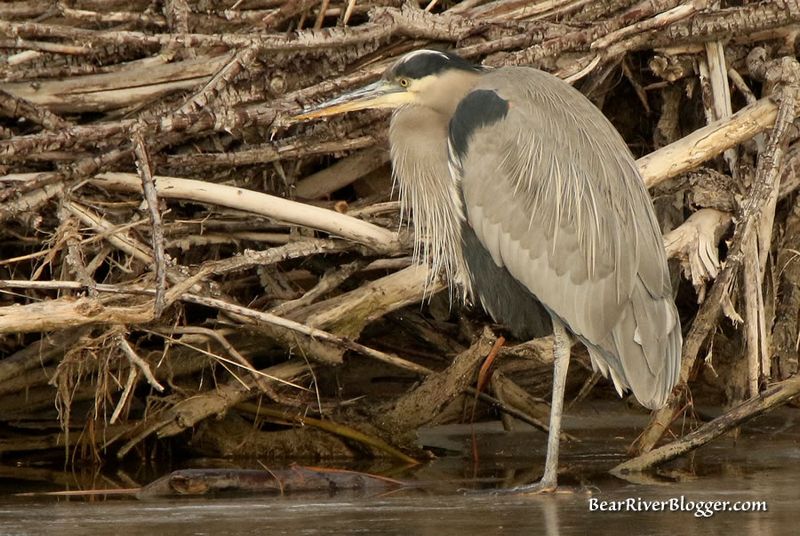
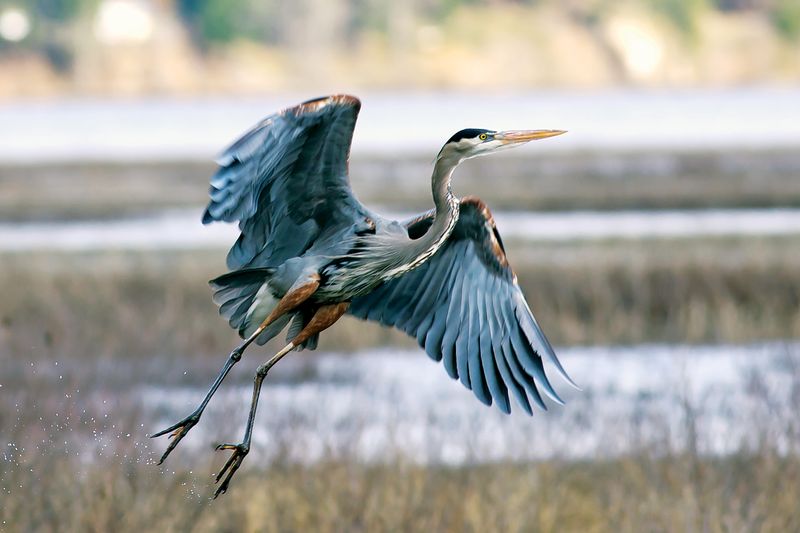
Few yard visitors stop traffic quite like a Great Blue Heron. Standing nearly four feet tall, steel-gray and perfectly still at the edge of your property, the bird looks like it knows something you do not.
For North Carolina homeowners from the Piedmont to the Coastal Plain, that stillness raises a practical question: what is this bird actually doing here, and what does its visit say about your yard? The answer is more interesting, and more nuanced, than the idea of a heron reading secret water beneath the grass.
A heron signals a foraging opportunity, not a report from underground
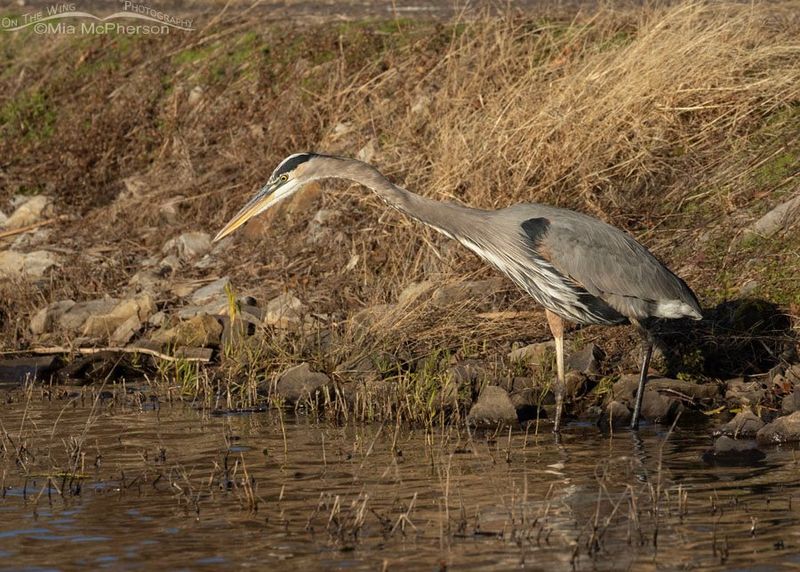
Standing at your yard’s edge, a Great Blue Heron is not performing an underground survey. The bird is almost certainly responding to something it can already detect at or near the surface: a visible shimmer of water, the movement of a fish, the silhouette of a frog, or an open patch of ground that offers clear sight lines for hunting.
That posture you see, neck pulled back into a tight S-curve, body angled slightly forward, is the coiled-spring stance of a bird preparing to strike.
According to NC Wildlife’s great blue heron profile, these birds forage near homes and businesses across North Carolina, using ponds, drainage ditches, and waterway shorelines as hunting grounds. Their typical method is to stand or walk slowly through shallow habitat, then lunge with a spear-like bill at whatever prey comes within range.
Fish rank among the most commonly documented prey, but the list extends well beyond that: amphibians, reptiles, small mammals, insects, and birds are all part of the documented diet.
That broad menu matters for how you interpret a yard visit. One sighting cannot tell you whether the bird is after a bullfrog, a minnow, a crayfish, or a vole moving through wet grass.
Cornell Lab’s species account notes that herons also forage in meadows, farmland, and open fields, meaning the bird’s presence does not even guarantee that water exists on your specific property.
What you can say with confidence is this: a Great Blue Heron chose your yard because something about it looked worth investigating. The practical job for a homeowner is to figure out what that something might be, without jumping ahead to conclusions the bird’s presence cannot actually support.
The possible habitat may be nearby, not beneath your grass
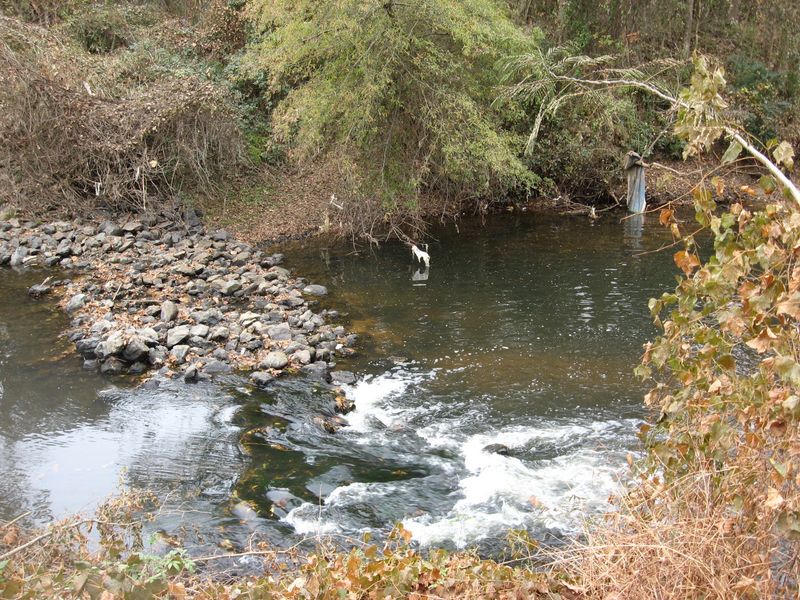
When a heron appears at your property line, the first instinct is to search the yard itself for hidden water. That instinct is worth following up, but the honest starting point is that the relevant habitat could be anywhere within the bird’s easy foraging range, which covers considerable ground for a species that flies several miles between roost and feeding site.
The candidate habitats are varied. A neighborhood retention pond two streets over, a drainage swale running along a roadway, a slow-moving creek at the back of an adjacent lot, a flooded depression left by recent rain, a stormwater feature maintained by a homeowners association, or a natural wetland beyond the property line all qualify.
NC Wildlife confirms that herons regularly use drainage ditches and shorelines within developed areas, which means suburban and semi-rural North Carolina yards sit inside the normal foraging territory for this species.
Open, grassy areas without any standing water can also attract a hunting heron. Cornell Lab’s species account documents foraging in meadows and farmland, where the target is more likely a small mammal or large insect than a fish.
A heron standing in a dry corner of your lawn is not proof that a subterranean pond exists beneath the turf.
One sighting also cannot establish how far the bird traveled, which direction it came from, or which specific patch of ground it was using before you spotted it. The visit is a signal that accessible habitat and prey may be within range of your property, and that is genuinely useful information.
Treating it as a precise map of underground hydrology, though, goes further than the evidence supports.
Inspect the yard without turning a clue into a conclusion
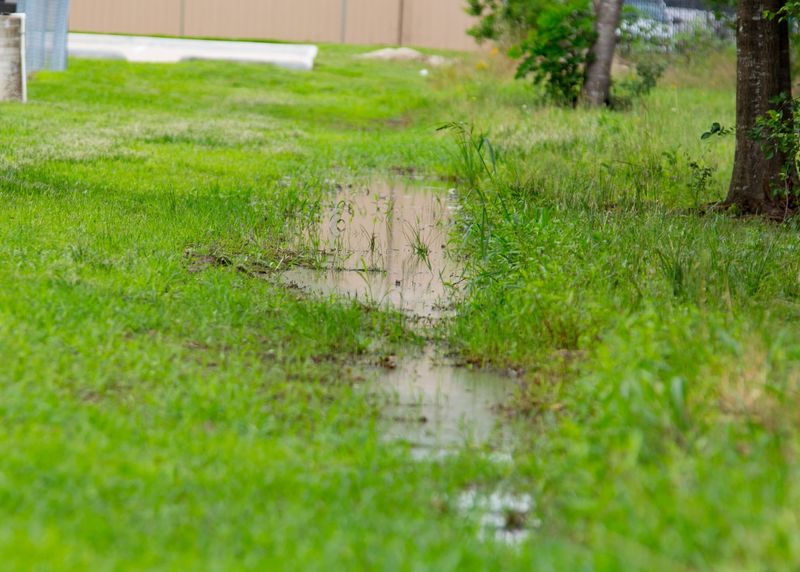
A heron visit is a reasonable prompt to take a closer look at your own property, and a careful walk-around can turn up things many homeowners overlook. The goal is observation, not landscape surgery.
You are testing a possibility, not confirming a fact.
Start with the low spots. Yards in the Piedmont and Coastal Plain often have subtle depressions that hold water after rain for longer than the surrounding lawn.
Check drainage swales along fence lines or property edges, any ditch that borders the yard, the margins of an existing pond if you have one, and the base of downspouts where runoff collects. NC Wildlife’s heron guidance points to exactly these features as typical foraging spots in residential settings.
Gutters deserve attention too, not because you should remove them, but because clogged gutters can hold standing water for days. Cleaning or unclogging a gutter is straightforward maintenance that removes a potential mosquito site without eliminating any ecological value.
Also check containers: buckets left upside-down that flipped in a storm, saucers under potted plants, anything that could hold a shallow inch of water.
When you reach any genuinely wet area, including a seasonal pool, a marshy corner, or a natural depression that stays damp, step back rather than into it. NC Wildlife’s wetlands and ponds resource describes these features as important habitat for frogs, salamanders, and other species that depend on undisturbed shallow water.
Trampling the edge of a seasonal pool to confirm a heron’s lunch is not worth the disturbance. Observe from a respectful distance, note what you find, and let that guide what comes next.
Manage mosquito-breeding containers without erasing valuable wetlands
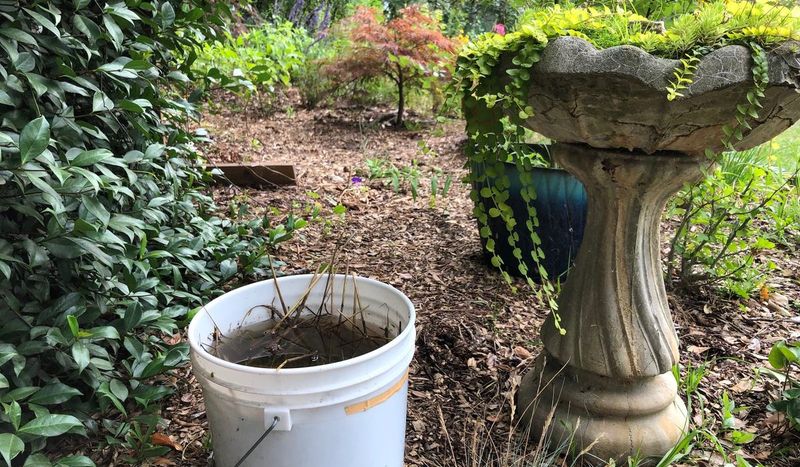
Not every patch of water in a yard deserves the same response. The most important distinction a homeowner can make is between small artificial containers that collect rainwater and serve no ecological purpose, and natural or intentional wet features that support wildlife.
Conflating the two leads to well-meaning decisions that harm the habitat a heron was likely responding to in the first place.
For artificial containers, the guidance is direct. North Carolina DPS mosquito guidance specifically lists flowerpots, buckets, pool covers, pet dishes, discarded tires, and birdbaths as items that should be emptied or managed to prevent mosquito breeding.
Birdbath water and pet-bowl water should be changed at least twice weekly. That same guidance applies after storms, when containers that normally stay dry can fill quickly and become productive mosquito nurseries within a week.
Gutters function differently from the items above. Cleaning or unclogging a gutter removes the standing water that accumulates in blocked sections without removing the gutter itself.
The same logic applies to birdbaths: refreshing the water twice a week eliminates the mosquito risk while keeping the feature available for birds. NC State Extension’s mosquito control guidance frames the goal as eliminating stagnant water in small containers, not eliminating the containers or features themselves.
Wetlands, ephemeral pools, and seasonal wet areas belong in a different category entirely. NC Wildlife’s wetlands and ponds page describes these features as providing flood protection, water filtration, and irreplaceable breeding habitat for amphibians.
Ephemeral pools are especially valuable because they typically lack fish, which makes them safe nurseries for frog and salamander eggs and larvae. Before draining or filling any natural wet area, assess what it supports and whether it falls under state or federal protections.
A heron’s visit is a clue worth investigating, not a mandate to drain the yard.
Choose pond management according to the habitat you want
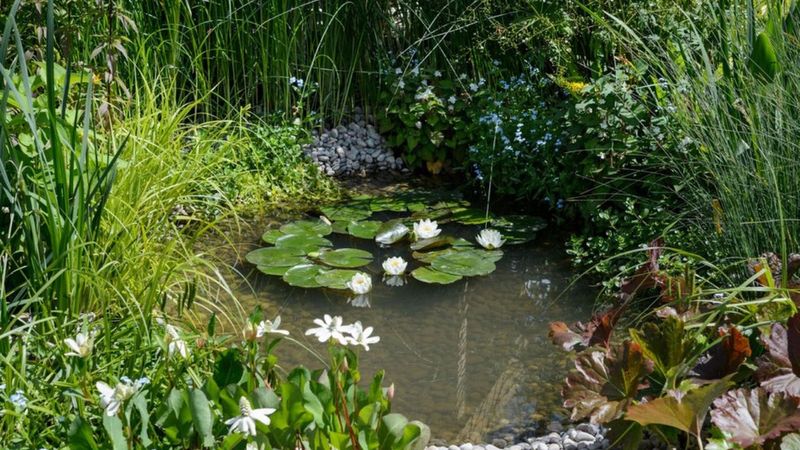
Two homeowners can look at the same backyard pond and want completely different things from it. One wants a thriving amphibian nursery full of frog calls in spring.
Another wants colorful koi and a water garden. Those goals are not interchangeable, and the management choices that serve one can actively undermine the other.
For a wildlife or amphibian-focused pool, native aquatic plants are foundational. NC State Extension’s reptiles and amphibians guide recommends plants like pickerelweed, which provide structure for egg masses, cover for tadpoles, and perches for adult frogs.
The same guide offers a clear caution about fish: adding fish to an amphibian-focused pool is counterproductive because fish consume frog and salamander eggs and larvae. A pond without fish, or with only very small native fish species that do not heavily predate amphibian eggs, gives frogs and salamanders a meaningful chance to breed successfully.
NC State Extension’s pools for amphibians resource expands on design choices that support breeding success, including shallow entry zones, gradual slopes, and a mix of sun and shade. These features also make the pond more attractive to a foraging heron, which is worth keeping in mind if fish protection is a concern.
If mosquito larvae become a problem in a managed wildlife feature, products containing Bacillus thuringiensis israelensis, commonly called Bti, are an option identified by NC State Extension as effective against mosquito larvae without harming other wildlife when used according to label directions. Bti is not a substitute for good pond design, and it should not be applied broadly to natural wetlands or seasonal pools.
Match the tool to the feature and the goal.
Protect pond fish by reducing access, not by punishing the heron
Homeowners with ornamental or koi ponds face a real and frustrating problem when a heron discovers their fish. The bird is doing exactly what it evolved to do, and the fish are exactly the kind of prey it prefers.
Protecting the fish without harming the heron is both the ethical approach and, under federal law, the only legal one.
Penn State Extension’s guide on herons and pond fish outlines several nonlethal strategies that reduce a heron’s ability to reach fish. Underwater hiding structures, such as stacked rocks, pipes, or commercially made fish shelters, give koi and goldfish a place to retreat when a heron arrives.
Floating vegetation and aquatic plants near the surface break up sight lines and reduce the open, shallow foraging lanes the bird prefers. Dense shoreline plantings and steep pond edges can also discourage a heron by removing the gradual-entry zones where wading is easiest.
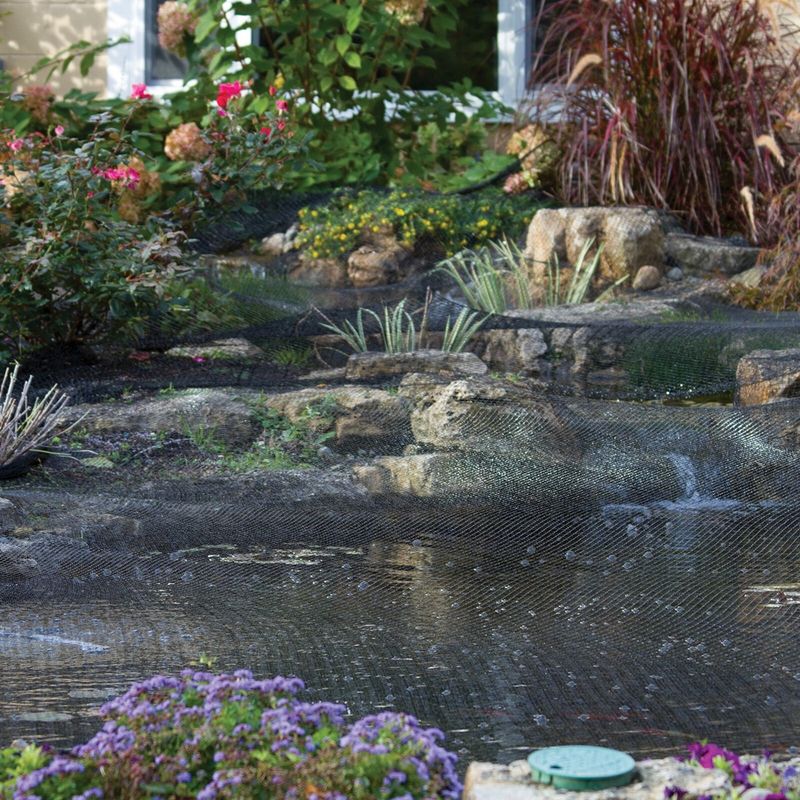
Pond netting is the most direct physical barrier, but it requires careful installation. Netting should be durable, pulled taut, and properly secured around all edges so that it cannot sag into the water or create loose loops.
Loose or improperly anchored netting can entangle birds, pets, and children, which creates a different and serious hazard. If netting is the chosen approach, check it regularly and repair any gaps or sagging sections promptly.
Plastic heron decoys are sometimes marketed as a deterrent, but NC Wildlife and Penn State Extension both note that herons can habituate to stationary objects over time, making decoys an unreliable long-term solution. Physical exclusion and habitat modification give pond fish more durable protection than a plastic replica standing in the corner.
A yard visit cannot measure water quality or mosquito abundance
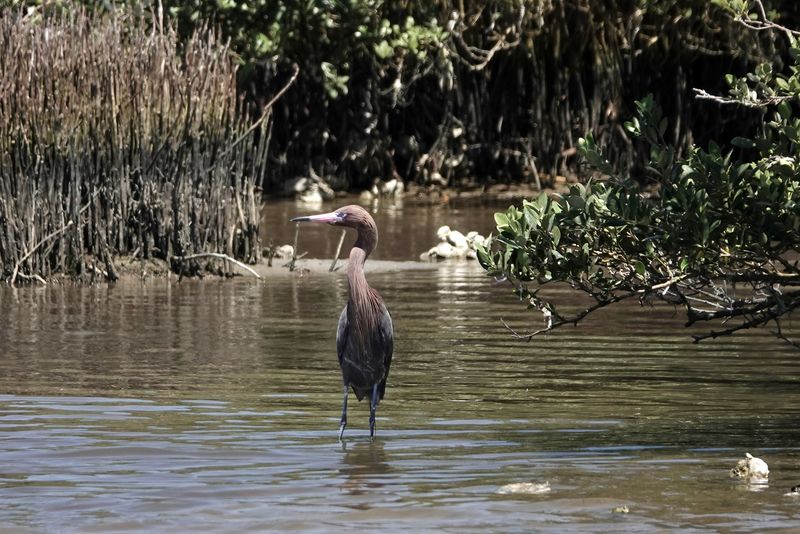
Herons have occasionally appeared in scientific literature as indicator species, and that connection sometimes leads homeowners to a tempting but unsupported conclusion: if a healthy-looking heron is here, the water must be clean. The relationship between herons and water quality is far more complicated than that, and a single bird in a residential yard cannot settle the question either way.
Specialized research on great blue herons as contaminant sentinels involves monitoring nesting colonies over time, analyzing tissue samples, and correlating contaminant loads with breeding outcomes in specific river systems. That kind of structured study cannot be replicated by watching one bird stand at your pond’s edge for twenty minutes.
A heron foraging in your yard is responding to a hunting opportunity, not evaluating the chemical profile of your water.
The mosquito connection deserves the same skepticism. Herons eat a wide range of prey, and while they will take the occasional insect, their foraging strategy, standing still in shallow water and striking at visible movement, is not optimized for catching mosquitoes.
NC State Extension’s mosquito control guidance centers on eliminating small water-holding containers and managing larvae with targeted treatments, not on wildlife as a control mechanism.
Heron presence does not confirm a mosquito problem, and heron absence does not mean mosquitoes are under control. NC Wildlife documents the heron’s diet as ranging from fish and amphibians to small mammals and birds, which reflects the bird’s opportunism rather than any specialized role in managing a particular pest.
Let the heron be a clue to possible nearby habitat, and use separate, targeted tools for separate problems.
Observe the visitor and let the clue guide careful stewardship
Putting the heron’s visit to practical use comes down to a straightforward sequence. Walk the yard and note where water collects, where drainage slows, and where shallow habitat might be accessible to a foraging bird.
Clean clogged gutters, empty small containers, and refresh birdbath and pet-bowl water at least twice weekly. If a natural wet area turns up during that walk, assess it before altering it, because seasonal pools and wetland edges often support the very frogs and salamanders that make a yard worth visiting.
For homeowners with decorative fish ponds, physical exclusion measures like underwater hiding structures, dense shoreline plantings, and properly secured netting offer the most dependable protection. Match the management approach to the goal: a wildlife pond and a koi pond call for different choices, and mixing strategies designed for one with the needs of the other tends to serve neither well.
One boundary that applies to every North Carolina homeowner is firm. The Migratory Bird Treaty Act protects Great Blue Herons, and chasing, trapping, poisoning, or killing one is not a legal option.
NC Wildlife advises contacting the NC Wildlife Resources Commission or the U.S. Fish and Wildlife Service before taking any management action involving a protected bird.
If a single foraging visitor becomes a recurring conflict, those agencies can help identify options appropriate to the situation.
Keep in mind that a lone bird hunting at a pond is a very different situation from a nesting colony. Nesting colonies require extra distance and caution: NC Wildlife recommends staying at least 100 meters away during nesting season, and human disturbance near colonies can lead to nest failure.
A heron in your yard is a clue worth reading carefully, and the yard that reads it well tends to stay richer for the effort.