
An Underrated North Carolina Native Fills The August Gap When Every Other Bloom Has Quit
Late summer in a North Carolina yard can feel like the garden has run out of ideas. Most of the showy spring and early summer flowers have faded, and the stretch from late July into September can leave sunny beds looking bare and tired.
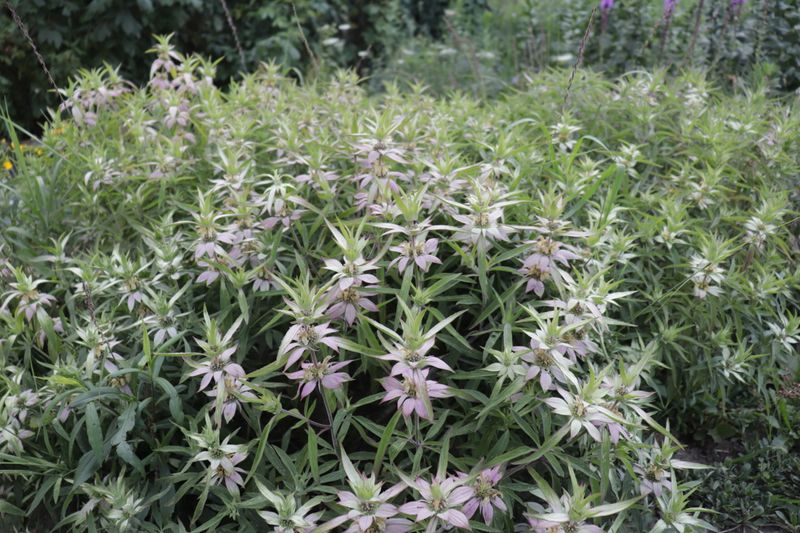
Spotted beebalm, known botanically as Monarda punctata, is a native plant that steps into that gap with pale, spotted blooms and layered bracts that pollinators find hard to ignore. If your yard gets plenty of sun and drains well, this distinctive plant deserves a serious look.
Spotted beebalm offers a distinctive late-summer display
Spotted beebalm earns its place in a late-summer garden not by being the only flower left standing, but by offering something genuinely unusual when most of the season’s familiar color has faded. NC State Extension lists its bloom window as July through September, which means a well-sited plant can carry color from the height of summer right up to fall’s first cool nights.
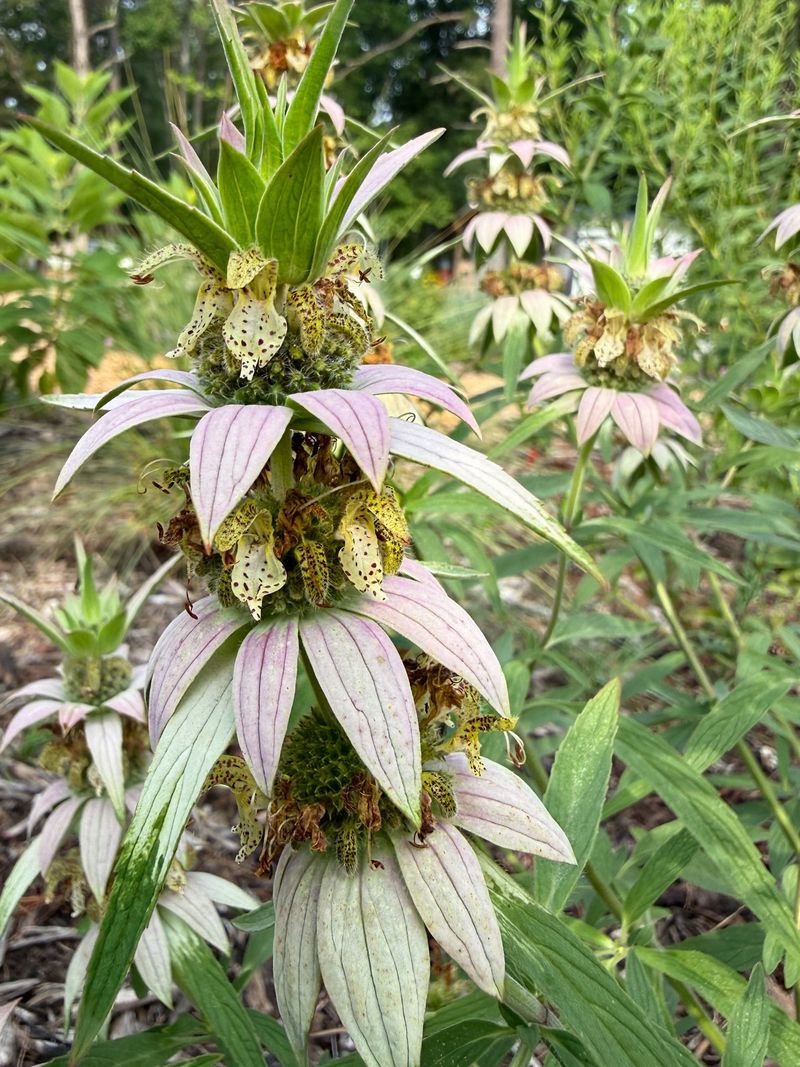
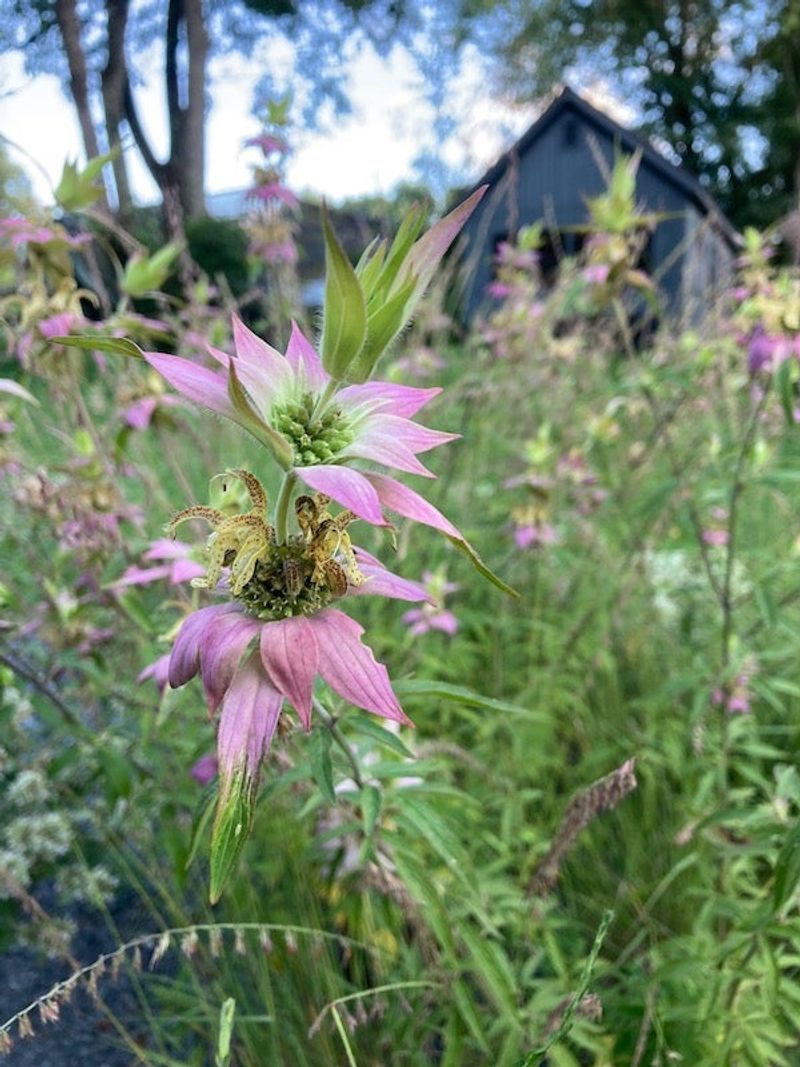
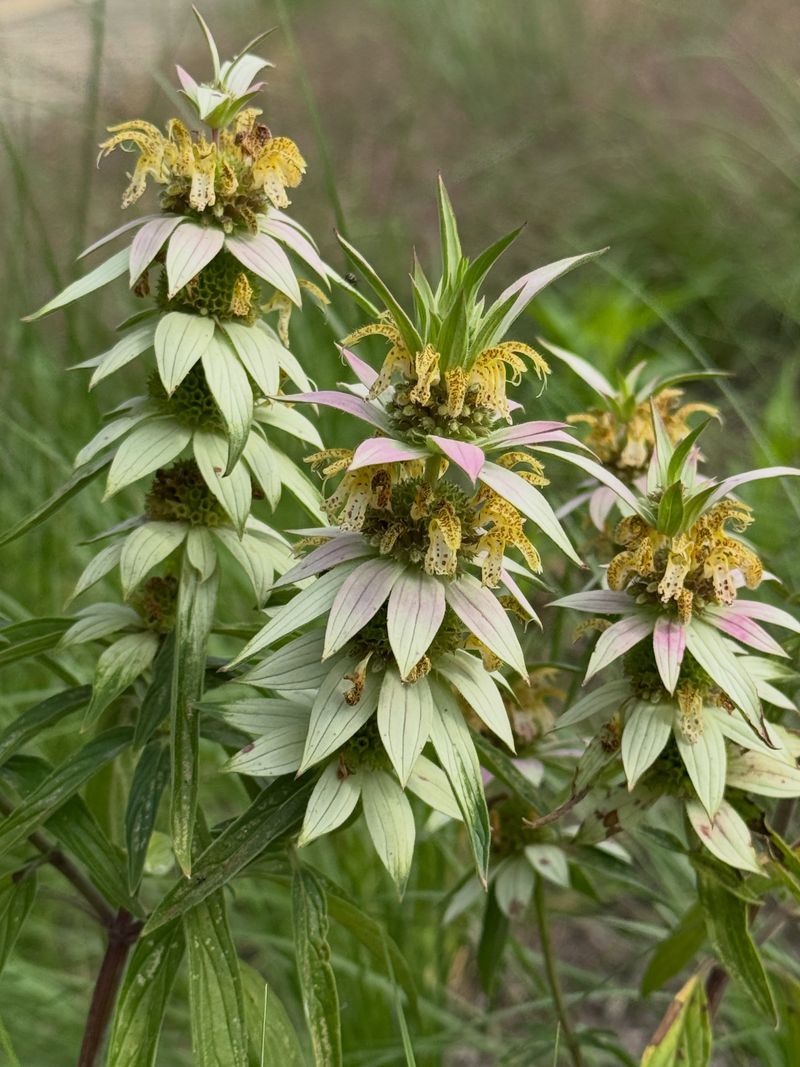
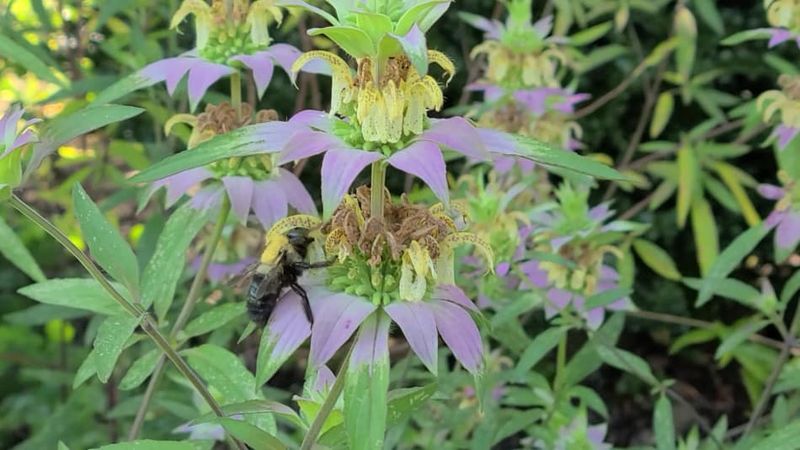
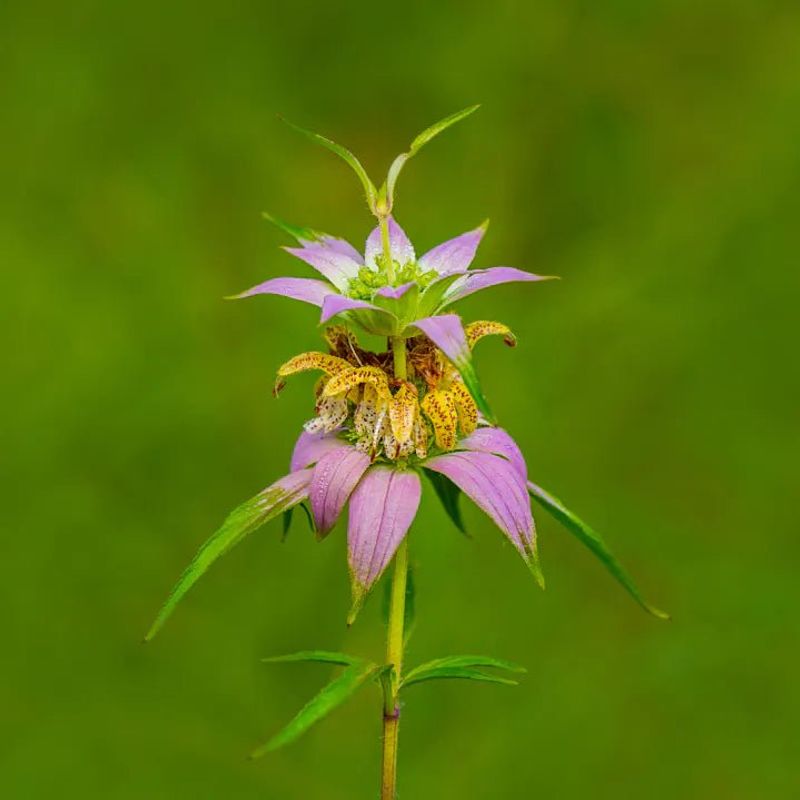
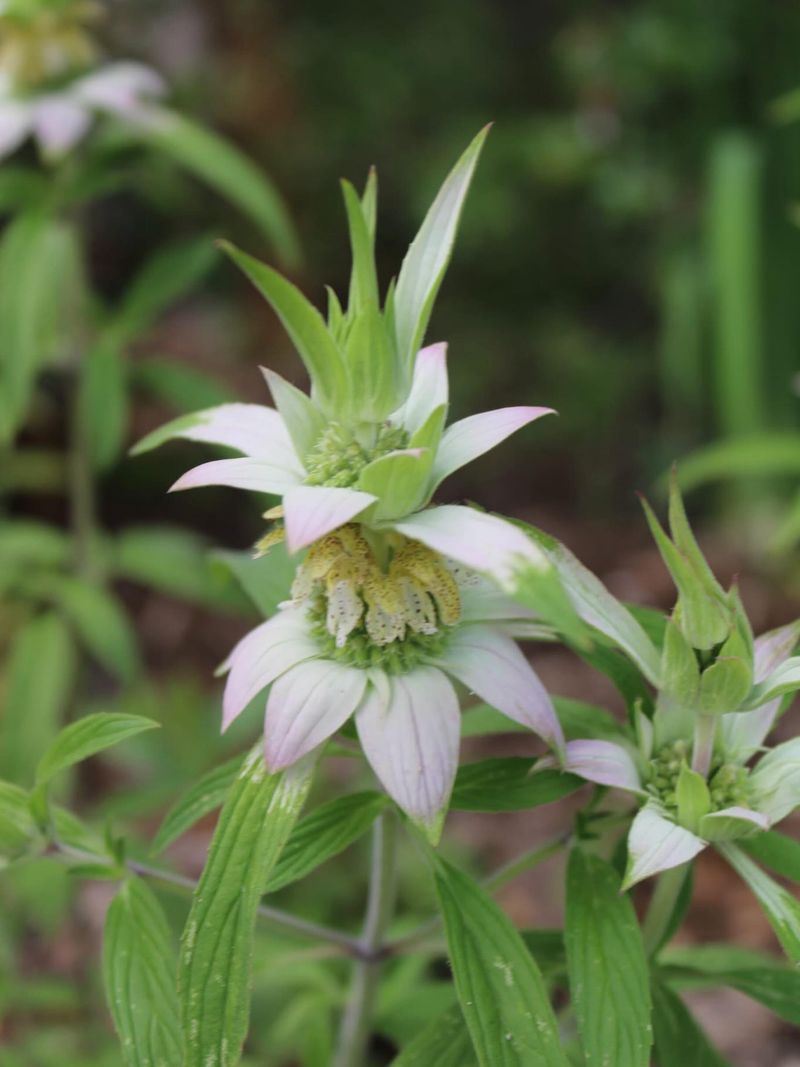
The flowers themselves reward a close look. Each bloom is pale yellow or cream, marked with small purple spots, and arranged in whorled tiers along the stem.
Beneath each tier sit pinkish or whitish bracts that fan outward and give the plant a layered, almost architectural appearance that reads differently from the flat faces of coneflowers or the sprays of black-eyed Susans.
To be clear about the premise here: spotted beebalm is a strong and distinctive late-summer bridge plant, not proof that the rest of the garden has gone quiet. North Carolina’s Department of Natural and Cultural Resources lists goldenrod, ironweed, Joe-Pye weed, and mountain mint among the natives that bloom during the same general period.
What sets Monarda punctata apart is its specific combination of spotted flowers, showy bracts, and reliable late-season timing in a sunny, well-drained bed.
The plant goes by several common names, including eastern horsemint and dotted horsemint, and that variety of names hints at a broader confusion worth addressing early. The label “bee balm” can refer to multiple Monarda species with different habitat needs.
Whenever planting or identification advice appears in this article, the name Monarda punctata is used to keep things precise. Using the botanical name removes any guesswork about which plant is actually being discussed.
Its North Carolina range makes the planting decision local
Being native to North Carolina does not mean a plant performs equally well in every corner of the state, and spotted beebalm is a clear example of that distinction. The North Carolina Natural Heritage Program describes natural populations as common across much of the Coastal Plain, scattered in the Piedmont, and very rare in the mountains.
That geographic pattern matters before you order plants or seed.
For Coastal Plain gardeners, spotted beebalm is a familiar part of the local flora, turning up in sandy fields, dune edges, and open pine savannas. The sandy, acidic soils and open sun that define much of that region match the plant’s preferences closely.
Gardeners there are working with conditions that already support the species, which makes establishment more straightforward.
Piedmont gardeners are working with a spottier picture. Natural populations exist but are less consistent, and soils in much of the region tend toward heavier clay rather than the sandy loam or sandy soil where Monarda punctata thrives.
That does not rule out cultivation, but it does mean site preparation becomes more important. Raised beds, amended soil, or a naturally sandy or gravelly spot will serve the plant far better than a dense red-clay bed with slow drainage.
Blue Ridge and mountain gardeners face the most significant regional mismatch. Wild populations are rare enough that the North Carolina Native Plant Society identifies a distinct montane variety, and the Natural Heritage Program’s distribution data reflect how uncommon the species is at higher elevations.
If you garden in the mountains, pay close attention to local provenance when sourcing plants or seed, prioritize the sunniest and best-drained spot you have, and recognize that other late-summer natives may be a more natural fit for your landscape conditions.
A sunny, sharply drained bed gives it the best start
Before choosing a planting spot, run a quick site test. Push a screwdriver into the soil after a rain.
If it meets resistance and water pools for more than an hour, that location is too wet for Monarda punctata. The plant’s North Carolina habitat includes dunes, sandy flats, sandhills, and open sandy fields, none of which hold standing water.
USDA guidance specifically advises avoiding wet soils, and that warning applies regardless of how much sun the spot receives.
Sun is the other non-negotiable. Full sun, defined as at least six hours of direct sunlight daily, is the safer recommendation for the strongest flowering and the most compact, upright habit.
NC State Extension notes that light partial shade is tolerable, but plants in shadier spots tend to stretch and may flower less freely. If you have a choice between a spot with five hours and one with seven, give Monarda punctata the brighter location.
Sandy and acidic soils are the plant’s natural home, and those conditions translate well to certain residential settings. A south-facing slope with sandy loam, a gravel garden, a raised bed with amended soil, or the edge of a paved driveway where drainage is fast can all work well.
Heavy, poorly drained clay is a different matter entirely.
Being a native plant does not make spotted beebalm immune to the problems that wet, compacted soil causes. Root rot, poor flowering, and increased disease pressure are all real risks in soggy conditions.
Piedmont gardeners with sticky red clay should either amend a raised bed with coarse sand and compost or choose a different native species better suited to clay. Placing Monarda punctata in a rain-soaked bed because it is labeled a “native” or a “pollinator plant” is a setup for disappointment and a wasted plant.
If your yard has a naturally sandy patch, a slope that sheds water quickly, or a bed you have already amended for good drainage, that is where spotted beebalm will reward you most reliably.
Choose nursery plants or responsible local seed

Buying nursery-grown plants is the most reliable way for most residential gardeners to establish spotted beebalm. A healthy transplant from a reputable native plant nursery gives you a known provenance, a head start on root development, and no risk of disturbing a wild population.
This matters more for spotted beebalm than for some other natives because, as the Natural Heritage Program’s distribution data make clear, wild populations are genuinely uncommon in parts of the state, and a montane variety is considered rare.
When nursery plants are not available, locally appropriate seed from a reputable native seed supplier is the next best option. The North Carolina Native Plant Society maintains resources that can help gardeners identify responsible sources.
Avoid collecting seed or divisions from wild plants without explicit landowner permission and a clear understanding of local population status.
For size and spacing, plan on a plant that reaches roughly 1.5 to 2 feet tall at maturity. NC State recommends leaving approximately 12 inches to 3 feet of space between plants, depending on how much spread you want to allow.
Tighter spacing creates a fuller initial look but can restrict airflow, which matters for disease prevention later in the season.
Seed propagation is an option for patient gardeners willing to manage a few extra steps. The USDA plant guide for Monarda punctata recommends collecting mature seed heads, cold-moist stratifying the seed for approximately three months, and sowing no deeper than one-eighth of an inch.
Under greenhouse conditions, germination can occur in roughly one to two weeks. The same guidance flags an important caution: seedlings are sensitive to overwatering, so resist the urge to keep the growing medium constantly wet.
These seed-propagation details are drawn from greenhouse production protocols, not typical home-garden conditions. A cold frame, a cool basement with supplemental light, or a well-managed seed tray can approximate those conditions, but results will vary.
NC State Extension treats nursery transplants as the practical starting point for most home gardeners, and that remains the safest advice for anyone new to the species.
Set realistic expectations for care and spread
Spotted beebalm is a short-lived perennial, which means individual plants may last only two to four years before fading out. That lifespan is normal for the species and not a sign of failure.
The good news is that NC State Extension does not consider it excessively aggressive, and the plant tends to sustain itself in a suitable spot through a combination of rhizomatous spread and reseeding rather than taking over the bed.
New transplants need consistent watering during their first season. The plant’s association with dry, sandy habitats applies to established specimens, not freshly planted ones still developing their root systems.
Water young plants regularly through their first summer, tapering off as they settle in. Drought stress on an immature or already-weakened plant opens the door to fungal problems, which is a real concern with this species.
Powdery mildew and rust are the two diseases most likely to show up, particularly in crowded plantings or during the humid stretch of late summer that North Carolina gardeners know well. Pruning stems to open up airflow through the center of the planting is the most effective preventive step.
USDA guidance also notes that reseeding is a characteristic of the species, so if you want to limit spread, deadheading before seed sets is a practical option.
Removing spent flowers can tidy the plant’s appearance and may extend the bloom period a bit, but skipping deadheading entirely will not harm a healthy, well-sited plant. Think of it as an optional step rather than a maintenance requirement.
The more consequential tasks are choosing the right site from the start, giving new plants enough water to establish, and keeping spacing generous enough that air moves freely between stems. Those three practices will do more for long-term plant health than any spray or fertilizer program.
The payoff is color plus documented wildlife value
The flowers that make spotted beebalm visually interesting to a gardener are the same features that make it productive for wildlife. NC State Extension identifies Monarda punctata as attractive to bees, butterflies, wasps, and hummingbirds, and lists it as a larval host plant for two moth species.
A recent peer-reviewed study that included Monarda punctata in research on insect pollination and seed production in southeastern native wildflowers confirms that the species draws meaningful insect pollinator activity.
That wildlife value is real, but it should be understood in proportion. Adding spotted beebalm to a sunny bed will not guarantee a dramatic increase in total pollinator numbers or attract a specific named bee species.
What it will do is extend the season during which your yard offers pollen and nectar resources, and contribute larval habitat for moths that depend on native plants to complete their life cycle.
The broader lesson from NC State Extension’s pollinator guidance is that variety matters more than any single species. Spotted beebalm works best as one component of a layered native planting rather than as a standalone solution.
Other North Carolina natives share or overlap the same late-summer bloom window and can strengthen the planting around it. Goldenrod is one of the most wildlife-productive natives in the state and blooms heavily from late summer into fall.
Joe-Pye weed adds height and attracts a wide range of pollinators through August and September. Narrow-leaf ironweed brings intense purple color and strong pollinator appeal during the same window.
Pairing Monarda punctata with any of these gives your yard overlapping bloom times, varied flower shapes, and a more resilient late-season display than a single-species planting can provide.
Match spotted beebalm to the conditions your yard can provide
Monarda punctata is a genuinely distinctive late-summer bridge plant for a sunny, well-drained North Carolina garden. NC State Extension and the Natural Heritage Program together make clear that it fits best in the Coastal Plain, can work in suitable Piedmont sites with good drainage, and requires extra care and attention to local provenance in the mountains.
Wet soil, deep shade, heavy poorly drained clay, and sites where standing water lingers after rain are conditions where this plant is likely to struggle regardless of how much you want it to succeed. Drainage is the deciding factor more than any other variable, and no amount of good intentions or native-plant enthusiasm changes that.
When the conditions are right, the approach is straightforward: source plants or seed responsibly, give new transplants enough water to establish, keep spacing generous, and pair spotted beebalm with other native bloomers such as goldenrod, Joe-Pye weed, or ironweed for a season that extends well past any single plant’s peak. As North Carolina’s Department of Natural and Cultural Resources emphasizes, a mix of native species working together is what makes a yard genuinely productive for wildlife.
Spotted beebalm earns its spot in that mix by showing up precisely when the season needs it most.