
A Skink On Your North Carolina Patio Stones May Signal Usable Habitat and Accessible Prey
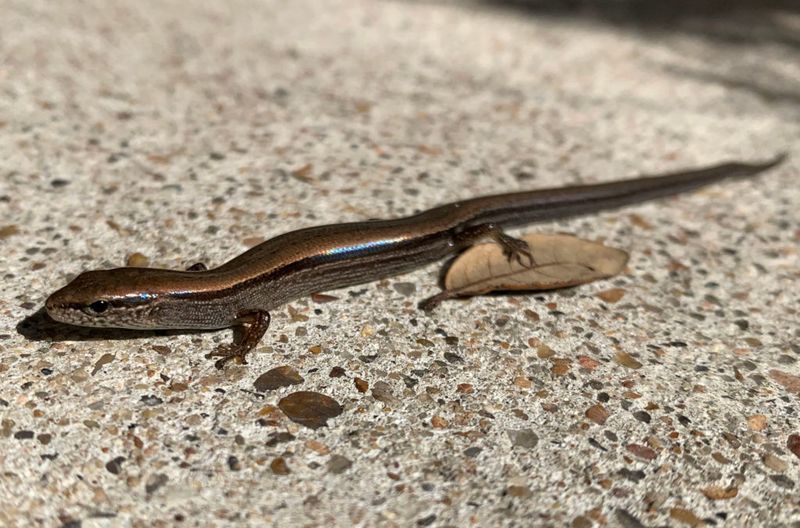
Spotting a lizard stretched out on your patio stones on a warm North Carolina morning is one of those small backyard surprises that deserves a second look. That glossy, striped creature is almost certainly a skink, and what it is doing on your stonework is more interesting than it first appears.
Far from wandering in by accident, it may be telling you something useful about your yard, though the message is more nuanced than a simple “your garden is full of bugs.” Understanding what is really going on can help you become a better steward of the wildlife already living alongside you.
The Patio Stone Is a Heat Source, Not a Dinner Plate
Sunlight lands on your patio stones and the surface temperature climbs well above the surrounding air. That warmth is precisely what a skink is after when it flattens itself across the rock and holds still long enough for you to notice it.
Reptiles cannot generate body heat internally the way mammals do. Instead, they move between warmer and cooler spots throughout the day to keep their core temperature inside a range where muscles, digestion, and reflexes work properly.
Published thermoregulation research confirms that lizards actively select microhabitats based on surface temperature, adjusting their position and exposure time to reach and maintain their preferred body temperature. A flat, sun-warmed patio stone is an almost ideal platform for that process.
Once a skink has warmed up sufficiently, it becomes capable of quick movement, efficient foraging, and fast escape from predators. The basking session is preparation, not a meal.
The stone itself may have no insects on or beneath it at all; the skink is there for the thermal opportunity the surface provides, not because it has detected a food source in the pavement.
Research on lizard thermoregulation and activity patterns shows that body temperature strongly predicts locomotor performance, meaning a cold lizard is a slow and vulnerable one. Warming up on your stonework is the skink’s way of getting ready for whatever the morning requires, whether that is hunting, defending territory, or retreating from a threat.
So the first and most direct reading of the sighting is simply this: your patio stones hold heat, and a skink found them. That is the behavior the evidence most clearly supports.
Any inference about what else your yard might offer comes as a secondary step, built on what we know about where skinks tend to live and what they eat.
Why a Skink Finds a Residential Yard Worth Using
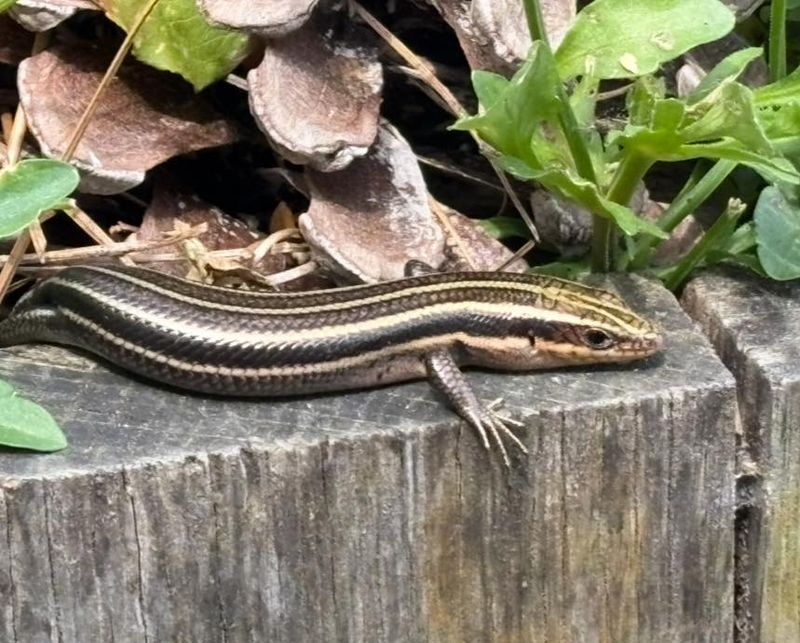
A warm stone explains the moment of basking, but it does not explain why the skink was in your yard to begin with. For a skink to show up regularly, the surrounding area usually needs to offer more than one good sun trap.
NC State Extension’s guide to backyard reptiles and amphibians identifies the combination of features that make residential yards genuinely usable for lizards: exposed basking spots located near shelter, leaf litter, fallen logs, rock piles, dense plant cover, and accessible prey. A yard that supplies several of those elements together is far more likely to host skinks than one offering only an open, manicured lawn with a patio at its edge.
The prey side of that equation matters because North Carolina’s skinks are insectivores and broader arthropod hunters. NC Wildlife’s profile of the five-lined skink lists beetles, spiders, crickets, and other invertebrates as documented food items.
The broad-headed skink takes larger prey and can eat small vertebrates as well. Southeastern five-lined skinks and ground skinks also depend on a steady supply of small invertebrates found in and around ground cover.
A yard with leaf litter, a brush pile, some native plantings, and a few rocks near the patio may genuinely be offering all of those things at once. The skink’s presence can be read as a reasonable sign that the yard is providing usable habitat and some access to prey, which is an encouraging observation worth protecting.
That said, one animal visiting one basking spot cannot measure total insect abundance across your property. The skink could be ranging from a neighbor’s yard, passing through a habitat corridor, or simply exploiting the warmest microclimate it found that morning.
Think of the sighting as a promising clue rather than a confirmed ecological report card.
Which North Carolina Skink Did You See?
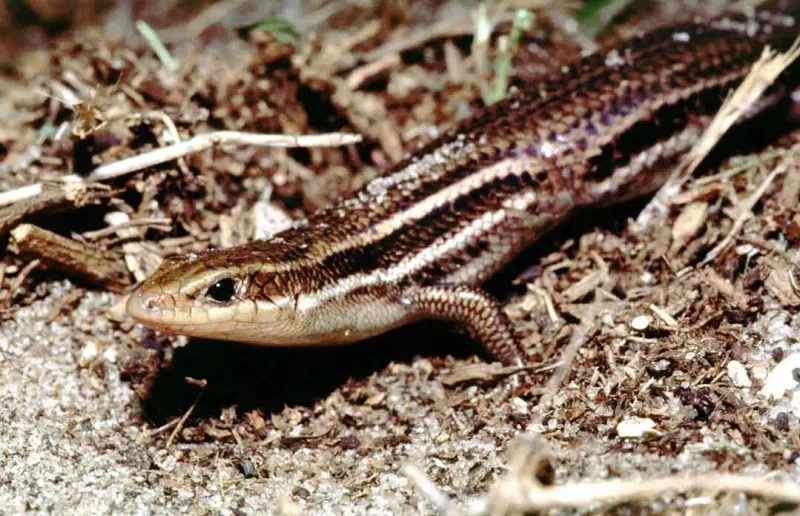
North Carolina is home to four skink species that a homeowner might reasonably encounter, and they are not interchangeable. Assuming the visitor on your patio is automatically a common five-lined skink skips over some meaningful differences in appearance, habitat preference, and behavior.
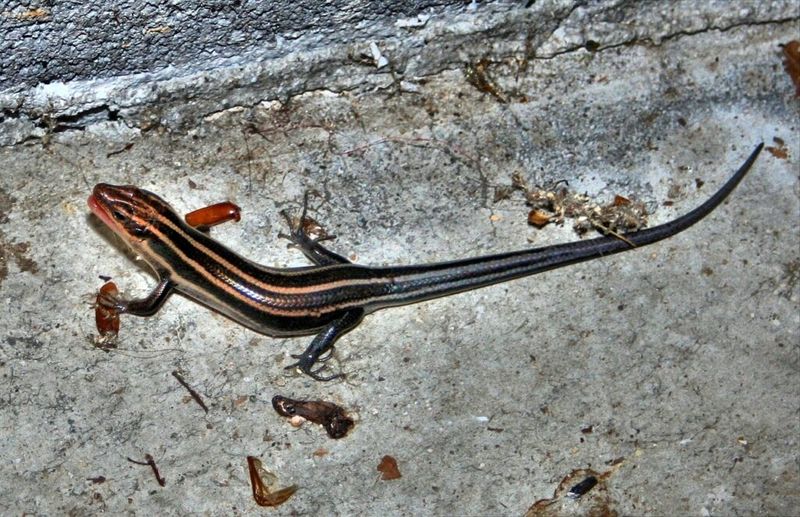
The common five-lined skink is probably the most frequently seen in residential settings across the Piedmont and Coastal Plain. Juveniles sport five pale stripes on a dark body and a brilliant blue tail.
Adults fade toward olive or brownish tones, and older males can develop a reddish-orange head. According to NC State Parks reptile records, the species is widespread but less common at high elevations and in some Outer Banks habitats.
The southeastern five-lined skink looks strikingly similar to the common five-lined but tends to favor drier, sandier environments and maritime forests along the coast. Telling the two apart in the field often requires a very close look at scale patterns, which is not practical from a respectful viewing distance.
The broad-headed skink is the largest of the group. Mature males develop a noticeably wide, reddish-orange head that makes them look almost cartoonishly robust.
They are more arboreal than the five-lined skinks and are often spotted on tree trunks, fence posts, and the sides of buildings as well as on the ground.
The ground skink is the smallest and the easiest to overlook. It is a slender, quick-moving lizard that stays close to leaf litter and forest floor debris.
If you saw something that seemed more like a moving leaf than a lizard, a ground skink is a strong candidate.
The most useful thing you can do when a skink appears is take a photograph from where you are standing. A good image captures details you cannot safely observe by handling the animal, and it gives you something to compare against field guides or share with NC Wildlife resources later.
Getting down on your knees and reaching for the skink is not recommended, for reasons covered in a later section.
A Single Skink Is a Clue, Not a Yard Health Test
Plenty of online sources will tell you that a skink on your patio means your yard is thriving with insect life. That is a satisfying idea, but it puts more interpretive weight on one small reptile than the evidence will hold.
Temperature, shelter availability, vegetation structure, predator pressure, and seasonal movement patterns all shape where a lizard turns up on any given morning. Research on five-lined skink habitat use shows that thermal conditions and cover can strongly predict occurrence, independent of insect density.
A warm patio adjacent to even modest plant cover may attract a skink that is simply following thermal gradients, not homing in on an unusually productive food patch beneath your flagstone.
Studies on lizard microhabitat selection reinforce that point: lizards weigh temperature, surface texture, exposure to predators, and proximity to retreat cover simultaneously when choosing where to sit. The stone wins the competition for basking quality even if the surrounding food supply is ordinary.
Urban reptile habitat research also demonstrates that modified residential environments can support lizards through a combination of thermal opportunity and structural shelter even when overall biodiversity is modest. A skink can thrive in a yard that is reasonably good, not only in one that is exceptionally wild.
NC State Extension notes that a healthy, diverse community of reptiles and amphibians can be an encouraging sign that an area supports the plants, insects, and habitat structure wildlife needs. Notice that this applies to a community observed over time, not a single animal on a single day.
One other expectation worth setting aside: a skink eating insects does not translate into reliable control of ticks, mosquitoes, or garden pests at any predictable level. The documented diet establishes that skinks eat arthropods.
It does not establish that one resident skink will meaningfully reduce the pest species you are most concerned about. Treat the animal as a welcome neighbor, not as a hired exterminator.
Protect the Food Web Behind the Sighting
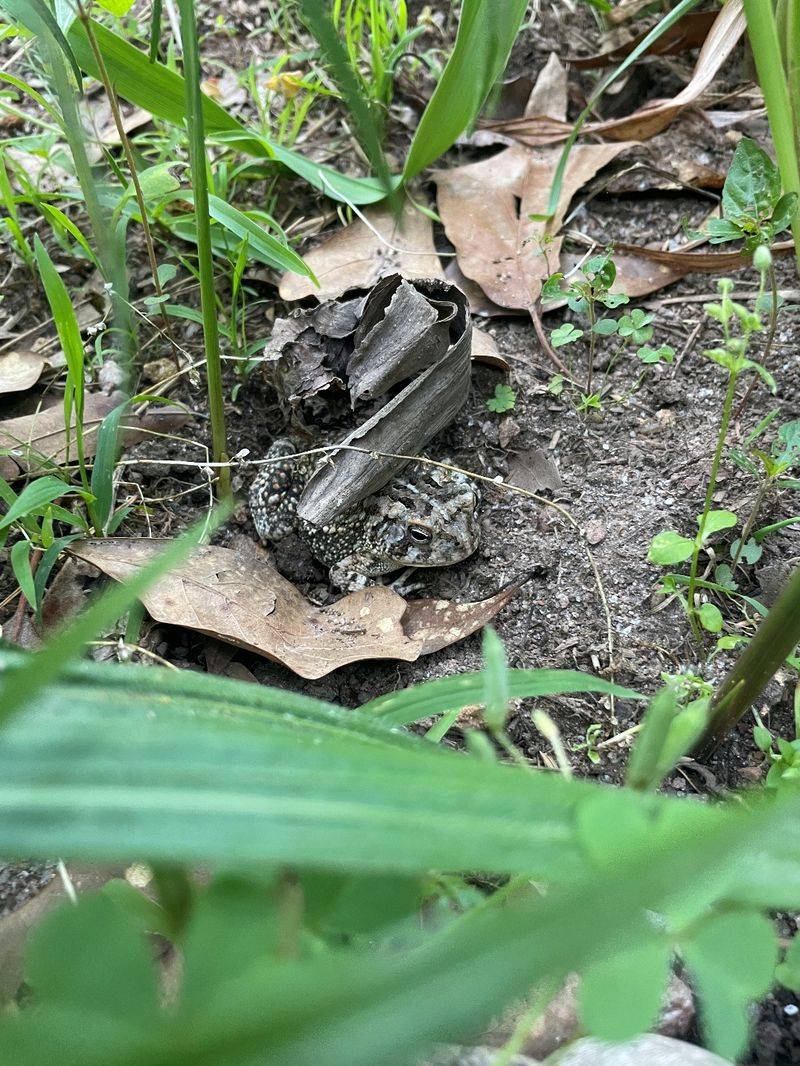
If you want skinks to keep visiting, the most effective thing you can do is protect the conditions that make your yard worth using in the first place. That means resisting the impulse to tidy every corner into bare soil and clipped grass.
NC State Extension’s reptile and amphibian guidance specifically recommends retaining leaf litter, fallen branches, logs, rock piles, dead vegetation, and woody debris as habitat features that support lizards and other herps. These are not signs of a neglected yard; they are the structural elements that provide shelter, overwintering sites, and hunting grounds for the invertebrates skinks eat.
A single log left near a garden bed or a modest pile of rocks beside the patio can make a meaningful difference.
Native plants play a supporting role here as well. NC State Extension’s wildlife gardening resources explain that native plantings support a broader range of insects compared with non-native ornamentals, and more insects in the food web can mean more reliable prey for insectivores like skinks.
Swapping out a patch of invasive English ivy for a native ground cover such as wild ginger or green-and-gold adds both structural cover and food web value.
Insecticide use deserves careful thought in this context. NC State Extension states plainly that broad-spectrum insecticides reduce the food supply for reptiles and amphibians because so much of their prey is made up of insects and other arthropods.
That does not mean tolerating a genuine pest problem or ignoring a dangerous infestation. The practical guidance is to use pesticides only when a real problem requires them, choose targeted products over broad-spectrum sprays when possible, follow label directions carefully, and avoid applying chemicals near water features, storm drains, leaf litter areas, or rock piles where skinks and their prey concentrate.
Keeping some structural complexity in the yard, planting or retaining native species, and applying chemicals only when necessary are all steps that support not just skinks but the broader community of birds, pollinators, and other wildlife that depend on the same food web.
What to Do When the Skink Returns
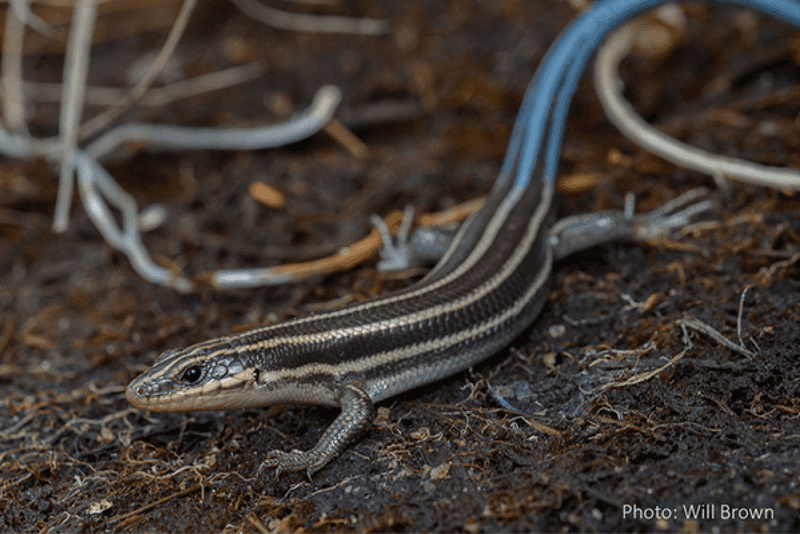
Seeing a skink on your patio a second or third time means the animal has found something reliable there. Your job at that point is straightforward: do not disturb it, and make sure others in your household follow the same rule.
The single most useful action is to stay back and watch. A skink that feels safe will linger long enough for you to observe its behavior and take a photograph with your phone.
Moving toward it quickly, reaching down, or letting a pet rush the area will send it sprinting into cover, which is exactly the response you want to avoid. NC State Extension advises keeping cats and dogs away from lizard habitat, identifying them as real hazards to skinks and other small herps.
Cats in particular are effective hunters of lizards even when well-fed, so keeping them indoors or under direct supervision during peak skink activity hours protects the animal meaningfully.
If the skink is sitting very still and you are worried it might be hurt, back away before drawing any conclusions. NC Wildlife’s guidance on injured and orphaned animals is clear that a wild animal may remain motionless when alarmed and that you should give it several hours of undisturbed time before assuming intervention is needed.
A skink that is simply frightened will move on once the threat has passed. One that is genuinely injured or unresponsive after a long period of calm may warrant a call to a licensed wildlife rehabilitator, but that is a different situation from a skink that is just basking and holding still.
Relocation is never the right answer. Moving a skink to another part of the yard or to a nearby greenspace strips it from a territory it already knows and drops it into an unfamiliar area where it has to relearn shelter locations, food sources, and escape routes under stress.
On the topic of handling: please do not pick up a wild skink casually. Reptiles can carry Salmonella bacteria without showing any signs of illness, and the risk is real.
CDC Salmonella outbreak records document transmission linked to reptile contact. CDC reptile-associated Salmonella guidance recommends thorough handwashing with soap and water after any unavoidable contact and keeping reptiles and any objects they have touched away from food-preparation areas.
Emerging Infectious Diseases research highlights that children under five face a heightened risk and should not handle reptiles or their environments. Observation and photography from a comfortable distance sidestep all of that risk entirely.
Let the Patio Stone Keep Its Wild Visitor
The skink on your patio stones found something it needed: a surface warm enough to bring its body up to working temperature on a North Carolina morning. That is the most direct and honest reading of what you witnessed.
Beyond the immediate thermal payoff, its presence may also reflect that your yard offers some combination of shelter, cover, and invertebrate prey worth returning to. NC State Extension’s backyard wildlife guidance frames repeated herp sightings as an encouraging sign that a yard is supporting the plants, insects, and structural features that wildlife depends on.
That is worth protecting deliberately rather than leaving to chance.
The steps are not dramatic: leave some leaf litter in place, keep a log or rock pile near planted areas, reduce unnecessary broad-spectrum spraying, plant or retain native species where you can, and keep pets from patrolling the spots where the skink appears. None of those actions require turning your yard into a wilderness preserve.
They just mean giving the existing food web a little more room to function.
One small, sun-warmed lizard cannot certify your yard as ecologically exceptional or promise you a pest-free summer. What it can do is remind you that the yard is already part of something larger, a connected piece of North Carolina habitat where wild animals make daily decisions about where to warm up, where to hunt, and where to shelter.
Keeping the patio stone in a yard that also offers those other things is a quiet act of stewardship that costs almost nothing.