
Common Witchhazel: The Fall Shrub That Shares Its Name With Your Bathroom Shelf
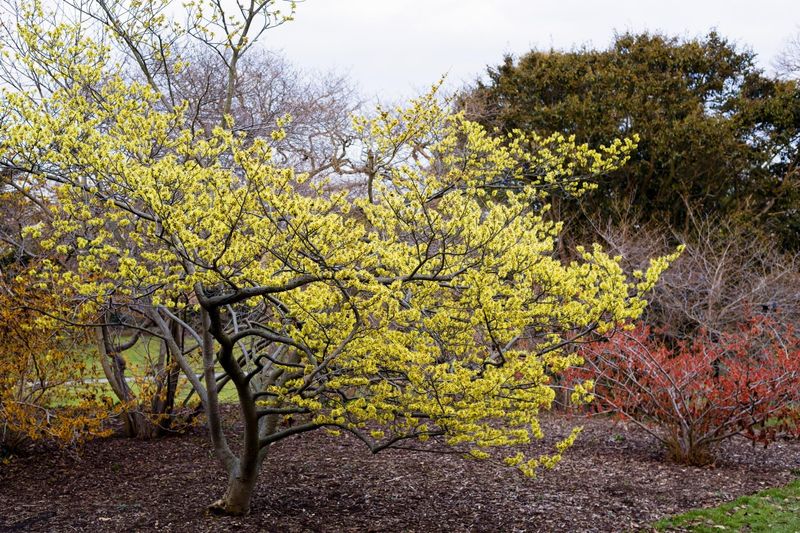
Walk past a witch hazel shrub on a cool October afternoon and you might notice something unusual: bright yellow leaves and thin, ribbon-like flowers appearing at the same time, long after most shrubs have gone quiet for the season. That plant, known botanically as Hamamelis virginiana, is a North American native with a direct connection to some of the witch-hazel products sold in pharmacies.
The shrub and the bottle share more than a name, but they are not the same thing. Understanding both will help you get more out of your fall yard and make smarter choices at the store.
Common witchhazel brings color and flowers to the fall yard
Hamamelis virginiana goes by the common name witchhazel, and it earns its place in a fall garden through sheer timing. While most flowering shrubs wrap up their show by midsummer, this North American native holds its display until the rest of the yard has gone brown and quiet.
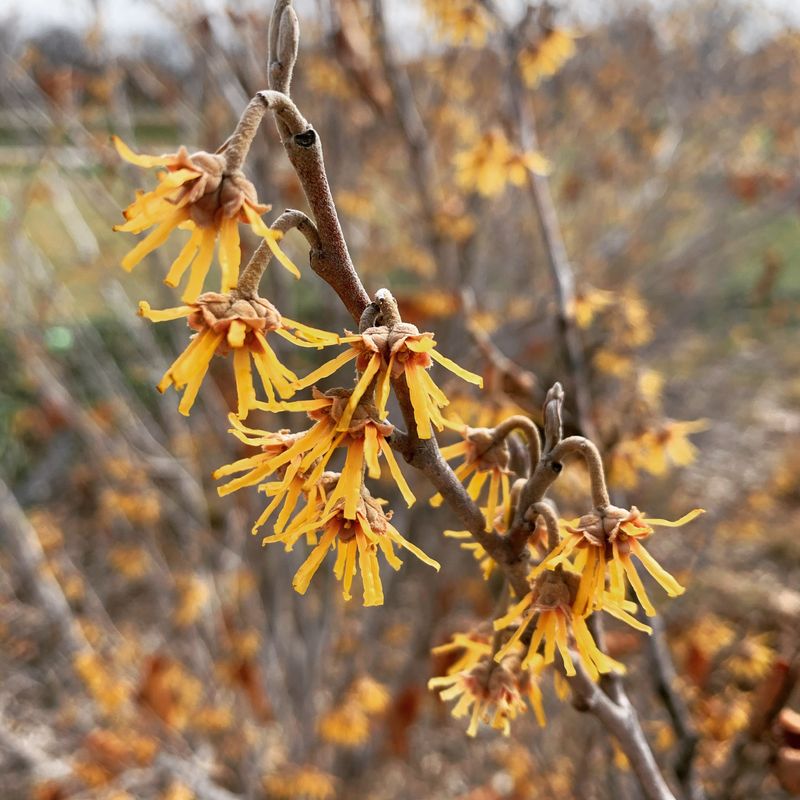
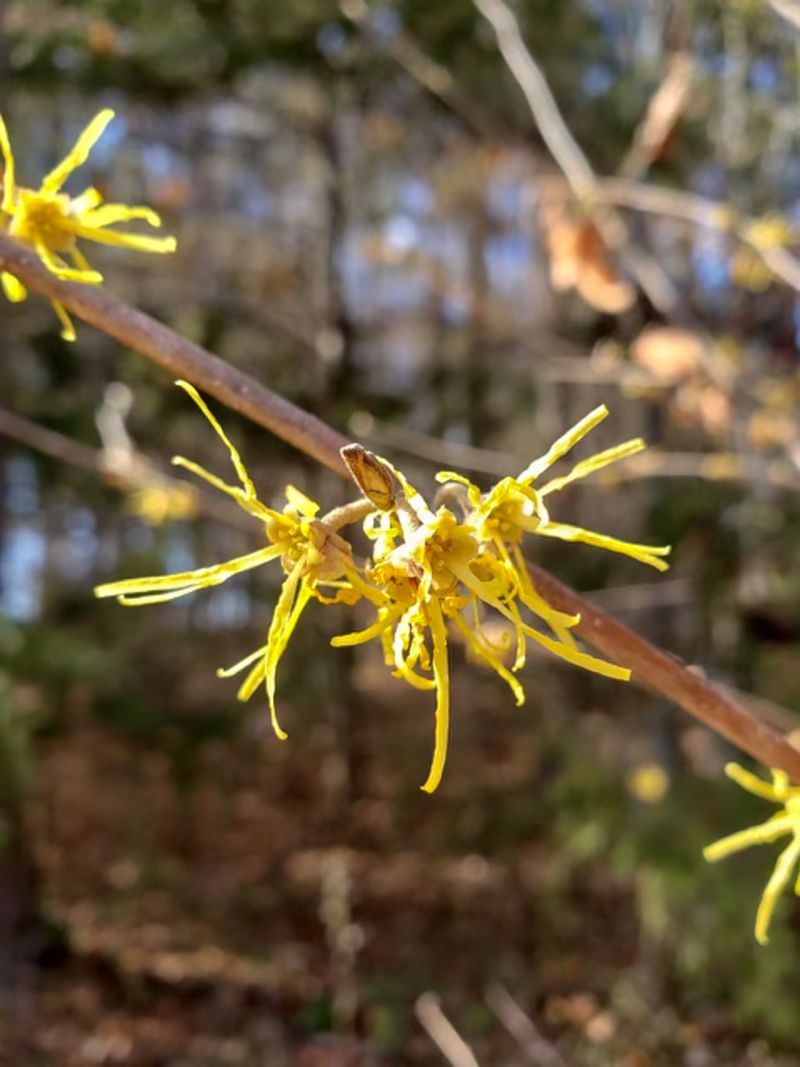
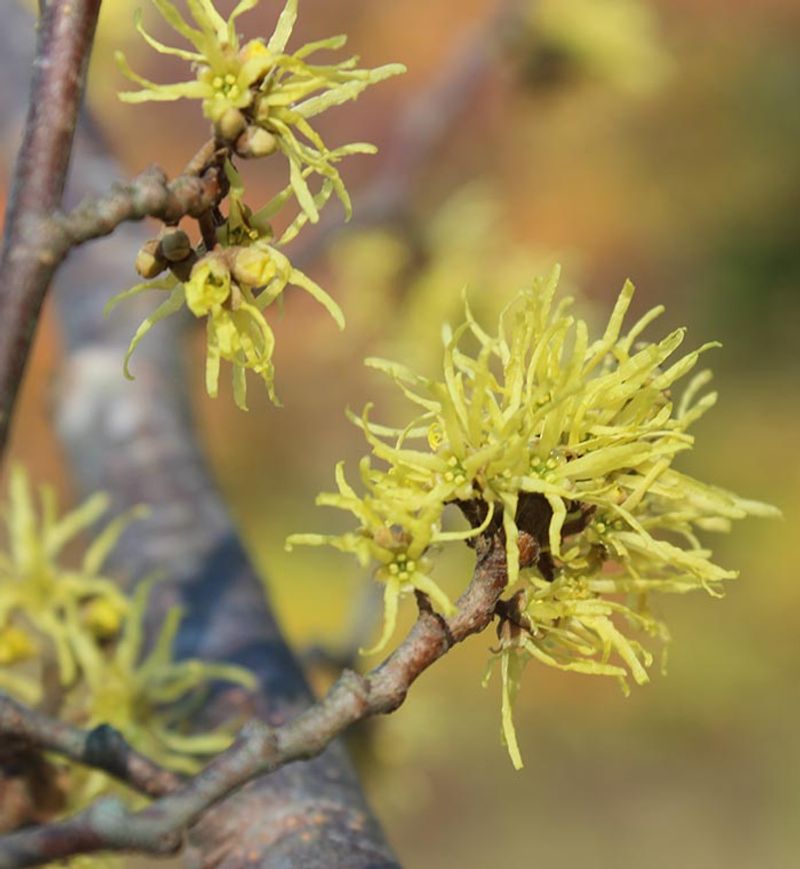
University of Maryland Extension describes it as a shrub or small tree with golden-yellow fall foliage and fragrant flowers whose narrow, strap-like petals give the blooms an almost spidery look.
Those flowers typically appear in late fall, and the timing can overlap with the plant’s own leaf color. That overlap is part of what makes common witchhazel distinctive, but it also means the blooms are easy to miss.
Yellow flowers tucked among yellow leaves can blend right in, especially from a distance or in low autumn light.
The fragrance helps. On a calm, cool day, you may catch a faint sweet scent before you spot any flowers at all.
Gardeners who grow this shrub often describe a pleasant surprise when they realize something is still blooming in November while everything else is dormant.
Beyond the flowers, the plant offers multi-season interest. Its leaves turn a clean, warm yellow in fall, and its open, layered branching structure gives it a natural, informal look that suits woodland edges and naturalized areas.
Iowa State University Extension notes that common witchhazel is the fall-flowering species in a genus that includes other witch hazels with very different bloom times, making species identification an important first step for any gardener hoping for fall flowers.
Which witch hazel will bloom in your fall yard?
Not every shrub sold as witch hazel will give you flowers in October or November. The common name covers a whole group of species and hybrids, and many of the witch hazels you see at garden centers are selections or hybrids bred for showy late-winter or early-spring color.
If you are counting on fall flowers, the botanical name on the tag matters more than the common name on the sign.
Hamamelis virginiana is the one to look for. It is the species native to eastern North America and the one that reliably flowers in late fall.
Hybrid witch hazels, including many sold under names like Arnold Promise or Jelena, typically bloom from late winter into early spring and may have orange, red, or copper flowers rather than yellow. Iowa State Extension’s overview of witch hazels points out that checking both the species name and cultivar is the only reliable way to know when a particular plant will bloom.
Even with the right species, flowering time shifts depending on where you live. A plant in Virginia may open its flowers in October, while the same species farther north might not bloom until late November.
Local weather, microclimate, and the age of the plant all play a role.
A quick look in the yard on a gray November afternoon is not always enough to confirm whether a shrub is flowering. Leaves that have not yet dropped can hide the blooms entirely, and yellow petals against a yellow leaf backdrop are genuinely hard to see.
Maryland Extension notes that flowers may emerge before leaves have fully fallen, so a shrub without obvious blooms at a glance is not necessarily failing to flower. Get close, look carefully at the branch tips, and check again after a hard frost drops more leaves.
Give the shrub room to reach its mature size
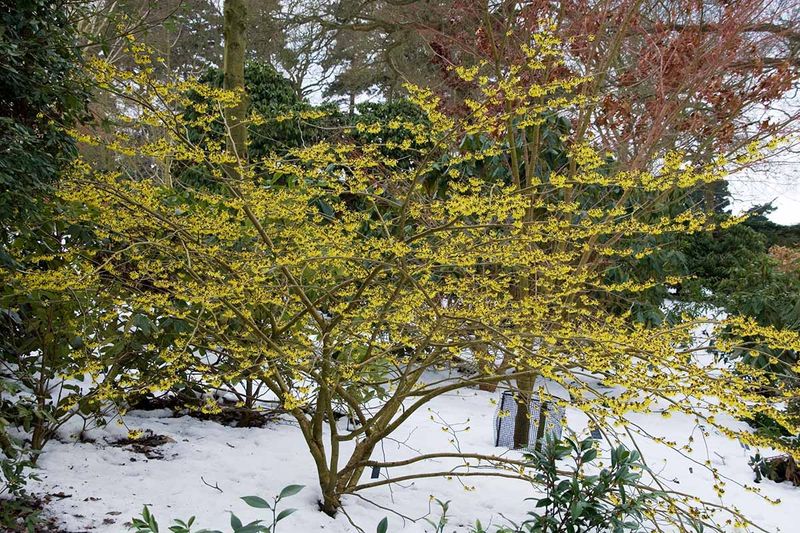
Common witchhazel is not a compact shrub you can tuck into a tight corner and forget. Given good conditions, it can reach 15 to 20 feet tall and spread nearly as wide, developing a broad, multi-stemmed form that looks best when it has space to grow without constant cutting.
Planting it where it has room to mature saves a lot of frustration later.
Maryland Extension recommends moist, well-drained soil and a spot with full sun to partial shade. The shrub tolerates a range of soil conditions but performs best with consistent moisture, especially in the first season or two after planting.
Watering regularly while a new plant establishes helps it develop a strong root system before it has to handle summer heat or drought on its own.
Once established, common witchhazel is generally low-maintenance. It does not need annual shaping the way a formal hedge does, and heavy pruning works against the plant’s natural open form.
Iowa State Extension advises keeping pruning to a minimum, removing only dead, damaged, or crossing branches, and doing that work in late winter or early spring rather than in fall when flower buds are forming.
A woodland edge, a naturalized corner, or the back of a mixed border are all good fits. The shrub’s layered branching and open canopy let light filter through in a way that suits underplantings of shade-tolerant natives.
Think of it as a long-term planting rather than a fast-growing screen, and choose its location with the mature size in mind rather than planning to prune it back each year to fit a smaller space.
The bottle contains a preparation, not a piece of the yard
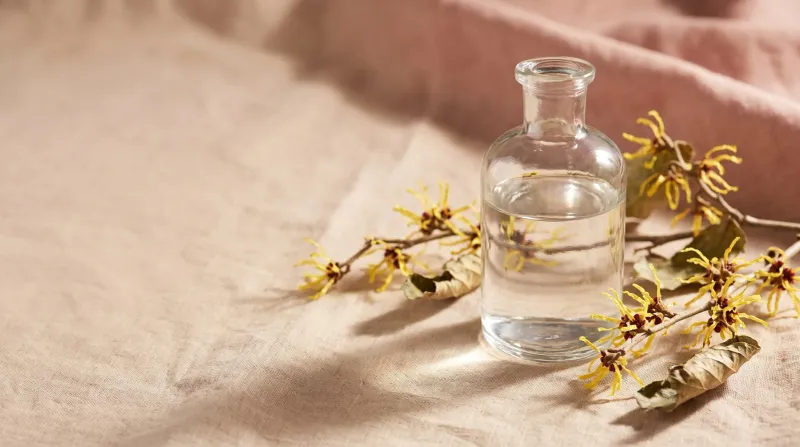
Seeing a witch hazel shrub in your yard and then spotting witch hazel on a pharmacy shelf might make it seem like one leads directly to the other, but the connection involves significant processing. The plant and the bottled product share a botanical origin, not a preparation.
The United States Pharmacopeia monograph for witch hazel describes it as a distillate prepared specifically from the dormant twigs of Hamamelis virginiana. That means the starting material is harvested at a particular time of year, processed through steam distillation, and combined with alcohol to reach a defined concentration.
The result is a standardized liquid that is chemically distinct from fresh leaves, bark, a handful of fall clippings, or the sap running through a branch in your yard.
Retail products add another layer of variation. Some formulations are distillates that closely follow the pharmacopeial definition, while others use extracts, concentrated preparations, or blends that include additional active or inactive ingredients.
A current OTC witch hazel label on DailyMed lists witch hazel as the active ingredient alongside water and alcohol as inactive ingredients, but formulations vary across brands.
None of this means the plant connection is fictional. Hamamelis virginiana is genuinely a botanical source for witch-hazel preparations.
The point is that the live shrub, its raw clippings, a pharmacopeial distillate, and a retail bottle are four different things. Do not treat them as interchangeable, and do not try to make a skin preparation from yard trimmings based on the shared name.
What does the FDA listing actually cover?
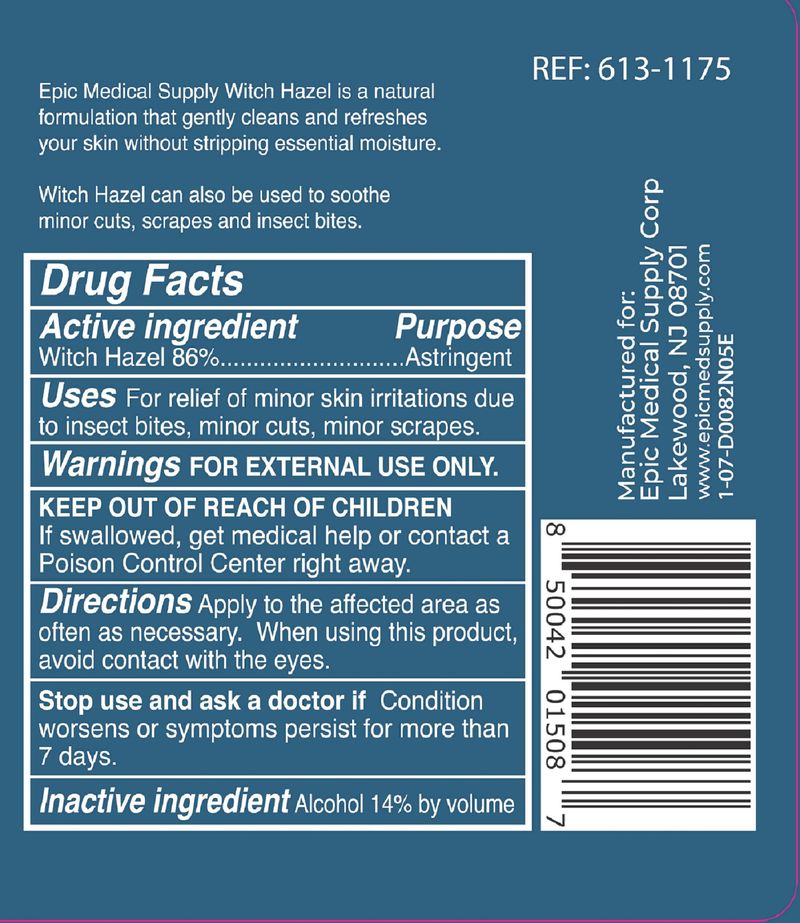
Witch hazel appears as an active ingredient in the FDA’s OTC skin-protectant monograph, and that distinction is worth understanding precisely. The FDA OTC skin-protectant monograph (M016) lists witch hazel as an astringent and permits labeling for relief of minor irritation due to insect bites, minor cuts, or minor scrapes.
Those are the specific uses the monograph covers for this ingredient.
What the monograph does not do is individually approve every brand, bottle, or cosmetic product that carries the words “witch hazel” on its label. The FDA’s OTC monograph system works differently from the new-drug approval process.
FDA guidance on the OTC regulatory process explains that manufacturers of products conforming to an applicable monograph’s conditions for ingredients, uses, and labeling may market those products without obtaining product-specific preapproval from FDA. Monograph status sets the rules; it does not stamp each product individually.
That distinction matters when you see witch hazel marketed for acne, eczema, general inflammation, or a broad range of skin conditions. Those uses fall outside what the skin-protectant monograph covers, and no monograph listing gives them automatic FDA backing.
Witch hazel also appears in a separate FDA document: the OTC anorectal-drug monograph (M015), which covers a different product category with its own specified concentration range and labeled uses. That listing applies to anorectal products specifically and should not be read as broadening the ingredient’s approved uses for facial toners, skin astringents, or general skincare.
Reading the Drug Facts label on any specific product tells you what that formulation is actually marketed to do, at what concentration, and under what conditions. The monograph sets the ceiling; the label tells you what the manufacturer is claiming within it.
Witch hazel’s skin claims have limits
Clinical research on witch hazel is real but narrower than many product descriptions suggest. One frequently cited study, a controlled trial examining hamamelis distillate applied to experimentally induced skin redness, found measurable effects on inflammation in healthy volunteers.
The catch: the witch-hazel preparations tested were less potent than 1% hydrocortisone, a standard low-strength OTC anti-inflammatory. That puts the effect in perspective.
It exists, but it is modest.
A broader look at the published research tells a similar story. A review of Hamamelis virginiana in skin care notes that while there is pharmacological rationale for some of the ingredient’s uses, robust clinical evidence across a wide range of skin conditions remains limited.
Studies vary in preparation strength, vehicle, and methodology, making it difficult to draw firm conclusions about uses beyond what the FDA monograph already covers.
That means acne, eczema, skin infections, and general inflammation are not supported uses under the FDA skin-protectant monograph. Seeing witch hazel in a toner or facial mist does not mean the product is treating those conditions in any FDA-recognized way.
Many such products are cosmetics, not OTC drugs, and their claims are evaluated differently.
For a product with a Drug Facts label, that label is the right guide. A current OTC witch hazel label specifies external use only, warns to avoid eye contact, and directs users to stop use and consult a doctor if the condition worsens or does not improve within seven days.
Those directions apply to the specific formulation on that label; other products may have different instructions. Read yours before using it, and do not apply topical witch hazel to eyes or ingest it.
Enjoy the shrub; use the bottle as labeled
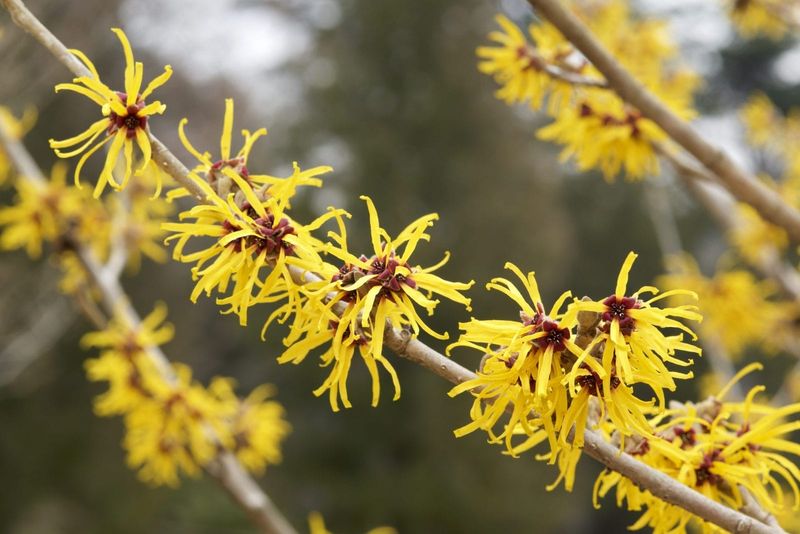
Common witchhazel, Hamamelis virginiana, earns a place in a fall yard on its own terms. Confirmed by its botanical name, it is the fall-flowering species in the genus, and verifying that name at purchase is the single most reliable step toward getting the late-season bloom you are hoping for.
The bottled product is a different matter. Witch hazel in a pharmacy is a processed preparation with specific, limited uses under the FDA OTC skin-protectant monograph.
The Drug Facts label on your specific product is the authoritative guide to how to use it safely. A yard full of yellow November color and a bottle of astringent can coexist without confusion, as long as you know what each one actually is.