
If A Black Walnut Tree Grows Near Your Yard, Here Is Why Your Tomatoes May Be Struggling
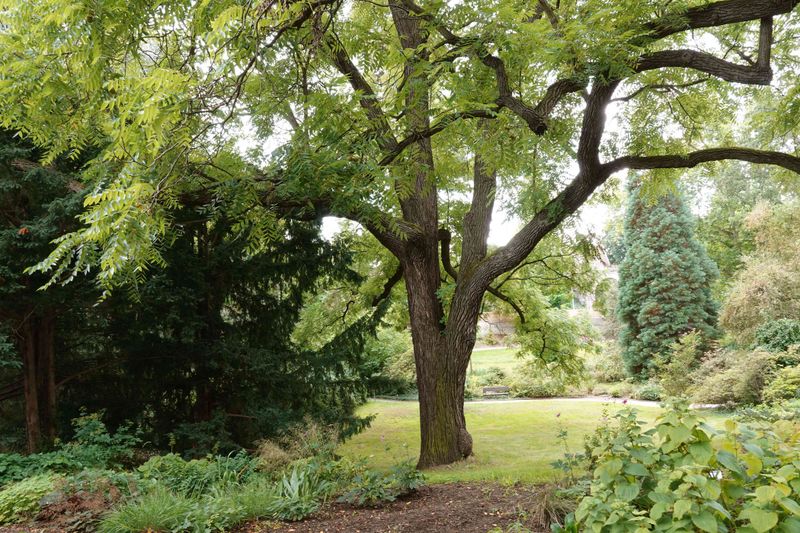
Tomatoes wilting or yellowing near a black walnut tree can feel like a mystery with no clear answer. The tree is a reasonable suspect, but it is not the only one, and the situation is more complicated than a simple case of tree poisoning.
Understanding what the tree actually does, and what else might be going on, puts you in a much better position to help your plants.
A walnut nearby is a clue, not a diagnosis
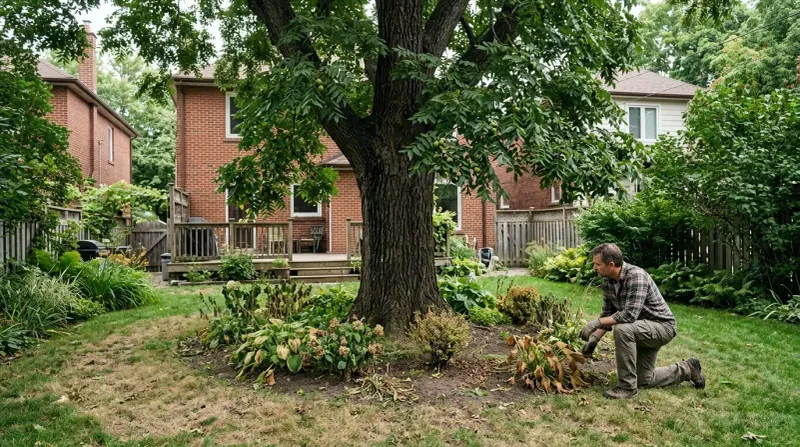
Finding a struggling tomato bed near a black walnut tree is understandably frustrating, and the tree is a reasonable thing to consider. But location alone cannot confirm what is happening to your plants.
Proximity is a clue worth following, not a verdict.
Black walnut (Juglans nigra) is frequently mentioned in gardening discussions as a tree that can harm nearby plants, and that reputation has some real basis. According to the USDA Forest Service species account for black walnut, the tree does produce compounds that can affect other plants, and its roots spread considerably.
But how far, and how consistently those compounds affect things, depends on a lot of factors specific to your yard.
One popular idea is that tomatoes will reliably die within 50 feet of a black walnut. That specific distance gets repeated often, but a Washington State University Extension review of the research makes clear that the science does not support a fixed radius where tomatoes will fail or beyond which they are safe.
Roots spread differently depending on soil type, moisture, and competition. Effects vary from yard to yard, and some gardeners grow tomatoes near walnuts without obvious problems while others see serious decline.
The bottom line at this stage is simple: if your tomatoes are struggling and a black walnut is nearby, the tree belongs on your list of possible contributors. That is different from saying the tree caused the problem.
Before drawing conclusions, it helps to understand how walnut compounds might reach your plants, and more importantly, what else could be responsible for the same symptoms you are seeing.
How juglone could reach a tomato bed
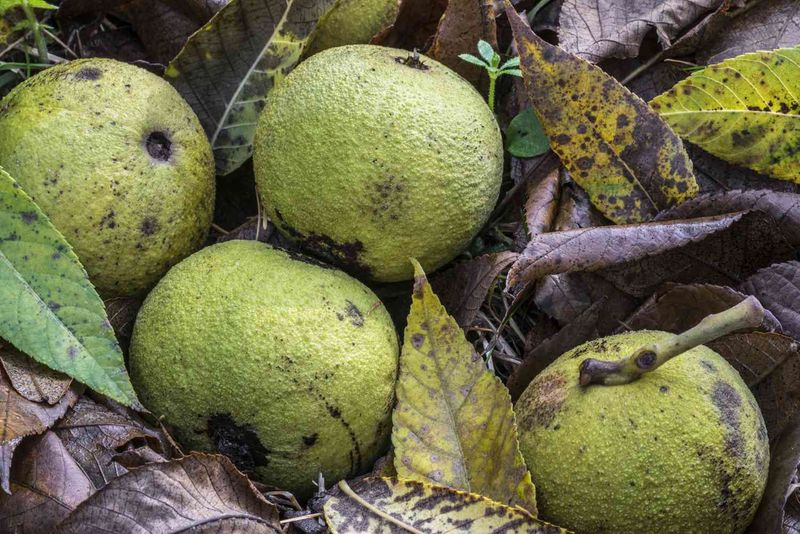
Black walnut trees contain a group of compounds related to juglone, a substance that can interfere with the growth of certain plants. Juglone and its precursors are present throughout the tree, including the roots, leaves, and hulls of the fruit.
When roots grow into surrounding soil, or when fallen leaves and hulls break down on the ground, these compounds can enter the soil in measurable amounts.
Tomatoes are among the plants commonly listed as sensitive to juglone. The Penn State Extension guide on gardening near walnuts includes tomatoes in its list of susceptible plants and notes that symptoms in sensitive species can include yellowing, stunting, wilting, and sometimes plant death.
That sensitivity is real and worth taking seriously when you are trying to figure out what is going wrong.
The way juglone reaches a tomato bed matters, though. Walnut roots are the primary pathway, because they can grow into the soil around and beneath a garden bed, releasing compounds as they grow and decompose.
Fallen walnut material, including leaves, hulls, and stems left on the soil surface or mixed into the planting area, adds another potential source. This is different from saying the tree broadcasts a uniform cloud of poison in every direction.
The USDA Forest Service account of the species documents that black walnut roots can spread substantially, but their actual reach and density vary with site conditions. A tomato bed that happens to be in the path of dense root growth faces more potential contact than one where roots have spread differently.
The mechanism is plausible, but how much exposure any particular bed receives depends on what is happening underground in your specific yard.
Why the effect varies from one yard to another
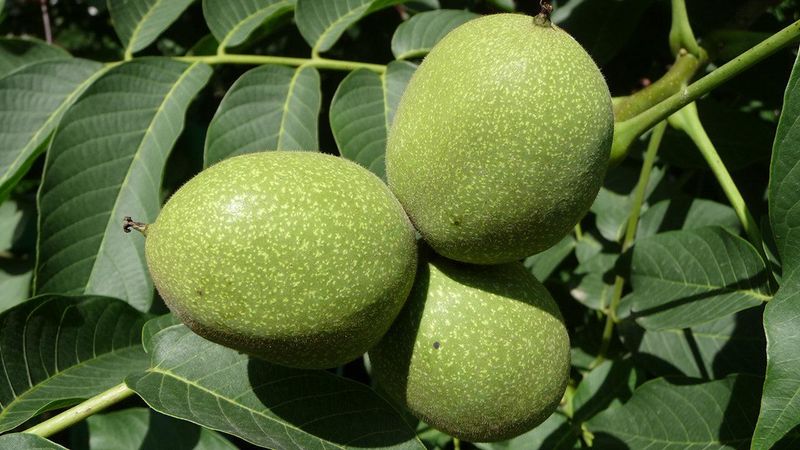
A plausible mechanism does not automatically produce a predictable outcome. Even if juglone can harm tomatoes under the right conditions, that does not mean every tomato planted within a certain distance of every walnut will fail.
The gap between laboratory findings and what actually happens in a real garden is significant, and field research reflects that complexity.
A peer-reviewed field study by von Kiparski and colleagues measured juglone in soil beneath black walnut trees and found that levels and effects depend on the balance between how much the tree releases, how the soil holds or moves compounds, and how quickly juglone degrades in that environment. Some soils break juglone down more readily than others.
Drainage, organic matter, microbial activity, and temperature all play roles. Two yards with the same tree species and similar planting distances can have meaningfully different juglone levels in their soil.
A separate field study, which looked at seasonal patterns of juglone in soil beneath black walnut, found that soil concentrations changed across the growing season and raised questions about whether strong allelopathic effects fully explained the patterns of vegetation observed near the trees. That kind of uncertainty matters when you are trying to decide whether the walnut is the reason your tomatoes are struggling.
Shade and root competition add another layer. A walnut tree large enough to cast significant shade will also reduce the sunlight tomatoes need to thrive.
Its roots compete with your plants for water and nutrients. The WSU Extension review specifically flags shade and competition as alternative explanations that can look a lot like chemical toxicity.
Any of these factors, or a combination of them, could contribute to poor tomato growth near a walnut, and separating their effects is not straightforward in a home garden setting.
What else can make tomato plants wilt?
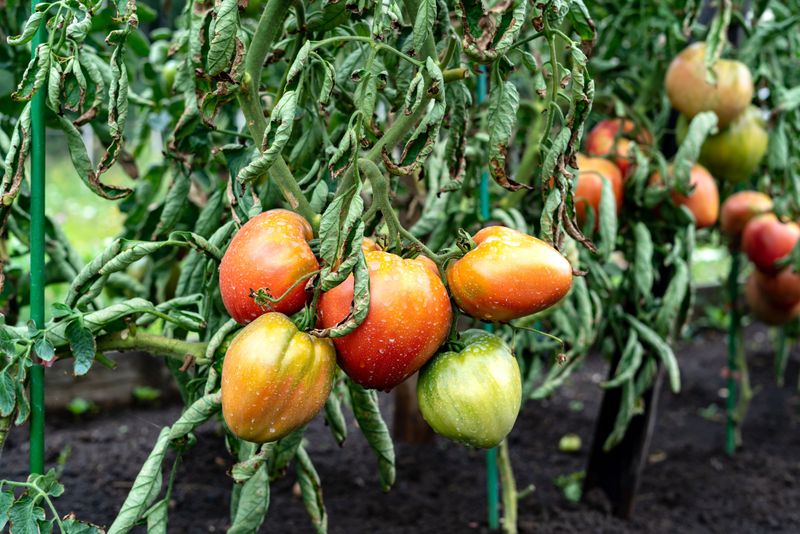
Yellowing, wilting, and stunted growth are the symptoms most often associated with juglone sensitivity in tomatoes. The problem is that those same symptoms show up in tomato plants for a long list of other reasons, and treating the walnut as the default explanation can lead you away from a problem that is actually treatable.
Two common tomato diseases produce wilt that can look almost identical to what juglone toxicity is said to cause. According to Iowa State University Extension guidance on tomato wilting, Fusarium wilt and Verticillium wilt are both soil-borne fungal diseases that cause progressive wilting and yellowing, often starting on one side of the plant or in the lower leaves.
One practical way to check: slice through the main stem near the base and look at the cut surface. Brown or tan discoloration in the ring of vascular tissue is a clue that points toward one of these diseases rather than the walnut.
Water stress is another common culprit. Tomatoes that dry out between waterings, or that sit in waterlogged soil, can wilt dramatically and fail to recover fully even after conditions improve.
Calcium deficiency, inconsistent watering, and extreme heat can add blossom end rot and leaf curl to the picture, making the plant look generally unhealthy in ways that have nothing to do with any tree nearby.
The Penn State Extension resource on juglone-producing plants notes that these symptoms are not diagnostic on their own. A plant wilting near a walnut tree has not been proven to be suffering from juglone exposure.
Investigating the actual cause, rather than assuming proximity explains everything, gives you a real chance to help your plants.
Move the bed or put a barrier between tomatoes and walnut roots
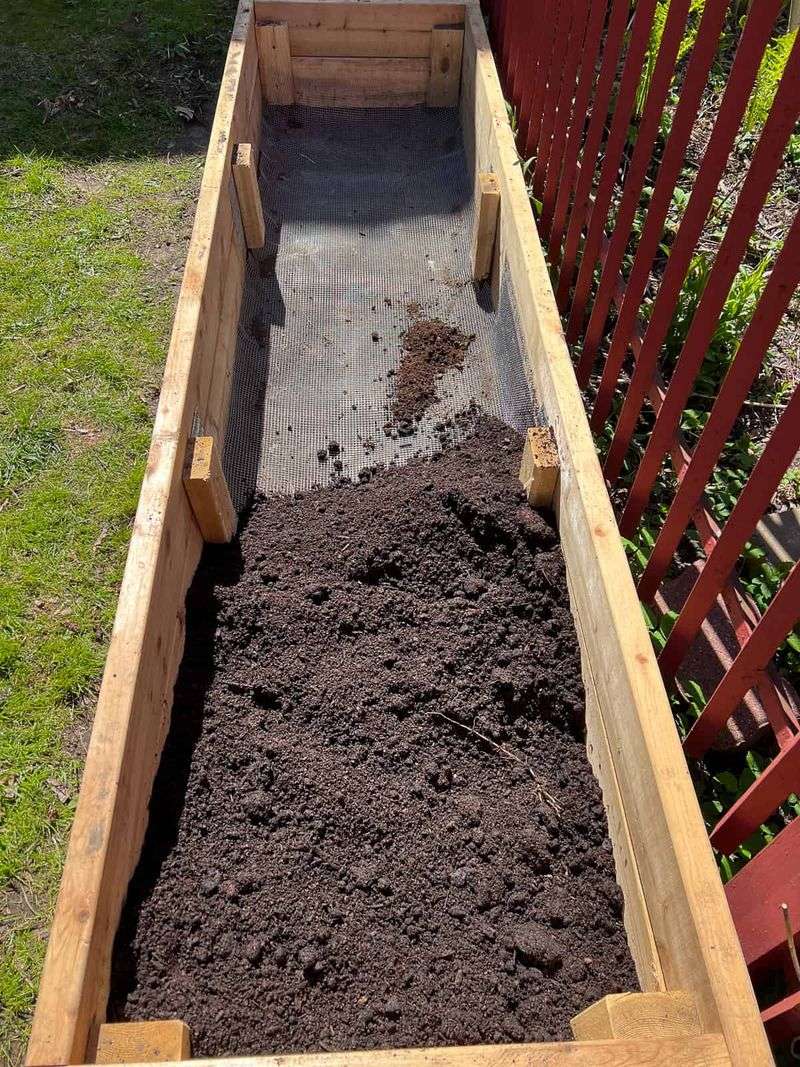
You do not need to confirm that juglone is the cause before taking practical steps to reduce possible exposure. Moving a tomato bed or reducing root contact are reasonable choices when a black walnut is nearby, and they also address shade and competition, which may be contributing to the problem regardless of any chemical effects.
The most straightforward option is relocating your tomato bed to a sunnier spot farther from the tree. Tomatoes need full sun, and a location away from a large walnut solves multiple potential problems at once: less shade, less root competition for water and nutrients, and less potential contact with juglone in the soil.
This is a cautious, practical step rather than a guaranteed fix, because disease and other issues travel with the plants if they are already infected.
When moving the bed is not an option, Penn State Extension suggests using a raised bed with a liner on the bottom to reduce contact between walnut roots and the planting area, filled with fresh soil rather than soil from the existing bed. A sturdy liner, such as heavy landscape fabric or a solid barrier, can limit how much root growth enters the bed from below.
This approach reduces possible exposure without requiring you to remove the tree or prove it caused the problem.
Keep in mind that a barrier slows root intrusion but does not eliminate it permanently. Walnut roots are persistent, and over time they can work around or through barriers.
Checking the bed periodically and refreshing the barrier or the soil is a reasonable long-term habit if you continue gardening in that area. These steps are about managing risk, not guaranteeing a particular outcome.
Fresh walnut debris is not the same as finished compost
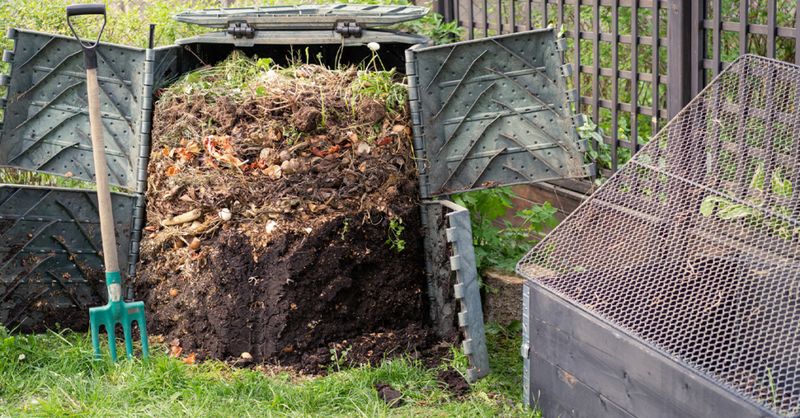
One of the more practical things you can do right now costs nothing: keep fresh walnut material out of your tomato planting area. Fresh walnut leaves, hulls, stems, and any mulch made from walnut wood or shells can carry juglone-related compounds.
Spreading that material around your tomatoes, or digging it into the soil, adds a source of potential exposure that you can simply avoid.
According to Penn State Extension, keeping fresh walnut debris out of the vegetable garden is a basic precaution that costs you nothing and removes one possible contributor to the problem. This applies to walnut-containing mulch as well.
If you are not sure what is in a bag of commercial mulch or wood chips, it is worth checking before using it near tomatoes.
Composting is a different matter. Oregon State University Extension explains that juglone can break down in a well-managed, sufficiently active compost pile.
The key word is active. A compost pile that heats up properly, with enough nitrogen-rich green material mixed in, adequate moisture, and a variety of organic inputs, creates conditions where microbial activity degrades juglone over time.
A cold or sluggish pile that never heats up is a different story, and material from that kind of pile should not be treated as finished compost.
The practical takeaway is to treat fresh walnut debris and finished, well-processed compost as two different things. Rake up fallen walnut leaves and hulls from around your garden beds and compost them separately in an active pile, or dispose of them elsewhere.
Do not use them as a direct mulch or soil amendment in your tomato bed, even if they look broken down on the surface. Finished compost from a well-managed pile is a reasonable option; fresh or partially decomposed walnut material is not.
Treat the tree as a lead, then choose your next step
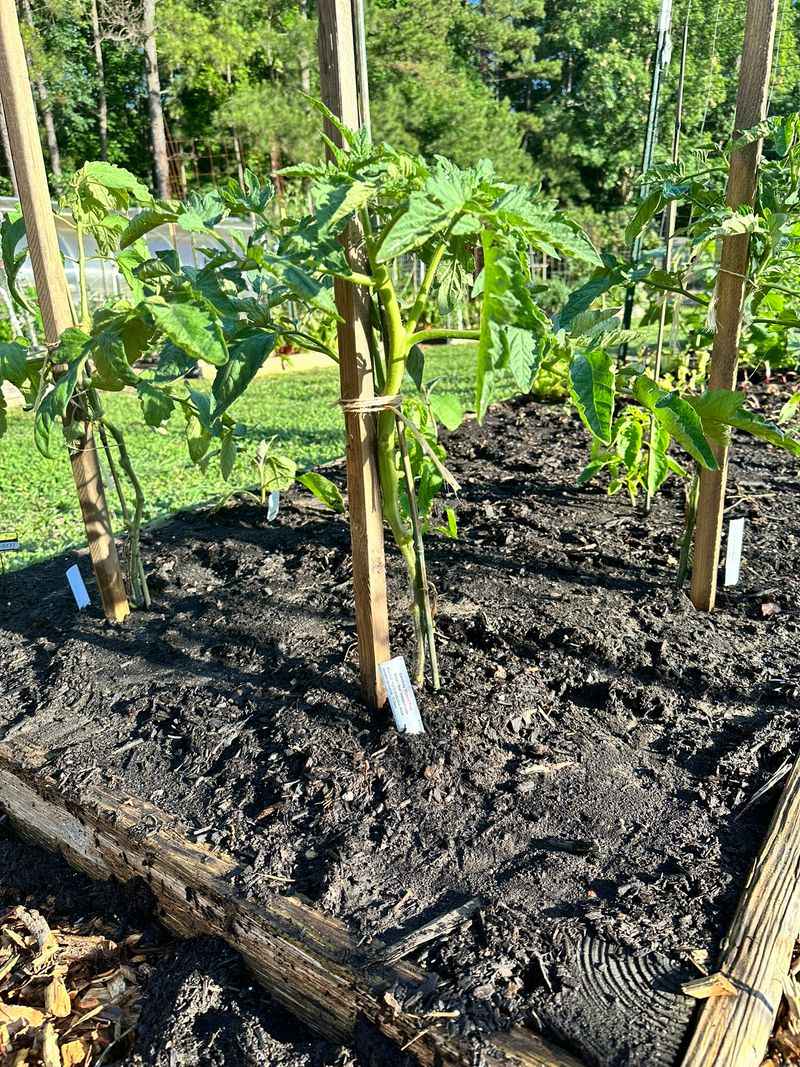
When tomatoes decline near a black walnut, the tree is worth considering as one possible factor. Check for disease signs first, especially the brown vascular discoloration that points toward Fusarium or Verticillium wilt, and rule out water stress and shade before settling on any single explanation.
No fixed distance reliably tells you whether the walnut is responsible, as the WSU Extension review and Penn State Extension both make clear.
Practical steps such as moving the bed, lining a raised bed, and keeping fresh walnut debris out of the planting area are sensible regardless of whether juglone turns out to be the main issue. A tomato bed that gets more sun, faces less root competition, and stays free of fresh walnut material is simply a better-positioned bed.
Sometimes the most useful thing a nearby tree can do is point you toward a smarter spot to garden.