
Your Tomato Plants Curl Their Leaves In Late Season — Here’s The Simple Fix Before You Blame Disease
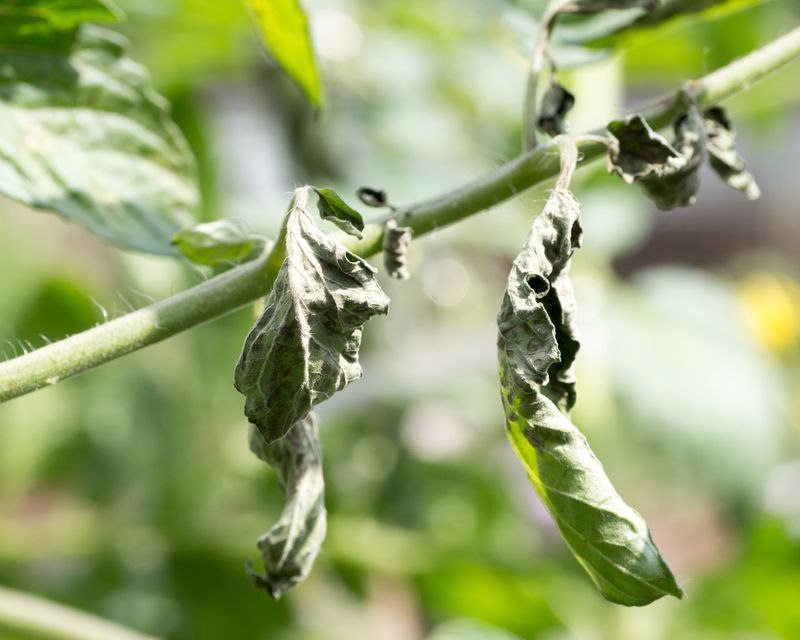
Walking out to your garden and finding your tomato leaves curled up tight can send you straight into panic mode. Before you pull out the plant or reach for a spray, though, the cause might be simpler than you think.
Late-season leaf curl is one of the most common worries for backyard tomato growers, and sorting out what is actually going on starts with a close look at the plant and the soil around it.
What physiological leaf roll can look like
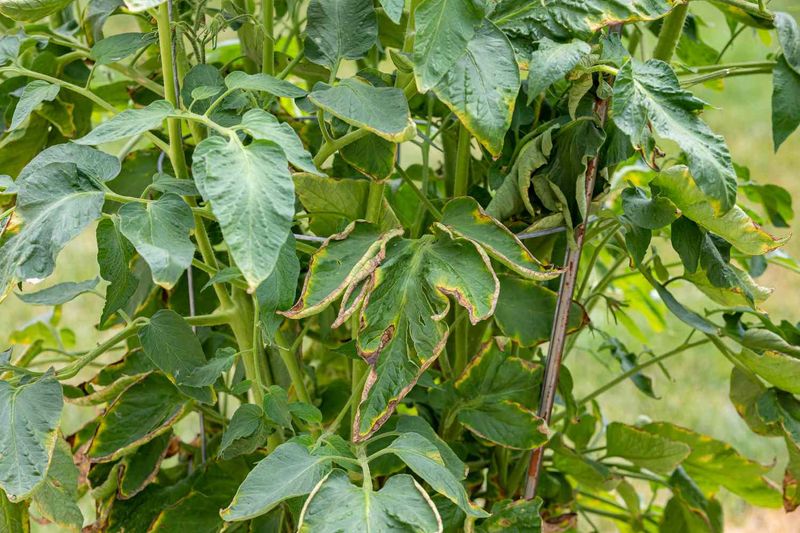
Physiological leaf roll follows a recognizable pattern that gardeners often mistake for something much more serious. The curling usually starts on the lower leaves first, with the edges turning upward and folding inward along the length of the leaf.
When you touch the affected leaves, they can feel thicker or more leathery than normal, almost waxy compared to the soft, flat leaves higher on the plant.
According to University of Minnesota Extension’s tomato leaf diagnosis guide, this upward and inward curling on lower leaves is one of the common presentations of physiological leaf roll. The plant can continue to look otherwise green and healthy, with new growth at the top appearing normal, flowers still forming, and fruit continuing to develop.
These features are clues worth noting, but they are not proof that disease or another problem is absent. Other causes, including viruses, herbicide exposure, and certain pests, can also produce curled or distorted leaves.
The shape of the curl and where it starts on the plant can help you narrow things down, but no single visual detail settles the question on its own.
The roll may be temporary, fading when conditions improve, or it may persist through the rest of the growing season. Oregon State University’s Pacific Northwest Plant Disease Management Handbook notes that physiological leaf roll is noninfectious, meaning it is not caused by a pathogen.
Recognizing what it typically looks like is a useful starting point, not a final answer.
Late-season timing does not identify the cause
Seeing curled leaves in August or September can feel like a late-season warning sign, but the timing by itself does not tell you what is wrong. Heat, dry soil, wet soil combined with high temperatures, and sharp swings between overly dry and overly wet conditions have all been associated with physiological leaf roll.
Summer and early fall bring exactly those kinds of conditions in many parts of the country, which is why the symptom shows up more often as the season wears on.
University of Maryland Extension’s guide to leaf curling on vegetables describes physiological roll as something that can occur when plants face moisture or temperature stress, without pinning it to a specific calendar window. The condition can begin during a heat wave in July just as easily as it can appear in September.
Timing is context, not a diagnosis.
One thing the research does make clear is that Illinois Extension’s explanation of rolling and wilted tomato leaves warns that prolonged exposure to hot, dry conditions can cause severe leaf roll from which plants may not recover. That detail matters: late-season stress is not automatically mild or harmless just because the growing season is winding down.
Resist the urge to assume that because the curl appeared late, the plant just needs a little more water to finish out the season. The right response depends entirely on what the soil and plant are actually doing right now, not on what month it is.
Check the root zone before changing irrigation
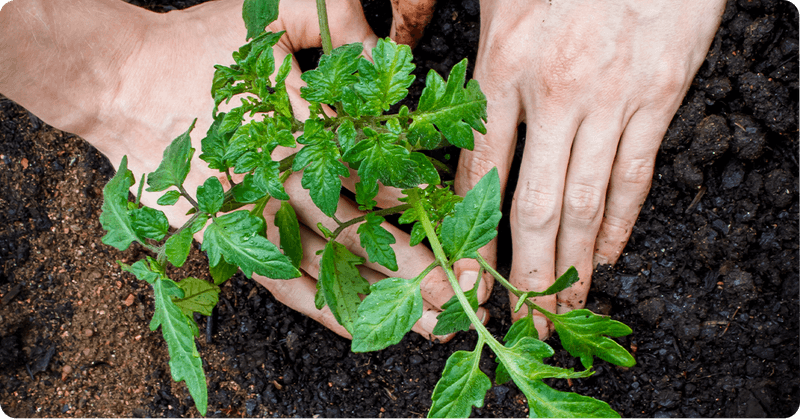
The most useful thing you can do when you spot curled tomato leaves is to check the soil before you touch the hose. Push two or three fingers about two inches into the ground near the base of the plant, close to where the roots are actively feeding.
What you feel there tells you far more than the surface of the soil, which can look dry even when moisture is still present a few inches down.
Dry, crumbly soil that pulls away from your fingers with no moisture is a real signal that the plant may be running short on water. Soil that feels cool and holds together, or that leaves your fingers damp, is not dry, and adding more water to it will not help the plant and could actually cause harm by pushing oxygen out of the root zone.
The Pacific Northwest Plant Disease Management Handbook connects physiological leaf roll to both prolonged dry soil and to wet soil conditions combined with heat, which means the same symptom can appear whether the plant has too little water or too much. That is exactly why checking first matters so much.
Also think back over the past several days. If you had significant rainfall recently, the soil may have more moisture than it appears to.
Illinois Extension’s Gardeners Corner summer guidance recommends accounting for recent precipitation before deciding to irrigate. A rain gauge or a simple mental tally of rainfall in the past week can save you from making a moisture problem worse by adding unnecessary water.
Restore steady moisture when the soil is dry
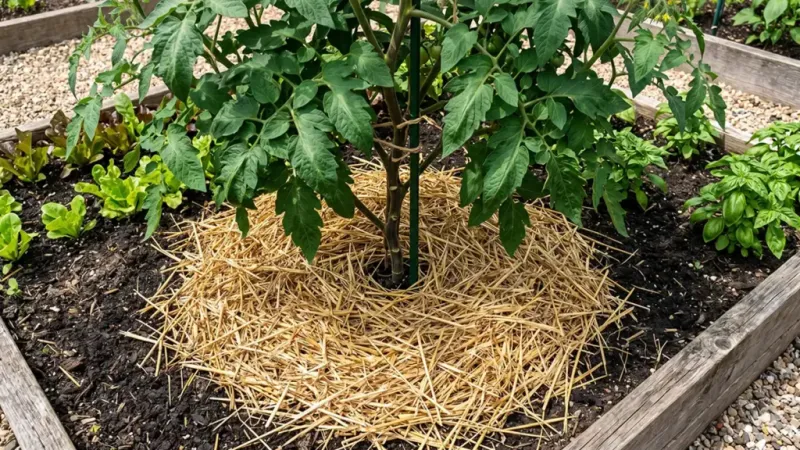
Finding genuinely dry soil around your tomato roots is a clear reason to act, but the goal is even, consistent moisture, not a sudden flood. Dumping a large amount of water on a dry plant all at once can stress the roots in a different way and may even cause problems like cracking in fruit that is already sizing up.
A slow, steady soak that penetrates several inches into the soil is far more useful than a quick splash at the surface.
Illinois Extension’s tomato heat tips point to consistent watering as a key part of keeping tomato plants stable during hot periods. About one inch of water per week, counting any rainfall that week, is often cited as a general growing-season baseline.
That figure is a starting point, not a rule that applies to every garden, every soil type, or every stretch of weather. Sandy soils drain faster and may need more frequent attention; heavy clay holds moisture longer.
If the soil was very dry when you checked, water thoroughly and then give it a day before checking again rather than watering repeatedly over the next 24 hours. The aim is to return the soil to a steady, adequate state, not to overcorrect.
Illinois Extension’s summer gardening guidance also notes that extreme swings in soil moisture, going from bone dry to saturated and back again, can be just as stressful for tomatoes as steady drought.
Do not add water if the soil is already wet. Wet soil combined with heat is one of the conditions that the Pacific Northwest Plant Disease Management Handbook associates with physiological leaf roll, so adding more water to an already-wet root zone will not uncurl the leaves and could make things worse.
Curled leaves may not straighten out immediately even after conditions improve, so give the plant time rather than chasing the symptom with more water.
Reduce recurring heat and moisture stress
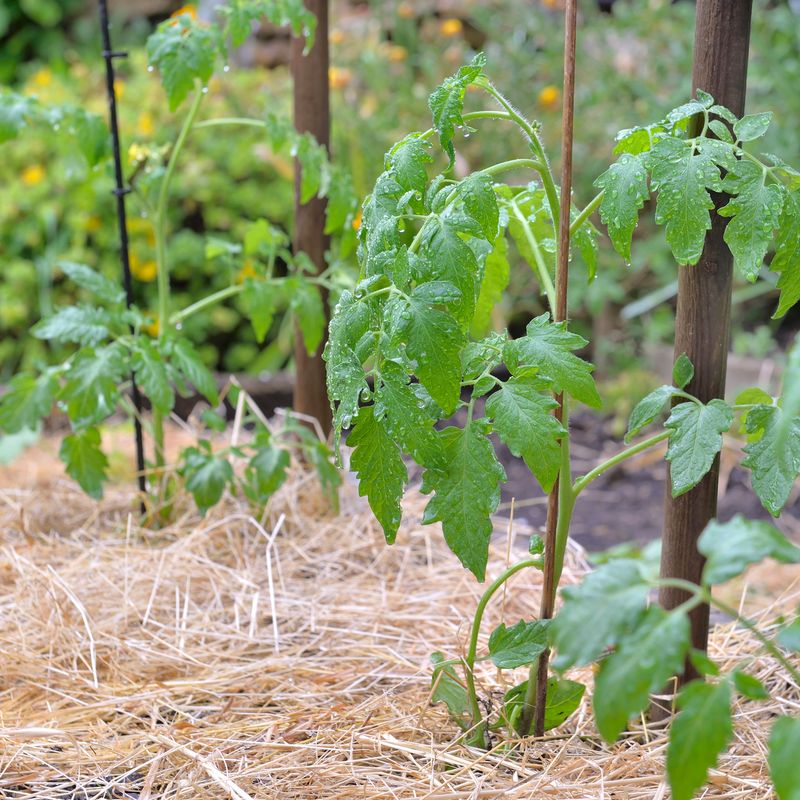
Once you have addressed the immediate moisture situation, a few supportive habits can help reduce the chances of the same stress repeating itself through the rest of the season. These are not quick cures for curled leaves already on the plant, but they can make the growing environment more stable going forward.
Mulch is one of the most practical tools available. A two-to-three inch layer of straw, wood chips, or shredded leaves spread around the base of the plant, kept a few inches away from the stem, slows moisture evaporation from the soil and helps buffer soil temperature during hot afternoons.
Illinois Extension’s heat management guidance for tomatoes recommends mulching as a way to help keep roots cooler and reduce the rapid moisture swings that contribute to stress.
Where practical, giving plants some protection from the most intense afternoon heat can also help. A shade cloth that filters about 30 percent of sunlight, draped over a simple frame during the hottest part of the day, can reduce heat load without cutting off the light the plant needs to ripen fruit.
This is not always necessary, but it is worth considering during extended heat waves.
Two practices to avoid are severe pruning and applying excess nitrogen fertilizer. The Pacific Northwest Plant Disease Management Handbook specifically lists both as factors associated with leaf roll.
Heavy pruning removes the plant’s ability to shade its own root zone, and a nitrogen surge pushes fast, lush growth that puts additional demand on the plant’s water uptake.
Neither is a helpful response to curled leaves, and both can make the situation worse.
Look for signs that point beyond physiological leaf roll
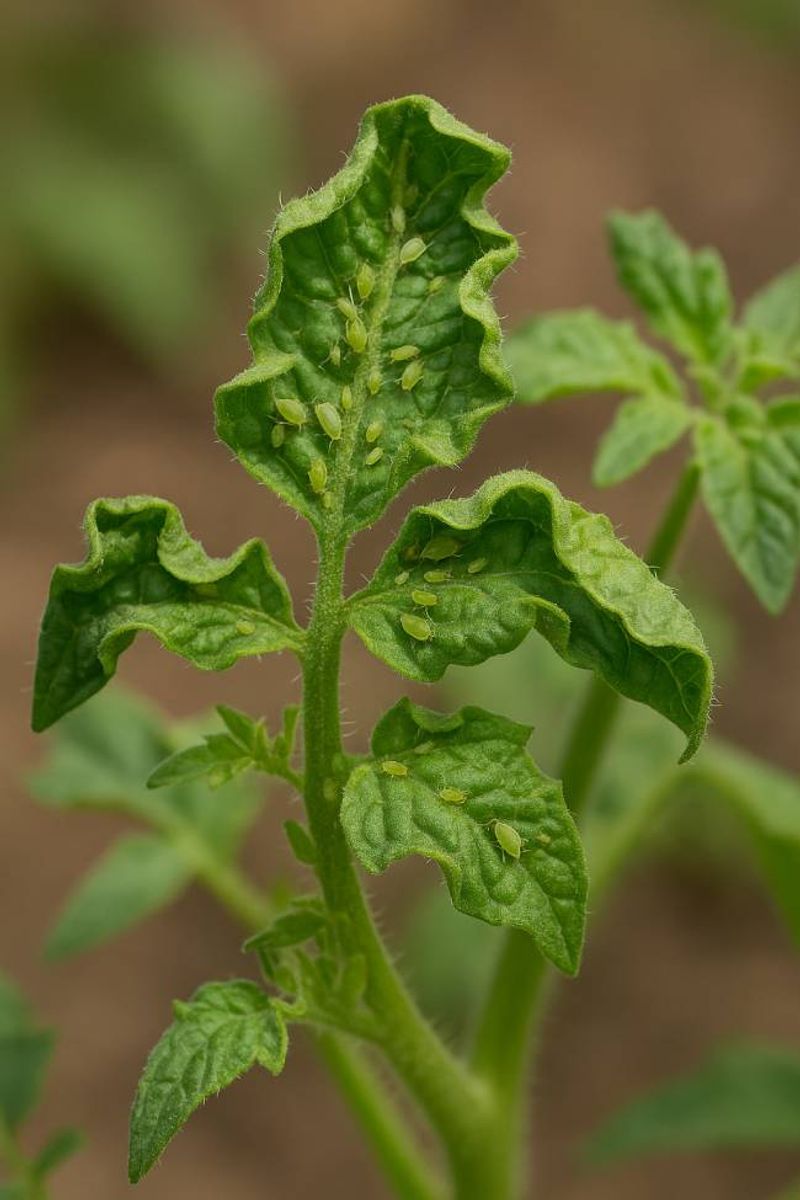
Curl alone cannot reliably separate physiological stress from disease, pest damage, or herbicide injury. Certain combinations of symptoms, though, are strong signals that something other than moisture and heat stress is at work and that the plant needs a closer look.
Yellowing between the veins, mottled patches of light and dark green, or a general bleached or bronze appearance on the leaves are not typical of straightforward physiological leaf roll. Stunted growth, where the plant seems to have stopped growing taller or producing new stems at a normal rate, is another flag.
Bushy, compact growth with many short side shoots can also point toward a systemic problem rather than a watering issue.
Pay particular attention to new growth at the top of the plant. Physiological leaf roll usually shows up on older, lower leaves first.
If the newest leaves at the growing tip are twisted, cupped, or distorted, that pattern fits other causes more closely. NC State Extension’s overview of tomato yellow leaf curl virus describes upward and inward leaf cupping as one symptom of that virus, but also notes accompanying interveinal yellowing, stunting, and bushy growth as distinguishing features.
The curl alone does not identify the virus.
Check the undersides of leaves and along stems for small insects. Whiteflies and aphids can both transmit viruses and cause their own leaf distortion.
If you see clouds of tiny white insects when you brush a leaf, or clusters of small soft-bodied insects on stems and new growth, pest pressure is part of the picture.
Herbicide drift or contact is another possibility, especially if neighboring lawns or fields were recently treated. University of Maryland Extension’s key to common tomato problems notes that herbicide injury often affects new growth and can produce cupping and distortion that looks very different from the lower-leaf roll typical of physiological stress.
University of Minnesota Extension’s tomato leaf diagnosis tool similarly lists herbicide injury among the causes of curled and distorted leaves.
When any of these warning signs appear alongside the curl, contact your local Extension specialist or a plant disease clinic for a proper diagnosis rather than trying to identify the cause from the curl alone.
Match the response to the plant’s condition
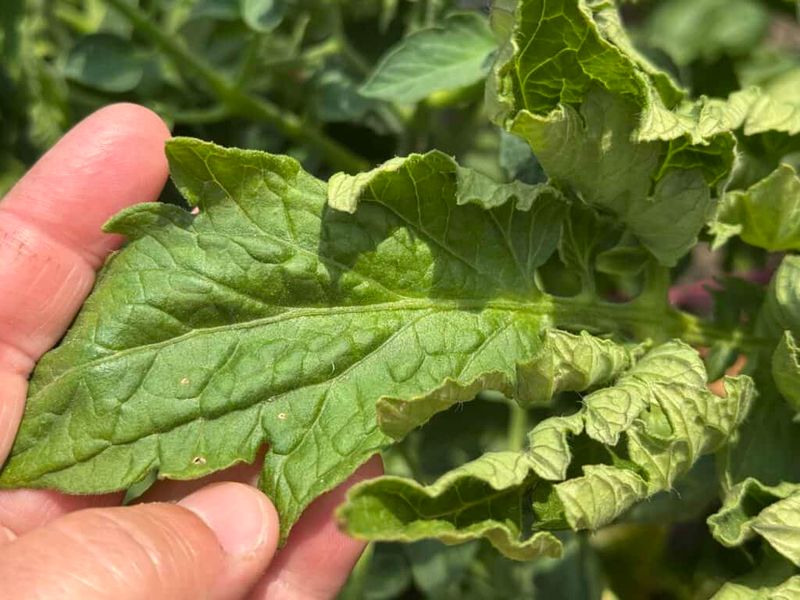
The right response to curled tomato leaves follows directly from what you actually find when you look closely. Check the root zone first: if the soil is dry, return to steady, consistent watering and add mulch to help hold that moisture going forward.
If the soil is already wet, hold off on irrigation and focus on improving drainage or airflow rather than adding more water.
UC Statewide IPM’s guide to physiological leaf roll in vegetables notes that this condition is not caused by a pathogen and does not harm plants in ordinary cases, which means a healthy plant showing typical lower-leaf roll with no other warning signs may need no special treatment at all. If yellowing, mottling, distorted new growth, insects, or possible herbicide exposure appear alongside the curl, bring a sample or clear photos to your local Extension office or plant disease clinic for a proper evaluation.
Curled leaves are a prompt to look, not an automatic reason to act. A plant that is otherwise green, growing, and producing fruit is telling you something different than one that is stunted and discolored throughout.