
If You Want More Hydrangeas For Free, Here’s How One Fall Cutting Becomes A Whole New Shrub
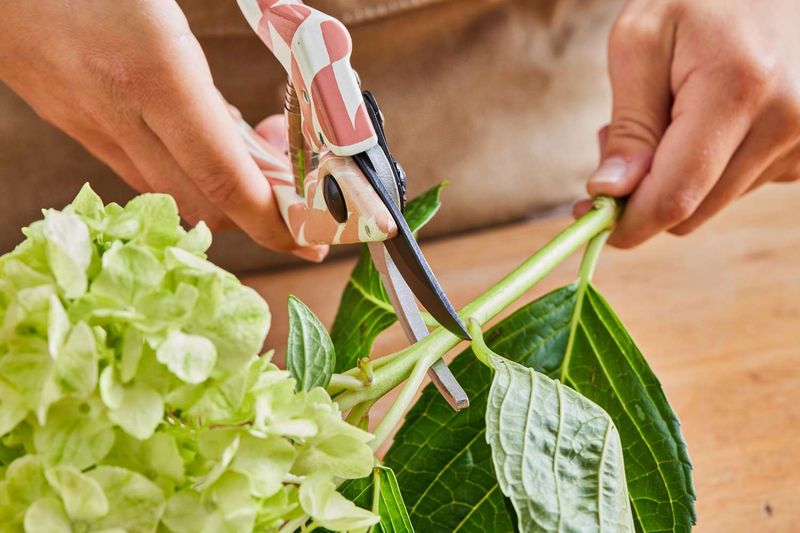
Hydrangeas are one of those shrubs that make gardeners want more of everything they already have. The good news is that a single stem snipped from a healthy plant can, under the right conditions, grow roots and eventually become a new shrub.
The catch is that timing and method matter more than most articles let on, and fall is not a universal green light for every hydrangea in every yard. Understanding which approach fits your season and your plant is what separates a cutting that roots from one that simply rots.
Is fall the right time for your hydrangea cutting?
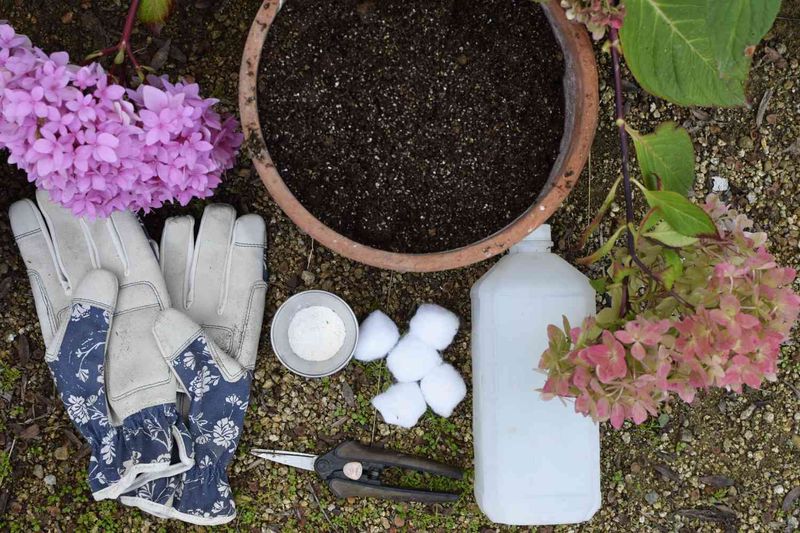
Timing a hydrangea cutting correctly starts with knowing that there is no single calendar date that works everywhere. Several university extension guides aimed specifically at hydrangeas point to early summer as the preferred window for softwood cuttings, when stems are actively growing but not yet woody.
University of Connecticut Extension’s hydrangea factsheet and University of Missouri Extension guidance both treat cuttings as a summer task, not a fall one.
That does not mean fall is off the table. Oregon State University Extension includes hydrangeas among the shrubs that can be propagated through an October-to-November hardwood-cutting approach in its Pacific Northwest regional guidance.
Mississippi State University Extension, working from a warmer-climate perspective, lists December through February as a hardwood-cutting window for hydrangeas in that region. These are region-specific recommendations, not a nationwide prescription.
What this means practically is that your location shapes your options as much as the calendar does. A gardener in coastal Oregon may have a reasonable fall hardwood window, while someone in the Upper Midwest might find that early summer softwood cuttings are the more reliable path.
The hydrangea species and cultivar also matter, since the available extension sources do not establish a single fall method or success rate that applies equally to all types. Before reaching for the pruners in October, check your local extension service’s guidance and consider which method your climate and plant type actually support.
Stem maturity determines the method
Pick up two stems from the same hydrangea shrub at different times of year and they will feel completely different in your hand. That difference in feel is not random; it reflects the stem’s maturity, and maturity is what determines which propagation method applies.
Iowa State University Extension describes softwood as the young, pliable current-season growth that appears in late spring and early summer. Softwood stems bend without snapping, feel almost succulent, and have not yet developed a bark-like exterior.
Because they are actively growing, they can root relatively quickly under the right humid conditions, but they also lose water fast and need careful attention.
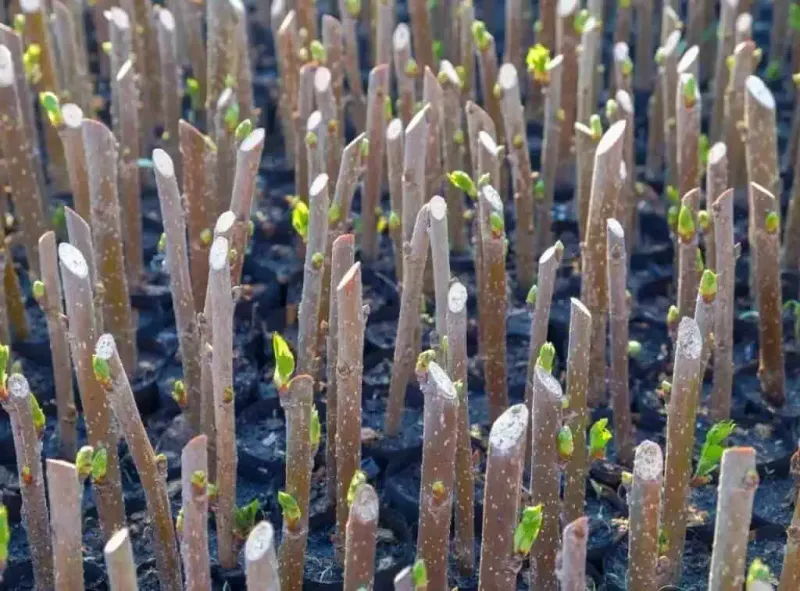
Hardwood is the opposite. Iowa State’s hardwood-cutting guide describes this material as dormant, hardened growth from the previous season.
A hardwood stem snaps cleanly rather than bending, feels firm and woody, and has completed its growth cycle for the year. Fall and winter cuttings come from this category, not from softwood, even if the idea of a fall cutting sounds similar.
Knowing which type of stem you are holding matters because the two methods use different timing, different cutting lengths, and different care routines. Treating a hardwood cutting like a softwood cutting, or vice versa, is one of the more common reasons propagation attempts fail before they start.
When you look at your hydrangea this fall, the stems you see are hardwood; plan your approach accordingly.
Softwood cuttings need tender, nonflowering growth
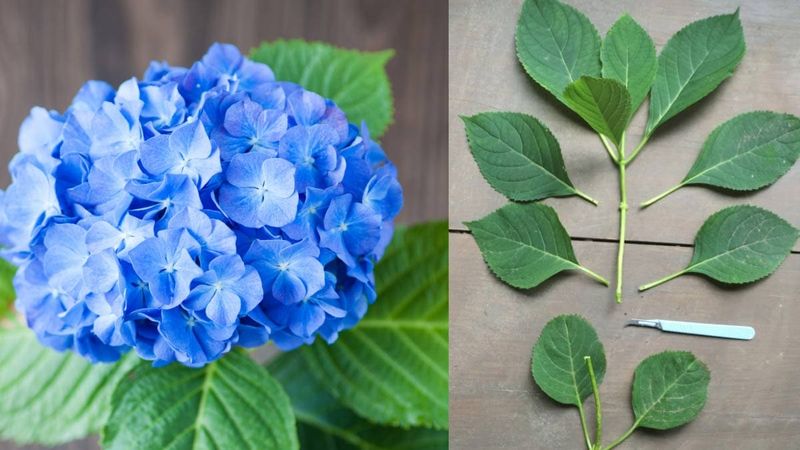
Softwood propagation is the method most hydrangea-specific extension guides describe in detail, and it belongs to early summer, not fall. The stem you want is healthy, actively growing, and free of flower buds.
A budding or blooming stem puts its energy into flowers rather than roots, which makes it a poor candidate for propagation.
University of Illinois Extension’s five-step hydrangea guide recommends cutting a stem roughly 3 to 6 inches long, just below a leaf node. Remove the leaves from the lower half of the cutting so they do not sit in the rooting medium and rot.
If the remaining upper leaves are large, cut them in half crosswise; this reduces how much water the cutting loses through its foliage while it has no roots to replace that moisture.
Set the prepared cutting into a moist, well-draining rooting medium. A mix that holds some moisture without becoming waterlogged works better than straight garden soil, which can compact and suffocate the cutting.
University of Missouri Extension and the University of Illinois guide both describe this kind of aerated, moist medium as the appropriate environment.
Rooting hormone is optional. At least one hydrangea-specific extension guide omits it entirely, while others suggest it may improve rooting or root quality.
If you choose to use it, apply only a small amount to the cut end and follow the product label exactly; excess hormone can actually inhibit rooting rather than help it. Either way, the cutting still needs humidity, shade, and patience before any roots appear.
Fall hardwood cuttings need a protected setup
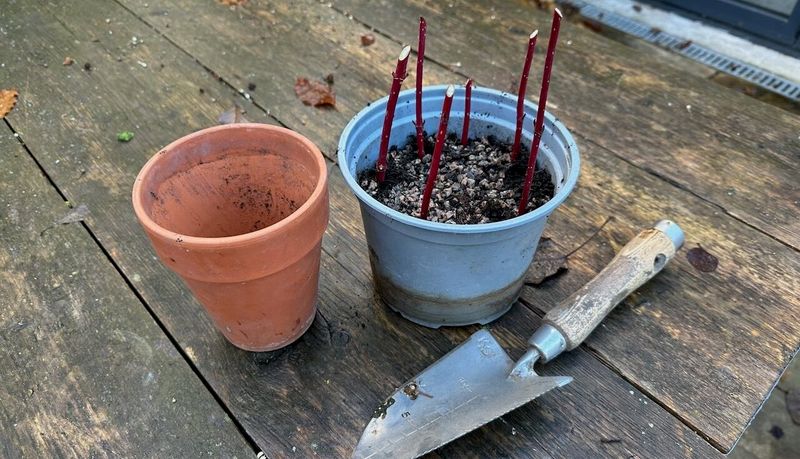
For gardeners in regions where fall hardwood propagation makes sense, the setup is different from the softwood approach in almost every practical detail. Oregon State University Extension’s fall-cuttings guide describes choosing healthy, strong twigs rather than weak or damaged growth.
The cuttings are cut short, each piece including multiple nodes, which gives the stem more than one potential point from which roots or new shoots can emerge.
The rooting medium for hardwood cuttings leans toward drainage and aeration. OSU’s approach uses a perlite-based mix, which keeps the medium from becoming saturated during the wet fall and winter months when cuttings sit dormant.
Planting depth matters too: the cuttings go in far enough to stay upright and maintain contact with the medium, but not so deep that air circulation around the base is cut off.
Protection from the elements is not optional. Wind desiccates cuttings, and heavy rain can waterlog a medium that seemed well-draining in dry conditions.
A cold frame, a sheltered porch, or a simple cover can make a meaningful difference. During hard freezes, additional insulation or moving trays to an unheated garage helps prevent the medium from freezing solid around the cuttings.
Iowa State University Extension notes that hardwood timing and storage needs vary by region, and Mississippi State University Extension places hydrangea hardwood cuttings in a December-to-February window for that climate. Check for roots in spring by gently tugging the cutting; resistance suggests roots have formed.
That check is hopeful, not a guarantee.
How do you keep a cutting from drying out?
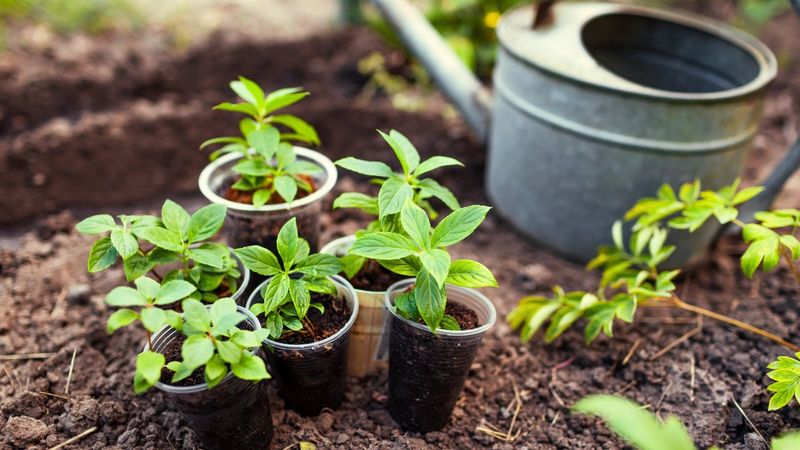
A freshly cut stem has no roots, which means it cannot pull water from the soil the way an established plant does. Every drop of moisture it loses through its leaves has to come from somewhere, and without roots, there is nowhere for it to come from.
Humidity, shade, and careful watering are what bridge that gap while roots develop.
Iowa State University Extension emphasizes that softwood cuttings in particular are vulnerable to wilting because their tissue is still tender and loses water quickly. Covering a pot with a clear plastic bag or placing the cutting inside a humidity tent slows that loss without blocking light entirely.
Remove the cover periodically to let air circulate and reduce the chance of fungal problems building up inside.
The rooting medium itself needs attention on both ends of the moisture spectrum. University of Illinois Extension notes that the medium should stay consistently moist, not soggy.
Overwatering is a real risk: a saturated medium cuts off the oxygen that developing roots need and creates conditions where rot can set in at the base of the cutting. Check the medium by pressing a finger about an inch deep; if it feels damp, hold off on watering.
Shade is equally important. Direct sun heats the medium, stresses the cutting, and speeds up moisture loss at exactly the moment the plant is least equipped to handle it.
Bright, indirect light gives the cutting enough energy without the added stress. None of these precautions guarantee rooting, but skipping them makes failure more likely.
Rooting is only the first milestone
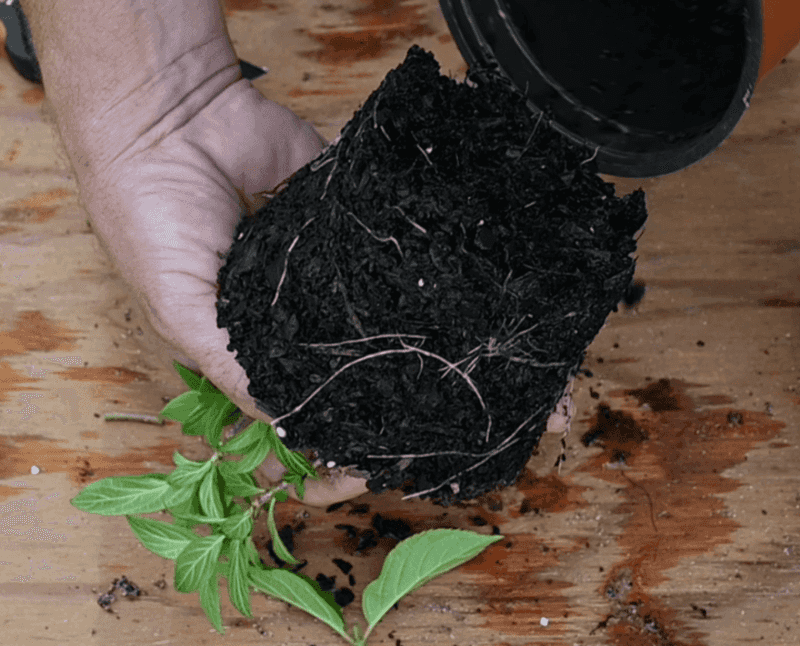
Finding roots on a cutting in spring feels like a win, and it is, but it is worth being clear about what that milestone actually means. A cutting that has rooted is a tiny plant with a fragile root system, not a shrub ready to fill a spot in the landscape.
Iowa State University Extension states plainly that it takes several years for a rooted cutting to grow into a nice-size plant. Managing that expectation from the start saves a lot of frustration.
Not every cutting will root at all. Oregon State University Extension’s fall-cuttings article notes explicitly that not all cuttings take.
The success estimate sometimes cited from that piece is a rough anecdotal benchmark from one general hardwood-cutting context, not a result from a controlled hydrangea trial. Taking several cuttings at once rather than one improves the odds that at least some will root, which is a practical hedge against the variability involved.
There is also a legal dimension worth knowing before you propagate a named cultivar. Plant patents can restrict asexual reproduction of a protected variety.
The U.S. Patent and Trademark Office explains that a plant patent can exclude others from asexually reproducing a patented plant without permission.
Many popular hydrangea cultivars sold at garden centers are patented. University of Illinois Extension advises checking whether a plant is patented before propagating it.
Look at the tag that came with the plant, or search the cultivar name along with “plant patent” to find out its status. Propagating a patented cultivar for personal use exists in a legal gray area, and propagating one for sale or distribution is a clearer infringement.
Match the cutting to the season you have
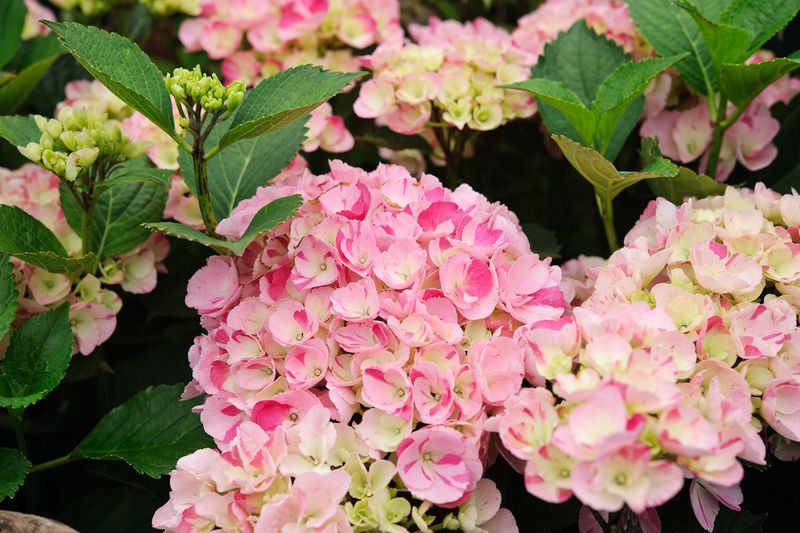
The simplest decision rule for propagating a hydrangea is to start with the stem in front of you. If it is fall and the stems are firm, dormant, and woody, a hardwood approach guided by your regional extension service is the relevant method.
If it is early summer and the new growth is soft and pliable, softwood cuttings are the better fit. Matching the method to the stem’s actual maturity is more reliable than following a generic calendar.
OSU Extension’s fall-cuttings guidance and UConn’s hydrangea factsheet reflect two different seasonal windows for good reason: the biology and the regional climate are different. Iowa State’s hardwood guide reinforces that timing, storage, and regional conditions all shape the outcome.
Treat propagation as an experiment you run with reasonable care, not a shortcut that reliably delivers a finished shrub. A cutting that roots is a small victory worth celebrating, and one that fails is useful information.
The hydrangeas that do root and grow into plants over the following years tend to feel more earned than any you could buy.