
If Your Hollyhocks Get Rusty, Spotted Leaves Every Year, Here’s The Fall Cleanup That Can Reduce It
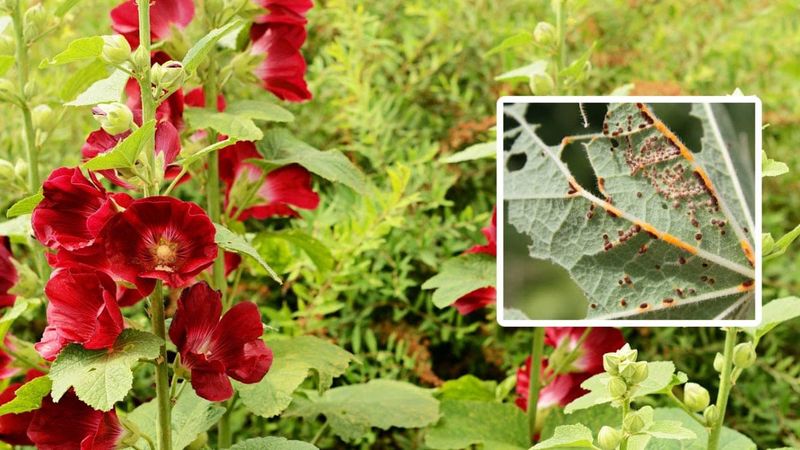
Hollyhocks are bold, old-fashioned plants that most gardeners love, but that orange-and-rust spotting showing up on the leaves every summer can be genuinely discouraging. The good news is that what you do with those plants in the fall can make a real difference heading into next season.
Cleaning up infected leaves and stalks before winter removes one of the main ways the fungus survives and spreads. You may not be able to stop every spore from finding your garden, but you can take away a lot of the material that feeds next year’s problem.
Are those spots actually hollyhock rust?
Yellow or orange patches appearing on your hollyhock leaves mid-season are a familiar sight for many growers, but spotting alone does not confirm you are dealing with hollyhock rust. The pattern matters.
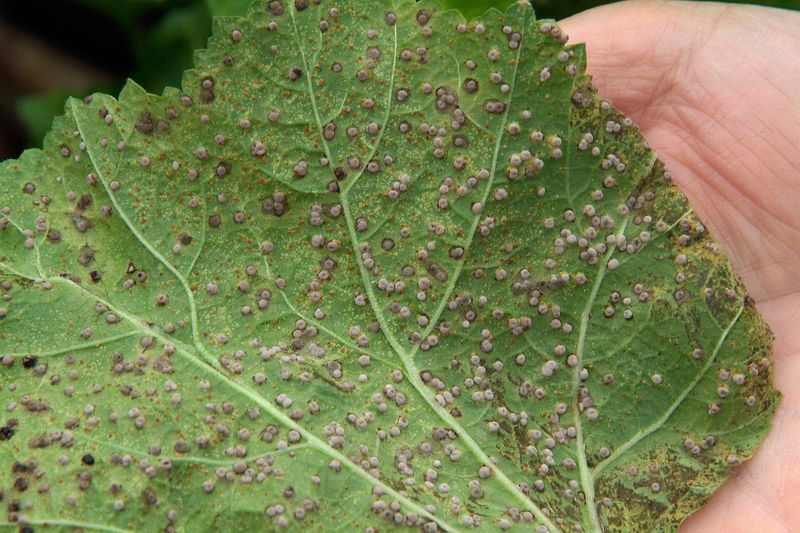
University of Wisconsin Extension describes hollyhock rust as yellow or orange spots on the upper leaf surface paired with raised brown-to-red pustules on the underside, and the trouble typically starts on the lower leaves first before working its way up the plant.
Flip a suspect leaf over and look closely. Those slightly bumpy, rust-colored pustules on the underside are the spore-producing structures of the fungus Phragmidium malvacearum, and seeing them alongside the yellowing on top is the clearest sign you are dealing with rust rather than another problem.
Other fungal leaf spots, bacterial issues, or even nutrient problems can produce discoloration that looks similar from above.
If you are not certain what you are looking at, your local cooperative extension office can often help with identification. Treating the wrong problem with the wrong method wastes time and money, and it does not protect the plant.
Getting a confident read on what is actually happening is the most practical first step before deciding how to respond.
Infected debris can carry rust through winter
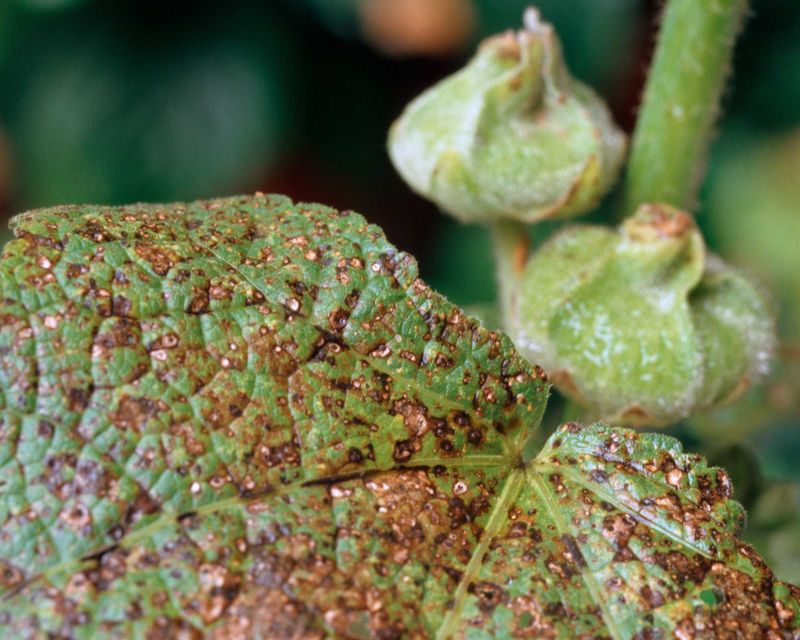
One reason hollyhock rust shows up in the same spot year after year is that the fungus does not simply disappear when cold weather arrives. It can survive the winter inside infected leaves and stems that are left on or near the plant.
When spring conditions warm up and moisture returns, that overwintered material becomes a ready source of new spores right where your hollyhocks are growing.
Removing that debris in the fall takes away one local source of infection before it gets a chance to restart the cycle. Iowa State Extension notes that cultural practices alone often do not control hollyhock rust completely, and Wisconsin Extension similarly positions cleanup as one part of a broader prevention approach.
That framing is worth keeping in mind: fall sanitation reduces the amount of fungal material near your plants, but it does not put a dome over your garden.
Rust spores travel on the wind, which means infection can arrive from neighboring yards, weedy mallow plants growing nearby, or other hollyhocks down the street. Cleaning up your own bed will not intercept airborne spores blowing in from elsewhere.
What it does is lower the amount of overwintering fungus that would otherwise be sitting right next to your plants, ready to go the moment growing conditions return in spring. That is a meaningful reduction in local risk, even if it is not a complete solution.
Cut back and clear the bed after the season
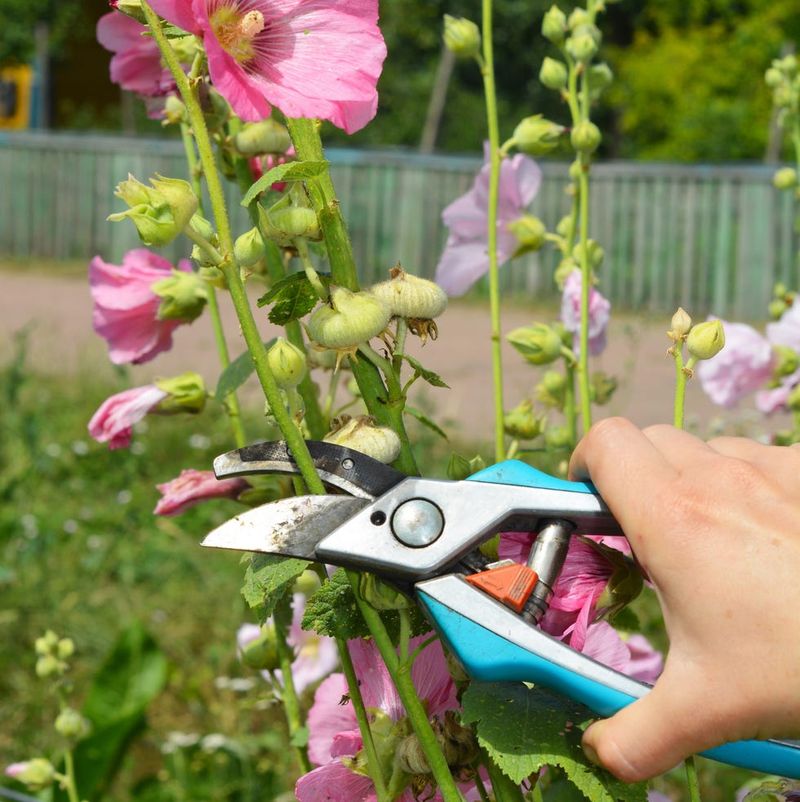
Timing the cleanup right makes the job easier and more effective. Wait until your hollyhocks have finished blooming and the stalks have died back for the season before cutting them down.
Pulling healthy plants early does not help, and it cuts short whatever bloom time remains.
Illinois Extension advises cutting infected hollyhock plants at the soil line once they are done blooming, then removing the debris from the area. That means the stalk, any attached leaves, and the fallen leaf litter around the base of the plant all need to go.
Rust pustules on fallen leaves are just as capable of contributing to next season’s problem as the ones still attached to the plant.
Work your way around each plant and collect everything that has come off during the season. Leaves that blew a few feet away can still harbor the fungus, so a wider sweep of the bed is worth the extra few minutes.
Use gloves while handling heavily infected material, and avoid shaking the debris more than necessary since disturbing old pustules can release spores.
Wisconsin Extension also recommends this kind of thorough end-of-season removal as part of managing the disease. The goal is to leave as little infected plant material as possible sitting in or around the bed through the winter months.
A clean bed going into cold weather gives the fungus less to work with when spring arrives, even though it cannot prevent every new infection from outside sources.
Keep infected material out of the garden bed
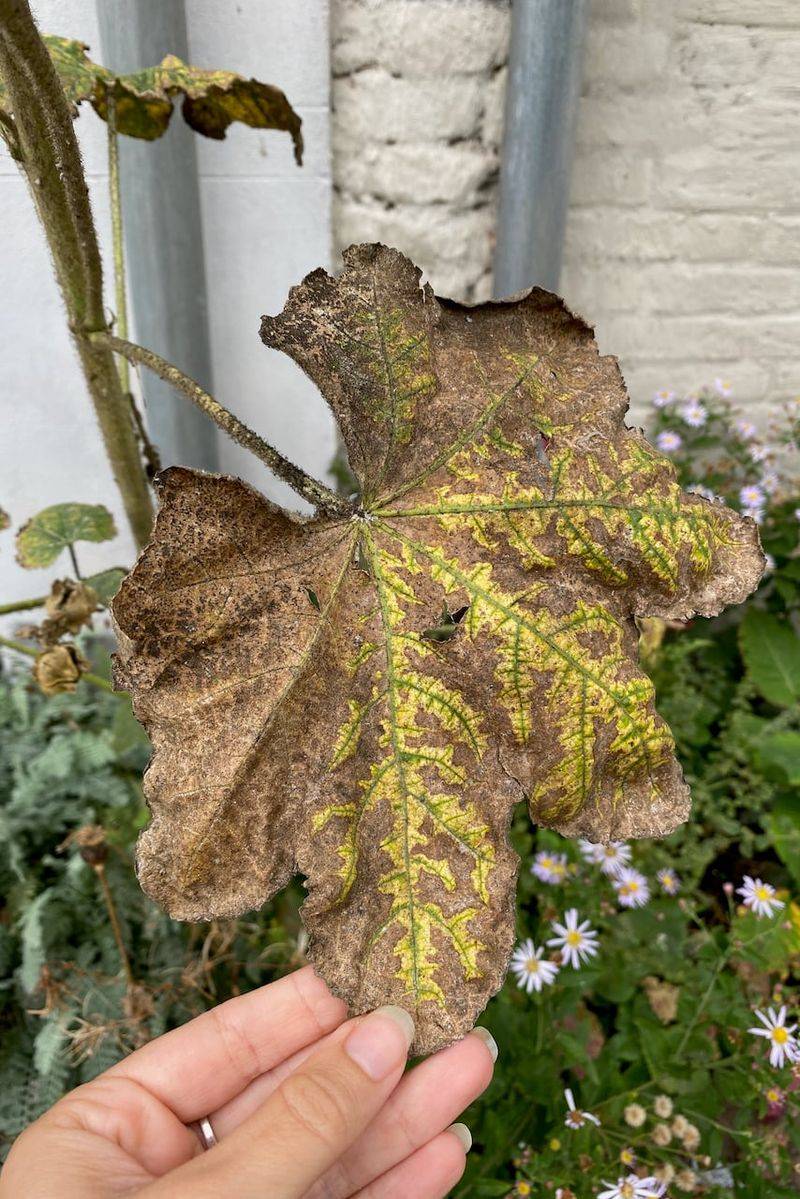
Once you have cut back the stalks and gathered up the fallen debris, where that material goes matters. Leaving the pile at the edge of the bed or tucking it under a nearby shrub defeats the purpose of removing it in the first place.
Wisconsin Extension recommends disposing of infected hollyhock debris in municipal garbage where local rules allow, or burying it deeply so it cannot easily release spores back into the garden. Illinois Extension’s general direction is to remove and dispose of the debris after cutting plants back.
Both approaches put distance between the infected material and your hollyhocks.
Home composting infected plant material is not straightforward. Backyard compost piles often do not reach temperatures high enough to reliably kill fungal spores, so adding rust-infected debris to a typical home pile carries real risk of cycling the problem back into your beds when you use that compost later.
The reviewed extension guidance does not recommend home composting for this material, so it is safest to skip that option unless you have a managed system that reliably hits high internal temperatures.
Burning is sometimes suggested for diseased plant debris, but it is subject to local ordinances and is not necessary to achieve the goal here. Bagging the material for municipal pickup or burying it at least a foot deep are the options most consistently supported by extension guidance, and either one gets the infected debris out of reach of your garden bed.
Other sources and garden conditions still matter
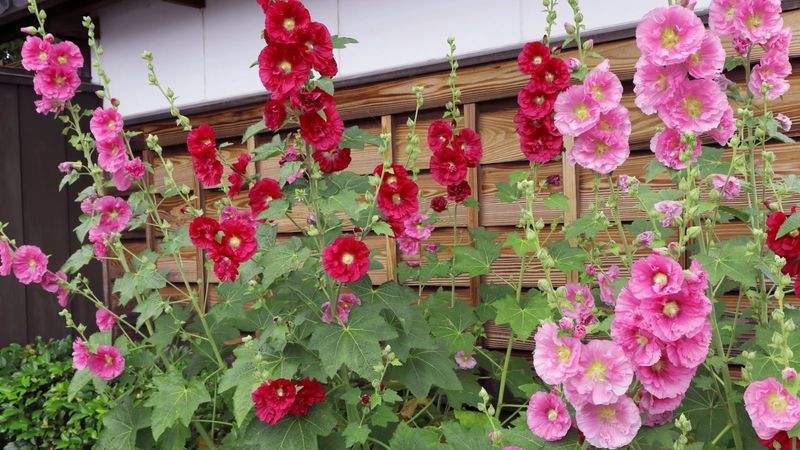
Fall cleanup addresses what is already in your bed, but rust can find hollyhocks through other routes. Common mallow, a weedy plant in the same family as hollyhocks, can host the same rust fungus.
Pulling mallow weeds from around and near your hollyhock bed removes one more potential source of spores, and it is a step worth taking throughout the growing season rather than saving it all for fall.
How you set up the planting also affects how fast rust spreads once it arrives. Wisconsin Extension and Iowa State Extension both note that dense planting and wet foliage create conditions that favor disease spread.
Giving plants enough room for air to move through the bed, and watering at the soil line rather than overhead, keeps leaves drier and makes the environment less hospitable for the fungus. A soaker hose or drip line is a practical swap from a sprinkler for this reason.
During the growing season, catching rust early and removing a small number of symptomatic leaves can help slow the spread to other parts of the plant or to neighboring plants. Iowa State Extension and Illinois Extension both recommend removing affected foliage promptly as part of managing the disease in season.
That said, pulling a few leaves will not undo a heavy infection or restore leaves that are already badly damaged.
Fungicides are sometimes used as a preventive measure or to help limit spread during the season, but they are not a substitute for the physical cleanup work and they cannot cure leaves that are already infected. If you choose to use one, follow the product label carefully and check with your local extension office for guidance on what is appropriate in your area.
Cleanup lowers risk, but cannot guarantee a rust-free season
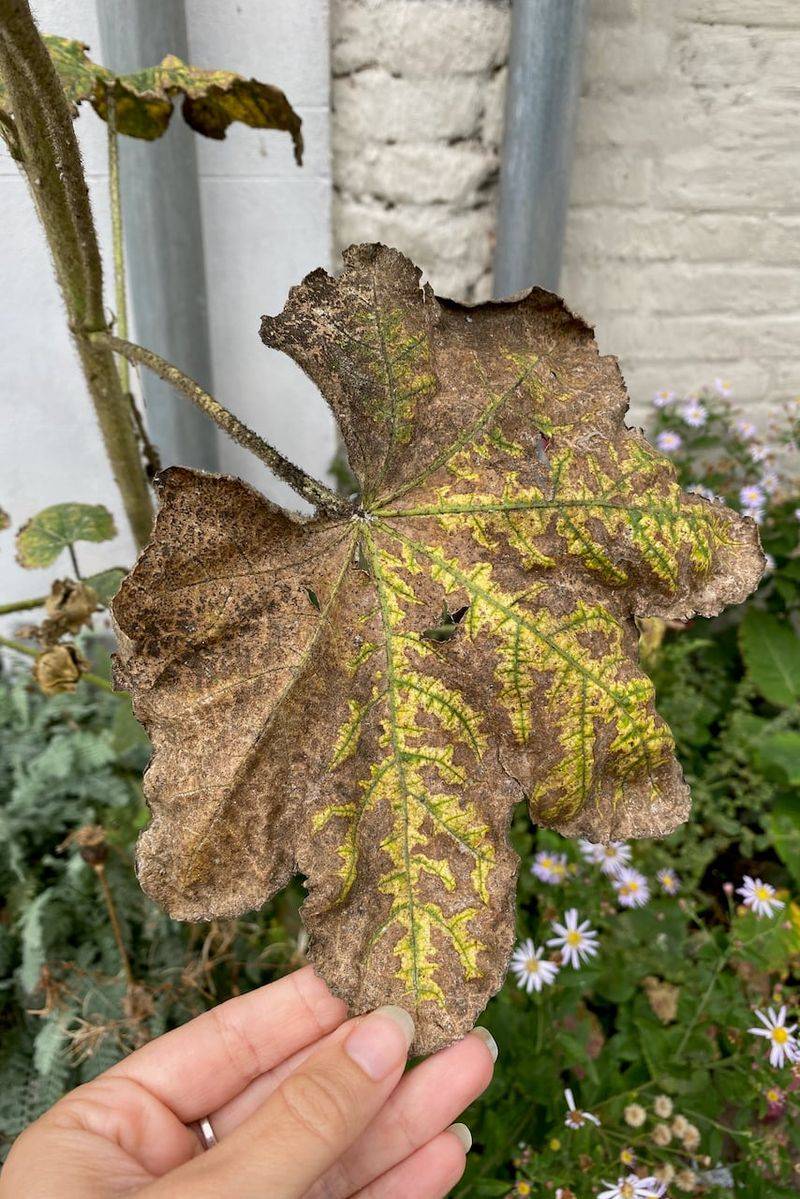
A thorough fall cleanup removes infected leaves, stalks, and debris that would otherwise sit through winter and provide a local source of rust spores come spring. That is a real and worthwhile reduction in risk.
Wisconsin Extension notes that plant death from hollyhock rust is rare, so even if spots return, you are not automatically losing your plants.
Rust spores travel on the wind, and susceptible mallow-family plants in neighboring yards can reintroduce the disease regardless of how carefully you manage your own bed. Seeing spots again next season does not mean you did something wrong or that the cleanup failed.
It may simply mean spores arrived from somewhere outside your control.
Consistent sanitation, good spacing, careful watering, and mallow weed removal all stack together to give rust fewer opportunities. No single step closes every door, but taking them together makes a meaningful difference over time.
A plant that gets a clean start each spring is in better shape to handle whatever the season brings.