
Yellow Nutsedge Produces Tubers Also Known as Tiger Nuts, Hiding Underground in Your Garden
That grassy-looking weed that keeps popping up in your lawn and beds has a secret under the soil. Yellow nutsedge grows small tubers that share a name with a snack food called tiger nuts or chufa.
The link is real, but it comes with some big catches about identification, flavor, and safety. Here is what is actually going on below ground, and what to do about it.
Yellow nutsedge produces tubers known as tiger nuts
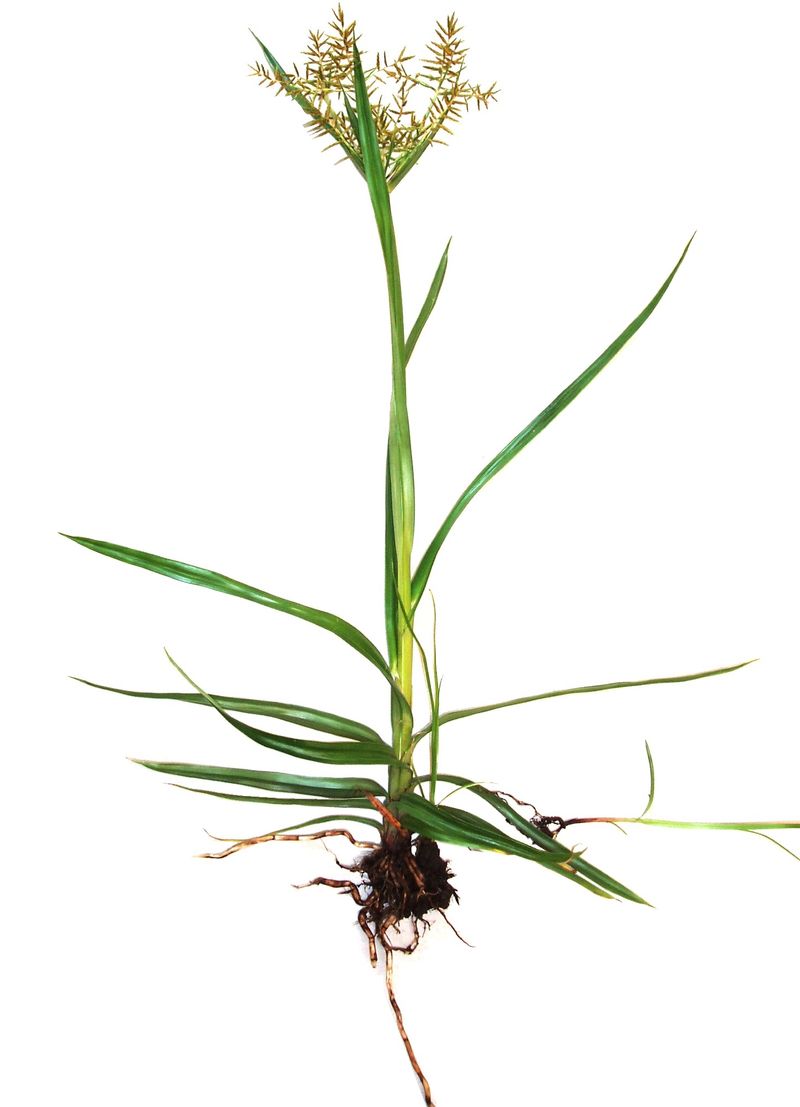
Botanists call yellow nutsedge Cyperus esculentus. It is a sedge, not a grass, even though it looks a lot like one in a lawn.
Run a stem between your fingers and you may feel the giveaway: it is triangular, not round or flat.
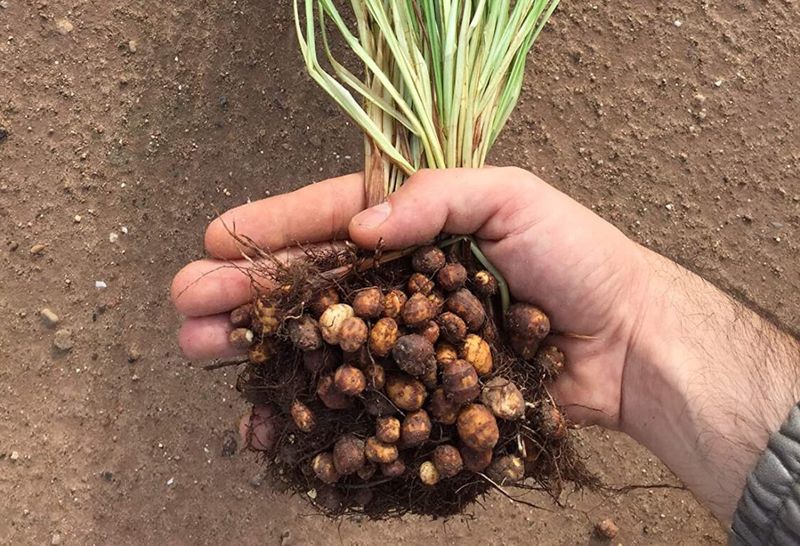
The same species makes small tubers underground, and those tubers go by the food names tiger nut and chufa. A tuber is a swollen underground storage part, so despite the name, it is not a botanical nut.
The plant above ground is the weed you pull. The tiger nut is only the tuber, and only the food name for it.
A peer-reviewed study of tiger nut accessions describes C. esculentus tubers as a food crop in parts of the world. That is a genuine species connection.
It is a surprising twist for a plant most gardeners curse.
Still, the connection has limits. Not every plant called nutsedge is yellow nutsedge, and a patch of it in your yard is not a ready-made food crop.
NC State Extension treats it as a perennial weed, and that is how most of us will meet it.
So think of the food link as a fun fact about the species, not a green light. Before anyone considers eating a thing, the plant needs to be identified correctly and the site needs to be clean.
The next sections cover both.
How tubers help the weed return
Pull a clump of yellow nutsedge and it often seems to be gone for good. Then two weeks later, green spikes are back in the same spot.
The reason lies below the surface.
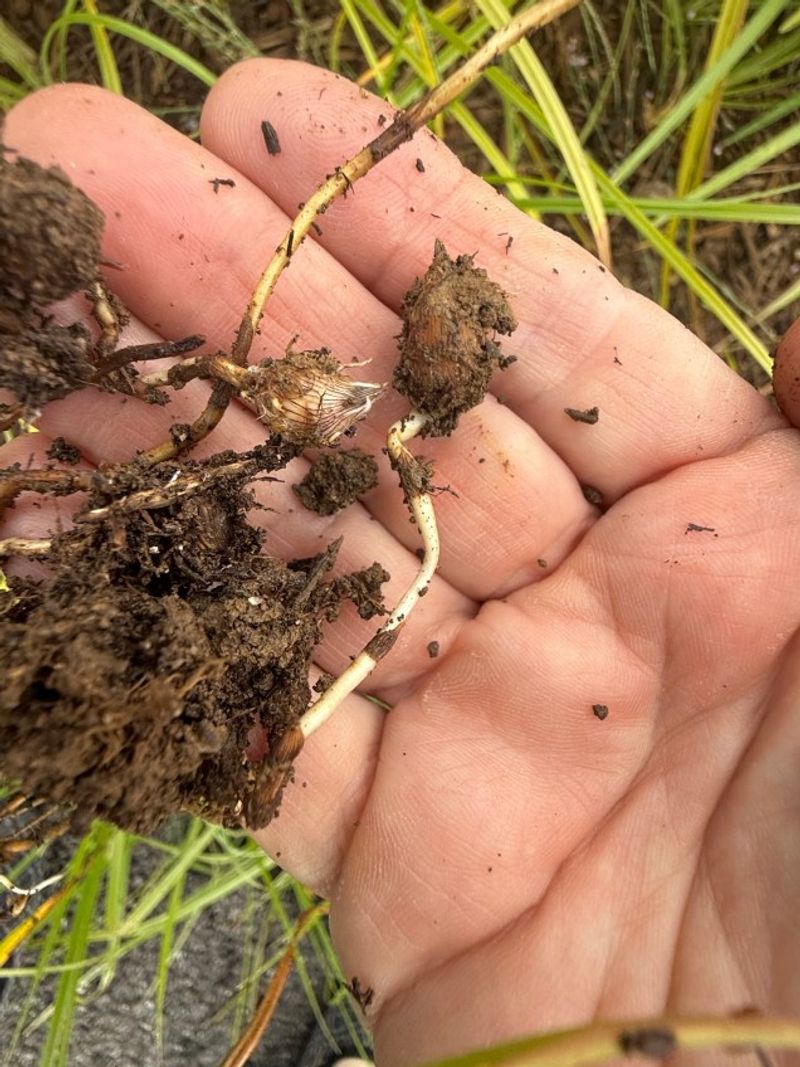
Yellow nutsedge sends out underground stems called rhizomes. At the tips of those rhizomes, small tubers form.
As Clemson Cooperative Extension explains, these tubers can grow into new plants, and the plant is widespread across the United States.
Think of each tuber as a tiny pantry packed with stored energy. If the top growth gets yanked off, the tuber can send up a fresh shoot.
One plant can leave several of these pantries scattered through the soil, and each one can start over.
That is also why digging can turn up tubers. If you dig around a patch, you may spot little round or oval bits about the size of a small bean or smaller, attached to thin roots.
Finding them is a useful clue about what you are dealing with.
As the NC State profile notes, this perennial habit is what makes the plant so persistent. Growth underground keeps the weed one step ahead of a quick tug on the leaves.
Next time you see a tuft come back, you will know it is not bad luck. It is simple biology working as designed.
A wild patch is not a cultivated chufa crop
Farmers grow chufa on purpose, and they have done so for a long time. The plant in your lawn may be the same species, but that does not make it the same thing in practice.
Research on tiger nut describes a cultivated form and wild forms of Cyperus esculentus, and they differ in how they are used in agriculture. The study of tiger nut accessions compares different collected types of the plant.
It supports saying the weed and the food crop are closely related.
What it does not show is what your own patch will produce. Nothing in that research tells us that a random lawn or garden clump makes tubers with the size, taste, or quality of cultivated chufa.
Growing conditions, the plant’s genetics, and the soil all play a part.
Picture the difference between a wild crabapple and a orchard apple. Both are apples, yet nobody expects the roadside tree to taste like the grocery store fruit.
The same kind of gap can apply here.
So if you have read that pulling nutsedge hands you free tiger nuts, take it with a big pinch of salt. The species link is true.
The promise of a ready harvest is not.
Keep that in mind as you look at the plant. Its family tree is interesting, but your backyard patch is a wild plant until proven otherwise.
Do not count on a sweet flavor
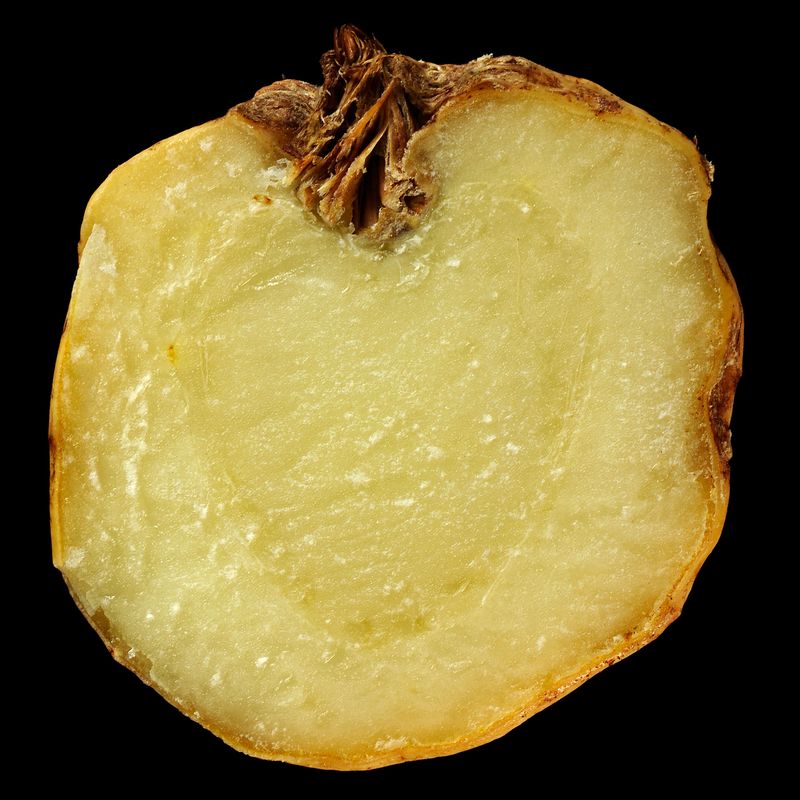
Tiger nuts get described as sweet in food articles, so many people expect a candy-like bite from wild tubers. Extension sources paint a much quieter picture.
NC State Extension says yellow-nutsedge tubers may have little taste and may be slightly sweet. Notice the two hedges: little taste, and maybe slightly sweet.
That is far from a promise.
Taste can vary, and a wild tuber may be bland. Your soil, the age of the tuber, and the plant itself could all change the result.
Nothing in that description supports calling every wild tuber a sweet snack.
The gap gets wider when you compare a backyard weed with a crop. The tiger nut research looks at cultivated and wild accessions separately, so a lawn patch cannot be assumed to match crop-grown chufa.
This article will not offer recipes, nutrition numbers, or health claims, because the sources here do not back them up. Eating a tuber is not a proven way to treat or prevent any illness.
If you are curious about tiger nuts as food, buying a product made for eating is a very different thing from digging up a weed.
The takeaway is simple. Treat flavor as a maybe, and never let the hope of a sweet reward guide your decisions in the garden.
Check the plant before considering a harvest
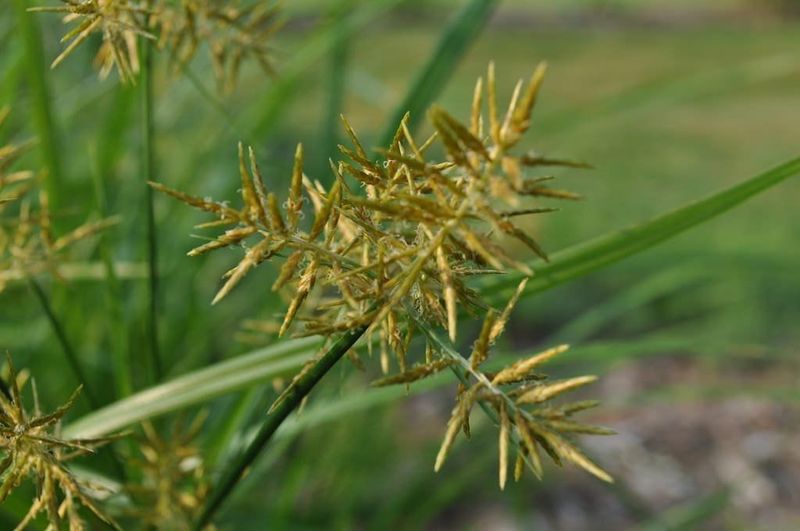
Standing over a green clump and guessing is how mistakes happen. A few clues can help you tell yellow nutsedge from its lookalike, purple nutsedge.
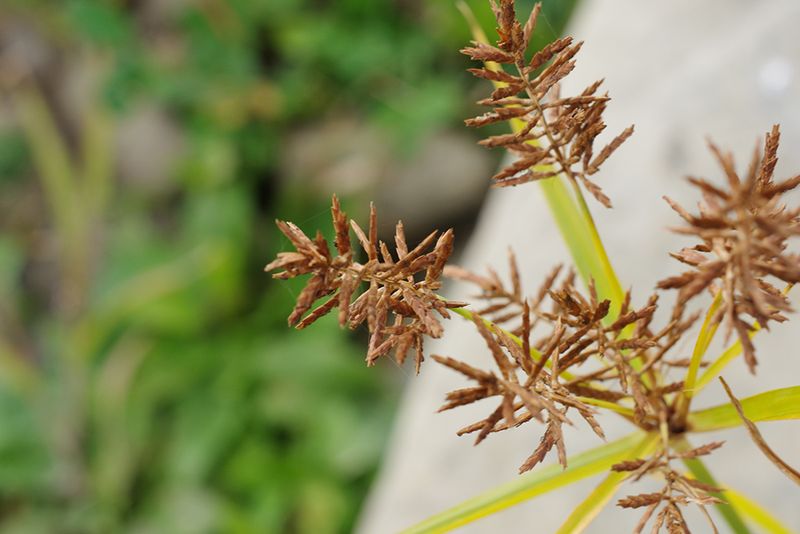
Yellow nutsedge has yellow-green leaves with long, tapered tips. Its flower heads are yellowish-brown to straw-colored.
According to UF/IFAS Extension, purple nutsedge generally has darker leaves and purple flower heads.
Below ground, the two differ too. Purple nutsedge tubers are arranged in chains along the rhizomes.
Yellow nutsedge tubers occur at the tips of rhizomes, as described in the NC State profile.
Now the catch. Young plants can be hard to tell apart, and a list of clues does not guarantee an ID.
One feature on its own, like leaf color, is not enough.
Before any harvest is even on the table, get help from a reliable local source. Your county Cooperative Extension office is a good place to start, and many will identify a plant from a sample or clear photos.
A local expert knows which lookalikes grow in your area.
Make a habit of checking several features together: the triangular stem, the leaf tips, the flower head, and where the tubers sit on the rhizome. If the picture does not fit cleanly, leave it alone.
Treat backyard foraging as conditional
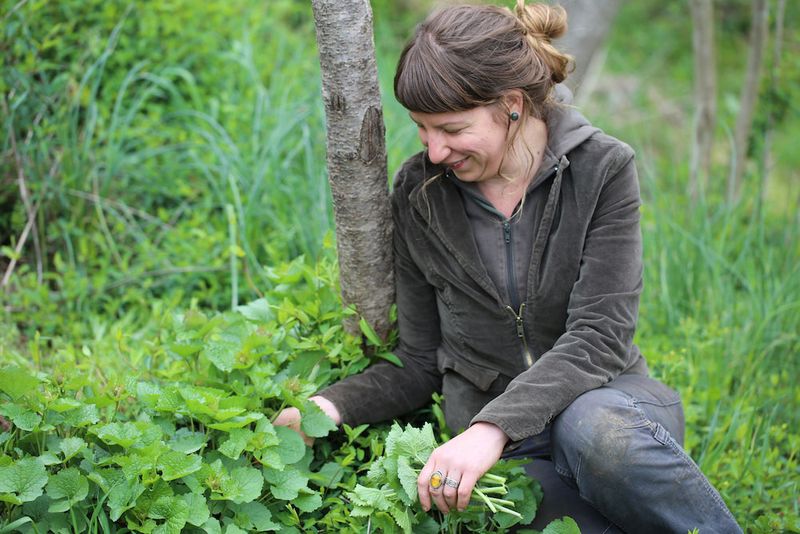
Suppose you have confirmed the plant. Eating anything from that patch still depends on more than a name.
Two conditions come first: a reliable identification, and a harvest site free from herbicides, pesticides, other chemicals, and contamination. Lawns are often treated, and nutsedge is a common target for weed killers.
If you have sprayed the patch or a neighbor might have, skip it.
The USDA foraging best practices specifically caution against gathering wild plants along roadsides or field edges that may have been treated. Those are places where yellow nutsedge sometimes grows, so the warning fits.
You may see safety claims about tiger nuts online. A 2024 EFSA assessment looked at a specified, processed tiger-nut oil made under described production and quality controls.
Its conclusion applies to that oil. It says nothing about unidentified or contaminated tubers from a backyard.
The same assessment describes tiger-nut allergy as rare, not impossible. So the food is not safe for everyone, and anyone with food allergies should be extra careful.
The safest default is simple. If you are unsure about the ID or the site, do not eat it.
There is no shortage of ways to enjoy your garden without taking that gamble.
Dig carefully, and expect the patch may return
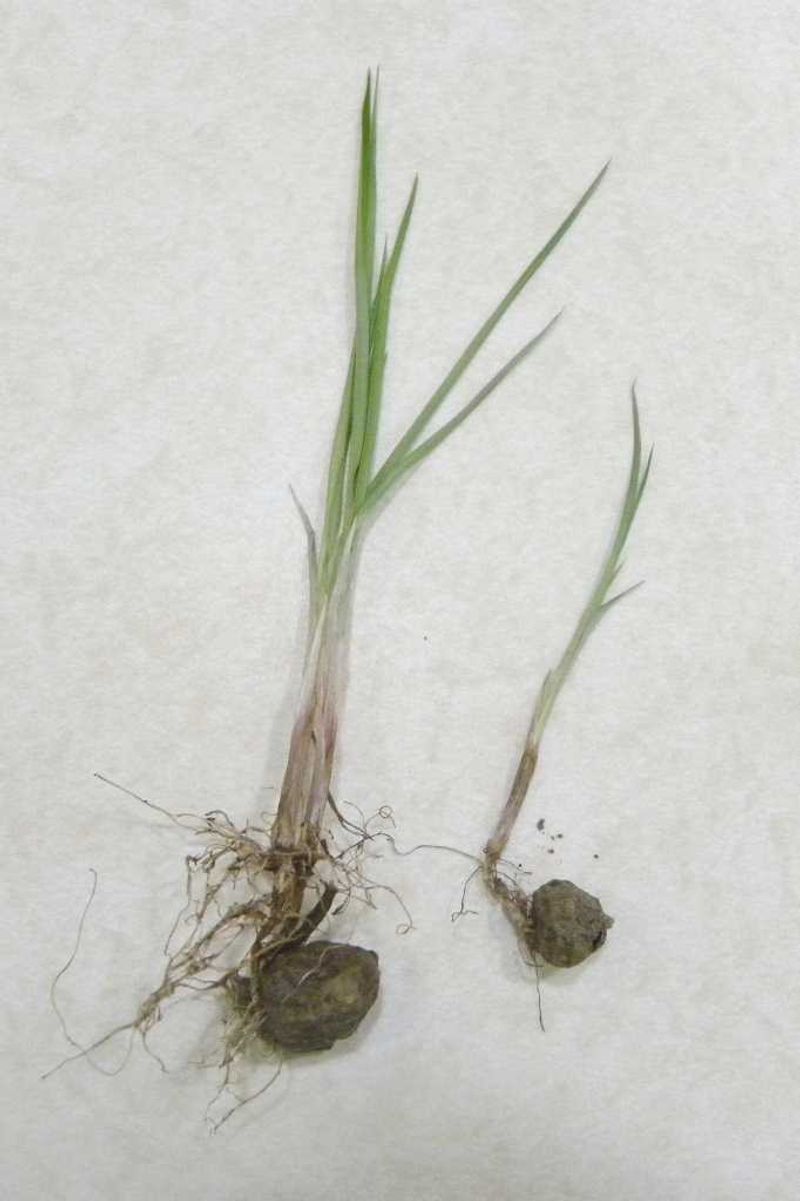
Back to the real chore: that patch is still in your yard. Tubers can resprout, so a single round of pulling rarely finishes the job.
The UC IPM guide to nutsedge warns that tilling mature nutsedge can spread tubers through the soil. A rototiller can turn one patch into many.
Skip the tiller if the plants are well grown.
Digging is a better choice for a small patch. Loosen the soil with a trowel or fork, lift the clump, and look for tubers.
Take care not to scatter them as you work, and bag what you remove rather than tossing it onto the compost pile.
Follow up. Removing young shoots again and again can reduce the plant’s stored reserves over time.
Still, a tuber may resprout, so plan on repeat visits through the season instead of a one-time win.
Those tubers you dig up are not automatically a snack. The USDA caution about treated roadsides and field edges reminds us that a wild plant from an unknown site is not safe just because it is edible in theory.
The food link is a good story, but a garden patch is not a sure ID, not a safe harvest, and not an easy removal. Nutsedge plays the long game, so patience is your best tool.