
Burning Rosemary, Thyme, and Bay: What a Medicinal Smoke Study Does and Does Not Show About Airborne Bacteria
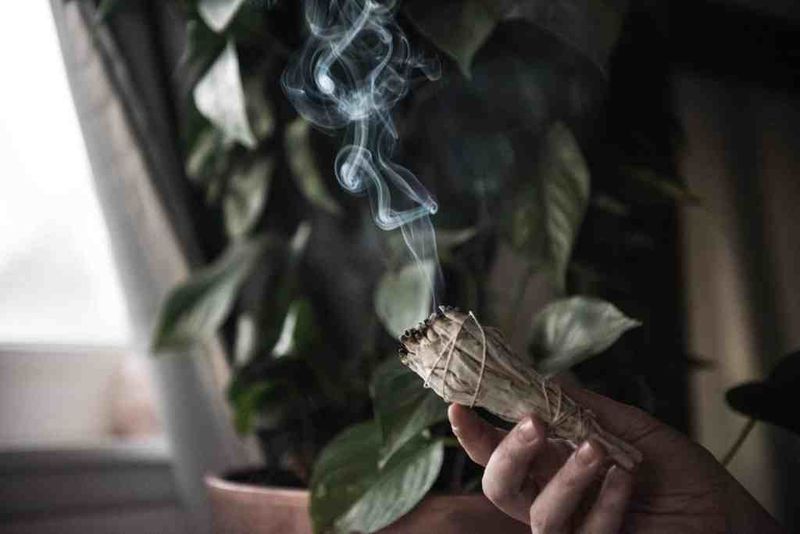
Anyone who trims rosemary, thyme, or bay from the garden has probably wondered if dried sprigs could do more than flavor dinner. A well-known 2007 experiment reported fewer bacteria in room air after a special herbal mixture was burned.
That result gets stretched a lot online, so it helps to look at what was actually tested. Here is what the study found, what it left out, and what works better for indoor air.
What the 2007 study actually burned
Picture the setup before looking at any numbers. In the 2007 paper by Nautiyal and colleagues, the researchers began with a control step.
They burned 1,000 g of mango wood alone and checked the air.
Next, they added 500 g of a complex herbal and aromatic mixture to the burning wood. This was a many-ingredient medicinal blend, not a handful of kitchen herbs.
The team did not burn ordinary garden clippings, and they did not single out any one herb to see what it did on its own.
The testing happened in a closed room reported at 12.93 cubic meters, which is roughly 457 cubic feet. That is a modest space, about the size of a small walk-in closet or a compact bedroom corner, but it is not a strange or extreme size for an experiment.
It also is not a typical living room or family room, so results from it do not map neatly onto a real house.
The researchers ran the treatment in triplicate, meaning they repeated it three times. Everything about the result belongs to this exact combination: mango wood, that particular mixture, that closed room, and that sampling method.
Keep that setup in mind, because it shapes every claim that follows.
The result concerned culturable bacterial counts

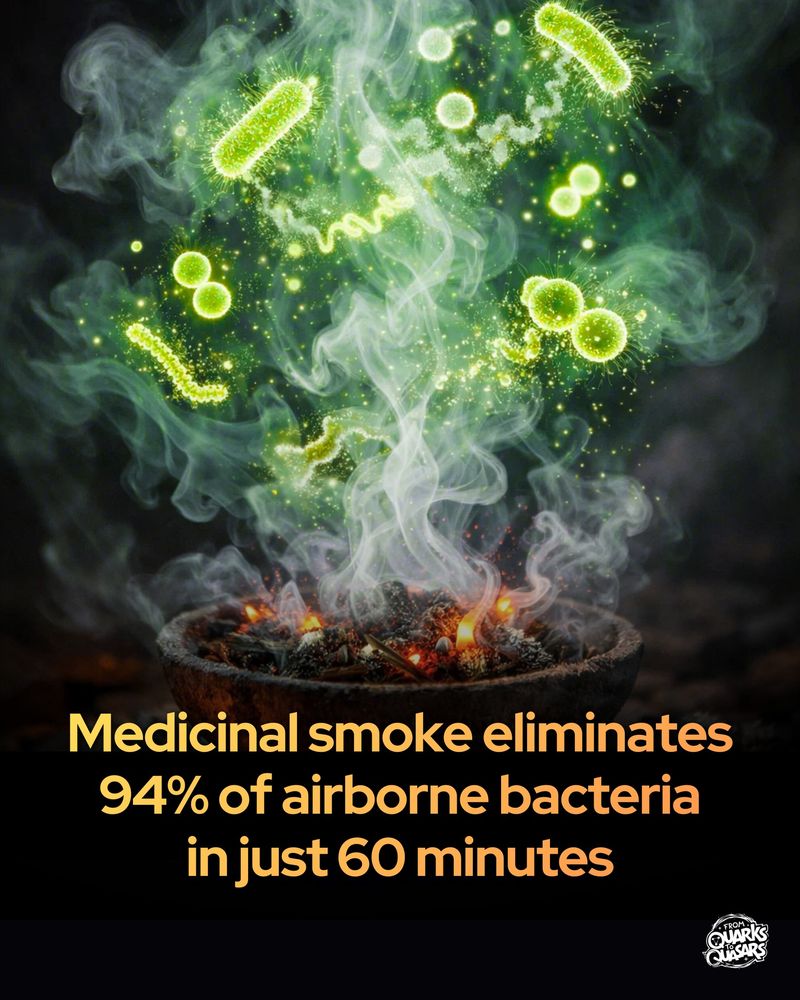
Here is the headline number. The authors reported a reduction of more than 94% in culturable airborne bacterial counts by 60 minutes after the herbal mixture was added.
Mango wood alone did not reduce the counts, which is why the mixture was credited with the change in that experiment.
The authors also reported that counts stayed reduced in the closed room through 24 hours. That describes what happened in one sealed test space.
It does not mean a home would stay protected for a day, since real houses have open doors, people, pets, and moving air.
Notice the wording, culturable bacterial counts. Researchers pulled air through a sampler, grew what landed on culture plates, and counted colonies.
National Academies material on exposure assessment explains that culture-based methods only pick up organisms that can grow under the chosen conditions.
So the figure is not a claim that 94% of all germs died. It does not cover viruses, and it does not show the air became sterile.
It also says nothing about fewer infections or better health. It is a change in what grew on plates after one specific treatment.
The study does not show what garden-herb smoke does
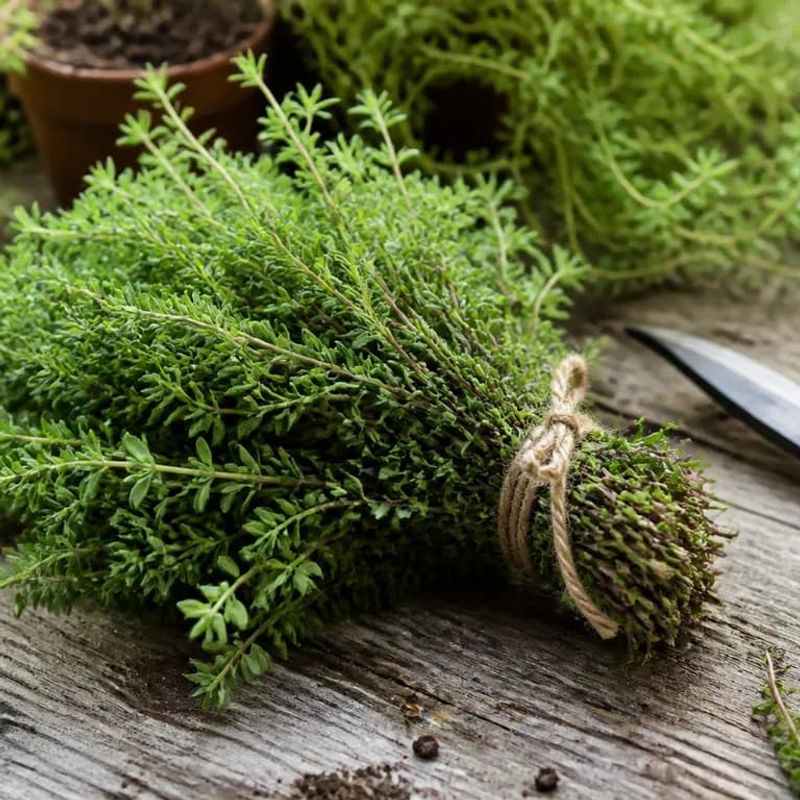
Your rosemary, thyme, and bay were not part of this experiment. The 2007 study burned a blend of many ingredients, and it did not test those three herbs alone or together.
Because no single herb was isolated, the study cannot say which ingredient, if any, did the work.
It is tempting to fill the gap with essential-oil research, but oil studies are a different thing from burning leaves. One example is a study of thyme volatile-oil vapor against airborne SARS-CoV-2.
The oil was placed in hot water to make vapor in a test room, and no thyme was burned.
Other lab work, such as research on Thymus vulgaris essential oil vapours, points to antibacterial activity in vapor form. That is interesting, but it is still oil, not smoldering leaves.
We cannot assume that antimicrobial oils survive burning intact, and the room study did not show that oils caused its result.
Rosemary, thyme, and bay may have useful properties in other forms. Still, no source here shows that burning your own harvest cleans household air.
If you grow these herbs, the safe and proven payoff is in the kitchen.
Smoke can add pollutants to indoor air
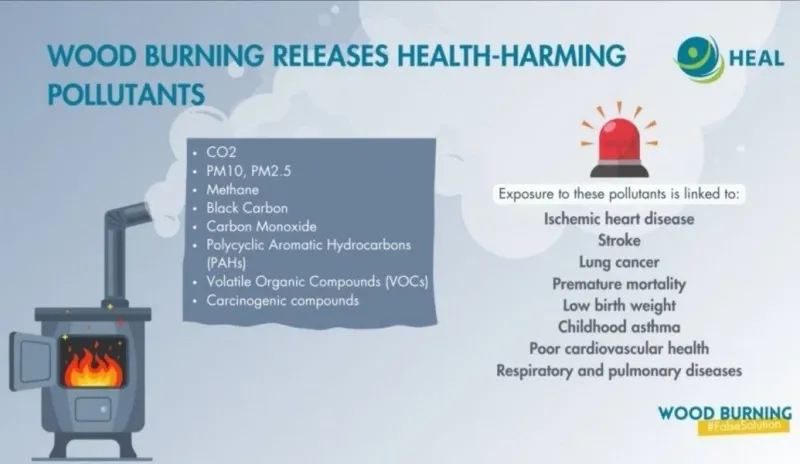
A lower bacterial count is only one part of the picture. Burning plant material also releases fine particles and other pollutants.
The EPA’s wood smoke guidance names fine particle pollution, known as PM2.5, as a main concern.
Those particles are small enough to get deep into the lungs. The EPA notes that smoke can worsen asthma and can affect people with heart or lung disease.
Children and older adults are among the groups at greater risk.
That is why a drop in bacteria should not be read as cleaner or healthier air. The 2007 bacterial-count result does not measure the particles and combustion products that smoke adds.
Trading one worry for another is not a clear win.
Herb smoke is also not a tested air-cleaning method for homes. If someone in your household has asthma or a heart or lung condition, indoor smoke deserves extra caution.
Filling an occupied home with smoke as a disinfection step is not something to try.
Use ventilation and filtration instead
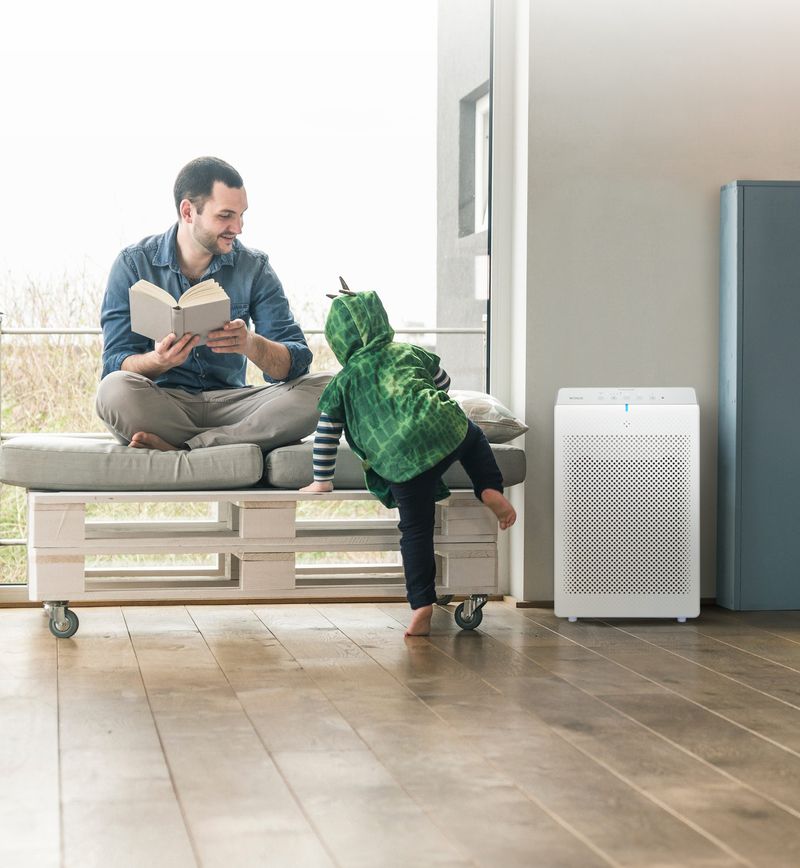
If cleaner indoor air is the goal, better tools exist. CDC and NIOSH guidance on improving air cleanliness points to ventilation and particle filtration.
That includes portable HEPA air cleaners.
Ventilation means bringing in outdoor air or moving stale air out. On a mild day, that can be as simple as opening windows on opposite sides of the house.
Running a bathroom or kitchen fan also helps move air.
Filtration works differently by pulling particles out of the air. A portable HEPA unit sized for the room can help, especially in spaces where people gather.
Upgrading the furnace filter is another practical step if your system allows it.
These steps are more defensible than burning herbs, but they are not magic. They can lower the amount of airborne particles, and they do not remove every pathogen or guarantee that nobody gets sick.
Think of them as sensible layers, not a promise.
Keep the finding in its proper context
Back at the herb bed, the takeaway is simple. The reported result came from one experiment with mango wood and a complex mixture in a closed 12.93 m³ room.
It did not come from burning rosemary, thyme, or bay at home.
Smoke is not a proven household disinfection strategy, and the EPA points out real exposure concerns. For cleaner rooms, lean on ventilation and filtration.
Your herbs still earn their spot in the garden: they are best on the cutting board.