
If Bare Spots Keep Showing In Your Beds, Here Are 13 Groundcovers That Fill Them In One Season
Bare dirt in a flower bed is like an open invitation for weeds, and it can make even a healthy garden look tired. You may think you did something wrong, but often the spot just needs the right plant to cover it.
The good news is that some groundcovers spread fast enough to close those gaps in a single growing season. Here are 13 tough, easy picks for sun, shade, and everything in between.
1. Dragon’s Blood Stonecrop
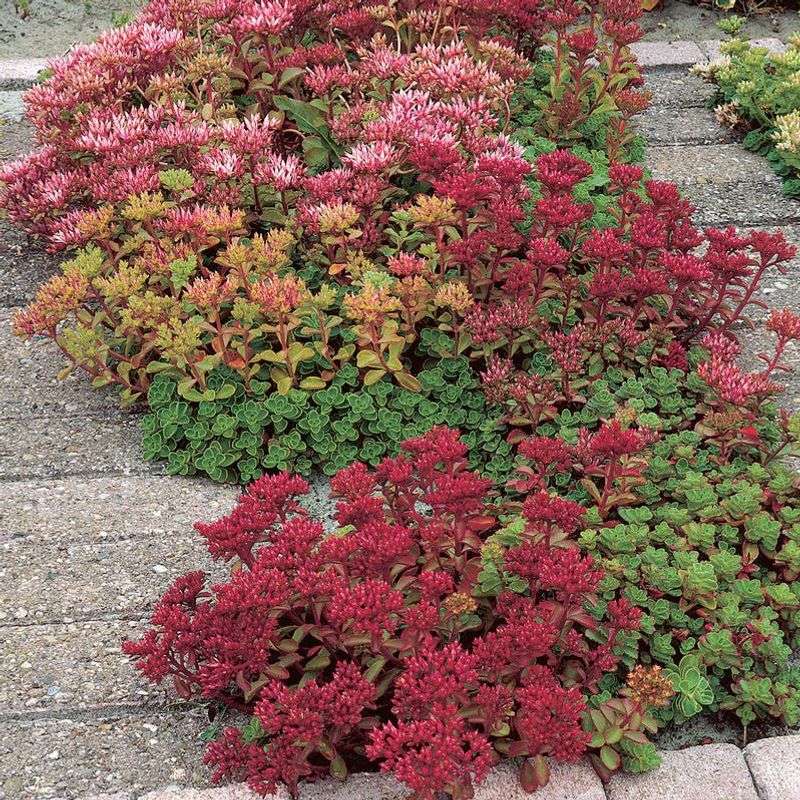
Picture a rug that changes color with the weather. Dragon’s Blood stonecrop starts the year green, then blushes deep burgundy as nights cool off.
It creeps outward along the soil, rooting as it goes, so a few small plants can knit together fast in a hot, dry corner. Pink-to-red star flowers show up from late spring into early summer, and bees love them.
Plant it where the soil drains well and the sun beats down. Skip heavy watering, since soggy roots are the one thing that may slow it down.
2. Angelina Stonecrop
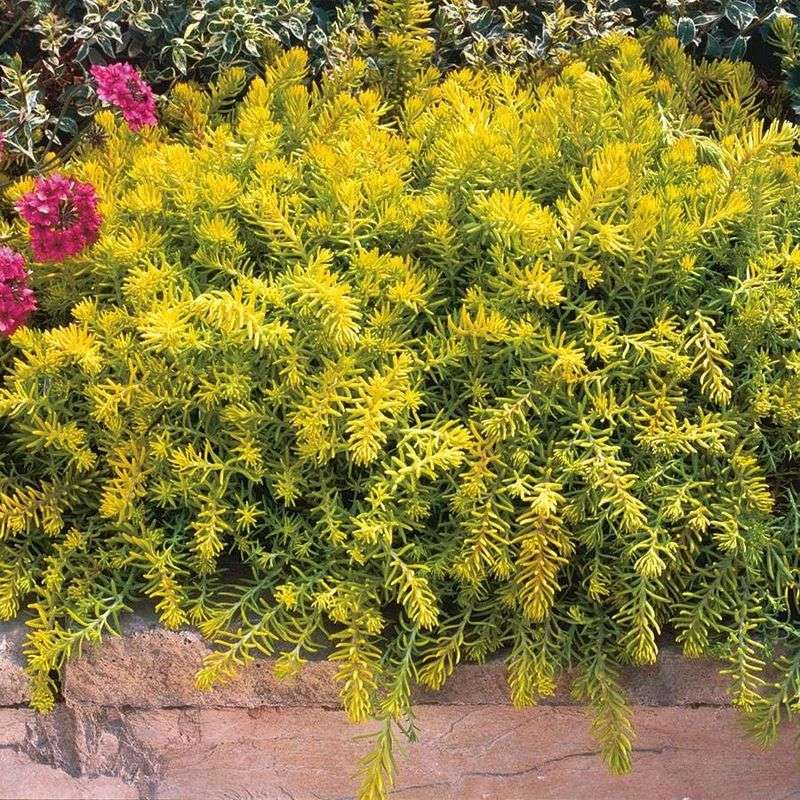
Need a splash of sunshine in a dull patch? Angelina glows bright gold, with soft needle-like leaves that look almost like tiny spruce branches.
Come winter, the foliage turns a warm copper-orange, so the spot never looks empty. It spreads into a thick mat in sunny, well-drained soil and handles drought like a champ.
Here is an easy trick: snap off a few stems and press them into bare dirt. They often root on their own within weeks, which makes filling gaps nearly free.
3. White Stonecrop
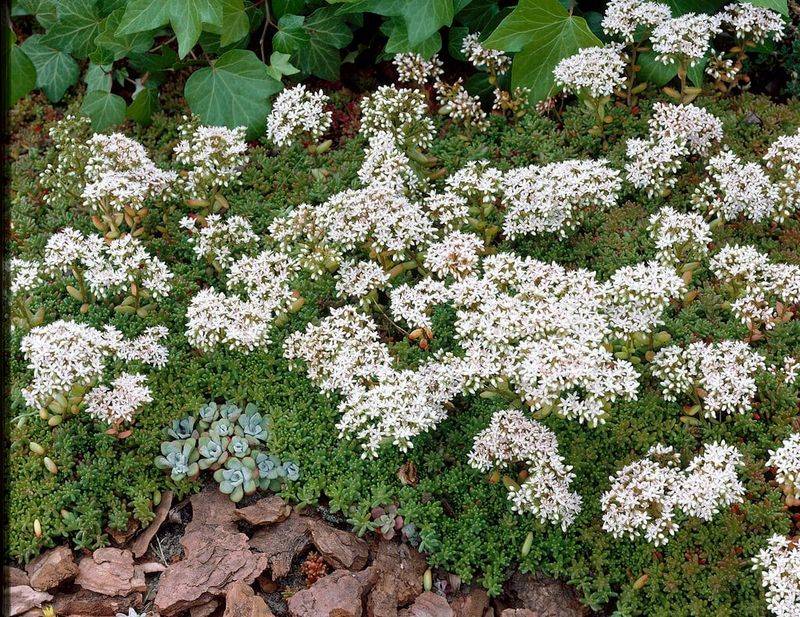
Some plants sulk in poor soil. White stonecrop seems to enjoy it, happily spreading across gravel, sand, and rocky spots where little else will grow.
Its tiny, bead-shaped leaves form a dense carpet that can turn reddish-bronze in cool weather. In early summer, delicate white star flowers float just above the mat.
Give it full sun and leave the fertilizer in the shed. Rich soil and too much water can make it floppy, so a little neglect actually helps.
4. Goldmoss Sedum
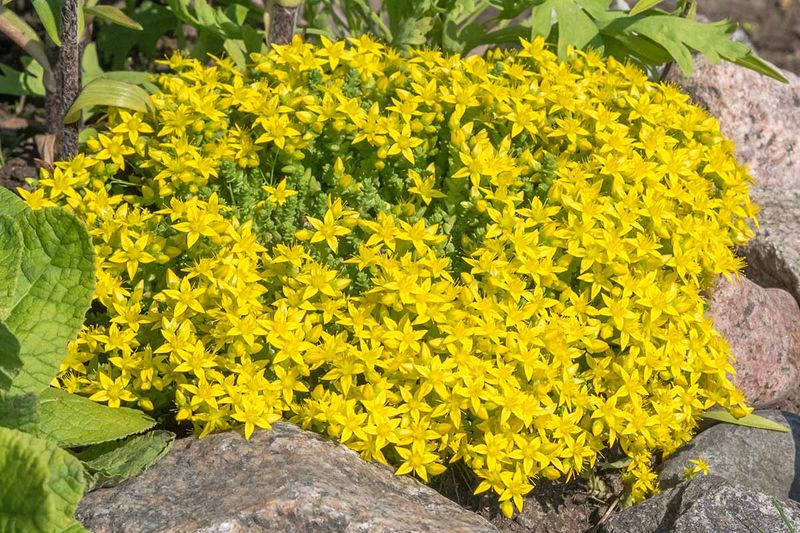
If you have a big, sunny area and a small budget, goldmoss sedum may be your new best friend. It grows quickly into a low, bright green carpet that hugs the ground.
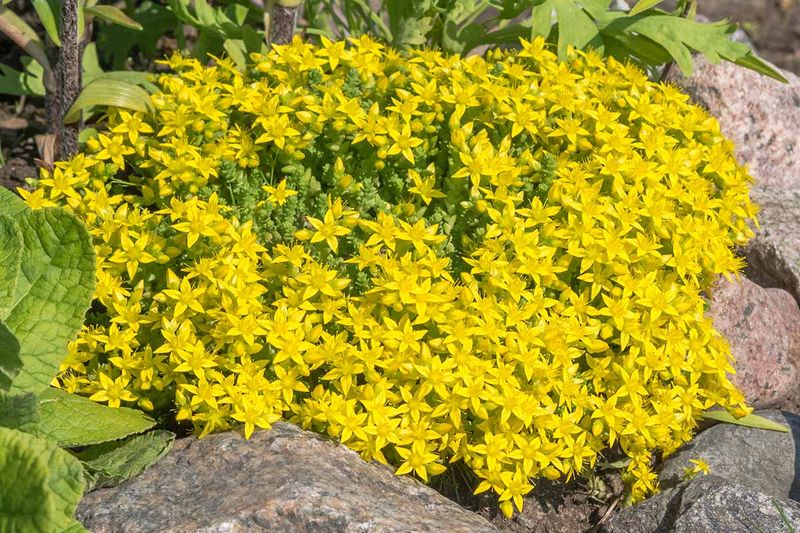
In early summer, it bursts with yellow flowers so thick you can barely see the leaves. It works well on slopes, along paths, and between stepping stones.
A word of caution, though. Goldmoss spreads so eagerly that it can wander into lawns and nearby beds, so plant it where you have room or edge it with stone.
5. Vinca Minor
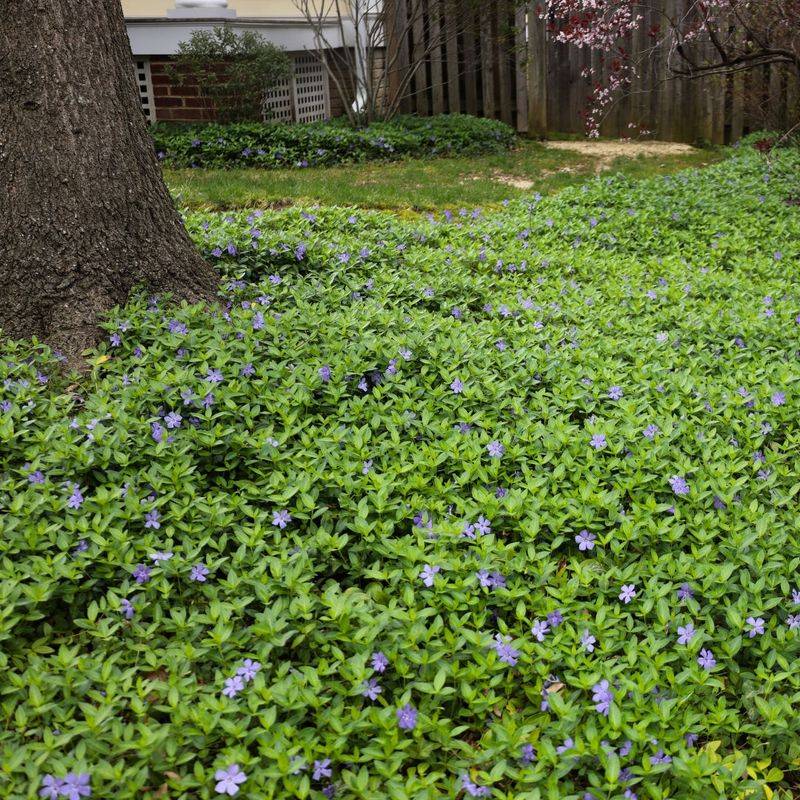
Grandma’s yard probably had a patch of this under the old maple. Vinca minor, also called periwinkle or creeping myrtle, has been covering tough shady ground for generations.
Its glossy evergreen leaves stay green all year, and spring brings blue, purple, or white flowers. It handles part sun to full shade and many soil types, which makes it great under trees where grass gives up.
Keep an eye on it, since it can be invasive in some regions. Check your state’s plant list first, and trim the edges each year to keep it where you want it.
6. Creeping Jenny
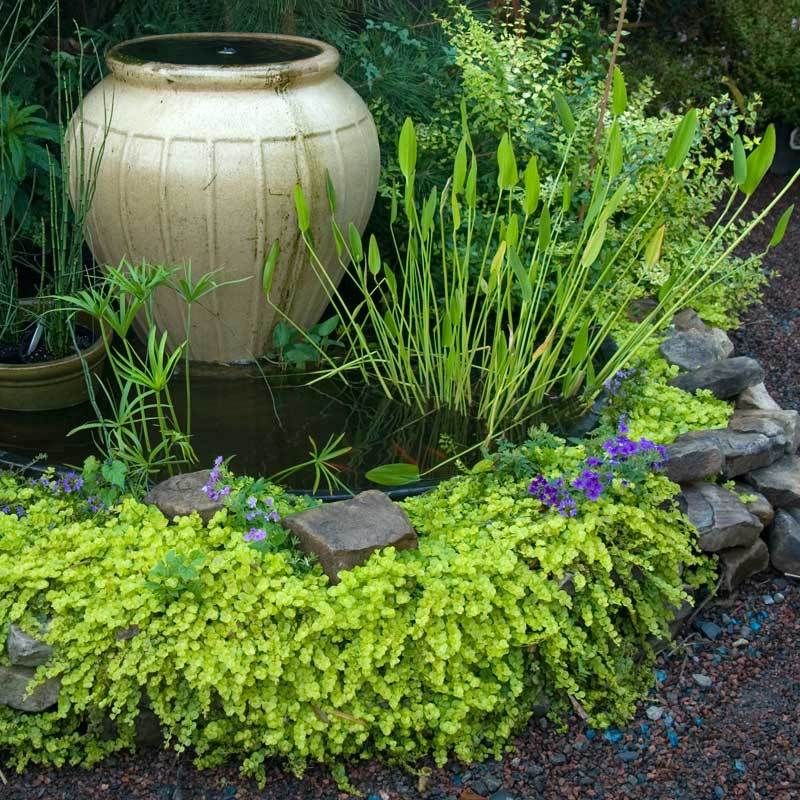
Round, coin-shaped leaves in bright chartreuse make Creeping Jenny impossible to miss. Its long stems race across the soil, rooting as they travel.
Unlike the sedums on this list, it loves moisture. That makes it a smart pick for damp low spots, rain garden edges, or the area near a leaky spigot where other plants rot.
It grows in sun or shade, though the gold color is brightest with some sun. Be ready to trim it often, because it can turn aggressive and creep into places it does not belong.
7. Lamium
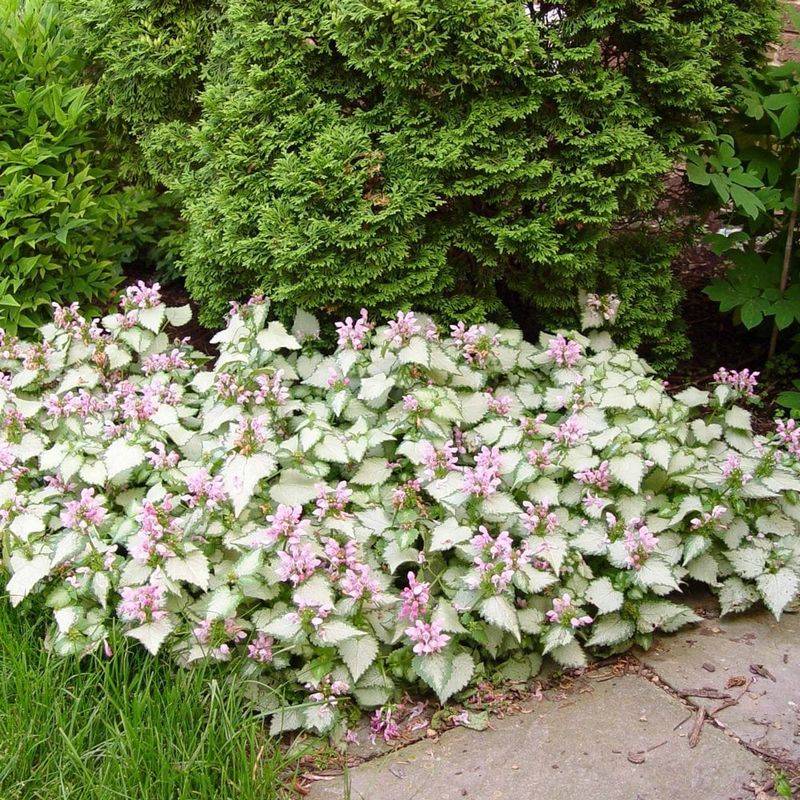
Dark corners can feel gloomy, but lamium lights them up. Its silvery or variegated leaves almost glow in deep shade.
Also called spotted dead nettle, it forms dense mats fast and adds pink or white flowers in spring. Don’t worry about the name, since it does not sting like true nettles.
Plant it under shrubs, beside hostas, or on the shady side of the house. Water during long dry spells, and pull back any runners that stray too far.
8. Creeping Thyme
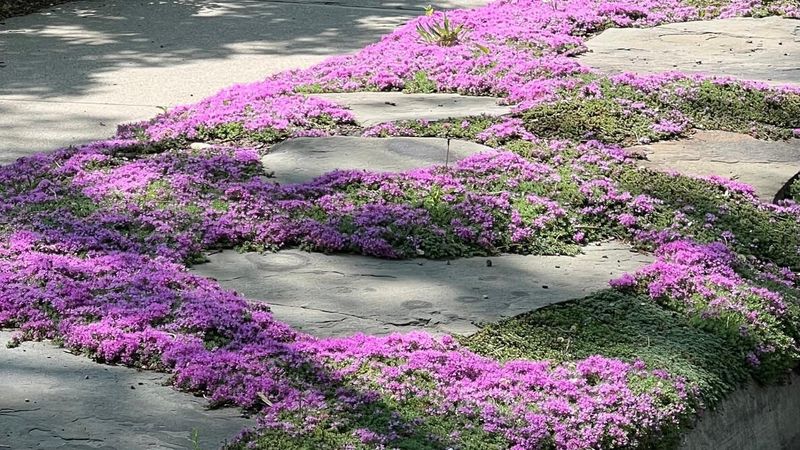
Step on it and your path smells like a kitchen herb garden. Creeping thyme releases a fresh scent every time a foot brushes the tiny leaves.
Varieties like ‘Pink Chintz’ and red creeping thyme form tight, evergreen mats that handle light foot traffic. That makes them perfect for gaps between pavers or bare spots along a walkway.
Full sun and dry, well-drained soil keep it happy. Summer flowers pull in bees and butterflies, so it pulls double duty.
9. Ajuga
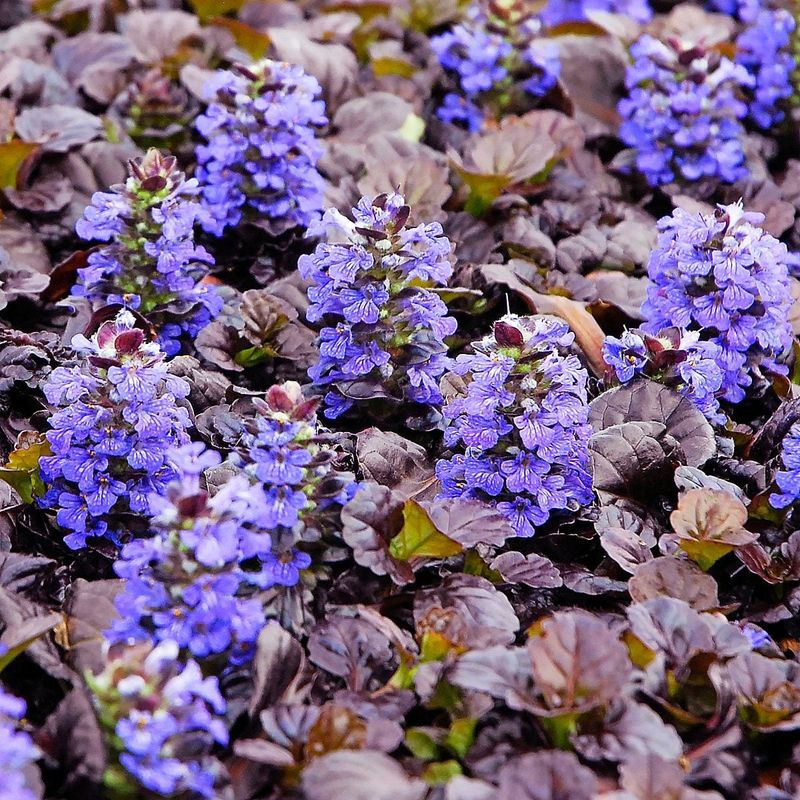
Bronze, purple, and rusty red leaves give ajuga a moody, jewel-toned look. In spring, blue-violet flower spikes pop up like little candles.
Bugleweed spreads by runners that zip across the soil and root quickly. It grows in sun or shade, though leaf color is richest with a bit of light.
Good drainage matters, since soggy soil can lead to crown rot. Thin it every couple of years and replant the extras in your next bare spot.
10. Creeping Phlox (Phlox subulata)
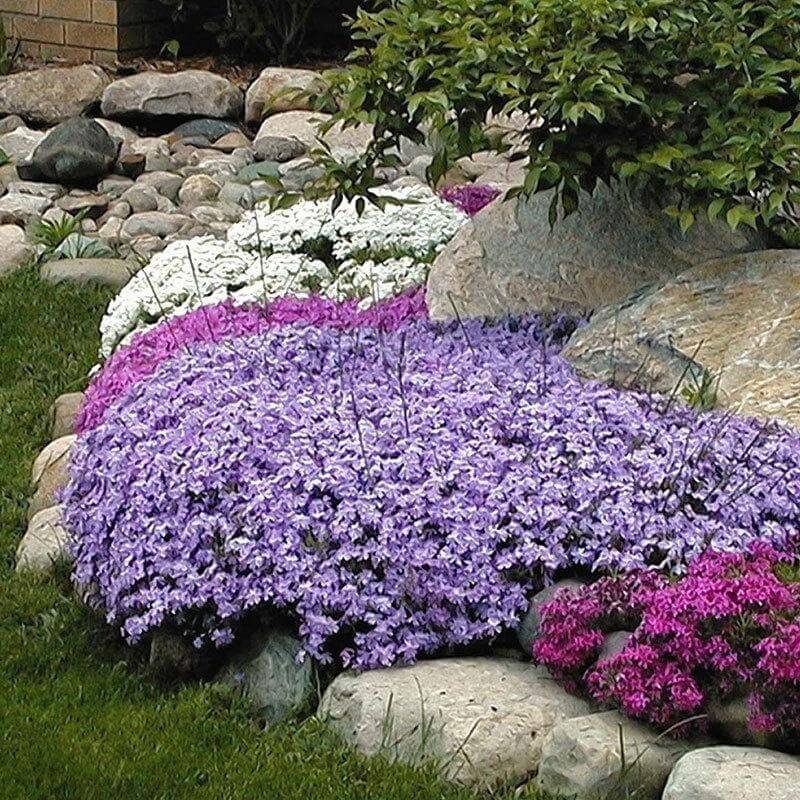
Every spring, neighbors slow down to stare at a slope covered in creeping phlox. The blooms come so thick that the plant looks like a pink, purple, or white blanket.
After flowering, the needle-like evergreen foliage keeps covering the ground and helps block weeds. It spreads steadily in full sun and well-drained soil.
Full maturity can take about two years, but plants spaced closely will fill much of a gap in the first season. A light trim after bloom keeps it tidy and dense.
11. Portulaca
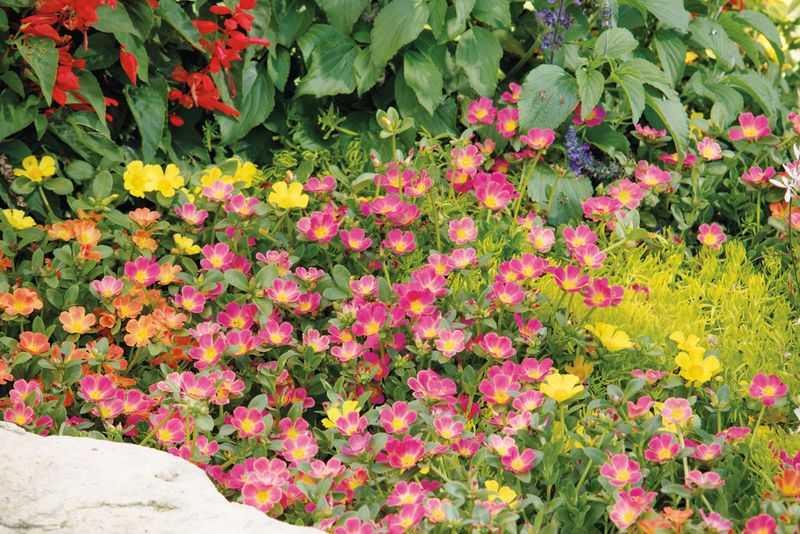
Got a spot so hot your petunias keep frying? Portulaca, or moss rose, laughs at heat, humidity, drought, and poor soil.
It is an annual, so it grows fast to finish its job in one summer. The succulent stems spread into a mat covered with rose-like blooms in orange, pink, yellow, and red.
Flowers keep coming from summer until frost. Plant it by driveways, sidewalks, or any bare strip that bakes in the afternoon sun.
12. Wild Stonecrop
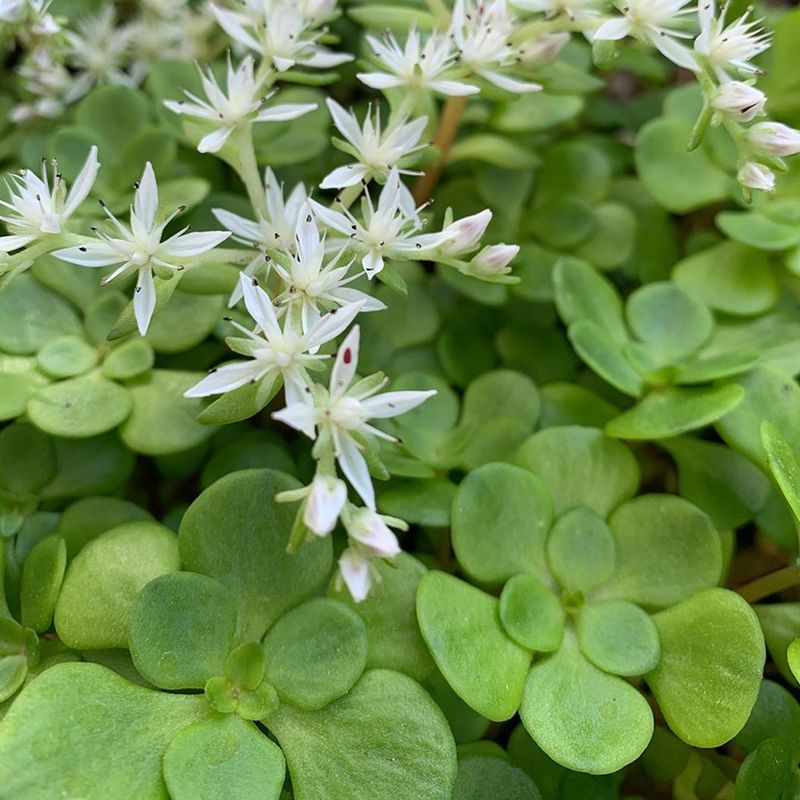
Most sedums want blazing sun, but wild stonecrop breaks the rule. This native plant creeps happily through partial shade.
Its light green, succulent leaves form a thick mat, and white star flowers appear in late spring and early summer. It looks lovely tucked around rocks or woodland paths.
Since it is native to eastern North America, it can support local pollinators. Any well-drained soil will do, making it an easy fix for shady gaps.
13. Creeping Phlox (Phlox stolonifera)
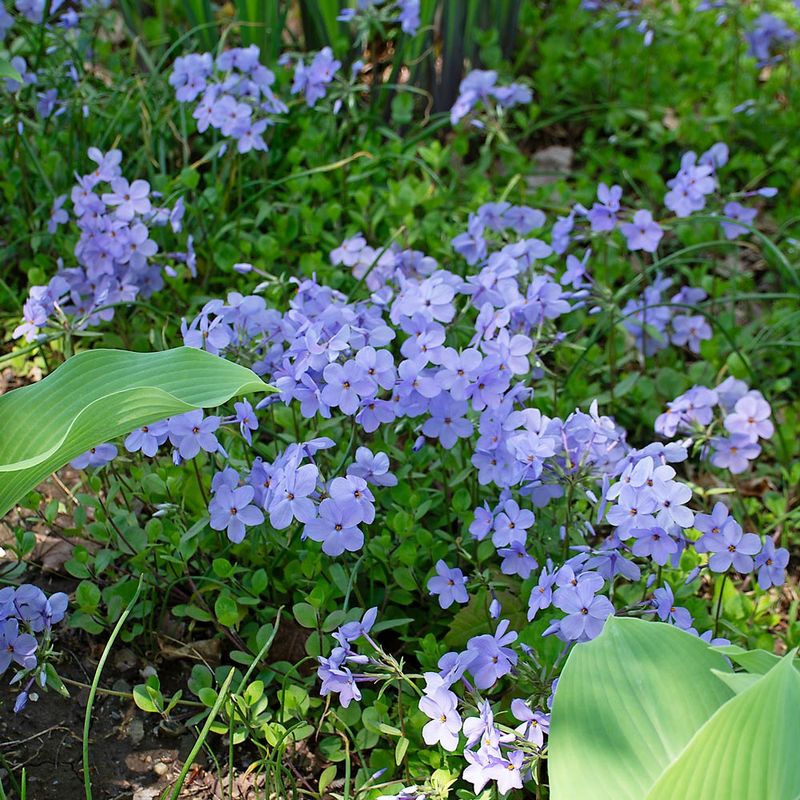
Think of it as the shade-loving cousin of the sun phlox above. Phlox stolonifera spreads by runners and thrives where light is patchy.
Its soft, rounded leaves form a loose mat, and spring brings clusters of lavender, blue, pink, or white flowers. It fits nicely under trees or beside hydrangeas.
Keep the soil evenly moist and rich in organic matter. With a little mulch and patience, those shady bare spots may soon disappear.