
If Your Christmas Cactus Leaves Turn Yellow This Fall, Here Are 11 Reasons And The Fix Each One Needs
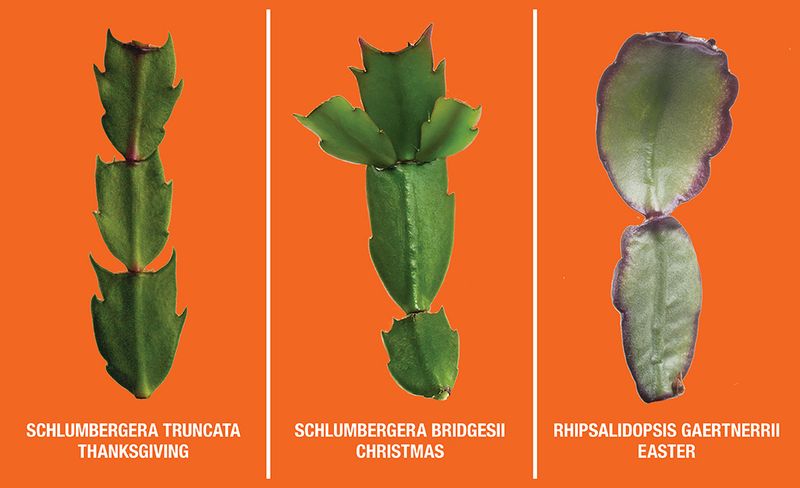
Your Christmas cactus should be gearing up for its big holiday show right now, so yellow leaves can feel like a punch in the gut. The good news is that yellowing is usually the plant’s way of asking for a small change, not a sign that it’s dying.
Fall brings shorter days, cooler rooms, and heaters kicking on, and all of that can stress this tropical plant. Below are 11 common reasons the segments lose their green, plus the simple fix for each one so you can still enjoy those winter blooms.
1. Too Much Direct Sun
Picture a plant that grew up in the shade of rainforest trees, and then imagine parking it in a blazing window. That’s what happens when a Christmas cactus sits in strong, direct sun.
It’s a tropical epiphyte, meaning it naturally clings to branches under a leafy canopy where light arrives soft and dappled.
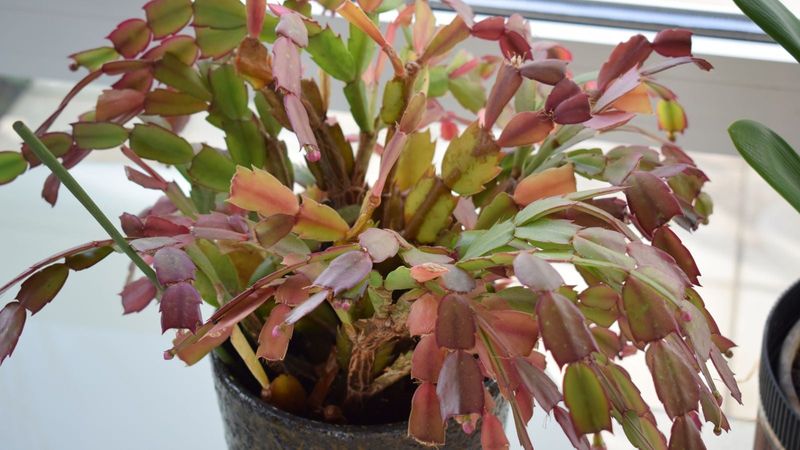
Too much sun bleaches the segments to a faded, washed-out yellow. Sometimes you’ll also see a reddish or purple tint, which is the plant’s version of a sunburn.
In extreme cases, the scorched segments can shrivel and die.
The fix is easy. Move your plant to a spot with bright, indirect light, such as a few feet back from a south-facing window or near an east or west window with a sheer curtain.
The existing pale segments may not turn fully green again, but new growth should come in healthy within a few weeks.
2. Not Enough Light
Fall has a sneaky way of dimming our homes. Days get shorter, the sun sits lower, and a spot that felt bright in July can turn gloomy by October.
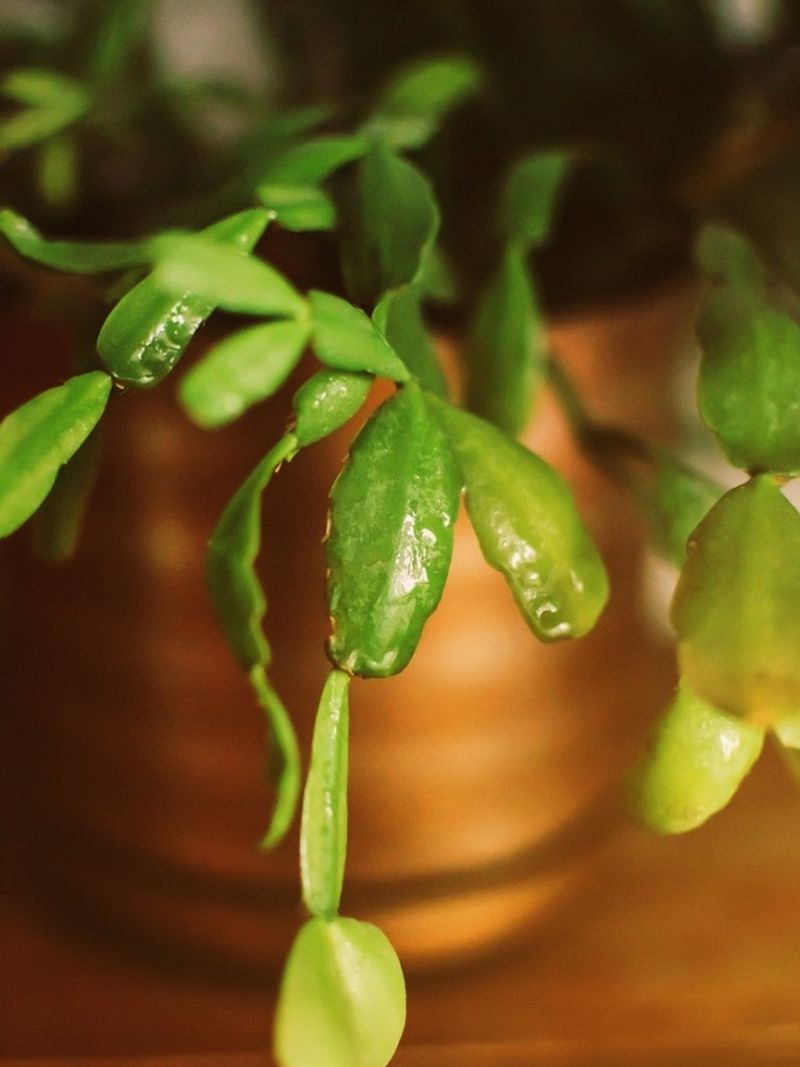
When a Christmas cactus doesn’t get enough light, it struggles to make chlorophyll, the green pigment plants use to turn light into food. The result is pale, yellowish segments and often fewer flower buds, or none at all.
That second part stings, since fall is exactly when buds should be forming.
Shift your plant closer to a window that gets plenty of bright but filtered light. An east-facing window is often a sweet spot.
If your home is naturally dark, a simple LED grow light for a few hours a day can make up the difference, but keep nights dark so the plant still gets its bloom signal.
3. Overwatering
Here’s the honest truth: more Christmas cacti are loved to death with a watering can than any other way. Overwatering is the number one reason these plants turn yellow.
The clue is where the yellow starts. Look at the lower, older segments first, and squeeze the base of the stems gently.
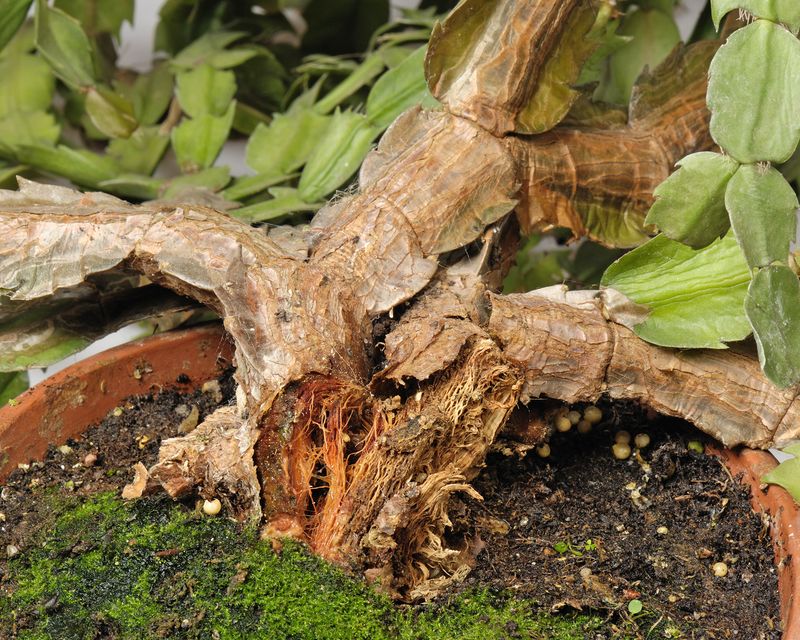
If they feel soft or mushy, the roots are probably sitting in water and starting to rot.
Going forward, water only when the top 1 to 2 inches of soil feel dry. Stick your finger in to check instead of watering on a schedule.
If you suspect rot, slide the plant out of its pot. Trim away brown, mushy roots with a clean knife or scissors, then repot into fresh, well-draining mix.
Healthy roots should look white or light tan and feel firm.
4. Underwatering
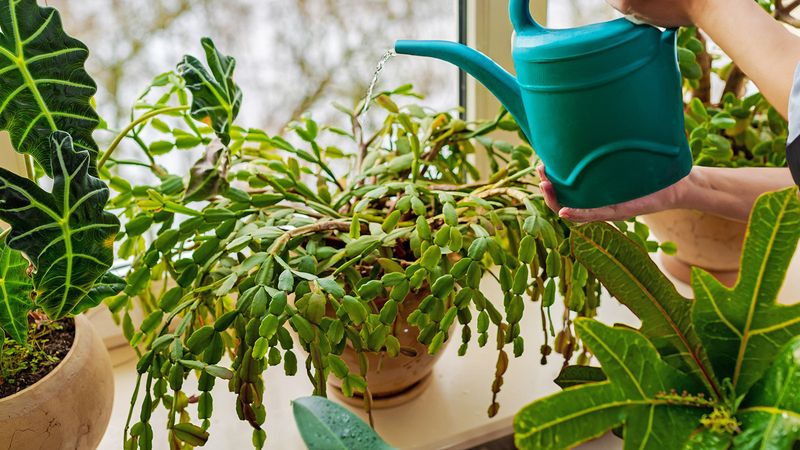
Plenty of people hear the word cactus and assume the plant wants desert treatment. Not this one.
A Christmas cactus actually prefers soil that stays lightly moist and rich in organic matter. Let it go bone-dry for too long, and the segments turn yellow, look wrinkled or deflated, and may even start dropping off.
Thankfully, this is one of the easiest problems to fix. Give the plant a thorough drink until water runs out the drainage holes, then let the extra drain away.
Water again whenever the top inch or two of soil dries out.
Indoor heating in fall can dry soil faster than you’d expect, so check a little more often once the furnace comes on. Most thirsty plants plump back up within a few days.
5. Hungry Plant, Missing Nutrients
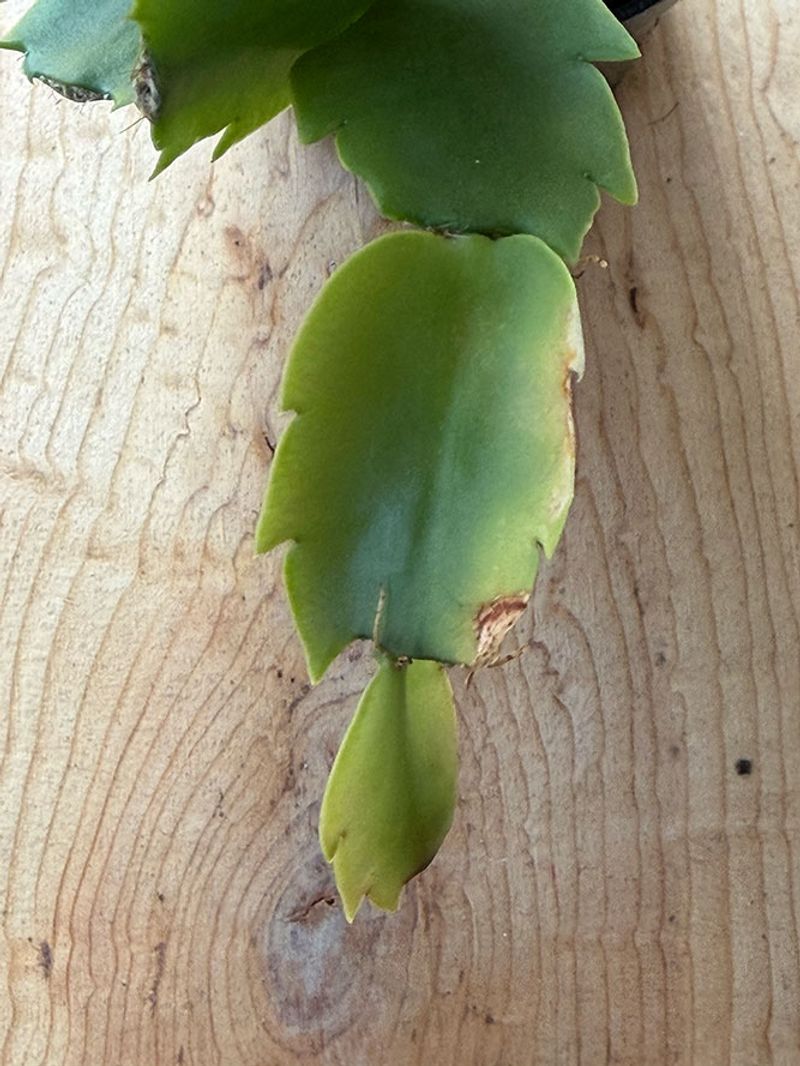
A slow, even fade from green to pale yellow, especially on older segments, often points to an empty pantry. If your plant has lived in the same potting mix for a long time, it may have used up most of the nutrients.
Christmas cacti also have a bit of a sweet tooth for magnesium, a mineral that helps build chlorophyll. When magnesium runs low, the green starts to drain out of the leaves.
Feed your plant monthly from spring until mid-fall with a balanced, all-purpose liquid fertilizer mixed at half strength. Some gardeners also add 1 teaspoon of Epsom salts to a gallon of water once a month during spring and summer.
Just don’t use it in the same week as your regular fertilizer.
Once buds start forming in fall, ease off feeding so the plant can focus on flowers.
6. The Wrong Potting Mix
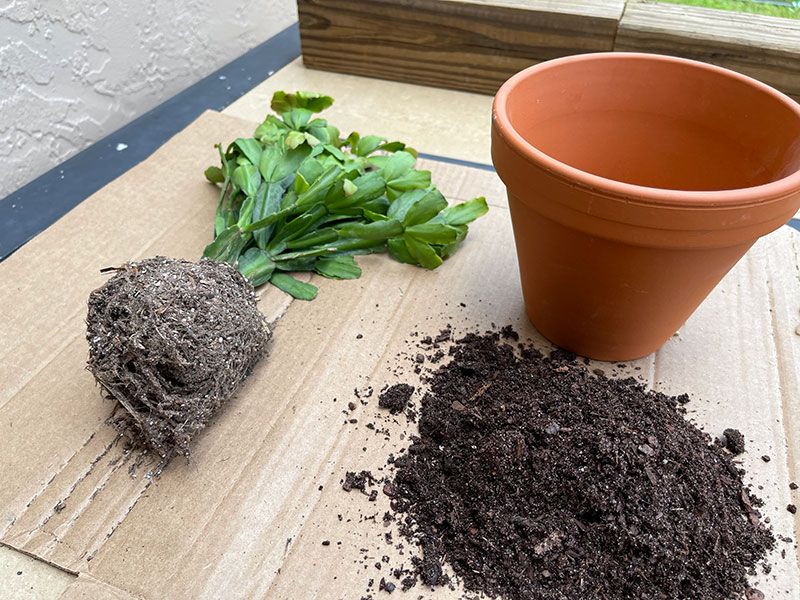
Dirt is dirt, right? Not quite.
The mix your Christmas cactus lives in can quietly cause trouble for months before the leaves show it.
Cheap, heavy potting soil often holds too much water and offers too little nutrition. Roots stay soggy, oxygen runs low, and the plant slowly yellows.
A better home is a loose, well-draining mix that still has some richness to it. A simple homemade blend is two parts regular potting mix to one part perlite or coarse sand.
Many gardeners also like adding a handful of orchid bark for extra air pockets.
Repotting in fresh mix gives the roots room to breathe and a new supply of nutrients.
7. Cramped, Potbound Roots
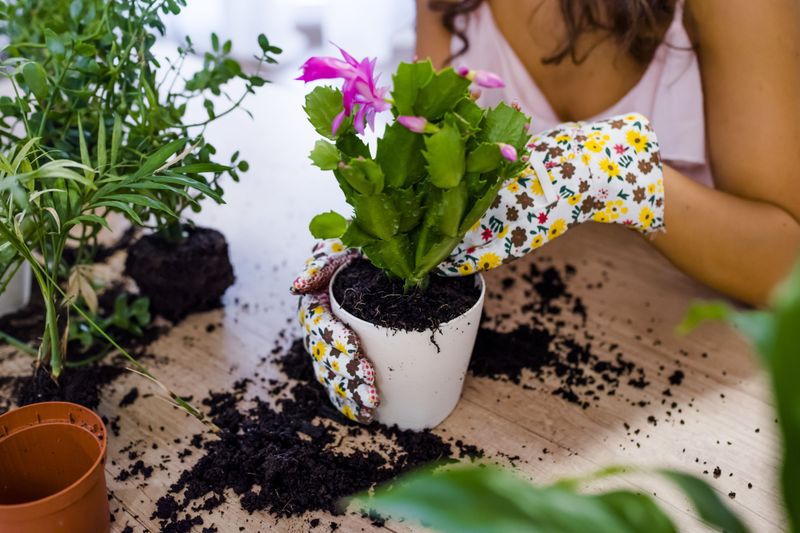
Funny enough, Christmas cacti actually bloom best when they’re a little snug in their pots. But there’s a limit.
After several years, roots can pack the container so tightly that water runs straight through and nutrients have nowhere to go. You might notice roots poking out of the drainage holes or soil that dries out almost instantly.
Yellow segments often follow.
Every two to three years, move your plant into a pot just one size larger. Going too big can leave extra soil staying wet, which leads right back to rot.
Spring is the best time to repot, but a badly crowded plant can be moved in fall if needed.
After repotting, hold off on fertilizer for about a month so the roots can settle in.
8. A Pot That Won’t Drain
That pretty holiday pot your plant came in might be the villain here. Many decorative containers have no drainage hole at all.
Without an escape route, water collects at the bottom and the roots sit in a puddle. The symptoms look almost exactly like overwatering, even if you’ve been careful with how much you pour.
Always grow your Christmas cactus in a pot with at least one drainage hole. If you love the decorative container, use it as a cover pot and set a plain nursery pot inside.
Just empty any water that collects in the outer pot after watering.
Pairing a draining pot with a loose mix can prevent a surprising number of problems.
9. Root Rot and Other Diseases
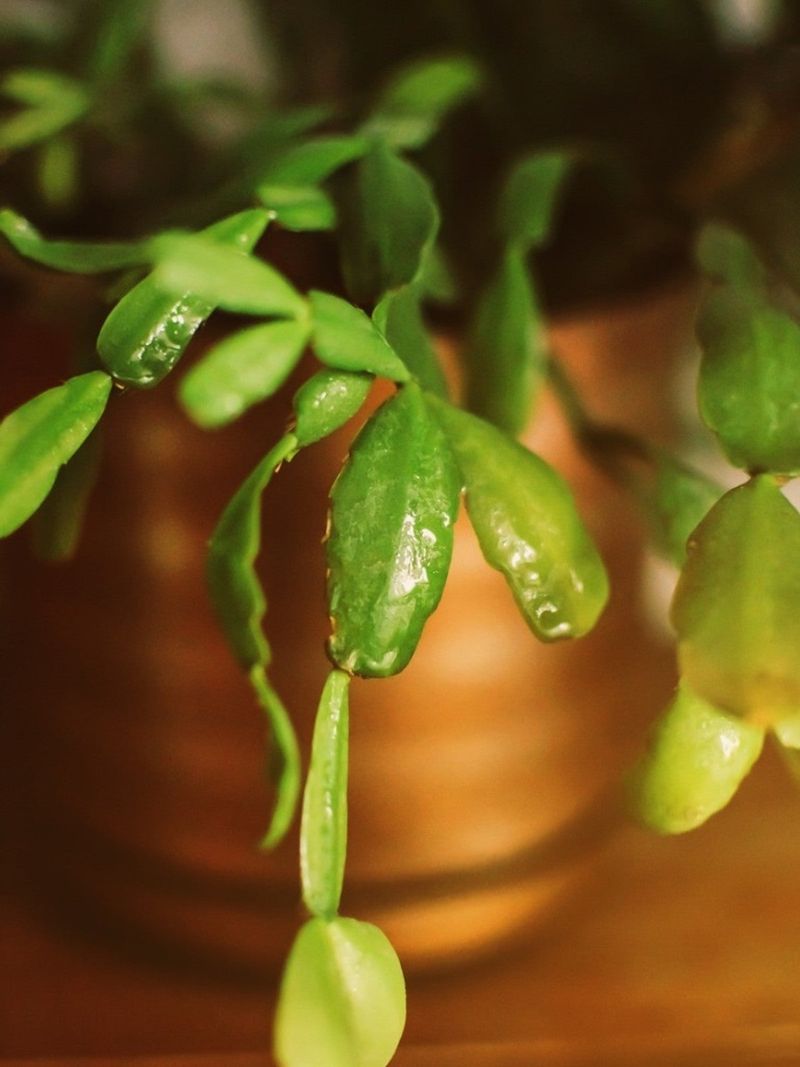
Sometimes yellowing comes with wilting that doesn’t improve no matter how you water. That’s when disease might be the culprit.
Fungal root rot is the most common one, and it thrives in wet, poorly drained soil. Treat it the same way you’d handle overwatering damage: remove the plant, cut away the brown, mushy roots, and repot in fresh mix with a clean pot.
A rarer and more serious problem is Impatiens Necrotic Spot Virus, often called INSV. It shows up as yellow spots ringed with brown, dead tissue.
Sadly, there’s no cure, so infected plants should be thrown away to protect your other houseplants.
Healthy segments from a rot-affected plant can often be rooted as cuttings, which is a nice backup plan.
10. Sap-Sucking Pests
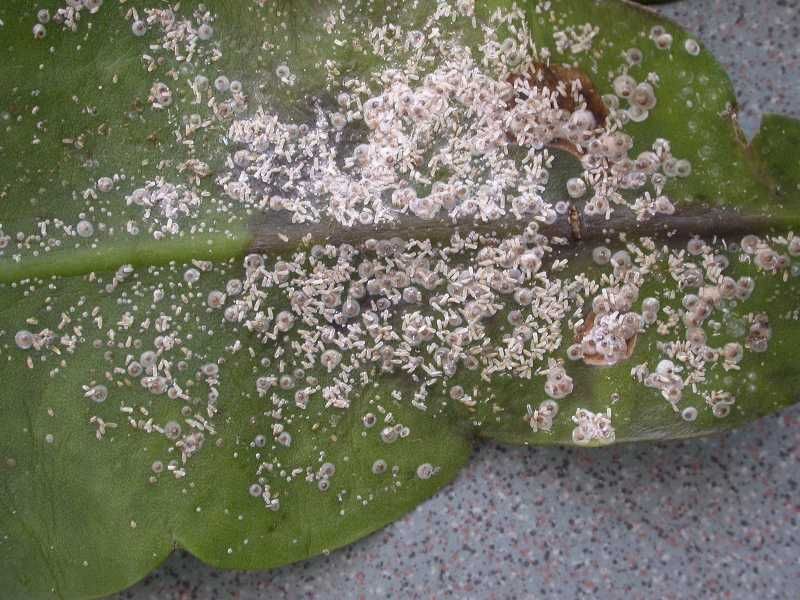
Tiny freeloaders can drain the color right out of your plant. Mealybugs, aphids, thrips, and whiteflies all feed on plant sap, and that constant sipping leaves segments yellow and weak.
Plants that summered outdoors are especially likely to bring hitchhikers inside in fall. Check where segments join and along the undersides.
Mealybugs look like little bits of white cotton, while aphids are small, soft, and often green or black.
For light problems, wipe the segments with a damp cloth or a cotton swab dipped in rubbing alcohol. Gentle insecticidal soap can help with bigger outbreaks, but you may need to repeat it every week or so for a few rounds.
Keep the plant apart from your others until it’s clear.
11. Cold Drafts and Temperature Swings
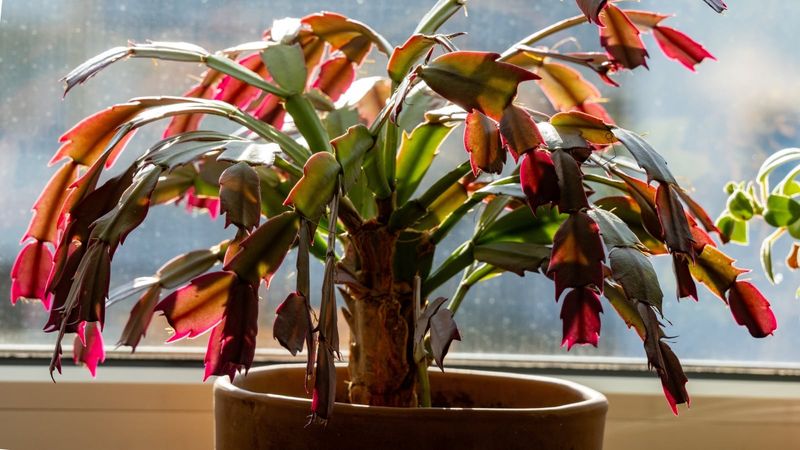
Windowsills can turn chilly fast once fall nights arrive. A glass pane that felt fine in September might drop to near-freezing by November.
Christmas cacti like it cool at night while buds form, but long stretches below 50°F, or blasts of cold air from a door, can stress the plant. Yellow segments, and sometimes dropped buds, are the result.
Hot air from heater vents causes problems too.
Aim for steady temperatures around 60 to 70°F. Pull the pot back from cold glass on frosty nights, and keep it away from doors, radiators, and vents.
A stable spot keeps your plant calm and ready to bloom.
Here’s the bottom line for all 11 causes: watch closely, change one thing at a time, and give your plant a few weeks to respond. Most yellowing Christmas cacti bounce back with a little patience.