
Does Walking Barefoot On Backyard Grass Really Change Your Body? What Early Research Can and Cannot Tell Us
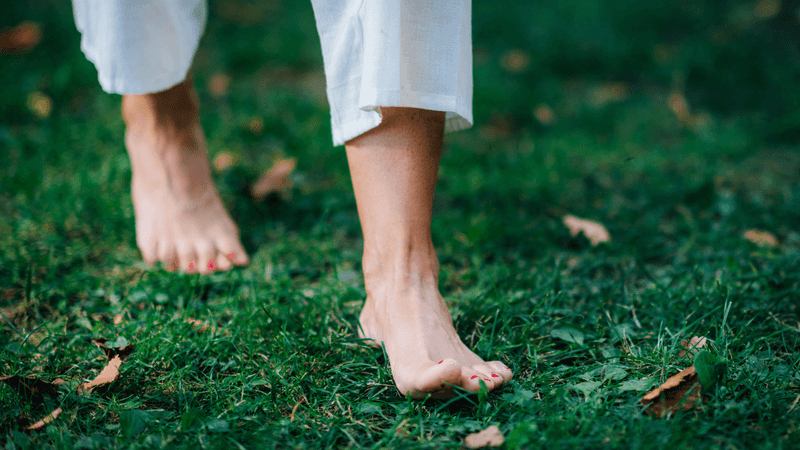
Kicking off your shoes and stepping onto the lawn feels like a tiny vacation. Some people say it calms them down and helps them sleep, and online claims about it get big fast.
Scientists have started to look, but the research is still young and small. Here is what the studies show, what they do not, and how to try it safely if you are curious.
Nature exposure offers a plausible stress backdrop
Stepping outside to slow down makes sense on its face. A 2020 review of 12 nature-exposure studies found lower physiological stress markers in the studies that measured them.
People also tended to report feeling less stressed after time in natural settings.
A second piece of the picture comes from walking in the woods. A 2025 randomized trial of 54 older adults found lower hair cortisol after a month of repeated forest walks, compared with each person’s preceding month.
The study compared forest walking with urban walking.
Neither study tested barefoot walking on a home lawn. Nobody in them was asked to take off their shoes, and neither looked at electrical contact with the ground.
So these results say that time in nature and gentle walking are reasonable ways to unwind, nothing more specific than that.
Cortisol is a stress hormone, but a change in it is not proof of a lasting health benefit. It is one snapshot taken under particular conditions.
Treat the findings as a hopeful backdrop for your yard pause rather than a promise about your own body.
What does green-space research say about sleep?
Sleep researchers have looked at time around trees, parks, and gardens. A systematic review found that 11 of 13 included studies linked green-space exposure with better sleep quality or quantity.
That sounds strong, but look at how the work was done. Many of the studies were observational, meaning researchers noticed patterns instead of assigning people to do something.
The activities varied too, and included walking and gardening.
An association is not the same as a cause. People who live near green space may differ in many ways, such as income, noise levels, exercise habits, or stress at work.
Any of those could shape how they sleep.
None of these studies asked people to walk barefoot on a lawn. So the honest takeaway is narrow.
Spending time around greenery goes along with better sleep in many studies, but nothing here shows that bare feet on grass make you sleep better.
Two studies test barefoot walking directly
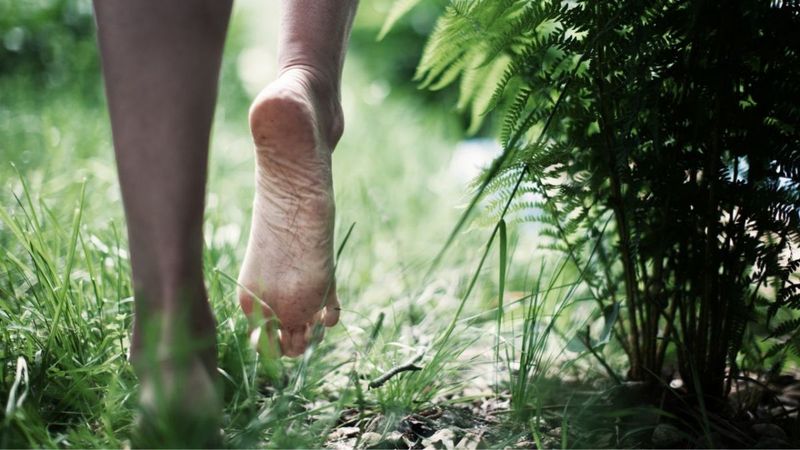
A few studies do look at bare feet directly. A 2025 quasi-experimental study followed 26 middle-aged women who walked in a forest.
The barefoot group reported better sleep-quality scores and had lower cortisol than a group that walked in shoes. The cortisol and sleep changes did not line up with each other, so one cannot be said to explain the other.
The second is a 2025 study of women aged 45 to 65 with menopausal symptoms. They joined a 12-week barefoot-walking program with 60-minute sessions three times a week, and 60 participants were in the final analysis.
They reported improvements in stress, sleep quality, menopausal symptoms, and quality of life compared with a no-intervention control group.
Both studies are small and were not randomized in the way the strongest trials are. The forest study took place in a forest, not a home lawn, and involved one specific group of women.
In the menopause study, the program mixed walking, an outdoor setting, and bare feet, so there is no way to tell which part, if any, made the difference.
Think of these as early signals that invite better research. They do not show that a few minutes on your own grass will change your stress or sleep.
Grounding remains a hypothesis, not an established mechanism
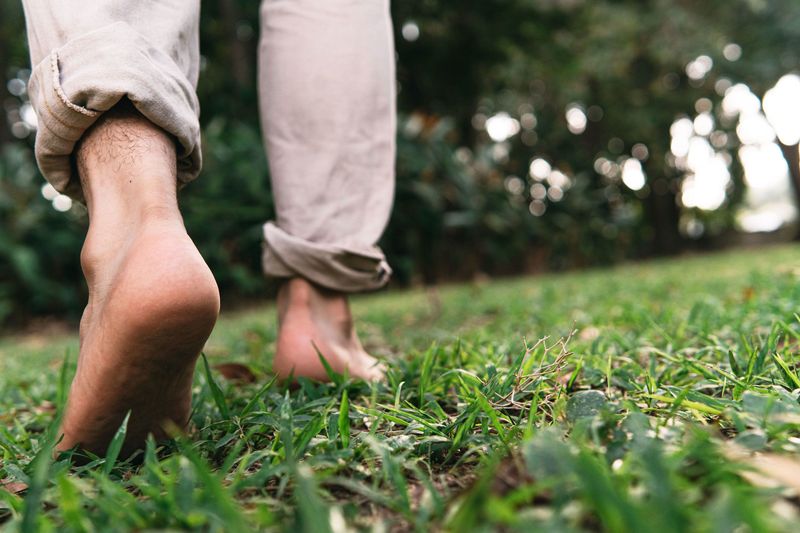
A barefoot walk bundles many things together. You are moving, you are outside, your feet feel texture and temperature, and you have stepped away from your routine.
You may also simply expect to feel better, and expectation can shape how people report sleep and stress.
Grounding, sometimes called earthing, adds a bolder idea. It says direct contact with the Earth transfers electrons that calm the body, often described as neutralizing free radicals.
That is a proposed explanation, not established physiology.
So far, studies have not separated an electrical effect from everything else going on. A 2023 review points out how little detailed research exists on direct body-to-ground contact and calls for better-controlled trials.
Medical claims deserve extra caution. Cleveland Clinic describes specific earthing health claims as unproven and notes that much of the research is preliminary or weak in design.
Grounding is not a treatment for insomnia, inflammation, or any illness, and it should never replace care from your doctor.
A lawn walk can be an optional pause—with precautions
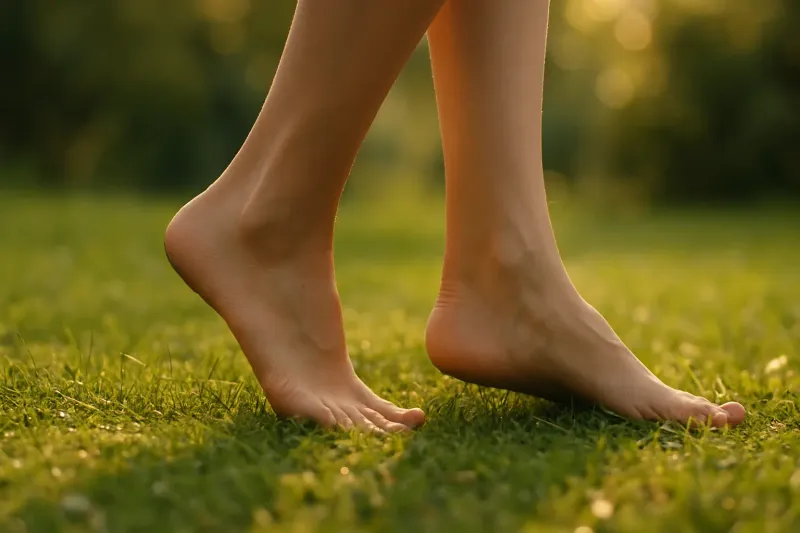
If the idea appeals to you, keep it small. Pick a short, gentle walk on a familiar, clean patch of lawn, and treat it as optional outdoor movement or quiet sensory downtime.
It is not a treatment.
Scan the ground first for sharp objects, animal waste, stinging insects, and recently treated areas. EPA guidance says to keep people and pets off pesticide-treated areas until the product has dried or for the time listed on its label.
Afterward, wash your feet and look them over for cuts, splinters, or ticks.
Some people should skip this entirely. CDC advises people with diabetes never to go barefoot, because injuries can go unnoticed and become serious.
The same goes for anyone with numb feet or broken skin.
Wounds deserve respect. Tetanus spores live in soil, dust, and manure and can enter through breaks in the skin, so stay current on vaccination and clean any wound well.
CDC notes that ticks can be found in people’s own yards, so a quick check matters.
Hookworm is a narrower concern. CDC advises against going barefoot on soil contaminated with human feces where hookworm is common.
That is a warning for specific settings, not a sign that ordinary lawns in the US routinely carry it.
Keep the claim smaller than the ritual
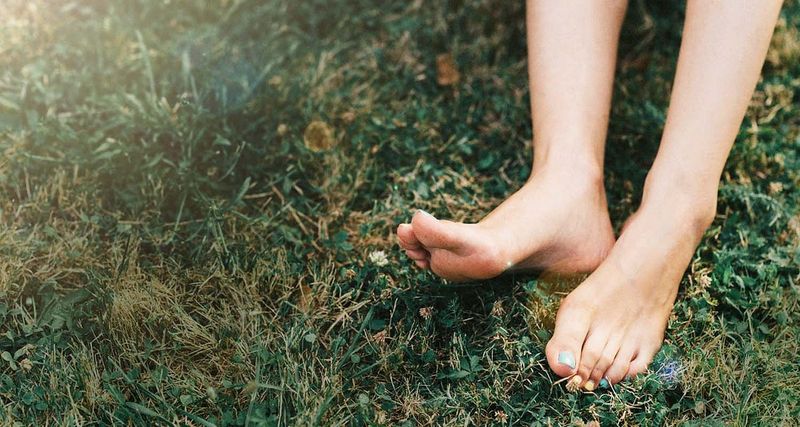
A quiet minute on the grass can be a nice habit all by itself. Studies on nature and stress make time outdoors a sensible pause, yet research on direct ground contact is still thin.
Nobody can promise you better sleep or less stress from bare feet on your lawn.
So try it if it suits you and your feet are healthy, and skip it without guilt if it does not. The lawn will be there either way.