
American Holly for North Carolina Privacy Screens: A Long-Term Native Evergreen With Honest Trade-Offs
Plenty of North Carolina yards share a fence line with a neighbor’s view, and a wall of evergreen leaves can fix that all year. American holly is a native tree that fits the job in the right spot, but it takes patience and a lot of room.
It also comes with a few cautions about fire, berries, and seedlings that wander. Here is how to decide whether it belongs in your yard.
American holly offers a statewide screen, but not instant privacy
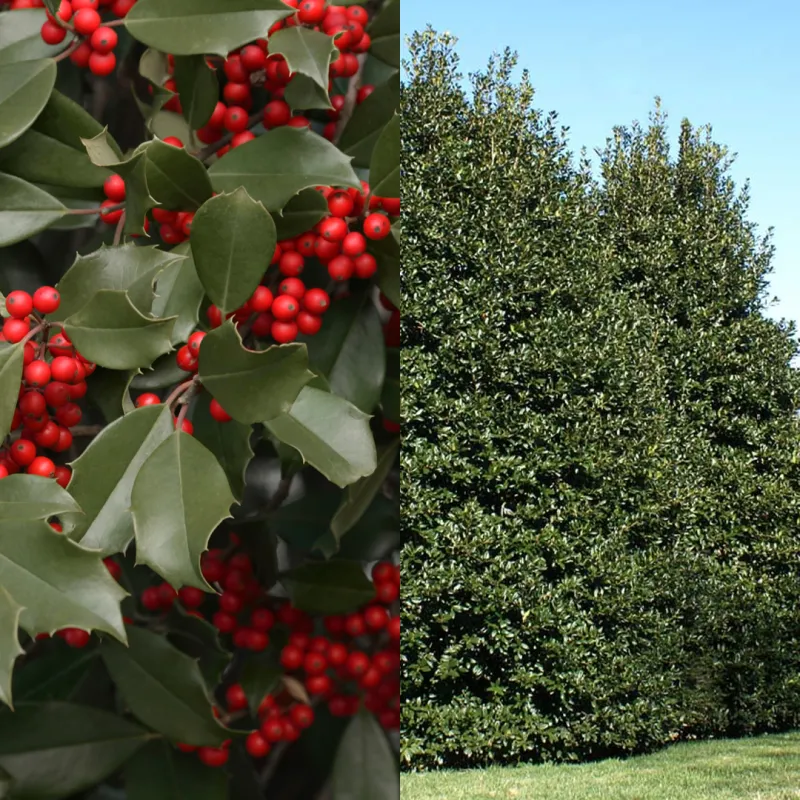
Few native trees hold their leaves as faithfully as American holly (Ilex opaca). NC State’s Plant Toolbox lists it as native in the Coastal Plain, Piedmont, and Mountains, and describes it as an evergreen suited to screens and hedges.
That statewide range makes it one of the more dependable native choices whether you garden near Wilmington, Raleigh, or Asheville.
The catch is time. NC State describes its growth as slow, so a young holly will not hide a second-story window or a neighbor’s shed in a season or two.
Expect several years before a small nursery plant starts to look like a barrier, and longer before it feels like a true wall.
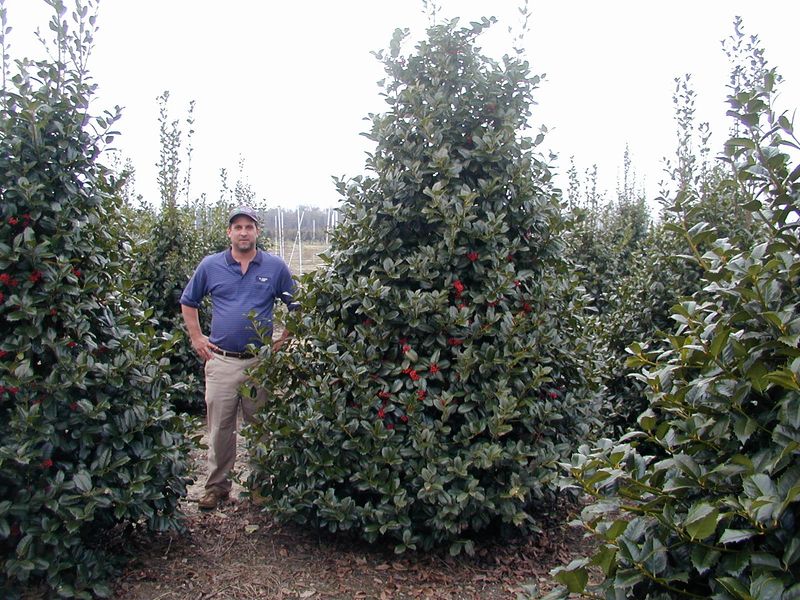
Size matters too. A mature American holly can reach 40 to 60 feet tall and 10 to 20 feet wide.
That is a full-sized tree, not a tidy shrub, so it asks for a long-term mindset and a property line with real space on your side of it.
If you want privacy next summer, holly alone will disappoint you. If you are planning for ten or fifteen years from now and have the room, it is a solid foundation.
Some homeowners pair it with temporary fillers, such as a fence or a trellis with annual vines, while the holly catches up. For comparison, NC State’s privacy planting guidance covers several evergreen options with different growth habits and trade-offs.
Room, light, and soil determine whether holly fits
Before you buy anything, walk your property line with a tape measure. A holly that eventually spreads 10 to 20 feet wide needs that much clearance from fences, driveways, power lines, and your neighbor’s property.
In a narrow lot, it may crowd everything within a couple of decades.
Light is the next check. American holly tolerates full sun to partial shade, so a spot that gets several hours of direct sun is a good start.
Heavy shade tends to thin out the foliage, and a thin screen defeats the purpose.
Soil comes third. The plant prefers moist, well-drained soil that runs acidic to neutral.
Many red clay yards in the Piedmont drain slowly after storms, so watch where water sits. According to NC State’s plant profile, holly does not handle flooding well, and it is a poor fit for limestone soils.
A simple test helps. After a hard rain, check the planting spot the next morning.
If the ground is still soggy, pick another spot or another plant. If you are unsure about pH, a soil test through your county Extension office can tell you before you spend money on a tree you hope will live for decades.
Matching the tree to the site now saves you from moving, pruning hard, or replacing it later.
Fall is a sound window for planting a long-term screen
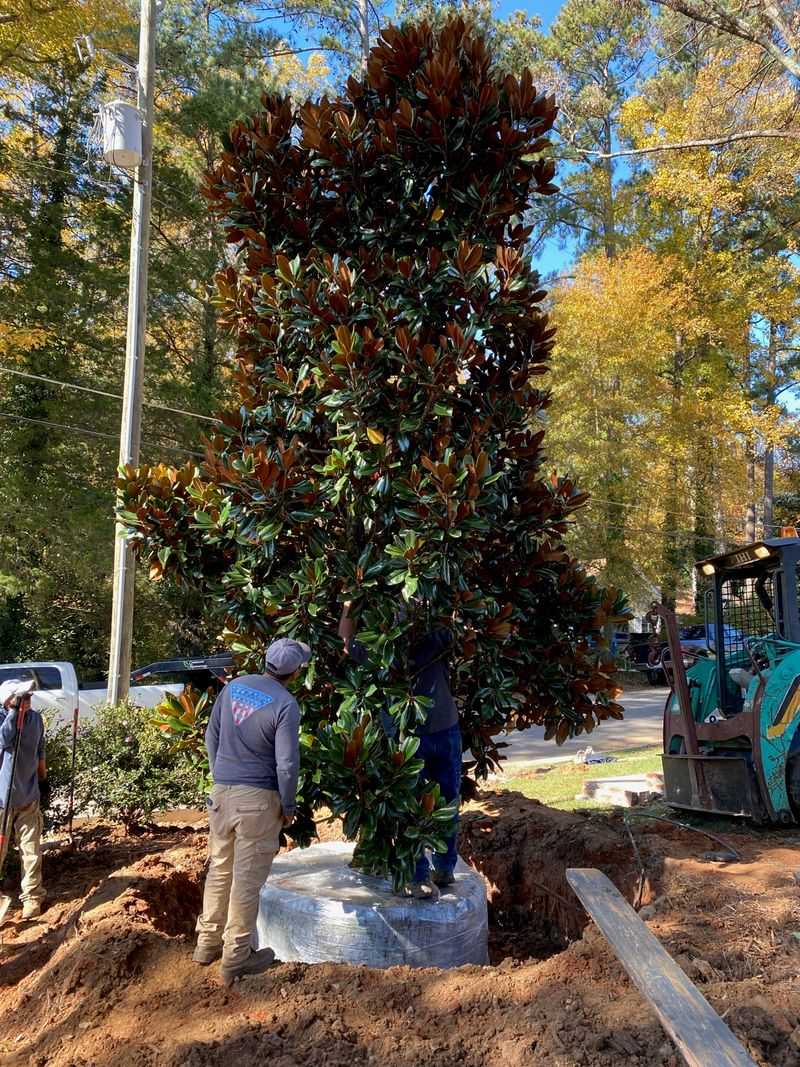
Autumn leaves are falling, the heat has eased, and many gardeners wonder if now is the time to plant. NC State Extension says fall and winter are good times to plant screening evergreens, which gives you a long stretch of workable weather.
There is a practical reason behind that advice. The Extension Gardener Handbook notes that container plants generally need less watering when planted in late fall or early spring.
Cooler air and lower evaporation take some pressure off a new root system.
Still, treat fall as a reasonable option, not a rule that always wins. A dry autumn, a hard early freeze, or a busy schedule can change the picture, and spring planting can work well too.
What matters most is that you can give the plant attention in its first months.
Less watering does not mean no watering. Roots are still settling into native soil, and a dry October can stress a young holly just as easily as a dry July.
Check the soil every week or so, and water when the top few inches feel dry.
Mark your calendar for a few simple check-ins through winter, since plants that look fine on top can still be struggling below ground.
Set the root ball correctly and water as the holly establishes
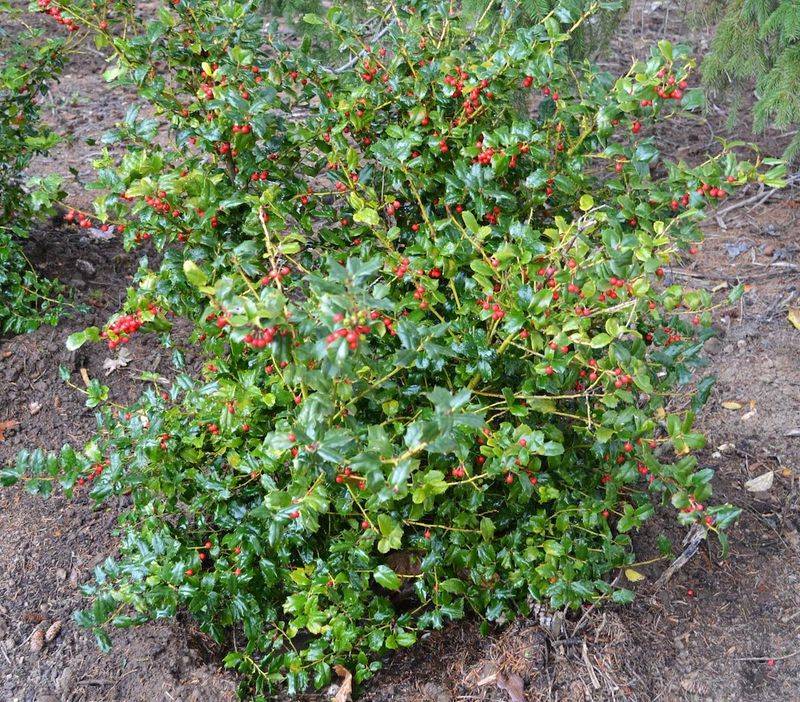
A good planting job starts with the hole. According to the NC State Extension Gardener Handbook, dig it no deeper than the root ball and two to three times wider.
A wide hole gives roots loose soil to push into, while a deep one lets the plant sink over time.
Next, set the holly so it sits at or slightly above the surrounding grade. In heavy clay, leaning toward slightly above is a smart habit because it keeps the trunk base from sitting in a wet pocket.
Backfill with the soil you dug out, firm it gently, and water thoroughly to settle things in. Then spread organic mulch over the planting area, but keep it 6 inches away from the trunk or crown.
Mulch piled against the stem holds moisture against the bark and invites trouble.
After that, keep an eye on watering through the establishment period. Newly planted hollies have not yet grown the root system they need to find water on their own, so dry spells matter, even in cooler months.
Stick a finger a few inches into the soil near the root ball. If it feels dry, give the plant a slow, deep soak.
Space multiple plants with their mature width in mind, not their nursery size. Tight spacing looks good at first, then forces hard pruning later.
Native recruitment is not the same as invasive spread
The idea that a native holly never escapes into the woods does not hold up. The U.S.
Forest Service notes that birds and small mammals disperse American holly seeds, and seedlings can establish in forest understories. If your holly bears fruit, some seeds may end up well beyond your fence.
That is native recruitment. American holly already belongs in North Carolina forests, so a seedling popping up there is part of how the species normally moves around.
It is a different story from a nonnative plant taking over habitat it never evolved in.
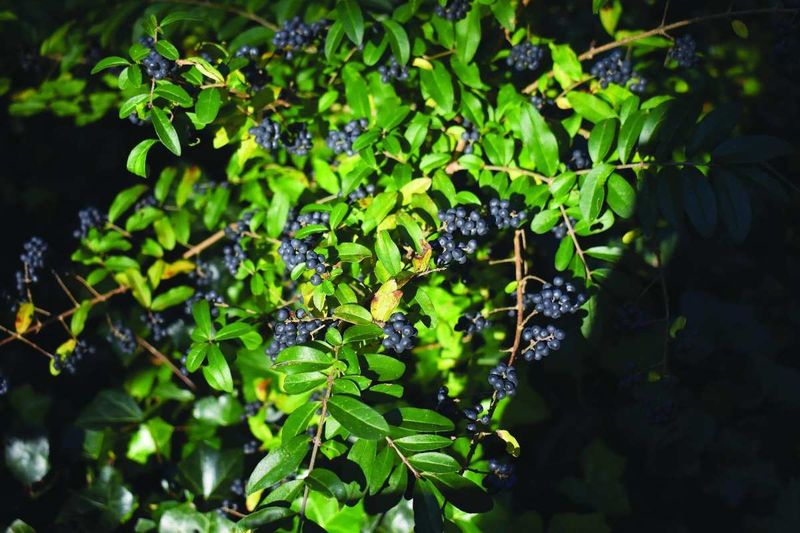
Chinese privet is the clear example of the second kind. NC State Extension lists it among the common, problematic invasive plants in North Carolina, and it is a plant to remove, not plant.
Leyland cypress is a separate case. NC State’s Leyland cypress guidance describes it as a hybrid that is, for practical purposes, sterile and must be propagated vegetatively.
Its problems are pests, disease, and maintenance, and NC State’s privacy planting article flags those concerns. It is not invasive like privet.
If you plant holly, watch for stray seedlings in nearby wooded edges and pull any you do not want. That small habit keeps your screen a good neighbor.
Fire risk and poisonous fruit affect where holly belongs
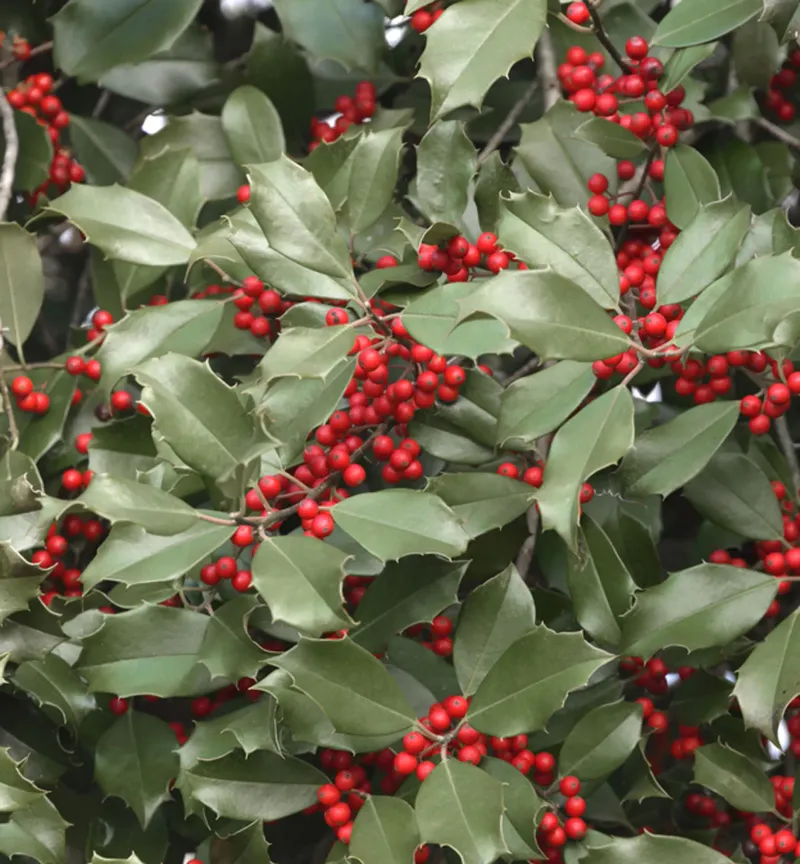
Siting is where holly gets serious. NC State’s Plant Toolbox rates American holly as highly flammable and advises against planting it within a home’s defensible space.
If you want a screen near the house, choose a different plant or move the holly farther out on the lot.
The red berries need caution as well. The same source lists the fruit as poisonous to humans and a problem for pets and horses.
Do not eat it, and think about who spends time in your yard, including toddlers, dogs, and any horses nearby.
Not every holly makes berries. American holly is dioecious, meaning male and female flowers grow on separate plants.
Female plants need a nearby male pollinator to produce fruit, so a lone female may stay berry-free, while a pair or group can fill up with fruit.
If you want fewer berries around kids or pets, that detail gives you some control, though a neighbor’s male tree could still pollinate yours.
Berries can feed wildlife, and that is a real benefit. Still, one hedge does not make a habitat.
NC State recommends diverse native plantings and notes that each species has its own soil, light, and moisture needs. Layer in other natives so birds and insects find a range of food and shelter.
Inkberry is a regional alternative, not a mountain substitute
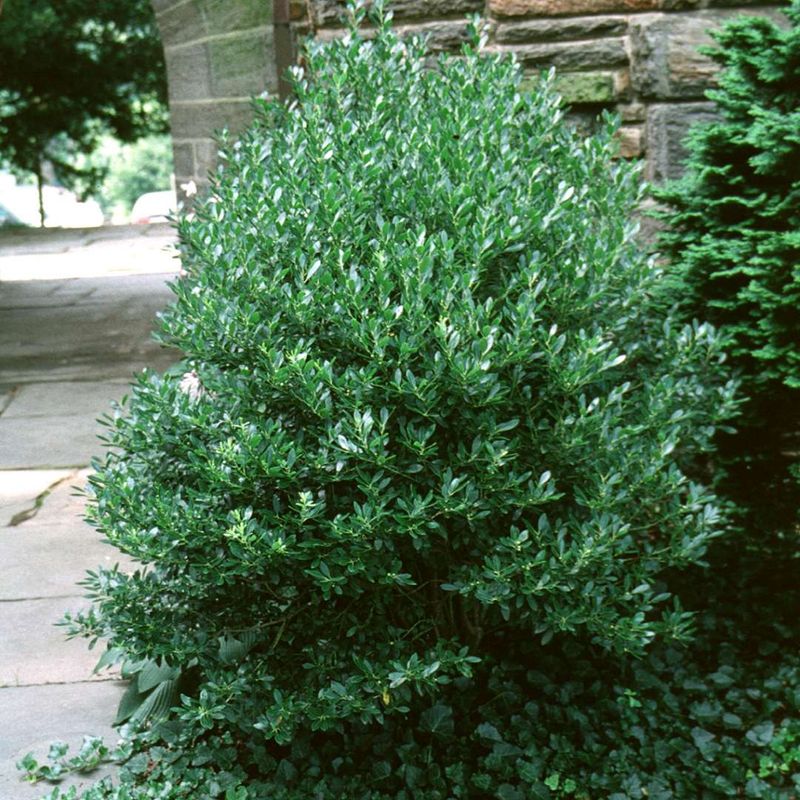
Not every yard has room for a 50-foot tree, and that is where inkberry (Ilex glabra) comes in. NC State’s Plant Toolbox lists it for the Coastal Plain and Piedmont, and it grows about 5 to 10 feet tall and 5 to 8 feet wide.
That makes it a more manageable evergreen screen for mid-sized spaces.
Geography is the limit. It is not listed for the Mountains, so a Blue Ridge gardener should not assume it will fit.
For mountain yards, American holly stays the statewide pick, with the same cautions about size and placement.
Inkberry also has a habit worth knowing about. Its natural form can sucker into colonies, sending up new stems from the roots.
Left alone, a few plants can widen into a patch, so give it room to spread or be ready to remove suckers that wander.
It works best as a screen of moderate height, such as along a patio, a side yard, or a lower fence line. It will not block a two-story view the way a mature American holly eventually could.
Choose inkberry when your region, your space, and your tolerance for suckering all line up. It is a useful option for some yards, not a swap-in for every North Carolina lot.
Choose a screen that fits the yard you have
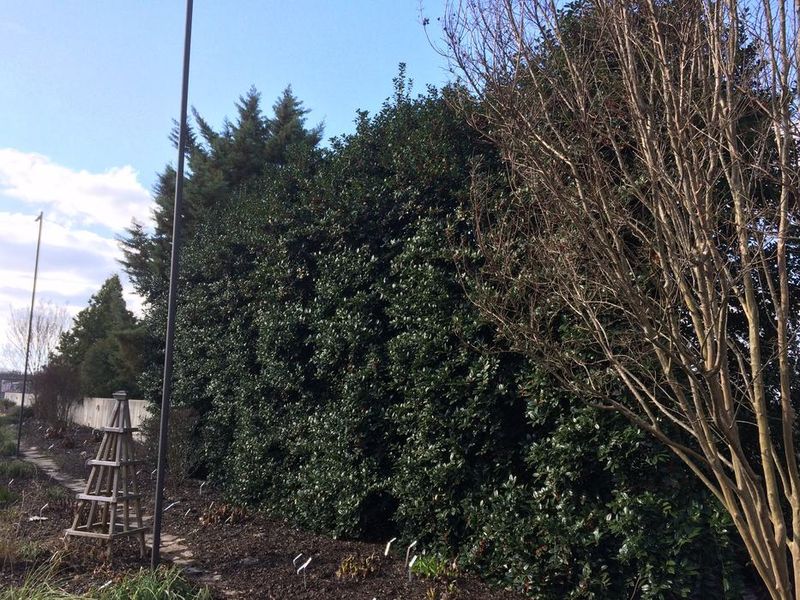
Pick American holly if you can give it 10 to 20 feet of width, accept slow growth, and keep it outside your home’s defensible space. NC State’s profile backs it as a screening evergreen.
Fall is a reasonable planting window, and since wildlife spreads its seeds, expect some seedlings.
A native tree is a long conversation with your yard, not a quick fix.