
Your Mums Keep Blooming Weeks Longer When You Stop Making These 13 Common Mistakes

You bring home a gorgeous pot of mums, and two weeks later it looks tired, brown, and done for the year. That fast fade usually is not your fault alone, because a few small habits can cut a mum’s show short.
The good news is that most of these mistakes are easy to fix with things you already have at home. Stop making them, and your mums can keep their color well into late fall.
1. Choosing the Wrong Mum Variety
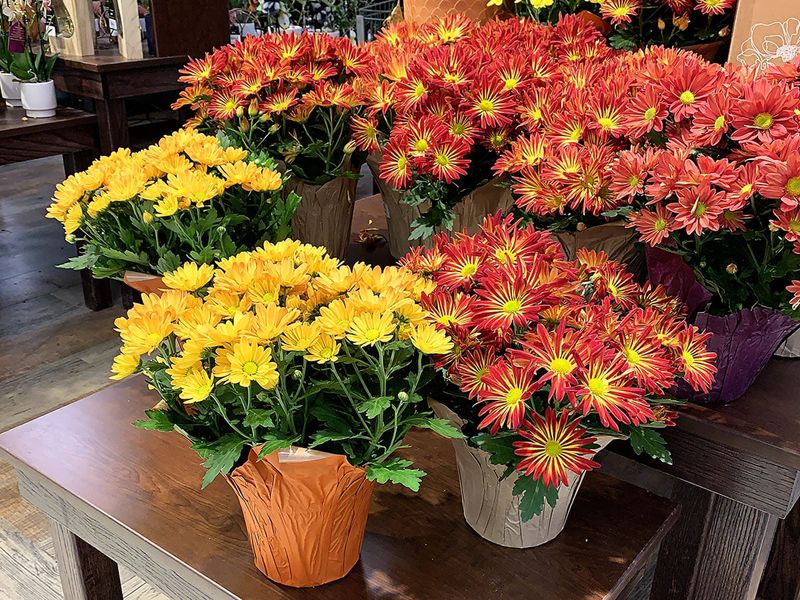
Not every mum on the store shelf is built for the same job. Some are tough garden mums that can return year after year in zones 5 through 9, while others are grown mainly as short-term potted decorations.
Picking the wrong type for your goal often leads to disappointment. A florist-style mum planted in a cold northern bed may never come back, and a hardy type stuffed into a tiny pot can struggle.
Before you buy, decide what you want. If you hope for a perennial, look for tags that say hardy or garden mum, and plant it early in fall so roots can settle before frost.
2. Buying Mums Already in Full Bloom
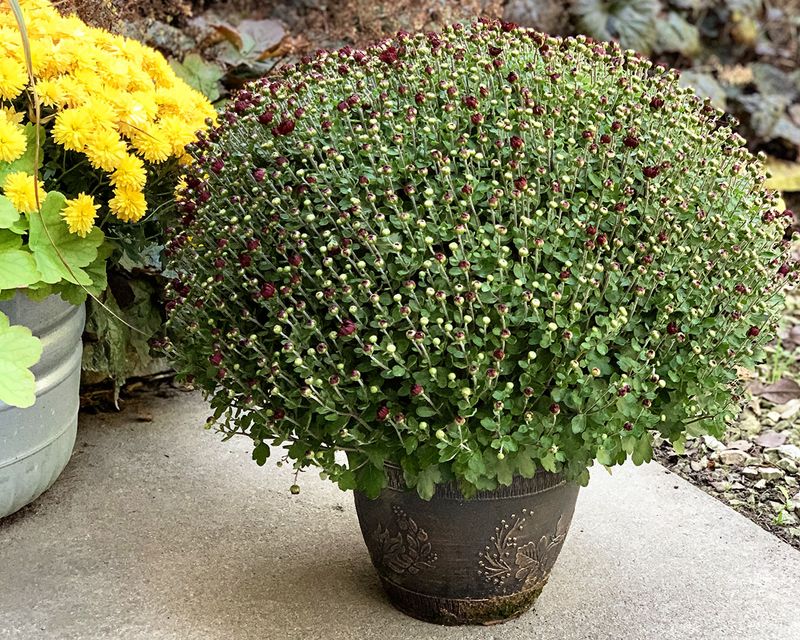
Picture two pots at the nursery. One is a fireball of open orange flowers, and the other is mostly tight buds with just a hint of color peeking out.
Most of us grab the showy one, but that plant is already halfway through its performance. The bud-covered pot is the smarter buy because every one of those buds is a flower you will get to enjoy at home.
Look for plants where petals are only starting to show. You may wait a few days for the big reveal, but the color can last weeks longer.
3. Not Giving Them Enough Sun

Mums are sun lovers at heart. Tuck one into a dim corner of the porch and you will likely see stretched, floppy stems and far fewer blooms.
Aim for at least six hours of direct sun a day. Morning sun is a real sweet spot, since it powers flower production without baking the plant.
If your mum already looks leggy, move it to a brighter spot right away. It may not fully reshape, but the remaining buds can open better with more light.
4. Watering Too Little or Too Much
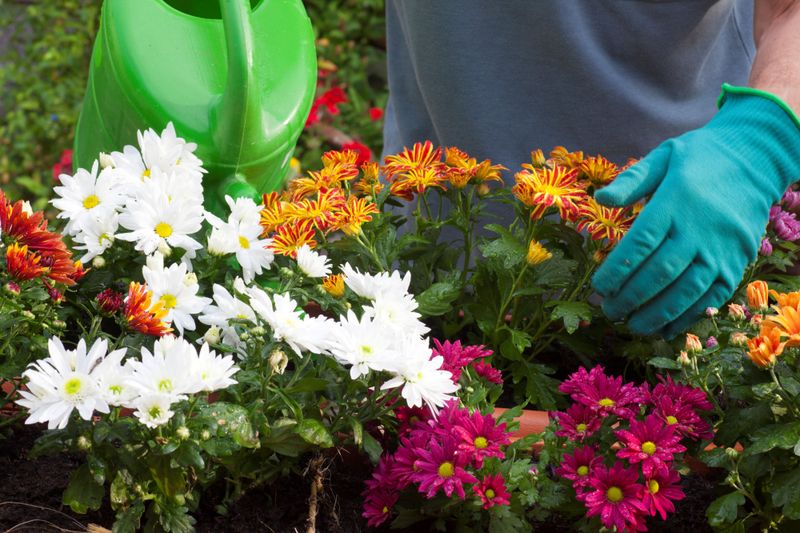
Here is the sneaky part about potted mums: their leaves are so dense that a quick sprinkle often runs off the top and never reaches the roots. The plant looks watered, but the soil underneath is bone dry.
On the flip side, soggy soil can drown roots and make the whole plant droop. Both extremes stress the mum and make flowers fade faster.
Check the soil with your finger every day, especially in warm weather. When the top inch feels dry, water slowly at the base until it drains from the bottom of the pot.
A wilted mum can sometimes bounce back if you set the whole pot in a bucket of water for about 30 minutes. Just do not make that soak a daily habit.
5. Skipping Deadheading

Faded flowers are more than an eyesore. Left on the plant, they signal it to switch gears toward making seeds instead of opening new blooms.
Spend a couple of minutes every few days pinching or snipping off brown, crispy flower heads. It is oddly relaxing, kind of like popping bubble wrap for gardeners.
Your mum looks tidier right away, and the energy goes back into the buds still waiting their turn.
6. Pinching Too Late or Not at All
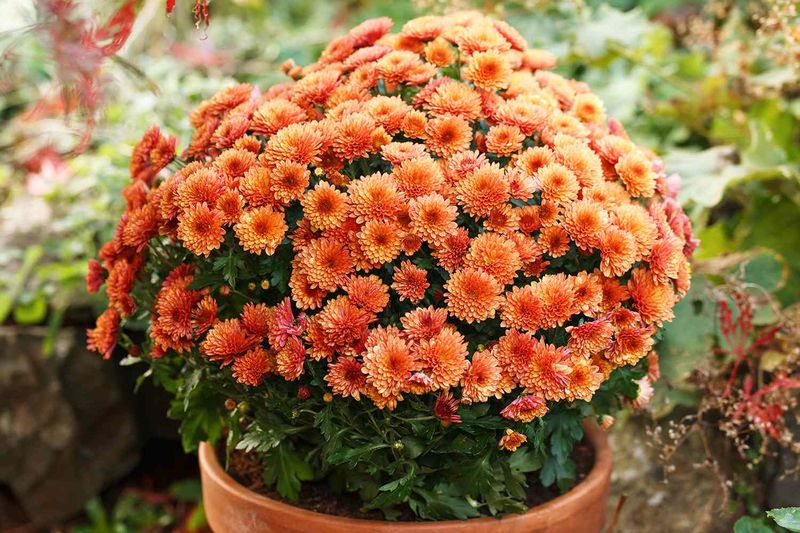
Ever wonder how garden centers get mums shaped like perfect domes? The secret is pinching, which means removing the soft tips of stems while the plant is young.
For mums growing in your beds, pinch stems when they reach about 8 inches in spring, then again around the Fourth of July. Each pinch creates more branches, and more branches mean more flowers.
Timing matters, though. Stop by mid-July, because pinching later can snip off the very buds that would have opened in fall.
7. Overdoing the Fertilizer
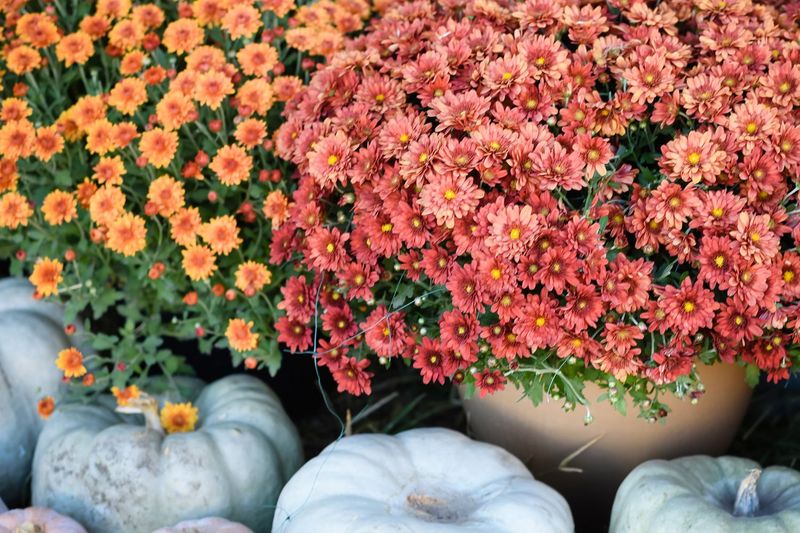
Feeding feels like a loving thing to do. With fall mums, though, extra fertilizer, especially high-nitrogen kinds, can push out leaves instead of flowers.
Most mums you buy in bloom were already fed well at the nursery. They usually have what they need to finish their show.
If a mum has lived in the same pot for a long time and looks pale, a very weak dose of balanced liquid fertilizer may help. Otherwise, it is often best to skip feeding entirely.
8. Leaving Them in the Afternoon Heat

Early fall can still throw heat waves, especially across the South and West. When temperatures climb, mum flowers open fast and fade even faster.
These plants bloom best in cool weather, roughly 61 to 65 degrees. A hot afternoon on a sunny concrete step can shave days off their color.
Give container mums morning sun and light shade after lunch. If an unusually warm spell hits, simply slide the pots to a cooler spot until it passes.
9. Placing Them Under Night Lights

Fun fact: mums tell time by darkness. They are short-day plants, which means long, uninterrupted nights are what trigger them to form flowers.
A porch light, security light, or streetlight shining on them after sunset can confuse that signal. The result may be delayed or uneven blooming.
Keep mums away from bright outdoor lighting, especially in late summer when buds are forming. A few feet of distance can make a real difference.
10. Forgetting Frost Protection

One clear, cold night can undo weeks of careful care. An early frost may brown petals overnight and end the show long before you were ready.
Watch the forecast in fall. When a chilly night is coming, drape frost cloth, an old bedsheet, or a light blanket over your mums before sunset.
Pull the cover off in the morning so the plant gets light and air. Potted mums can also be rolled into a garage for the night.
11. Setting Young Plants Out Too Early

Spring fever is real, and it tempts many gardeners to plant small mums the moment the ground thaws. Unfortunately, steady temperatures below 50 degrees can trick young plants into setting buds way too soon.
That early start usually means a smaller plant with a shorter bloom later on. Patience pays off here.
Wait until nights stay reliably mild before moving little mums outside. They will spend their early weeks growing roots and stems, which builds a bigger fall display.
12. Using Pots Without Drainage
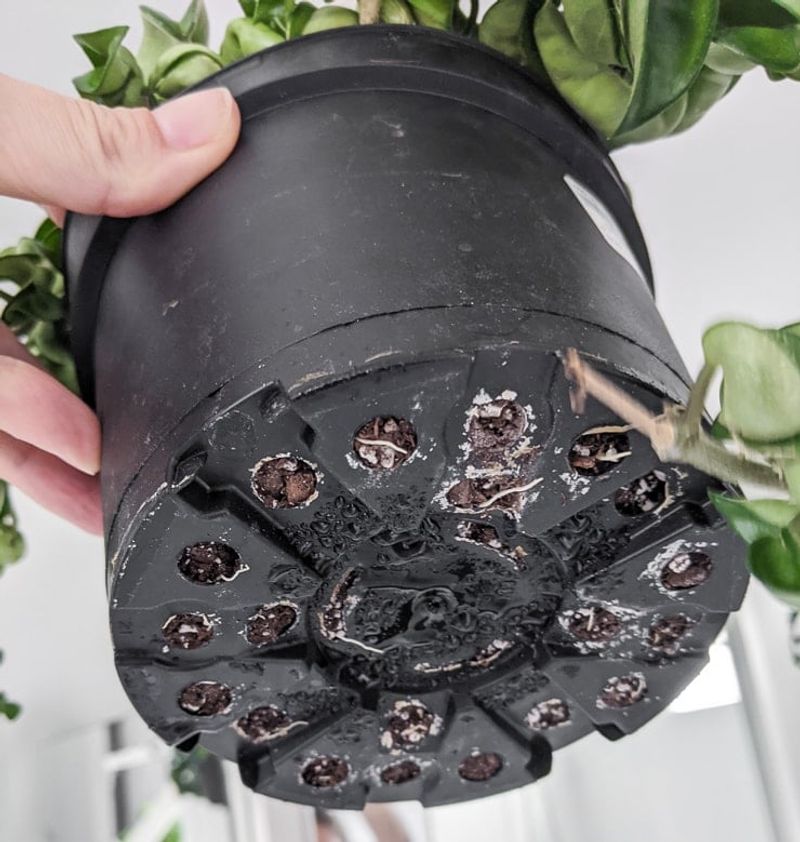
That pretty ceramic pot with no hole in the bottom might be quietly drowning your mum. Water collects at the base, roots sit in it, and root rot can set in.
Signs include yellowing leaves and wilting even when the soil feels wet. By then, the damage may already be underway.
Always choose containers with drainage holes. If you love a solid decorative pot, set the mum inside in its plastic nursery pot and empty any extra water after each watering.
13. Letting Water Sit on the Blooms

Splashing water over the top of your mums might look refreshing, but the flowers do not see it that way. Wet blooms can break down faster and pick up spots, mold, or mildew.
If the sun hits damp petals, they may also scorch. That is a lot of harm from a simple watering habit.
Aim your hose or can at the soil, right at the base of the plant. During long rainy stretches, tuck potted mums under a porch roof to keep the flowers dry and fresh.
Once you keep the water low and the petals dry, those blooms can look crisp for many more weeks.